
An “1800” designation on a sewing machine isn’t just a model number—it’s a statement of capability. Machines built around the 1800 platform prioritize a powerful motor, a wide throat space for quilting, and the raw torque needed to punch through multiple layers of denim, canvas, or upholstery fabric without bogging down. Whether you’re constructing a custom jacket, free-motion quilting a king-size comforter, or tackling heavy home décor, the 1800-class machine is engineered to make those tasks feel effortless.
I’m Min — the co-founder and writer behind Gadgets Feed. This guide is the product of countless hours analyzing stitch quality, feed-dog systems, motor wattage, and real-user feedback across the full spectrum of 1800-class sewing machines, from entry-level workhorses to semi-industrial marvels.
The goal here is simple: cut through the marketing noise and help you find the absolute best 1800 sewing machine for the exact type of sewing you do, without overspending or undershooting your needs.
How To Choose The Best 1800 Sewing Machine
The 1800 platform is not a one-size-fits-all category. The right choice depends on whether you’re a quilter needing a massive throat, a garment sewer valuing stitch variety, or a heavy-duty user demanding raw power. Focus on three pillars: mechanical vs. computerized, motor torque, and workspace ergonomics.
Mechanical Guts vs. Computerized Brains
Mechanical 1800 machines, like the Janome HD3000, use a dial and lever system. They are simpler to troubleshoot, last decades, and offer tactile control. Computerized models, like the Brother CP100X, offer automatic buttonholes, needle-down positioning, and speed control sliders—features that reduce fatigue during long quilting sessions. Your choice here dictates how much you rely on manual finesse versus digital assistance.
Motor Power and Piercing Capability
Not all 1800-class motors are equal. A machine’s ability to maintain speed under load is defined by its motor wattage and gearing. Look for “high-speed” ratings (1,100+ stitches-per-minute) and user reviews that specifically mention sewing through 6-8 layers of denim or upholstery without hesitation. A heavy-duty metal frame is non-negotiable for damping vibration when the motor is under strain.
Throat Space and Harp Size
For quilters, the distance from the needle to the machine body (the throat) is the single most important dimension. An 1800 platform often offers 6 to 8 inches of throat depth, which is the difference between wrestling a bulky quilt and letting it glide freely. If you free-motion quilt, prioritize machines with a generous harp and a built-in extension table or the ability to add one.
Quick Comparison
On smaller screens, swipe sideways to see the full table.
| Model | Category | Best For | Key Spec | Amazon |
|---|---|---|---|---|
| JUKI TL-2010Q | Premium/Semi-Industrial | Straight-stitch quilting & heavy fabrics | 1,500 SPM, automatic thread trimmer | Amazon |
| JUKI TL-2000Qi | Premium | High-speed quilting & apparel | 1,500 SPM, LED lighting, aluminum body | Amazon |
| Janome HD3000 | Mid-Range/Heavy-Duty | Thick fabrics & reliable mechanical sew | 23 lbs., aluminum internal frame | Amazon |
| Janome JW8100 | Mid-Range/Computerized | Versatile quilting & garment sewing | 7-piece feed dog, 100 stitches | Amazon |
| SINGER 4423 | Budget/Entry-Level | High-speed home sewing & alterations | 1,100 SPM, 60% stronger motor | Amazon |
| Brother CP100X | Mid-Range/Computerized | Everyday sewing & light quilting | 100 stitches, fixed needle bar | Amazon |
| Brother CS7205 | Mid-Range/Computerized | Stitch variety & ease of use | 150 stitches, 1 alphanumeric font | Amazon |
| Bernette B35 | Mid-Range/Mechanical | Durable mechanical Swiss design | 23 stitches, 1-step buttonhole | Amazon |
| Smartstitch S-1001 | Commercial/Multi-Needle | Commercial embroidery & multi-color | 10 needles, 7″ touchscreen | Amazon |
In‑Depth Reviews
1. Juki TL-2010Q

The Juki TL-2010Q is a semi-industrial straight-stitch machine designed for serious quilters and heavy fabric users. With a maximum speed of 1,500 stitches per minute, a massive aluminum die-cast body, and an automatic thread trimmer, it delivers industrial-grade performance in a portable footprint. The knee lifter lever allows hands-free presser foot control, essential for maneuvering thick quilt sandwiches or multiple layers of denim.
Its straight-stitch-only design means flawless tension and perfect 1/4-inch seams every time, ideal for chain piecing and free-motion quilting. The automatic needle threader, while functional, can be finicky, and the foot pedal’s position may accidentally trigger the thread cutter for some users. However, the build quality and stitch precision are unmatched in this class.
The 12mm presser foot lift height makes it easy to slide heavy materials under the needle. The TL-2010Q is noticeably quieter than its speed suggests, running with a smooth, purring hum. Experienced users praise its ability to sew through 5+ layers of vinyl without strain. For the quilter or tailor who demands maximum straight-stitch performance, this machine is a long-term investment that pays for itself in precision and speed.
Why it’s great
- Semi-industrial speed (1,500 SPM) with exceptional stitch consistency
- Automatic thread trimmer saves significant time during long projects
- Knee lifter allows hands-free fabric manipulation
Good to know
- Straight stitch only—no zigzag or decorative patterns
- Automatic needle threader can be unreliable
- Foot pedal may accidentally trigger thread cutter if positioned incorrectly
2. JUKI TL-2000Qi

The Juki TL-2000Qi is a close sibling to the 2010Q, offering the same 1,500 SPM speed and aluminum die-cast construction but at a more accessible price point. It ships with an extension table and bright LED lights, making it ready for quilting right out of the box. Users consistently note its low vibration operation, which is critical for long hours of free-motion quilting.
The tapered head design provides excellent visibility around the needle area, a feature quilters particularly value. The machine requires regular oiling (daily with heavy use), but this simple maintenance is a small trade-off for the durability of its all-metal components. The automatic needle threader, similar to the 2010Q, is a common point of user frustration and may require a backup wire threader.
Reviews highlight the machine’s ability to handle thick seams (canvas, nylon, webbing) without hesitation, and its straight-stitch quality is described as “buttery smooth.” For users who primarily need a high-speed straight-stitch machine for quilting or apparel construction, the TL-2000Qi delivers 95% of the 2010Q’s performance at a lower price, though it lacks the automatic thread trimmer.
Why it’s great
- Outstanding straight-stitch quality and high-speed capability
- All-metal, low-vibration construction for durable use
- Includes extension table and bright LED lighting
Good to know
- Automatic needle threader is unreliable; a wire threader is recommended
- Requires regular oiling before each use
- No automatic thread trimmer (unlike the TL-2010Q)
3. Janome HD3000

The Janome HD3000 is a fully mechanical, heavy-duty machine built around a robust aluminum internal frame, weighing in at 23 pounds. This weight translates directly to stability—the machine stays planted even when sewing through 10+ layers of denim or lightweight leather. The built-in needle threader is a welcome convenience on a mechanical platform, and the top-loading, jam-proof bobbin system is a favorite among users.
It offers 18 built-in stitches and a one-step buttonhole, which is adequate for most garment sewing and home décor projects. The three-step buttonhole is a point of contention for some users who prefer the precision of a four-step or automatic buttonhole. The harp space (throat) is on the smaller side, making this machine less ideal for large quilting projects without a walking foot.
User feedback consistently emphasizes the machine’s quiet, smooth operation and its ability to handle heavy alterations without jamming. The drop-in bobbin and intuitive threading path make setup straightforward. For the sewer who wants a mechanical workhorse that will run reliably for decades without software issues, the HD3000 is a top-tier choice in the mid-range bracket.
Why it’s great
- Rock-solid aluminum frame provides vibration-free sewing through thick fabrics
- Jam-proof top-loading bobbin system is easy to use and maintain
- Quiet, smooth mechanical operation ideal for heavy alterations
Good to know
- Small harp space—not ideal for large quilting projects
- Uses a three-step buttonhole instead of a one-step automatic
- Lacks a walking foot in the standard accessory set
4. Janome JW8100

The Janome JW8100 is a fully computerized sewing and quilting machine that strikes a strong balance between stitch variety and heavy-duty capability. With 100 built-in stitches, 7 one-step buttonholes, and a 7-piece feed dog system, it delivers consistent fabric feeding across materials from cotton sheeting to multiple layers of denim. The bonus accessories package—including a wide extension table, hard cover, even feed foot, and quarter-inch quilting foot—makes it value-packed for quilters.
The intuitive LCD screen and buttons make stitch selection straightforward, and the start/stop button paired with speed control slider allows sewing without the foot pedal, which users with mobility concerns appreciate. The metal frame construction provides the necessary weight to handle the motor’s torque without excessive vibration. Some users note the work light could be brighter for detailed work.
Reviews highlight the machine’s ability to sew smoothly and quietly through thick projects without tension issues. The built-in needle threader and automatic buttonhole functions work reliably. For the sewer who wants a computerized machine that can handle quilting, garment-making, and decorative stitching without breaking the bank, the JW8100 is a compelling option.
Why it’s great
- 7-piece feed dog system ensures even fabric feeding with minimal puckering
- Generous accessory package: extension table, hard cover, even feed foot
- Speed control and start/stop button allow pedal-free operation
Good to know
- Work light could be brighter for detailed sewing
- Needle doesn’t raise very high for very thick materials
- Some users report a learning curve with tension for heavy fabrics
5. SINGER Heavy Duty 4423
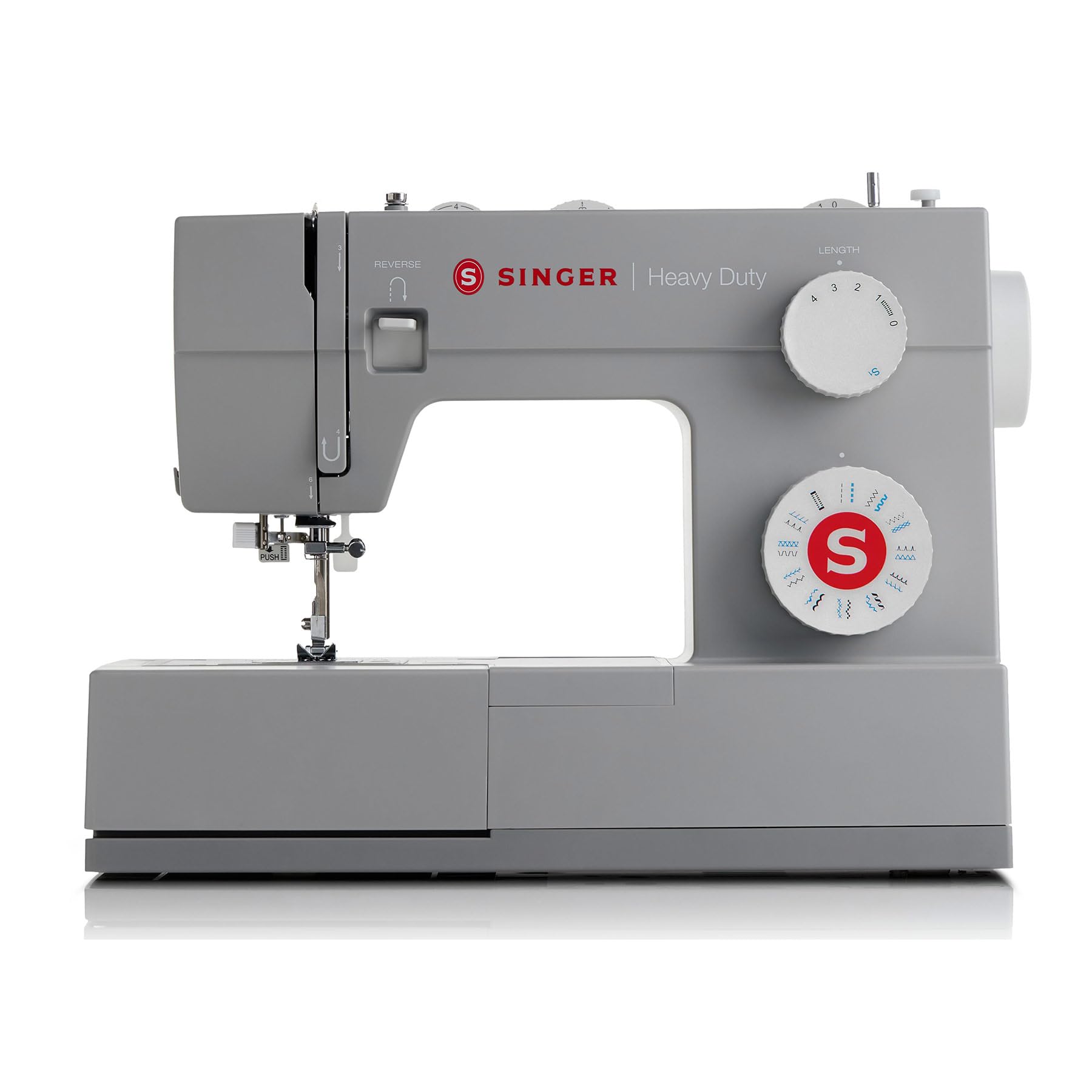
The Singer 4423 Heavy Duty is a perennial best-seller, and for good reason: it offers a 60% stronger motor than standard machines, a maximum sewing speed of 1,100 stitches per minute, and a heavy-duty metal interior frame—all at an entry-level price point. The 23 built-in stitches cover the essentials: utility, stretch, decorative, and a one-step buttonhole. The automatic needle threader is a genuine convenience that reduces eye strain.
The machine’s piercing power through thick seams is its standout feature. Users routinely sew through multiple layers of denim and upholstery fabric without the machine struggling. The 725 accessory kit includes a variety of presser feet, bobbins, and a soft-sided dust cover, providing good value. However, the bobbin tension can be finicky, and some users report the “heavy-duty” label is misleading for extremely thick commercial-grade materials.
For home sewers tackling heavy alterations, quilting, and home décor, the 4423 is a reliable, high-speed workhorse. The compact footprint (15.5″ x 12″) makes it easy to store. While not as refined as premium models, its combination of speed, power, and affordability has made it the #1 best-selling sewing machine on Amazon for a reason.
Why it’s great
- 60% stronger motor delivers exceptional piercing power for thick fabrics
- High-speed sewing at 1,100 SPM speeds through projects quickly
- Heavy-duty metal frame provides stability and long-term durability
Good to know
- Bobbin tension can be inconsistent and requires careful threading
- Not truly heavy-duty for commercial-grade or constant thick leather use
- Lacks computerized features like needle-down positioning
6. Brother CP100X

The Brother CP100X is a computerized sewing and quilting machine that prioritizes quiet operation and ease of use. With a durable metal frame and a fixed needle bar design for cleaner, straighter stitching, this machine is well-suited for sewers who want consistent results without fuss. The 100 built-in stitches (including 8 auto-size buttonholes) offer substantial versatility for garments and home décor.
The large extension table and 10 included sewing feet—including a walking foot for quilting—add significant value. Users praise the machine’s ability to sew through denim and light webbing without tension issues, and the speed control slider allows precise speed adjustment, which is helpful for beginners. The needle threader is described as “bulky” and less reliable than expected, and bobbin winding sometimes requires manual guidance.
Weighing just 10.5 pounds, the CP100X is portable enough to move between rooms or take to a class. The hard case provides good protection during storage. For the sewer looking for a quiet, well-featured computerized machine that grows with their skills, the CP100X is a solid mid-range investment, particularly for those who value extended workspace.
Why it’s great
- Fixed needle bar ensures cleaner, straighter stitching lines
- Large extension table and 10 quilting feet included
- Very quiet operation, even at higher speeds
Good to know
- Needle threader is bulky and not always reliable
- Bobbin winding can be inconsistent, requiring manual guidance
- Stitch selection interface is not as intuitive as some competitors
7. Brother CS7205
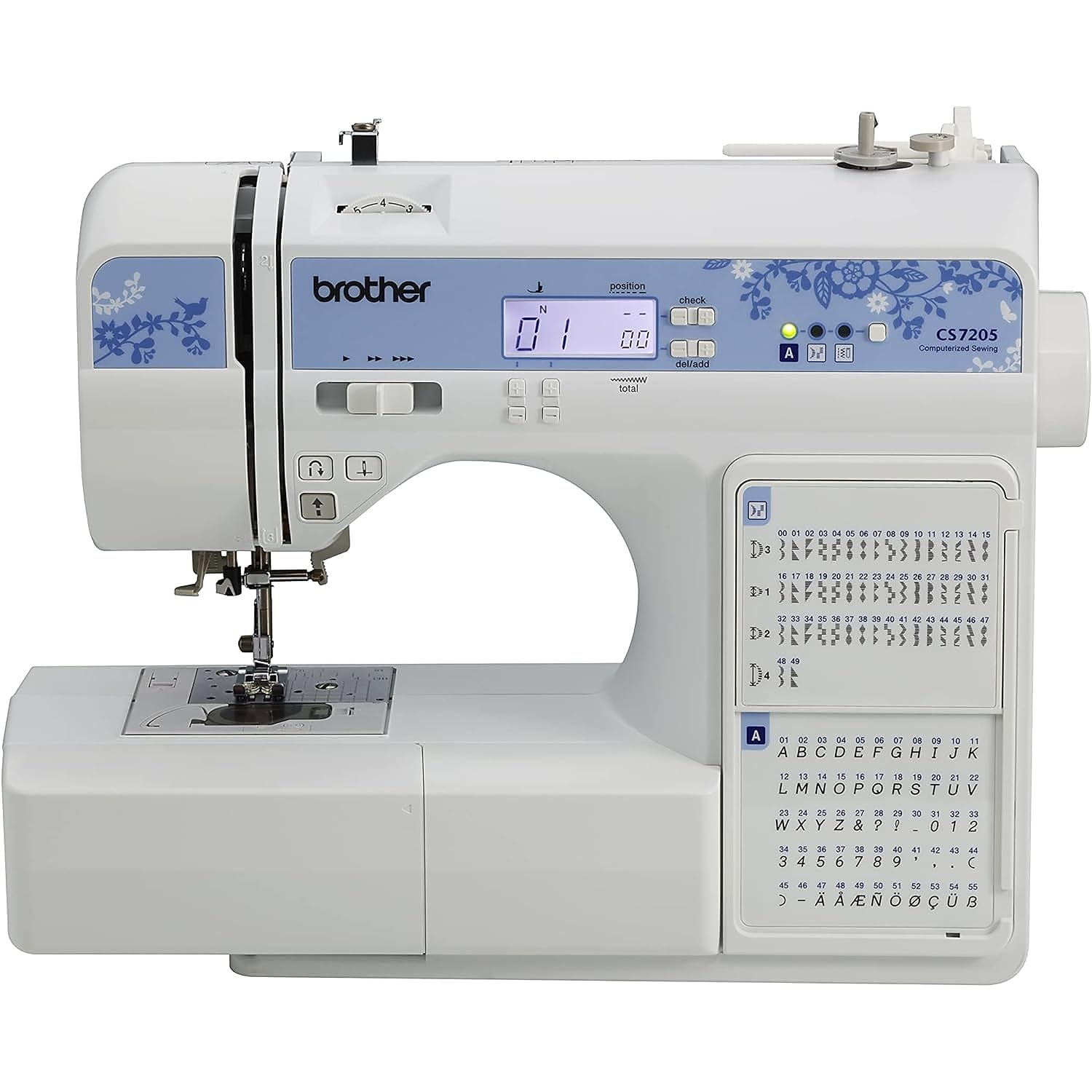
The Brother CS7205 is designed for sewers who want maximum stitch variety without stepping up to a premium-tier machine. With 150 built-in stitches—including utility, decorative, heirloom patterns, 1 alphanumeric font, and 8 one-step auto-size buttonholes—this machine offers one of the largest stitch libraries in its price range. The LCD screen makes selection clear, and the automatic needle threader is a time-saver.
The wide table and 11 included sewing feet, including a walking foot and quilting foot, make it well-suited for quilting and garment projects. The quick-set drop-in bobbin is jam-resistant and easy to load. The machine is lightweight (2.2 pounds on the spec sheet, though this appears to be an error—actual weight is around 13 pounds) and portable. Users consistently note the easy setup and clean, consistent stitches across a variety of light-to-medium fabrics.
Some users report that the machine is best suited for light-to-medium weight fabrics; sewing multiple layers of thick denim can cause strain. The machine’s plastic components, while sturdy, don’t inspire the same confidence as a metal-frame machine for very heavy-duty work. For the sewer whose projects span garment creation, home décor, and decorative stitching, the CS7205 provides exceptional value and versatility.
Why it’s great
- Massive 150-stitch library including alphanumeric font for monogramming
- 11 sewing feet included, plus wide extension table
- Jam-resistant drop-in bobbin with quick-set feature
Good to know
- Not designed for very heavy-duty or thick multi-layer projects
- Plastic components rather than full metal frame
- Stitch quality can vary on very thick seams
8. Bernette B35

The Bernette B35 brings Swiss engineering to the mechanical sewing machine segment. With a sturdy metal build, 23 built-in stitches (including essential decorative and utility stitches), and a one-step automatic buttonhole, this machine is designed for reliability and precision. The LED light is notably bright, illuminating the work area better than many competitors in this class.
The drop-in bobbin system is straightforward, and the manual thread tension control offers precise adjustment for different fabric types. The machine includes 7 presser feet and an extension table, which adds value. Users praise the even stitch quality and the machine’s ability to handle standard garment sewing and light quilting. The Swiss design heritage is evident in the build quality, though some components feel similar to higher-end Janome models.
Some users report vibration or shuddering at higher speeds, particularly if the machine is not on a solid, heavy surface. The machine is not ideal for very heavy denim layers or industrial use. For the sewer who values simplicity, durability, and consistent stitch quality in a compact, portable package, the Bernette B35 is an excellent choice that will last for years.
Why it’s great
- Sturdy Swiss-engineered metal build ensures long-term reliability
- Excellent stitch quality with even feeding across most fabrics
- Bright LED light significantly improves visibility during detailed work
Good to know
- Can vibrate or shudder at higher sewing speeds on lighter tables
- Limited to 23 stitches—fewer decorative options than computerized models
- Not recommended for heavy-duty denim or commercial use
9. Smartstitch S-1001

The Smartstitch S-1001 is a multi-needle commercial embroidery machine that occupies a different category than the other machines on this list. With 10 needles and a maximum speed of 1,200 SPM, it is designed for production-level embroidery on hats, t-shirts, bags, and flat goods. The 7-inch color touchscreen, auto thread trimming, laser embroidery positioning, and self-lubrication system are features typically found on machines costing significantly more.
The machine is praised by users for its beginner-friendly setup and robust support community, including video training and an active Facebook group. The 9.5″ x 14.2″ embroidery area is generous for a machine in this class. Users report excellent stitch quality compared to single-needle embroidery machines. The starter pack includes machine embroidery threads, stabilizers, and bobbin threads, reducing initial investment.
The S-1001 is a substantial machine at 93 pounds and requires careful unpacking and setup. It is a purpose-built tool for those looking to start or expand a commercial embroidery business or for serious hobbyists who need multi-color, multi-design capability. For the user whose primary need is high-volume, multi-color embroidery, this machine is a powerful and cost-effective entry point into commercial-grade equipment.
Why it’s great
- 10-needle design enables multi-color embroidery without manual thread changes
- Large 9.5×14.2-inch embroidery area for sizable designs
- Includes comprehensive training support and starter pack
Good to know
- Large and heavy (93 lbs); requires dedicated workspace
- Primarily an embroidery machine—not suitable for general sewing
- Learning curve for digitizing and design software integration
FAQ
Can an 1800 sewing machine handle thick denim and leather layers?
What is the difference between an 1800 sewing machine and a regular home machine?
How often should I oil a new 1800 sewing machine?
Do I need a walking foot for quilting on an 1800 machine?
Final Thoughts: The Verdict
For most users, the best 1800 sewing machine winner is the Singer Heavy Duty 4423 because it delivers the core 1800 promise—raw speed and piercing power—at a price point that makes it accessible to virtually any sewer. If you want maximum straight-stitch precision and a true semi-industrial build for serious quilting, grab the Juki TL-2010Q. And for the sewer who needs stitch variety, a computerized interface, and a generous accessory package for a balanced mid-range investment, nothing beats the Janome JW8100.