
A bicycle back light is the single most critical safety component for any cyclist riding in low-light conditions, dawn, dusk, or at night. It is your primary visual communication to motorists, signaling your presence, your position on the road, and your direction of travel.
I’m Min — the co-founder and writer behind Gadgets Feed. I spent countless hours combing through technical datasheets, decoding lumen measurements, battery capacities, beam angles, and IP waterproof ratings to separate the lights that truly keep you safe from those that are just dim plastic tubes.
Whether you commute daily, ride for fitness on long country roads, or navigate busy city streets, you need a light that is bright, reliable, and built for the real world. This guide breaks down the specs that actually matter so you can buy the best bicycle back light for your specific riding style and budget.
How To Choose The Best Bicycle Back Light
Buying a tail light is not just about picking the one with the biggest number on the box. You need to match the light’s beam pattern, battery type, and mounting system to your specific bike and riding conditions. A 400-lumen light is useless if its mount vibrates off on the first bump.
Lumens vs. Beam Angle vs. Visibility
Many shoppers fixate on raw lumens, but a narrow 5-degree beam that blasts all light straight back is less safe than a wider beam that illuminates your sides. A 30-lumen light with a 300-degree wide-angle lens can make you more visible from cross-traffic than a 150-lumen light with a tight spot. Look for “wide-angle” or “260° to 300°” visibility ratings — these cover your flanks when cars approach from intersecting streets.
Battery Life & Power Source
You face a choice between built-in rechargeable batteries and user-replaceable AAAs. Rechargeable models (like those with USB-C) save money on cells over time and are convenient, but they force you to remember to charge. AAA-powered lights, such as the Planet Bike Grateful Red, offer the ability to swap in fresh batteries mid-ride and tend to have longer overall run times. Check the advertised run time in your most-used mode — a light that lasts 6 hours in “full” mode may die halfway through a long night event.
Mount Security & Compatibility
A tail light is useless if it falls off. The mount must fit your specific seatpost diameter or saddle rail width. Silicone band mounts are quick but can snap or slide on wet tubes. Hard plastic clamps with screw-down mechanisms offer greater long-term stability. If you have aero seatposts, verify the mount is compatible — the CATEYE Viz uses an SP-15 bracket specifically for these profiles.
Quick Comparison
On smaller screens, swipe sideways to see the full table.
| Model | Category | Best For | Key Spec | Amazon |
|---|---|---|---|---|
| MagicShine SEEMEE 300 | Premium/Tech | Smart brake sensing & long battery life | 300 Lumens / 260° View / 1600 mAh | Amazon |
| CATEYE ViZ 450 | Premium/Bright | Maximum daytime visibility | 450 Lumens / Daytime Hyperflash | Amazon |
| Cygolite Hotshot 100 | Mid-Range/Versatile | Adjustable flash speed & proven durability | 100 Lumens / Tunable Flash | Amazon |
| RAVEMEN CL01 | Mid-Range/Compact | Ultra-wide beam & saddle mount | 30 Lumens / 300° View / 22g | Amazon |
| Planet Bike Superflash | Mid-Range/Classic | Incredible battery life & daylight flash | 7 Lumens / 100hr Superflash | Amazon |
| G2FS LITH 150 | Budget/Value | High brightness at low cost | 150 Lumens / 220° Beam / IPX6 | Amazon |
| Planet Bike Grateful Red | Budget/Reliable | AAA-powered versatility & long runtime | 13 Lumens / 150hr Superflash | Amazon |
In‑Depth Reviews
1. MagicShine SEEMEE 300

The MagicShine SEEMEE 300 delivers 300 lumens of output through two separate LEDs with different lens angles, achieving 260° of visibility that catches drivers from every approach. Its built-in motion sensor automatically triggers a brighter burst when you decelerate — a genuine safety feature that mimics a car’s brake light.
The 1600 mAh battery is the largest in this comparison; it powers up to 200 hours of runtime in ECO mode. Recharging via USB-C takes just 2 hours, and the one-piece aluminum housing gives it a premium feel while protecting against rain with an IPX6 rating. The ambient light sensor automatically adjusts brightness to external conditions, so you never outrun your battery in twilight.
Mounting is limited to seatpost and saddle rail, and some users report the mount is not adjustable enough for non-standard frame tubes. The light unit is also pricier than most, but the combination of smart brake sensing, huge battery capacity, and all-metal construction justifies the investment for riders who prioritize safety above all else.
Why it’s great
- Smart brake sensor automatically increases brightness when slowing
- 260° visibility keeps you visible from cross-traffic
- Massive 1600 mAh battery lasts up to 200 hours in ECO mode
Good to know
- Mount is not adjustable for non-standard frames or rear racks
- Premium price point may be overkill for casual riders
2. CATEYE ViZ 450

The CATEYE ViZ 450 is the brightest tail light in this lineup, pumping out a staggering 450 lumens through its OptiCube lens technology. Its Daytime Hyperflash mode is specifically designed to be blindingly visible in direct sunlight, with visibility rated at over 1 mile (1.3 km), giving motorists more time to react.
The light offers four distinct modes: Constant, Flashing, Group Ride (which dims to avoid blinding your pack), and the aforementioned Daytime Hyperflash. It uses USB-C charging with a 3.5-hour recharge time, but note the cable is sold separately. The SP-15 bracket is optimized for modern aero seatposts, and the Snap Square base allows you to mount the light vertically or horizontally.
Some users find the hyperflash too aggressive for close group riding, and the package does not include a rack mount. At 45 grams, it is lightweight, but the entire unit must be removed from the mount to charge, which may wear the rubber strap over time. For solo commuters and road riders who ride in bright daylight, this is the ultimate “be seen” device.
Why it’s great
- 450 lumens is the highest maximum output in this test
- Daytime Hyperflash is visible from over a mile away in daylight
- SP-15 bracket fits modern aero seatposts
Good to know
- USB-C cable is not included in the box
- Must remove entire unit to charge, risking strap wear
3. Cygolite Hotshot 100

The Cygolite Hotshot 100 has been a staple in the bicycle lighting community for years, and for good reason. It pumps out 100 lumens through six distinct modes (including Steady Pulse and Daylighting) and allows you to tune the flash speed so you can dial in a pattern that feels visible without being obnoxious to drafting riders.
Battery life reaches up to 270 hours on a single charge in the lowest mode, and the included Mini USB cable (note: not USB-C) makes top-ups easy. The IP64 rating means it is dust-tight and resistant to water splashes, making it suitable for wet commutes. The mount system includes seatpost and seat stay options, and a clip mount for attaching to bags.
Some users note that the focused beam is excellent for rear visibility but does not offer the extreme side spill of a 260° wide-angle design. The 100-lumen maximum is also lower than premium options, but for the balance of proven reliability, long battery life, and useful modes, the Hotshot 100 remains a solid mid-range champion.
Why it’s great
- User-tunable flash speed for personalized visibility pattern
- Up to 270 hours of battery life on a single charge
- Proven durability with many units lasting 7+ years
Good to know
- Uses Mini USB, not the more modern USB-C
- Beam is focused rearward, not a 300° wide-angle design
4. RAVEMEN CL01
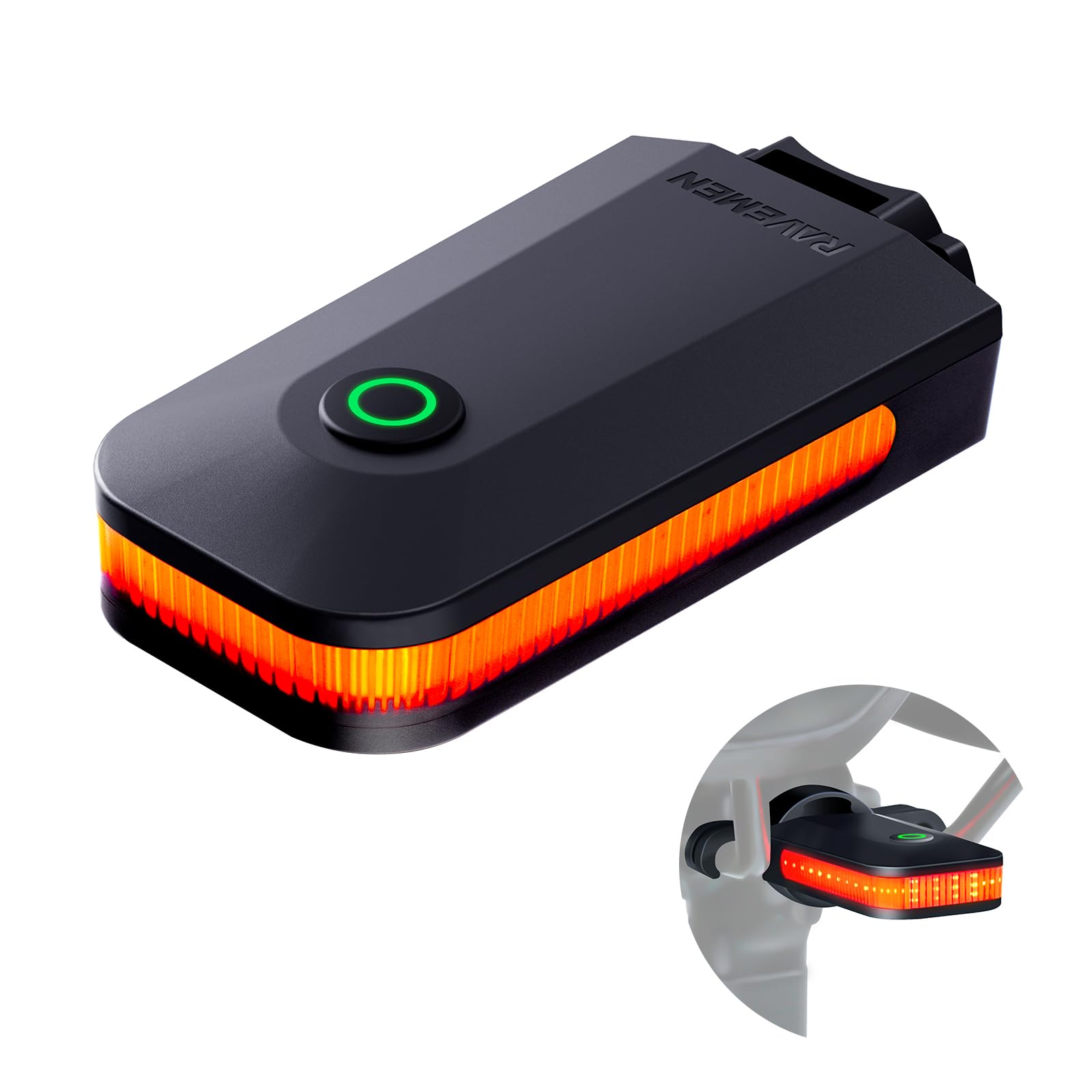
The RAVEMEN CL01 redefines the value proposition by offering a 300° wide-angle beam in a package that weighs just 22 grams. That beam pattern is genuinely industry-leading at this price tier — it uses a horizontal long light strip that projects 30 lumens across a full 300-degree arc, making you visible to cars approaching from perpendicular streets, not just from behind.
The light includes a brake detection system that automatically increases brightness for 2 seconds when you decelerate. It also features a smart auto on/off mode that puts the light to sleep after 2 minutes of no motion and wakes it when you start moving again — perfect for stop-and-go traffic. It mounts via both saddle rail and seatpost brackets, and the Garmin-style twist mount makes removal rapid.
With 30 lumens maximum, it is not the brightest option for daytime use. Some users report the battery does not meet the advertised runtime, and the plastic housing feels less durable than metal-bodied alternatives. Still, for urban and trail riders who prioritize wide-angle flank visibility above raw lumen count, the CL01 is a fantastic lightweight choice.
Why it’s great
- 300° wide-angle beam is among the widest available
- Weighs only 22 grams, barely noticeable on the bike
- Smart auto on/off conserves battery during stops
Good to know
- 30 lumens maximum is not bright enough for daytime highway use
- Plastic housing may not survive a serious crash
5. Planet Bike Superflash

Its secret is an ultra-efficient 0.5-watt Blaze LED combined with two 5mm extreme LEDs, producing a brilliantly visible Superflash strobe that cuts through fog and daylight alike. The strobe pattern extends the effective visibility distance farther than many higher-lumen solid beams.
Battery life is extraordinary: up to 100 hours in Superflash mode on just two AAA batteries. Many users report running the same set of alkalines for an entire season of weekly commuting. The housing is IPX5 rated, resisting rain and road spray, and the bayonet-style mount makes it easy to swap between bikes if you buy extra brackets.
The 7-lumen maximum output sounds tiny on paper, and it is indeed less intense than modern USB lights. The housing is plastic and may crack under extreme pressure. The side visibility is also weaker than newer wide-angle designs. For riders who value a proven, extremely long-running light that just works with cheap batteries, the Superflash is still a strong choice.
Why it’s great
- Up to 100 hours of run time on two AAA batteries
- Superflash strobe is highly visible in fog and daylight
- IPX5 weatherproofing handles rain and road spray
Good to know
- Only 7 lumens maximum output; not the brightest available
- Side visibility is limited compared to 300° wide-angle lights
6. G2FS LITH 150 Lumens
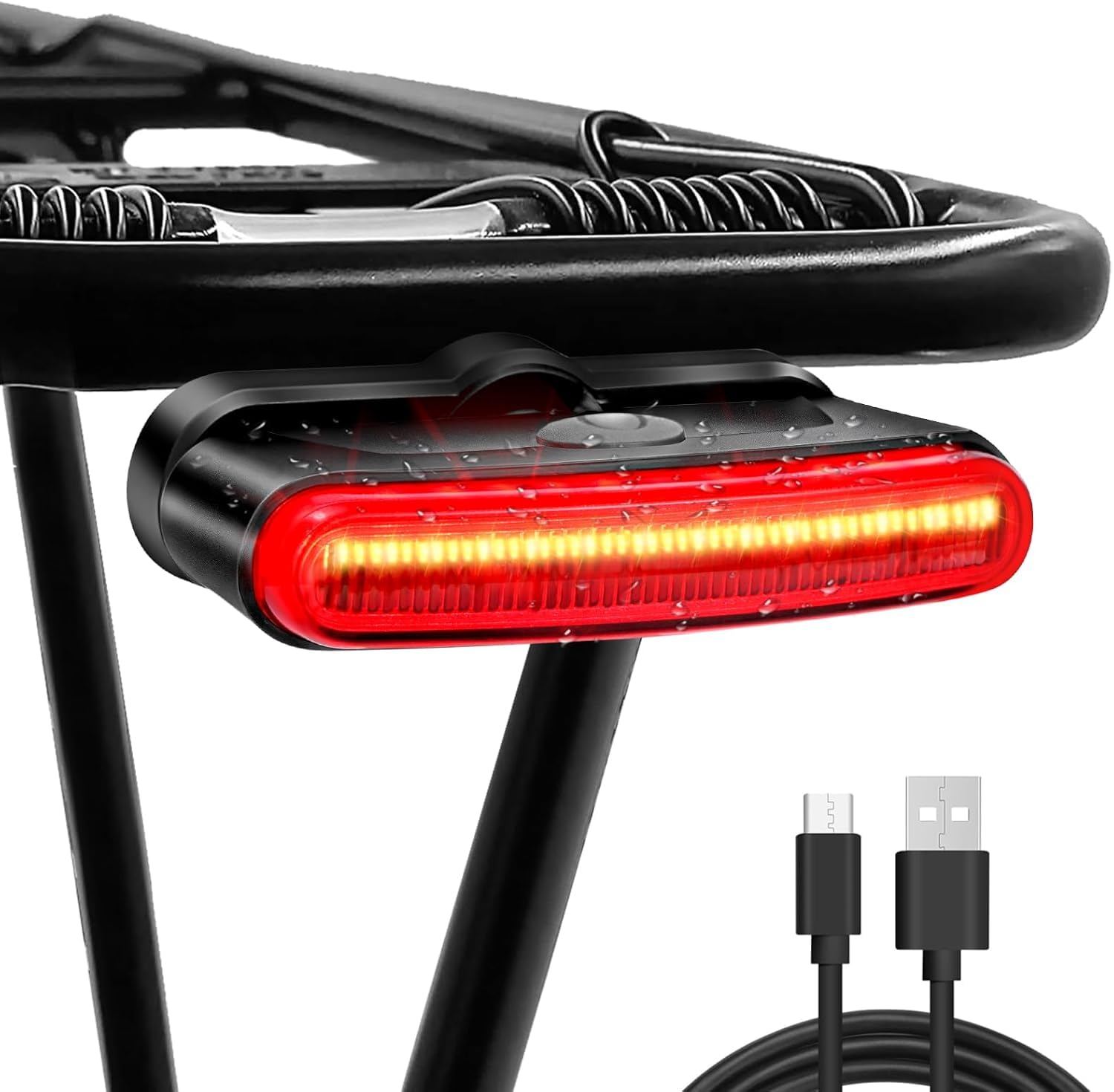
The G2FS LITH brings 150 lumens of output to the table at an entry-level price point, making it one of the brightest budget-friendly options you can find. The 220° wide-angle beam covers your flanks better than most lights in its tier, and the 500 mAh Li-ion battery delivers up to 25 hours of runtime in the slow flash mode.
Five distinct modes give you flexibility: half light for battery saving, full light for maximum brightness, breathing flash, slow flash, and high flash. The IPX6 waterproof rating means it can handle heavy rain without issue, and the total weight of 2.29 ounces keeps your bike feeling light. Mounting is via a simple rack mount that installs in seconds.
Several users report that the included bracket does not hold the light securely; it can fall off after a few rides. The button function is also described as slightly unintuitive. For the price, the brightness and waterproofing are hard to beat, but you may want to reinforce the mount with a zip tie for peace of mind.
Why it’s great
- 150 lumens output at a very accessible price point
- 220° wide-angle beam provides side visibility
- IPX6 waterproof rating handles heavy rain
Good to know
- Mount can be unreliable; the light may fall off during rides
- Button interface is not the most intuitive
7. Planet Bike Grateful Red
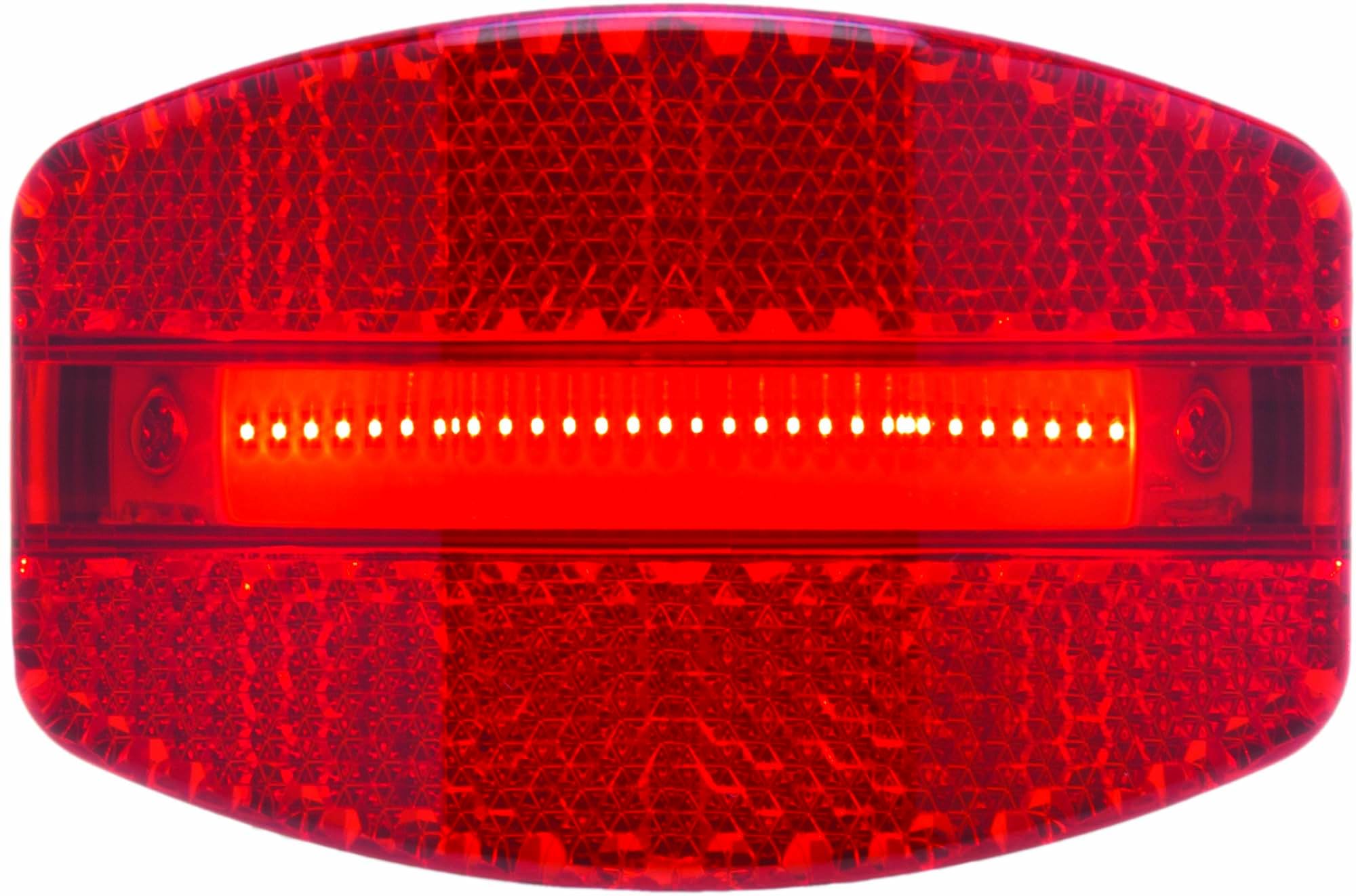
The Planet Bike Grateful Red uses 28 LED microchips to produce 13 lumens of light that is surprisingly punchy for the number. Its run times are legendary: up to 150 hours in Superflash mode on just two AAA batteries. When the light is switched off, it acts as a certified reflector, giving you passive visibility even if the battery dies.
Three modes cover steady, Courtesy (a pulsing 4-11 lumens), and Superflash. The IPX3 water resistance means it is splash-proof, though not suitable for submersion. The included mounting kit covers rear racks, seatposts, and a clip for bags, giving you maximum versatility across different bikes — a real advantage if you switch between a road bike and a commuter.
At 13 lumens, it is dim compared to any USB-rechargeable light in this guide, and it is simply not visible in direct sunlight. The housing is plastic and the mode switch is well-sealed. For riders who want a dead-simple, battery-powered light that will flash for weeks without intervention, the Grateful Red is a very reliable budget companion.
Why it’s great
- Up to 150 hours of run time in Superflash mode
- Triple mounting options: rack, seatpost, and clip
- Built-in reflector provides backup visibility when off
Good to know
- 13 lumens maximum is too dim for daytime visibility
- Uses AAA batteries; no rechargeable option built in
FAQ
How many lumens do I need for a bicycle tail light?
What does IPX6 waterproof rating mean for a bike light?
Should I get a rechargeable tail light or one that uses AAA batteries?
Final Thoughts: The Verdict
For most users, the best bicycle back light winner is the MagicShine SEEMEE 300 because its smart brake sensor, 260° visibility, and massive 1600 mAh battery deliver the best combination of safety and endurance. If you want maximum daytime visibility for road riding, grab the CATEYE ViZ 450. And for budget-conscious commuters who need wide-angle flank coverage, nothing beats the RAVEMEN CL01 for its tiny weight and 300° beam spread.