
Routing hot, corrosive exhaust gases away from an engine demands a component that can handle thermal cycling, vibration, and moisture without failing. A 1/2 inch exhaust pipe acts as the critical link in small engines, generators, and custom fabrication projects, where the wrong material choice leads to rust-through within months or dangerous carbon monoxide leaks. The market offers everything from aluminized steel to T304 stainless, and picking the wrong alloy can turn a simple repair into a recurring headache.
I’m Min — the co-founder and writer behind Gadgets Feed. My analysis focuses on material composition, wall thickness, and real-world corrosion data drawn from thousands of verified purchaser reports across the small-engine and automotive aftermarket sectors.
Whether you are repairing a generator exhaust, fabricating a custom bike header, or replacing a rusted section on a tractor, choosing the right 1/2 exhaust pipe requires understanding how gauge thickness and stainless grade impact longevity under your specific operating conditions.
How To Choose The Best 1/2 Exhaust Pipe
The wrong exhaust pipe choice often surfaces six months later as a rust hole or a fatigue crack. Three specific factors determine whether your repair or build stays sealed for years or fails prematurely.
Material Grade: T304 Stainless vs Aluminized vs Mild Steel
T304 stainless steel contains 18% chromium and 8% nickel, forming a passive oxide layer that resists salt spray and condensation — the primary killer of exhaust components on generators and marine equipment. Aluminized steel offers a middle ground with a hot-dip aluminum-silicon coating that provides decent corrosion resistance at a lower cost, but it cannot match stainless in coastal or high-humidity environments. Mild steel rusts aggressively from the inside out once moisture enters the system; it requires high-temperature paint or ceramic coating for any application with exposure to water.
Wall Thickness and Gauge
Most 1.5-inch exhaust pipes come in 16-gauge (0.065-inch wall) or 18-gauge (0.049-inch wall). Sixteen-gauge tubing provides significantly better weld penetration for MIG and TIG processes without burn-through, and it resists denting from road debris or accidental impact. Eighteen-gauge is lighter and easier to bend but requires careful heat control during welding and may develop pinhole corrosion faster on the inner surface exposed to acidic exhaust condensate.
Bend Type: Mandrel vs Crush
Mandrel-bent elbows maintain a consistent inner diameter throughout the curve, preserving exhaust velocity and preventing flow restrictions that increase backpressure. Crush-bent pipes pinch at the inner radius, reducing effective cross-section and creating turbulence that can cost horsepower in performance applications and cause droning in generator systems. All premium exhaust elbows in this category use mandrel bending; avoid any pipe that does not explicitly state mandrel construction.
Quick Comparison
On smaller screens, swipe sideways to see the full table.
| Model | Category | Best For | Key Spec | Amazon |
|---|---|---|---|---|
| Walker 46971 | Flex Pipe | Generator exhaust routing | 6 ft length, galvanized steel | Amazon |
| TORDXICS 72″ Flex | Flex Pipe | Corrosion-resistant long runs | T304 stainless, 72-inch length | Amazon |
| Patriot Exhaust H7013 | J-Bend | Small engine custom fabrication | Mild steel, 1.5-inch OD | Amazon |
| FORTLUFT Bend Set | Bend Set | 90/180-degree exhaust routing | Aluminized steel, 2-piece set | Amazon |
| PATIKIL 90-Degree Elbow | Elbow | Tight-space exhaust redirection | T304 stainless, 2-pack, 1.5mm wall | Amazon |
| TORDXICS 22.5″ Flex | Short Flex | Vibration dampening in tight spaces | T304 stainless, 22.5-inch, single-band | Amazon |
| FORTLUFT Straight Pipe | Straight Pipe | Budget generator/equipment extension | Stainless steel, 38-inch length | Amazon |
In‑Depth Reviews
1. Walker 46971 Universal Flex Pipe

The Walker 46971 delivers the longest continuous length in this comparison at a full 6 feet, making it the ideal choice for routing generator exhaust through walls or under sheds where a single uninterrupted section prevents joint leaks. The galvanized steel construction with single-roll band configuration provides leak-free flexibility that buyers consistently praise for carbon monoxide safety in permanent generator installations. Its 1.5-inch diameter matches standard small-engine muffler outlets and universal wall-thimble kits.
Users report the as-squashed length measures closer to 57 inches before gentle stretching, so plan for a maximum safe working length of about 67 inches rather than the advertised 72. The galvanized coating holds up well in intermittent moisture but buyers in salt-spray environments have noted surface rust beginning at the cut ends if left uncoated. The wire-reinforced flex section allows bending radii as tight as 4 inches without kinking, a critical advantage when snaking through tight crawl spaces.
Walker backs this with no formal warranty, but the brand reputation in exhaust systems means replacement stock is widely available if a defect occurs. The galvanized surface accepts standard exhaust wrap for temperature reduction, and several reviewers layered fiberglass wrap to keep surface temperatures below 300°F in enclosed generator compartments. For any application requiring length, the 46971 removes the need for multiple couplers and the failure points they introduce.
Why it’s great
- Full 6-foot continuous length eliminates mid-line joints
- Flex-lock construction seals tightly without leaks
- Galvanized coating handles intermittent moisture well
Good to know
- Actual stretchable length is shorter than advertised 72 inches
- Cut ends require paint or coating to prevent edge rust
- No manufacturer warranty included
2. TORDXICS 72″ T304 Flex Pipe
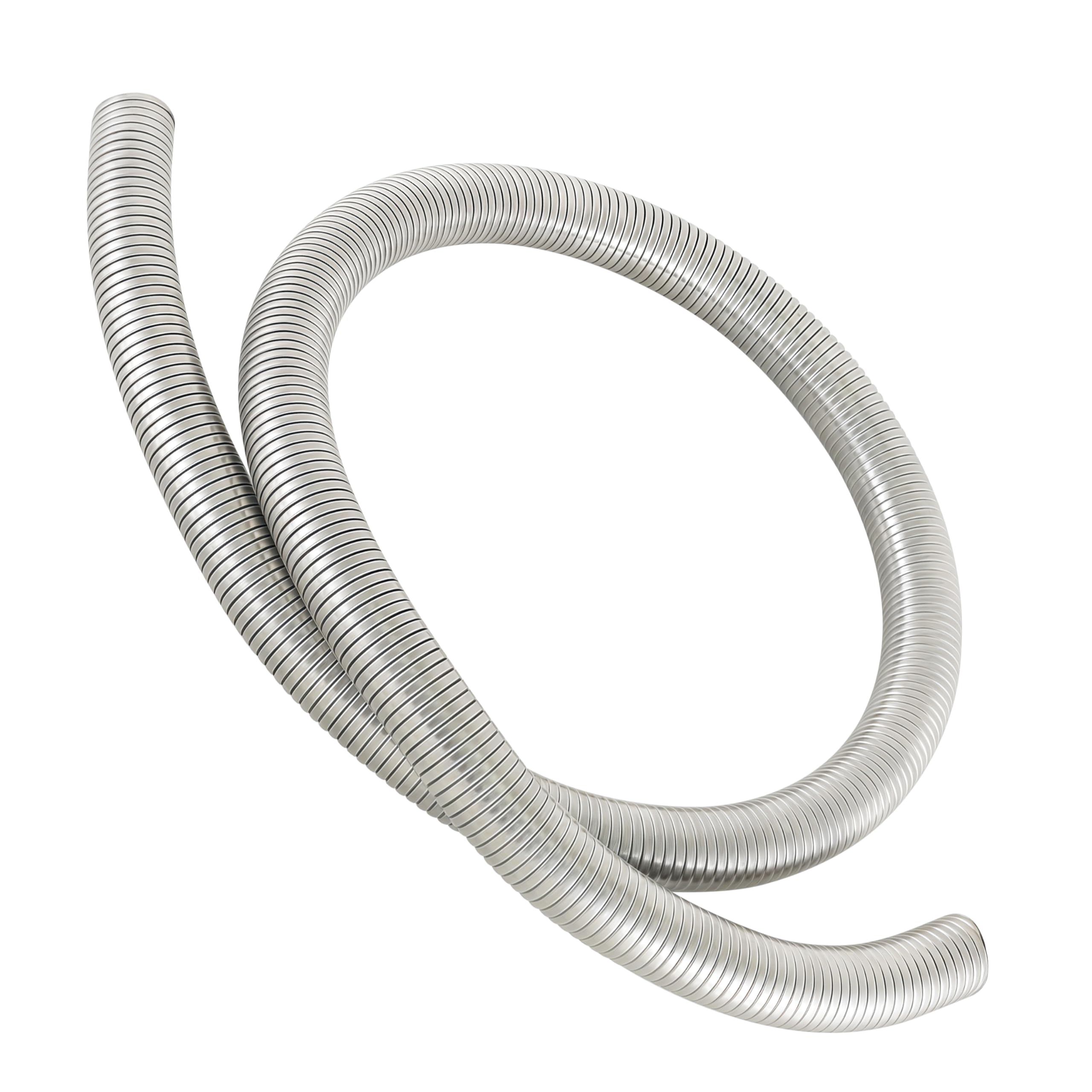
The TORDXICS 72-inch flex pipe shares the same 6-foot length as the Walker but upgrades the material to T304 stainless steel, giving it superior resistance to the acidic condensate that forms inside exhaust pipes during cold starts. The single-roll band construction mirrors the durability of professional-grade flex pipes, and buyers report successful installations on Generac and DuroMax generators where carbon monoxide sensor shutdowns forced exhaust rerouting. The 1.5-inch inner diameter fits standard muffler outlets with a tight tolerance.
Several users noted that the pipe resists sliding over 1.5-inch OD flanges without an expander tool, so anticipate needing a pipe expander or a slight cut-and-slip technique for stubborn connections. The stainless surface resists the salt spray that destroys galvanized and aluminized pipes within two years, making this the best choice for coastal generator sheds or vehicles exposed to road salt. Reviewers who expanded the pipe to fit report it holds the new shape without cracking, a sign of ductile material quality.
TORDXICS provides only a 30-day warranty, which is standard for budget-flex pipe sellers but worth noting for long-term installations. The stainless steel will discolor with heat cycles but will not scale or flake like mild steel. For the price premium over galvanized alternatives, you gain multi-year corrosion protection that typically outlasts the equipment itself in generator applications.
Why it’s great
- Full 6-foot length in corrosion-proof T304 stainless
- Single-roll band construction for leak-free durability
- Survives salt spray and coastal conditions without rust
Good to know
- Requires pipe expander for tight OEM flange connections
- Only 30-day warranty provided
- Stainless discolors with heat but does not corrode
3. Patriot Exhaust H7013 J-Bend
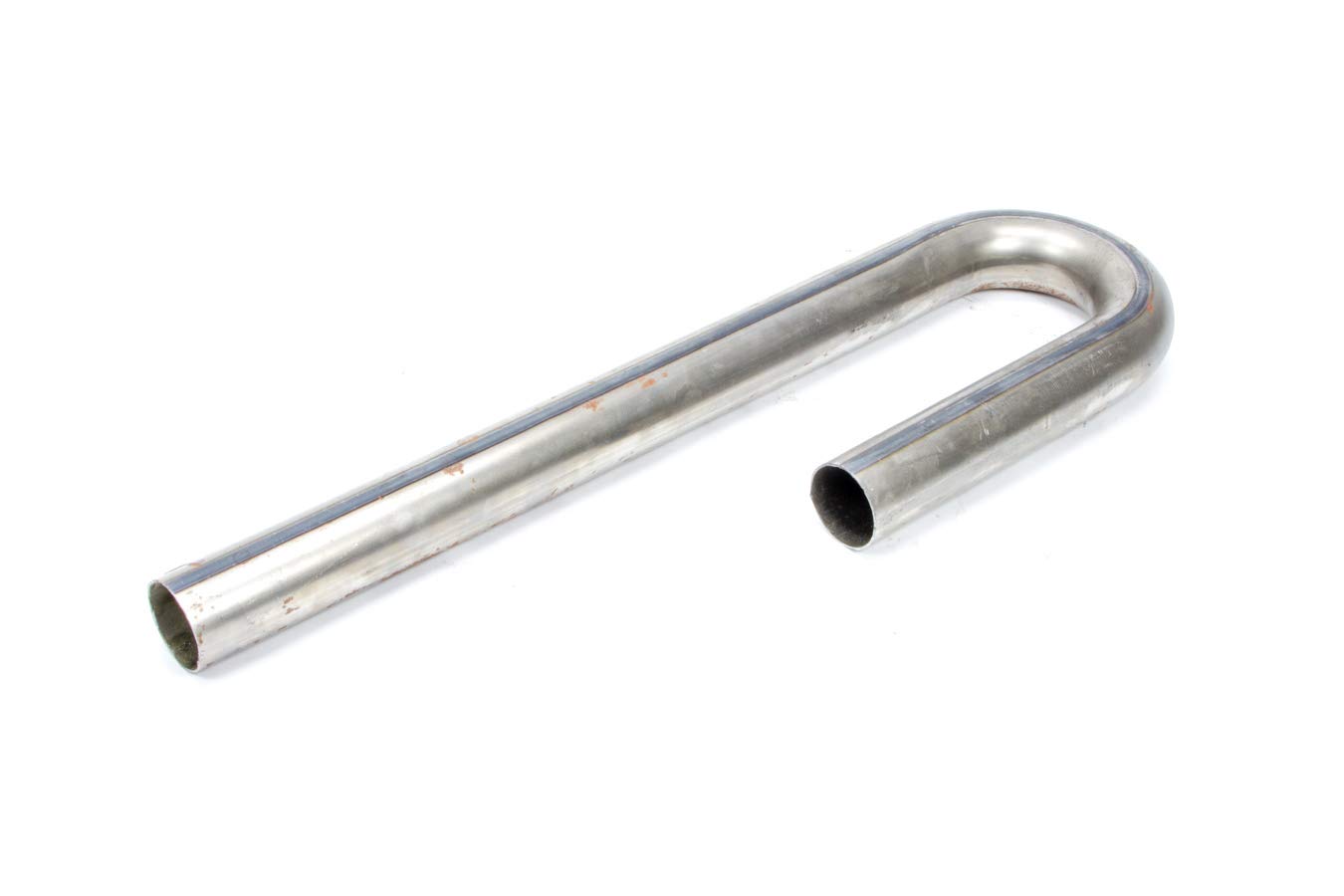
The Patriot Exhaust H7013 offers a pre-formed J-bend in mild steel for fabrication projects where you need a specific shape without cutting and welding multiple straight sections. The 1.5-inch outer diameter fits standard exhaust tubing and the mild steel composition welds cleanly with both MIG and TIG processes, with reviewers noting good color formation after heat cycling on small motorcycle and ATV projects. The J-bend geometry provides a 180-degree return that fits tight frame rails on lawn tractors and vintage bikes.
Buyers should note that the outer radius of the bend is noticeably thinner than the straight sections — one reviewer measured the wall at the apex at approximately 0.045 inches compared to the nominal 0.065-inch straight section. This thin spot requires lower amperage and faster travel speed during welding to avoid burn-through. The mild steel will rust within weeks if left bare, so plan for ceramic coating or high-temperature paint before installation, especially on vehicles exposed to rain or humidity.
Patriot Exhaust manufactures this in the United States, a differentiator for buyers prioritizing domestic sourcing. The J-bend measures approximately 18 inches across the legs, and the unit weight of 1 pound makes it easy to handle and position during tack-welding. For custom header fabrication or exhaust rerouting on vintage small engines, this provides the correct pre-formed shape without the cost of mandrel-bent stainless alternatives.
Why it’s great
- Pre-formed J-bend saves fabrication time
- Welds cleanly with MIG or TIG processes
- Made in the United States
Good to know
- Outer bend radius is thinner — weld carefully
- Mild steel rusts quickly without coating
- Not suitable for salt-exposure applications
4. FORTLUFT Exhaust Bend Set 1.50″ Aluminized

The FORTLUFT exhaust bend set includes both a 90-degree and a 180-degree mandrel bend in 1.5-inch outer diameter, making it a complete kit for fabricating exhaust routes that require two direction changes. The aluminized steel construction offers better corrosion resistance than bare mild steel while keeping costs below stainless alternatives, and the 16-gauge wall thickness provides a stable platform for welding without distortion. Buyers have successfully used these bends for quarter-wave resonators and custom generator exhaust routing.
The bends are magnetic to about halfway — indicating the aluminized coating does not cover the entire carbon steel substrate — which means scratches or cut ends will expose the underlying steel to rust. Reviewers recommend touching up any bare metal with high-temperature silver paint after welding to preserve the corrosion protection. The mandrel bends maintain consistent inner diameter throughout the curve, unlike crush-bent alternatives that pinch flow.
FORTLUFT includes a 12-month or 15,000-mile warranty, the best coverage in this comparison and a strong indicator of confidence in their welding and material quality. The set ships with both bends bundled as a pack, and the 0.06-inch wall thickness matches standard 16-gauge tubing for compatibility with common exhaust clamps and expanders. For budget-conscious fabricators who need both bend angles in a single order, this set eliminates separate sourcing.
Why it’s great
- Includes both 90 and 180-degree mandrel bends
- 16-gauge wall provides solid weld platform
- 12-month warranty coverage
Good to know
- Magnetic substrate indicates partial carbon steel content
- Cut ends require coating to prevent rust
- Depicted as longer than actual physical dimensions
5. PATIKIL 2pcs 90-Degree Mandrel Elbow

The PATIKIL 90-degree elbows bring T304 stainless construction in a compact 3.74-inch length with a 1.5mm wall thickness, ideally sized for tight generator exhaust redirection or gas filler neck modifications. The mirror-polished surface resists carbon buildup and cleans easily, and the mandrel bending ensures the 38mm outer diameter remains consistent through the full radius. Buyers have used these elbows to redirect generator exhaust sideways to prevent lawn debris pickup and to build ZombieBox exhaust extension kits for DuroMax XP13000EH units.
The short arc radius — approximately 2.5 inches centerline to centerline — allows 90-degree turns in spaces where a full-radius bend would not fit, such as between a generator frame rail and the muffler outlet. The stainless construction handles continuous exhaust temperatures without scaling, and the 1.5mm wall thickness provides good heat dissipation for the size. Each elbow weighs approximately 4 ounces, making them unobtrusive in the final assembly.
PATIKIL packages these as a 2-pack, giving you a spare or allowing symmetric routing for dual-exhaust generator setups. One reviewer used them as gas filler neck elbows, noting the smooth interior surface caused no flow restriction. The only limitation is the fixed 90-degree angle — if your application requires a custom bend angle, you will need to cut and weld, which is straightforward given the stainless composition accepts TIG welding well when back-purged with argon.
Why it’s great
- T304 stainless resists corrosion indefinitely
- Short radius fits extremely tight spaces
- Two-pack provides a spare or second-side use
Good to know
- Fixed 90-degree angle only — no adjustment
- Requires TIG welding for best stainless joints
- Short length limits routing flexibility
6. TORDXICS 22.5″ T304 Flex Pipe
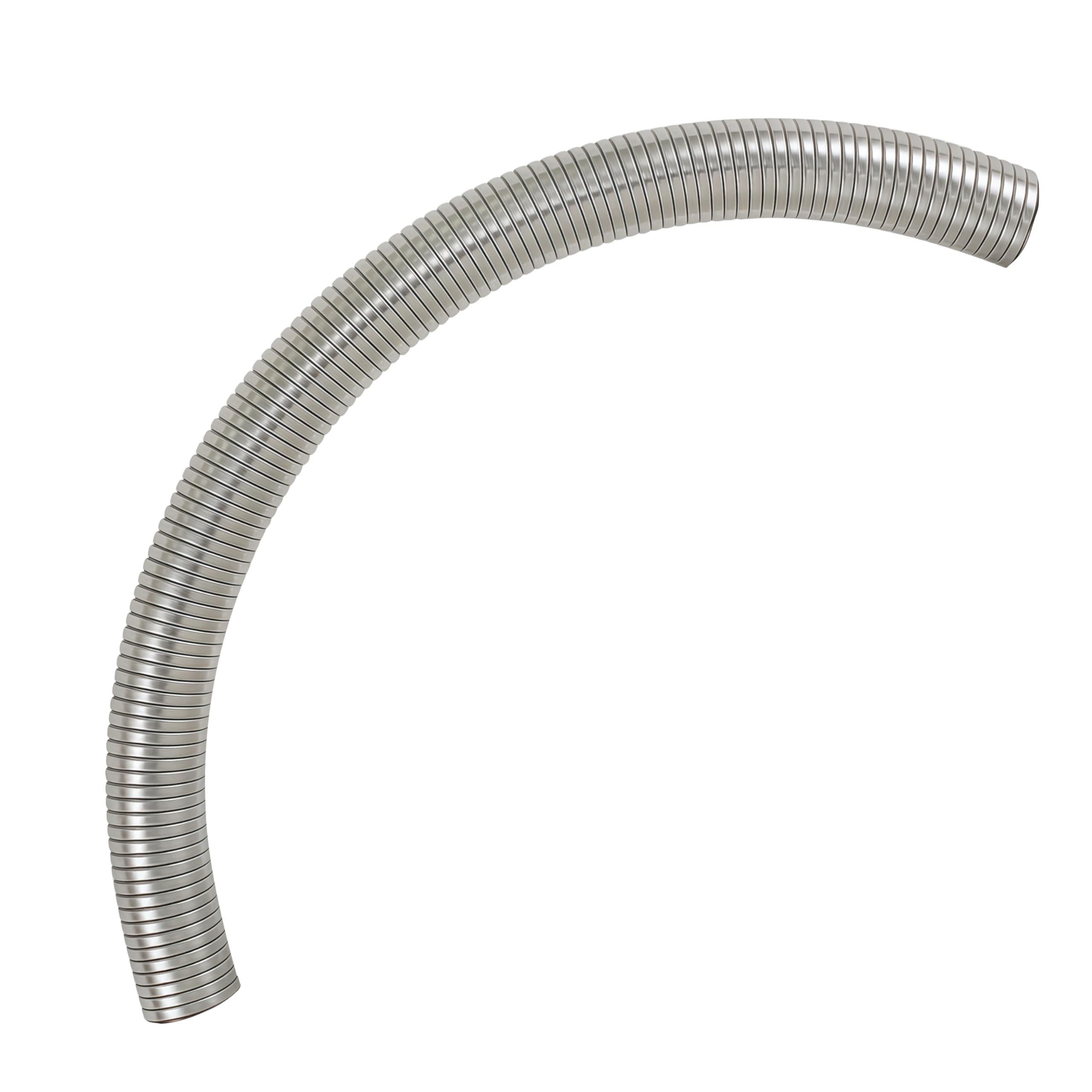
The shorter 22.5-inch TORDXICS flex pipe targets applications requiring vibration isolation between the engine and the exhaust exit, such as side-by-side vehicles or generators mounted on anti-vibration pads. The T304 stainless construction mirrors the 72-inch sibling, providing the same corrosion resistance in a more manageable length that fits under vehicle chassis or inside generator compartments without excessive coiling. The single-roll band construction flexes freely while maintaining a gas-tight seal under engine vibration.
Reviewers report this pipe fits perfectly for patching 2.25-inch exhaust after catalytic converter theft, though some found the inner diameter required a pipe expander to slip over existing pipes. The flex section allows up to approximately 15 degrees of angular misalignment, correcting minor frame or mount variations without inducing stress on the exhaust manifold. The stainless material survives road salt and mud exposure that destroyed rubber or canvas flex connections within one season.
TORDXICS provides a 30-day warranty, and the material thickness feels substantial compared to cheaper flex pipes that collapse under exhaust backpressure. The 22.5-inch pre-cut length eliminates the need to cut longer sections, reducing the risk of frayed wire edges that can cause leaks. For side-by-side exhaust rerouting or generator flex sections, this length covers the distance between a rigid downpipe and a through-wall kit without excess material to manage.
Why it’s great
- T304 stainless flex for vibration isolation
- Pre-cut 22.5-inch length fits common distances
- Survives mud and road salt exposure
Good to know
- May require expander to fit over existing pipes
- 30-day warranty is short for permanent installation
- Not suitable for tight bends — flex radius minimum ~4 inches
7. FORTLUFT Exhaust Straight Pipe 1.50″ Stainless

The FORTLUFT straight pipe offers a 38-inch section of stainless steel tubing at an entry-level price point that makes it the go-to choice for extending generator exhaust or replacing a short rusted section. At 3.1 pounds with a 1.5-inch outer diameter, the 16-gauge wall thickness feels substantial and welds cleanly for DIY fabricators. The universal fit works with standard exhaust clamps, and buyers have successfully used it as an extension pipe for generator exhaust systems where a few extra feet of separation from living spaces made a material safety difference.
Critical feedback from a marine buyer reports that this pipe rusted severely after 8 months in salt spray on a boat, behaving like mild steel rather than true stainless. This suggests the alloy may be a lower-cost 409 stainless or a stainless-clad material rather than full T304, meaning it should not be used in marine, coastal, or road-salt environments. For dry indoor generator use or equipment kept out of the elements, the corrosion performance appears adequate based on other buyer reports.
FORTLUFT includes a 12-month or 15,000-mile warranty, which is strong for a budget pipe and indicates they stand behind the material quality for normal automotive use. The bolt-on installation type noted in the specs means it works with band clamps without welding, though welding provides a permanent seal. Given the rust report, reserve this pipe for dry, sheltered applications where exposure to road salt or sea spray is not a factor.
Why it’s great
- Budget-friendly entry price for stainless pipe
- 16-gauge wall thickness welds well
- 12-month warranty for a budget product
Good to know
- Not true T304 stainless — rusts in salt spray
- Not suitable for marine or coastal use
- Only 38 inches long — short for some applications
FAQ
Can I use a 1.5-inch exhaust pipe on my 5000-watt generator?
How do I weld stainless steel exhaust pipe without burn-through?
What is the difference between I.D. and O.D. exhaust pipe measurements?
Final Thoughts: The Verdict
For most users, the 1/2 exhaust pipe winner is the Walker 46971 because its 6-foot length eliminates joints where leaks form, and the galvanized coating handles the damp environments where generators typically live. If you need maximum corrosion resistance for a coastal or road-salt environment, grab the TORDXICS 72″ T304 Flex Pipe. And for tight fabrication projects requiring both a 90 and 180-degree bend in one shipment, nothing beats the FORTLUFT Exhaust Bend Set.