
A pneumatic saw is only as good as the blade it holds. The wrong blade stalls on 18-gauge steel, wanders on radius cuts, or dulls before the first panel is finished. Choosing the right air saw blades is a decisive step for bodywork, metal fabrication, and demolition jobs alike because the blade’s tooth geometry and material composition determine how fast the saw moves and how clean the cut remains.
I’m Min — the co-founder and writer behind Gadgets Feed. I’ve spent hundreds of hours researching air tool consumables, cross-referencing customer tests on sheet metal and aluminum, and analyzing the spec sheets that separate a weekend blade from a production-ready one.
Whether you work in a collision shop or restore vehicles at home, matching the right tooth count and bi-metal construction to your material matters. This guide breaks down the best air saw blades for automotive bodywork, exhaust tubing, and thin-gauge metal cutting.
How To Choose The Best Air Saw Blades
Air saw blades are not one-size-fits-all. The wrong TPI leads to snagging, the wrong material causes premature dulling, and the wrong length limits access. Here is how to filter the options for your specific cutting needs.
TPI and Tooth Pitch: Fine vs. Variable
Teeth per inch (TPI) is the first spec to check. Blades with 32 TPI produce a smooth, fine cut ideal for sheet metal up to about 18-gauge. Variable pitch blades, such as 14/18 TPI, shift tooth spacing to handle thicker materials like 1/8-inch aluminum or fiberglass without loading up. For body panel work and exhaust pipes, 32 TPI is the go-to; for structural framing or thicker alloys, a coarser variable pitch will cut faster.
Blade Material: HSS vs. Bi-Metal
High-speed steel (HSS) blades are the entry-level standard and cut well in thin metal but dull quickly when hitting welds or hardened debris. Bi-metal blades weld HSS teeth to a flexible alloy steel body, offering significantly longer life and better resistance to sudden impacts or binding. For regular shop use, the added cost of a bi-metal blade pays off in fewer changes and less downtime.
Blade Length and Width
Standard air saw blades measure between 3 and 6 inches in length. Shorter blades (3 to 4 inches) are stiffer and better for controlled radius cuts in tight spaces, while longer blades (5 to 6 inches) offer a longer stroke reach but require more air volume. A 1/2-inch blade width is the most common and balances flexibility for curved cuts with enough rigidity for straight-through work.
Quick Comparison
On smaller screens, swipe sideways to see the full table.
| Model | Category | Best For | Key Spec | Amazon |
|---|---|---|---|---|
| Ingersoll Rand P4FS-6 (32 TPI) | Mid-Range | Automotive sheet metal | 32 TPI, 6-inch length, HSS | Amazon |
| Tool Aid S&G 90030 | Mid-Range | Aluminum and thin stainless | 32 TPI, cobalt material, 3-inch length | Amazon |
| Starrett BS226-5 | Mid-Range | Auto body and metal fab | 32 TPI, bi-metal, 0.025-inch thickness | Amazon |
| Ingersoll Rand P4EV-6 (14/18 TPI) | Mid-Range | Thicker aluminum and fiberglass | 14/18 variable pitch, bi-metal, 6 inches | Amazon |
| MK Morse RBA432T25 | Premium | Thin-gauge radius cuts | 32 TPI, 4-inch length, 0.025-inch thickness | Amazon |
In‑Depth Reviews
1. Ingersoll Rand P4FS-6 (32 TPI)

The Ingersoll Rand P4FS-6 pack delivers six blades with a 32 TPI fine standard pitch, making them a direct fit for any standard-shank pneumatic saw used in collision repair. The 6-inch length provides extended reach for cutting across door panels and quarter panels without repositioning the saw. At 22.68 grams per blade, they are light enough to minimize fatigue during repetitive cuts, yet the high-speed steel edge holds a sharp profile through multiple automotive sheet metal panels.
Customer reports from collision shops confirm these blades cut automotive sheet metal reliably and last longer than generic equivalents from big-box store brands. The rectangular blade shape locks securely into the saw’s collet, reducing the wobble that causes wandering cuts on thin 20-gauge steel. For the body shop mechanic cutting quarter panels or flanges, this set offers a practical balance of price and consistent edge retention.
The main limitation is the HSS material: it will dull faster if it contacts hardened welds or stainless steel. These are best reserved for clean, thin-gauge steel and aluminum. The 32 TPI pitch means slower cutting in thicker materials, but the trade-off is a exceptionally smooth finished edge that requires minimal grinding.
Why it’s great
- Six blades per pack keeps cost-per-blade low
- 6-inch length works well for deep panel cuts
- 32 TPI leaves a clean, burr-free edge on sheet metal
Good to know
- HSS dulls faster on contact with welds or hardened steel
- Fine pitch slows progress on material thicker than 16-gauge
2. MK Morse RBA432T25 (32 TPI)

The MK Morse RBA432T25 is a 25-pack of 4-inch bi-metal blades with a 32 TPI configuration, designed specifically for pneumatic saws that need a flexible yet durable blade for radius cuts. The 1/2-inch width and 0.025-inch thickness allow the blade to follow tight contours between body panels and under stripped fasteners without binding. The bi-metal construction means the teeth are hardened high-speed steel fused to a flexible alloy back, resisting breakage when the blade encounters unexpected resistance.
Users frequently cite this pack as a great fit for Ingersoll Rand and Harbor Freight pneumatic saws, noting that the blades cut through window openings in vans and follow curved panel lines with minimal vibration. The 4-inch length is ideal for close-quarter work where a 6-inch blade would be too long to maneuver. Several users also report that the blade survives contact with light aluminum alloys and plastic trims without chipping.
The main consideration is the blade’s thin profile. If the blade overheats from prolonged, heavy-pressure cuts, it can bend. Short, controlled cutting stints preserve the edge and prevent thermal distortion. For a body shop or restoration shop that burns through blades quickly, the 25-count is a cost-efficient way to keep a steady supply of sharp metal-cutting blades.
Why it’s great
- 25 blades per pack is excellent value for high-volume work
- Bi-metal construction withstands impact better than HSS
- 4-inch length excels at tight radius cuts and flush trimming
Good to know
- Thin profile can bend if overheated during long cuts
- 32 TPI is slow for material thicker than 3/16-inch
3. Tool Aid S&G (90030) 32 TPI

The Tool Aid S&G 90030 is a 5-pack of 3-inch blades with 32 TPI, made from cobalt steel rather than standard HSS. Cobalt adds heat resistance and edge hardness, making these blades particularly effective for cutting aluminum and occasional light stainless steel work. The shorter length provides exceptional stiffness, reducing blade flutter and improving control when making precise straight cuts in a pneumatic saw.
Customer feedback consistently notes that these blades last longer than expected for the price point, with users cutting through aluminum panels and thin-gauge stainless without the edge rolling over. The compact 3-inch length makes this set a strong candidate for exhaust work or cutting inside tight engine bays where longer blades can’t fit. The arbor hole and slot match standard air saw shanks with a 0.25-inch arbor requirement.
The trade-off is the limited cutting depth. A 3-inch blade will not reach through double-panel layers or wide flanges, so this set is best reserved for spot cutting and flush trimming. The pack size of five blades is smaller than some competitors, but the cobalt material means each blade keeps cutting longer, effectively reducing the consumable cost over a week of moderate use.
Why it’s great
- Cobalt steel stays sharp longer than standard HSS in aluminum
- 3-inch length is stiff and precise for tight locations
- 32 TPI delivers a clean finish on thin metals
Good to know
- Short length cannot cut through layered panels
- Five-blade pack runs out quickly for heavy daily use
4. Ingersoll Rand P4EV-6 (14/18 TPI)
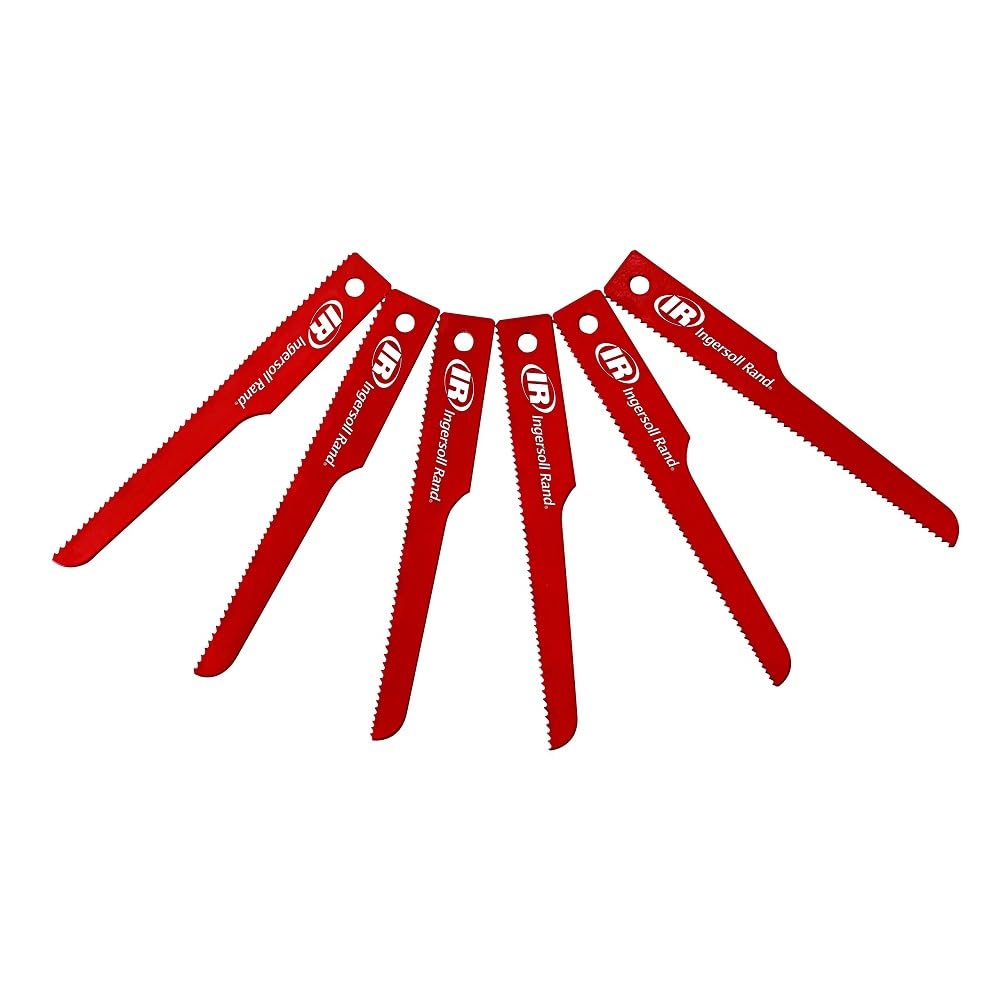
The Ingersoll Rand P4EV-6 is a 6-pack of 6-inch blades with a variable 14/18 TPI pitch, designed for cutting thicker materials like 1/4-inch aluminum and layered fiberglass. The bi-metal construction combines high-speed steel teeth with a flexible body, and Ingersoll Rand claims this blade increases contact area by 170% through a new tooth profile that generates smaller chips while reducing frictional heat. The variable pitch shifts between 14 and 18 teeth per inch to handle changing material density without loading up.
Users cutting 1/4-inch aluminum bar stock report this blade outlasts two competing brands, with one user completing a full project using only three blades. Others note that the blade cuts 20-gauge and thinner sheet metal well but begins to struggle on 18-gauge and thicker steel, suggesting it is best tuned for softer non-ferrous metals. The tooth design evacuates chips effectively, keeping the kerf clear and preventing the blade from binding.
The main downside is that the coarser tooth geometry leaves a rougher edge compared to a dedicated 32 TPI blade. For fine bodywork requiring minimal grinding, this may mean additional finishing steps. Also, the 6-inch length requires the saw to have sufficient air volume to maintain stroke speed; low-CFM compressors may cause the blade to stall under load.
Why it’s great
- Variable 14/18 TPI clears chips in thick aluminum and fiberglass
- Bi-metal body resists breakage from sudden loads
- 6-inch pack gives good reach for flat panel cutting
Good to know
- Coarser teeth leave a finish that needs deburring
- Struggles on steel thicker than 18-gauge
5. Starrett BS226-5 (32 TPI)
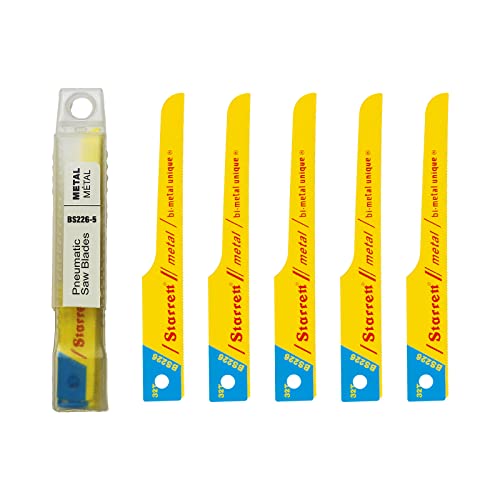
Starrett’s BS226-5 is a 5-pack of bi-metal blades measuring 3-5/8 inches in length with a 32 TPI configuration, specifically engineered for pneumatic reciprocating saws used in auto body and light fabrication work. The 0.025-inch thickness keeps the blade flexible enough for slight curves while maintaining enough rigidity for straight cuts. Starrett’s bi-metal unique saw technology bonds hardened M2 high-speed steel teeth to a tough alloy back, which reduces tooth strip-out when cutting through spot welds or thin-gauge metal.
Users in restoration environments report that this blade cuts cleanly through body panels and small structural brackets, with one user completing an entire T3 van restoration using only two blades from the pack. The compact length makes it ideal for cutting in tight cavities where longer blades would contact surrounding panels. However, some users note that the blades are manufactured in China and do not match the fit and finish of older US-made Starrett blades, with a few reporting the teeth feel too fine and not sharp enough out of the pack.
The primary limitation is the high tooth count combined with the short length. While it excels at fine, controlled cuts in thin sheet metal, it will cut slowly in any material approaching 1/8-inch or thicker. For dedicated sheet metal work in a body shop, this blade provides a good balance of durability and precision, though it may not keep up in high-speed production environments.
Why it’s great
- Bi-metal construction reduces tooth strip-out on spot welds
- 3-5/8-inch length fits tight restoration cavities
- Starrett brand reputation for consistent manufacturing
Good to know
- Some users report inconsistency in sharpness out of the pack
- 32 TPI is slow for any material thicker than 1/8-inch
FAQ
Can I use a standard reciprocating saw blade in my air saw?
How long does a bi-metal air saw blade last cutting sheet metal?
Why does my air saw blade keep binding or wandering on curves?
Final Thoughts: The Verdict
For most users, the best air saw blades winner is the Ingersoll Rand P4FS-6 32 TPI because it combines a proven 6-inch length, reliable sharpness, and six blades at a fair cost for daily automotive sheet metal work. If you need maximum flexibility and longevity for radius cuts in tight spaces, grab the MK Morse RBA432T25. And for heavy cutting of aluminum and fiberglass, nothing beats the Ingersoll Rand P4EV-6 variable pitch.