
The best backpacking stove must endure two specific hells: a sudden crosswind on a ridgeline that turns your burner into a flickering candle, and a half-empty fuel canister that delivers a weak sputter instead of a rolling boil. The wrong stove wastes fuel, doubles cook time, and leaves you eating cold soaked oats. The right one delivers a controlled inferno exactly when you need it.
I’m Min — the co-founder and writer behind Gadgets Feed. I’ve spent countless hours analyzing the technical specifications and real-world performance data of dozens of backpacking stoves to separate the wind-resistant pressure-regulated contenders from the cheap flame-throwers that fail when conditions matter most.
This guide evaluates seven distinct models to help you find the best backpacking portable stove for your specific packing style and trail needs, from ultra-light canister toppers to integrated all-in-one systems.
How To Choose The Best Backpacking Portable Stove
Selecting a stove for the backcountry is a trade-off between packability, boil speed, wind resistance, and fuel efficiency. The wrong choice adds grams to your pack or minutes to your dinner prep. Focus on these three factors to narrow the field.
Pressure Regulation: The Cold-Weather Dealbreaker
A pressure regulator maintains a consistent fuel flow as the canister pressure drops in cold temperatures or when the fuel level runs low. Non-regulated stoves lose flame intensity as the canister cools or empties, turning a three-minute boil into a ten-minute frustration. If you backpack in temperatures below 40°F or at elevation above 8,000 feet, a regulated stove like the MSR PocketRocket Deluxe or SOTO WindMaster is a non-negotiable upgrade.
Wind Resistance: More Than a Marketing Buzzword
A stove that cannot hold a flame in a 15 mph gust is useless on an exposed alpine shelf. Look for concave burner heads, integrated pot-stand designs that act as a windscreen, or dedicated wind guards. The SOTO WindMaster and Jetboil Flash use distinct approaches — the first through a concave burner and low-profile pot support, the second via a FluxRing that shelters the flame inside the pot base. Check critical reviews for mentions of performance in real wind, not just a calm backyard test.
Integrated System vs. Standalone Burner: Weight vs. Efficiency
Integrated systems (Jetboil Stash, Jetboil Flash) mate the burner to a specific pot via a locking mechanism and heat-exchange fins, delivering significantly faster boil times and better fuel economy. They weigh more and cannot be used interchangeably with a standard titanium pot. Standalone burners (MSR PocketRocket Deluxe, SOTO WindMaster) offer modularity — use any pot, lighter total weight, but sacrifice wind performance and fuel efficiency. Your decision hinges on whether you value ultralight minimalism or meal speed and fuel conservation.
Quick Comparison
On smaller screens, swipe sideways to see the full table.
| Model | Category | Best For | Key Spec | Amazon |
|---|---|---|---|---|
| MSR PocketRocket Deluxe | Premium Standalone | Cold-weather ultralight cooking | 2.9 oz, pressure-regulated | Amazon |
| SOTO WindMaster | Premium Standalone | Extreme wind resistance | 2.3 oz, 3260W output | Amazon |
| Jetboil Flash | Integrated System | Blazing-fast boil for solo trips | 1.0L cup, 2 min boil | Amazon |
| Jetboil Stash | Integrated System | Ultralight integrated system | 7.1 oz total, .8L pot | Amazon |
| Fire-Maple Star X2 Pro | Mid-Range Integrated | Best value integrated system | 19.8 oz, hard-anodized alum. | Amazon |
| Coleman Triton 2-Burner | Car-Camping Workhorse | Basecamp/car camping with group | 22,000 BTU, dual burner | Amazon |
| Condor Medium Assault Pack | Storage Add-On | Carrying stove + gear | Medium daypack, 19-in laptop | Amazon |
In‑Depth Reviews
1. MSR PocketRocket Deluxe

The MSR PocketRocket Deluxe sets the benchmark for ultralight standalone backpacking stoves. At just 2.9 ounces, it packs a pressure regulator that maintains consistent output in cold weather and with a near-empty fuel canister — a feature previously reserved for heavier, bulkier designs. Its push-start piezo ignition is protected inside the burner arm, significantly reducing the chance of breakage compared to exposed piezo housings. Reviewers consistently report boiling a full liter in 3.5 minutes, even at sub-40°F temperatures and moderate altitude.
The broad burner head improves wind resistance appreciably over non-regulated stoves, and the simmer control is surprisingly refined for a canister-top design — you can cook delicate items like eggs or hash browns without scorching. The integrated stuff sack is minimalist but functional, and the overall folded dimensions (3.3 inches tall) slip easily into any cook pot. Customer feedback from Sierra trips confirms reliable ignition in 30°F conditions with 20 mph gusts, a demanding real-world stress test that few competitors pass.
On the downside, the plastic piezo assembly, while durable, is not field-repairable — carry a backup ferro rod or mini Bic if you’re going deep. The burner lacks a dedicated windscreen, so in sustained high winds you may need to improvise a wind block from a rock or backpack. Still, for the solo or duo backpacker who values consistent performance across variable conditions, this is the gold standard.
Why it’s great
- Pressure-regulated flame stays strong in cold and at elevation
- Ultralight at 2.9 oz with reliable push-start piezo ignition
- Excellent simmer control for a canister stove
Good to know
- Piezo unit is non-replaceable in the field; pack a backup lighter
- No integrated windscreen — wind protection is DIY
2. SOTO WindMaster with 4Flex
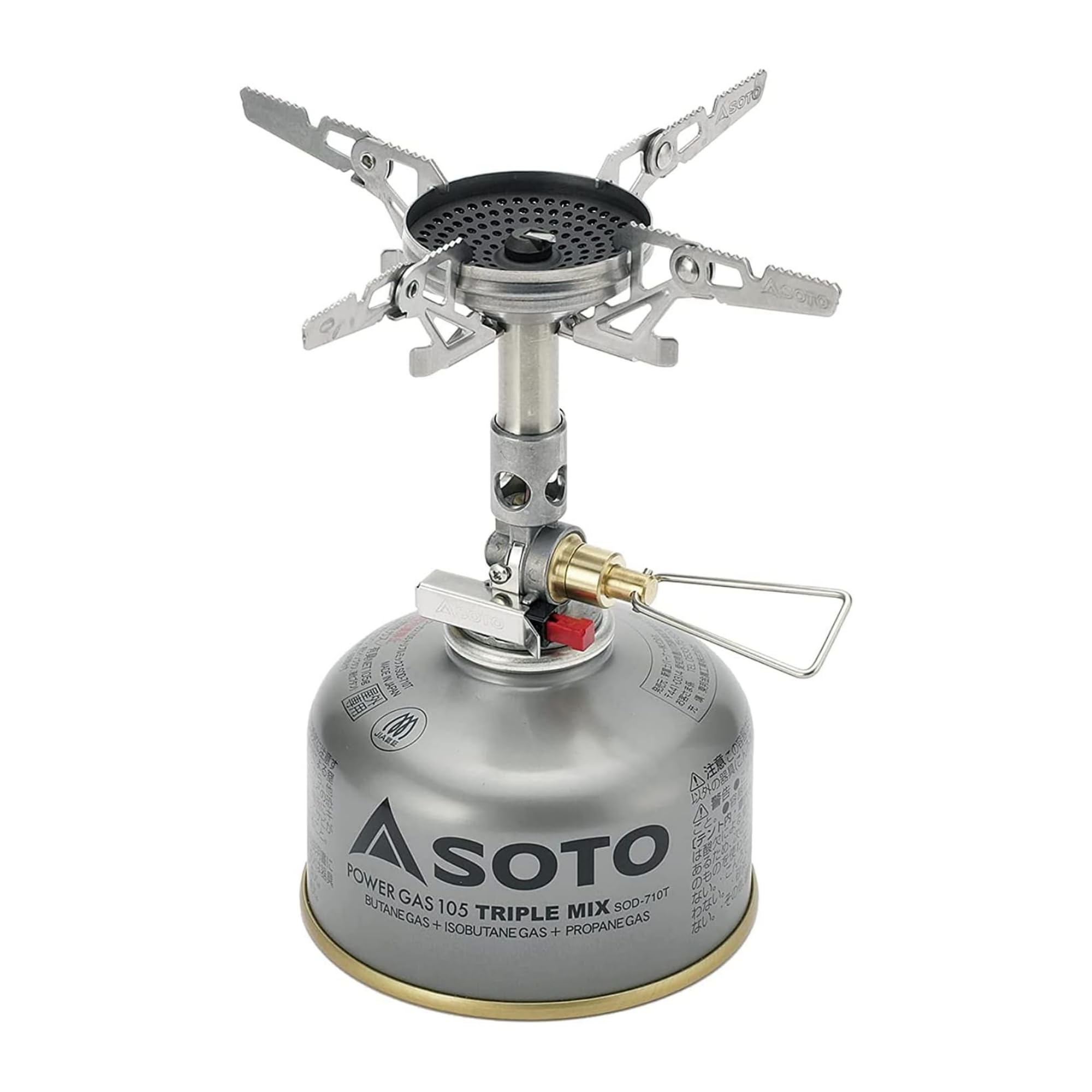
The SOTO WindMaster is engineered from the ground up for one specific mission: maintaining a stable flame in windy conditions. Its concave burner head creates a micro-environment that shields the flame from crosswinds, and the 4Flex pot support holds larger cookware securely while still allowing the burner to sit close to the pot. Independent reviewers report that it outperforms the MSR PocketRocket in gusty winds, with a steady flame that barely flickers even in exposed campsites.
Weighing only 87 grams (2.3 oz) including the 4Flex support, it is one of the lightest regulated stoves available. The built-in piezo igniter is replaceable — a distinct advantage over the MSR unit — and the pressure regulator ensures consistent output across the life of the canister. Real-world boil tests show 1 cup of water in approximately 1.5 minutes, noticeably faster than many competitors. The 4Flex legs provide a wide, stable platform that supports 8-inch and 10-inch pans without tipping.
The primary trade-off is durability: the stainless steel burner and pot support are relatively delicate. Some users report that the 4Flex legs feel flimsy when extended, and the gasket seal on the canister valve requires careful threading. It’s also incompatible with 100% propane fuel, limiting canister options in certain regions. For backpackers who prioritize wind performance and weight above all else, this stove is unmatched.
Why it’s great
- Best-in-class wind resistance via concave burner design
- Replaceable piezo igniter — field-serviceable
- Ultralight at 87g with excellent fuel efficiency
Good to know
- Delicate build; 4Flex legs feel less robust than competitors
- Not compatible with 100% propane canisters
3. Fire-Maple Star X2 Pro
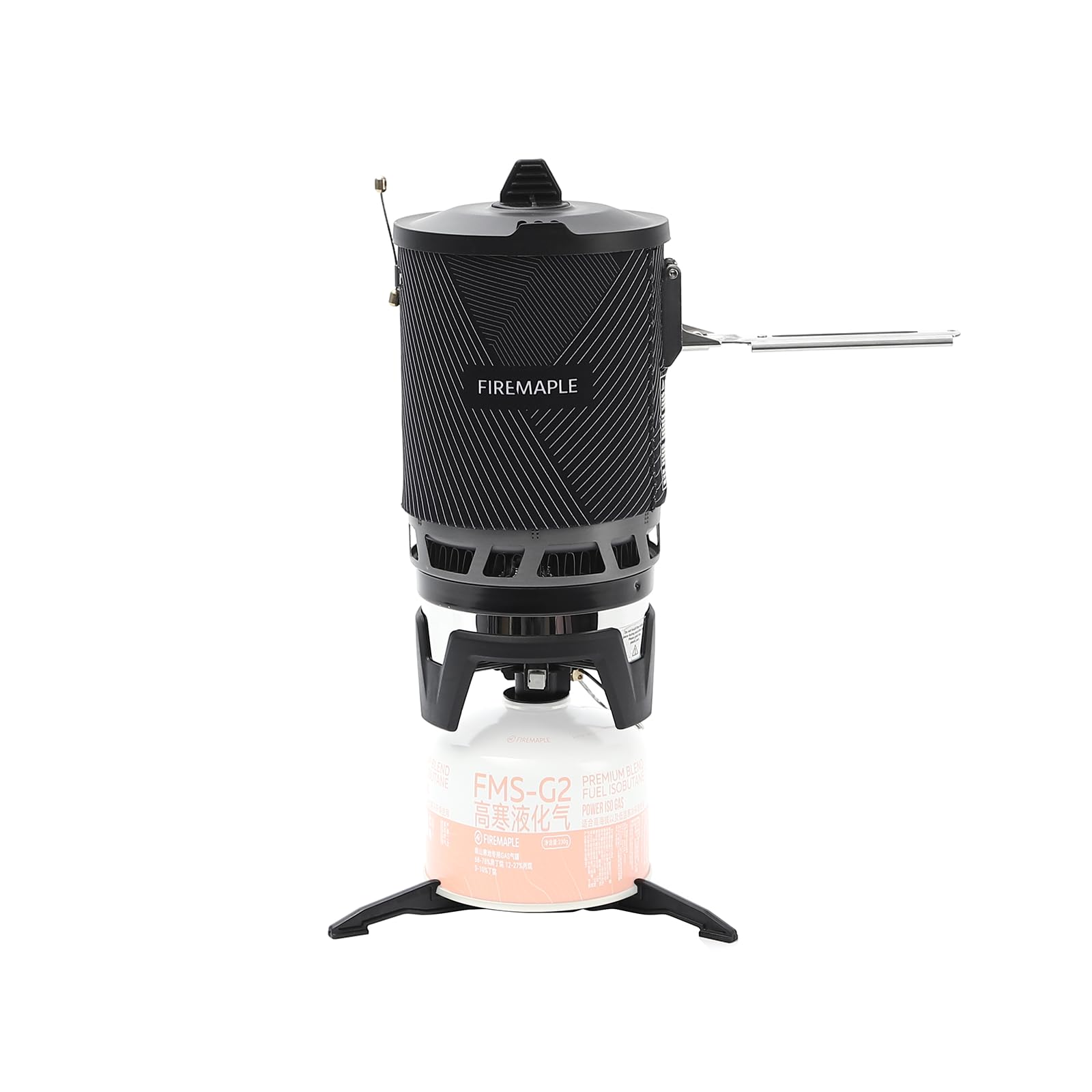
The Fire-Maple Star X2 Pro is the dark horse of the integrated stove category — it delivers Jetboil-like efficiency at roughly half the cost. The system uses hard-anodized aluminum for the pot and a stainless steel burner with built-in heat exchange technology that reduces boil times by up to 30% compared to standard pots. Side-by-side tests place it within one minute of a Jetboil clone’s boil time, making it a legitimate budget alternative for backpackers who want an all-in-one solution without the premium price tag.
The integrated design includes a locking stainless steel handle, a silicone-insulated neoprene pot cozy that stays cool to the touch after boiling, and a pour-through lid with a built-in strainer. The burner clicks to life with a reliable piezo igniter, and the 100g canister fits neatly inside the pot alongside the burner. Customer feedback from Sierra and Rocky Mountain trips confirms the stove performs well in wind and at moderate altitude, though the built-in windscreen effect is not as refined as the Jetboil FluxRing.
At 19.8 ounces (562g), the X2 Pro is not ultralight — it is nearly three times heavier than a standalone burner. The pot diameter is smaller than the 1.0L Jetboil cups, so cooking for two requires multiple batches. The stand and heat exchanger do not nest as compactly as advertised, slightly increasing packed volume. For the budget-conscious backpacker who wants integrated performance and is willing to carry extra ounces, this is the smart choice.
Why it’s great
- Integrated system at a fraction of Jetboil’s cost
- Fast boil (3–4 min) with heat-exchange technology
- Insulating neoprene cozy keeps pot handle cool
Good to know
- Heavier than standalone burners (1.2 lbs total)
- Small pot capacity — not ideal for two-person meals
4. Jetboil Stash

The Jetboil Stash is the lightest integrated cooking system on this list, tipping the scale at just 7.1 ounces for the complete set (titanium burner, 0.8L FluxRing pot, lid, and fuel stabilizer). Its titanium burner shaves critical grams off the standard Jetboil design, while the FluxRing technology still delivers a 2.5-minute boil time. For solo backpackers counting every gram, this system is near-perfect — it packs smaller than a Nalgene bottle and leaves no need for a separate pot.
The nesting design is elegant: the burner, burner pouch, and stabilizer fit inside the pot, and the lid snaps shut to contain the 100g fuel canister and mini lighter (both sold separately). The pot includes internal volume markings and a pour spout integrated into the lid. Reviewers consistently praise the fuel efficiency, reporting significant savings on long trips because the FluxRing transfers heat directly into the water rather than wasting it on the side of the pot. The snap-on lid also reduces heat loss during boiling.
The Stash lacks a built-in piezo igniter, so you must carry a separate lighter or match — an omission that feels dated at this price point. The 0.8L capacity is small; boiling for two requires two cycles. At mid-range pricing, it is not cheap, but the value proposition is clear for gram-weenies who demand integrated performance and the lightest possible carry. It also works with the Jetboil coffee press accessory for morning brew upgrades.
Why it’s great
- Ultralight integrated system at only 7.1 oz total
- Fast 2.5-min boil via FluxRing technology
- Titanium burner is exceptionally durable for its weight
Good to know
- No built-in piezo ignition; requires separate lighter
- 0.8L capacity is snug for solo, tight for duo
5. Jetboil Flash
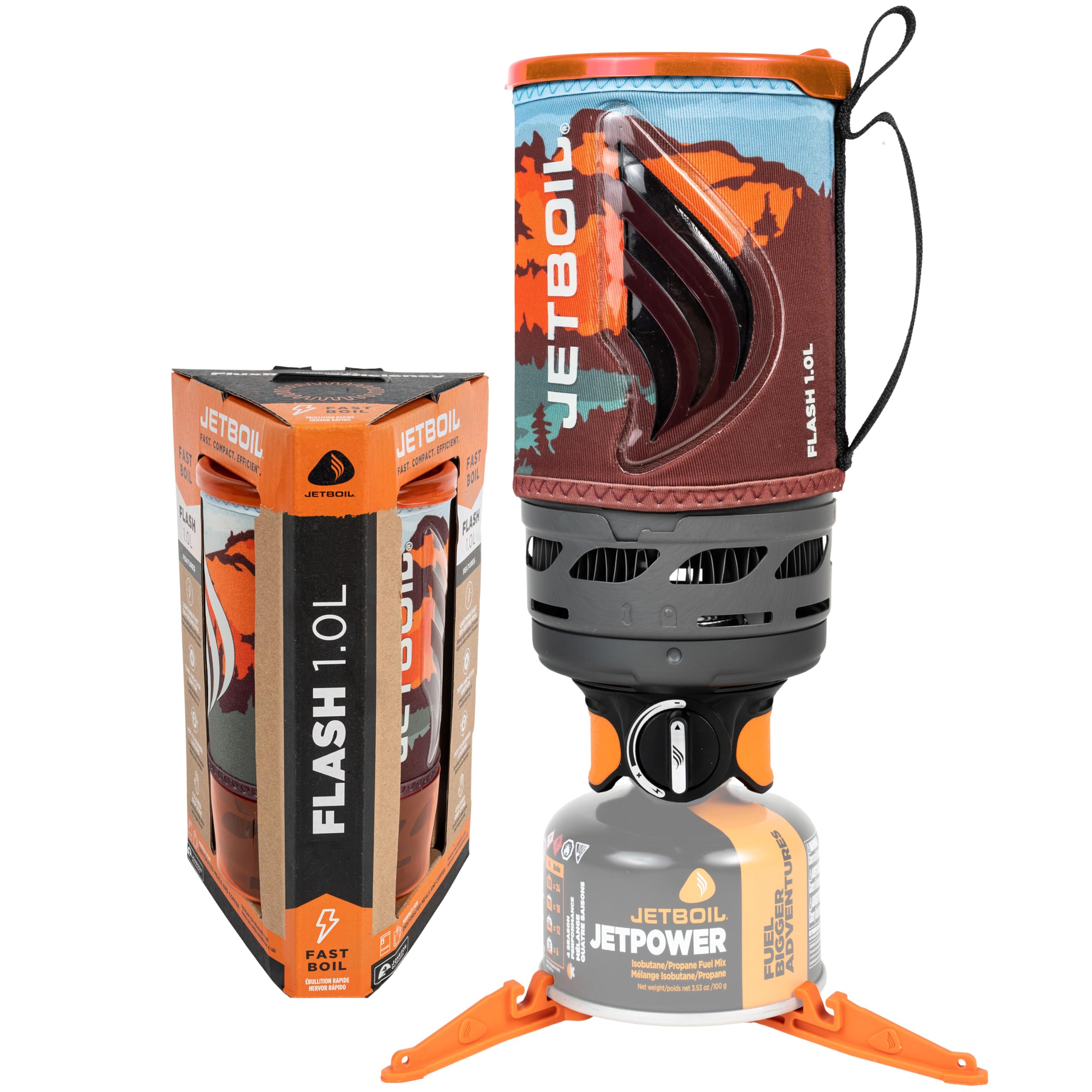
The Jetboil Flash is the speed king of backpacking stoves. Its one-step auto ignition — a simple turn-and-click knob that lights the burner like a home gas range — eliminates the need for a separate lighter. The FluxRing integrated pot and burner deliver a verified 2-minute boil time for 16 ounces of water, making it the fastest system in this roundup. The 1.0L cup is larger than the Stash, accommodating a full freeze-dried meal plus hot water for a second course.
The design is packed with thoughtful features: a color-coded heat indicator on the cozy that changes to show when the cup is too hot to touch, three locking points for a secure burner-to-pot connection, and an insulated cozy that keeps water hot significantly longer than an uninsulated pot. The bottom cup doubles as a measuring cup or bowl, and the entire system (including a 100g fuel canister) nests inside the cook cup for compact storage. This is the system most recommended for backpackers new to integrated stoves because of its ease of use and reliability.
On the negative side, the Flash is heavier than the Stash at 13.09 ounces total, and the fixed pot-burner interface limits compatibility with standard cookware. The simmer control is better than earlier Jetboil models but still not as refined as a standalone burner. The thermochromatic color-change feature is a novelty that adds no functional benefit. For solo or duo hikers who prioritize boiling water in under two minutes above all else, this is the definitive choice.
Why it’s great
- Fastest boil in class — 2 minutes for 16 oz water
- One-step auto ignition; no lighter required
- Compact nesting design stores burner + canister inside cup
Good to know
- Heavier than the Jetboil Stash (13 oz vs 7.1 oz)
- Fixed system — cannot easily swap pots
6. Coleman Triton 2-Burner

The Coleman Triton 2-Burner is not a backpacking stove in the traditional sense — at 5 pounds it is strictly for car camping, basecamp, or tailgating where weight is not a constraint. It delivers 22,000 total BTUs across two independently adjustable burners, each capable of boiling a pot of water quickly. The wind guards fold up around the burners to provide practical wind protection in exposed campsites, a feature that makes it far more reliable in breezy conditions than many comparable lightweight tabletop stoves.
The design is refreshingly minimalist: a heavy-duty latch, removable chrome-plated grate for easy cleaning, and improved knob rotation that offers precise simmer control — a weak point on many two-burner camp stoves. The stove fits 12-inch and 10-inch pans comfortably, making it suitable for cooking full meals for 3-4 people. It runs on standard 16 oz propane cylinders, with a burn time of about one hour on high per cylinder. Many reviewers prefer it over more expensive options because of its reliability and consistent flame output across both burners.
There is no built-in piezo igniter, which is disappointing given the mid-range price — you must use a separate lighter or match. The compact fold is decent but not as streamlined as premium competitors. Some users note that small pots can rock slightly on the wide grill bars. If you need a stove for car camping where stove weight is irrelevant and you want 21,000+ BTUs at a budget-friendly price, this is the clear winner.
Why it’s great
- Powerful dual burners with 22,000 total BTUs
- Excellent simmer control for a car-camping stove
- Fold-up wind guards work well in breezy conditions
Good to know
- No built-in piezo ignition; requires separate lighter
- Too heavy (5 lbs) for backpacking — strictly car/basecamp use
7. Condor Medium Assault Pack
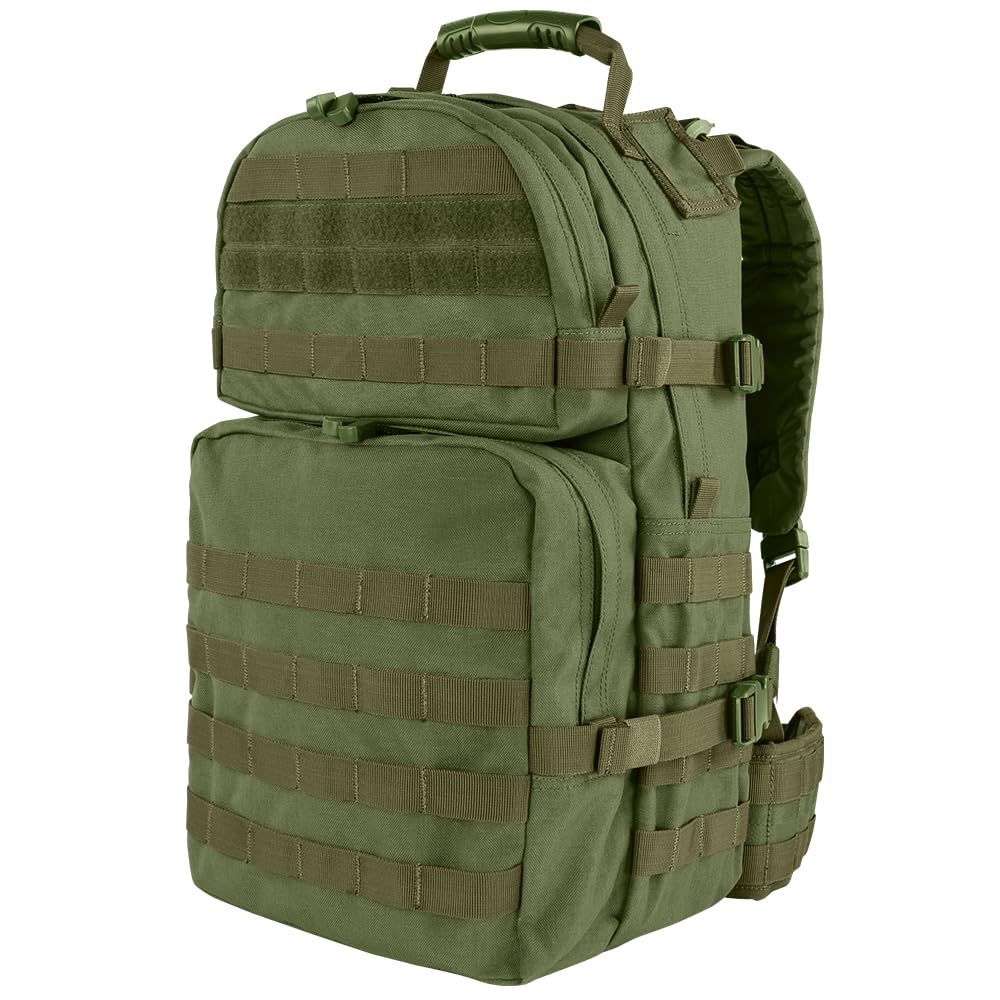
The Condor Medium Assault Pack is not a stove — it is the bag that carries everything else, including the stove you choose. Designed with heavy-duty 600D polyester and a compression-molded back panel for airflow, this pack offers ample volume for a Jetboil system, food, water, and shelter. The external MOLLE webbing and side compression straps allow you to secure a stove or fuel canister externally, freeing internal space for bulkier items.
The pack features a removable padded waist belt, a heavy-duty carry handle, and double zipper pulls on all compartments for rapid access. At a medium size (listed for up to 19-inch laptops), it fits comfortably on a 5’10” frame and is rated as a rugged everyday pack by hundreds of reviewers. The main compartment swallows a stove, freeze-dried meals, and a hydration bladder, while the front organizer pocket holds stove accessories, lighters, and repair kits. The chest strap helps distribute the load for day hikes leading to a basecamp.
On the downside, there is no external water bottle pocket, and the side MOLLE webbing is sewn too close to the edge to be fully usable. The waist belt sits slightly high on shorter torsos, and the zipper flaps can impede quick closing. This pack is best for those who already have a stove and need a rugged, organized daypack or shorter overnight pack to complement it. It is not a substitute for a proper backpacking pack but serves as a solid stove-transport and day-support vehicle.
Why it’s great
- Rugged MOLLE-panel design for external stove/canister attachment
- Compression-molded back panel provides airflow for sweaty hikes
- Removable padded waist belt improves load distribution
Good to know
- No external water bottle pocket
- Side MOLLE webbing placement limits full use
FAQ
Can I use a Jetboil burner with any pot?
Will a non-regulated stove work below freezing?
How do I maintain my backpacking stove in the field?
Final Thoughts: The Verdict
For most users, the backpacking portable stove winner is the MSR PocketRocket Deluxe because it combines ultralight weight (2.9 oz), reliable push-start ignition, and consistent pressure-regulated output across the widest range of temperatures and altitudes. If you want the best integrated system for blazing-fast boil times, grab the Jetboil Flash. And for extreme wind resistance in a featherweight standalone burner, nothing beats the SOTO WindMaster.