
Choosing a black fence stain means balancing deep, uniform color against the real-world wear of rain, UV exposure, and the inevitable scrapes from a leaf blower or lawn mower. A true black finish transforms a weathered fence into a crisp property line, but the wrong formula leaves you with patchy fading, peeling layers, or a chalky surface within a single season. Getting this right comes down to the chemistry — oil-based penetrants versus water-borne acrylics — and matching that to your wood type and climate.
I’m Min — the co-founder and writer behind Gadgets Feed. For this guide, I analyzed technical specifications, coverage rates, UV resistance claims, and verified buyer feedback from hundreds of fence-staining projects to separate the finishes that hold their black pigment from those that wash out.
After cross-referencing formulations, drying times, and real-world durability on cedar, pine, and pressure-treated wood, this analysis identifies the best black fence stain for achieving a lasting, deep black finish without lap marks or premature peeling.
How To Choose The Best Black Fence Stain
Selecting a black fence stain involves more than picking a pigment. The wood’s porosity, exposure level to sunlight, and whether the surface has been previously painted or oiled dictate which formula group — water-based acrylic or oil-based penetrating — will actually bond and hold the black color. The wrong choice results in a finish that flakes off or fades to gray within months.
Oil-Based Penetrating Stains vs. Water-Based Acrylic Paints
Oil-based stains (like those from Ready Seal and Armstrong-Clark) soak into the wood fibers, creating a moisture-repelling bond that resists peeling because the color is inside the wood, not layered on top. They are ideal for raw, weathered, or pressure-treated wood but require solvents for cleanup. Water-based acrylic formulas (like EVOLVE and DEFY) form a protective film on the wood surface, offering better UV-blocking with zinc nano-technology and easier soap-and-water cleanup. However, that film can crack or peel if applied over a previous oil-based layer or if the wood is not fully dry.
Semi-Transparent vs. Solid-Color Coverage
A semi-transparent black fence stain lets the wood grain show through, giving a more natural look, but it typically requires two coats on lighter woods to achieve a true black tone. Solid-color stains or exterior paints deposit a thicker, opaque layer that delivers uniform black coverage in one coat but hides the grain entirely. Solid finishes are more prone to peeling on horizontal surfaces or after freeze-thaw cycles because they sit on the surface rather than penetrating it.
Quick Comparison
On smaller screens, swipe sideways to see the full table.
| Model | Category | Best For | Key Spec | Amazon |
|---|---|---|---|---|
| Ready Seal Exterior Wood Stain | Oil-Based | No-back-brush application on large fences | 125 sq ft/gal coverage | Amazon |
| DEFY Ultra Semi-Transparent Stain | Water-Based Hybrid | UV protection with customizable sheen | Zinc nano-technology UV defense | Amazon |
| Armstrong-Clark Oil-Based Wood Stain | Oil-Based | Long-term durability on softwoods | 150-300 sq ft/gal coverage | Amazon |
| General Finishes Exterior 450 Stain | Water-Based | Vertical surfaces like fence pickets | UV absorbers in formula | Amazon |
| #1 Deck Premium Fence Stain | Water-Based | Budget-friendly vertical coverage | Waterproof protection listed | Amazon |
| KILZ Waterproofing Wood Stain | Water-Based Acrylic | Multi-surface use (fence, siding) | 250-500 sq ft/gal coverage | Amazon |
| EVOLVE Barn & Fence Paint | Water-Based Paint | Solid black coverage on rough wood | 300-400 sq ft/gal coverage | Amazon |
In‑Depth Reviews
1. Ready Seal Exterior Wood Stain, Burnt Hickory
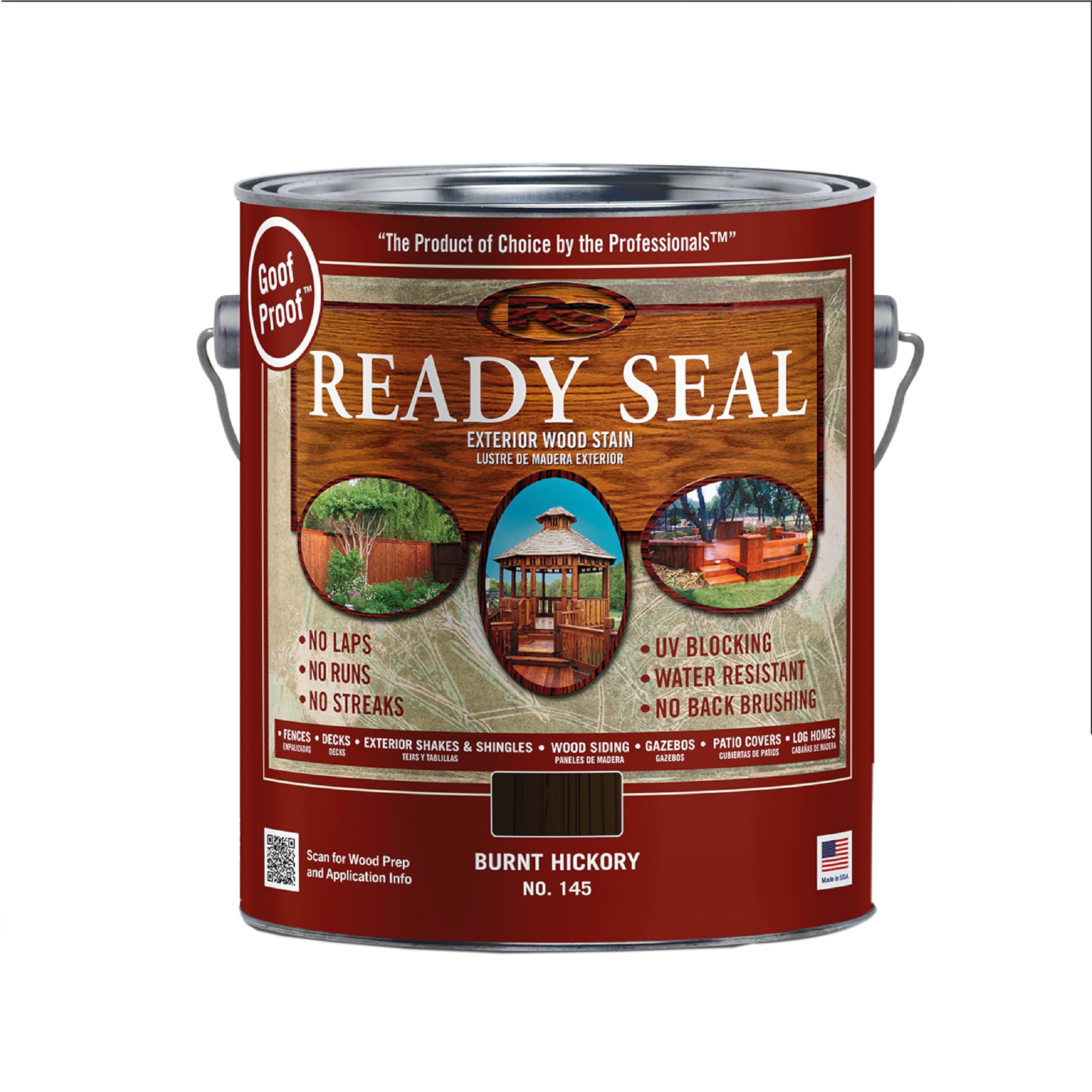
Ready Seal’s oil-based formula is engineered to eliminate the most frustrating part of fence staining: lap marks and streaking. The “goof proof” design means you can spray or roll on a continuous wet edge without needing a second person to back-brush, which is a massive time saver on long fence runs. The oil carrier penetrates deep into cedar and pressure-treated pine, locking pigment inside the wood rather than leaving a surface film that could peel.
With a coverage rate of approximately 125 square feet per gallon, this stain demands more material than water-based competitors, but the trade-off is exceptional moisture resistance — the manufacturer claims rain within minutes of application won’t damage the finish. Professional users report the product lasts four to five years on vertical fences before needing a maintenance coat, and the low-odor profile makes it tolerable for all-day spraying.
The Burnt Hickory color delivers a rich, warm black-brown tone rather than a flat carbon black, which helps hide dust and pollen between cleanings. The main compromise is color selection — the line is limited to a handful of earth tones, so if you want a true jet black, check the Dark Walnut or Cordovan Brown variants for the deepest pigment saturation.
Why it’s great
- No back brushing required, eliminating lap marks on long fence sections
- Penetrating oil formula resists peeling even on weathered wood
- Can be applied in direct sunlight and rain tested within minutes
Good to know
- Coverage is lower at 125 sq ft per gallon compared to water-based options
- Oil base requires mineral spirits for cleanup instead of soap and water
2. Armstrong-Clark Oil-Based Wood Stain, Natural Oak
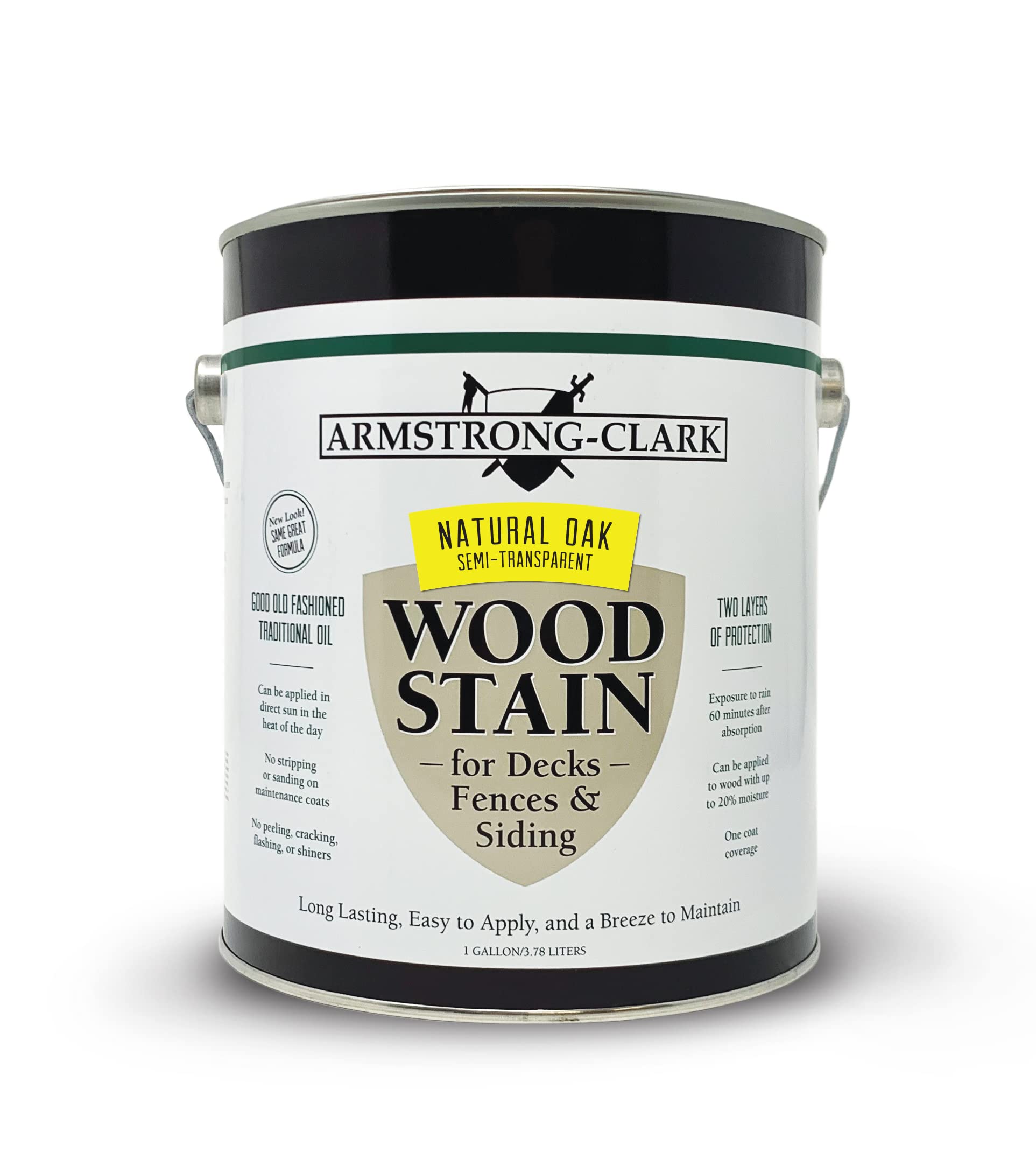
Armstrong-Clark sits at a higher price tier because its oil-based formulation uses a blend of drying and non-drying oils that condition wood fibers while sealing out moisture. This dual-action approach helps prevent the cracking and checking common on fence boards exposed to intense sun after heavy rain. The stain is designed to be applied in direct sunlight at warm temperatures, which widens the weekend-project window considerably.
Reapplication doesn’t require sanding or media blasting — a pressure wash and a fresh coat bond directly to the previous layer without the peeling risk associated with acrylic films. The coverage range is generous for an oil-based product: vertical softwoods yield 200 to 300 square feet per gallon, making the per-project material cost more predictable than the Ready Seal’s 125-foot rate.
The Natural Oak semi-transparent color lets the wood grain emerge with a warm, honeyed undertone rather than a flat opaque black. Users report that after curing, the finish beads water noticeably, and the color holds its richness for three to five years on vertical fences. The main drawback is the lengthy dry time — the label warns against over-application because the oil can remain tacky for 24 to 48 hours in humid conditions.
Why it’s great
- Conditioning oils penetrate deep to prevent wood from cracking
- Maintenance coats require no sanding or stripping
- Excellent water beading after fully cured
Good to know
- Dry time can extend to 48 hours in high humidity
- Over-application leads to a tacky surface that attracts dust
3. DEFY Ultra Semi-Transparent Outdoor Wood Stain, Light Walnut

DEFY Ultra stands out among water-based fence stains for its dual-finish capability: one coat yields a flat, natural look, while a second coat builds to a satin sheen that reflects light and enhances grain depth. The formulation blends acrylic and alkyd resins with zinc nano-technology specifically aimed at blocking UV radiation that turns black stains gray. This is the strongest UV-defense claim among the water-based options in this list.
The 200-to-300-square-foot-per-gallon coverage rate is competitive, and the water-based cleanup is a practical advantage for DIYers who want to rinse sprayer equipment in the driveway without solvent puddles. Users consistently report that DEFY goes on smoothly with a pump sprayer and dries to the touch within one to two hours, enabling a two-coat job in a single day if the temperature stays above 65 degrees Fahrenheit.
The Light Walnut color in semi-transparent form produces a medium dark brown-black with visible wood character. The main reliability concern from long-term reviews is that adhesion can fail on wood that was previously treated with a film-forming sealant — the manufacturer explicitly recommends stripping old finishes before application. A small but notable subset of users reported bubbling or peeling within six months on new decking, so surface preparation is non-negotiable.
Why it’s great
- Zinc nano-technology offers category-leading UV protection against graying
- Two-coat system allows customizable sheen from flat to satin
- Dries in 1-2 hours and cleans up with soap and water
Good to know
- Requires old finish removal for proper adhesion on sealed wood
- Some users report peeling on horizontal deck boards within a year
4. General Finishes Exterior 450 Wood Stain, Black Walnut
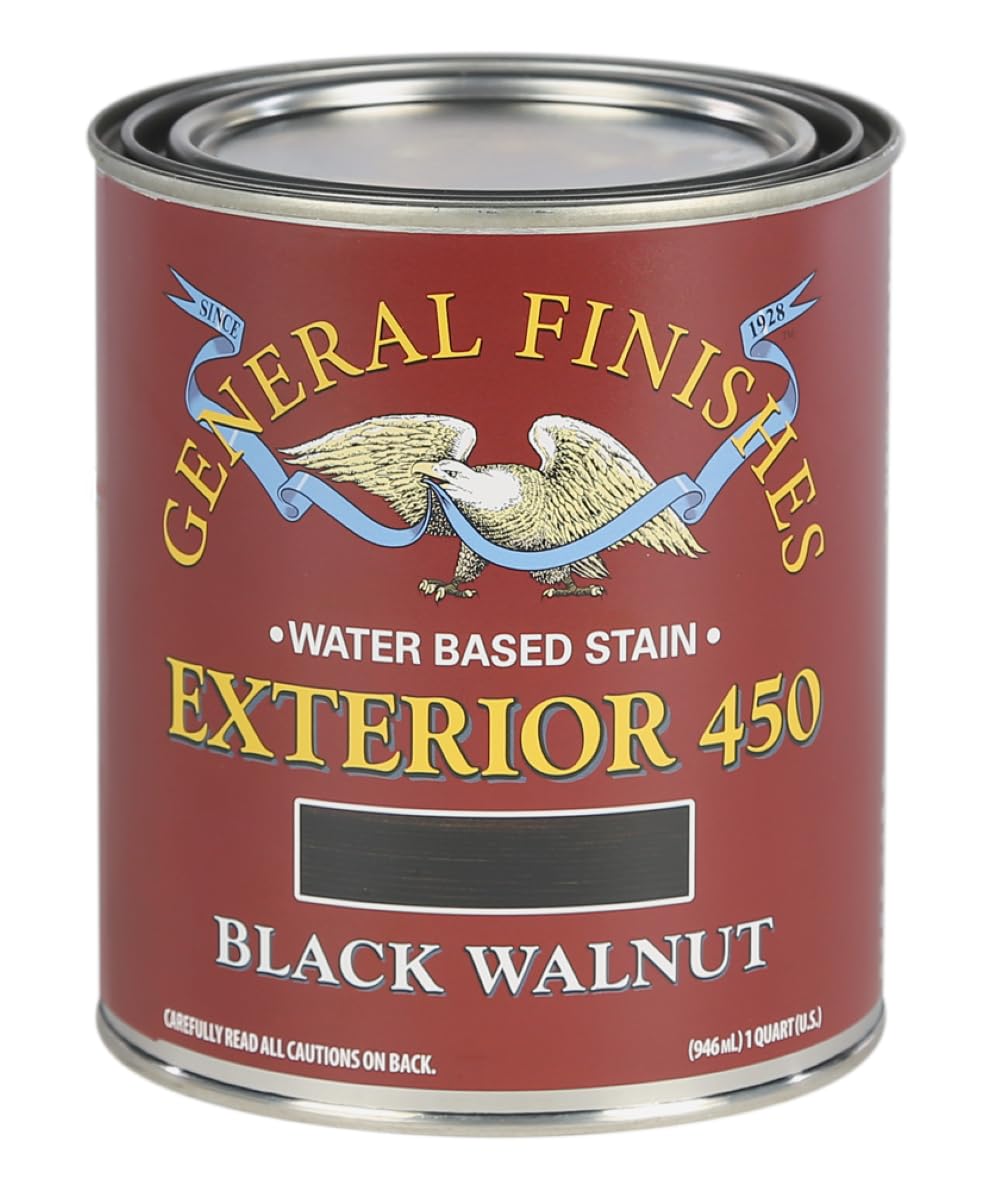
General Finishes Exterior 450 is purpose-built for vertical outdoor surfaces — fence pickets, garage doors, patio furniture — and the manufacturer explicitly discourages using it on large horizontal deck areas. The water-based formula contains UV absorbers that protect the film integrity, though the wood itself will still change color naturally over time. The Black Walnut color provides a deep, furniture-grade dark brown with subtle warmth, matching the look of stained cabinet-grade wood.
Application is straightforward with a brush, roller, or sprayer, and the fast dry time of roughly two hours in ideal conditions (70 degrees F, 50% humidity) keeps a fence project moving. The quart size is convenient for testing color on a hidden section before committing to gallons, though the per-ounce cost is significantly higher than the commodity brands. Users report that three coats are sometimes needed to hide brush overlaps on bare wood, which increases the total project expense.
The Black Walnut color is more chocolate-toned than a pure black, and the semi-transparent nature means the grain direction is still visible after curing. This is an excellent option for staining a cedar fence where you want the wood character to read through the dark pigment. The main practical limitation is the quart volume — a standard picket fence will require multiple quarts or the larger can sizes that are harder to find stocked.
Why it’s great
- Premium water-based formula with UV absorbers for vertical surfaces
- Fast dry time enables two-coat completion in one afternoon
- Black Walnut color matches high-end stained furniture aesthetics
Good to know
- Quart size is expensive per ounce compared to gallon options
- Three coats may be needed to eliminate brush marks on bare wood
5. KILZ Waterproofing Semi-Transparent Wood Stain, Cedar Naturaltone

KILZ brings its 50-year reputation for primers into the fence stain category with a 100-percent acrylic formula that waterproofs while offering fade, mildew, and UV resistance. The semi-transparent Cedar Naturaltone finish is the lightest in this comparison — it warms up the wood without masking the grain — but KILZ also offers the same formula in darker colors like Dark Oak and Redwood that approach a deep brown-black on pressure-treated wood. The coverage rate is the widest in this review: a single gallon can cover 250 to 500 square feet depending on surface porosity, making it the most economical option per linear foot of fence.
The warranty backing is notably transparent: three years on decks and five years on fences and siding, which reflects confidence that vertical surfaces hold the finish longer than horizontal ones. Application requires standard back-brushing to ensure even absorption, and the acrylic base means cleanup with soap and water rather than solvent. Users across multiple review cycles describe the application as smooth and forgiving, with strong adhesion to properly cleaned wood.
The main compromise for buyers seeking a true black fence stain is that KILZ’s color range is weighted toward natural wood tones rather than dramatic dark pigments. The Cedar Naturaltone color profile is a tan-brown, so achieving a deep black finish would require layering multiple coats of the darkest available option. The formula’s strong point is waterproofing — rain beads up noticeably on cured surfaces, and the film holds up well against mildew in shaded fence sections.
Why it’s great
- Industry-leading coverage of up to 500 sq ft per gallon reduces material cost
- Transparent 5-year warranty on fences and 3 years on decks
- Acrylic base with built-in mildew and fade resistance
Good to know
- Color range is limited to natural wood tones rather than deep black
- Semi-transparent coverage may require two coats for uniform color on new wood
6. EVOLVE Barn & Fence Paint, Flat Black
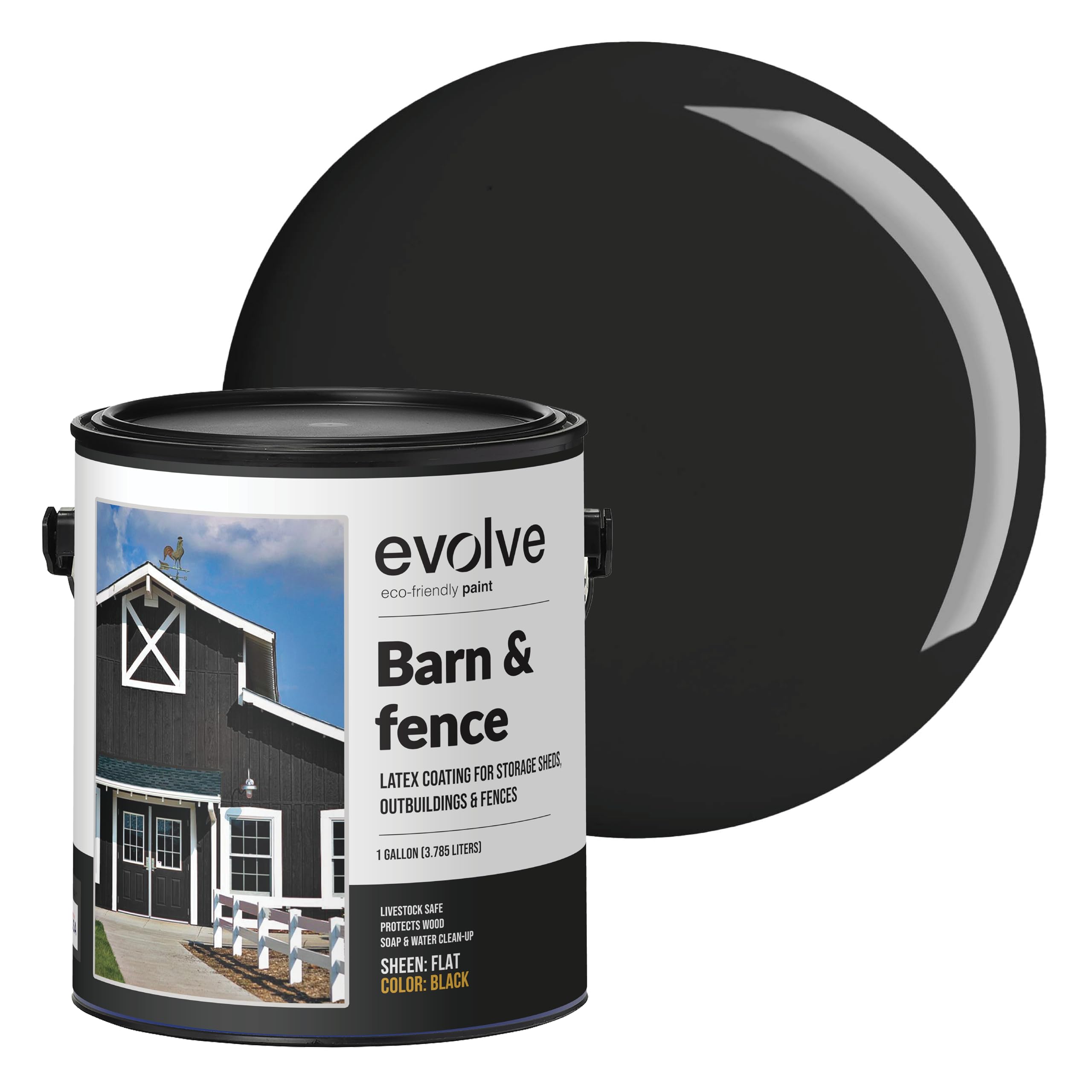
EVOLVE Barn & Fence Paint is a flat acrylic latex paint rather than a penetrating stain, which means it deposits a solid, opaque color layer on the wood surface. The flat black color code delivers a true matte black — no brown undertones — that is ideal for modern farmhouse aesthetics or hiding mismatched board repairs on older fences. The scratch-resistant formulation is designed to survive contact with tools, pets, and lawn equipment, which is a practical concern for fences near work zones.
Coverage is competitive at 300 to 400 square feet per gallon, and the paint is advertised as weather-resistant against sun, rain, and temperature swings. The water-based formula cleans up easily and dries quickly, enabling a two-coat fence refresh over a weekend. A long-term user reported that a coat on a chicken coop held strong for four years, which suggests good adhesion to rough-sawn wood even in exposed conditions.
The flat black finish is prone to showing dust, pollen, and minor scuffs more readily than a satin or semi-gloss product, so maintenance may involve more frequent rinsing with a garden hose. The paint also sits on the wood surface rather than penetrating, so if the underlying wood is heavily weathered or has an existing oil residue, the paint may chip off in patches. This product is best for raw or previously painted wood where a uniform black color is the primary goal.
Why it’s great
- True flat black color with no brown tint for uniform coverage
- Scratch-resistant finish holds up against physical contact
- Excellent value per gallon with fast-drying water-based cleanup
Good to know
- Flat finish attracts dust and shows scuffs more than satin
- Surface film may peel on wood with existing oil-based treatments
7. #1 Deck Premium Wood Fence Stain and Sealer, Gray

The #1 Deck Premium formula from SaverSystems is a water-based fence stain and sealer combination that focuses on protecting against color fade and graying on vertical wood surfaces. The Gray color delivers a cool-toned medium gray that darkens wood without the warmth associated with cedar-toned stains — it sits between a true black and a weathered driftwood in appearance. The product is designed for use on pressure-treated pine, cedar, fir, and redwood, which covers the vast majority of residential fence construction.
Coverage is listed broadly as waterproof, with users reporting that two gallons were sufficient for approximately five standard eight-foot fence panels. The water-based formula is easy to spray or brush, though multiple reviewers noted it is runny and requires a mask due to lung irritation from the mist. The drying time is listed at two hours at 65 degrees F, but humid conditions can extend that significantly, so morning application is recommended for evening recoat windows.
The primary trade-off at this price point is durability on horizontal or high-traffic surfaces — one user reported that the finish on deck flooring lasted only one year before showing wear, while the vertical railings held up much longer. This reinforces the product’s intended use as a vertical fence stain. For a fence project where budget is the dominant constraint, the #1 Deck formula provides adequate waterproofing and color retention if the surface is properly pressure-washed beforehand.
Why it’s great
- Entry-level price point suitable for large fence projects on a budget
- Water-based formula allows easy cleanup and low odor during application
- Resists fading and graying on vertical wood surfaces
Good to know
- Durability is limited on horizontal surfaces or high-traffic areas
- Formula is runny and requires a mask to avoid lung irritation from mist
FAQ
Can I use a black fence stain over an existing oil-based finish?
How long does a black fence stain typically last before fading?
Should I apply a black fence stain with a sprayer or a brush?
Final Thoughts: The Verdict
For most users, the best black fence stain winner is the Ready Seal Exterior Wood Stain because its oil-based, no-back-brush formula eliminates lap marks and delivers deep moisture resistance on raw cedar or pressure-treated wood. If you want zinc nano UV protection and the flexibility to choose between a flat or satin sheen, grab the DEFY Ultra Semi-Transparent Stain. And for a true flat black paint finish on a budget without sacrificing scratch resistance, nothing beats the EVOLVE Barn & Fence Paint.