
That drip on your floorboard or the creeping rust line along your rocker panel started the same way — a seam the factory never sealed right. Auto seam sealers aren’t just for body shops; they’re the difference between a car that stays solid and one that dissolves from the inside out. Picking the wrong one means cracked joints, failed adhesion, and water finding its way back in.
I’m Min — the co-founder and writer behind Gadgets Feed. I’ve dissected dozens of polyurethane and epoxy formulations to find which compounds actually bond to bare metal without shrinking or cracking under real road vibration and temperature swings.
Whether you’re patching floor pans, sealing a truck cab, or restoring a classic, the right auto seam sealer must flex with the chassis and accept paint within an hour — anything less invites rust right back.
How To Choose The Best Auto Seam Sealer
An auto seam sealer isn’t just glue — it’s a flexible armor that must move with the chassis, resist moisture, and accept paint without reacting. Get it wrong and you’ll peel dried flakes off your floor pans within a season.
Polyurethane vs. Epoxy vs. Rubber-Based
Polyurethane seam sealers dominate because they bond to bare, primed, and painted metal without shrinking, and they stay flexible through temperature extremes. Epoxy formulas, like the 3M heavy-bodied two-part, offer maximum strength and chemical resistance but require a precise mixing gun and cure faster, leaving less working time. Rubber-based sealers are easier to brush on but lack the tensile strength for structural panel joints.
Viscosity Matters: Gun-Grade vs. Brushable
Gun-grade sealers (10-10.5 oz cartridges) allow precise bead control for vertical seams and tight wheel wells but need a standard caulking gun. Brushable sealers (quart cans) let you replicate OEM brushed textures over large areas like floor pans — just be prepared for a thicker application that requires acetone for smoothing.
Paintable Window and Surface Prep
The best auto seam sealers are paintable within 30-60 minutes, letting you prime and topcoat the same day. Skip acid-etching primers — they prevent adhesion. Stick to epoxy primer over bare metal before applying the sealer for the strongest bond.
Quick Comparison
On smaller screens, swipe sideways to see the full table.
| Model | Category | Best For | Key Spec | Amazon |
|---|---|---|---|---|
| Berkland Polyurethane (2-Pack) | Polyurethane | Full panel restoration | 10 oz cartridges, 2-pack | Amazon |
| Custom Shop Brushable (Quart) | Brushable PU | Large floor pan & roof seams | 30.4 fl oz brushable can | Amazon |
| 3M Heavy-Bodied Epoxy 08308 | Two-Part Epoxy | Vertical seams & OEM matching | 200 ml self-mixing cartridge | Amazon |
| FORTIVO Professional (Black) | Polyurethane | Quick spot repairs, low-odor | 10 fl oz, paintable in 30 min | Amazon |
| Custom Shop Barrier Bond (Gray) | Rubber/PU | Horizontal & vertical joints | 10.1 oz, non-sag texture | Amazon |
| Berkland Single Cartridge (White) | Polyurethane | Economical single-panel fix | 10.5 fl oz, includes gloves | Amazon |
| Dominion Sure Seal Brush-On | Rubber | Fabric, canvas & odd shapes | Brush-on paste, heat resistant | Amazon |
In‑Depth Reviews
1. Berkland Polyurethane Seam Sealer (2-Pack)

The Berkland 2-Pack is the volume play that actually delivers professional-grade performance. Each 10 oz cartridge holds a polyurethane compound that won’t shrink or crack under road vibration, bonding equally well to bare steel, primed surfaces, or painted panels. The 30-minute paint window means you can seal, prime, and topcoat in a single session — no overnight delays.
Users restoring floor pans and truck cabs consistently report strong adhesion even on vertical wheel wells. The included nitrile gloves and application tip keep cleanup manageable, though the white color means you’ll want to paint over it if the seam is visible. The 2-pack is the natural choice for anyone doing a full panel or multiple repair zones.
At roughly two dollars more per ounce than the single cartridge, the 2-pack offers the best per-job value without any compromise in flexibility or weather resistance. For a complete floor pan or roof ditch job, this is the one to grab.
Why it’s great
- Excellent adhesion to bare metal, primed and painted surfaces without prep
- Paintable in 30 minutes — same-day finishing possible
- Two cartridges cover full panel restoration jobs
Good to know
- White color requires paint topcoat on visible seams
- Standard caulking gun needed (not included)
2. 3M Heavy-Bodied Seam Sealer 08308

The 3M 08308 is the industry standard for collision repair centers for a reason — it’s a two-part epoxy that self-mixes through a metered dual syringe, eliminating any guesswork. The heavy-bodied formula stays exactly where you put it, even on vertical door jambs and roof ditches, and cures to a hard, chemically resistant finish that matches OEM seam appearance.
Working time is shorter than polyurethane sealers — expect about 8 hours at 75°F for full cure — but the bond strength is unmatched. Users on F-Series trucks and classic restorations report it bonds best over epoxy primer, not acid-etch primer. The 200 ml cartridge is ideal for targeted seams rather than broad floor pan coverage.
You’ll need a separate dispensing gun designed for dual cartridges. This is premium-grade material best reserved for structural joints where maximum durability and chemical resistance are non-negotiable. The self-mixing tip is genuinely clever — no mess, no hardener waste.
Why it’s great
- Self-mixing dual cartridge delivers perfect epoxy ratio every time
- Heavy-bodied — no sag on vertical surfaces
- Hard, chemical-resistant cure matches OEM specs
Good to know
- Requires a specialized dual-cartridge dispensing gun
- Shorter working time — must be fully ready before mixing
- More expensive per ounce than single-part urethanes
3. Custom Shop Barrier Bond (10.1 oz Gray)
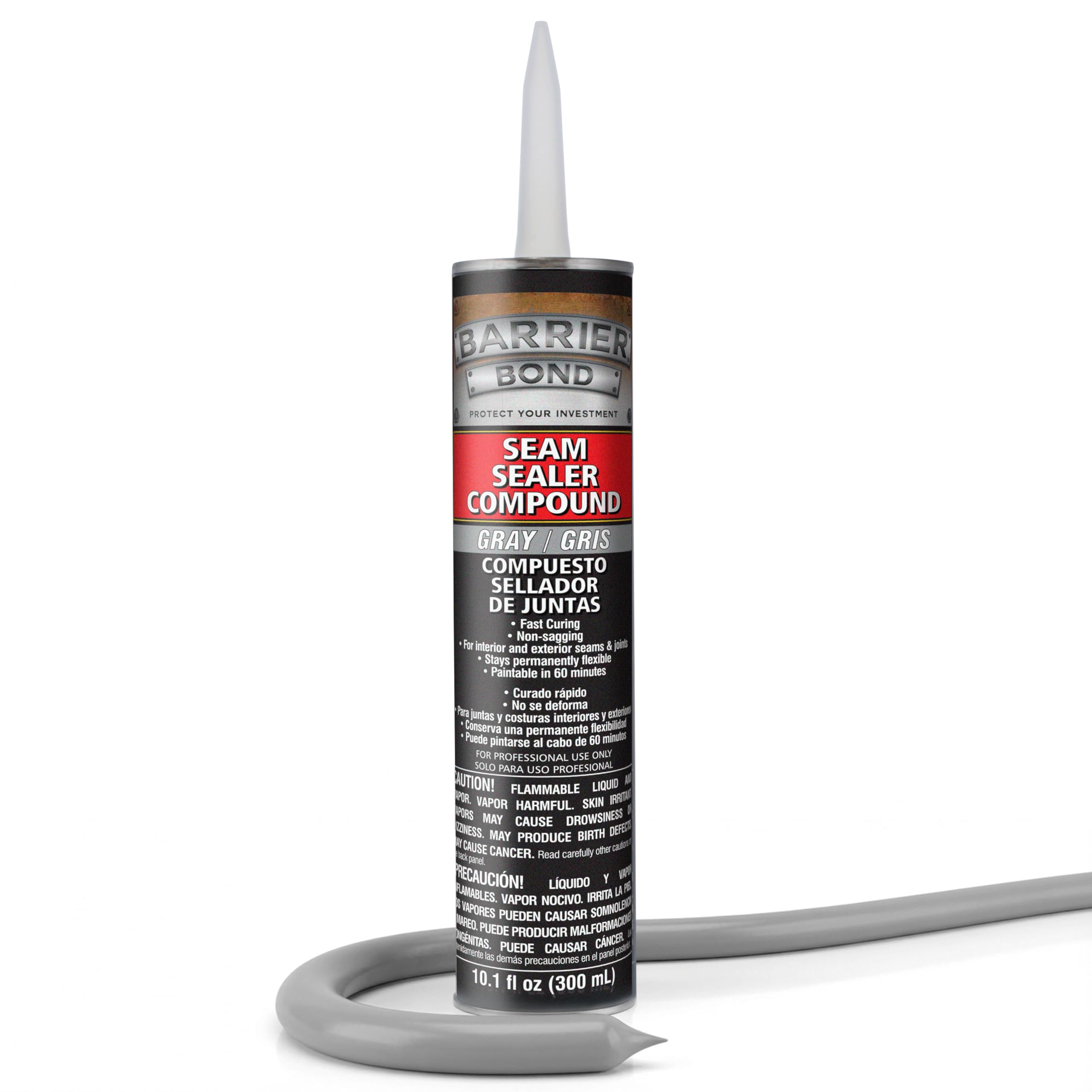
The Custom Shop Barrier Bond strikes a sweet spot between creamy texture and high rubber content for flexibility. Users describe it as smooth and non-sag, making it forgiving on both horizontal floor pans and vertical door seams. The 10.1 oz tube fits any standard caulking gun, and the gray color blends well with primer without screaming for a paint topcoat.
Multiple mechanic reviews highlight its low-temperature flexibility — it stays elastic even in freezing conditions, which matters for trucks and RVs that sit through winter. The label claims paintable after one hour, but experienced users recommend waiting 12 hours for best topcoat adhesion. Vapors are strong for the first week, so ventilate your workspace.
It’s a reliable mid-range option that won’t break the bank. The Barrier Bond series is especially popular with RV owners for sealing camper trailer seams against seasonal temperature swings.
Why it’s great
- Creamy, non-sag texture — tools cleanly for a professional finish
- High rubber content keeps it flexible in low temperatures
- Gray color blends under primer without needing topcoat
Good to know
- Strong vapors require ventilation for about a week
- Label’s 1-hour paint time is optimistic — safer to wait overnight
4. Custom Shop Brushable Seam Sealer (Quart)
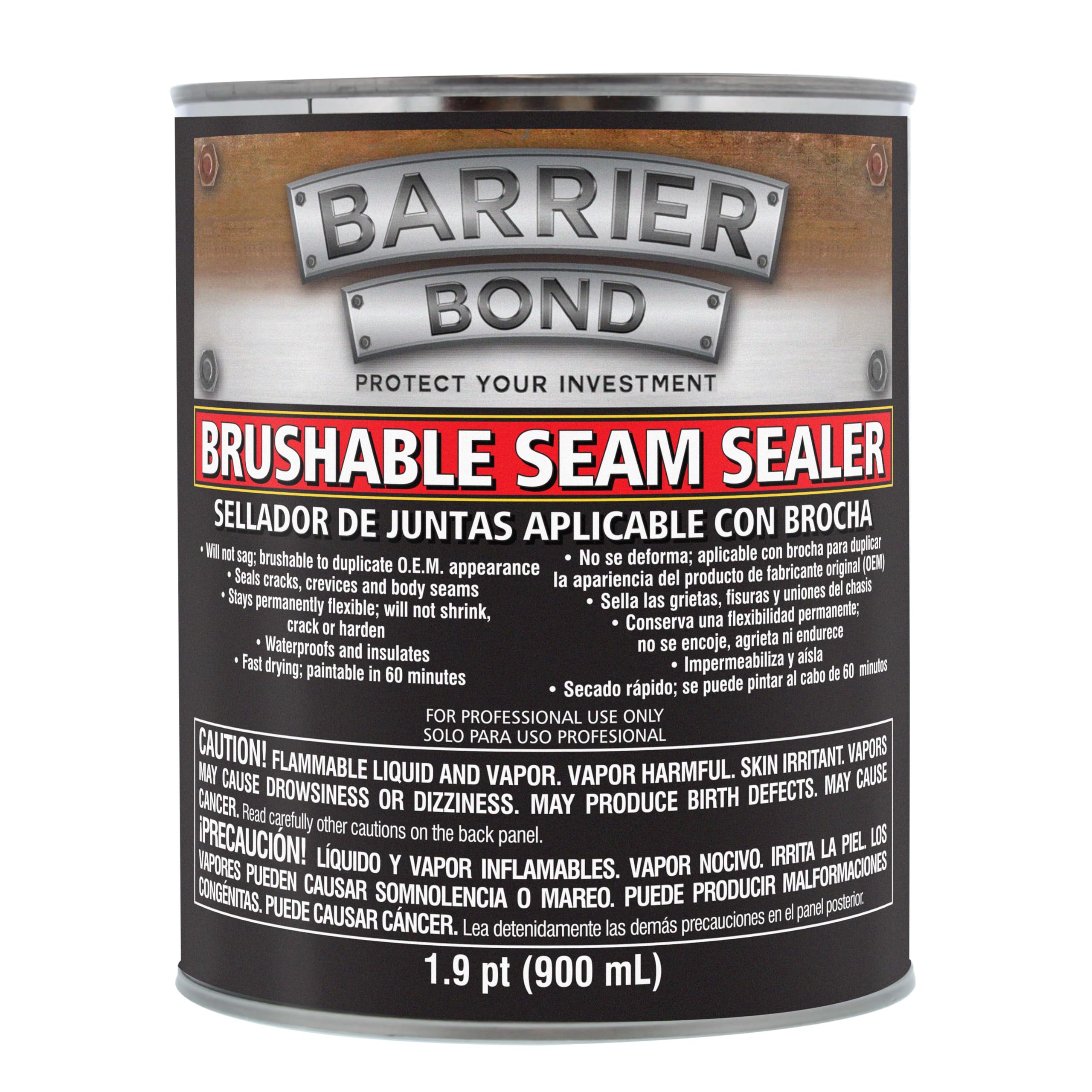
When you need to cover a whole floor pan, fire wall, or truck bed seam, the Custom Shop Brushable Quart is the efficient answer. Its thick paste applies smoothly with a brush and holds brush marks to replicate OEM textures — no special gun required. The 30.4 oz can is enough to do an entire car interior, making it the most cost-effective option for large-scale restoration.
Users with 27 years of body work call it the best brushable seam sealer they’ve ever used, noting it doesn’t run or sag even when applied upside down. The paint window is 60 minutes, though any painter will wait longer for full cure. Light gray color matches factory seam finishes on many vehicles. The only real complaint is packaging — the can’s lip can get bent in shipping if not wrapped well.
This is the clear winner for anyone doing a full restoration who wants OEM-looking seams without buying a dozen cartridges. Just make sure to have acetone and a clean brush for smoothing.
Why it’s great
- Enough material to seal an entire car interior
- Holds brush marks for OEM-style seams
- Won’t run or sag even on vertical surfaces
Good to know
- Packaging can arrive with bent can lip — inspect on delivery
- Thicker than gun-grade — takes practice to tool smoothly
5. FORTIVO Professional Seam Sealer (Black)
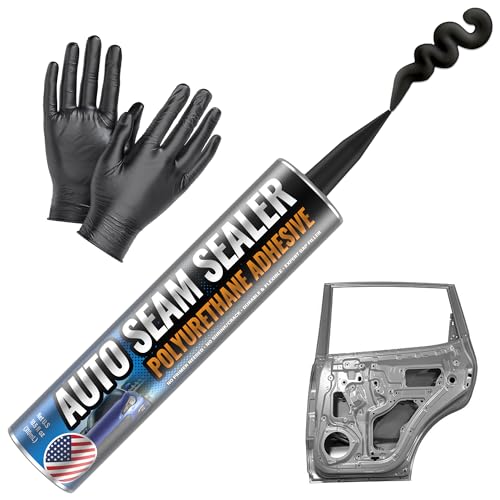
The FORTIVO Professional in black is a direct competitor to Berkland with a key difference — black color makes it much more discreet on dark undercarriages and truck cabs where painting is optional. The polyurethane formula bonds to bare, primed, and painted metal without special prep, and the 30-minute paint window is genuine based on user reports.
Buyers using it on Ford F-250 Super Duty floorboards and square-body Chevys report strong adhesion and no recurrence of water leaks. The 10 oz cartridge flows smoothly through a standard caulking gun and levels well, though users note that a thick bead left for 12 hours may stay uncured in the center. Apply in thin layers for best results.
At the same price point as Berkland’s single cartridge but in black, this is the smarter pick for visible areas and budget-conscious repairs. The included gloves are a welcome touch for messy work.
Why it’s great
- Black color blends with underbody and dark paint — painting optional
- Bonds strongly to bare metal without surface prep
- Flows and levels smoothly for a clean bead
Good to know
- Thick beads may not cure fully through the center
- Standard caulking gun required
6. Berkland Polyurethane Cartridge (White, Single)

The single Berkland cartridge is the minimum viable seam sealer for targeted repairs — one 10.5 oz tube for a door jamb, a wheel well, or a leaky RV roof seam. The polyurethane compound is identical to the 2-pack version: paintable in 30 minutes, won’t shrink or crack, and bonds to bare metal without primer. Users fixing Honda Civic roof leaks confirm it holds strong even without primer.
It’s white, so visible seams will need paint. The included gloves and application tip are handy, and the tube fits any standard caulking gun. For someone sealing a single panel or plugging a known leak, this is the economical entry point. Just don’t expect it to cover a whole floor pan — you’ll need the 2-pack for that.
Customer reviews consistently mention ease of use and fast delivery. The self-leveling flow means less tooling and a cleaner finish for beginners. It’s the right tool for the one-off repair.
Why it’s great
- Low entry cost for a single panel or spot repair
- Same high-quality polyurethane as the 2-pack
- Easy to apply — flows and levels without much tooling
Good to know
- White color needs paint on visible seams
- Single cartridge is insufficient for full restoration jobs
7. Dominion Sure Seal Brush-On Seam Sealer
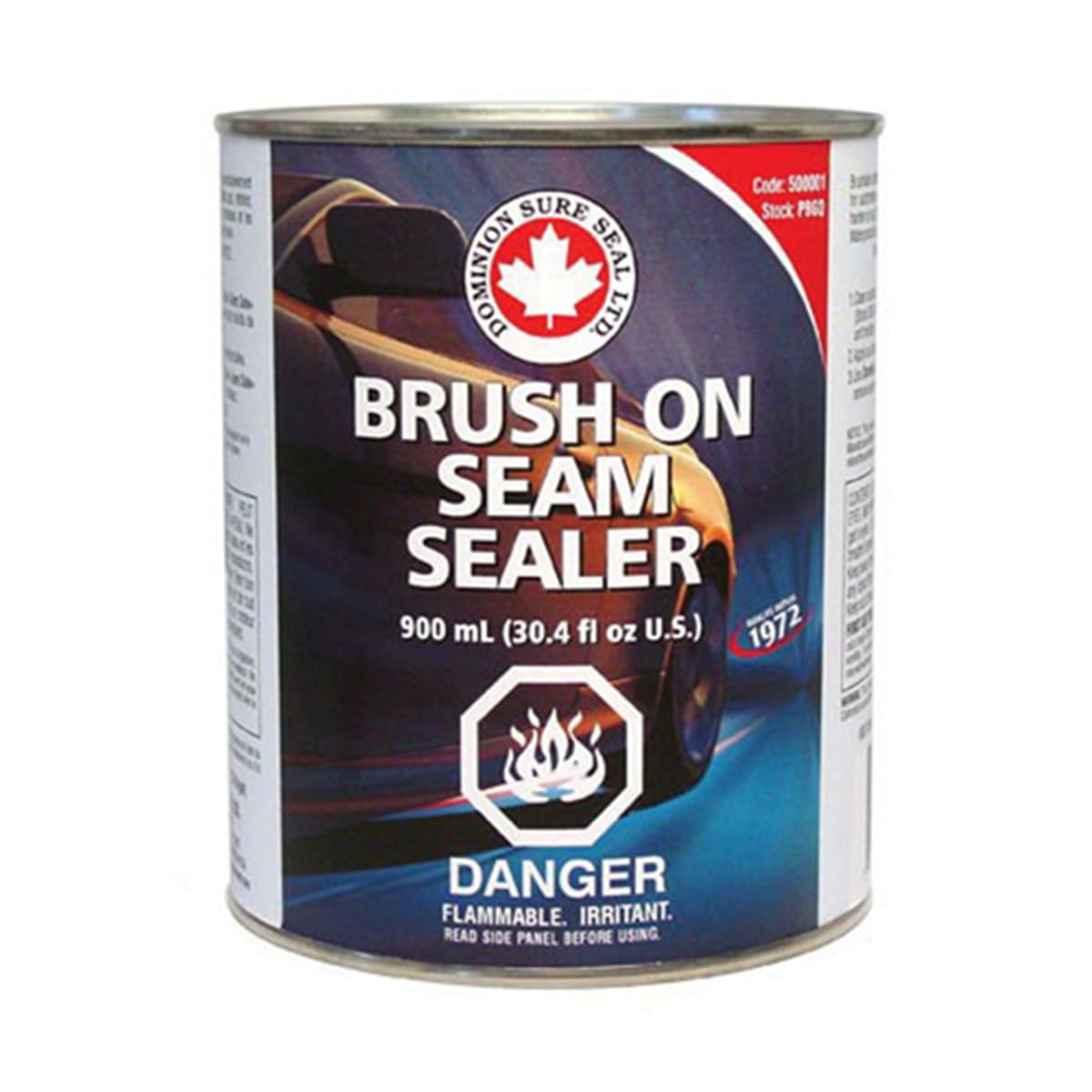
The Dominion Sure Seal is the oddball in this list — it’s a brush-on rubber-based paste designed for fabric, canvas, and automotive surfaces, making it the go-to choice for sealing convertible tops, vinyl interiors, and odd-shaped joints where a caulking gun can’t reach. Users report it brushes on thick, dries semi-hard, and provides a genuine moisture seal on welded floor pans and patches.
It’s heat resistant and works well as a high-temperature silicone alternative for engine bay seams. The brush-on method is surprisingly forgiving for beginners — no gun, no nozzle, just dip and spread. One first-time user gave it 10 stars for sealing floor pans with no prior experience. For a smooth finish, use a clean brush dipped in acetone.
This is not the strongest structural sealer on the list, but for flexible surfaces and hard-to-reach areas, its convenience is unmatched. It’s the right choice when your repair involves mixed materials or when you don’t own a caulking gun.
Why it’s great
- Brush-on application — no caulking gun needed
- Works on fabric, canvas, metal, and vinyl surfaces
- Heat resistant for engine bay and high-temp areas
Good to know
- Not as strong as polyurethane for structural panel joints
- Requires acetone brush for a smooth finish
FAQ
Can I paint over auto seam sealer the same day?
Will auto seam sealer stop a water leak in my truck cab?
How long does auto seam sealer last before cracking?
Final Thoughts: The Verdict
For most users, the auto seam sealer winner is the Berkland Polyurethane 2-Pack because it delivers professional-grade adhesion, 30-minute paintability, and enough material for a full restoration at a fair per-ounce cost. If you need maximum structural strength and vertical-seam stability, grab the 3M Heavy-Bodied Epoxy 08308. And for covering an entire floor pan or roof with OEM brush marks, nothing beats the Custom Shop Brushable Quart.