
Hard water doesn’t just leave scale on your fixtures—it actively eats away at your water heater’s sacrificial anode rod, accelerating corrosion and breeding the sulfur bacteria responsible that rotten egg stench. Choosing the wrong rod material for your water chemistry means yearly replacements at best and a leaking tank at worst.
I’m Min — the co-founder and writer behind Gadgets Feed. I’ve spent countless hours analyzing tank corrosion chemistry, sacrificial anode depletion rates, and hard water treatment solutions to separate the rods that truly protect your investment from the ones that dissolve before their first inspection.
Whether you’re fighting stinky sulfur water or simply want to extend your heater’s life without calling a plumber, this guide breaks down the specs and real-world performance of the best anode rod for hard water available on Amazon right now.
How To Choose The Best Anode Rod For Hard Water
Hard water is packed with dissolved calcium, magnesium, and sulfates that accelerate the decay of standard anode rods and can trigger bacterial reactions that create hydrogen sulfide gas (that rotten egg smell). The right rod doesn’t just protect your tank—it neutralizes the odor at its source. Here’s what to prioritize.
Material Matters: Magnesium vs. Aluminum-Zinc vs. Titanium
Magnesium rods are the most electrically active, offering the best tank protection in soft-to-moderate water, but they react violently with hard water’s sulfates to create foul sulfur smells. Aluminum-zinc alloys (often blended) provide a middle ground with better odor resistance and longer lifespan in hard water conditions. Titanium powered rods eliminate sacrificial decay entirely by using a low-voltage current to protect the tank, making them immune to hard water’s corrosive effects and sulfur bacteria—they simply never dissolve.
Flexible vs. Solid: Installation Headroom is Everything
Most water heaters sit in tight closets or basements with less than 12 inches of overhead clearance. A rigid 42-inch solid rod is impossible to insert without cutting or tilting the entire heater. Flexible or segmented designs—linked by a corrosion-resistant cable—let you snake the rod into the tank through the top port, requiring only about 12 inches of clearance. Measure the ceiling gap above your heater before buying; if it’s tight, a flexible rod is non-negotiable.
Powered Anodes for Severe Hard Water and Odor
If your water has extreme hardness (over 7 grains per gallon) or you’ve fought recurring sulfur smells for years, a powered titanium anode rod is the permanent fix. These units use a 3V DC current to repel corrosive ions, never deplete, and actively break down the sulfate-reducing bacteria that cause the rotten egg odor. They cost more upfront—often over —but eliminate the need for biannual rod replacements and prevent sediment scale buildup that hard water leaves behind.
Quick Comparison
On smaller screens, swipe sideways to see the full table.
| Model | Category | Best For | Key Spec | Amazon |
|---|---|---|---|---|
| Corro-Protec Powered Anode Rod | Premium Powered | Permanent odor & rust fix | Titanium, 20-Year Warranty | Amazon |
| Briidea Powered Anode Rod | Premium Powered | Budget-powered alternative | Titanium, 40-89 Gal | Amazon |
| Podoy Powered Anode Rod | Premium Powered | Descaling & purification | Titanium, 9.4″ compact | Amazon |
| Eastman 42″ Flexible Magnesium | Mid-Range Sacrificial | Tight-space installation | Flexible Mg, 42″ | Amazon |
| Camco Aluminum 42″ | Mid-Range Sacrificial | Solid universal replacement | Aluminum, 42″ | Amazon |
| Eau Aluminum-Zinc 44″ | Mid-Range Sacrificial | Sulfur smell elimination | Al-Zn, 44″ Flexible | Amazon |
| Kelaro Magnesium 44″ Flexible | Budget Sacrificial | Entry-level value | Flexible Mg, 44″ | Amazon |
In‑Depth Reviews
1. Corro-Protec Powered Anode Rod for Bradford White
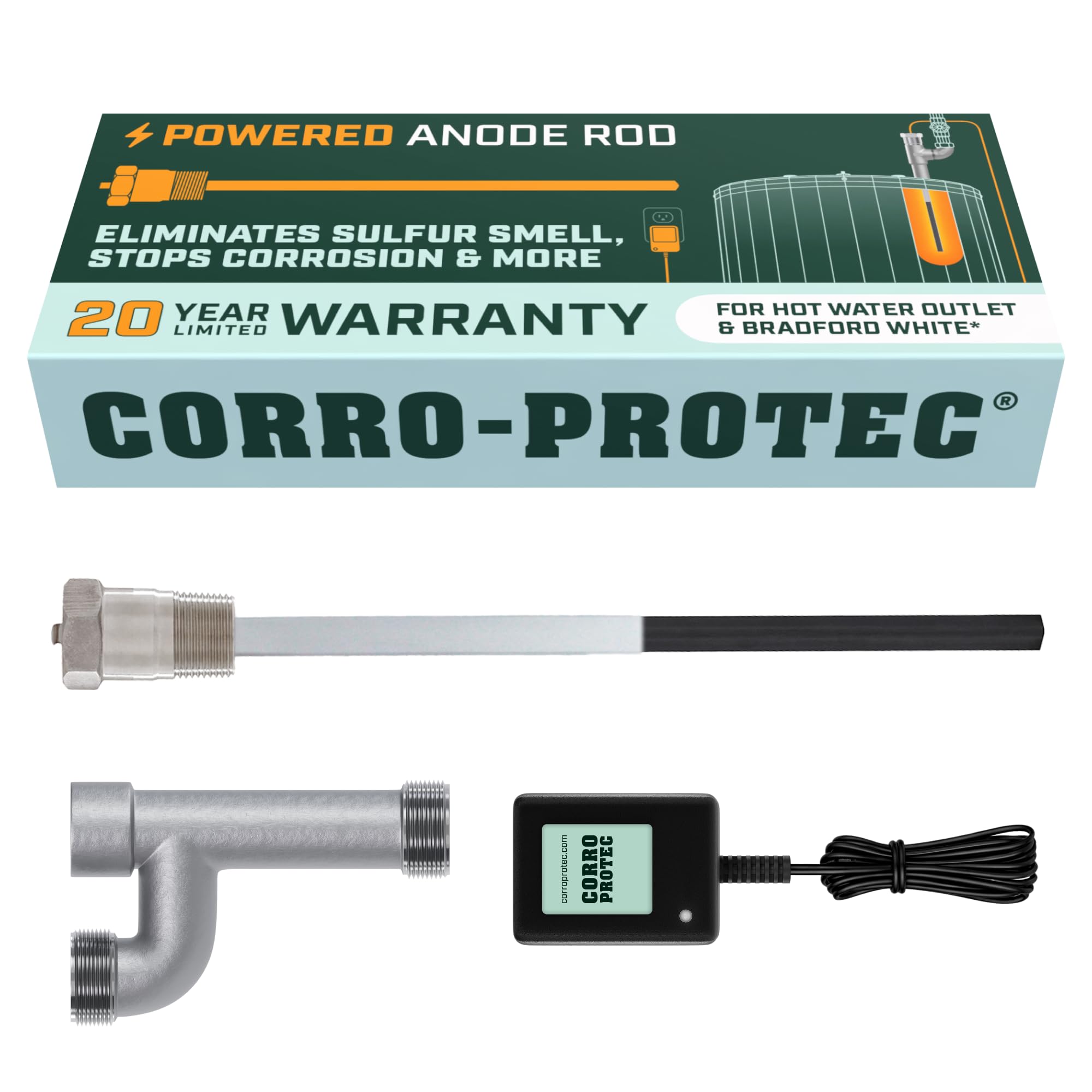
The Corro-Protec is the gold standard for hard water homes where sulfur odor and aggressive corrosion are a constant battle. It’s a titanium powered anode rod that emits a 3V DC current to protect the tank interior, eliminating the sacrificial consumption that plagues magnesium and aluminum rods. The unit is rated for 10 to 120-gallon tanks and installs into the hot water outlet port on Bradford White heaters, though it works with virtually any brand via the included stainless steel Wye fitting.
This rod actively neutralizes sulfate-reducing bacteria within 24 hours, permanently killing the rotten egg smell that conventional sacrificial rods often worsen in high-sulfate hard water. The 12-foot power cord gives you flexibility in outlet placement, and the green LED indicator confirms the unit is energized. Users report complete odor elimination in as little as three days, even on stubborn well water systems with aggressive bacterial blooms.
At this tier, you’re paying for a 20-year warranty and total maintenance freedom—no more biannual rod inspections or replacements. The installation is more involved than a simple sacrificial swap, especially on Bradford White units requiring the hot water line to be redirected through the Y-fitting, but the long-term savings on plumber visits and tank replacements are substantial. It’s the definitive solution for anyone tired of fighting hard water’s effects on their water heater.
Why it’s great
- 20-year warranty backed by a Canadian manufacturer since 2006
- Terminates sulfur odor at the bacterial source within 24 hours
- Compatible with all water types including softened, well, and city hard water
Good to know
- Requires basic plumbing skills for hot water outlet installation
- Stainless steel Wye fitting can be difficult to tighten properly
2. Briidea Powered Anode Rod

The Briidea powered anode rod delivers the same titanium-based electrified protection as the Corro-Protec at a significantly lower entry point, making it the smart choice for homeowners who want permanent hard water defense without the premium brand markup. It’s rated for 40 to 89-gallon tanks and uses a ruthenium-iridium coated titanium electrode paired with an HDPE plastic shroud that resists scale accumulation from hard water deposits.
Users report sulfur smell elimination within an hour of installation, and the green LED on the AC adapter gives clear visual confirmation that the unit is active. The rod is 12.3 inches long with a standard 3/4-inch NPT thread, fitting into the dedicated anode port on most gas and electric heaters. It draws minimal power—3V DC at 1A—so it won’t noticeably affect your electric bill.
Several reviewers note that this unit appears to be manufactured by the same OEM as the Corro-Protec, just without the premium packaging and at roughly half the price. The five-foot power cord is shorter than ideal for some setups, and you’ll need to ensure a clean ground contact on the tank for proper operation. For hard water homes on a mid-range budget, this is the powered rod that delivers permanent protection from corrosion and smell without ongoing replacement costs.
Why it’s great
- Eliminates sulfur smell in under an hour according to verified users
- Ruthenium-iridium coated titanium head resists hard water scale
- Works with any 40-89 gallon tank using standard anode port
Good to know
- Lacks detailed installation instructions out of the box
- Short five-foot power cord limits outlet placement options
3. Podoy Powered Anode Rod
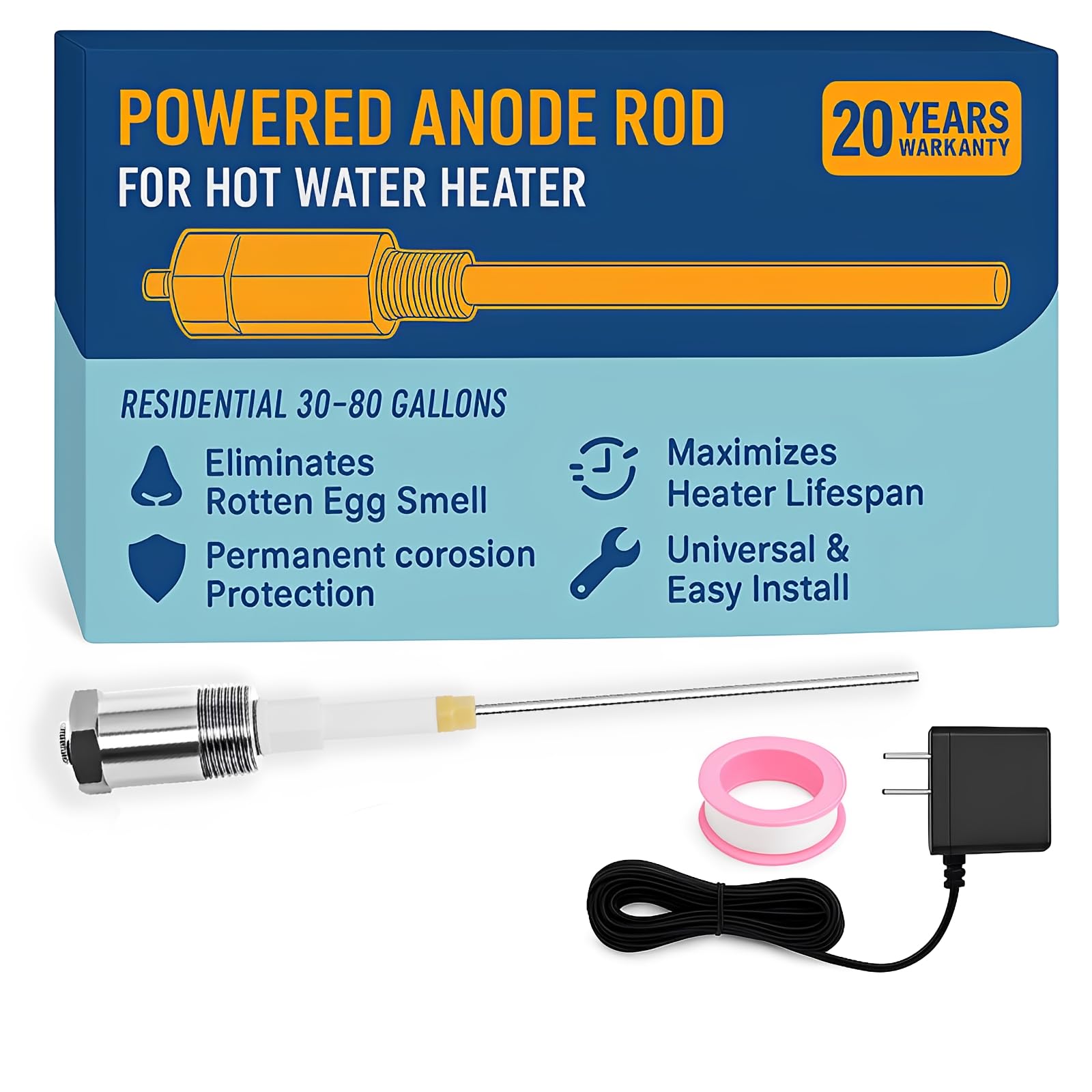
The Podoy powered anode rod is uniquely compact at only 9.4 inches, making it the best option for water heaters with extremely limited clearance or those where the sacrificial rod port is obstructed by pipes. Despite its smaller size, it’s rated for 30 to 80-gallon tanks and uses the same titanium-based electrified protection principle, outputting 3V DC through a standard AC/DC adapter to suppress corrosion and kill sulfate-reducing bacteria.
This model is particularly effective at descaling—the electrical current helps break down calcium carbonate deposits that hard water leaves behind, improving heat transfer efficiency and reducing sediment buildup at the tank bottom. Users report complete odor elimination within 24 hours and note that hot water feels “softer” with less scaling on fixtures. The rod includes Teflon tape in the box, though some users prefer to supplement with higher-quality tape for a leak-proof seal.
Installation is straightforward if you have a 1 1/16-inch socket and basic tools, but the compact design means it fits into tanks where no other powered rod would. The lack of an indicator light on the rod itself (only on the power supply) is a minor annoyance, and the packaging sometimes references a broader tank range than the unit is actually designed for. For tight spaces with hard water, this compact powered rod is a space-saving wonder.
Why it’s great
- 9.4-inch length fits in the tightest heater compartments
- Actively reduces limescale buildup from hard water deposits
- Universal 3/4-inch NPT thread fits most standard ports
Good to know
- Included Teflon tape is low quality—replace before installing
- Packaging mismatch: says 10-120 gallons in some prints
4. Eau Aluminum-Zinc Anode Rod 44″ Flexible

The Eau Aluminum-Zinc rod is the most cost-effective remedy for hard water that causes sulfur smells, specifically formulated with an alloy blend that neutralizes the bacterial reaction responsible for hydrogen sulfide gas. At 44 inches long and segmented into four hinged sections, it fits into tight overhead spaces where a solid rod cannot—each section is under 12 inches, so you only need about a foot of clearance above the tank to install it.
The kit arrives with everything needed: the rod, a chrome-finished 27mm socket, and Teflon sealing tape. Users with well water or high-sulfate city water report that the rotten egg smell disappears permanently within days of installation, solving a problem that even bleach treatments couldn’t fix. The aluminum-zinc material is less reactive than pure magnesium, so it lasts longer in aggressive water while still providing sacrificial protection to the tank.
Some users note that the rod can be safely cut shorter with a hacksaw if the 44-inch length is too long for your specific heater model. The included socket is a nice bonus, as the 1-1/16-inch hex size is required for most anode ports and not everyone has one in their toolbox. For the price, this is the most effective sacrificial option for hard water odor problems—just be aware it will still need replacement every 2-3 years depending on your water’s corrosiveness.
Why it’s great
- Aluminum-zinc alloy specifically formulated to kill sulfur smell
- Kit includes socket, Teflon tape, and all necessary hardware
- Hinged design installs in spaces with just 12 inches of clearance
Good to know
- Sacrificial rod needs replacement every 2-3 years in hard water
- Some users prefer pipe dope over included Teflon tape for sealing
5. Eastman 42″ Flexible Magnesium Anode Rod
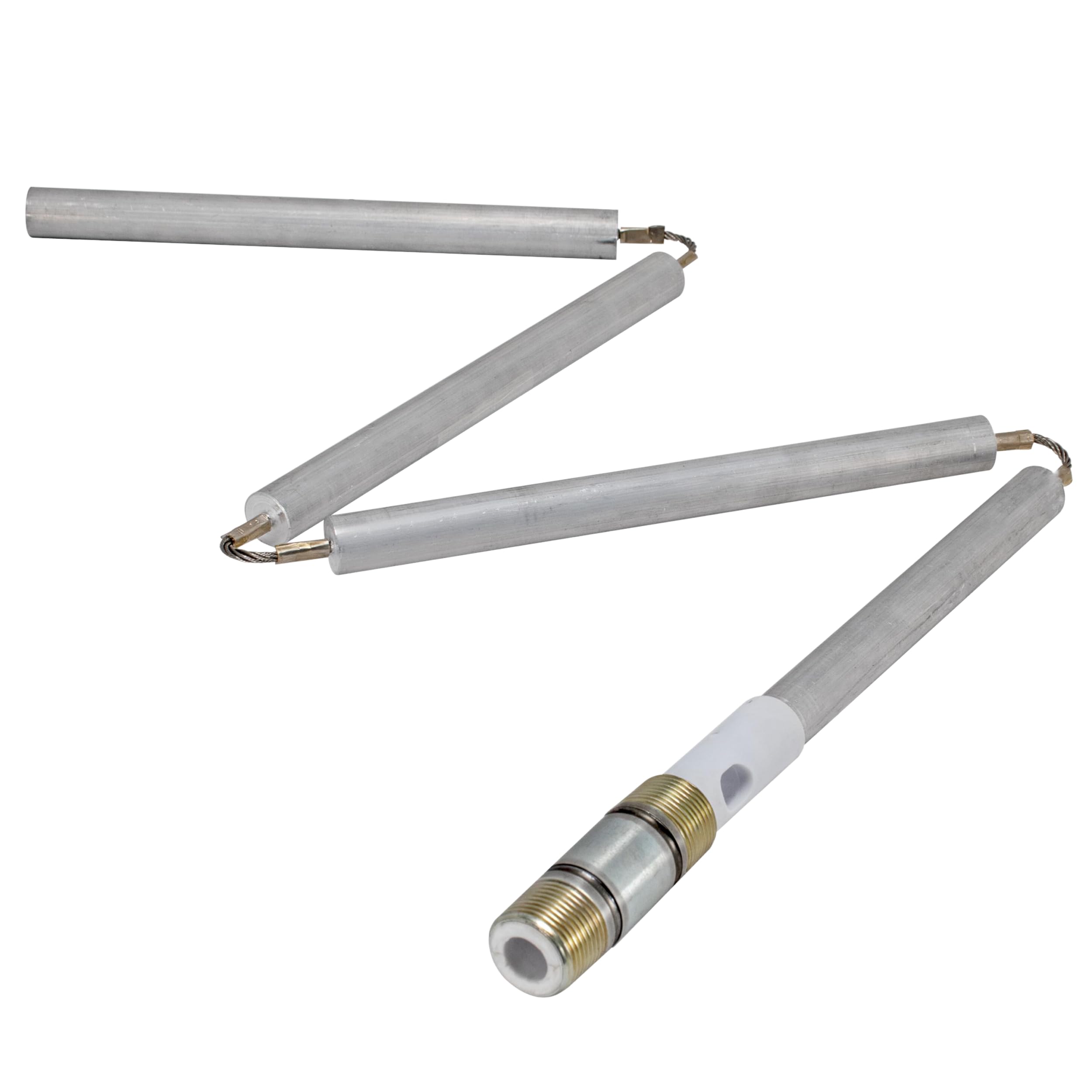
The Eastman flexible magnesium rod is a premium sacrificial option for homeowners who prefer the superior electrochemical activity of magnesium but need the convenience of a segmented design for tight installations. It features four magnesium links connected by a carbon steel cable, each link 5/8-inch in diameter, and a chrome-plated stainless steel 3/4-inch NPT nipple for corrosion-free threading into the tank.
Magnesium is the most active sacrificial metal, meaning it offers the best protection against tank corrosion in moderately hard water conditions. However, it’s also the most likely to react with sulfates in hard water to produce that rotten egg smell. Eastman designed this rod with a stainless steel nipple that reduces galvanic corrosion at the connection point, and the flexible cable design requires only 12 inches of overhead clearance to feed the rod into the tank.
This rod fits perfectly on Bradford White and similar branded heaters, and users appreciate that it comes without any unnecessary extras—just the rod itself. Note that it does not include a heat trap, so if your heater uses one, you’ll need to reuse the existing fitting. The magnesium segments will deplete faster than aluminum in hard water, generally requiring inspection every two years. For homes with moderate hardness where odor isn’t an issue, this is a top-tier sacrificial choice.
Why it’s great
- Magnesium offers superior corrosion protection for the tank
- Chrome stainless steel nipple resists rust at the connection
- Four-segment cable design fits heaters with minimal headroom
Good to know
- Depletes faster than aluminum in aggressive hard water
- Does not include a heat trap replacement component
6. Camco Aluminum Anode Rod 42″ Solid

The Camco 11582 is the no-frills workhorse of sacrificial anode rods—a solid 42-inch aluminum rod with a plated hex bushing and standard 3/4-inch NPT threads that fits virtually every residential water heater on the market.
Unlike magnesium, aluminum is less reactive with sulfates, making it a better choice for hard water that’s prone to sulfur odor issues. It won’t completely prevent the smell like a powered rod will, but it won’t make it worse either. Users report that the rod is easy to cut with a hacksaw if the 42-inch solid length exceeds available headroom—just measure carefully before threading it in.
The solid one-piece construction means it’s the most durable option mechanically, with no joints or cables that could fail, but it also means you need at least 42 inches of clearance above the tank to install it without bending or cutting. Most users who buy this have a basement or utility room with adequate overhead space. For standard installations where headroom isn’t a constraint, this is the most straightforward, reliable replacement you can choose.
Why it’s great
- Solid aluminum construction lasts 4-5 years in typical hard water
- Universal 3/4-inch NPT thread fits all major water heater brands
- No mechanical joints or cables to corrode and fail
Good to know
- Requires 42 inches of clearance for straight installation
- May need 1-1/16″ deep socket instead of standard 27mm
7. Kelaro Magnesium Rod 44″ Flexible

The Kelaro flexible magnesium rod is the most affordable entry-level option for hard water tank protection, offering the highest electrochemical activity of any sacrificial material at a budget-friendly price point. At 44 inches long with a flexible cable design, it folds down to install in spaces with just over 12 inches of overhead clearance, making it accessible for the vast majority of water heater installations.
This rod is a direct replacement for Rheem, Reliance, Richmond, Kenmore, GE, and AO Smith heaters, using a standard 3/4-inch NPT thread. Users report that it fits perfectly and installs smoothly, with one verified purchaser noting that their rod was almost completely dissolved after only two years in south Florida city water—which tells you it’s doing its sacrificial job actively. The magnesium material provides excellent protection but will deplete faster than aluminum in hard water, particularly in warmer climates with higher sulfate content.
Many buyers praise the value proposition, noting that it’s significantly less expensive than going to an OEM dealer for a replacement, and that the flexible design eliminates the need to cut and re-plumb the water heater for access. The trade-off is lifespan: expect to inspect it annually and replace it every 1.5 to 2.5 years depending on your water’s aggressiveness. For the price, it’s a perfectly effective way to keep your tank from rusting through, as long as you stay on top of regular maintenance.
Why it’s great
- Most affordable option with excellent corrosion protection
- Flexible design installs in tight spaces with 12-inch clearance
- Universal fit for Rheem, GE, AO Smith, and other major brands
Good to know
- Lasts only 1.5-2.5 years in aggressive hard water conditions
- May react with sulfates to worsen sulfur smell in some water
FAQ
Will an anode rod stop the rotten egg smell in my hot water?
How often should I replace my anode rod in hard water?
Can I cut a flexible anode rod to fit my water heater?
What size socket do I need to remove an old anode rod?
Final Thoughts: The Verdict
For most users, the best anode rod for hard water winner is the Corro-Protec Powered Anode Rod because it completely eliminates the need for sacrificial rod replacements and permanently stops sulfur odor, even in the most aggressive hard water conditions. If you want the best value per dollar, grab the Eau Aluminum-Zinc 44″ Flexible Rod for a sacrificial option that tackles odor and installs easily. And for a powered alternative that costs less than the premium contender, nothing beats the Briidea Titanium Powered Rod for protecting 40-89 gallon tanks without breaking the bank.