
Choosing a 60-inch TV means deciding between Mini-LED precision, QLED color volume, or the pure black of OLED — each technology fundamentally changes how movies and games look in your living room. The 60-inch class is the sweet spot where premium features like 144Hz panels, Dolby Vision IQ, and local dimming become accessible without stepping into custom-installation pricing.
I’m Min — the co-founder and writer behind Gadgets Feed. My buying guides are built on weeks of cross-referencing panel specs, HDR format support, real-world refresh rates, and gaming compatibility data across dozens of models to separate genuine performance upgrades from marketing noise.
After analyzing the latest 2026 releases across Mini-LED, QLED, and OLED platforms, this guide ranks the very best options and provides the decision framework you need to pick the right 60 inch tvs for your home setup and budget.
How To Choose The Best 60 Inch TV
Before you sort through panel types and HDMI ports, knowing which spec actually dictates your daily viewing experience saves hours of confusion. The 60-inch segment offers a wider technology spread than smaller sizes — from budget-friendly 4K panels to flagship Mini-LED and OLED models — so matching the display tech to your room’s lighting and viewing habits is the first step.
Panel Technology: Mini-LED, QLED, or OLED
Mini-LED uses thousands of tiny LEDs behind the screen for precise local dimming — deep blacks without the burn-in risk of OLED. QLED (quantum dot) boosts color volume and brightness, making it ideal for bright living rooms. OLED delivers per-pixel lighting for infinite contrast and perfect blacks but performs best in dimmer environments. Most 60-inch models in 2026 favor Mini-LED because it balances brightness, contrast, and longevity better than the other two technologies at this size.
Refresh Rate and Gaming Features
Native 120Hz or 144Hz panels dramatically reduce motion blur during fast sports and first-person games. If you own a PS5 or Xbox Series X, look for HDMI 2.1 ports that support 4K at 120Hz, VRR (Variable Refresh Rate), and ALLM (Auto Low Latency Mode). Many premium models now offer VRR up to 288Hz through frame doubling, which competitive gamers will notice. A 60Hz panel is fine for casual streaming and news, but 120Hz+ is non-negotiable for gaming and live sports.
HDR Format Support
Dolby Vision IQ is the most widely adopted high-end HDR format — it adjusts brightness and color based on your room’s ambient light. HDR10+ is Samsung’s alternative, delivering dynamic metadata scene by scene. IMAX Enhanced certification ensures DTS audio and expanded aspect ratios for select titles. A model that supports all three (Dolby Vision, HDR10+, and HLG) future-proofs your streaming library the best.
Audio Hardware
Built-in speakers vary massively at this size. Basic 2.0-channel setups (20W total) sound hollow, while 2.1-channel systems with a dedicated woofer (50W+) provide enough bass for casual viewing. A few premium models offer 4.1.2-channel arrays with up-firing speakers for object-based Dolby Atmos. No built-in system rivals a separate soundbar, but a TV with a 2.1-channel system and Dolby Atmos passthrough via eARC saves you from buying audio gear immediately.
Quick Comparison
On smaller screens, swipe sideways to see the full table.
| Model | Category | Best For | Key Spec | Amazon |
|---|---|---|---|---|
| Hisense 65″ S7N CanvasTV | Mid-Range | Art Mode & Living Room Décor | Hi-Matte Display, 144Hz Panel | Amazon |
| Sony BRAVIA 5 65XR50 | Premium | Processor & PS5 Gaming | XR Processor, 120Hz, Dolby Vision | Amazon |
| Sony OLED XR8B 65″ | Premium | Pure Blacks & Cinema | OLED, Per-Pixel Dimming, 120Hz | Amazon |
| Hisense 65″ U8 ULED Mini-LED | Premium | Brightness & Local Dimming Zones | 5,000 Nits, 165Hz, 4.1.2 Ch Audio | Amazon |
| Toshiba 65″ Z670R Mini-LED | Mid-Range | All-Round Value with 144Hz | Mini-LED, 144Hz, REGZA Engine | Amazon |
| Samsung 65″ M80H Mini LED | Mid-Range | AI Mode & Samsung Ecosystem | Mini-LED, 144Hz, NQ4 AI Gen2 | Amazon |
| Samsung 65″ M70H Mini LED | Mid-Range | Soccer Mode & Bright Rooms | Mini-LED, 60Hz DLG, Pure Color | Amazon |
| iFFALCON 65″ U85 MiniLED | Value | PC & Console Gaming | Mini-LED, 144Hz, 4x HDMI 2.1 | Amazon |
| Roku 65″ Plus Series Mini-LED | Mid-Range | Roku OS Simplicity & Sound | Mini-LED, QLED, Built-in Subwoofer | Amazon |
| TCL 55″ QM64L Mini LED QLED | Value | Mini-LED at Entry-Level Price | Mini-LED, 144Hz, Fire TV | Amazon |
| Westinghouse 58″ 4K Xumo TV | Budget | Budget-Friendly Smart TV | 4K, HDR10, Xumo OS, Voice Remote | Amazon |
In‑Depth Reviews
1. Hisense 65″ S7N CanvasTV
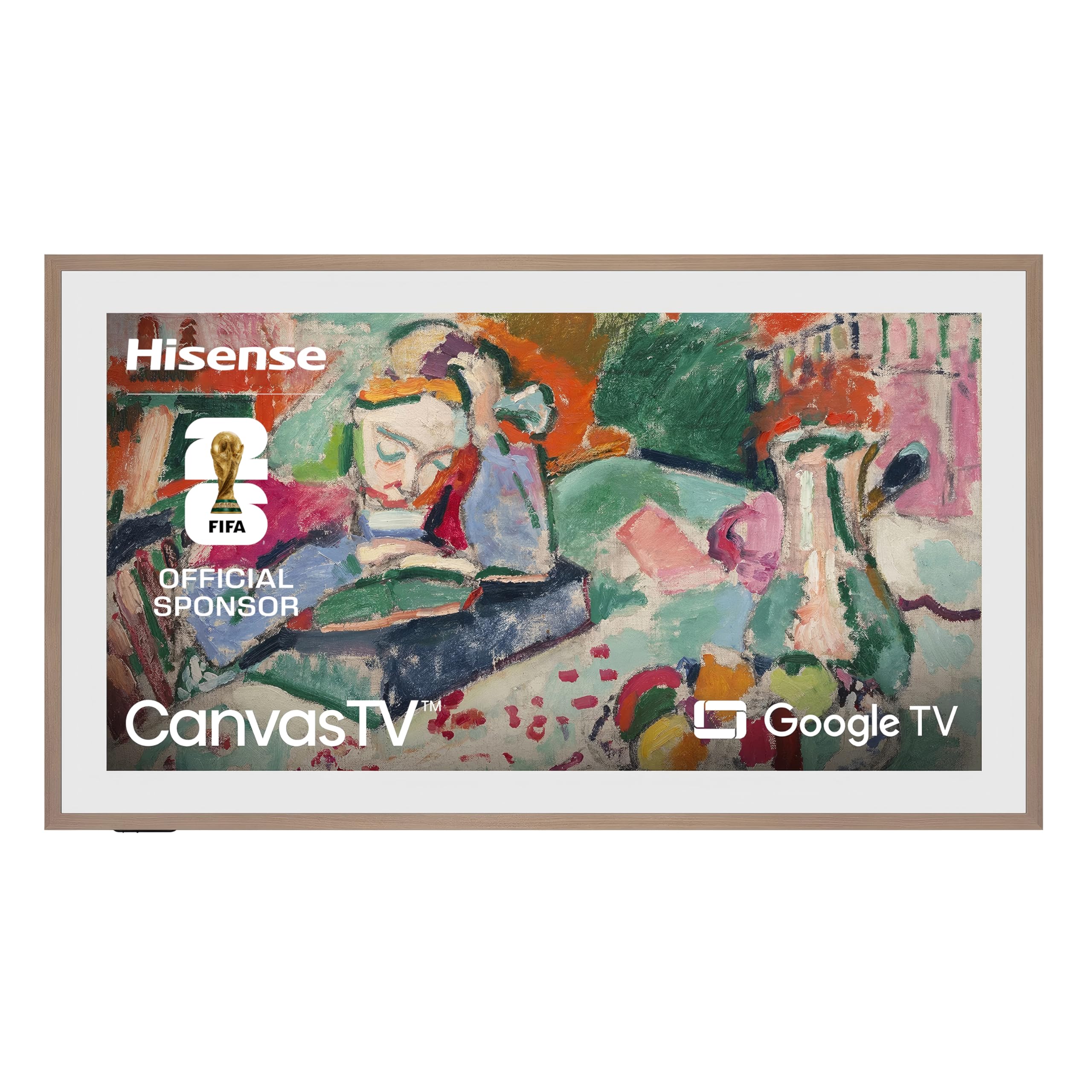
The Hisense S7N CanvasTV bridges a surprising gap: a 144Hz QLED panel with a matte anti-glare screen designed to look like framed wall art when idle. The Hi-Matte display virtually eliminates reflections — a distinct advantage over glossy-screened competitors in naturally lit rooms. The included teak magnetic frame and ultra-slim wall mount make flush installation straightforward, and the Art Mode gallery is genuinely convincing from a few feet away.
Under the panel, this is a full 4K QLED with Dolby Vision HDR and a 144Hz native refresh rate — the same gaming credentials as more expensive Mini-LED sets. Google TV runs smoothly, and the CanvasTV doubles as a digital photo frame using your own images via phone upload. The built-in audio is 2.0-channel and serviceable but lacks the bass of sets with dedicated subwoofers.
For buyers who want a TV that disappears into the room when not in use, the S7N delivers zero-compromise picture quality without the premium upcharge of competing frame TVs. The motion-activated art mode and included wall mount add genuine value, making this the most versatile 60-inch option for design-conscious households.
Why it’s great
- Hi-Matte anti-glare display works brilliantly in bright rooms
- 144Hz native panel for smooth gaming and sports
- Art Mode with magnetic frame and wall mount included
Good to know
- Built-in sound lacks deep bass — plan for a soundbar
- Limited built-in art library; best with personal photos
2. Sony BRAVIA 5 65XR50

Sony’s XR Processor with AI-driven real-time upscaling sets the BRAVIA 5 apart in a market flooded with generic chipsets. It takes 1080p or 1440p content and intelligently reconstructs it to 4K with remarkably low artifacting — crucial if you watch a lot of cable TV or older streaming libraries. The Mini-LED backlight, controlled by the XR Backlight Master Drive, produces deep blacks with no visible haloing around bright subtitles.
Gamers benefit from exclusive PlayStation 5 features: Auto HDR Tone Mapping and Auto Genre Picture Mode that automatically switch the TV to game-optimized settings. The 120Hz panel with VRR support keeps motion smooth, and Dolby Vision + Dolby Atmos delivers a cohesive home theater experience. Only two of the four HDMI ports support HDMI 2.1 bandwidth, which is restrictive for multi-console setups.
For buyers who prioritize image processing above all else — especially mixed-use households watching everything from 480p news to 4K Blu-rays — the BRAVIA 5 makes poorly-mastered content watchable without sacrificing flagship HDR performance. The Google TV interface is fast, and the included Sony Pictures CORE app adds IMAX Enhanced movies.
Why it’s great
- XR Processor upscales low-resolution content exceptionally well
- Exclusive PS5 features simplify gaming setup
- Mini-LED with virtually no blooming
Good to know
- Only 2 HDMI 2.1 ports for 120Hz gaming
- Built-in sound is good but not class-leading
3. Sony OLED XR8B 65″

Sony’s OLED XR8B delivers the contrast benchmark for this size class — over 8 million self-lit pixels produce absolute black with zero blooming, even next to bright HDR highlights. The XR Processor handles motion interpolation with XR OLED Motion, eliminating the stutter that older OLED panels often showed during 24fps film content. The 120Hz panel with VRR ensures gaming stays tear-free, and the Acoustic Surface Audio+ technology uses the screen itself as a speaker for surprisingly directional sound.
Color accuracy out of the box is reference-grade, and the Dolby Vision implementation handles challenging shadow detail better than any Mini-LED competitor at this price. The downside is peak brightness — at roughly 800 nits, it struggles in very bright rooms compared to Mini-LED sets that hit 1,000–5,000 nits. Burn-in risk is low with modern OLED mitigation, but it remains a consideration for static content.
If you watch most content in a dim or dedicated theater room and demand the purest possible black levels, the XR8B is the definitive choice for 60-inch cinematic viewing. The Google TV interface, AirPlay 2 support, and seamless PS5 integration make it as practical as it is beautiful.
Why it’s great
- Perfect black levels with zero bloom
- Acoustic Surface Audio projects sound from the screen
- Reference-grade color accuracy for HDR movies
Good to know
- Peak brightness is lower than Mini-LED rivals
- Not ideal for very bright rooms with lots of windows
4. Hisense 65″ U8 ULED Mini-LED
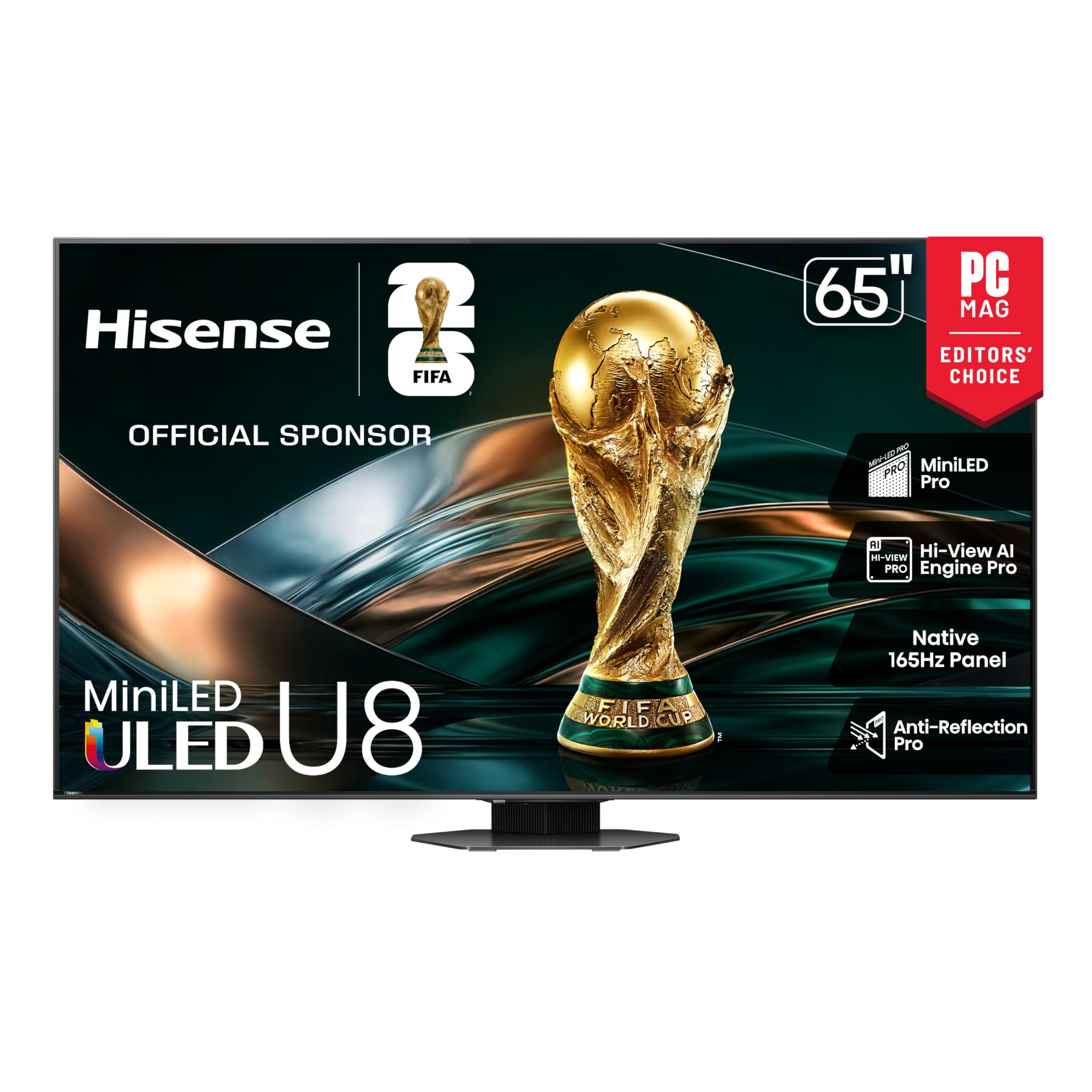
The Hisense U8 series is a brightness monster — 5,000 nits peak luminance with up to 5,600 local dimming zones, making it the most capable HDR performer in this roundup for specular highlights. Sun reflections, explosions, and neon signs in HDR content look blindingly realistic. The native 165Hz panel with VRR climbing to 288Hz is the highest refresh rate available at this size, and the Game Bar gives granular control over latency and response time settings.
The 4.1.2-channel audio array with two up-firing speakers creates genuine Dolby Atmos height effects without external speakers — rare in any TV. QLED quantum dot color is Pantone Validated, and the Hi-View AI Engine Pro adjusts picture parameters per scene using real-time content analysis. The set is physically deeper than ultra-slim competitors due to the local dimming hardware, which matters for flush wall mounting.
For buyers who watch a lot of HDR content in bright rooms or want the absolute best gaming spec sheet (165Hz, FreeSync Premium Pro, ALLM), the U8 outperforms sets costing twice as much. The anti-reflection Pro coating minimizes glare even with this extreme brightness.
Why it’s great
- 5,000 nits peak brightness for jaw-dropping HDR
- 165Hz native panel with 288Hz VRR for competitive gaming
- 4.1.2-channel Atmos audio with up-firing speakers
Good to know
- Chassis is thicker than competing slim models
- Some users report periodic software instability
5. Toshiba 65″ Z670R Mini-LED

Toshiba’s Z670R combines Mini-LED backlighting with QLED quantum dot color and the proprietary REGZA Engine ZRi Gen3, which Toshiba engineers in Japan fine-tune for natural color reproduction. The result is a picture that avoids the oversaturated look of some competitors while still delivering 1,000+ nit highlights and deep black floors via full-array local dimming. The 144Hz native panel with AMD FreeSync Premium and VRR 144Hz makes it equally suited for sports and PS5 gaming.
The built-in REGZA Power Audio Pro system includes a dedicated bass woofer, producing room-shaking low end that few stock TV audio systems can match. Fire TV OS with Alexa built-in is responsive and integrates well with Amazon ecosystem devices. Dolby Vision IQ adapts to ambient light automatically, and the Total HDR Solution Pro includes HDR10+ Adaptive for Samsung-friendly content.
For buyers who want a single TV that handles movies, gaming, and live TV equally well without needing a soundbar immediately, the Z670R offers the best feature-to-price ratio in the mid-range Mini-LED segment. The Japanese-designed chassis is minimalist and clean.
Why it’s great
- REGZA Engine delivers natural, accurate color
- Built-in bass woofer provides cinematic audio
- 144Hz native refresh with FreeSync Premium
Good to know
- Fire TV OS may feel slower than Google TV over time
- Remote requires precise aiming for IR commands
6. Samsung 65″ M80H Mini LED
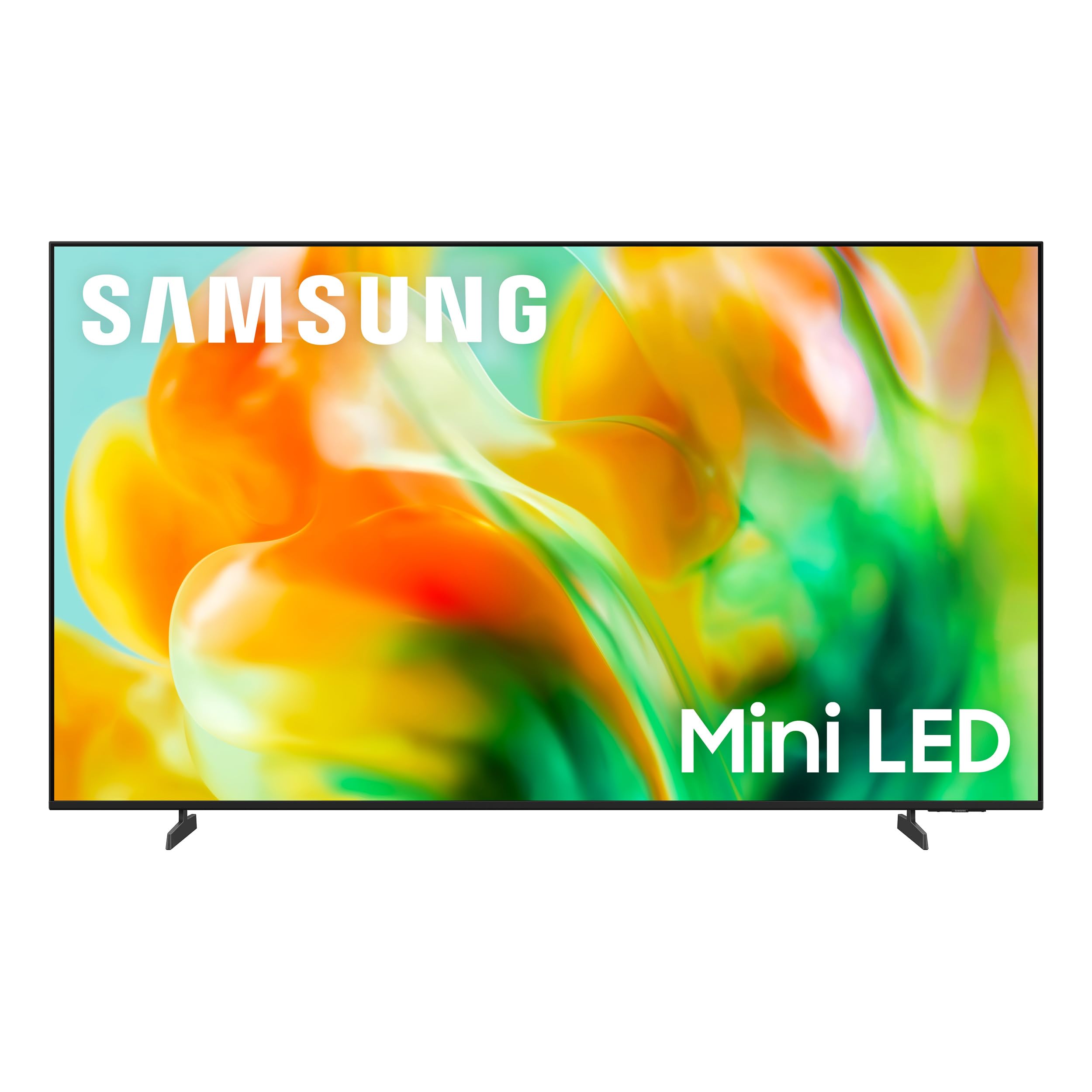
Samsung’s M80H steps up from the M70H with the NQ4 AI Gen2 Processor, which analyzes each scene and applies real-time adjustments to color, contrast, and clarity via AI Mode. The Mini-LED panel with Pure Spectrum Color produces over one billion shades, and the Auto HDR Remastering intelligently converts SDR content into HDR-like luminance — a feature that noticeably improves standard cable and YouTube streams. Motion Xcelerator 144Hz ensures smooth panning during sports.
The Samsung Vision AI ecosystem includes built-in Alexa and Samsung TV Plus (2,700+ free channels). The remote is simple, though some users find Samsung’s Tizen OS less intuitive than Google TV or Roku for third-party app discovery. The 4K AI Upscaling is competitive with Sony’s XR processor, especially for 1080p gaming.
If you want the Samsung ecosystem — seamless integration with Samsung phones, Galaxy Buds, and SmartThings — the M80H is the smartest choice. The AI Mode genuinely improves mixed-content watching without manual tweaking.
Why it’s great
- NQ4 AI Gen2 Processor delivers excellent upscaling
- Auto HDR Remastering improves SDR content noticeably
- 144Hz Motion Xcelerator for smooth sports
Good to know
- Tizen OS is less intuitive than Google TV
- Remote lacks a dedicated input-switching button
7. Samsung 65″ M70H Mini LED
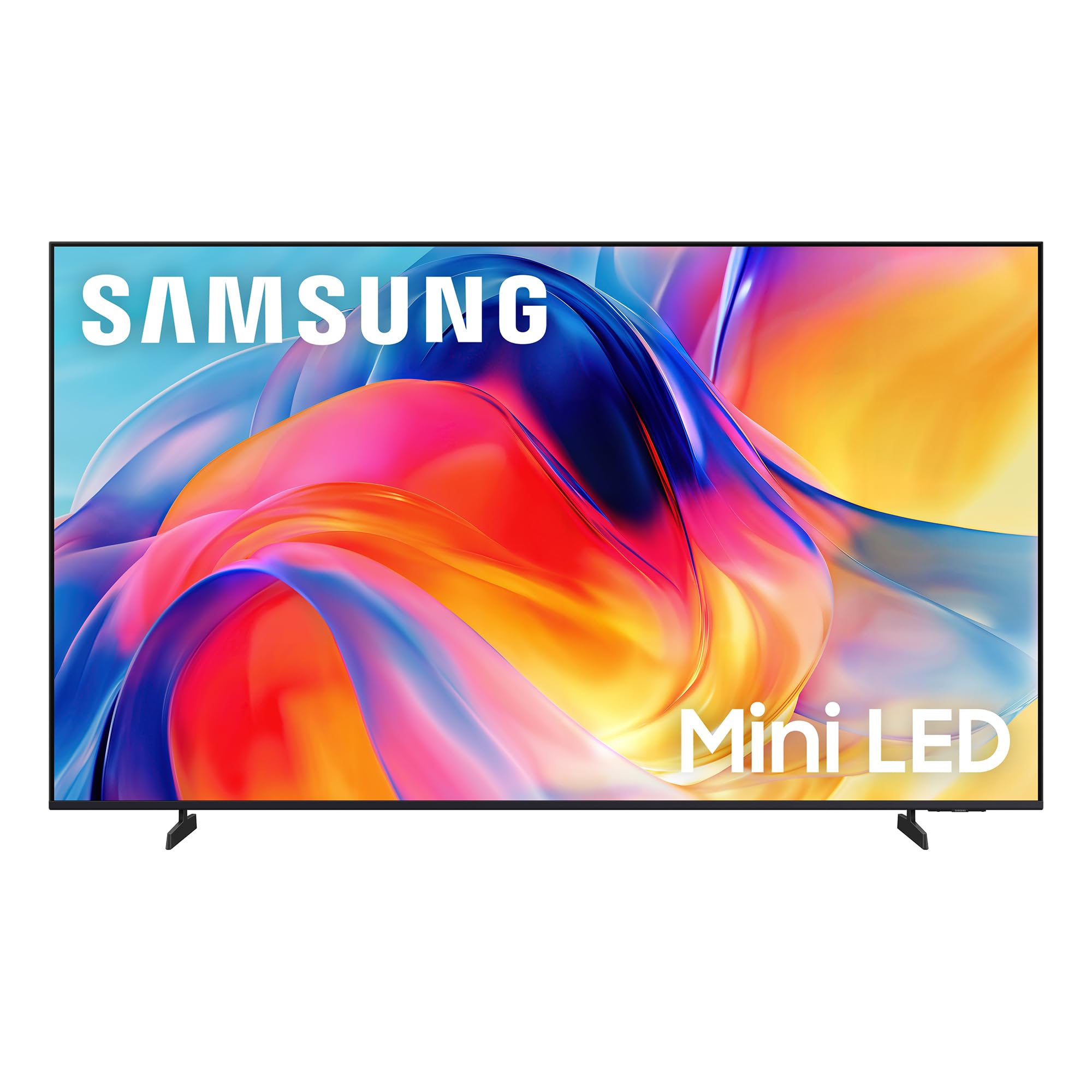
The M70H is the entry point into Samsung’s Mini-LED lineup, offering the same Pure Spectrum Color technology and Mini-LED HDR as the M80H but with a 60Hz native panel using DLG (Dual Line Gate) to simulate 120Hz for gaming. The Motion Xcelerator + DLG 120Hz reduces input lag and motion blur effectively for casual console play, though competitive gamers will prefer the native 144Hz panel on the M80H. Color Booster adds vibrancy to mid-tones, and the dedicated Soccer Mode adjusts motion handling and green saturation for pitch realism.
Samsung TV Plus offers 750+ free channels out of the box, and the built-in Alexa supports voice control. Color accuracy is good right out of the box in Movie mode, and the Supreme Mini LED Dimming produces respectable black levels for the price tier. The main compromise is the 60Hz panel ceiling — fast-paced PC gaming above 60fps won’t be fully utilized.
For buyers who want Samsung’s processing and Mini-LED contrast without paying for the high-refresh tax, the M70H is a smart compromise. The bright panel handles daytime viewing well, and the 60Hz refresh is perfectly adequate for streaming movies and live TV.
Why it’s great
- Mini-LED backlight with good contrast for the price
- Color Booster and Pure Spectrum produce vibrant images
- Soccer Mode improves live sports clarity
Good to know
- Native 60Hz panel — DLG 120Hz is simulated
- Tizen OS interface can be slow with streaming apps
8. iFFALCON 65″ U85 MiniLED
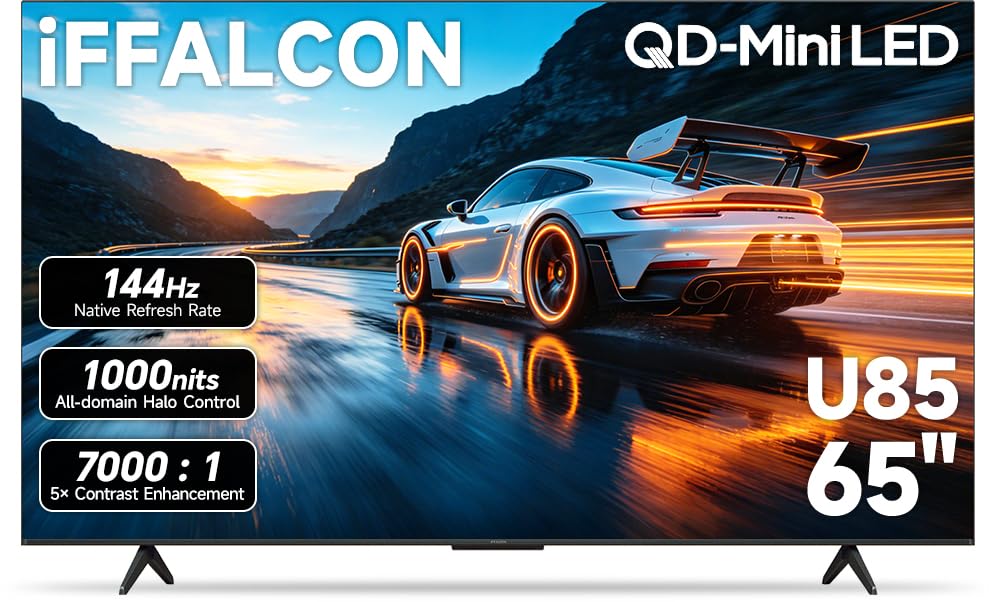
The iFFALCON U85 is engineered for the multi-console household — four HDMI 2.1 ports, all supporting 4K@144Hz on two ports and 4K@60Hz on the other two, plus VRR up to 288Hz via frame doubling. This eliminates the port shortage that plagues most competitors. The Mini-LED panel with 1,000 nits peak brightness and a 7,000:1 contrast ratio delivers punchy HDR gaming visuals, and FreeSync Premium Pro certification ensures tear-free gameplay across Xbox and AMD GPUs.
The 50W 2.1-channel audio system (dual tweeters plus a dedicated woofer) provides solid bass without a soundbar, and Dolby Atmos passthrough via eARC preserves lossless audio for external setups. Google TV with far-field voice control and built-in Chromecast makes streaming effortless. A unique selling point is the built-in hotel mode for commercial installations, alongside IP and IR control for hospitality environments.
For dedicated gamers who need multiple 120Hz-capable ports and the highest VRR ceiling available, the iFFALCON U85 outperforms almost everything at its price tier. The panel’s brightness holds up well in well-lit rooms, and the Google TV interface is clean and responsive.
Why it’s great
- Four HDMI 2.1 ports — unmatched at this price
- 288Hz VRR for ultra-smooth competitive gaming
- 50W 2.1 audio with dedicated woofer
Good to know
- Chassis thickness is above average
- Occasional flickering reported in some units
9. Roku 65″ Plus Series Mini-LED
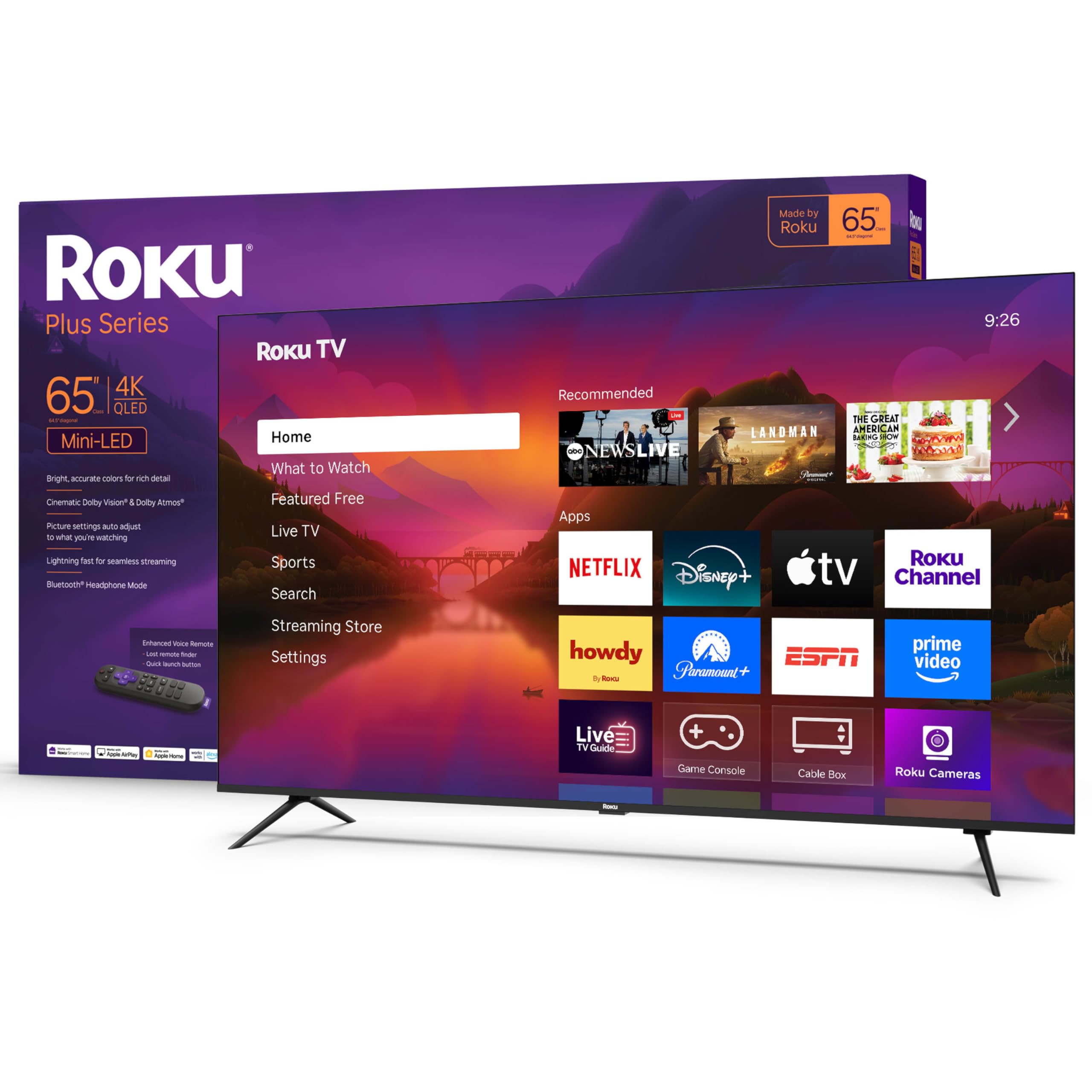
Roku’s Plus Series combines a Mini-LED backlit QLED panel with the company’s famously clean and fast interface. The Roku OS prioritizes simplicity — no bloatware, no algorithmic feed cluttering the home screen, just apps and live TV channels. The Enhanced Voice Remote includes lost-remote finder and app-specific shortcut keys. Roku Smart Picture Max uses AI to automatically tune color and sharpness per scene, and the results are subtle but effective for broadcast TV and older content.
Audio is a standout feature: a built-in subwoofer paired with Dolby Atmos decoding produces fuller bass and clearer dialogue than most mid-range TV speakers. Bluetooth Headphone Mode lets you listen privately through wireless headphones — a genuinely useful feature for late-night viewing. The 65-inch panel supports VRR and Game Mode for casual gaming, though the 60Hz refresh rate limits high-framerate performance.
For buyers who value interface speed and simplicity above all else — particularly older users or anyone frustrated by smart TV lag — the Roku Plus Series delivers a premium viewing experience without the complexity of Tizen or Google TV.
Why it’s great
- Clean, fast Roku OS with automatic updates
- Built-in subwoofer for richer bass
- Bluetooth Headphone Mode for private listening
Good to know
- 60Hz panel — not ideal for high-fps gaming
- No USB 3.0 port for high-speed media playback
10. TCL 55″ QM64L Mini LED QLED
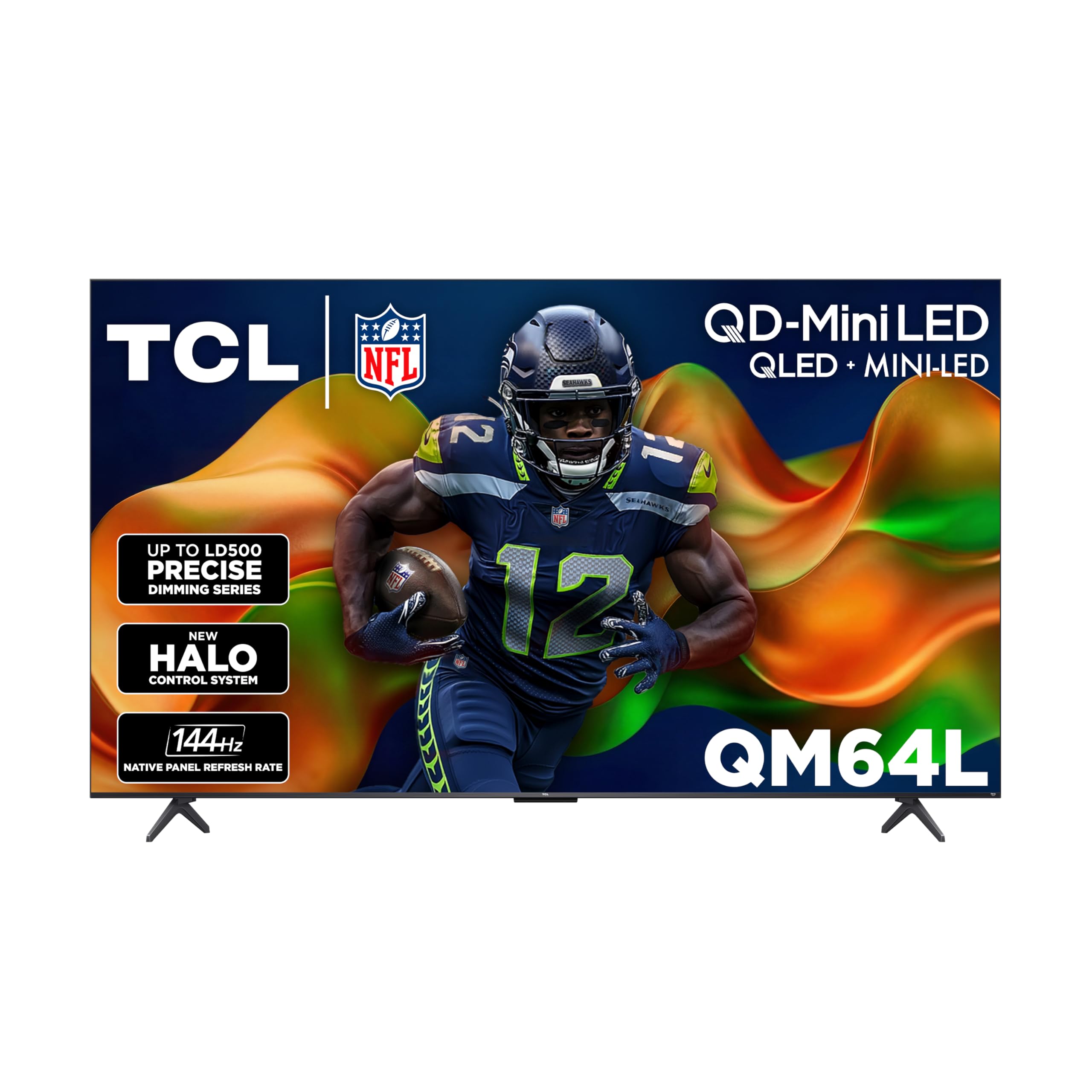
The TCL QM64L is an Amazon-exclusive that delivers the core Mini-LED and QLED experience — deep blacks, vibrant quantum dot color, and a native 144Hz panel — for a remarkably low entry price. The TCL Halo Control System includes a Super High Energy LED Microchip and Micro-OD Reduced Optical Distance to minimize blooming, while Local Dimming Pro adapts brightness to on-screen content. The High Contrast HVA Panel boosts native contrast ratio without sacrificing viewing angles.
Fire TV is fully integrated with Alexa+ Voice Remote, making it a natural fit for Amazon Prime households. The smart home hub functionality lets you view security camera feeds and control lights directly from the TV. The 100,000-hour QLED lifespan rating means this panel should outlast most other components, and the Enhanced QLED reproduces nearly 100% of the DCI-P3 color space required for Hollywood-standard HDR.
For buyers on a tighter budget who refuse to compromise on panel technology — wanting true Mini-LED contrast and 144Hz gaming without paying for premium brand markup — the QM64L is the clear value champion. The 55-inch size fits smaller spaces while offering the same specs as larger flagships.
Why it’s great
- Mini-LED with QLED at a budget-friendly price
- 144Hz native panel with FreeSync support
- Fire TV with Alexa built-in and smart home hub
Good to know
- 55-inch size — smaller than the 60-inch class
- Some users report optical audio control issues
11. Westinghouse 58″ 4K Xumo TV
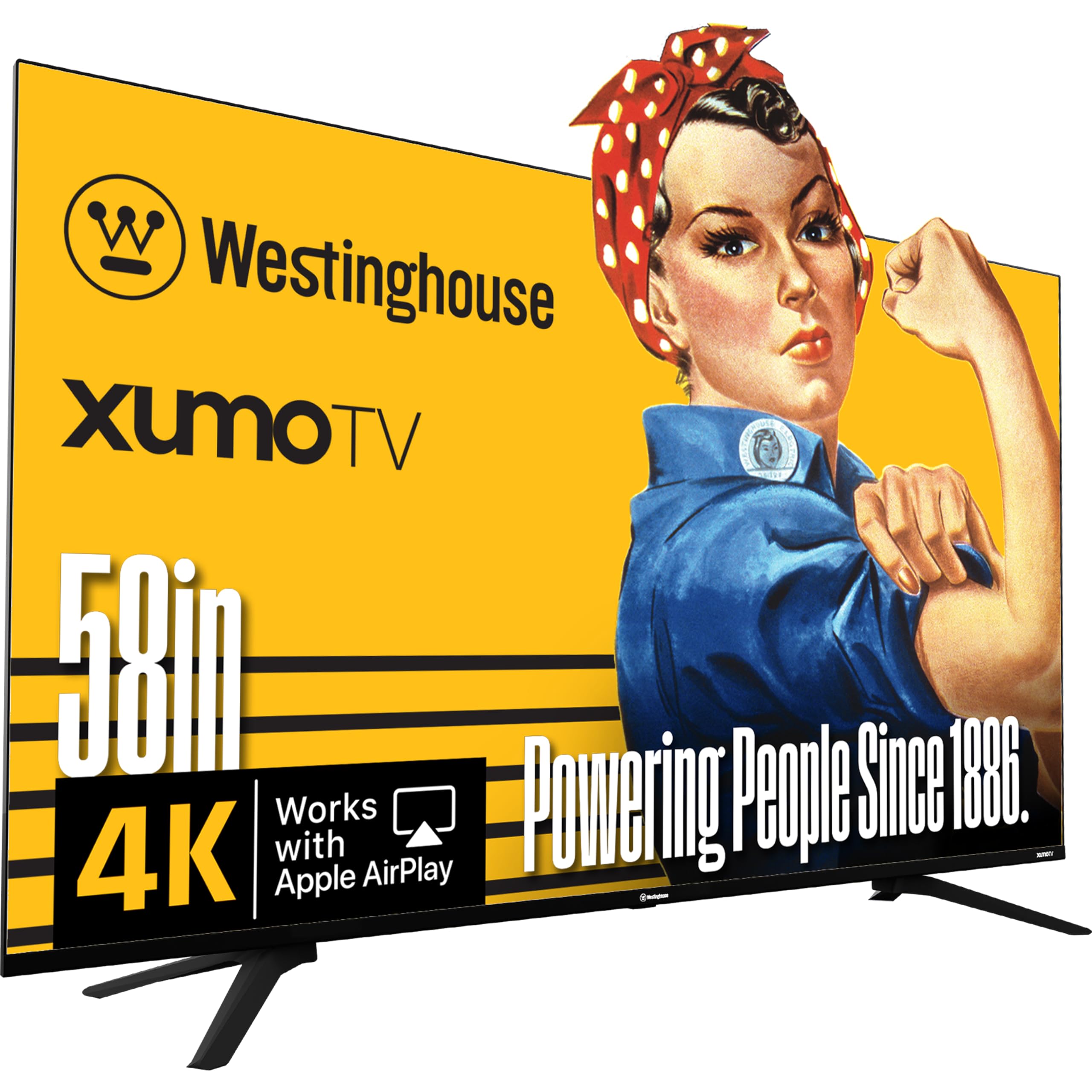
The Westinghouse 58-inch 4K Xumo TV targets the budget buyer who needs a large screen for basic streaming and OTA antenna viewing. The 4K UHD panel with HDR10 and Dolby Vision delivers surprisingly good color for the price, and the Dolby Atmos decoding keeps audio clear. The Xumo OS interface is built around free, ad-supported streaming — with over 350 free live channels and 70,000 on-demand titles available without any subscription — making it ideal for cord-cutters.
Connectivity is robust: three HDMI ports, USB, optical audio, composite video, and built-in Bluetooth 5.1 for wireless headphones or soundbars. Apple AirPlay and Chromecast are built in for mobile mirroring. The edgeless design looks modern on a stand, though the viewing angles are typical VA panel behavior — best watched head-on. The voice remote supports universal search across apps, though app loading times are slower than premium smart TV platforms.
For a secondary bedroom, guest room, or a first apartment where budget is the primary constraint, the Westinghouse 58-inch delivers a genuine 4K HDR experience with Dolby Vision support. The free streaming library eliminates monthly subscription pressure, and the Bluetooth audio support adds convenience without extra hardware cost.
Why it’s great
- Excellent value with Dolby Vision and HDR10 support
- 350+ free live channels via Xumo Play
- Bluetooth 5.1 and AirPlay 2 for wireless streaming
Good to know
- Xumo OS is slower than Roku or Google TV
- VA panel has limited viewing angles off-center
FAQ
Is Mini-LED better than OLED for a 60-inch TV?
Do I need HDMI 2.1 for a 60-inch TV?
What is Dolby Vision IQ and why does it matter?
Can I use a 60-inch TV for PC gaming?
Final Thoughts: The Verdict
For most users, the 60 inch tvs winner is the Hisense 65″ S7N CanvasTV because its Hi-Matte display, included wall mount, magnetic frame, and 144Hz panel deliver exceptional versatility for both entertainment and home décor at a mid-range price. If you want the absolute best picture quality for dark-room cinema viewing, grab the Sony OLED XR8B 65″. And for competitive gaming with the highest VRR ceiling and four HDMI 2.1 ports, nothing beats the iFFALCON 65″ U85 MiniLED.