
A cracked mug, a chipped vase, a broken tile—these aren’t just clutter, they’re moments that demand a repair that vanishes. Ceramic adhesive isn’t a single formula; it’s a spectrum of chemistries, from thin cyanoacrylate that wicks into hairline cracks to thick epoxy pastes that fill gaps, each with a unique curing profile and temperature ceiling. Picking the wrong one means a repair that fails under heat, yellows over time, or simply never holds its shape on a vertical surface.
I’m Min — the co-founder and writer behind Gadgets Feed. I’ve spent countless hours analyzing the tensile strengths, cure windows, and service temperature ranges of these formulations to cut through the marketing and deliver data you can actually use for real-world repairs.
Whether you need to seal a gas tank, fix a heirloom figurine, or fireproof a stove joint, this guide zeroes in on the specific curing chemistry and environmental tolerance that defines the best ceramic adhesive for your exact job.
How To Choose The Best Ceramic Adhesive
Ceramic adhesive selection hinges on three axes: the repair’s thermal environment, the gap size of the fracture, and the curing speed you can tolerate. A formula optimized for a kiln will fail on a moisture-prone bathroom tile, and a fast-drying cyanoacrylate won’t bridge a 3mm gap left by a chipped edge.
Match Service Temperature to Your Use Case
Every adhesive carries a “service temperature range” — the sustained heat it endures without weakening. For oven and fireplace repairs, look for a rating above 500°F; sodium silicate-based options survive 2000°F. Standard household epoxies top out around 200°F, fine for ceramic mugs but fatal near a stove pipe.
Choose the Right Viscosity for the Fracture
Thin, water-like cyanoacrylate adhesives exploit capillary action to penetrate hairline cracks in porcelain figurines, creating an invisible bond after curing. Thick epoxy pastes are best for gap-filling — chipped tiles or broken handles — where you need to build volume and sand the surface afterward. A paste that can’t wick will leave bubbles, while a low-viscosity liquid will run off a vertical gap.
Understand the Cure Cycle Trade-Off
Cyanoacrylate sets in 15-60 seconds but reaches full strength only after 24 hours. Five-minute epoxies offer a working window for alignment but require clamping. Sodium silicates harden to a glass-like state over several hours. Rushing a cure — e.g., exposing a “fast” glue to water or heat before full polymerization — guarantees a brittle joint that snaps under the first real load.
Quick Comparison
On smaller screens, swipe sideways to see the full table.
| Model | Category | Best For | Key Spec | Amazon |
|---|---|---|---|---|
| Leenexus Super Glue | Cyanoacrylate | Hairline crack repair on heirloom ceramic | 15-45s set; 1.35 fl oz | Amazon |
| Kraken Bond Fireplace Sealant | Silicone Caulk | Extreme heat — stoves, chimneys, ovens | 2732°F rated; 2×10.1 oz | Amazon |
| Lynn Mfg Sodium Silicate | Liquid Glass | High-temp ceramic fiber repair | 2000°F rated; 4 fl oz | Amazon |
| GDDP 5-Minute Epoxy | Epoxy Resin | Versatile general household ceramic bonding | 300°F heat resistant; 8.45 fl oz | Amazon |
| Ankita Tile Repair Kit | Paste Epoxy | Cosmetic color-matched tile chip repair | Color-match pigment kit | Amazon |
| PC Products PC-7 Epoxy | Epoxy Paste | Structural fills — gas tanks, masonry | 200°F service; 1/2 lb cans | Amazon |
| Beacon 527 Multi-Use | Quick-Dry Liquid | Lightweight craft and ceramic repairs | 1-hour dry; 2 oz 2-pack | Amazon |
In‑Depth Reviews
1. LEENEXUS Super Glue for Ceramic (40ML)
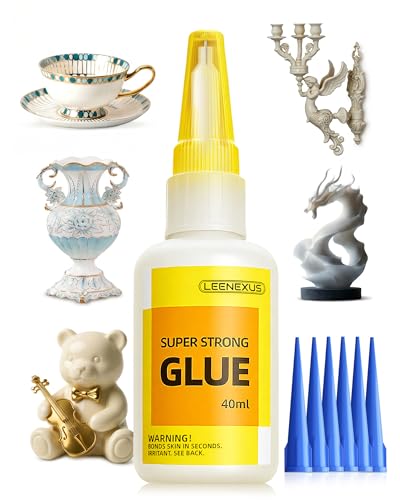
The LEENEXUS formula is engineered as a low-viscosity cyanoacrylate specifically for ceramic and porcelain, using capillary action to penetrate hairline cracks rather than simply sitting on the surface. Its 15-45 second set time provides a fast initial grab while still allowing a short window for alignment — crucial when reassembling a shattered heirloom. The bond cures crystal clear and withstands hot water up to 212°F (100°C), so a repaired mug won’t fail under morning tea.
The anti-clog system — a built-in cleaning needle, dual-threaded cap, and moisture-proof seal — directly addresses the most common frustration with super glues: a hardened nozzle that wastes the remaining product. Users report strong adhesion on leather, rubber, and most plastics, though it is not designed for polyethylene or polypropylene. The 1.35 fl oz bottle with six precision tips allows controlled drop-by-drop application, critical for avoiding the whitening effect common when too much cyanoacrylate is applied.
Customer feedback highlights successful repairs on ceramic shoes, broken figurines, and even sidewall punctures on mower tires after a 30-minute set. A small number of units shipped with empty bottles, but the manufacturer’s warranty covers replacements. For a fast-curing, invisible repair on decorative ceramics, this is the most targeted option available.
Why it’s great
- Water-thin viscosity wicks into hairline cracks; final bond is virtually invisible
- Anti-clog nozzle system extends usable life well beyond standard super glues
Good to know
- Not effective for gap-filling or non-porous plastics like polyethylene
- Some units have shipped with no glue inside; verify seal upon arrival
2. Kraken Bond High Temperature Black Fireplace Sealant (2×10.1oz)
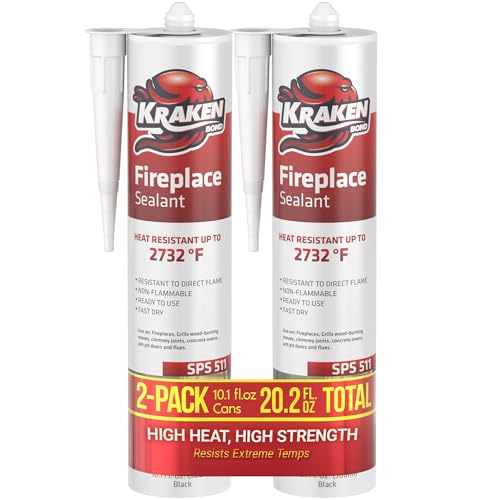
For extreme-heat applications, the Kraken Bond sealant stands alone with a Class-A fire rating and a temperature ceiling of 2732°F. This silicone-based caulk is formulated specifically for fireplace joints, wood stove connections, chimney liners, and oven gaskets — environments where standard epoxies would degrade or combust. The paste consistency allows application with a putty knife or rubber scraper, and uncured sealant cleans up with water.
The 24-hour full cure yields a crack-free seal that remains flexible enough to accommodate thermal expansion in metal and brick interfaces. Users report successful sealing of air leaks around wood stove joints, leading to improved flame control and extended burn times. The two-pack format provides 20.2 total fluid ounces, sufficient for multiple stove doors or a full chimney liner seal. The low-odor, low-VOC formulation is safe for indoor use with proper ventilation.
While the initial cure takes about a day, the bond holds after repeated cycles from cold start to 900°C furnace temperatures. A few users note that a standard caulking gun is required for smooth application. If your ceramic repair must survive direct flame contact, this is the only reliable choice in this lineup.
Why it’s great
- Certified Class-A fire rating withstands sustained 2732°F temperatures
- Low-odor, low-VOC formula safe for indoor fireplace and stove repairs
Good to know
- Requires a caulking gun for proper application; paste is stiff
- Full cure takes 24 hours before exposure to high heat
3. Lynn Manufacturing High Temperature Adhesive (Sodium Silicate 4oz)

Lynn Manufacturing’s sodium silicate solution, also known as waterglass, takes a different approach to ceramic adhesion. The 40% solution dries into a clear, glass-like solid that resists temperatures up to 2000°F — making it a go-to for ceramic fiber blanket attachment, refractory board bonding, and pottery repair. Unlike organic epoxies that burn off, this inorganic adhesive forms a vitreous bond that actually strengthens under heat cycles.
Application is straightforward but requires surface prep: both surfaces must be clean and tightly fitted. The liquid glass sets in about 30 minutes and hardens fully over 24 hours, at which point it can be filed or sanded. Users have successfully restored ceramic flame guards from multiple pieces, reporting the repaired item felt stronger than the original after repeated blue-flame exposure. The 4 oz bottle is sufficient for a modest kiln repair or several ceramic projects.
The primary constraint is that uncured sodium silicate is water-soluble and slightly caustic (alkaline) — it requires a sealed finish if the repair will contact water, and gloves are recommended. It also conducts electricity when wet, so it is not suitable for electrical repairs. For a low-cost, high-temp adhesive that becomes ceramic itself, this formula is unparalleled.
Why it’s great
- Forms a true mineral-glass bond that survives 2000°F continuous heat
- Low cost per ounce for high-temperature refractory and kiln repairs
Good to know
- Water-soluble and caustic before curing; needs sealed finish for wet environments
- Only works well on tight-fitting, clean breaks — not for gap-filling
4. GDDP 5 Minute Epoxy Glue (8.45 fl oz)
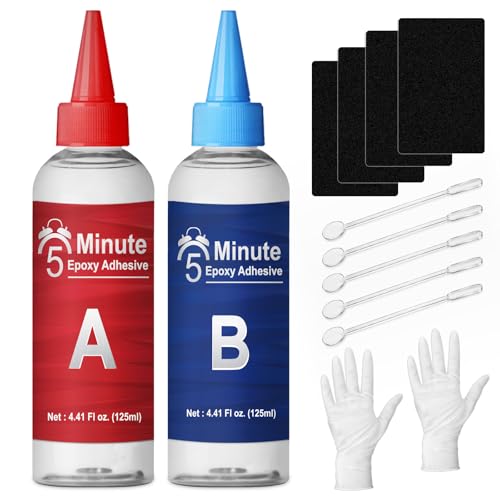
The GDDP 5-minute epoxy delivers a balanced profile for users who need a working window to align complex repairs without waiting hours for a tack-free surface. The two-part resin cures functionally in one hour and fully in 24 hours, with a heat resistance up to 300°F (149°C) — sufficient for ceramic cookware handles but not direct flame exposure. The 1:1 mixing ratio simplifies preparation, and the included wooden sticks, gloves, and four mixing trays remove the need for separate tool purchases.
The bottle’s two-color cap system prevents cross-contamination between the resin and hardener, a design detail that matters when multiple applications are needed. Users report superior clarity and lower odor compared to competing epoxy brands, with minimal bubble formation during mixing — a critical factor for glass and ceramic repairs where trapped bubbles weaken the bond line. The epoxy is compatible with metal, wood, concrete, fiberglass, and most plastics, making it a true all-purpose household adhesive.
Ambient temperature affects working time: warmth accelerates curing, while cool conditions extend it, so a controlled workspace helps. Some users note the epoxy sets slightly faster than the advertised 5 minutes if mixed vigorously. For a versatile, heat-tolerant adhesive that handles a wide range of ceramic repairs, this kit provides the most accessories per dollar.
Why it’s great
- 5-minute working window allows precise alignment of complex ceramic pieces
- Kit includes mixing trays, sticks, and gloves for immediate use
Good to know
- Working time shortens in warm conditions — mix quickly
- Full strength requires 24-hour cure before heavy loads
5. Ankita Tile Repair Kit (Color Match)
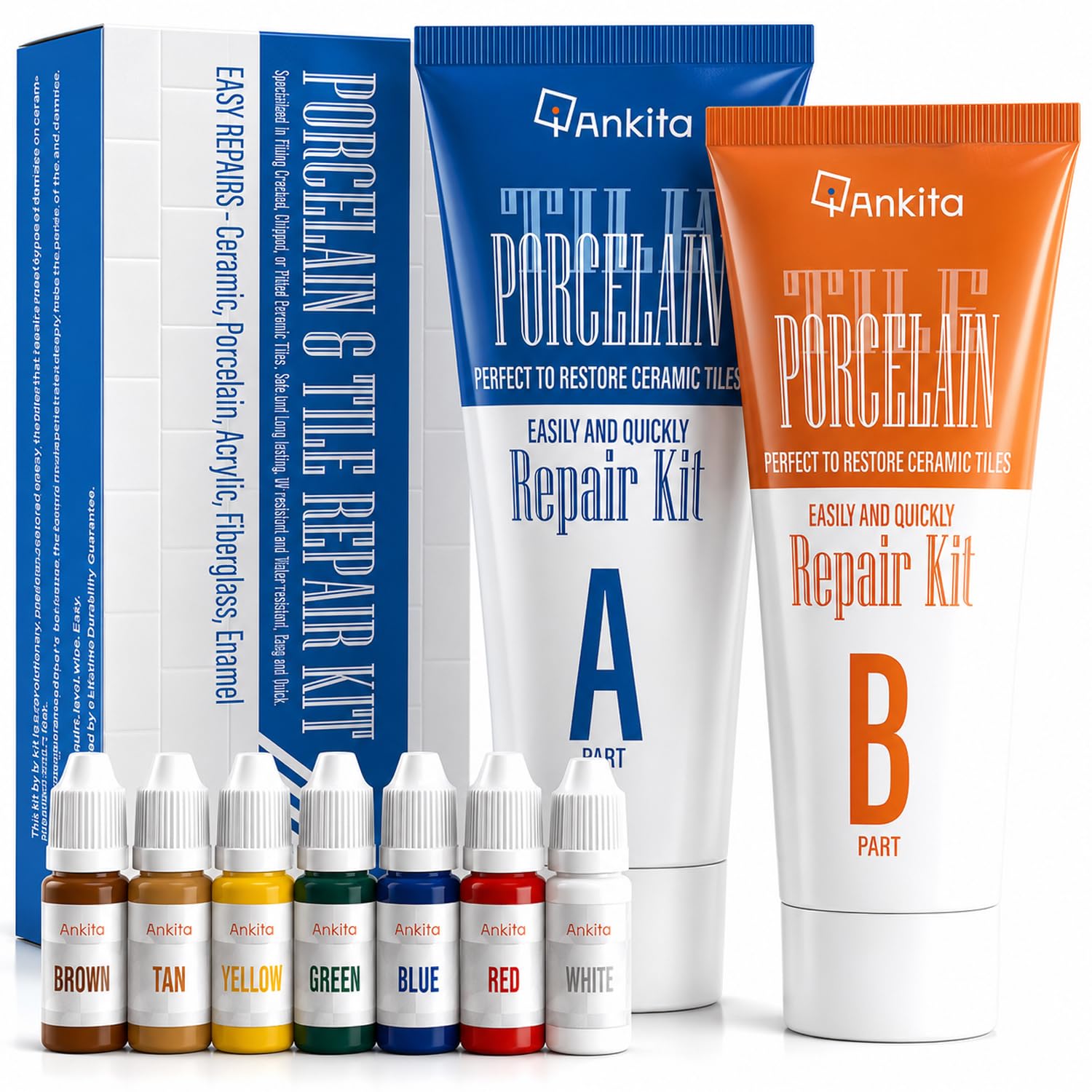
The Ankita kit solves a problem most ceramic adhesives ignore: making the repair invisible. The two-part epoxy paste comes with seven pigment powders that allow color matching to white, beige, gray, almond, blue, black, and common tile shades. This is not a structural epoxy for load-bearing joints — it’s a cosmetic repair filler for chips, cracks, scratches, and holes in bathroom tiles, porcelain sinks, and even small granite countertop chips.
The paste consistency fills divots and can be sculpted before curing, then sanded to a smooth finish that blends with the surrounding tile. Users report successful repairs on large-format floor tiles where the result becomes nearly invisible once the color match is dialed in. The waterproof finish after curing resists moisture, scratches, and heat, making it suitable for shower walls and kitchen backsplashes. The step-by-step instructions help beginners avoid common pitfalls like over-application or improper pigment blending.
The main difficulty is achieving the perfect color match—mixing pigments requires patience and multiple test applications on a scrap surface. A small number of users report yellowing over time when exposed to direct sunlight. For a visual repair that preserves the original tile rather than replacing it, this kit is the most accessible option.
Why it’s great
- Seven pigments enable custom color matching for invisible tile repairs
- Waterproof and heat-resistant after cure; suitable for wet bathroom areas
Good to know
- Color matching requires trial and error — have a test surface ready
- May yellow over extended time in direct UV exposure
6. PC Products PC-7 Epoxy Adhesive Paste (1/2 lb)

The PC-7 is a two-part epoxy paste with a consistency thick enough to stay put on vertical surfaces without running — ideal for filling masonry cracks, sealing gas tank leaks, or bonding fiberglass to ceramic. The 1-hour working time provides ample room for shaping and sculpting before the paste hardens into a sandable, paintable solid after 24 hours. The service temperature range of -20°F to +200°F covers engine compartments and plumbing but not direct fire contact.
Users consistently describe it as a “great JB Weld alternative” for projects requiring structural fills — rocket fins, auto body panels, and cracked fountains. The paste can be applied with a gloved finger or putty knife, and it adheres to brick, concrete, metal, glass, and rubber. The long cure time is the trade-off: repairs need a full 24 hours undisturbed, and the surface must be absolutely clean and dry for the bond to hold under pressure.
A small number of gas tank repairs failed after a month when the patch wasn’t fully sealed before fuel exposure. For heavy-duty fills where strength matters more than speed, this paste delivers the highest volume per unit cost in the lineup.
Why it’s great
- Thick paste consistency stays on vertical and overhead surfaces without dripping
- 1-hour working time allows sculpting and shaping before final cure
Good to know
- Requires 24-hour undisturbed cure; not a quick fix
- Gas tank applications may fail without a sealed top coat over the patch
7. Beacon 527 Multi-Use Glue (2 oz, 2-Pack)
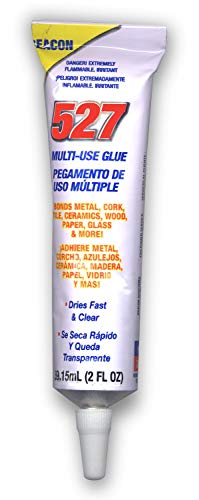
Beacon’s 527 is a clear-drying, quick-grab adhesive formulated for craft and small-scale ceramic repairs. It dries in one hour and cures fully in 24 hours, offering a faster initial hold than the PC-7 paste while remaining flexible for shock resistance. The formula is waterproof, weatherproof, and UV-resistant, so repaired garden ceramics or outdoor ornaments won’t degrade under sun exposure.
The liquid applies cleanly — a thin layer on one surface, gentle pressing to bond — and can be cleaned up with toluene while still wet. Users report successful repairs on chipped china, broken ceramic figurines, and tile edges. The two-pack provides redundancy for larger projects or continued use without reordering. The glue bonds effectively to glass, metal, shells, and plastic, though it is not recommended for polyethylene or polypropylene.
Some users note that the smell is stronger than typical white glues, requiring ventilation during application. For light-duty decorative repairs where clarity and speed matter, the 527 is a reliable workhorse.
Why it’s great
- Dries clear with a flexible, shock-resistant bond ideal for delicate ceramics
- Two-pack offers excellent value for multiple small repairs
Good to know
- Strong solvent odor requires good ventilation during use
- Not suitable for structural or high-temperature applications
FAQ
What is the difference between cyanoacrylate and epoxy for ceramic repair?
Can ceramic adhesive be used on oven or fireplace repairs?
How do I prepare a ceramic surface for adhesive bonding?
Why does my ceramic glue leave a white residue or fog around the repair?
Final Thoughts: The Verdict
For most users, the best ceramic adhesive winner is the LEENEXUS Super Glue because its water-thin cyanoacrylate penetrates cracks for an invisible bond that withstands hot water while the anti-clog design ensures every drop is usable. If you need extreme heat tolerance for a stove or fireplace, grab the Kraken Bond Fireplace Sealant. And for a cosmetic color-matched repair that makes a chipped tile nearly disappear, nothing beats the Ankita Tile Repair Kit.