
The jump to a 1440p resolution paired with a 144Hz refresh rate is the single most impactful upgrade you can make for PC gaming, delivering a sharpness that 1080p cannot match and a fluidity that 4K struggles to maintain at high frame rates. This sweet spot balances visual fidelity and performance, but the market is now flooded with OLED and IPS panels that vary wildly in response times, color accuracy, and HDR capability.
I’m Min — the co-founder and writer behind Gadgets Feed. After analyzing hundreds of hours of technical data, panel specifications, and real-world user feedback across nine distinct 1440p 144Hz screens, I’ve separated the genuine performers from the marketing fluff.
This guide breaks down every critical spec you need to make an informed purchase, ensuring you choose the right 1440p 144hz screen that fits your gaming habits, desk space, and visual expectations.
How To Choose The Best 1440p 144Hz Screen
Selecting the right monitor requires understanding three core pillars: panel technology, refresh rate vs. response time, and connectivity standards. Each directly dictates your visual experience and hardware compatibility.
Panel Technology: IPS vs. QD-OLED
IPS panels offer consistent color accuracy from wide viewing angles and good brightness, but they suffer from contrast ratios around 1000:1, meaning blacks appear gray in dark rooms. QD-OLED panels deliver infinite contrast, true blacks, and vibrant colors with DCI-P3 coverage exceeding 99%, but they may exhibit text fringing due to their subpixel layout and require burn-in mitigation software. Your choice depends on whether you prioritize contrast for immersive single-player games or consistent color for mixed productivity and gaming.
Refresh Rate and Response Time: The Real Speed Metrics
A 144Hz refresh rate updates the image 144 times per second, providing smooth motion, but the perceived clarity during fast movement depends more on response time. Look for 1ms GtG on IPS panels; QD-OLED panels achieve 0.03ms GtG, virtually eliminating ghosting. However, if your graphics card cannot consistently output 144+ frames per second at 1440p in your target games, investing in a higher refresh rate panel like 240Hz or 360Hz may not yield visible benefits.
Connectivity and Adaptive Sync
Ensure the monitor includes DisplayPort 1.4 for full bandwidth at 1440p 144Hz without chroma subsampling. HDMI 2.1 is critical for console compatibility, supporting 1440p at 120Hz on PS5 and Xbox Series X. Adaptive Sync technologies like G-Sync Compatible or FreeSync Premium synchronize the monitor’s refresh rate with your GPU’s frame output, eliminating screen tearing. NVIDIA users require official G-Sync Compatible certification for trouble-free operation.
Quick Comparison
On smaller screens, swipe sideways to see the full table.
| Model | Category | Best For | Key Spec | Amazon |
|---|---|---|---|---|
| LG 27GL83A-B | IPS | Reliable all-around gaming | 144Hz / 1ms GtG / 99% sRGB | Amazon |
| Acer Predator X27U | QD-OLED | Budget entry into OLED | 240Hz / 0.03ms / 99% DCI-P3 | Amazon |
| AOC Q27GAZD | QD-OLED | High refresh rate value | 240Hz / 0.03ms / HDR400 True Black | Amazon |
| MSI MAG 272QP QD-OLED X24 | QD-OLED | Burn-in protection features | 240Hz / 0.03ms / HDMI 2.1 | Amazon |
| INNOCN 2780s | QD-OLED | 280Hz budget OLED | 280Hz / 0.03ms / HDR400 | Amazon |
| Samsung Odyssey OLED G6 (G61SH) | QD-OLED | Glare-free gaming experience | 240Hz / 0.03ms / Pantone Validated | Amazon |
| LG 27GX704A-B | OLED | Glossy OLED with high brightness | 240Hz / 0.03ms / 1300 nits peak | Amazon |
| Alienware AW2725DF | QD-OLED | Competitive gaming at 360Hz | 360Hz / 0.03ms / DCI-P3 99.3% | Amazon |
| ASUS ROG Strix XG27ACDNG | QD-OLED | Premium 360Hz with anti-flicker | 360Hz / 0.03ms / Custom Heatsink | Amazon |
In‑Depth Reviews
1. LG 27GL83A-B 27-Inch Ultragear QHD IPS Gaming Monitor

The LG 27GL83A-B remains a benchmark for mid-range 1440p gaming due to its excellent IPS panel that covers 99% of the sRGB spectrum, delivering vibrant colors and wide viewing angles that rival more expensive displays. Its 144Hz refresh rate with a 1ms GtG response time ensures smooth motion in fast-paced shooters, while the G-Sync Compatible certification guarantees tear-free gameplay with NVIDIA graphics cards.
Users consistently praise its crisp 2560×1440 resolution, noting that the anti-glare coating reduces reflections without washing out colors, and the adjustable stand with tilt, height, and pivot provides flexible ergonomics for long sessions. The Black Stabilizer feature lifts shadows in dark game scenes, giving a competitive edge in titles like Escape from Tarkov or Call of Duty.
The HDR10 implementation is basic, with limited brightness and contrast compared to OLED panels, so HDR should remain off for accurate color reproduction. Some units exhibit minor IPS glow in the corners, but this is typical for the panel type and does not affect center-screen performance.
Why it’s great
- Excellent color accuracy out of the box with 99% sRGB coverage
- Officially G-Sync Compatible with flawless adaptive sync performance
- Robust ergonomic stand with height, tilt, pivot, and swivel adjustments
Good to know
- HDR performance is underwhelming and best left disabled
- IPS glow may be visible in dark room environments
- Contrast ratio is limited to 700:1, blacks appear gray in dark scenes
2. Acer Predator X27U W1bmiipprx 26.5″ QD-OLED Gaming Monitor
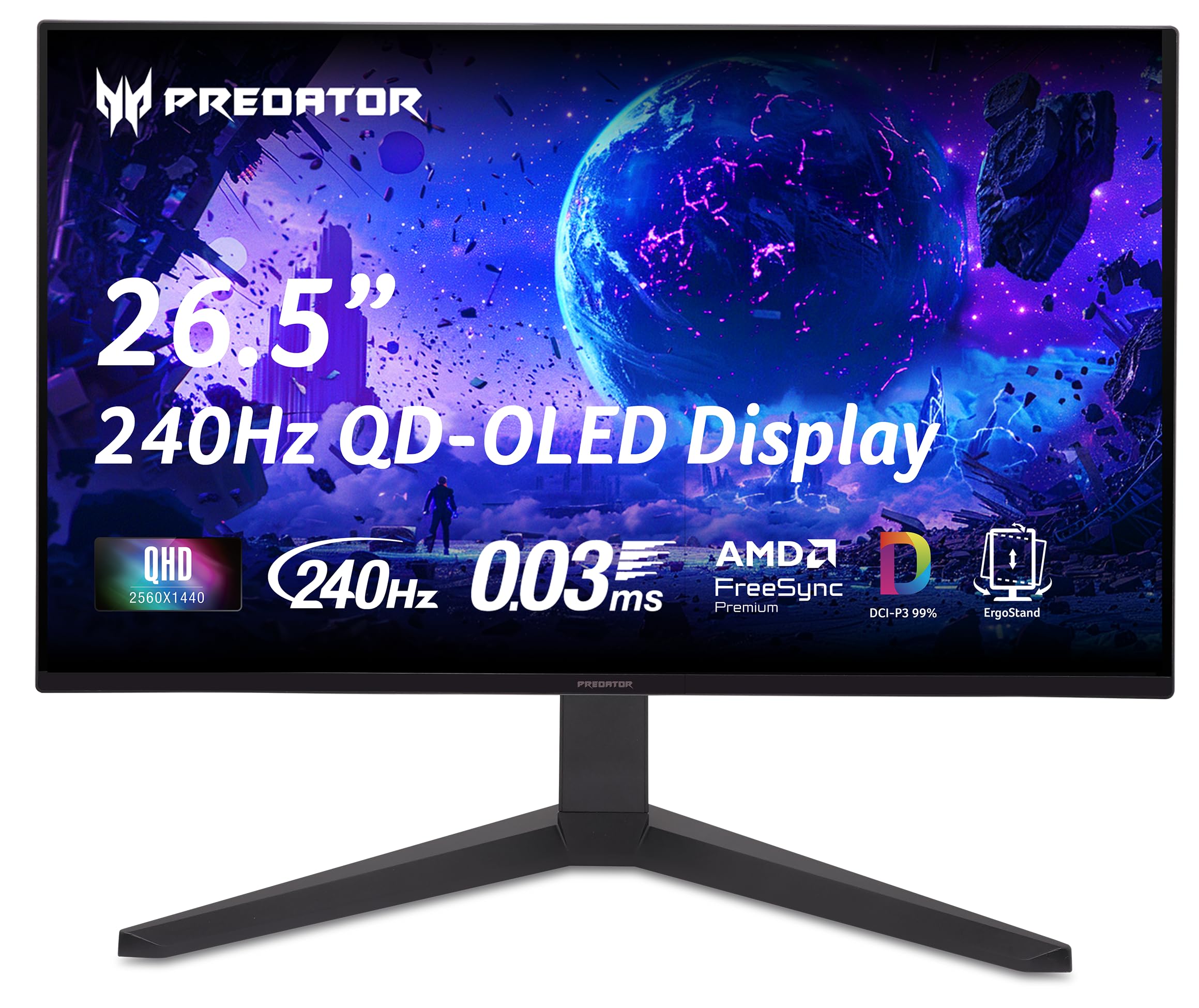
The Acer Predator X27U brings QD-OLED technology to a more accessible price point, offering a 26.5-inch WQHD panel with a 240Hz refresh rate and a 0.03ms response time that obliterates motion blur. The quantum dot layer produces a DCI-P3 99% color gamut, making every game look richer and more lifelike than any IPS panel can achieve.
Users note that the glossy screen finish enhances perceived contrast and color vibrancy, and the inclusion of two HDMI 2.1 ports allows full 1440p 120Hz support on PS5 and Xbox Series X without compromises. The zero-frame design and adjustable stand with height, pivot, swivel, and tilt provide excellent desk flexibility for competitive setups.
Brightness is slightly lower than premium OLED models, topping out at around 250 nits in SDR, which may feel dim in brightly lit rooms. The menu system is also overly complex, lacking dedicated sharpness or overdrive controls, and the plastic build does not feel as premium as the panel technology suggests.
Why it’s great
- Infinite contrast ratio delivers true blacks and stunning HDR highlights
- 240Hz refresh rate with 0.03ms response eliminates all ghosting
- Dual HDMI 2.1 ports for console gamers at 1440p 120Hz
Good to know
- SDR brightness is modest and may struggle in sunlit rooms
- Menu navigation is clunky and missing some image tuning options
- Build quality is mostly plastic with a noticeable wobble
3. AOC 27″ QD OLED Gaming Monitor Q27GAZD
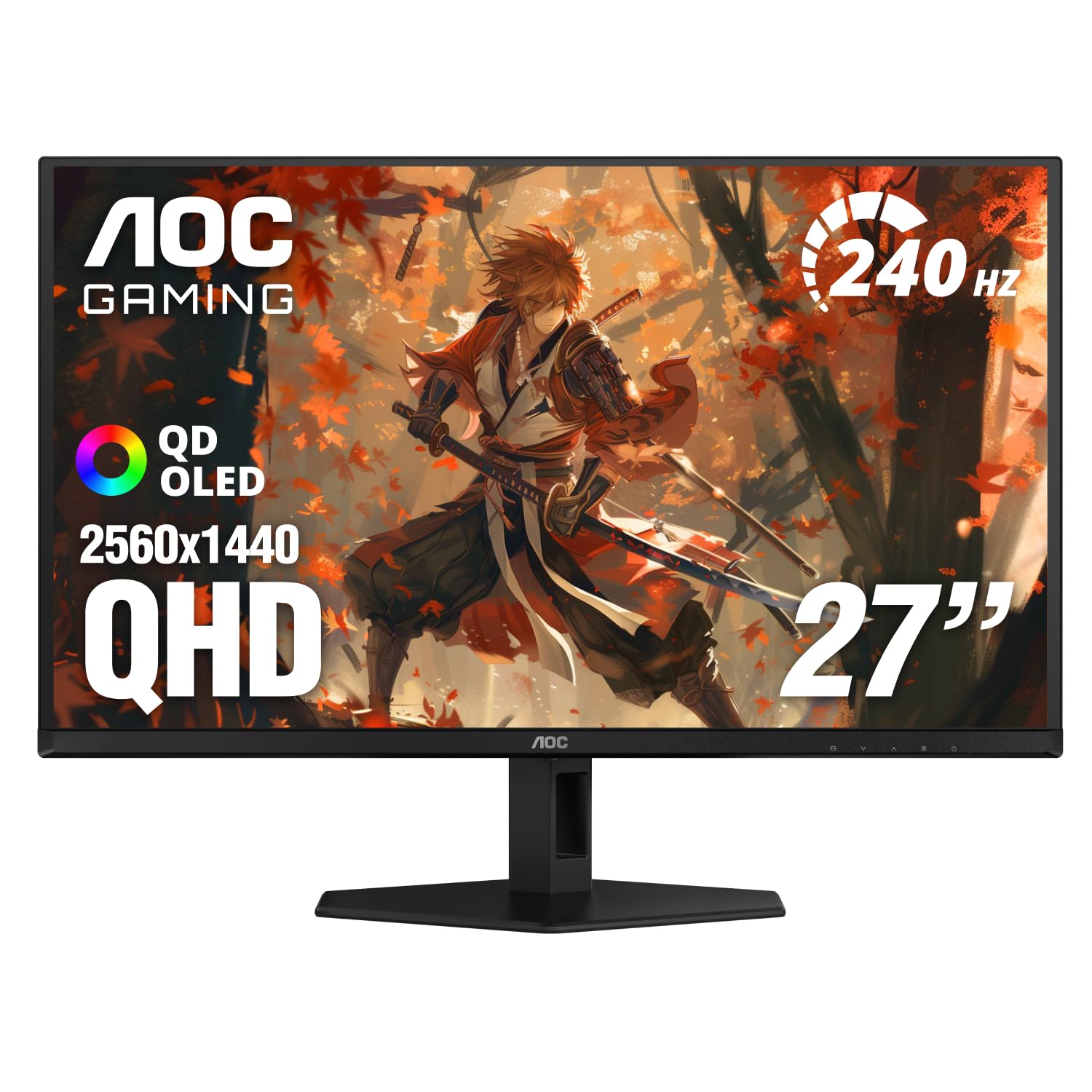
The AOC Q27GAZD delivers a compelling QD-OLED experience at a mid-range price, featuring a 27-inch 2560×1440 panel with a 240Hz refresh rate and a 0.03ms GtG response time. The HDR400 True Black certification ensures deep blacks and bright highlights, and the 147.6% sRGB color gamut coverage produces exceptionally vivid imagery across games and media.
User feedback highlights the monitor’s excellent picture quality and brightness, which users describe as comparable to flagship models costing significantly more. The adaptive-sync technology works flawlessly with both G-Sync and FreeSync, eliminating screen tearing in demanding titles like Cyberpunk 2077 and Valorant.
The included stand is basic and does not offer height adjustment, so a third-party monitor arm is recommended for ergonomic setups. The HDMI port is limited to 165Hz, requiring a DisplayPort connection to achieve the full 240Hz refresh rate, and the glossy screen can show reflections in mixed-lighting environments.
Why it’s great
- QD-OLED colors are vibrant and accurate with 147.6% sRGB coverage
- HDR400 True Black delivers impressive contrast in compatible content
- 240Hz refresh rate ensures butter-smooth motion in competitive games
Good to know
- Stand lacks height adjustment and feels flimsy, monitor arm advised
- HDMI limited to 165Hz; use DisplayPort for full 240Hz performance
- Glossy screen coating reflects light sources in bright rooms
4. MSI MAG 272QP QD-OLED X24 27-Inch WQHD Gaming Monitor
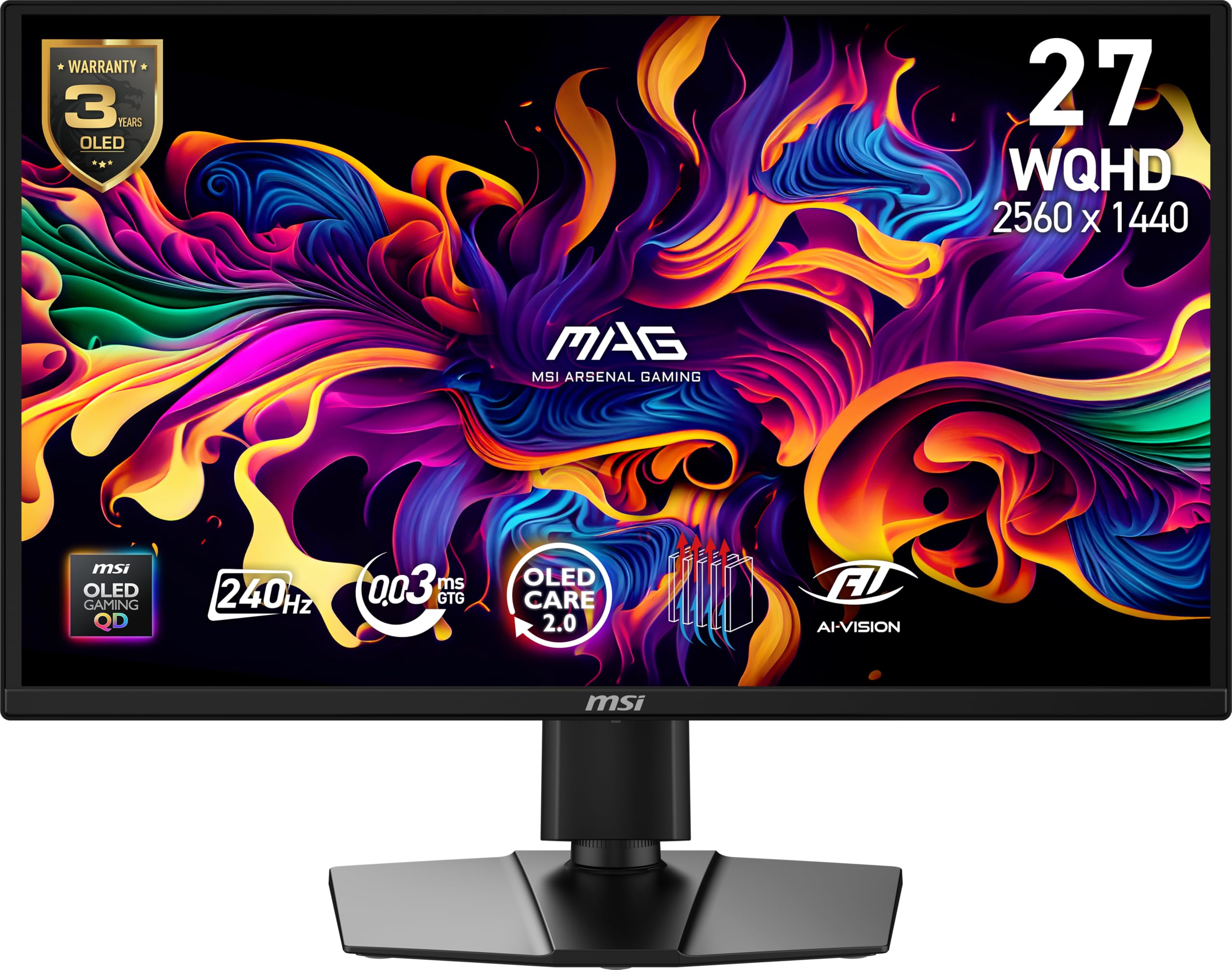
The MSI MAG 272QP QD-OLED X24 integrates a graphene heatsink for passive cooling, which enhances panel durability and allows fanless operation while maintaining a 240Hz refresh rate and 0.03ms response time. The 26.5-inch QD-OLED panel covers 99% DCI-P3 with Delta E ≤2 color accuracy, making it suitable for both gaming and color-sensitive creative work.
Users appreciate the OLED Care 2.0 suite, which includes pixel refresh, panel shift, and real-time brightness limiting to prevent burn-in during long gaming sessions. The height-adjustable stand is well-built with smooth tilt, swivel, and pivot adjustments, and the connectivity options include HDMI 2.1 for console support at full bandwidth.
Some users report that default settings are too dark and require brightness and contrast tuning to achieve optimal image quality. The pixel refresh routine can trigger mid-game, causing a brief interruption, and the stand base is heavy, occupying significant desk space.
Why it’s great
- Graphene heatsink enables fanless operation and improves longevity
- OLED Care 2.0 provides comprehensive burn-in prevention tools
- Excellent color accuracy with 99% DCI-P3 and Delta E ≤2
Good to know
- Default image settings are too dark and require manual calibration
- Pixel refresh can interrupt gameplay if scheduled during use
- Heavy stand base consumes a lot of desk real estate
5. INNOCN 27″ QD-OLED 2K QHD Gaming Monitor 2780s
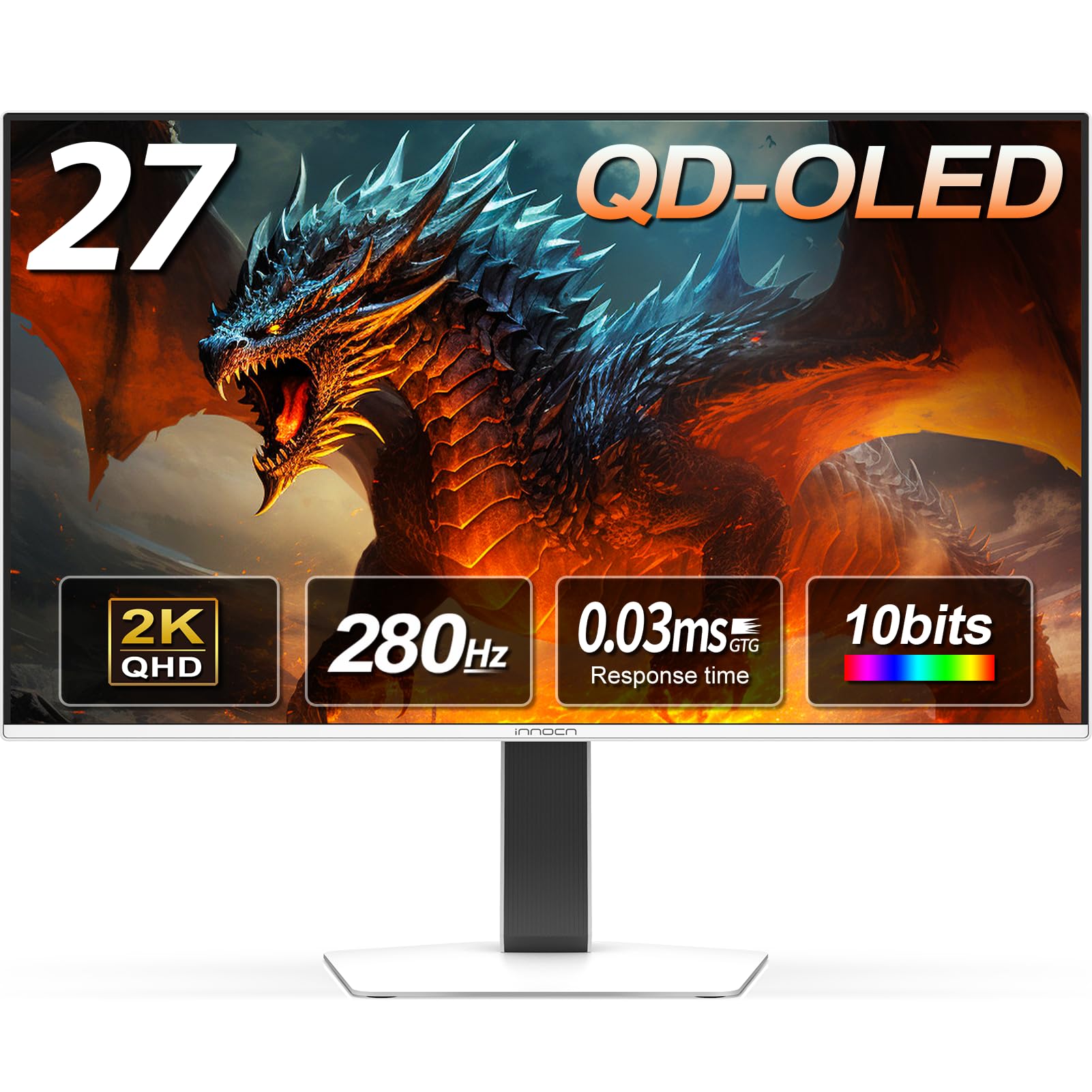
The INNOCN 2780s pushes the refresh rate boundary slightly higher than the standard with a 280Hz QD-OLED panel, offering near-instantaneous 0.03ms response times that make motion incredibly fluid. The matte screen surface reduces glare in bright environments, and the HDR400 support ensures decent contrast for cinematic gaming scenes.
Buyers transitioning from older VA panels report a massive improvement in color vibrancy and black depth, with many noting that even non-HDR content looks noticeably richer than their previous display. The fully adjustable stand provides height, tilt, and pivot adjustments, and the lifetime technical support is a standout warranty offering in this category.
The integrated speakers are weak, producing tinny audio that is not suitable for gaming immersion. Some users mention limited image adjustment controls, making it difficult to fine-tune the brightness curve for dark scenes, and the build quality feels less premium than established brands like MSI or ASUS.
Why it’s great
- 280Hz refresh rate provides a slight edge over standard 240Hz panels
- Matte coating effectively manages reflections in various lighting
- Lifetime technical support with a 30-day free replacement warranty
Good to know
- Built-in speakers are poor and should not be relied upon for gaming
- Limited image adjustment options for gamma and black level
- Overall build quality and materials feel less robust than premium brands
6. Samsung 27″ Odyssey OLED G6 (G61SH) Gaming Monitor
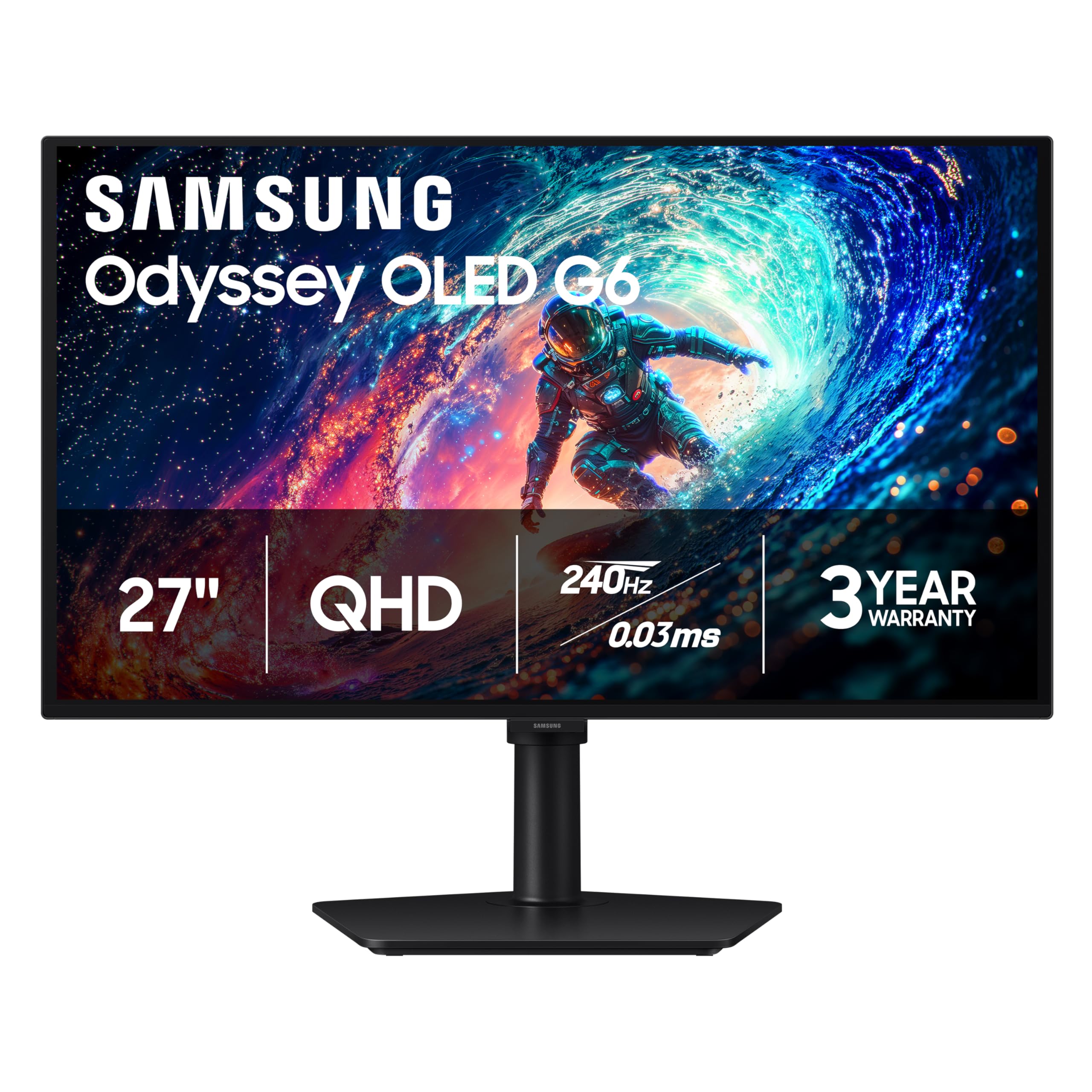
The Samsung Odyssey OLED G6 (G61SH) features Samsung’s proprietary Glare Free technology, which effectively diffuses ambient light reflections without the hazy look of traditional matte coatings, preserving image sharpness. The Pantone Validated certification ensures accurate reproduction of over 2100 colors, making it a strong choice for gamers who also do photo editing or design work.
Users upgrading from high-refresh IPS panels notice a significant improvement in color saturation and contrast in both dark and bright scenes, with OLED Safeguard technology using a thermal modulation system to actively prevent burn-in. The height-adjustable ergonomic stand supports tilt, swivel, and pivot, providing excellent flexibility for competitive seating positions.
Text clarity is slightly reduced compared to IPS panels due to the QD-OLED subpixel structure, though most users find it acceptable for everyday browsing and productivity. The brightness, while adequate for most rooms, is not the highest in its class, and the monitor requires constant power to avoid triggering pixel refresh warnings.
Why it’s great
- Glare Free coating minimizes reflections without sacrificing sharpness
- Pantone Validated for accurate color reproduction in creative work
- OLED Safeguard burn-in protection with active thermal management
Good to know
- Text clarity is slightly lower than IPS due to QD-OLED subpixel layout
- Brightness is sufficient but not class-leading for HDR highlights
- Requires constant power connection to avoid pixel refresh prompts
7. LG 27GX704A-B 27-inch Ultragear QHD OLED Gaming Monitor
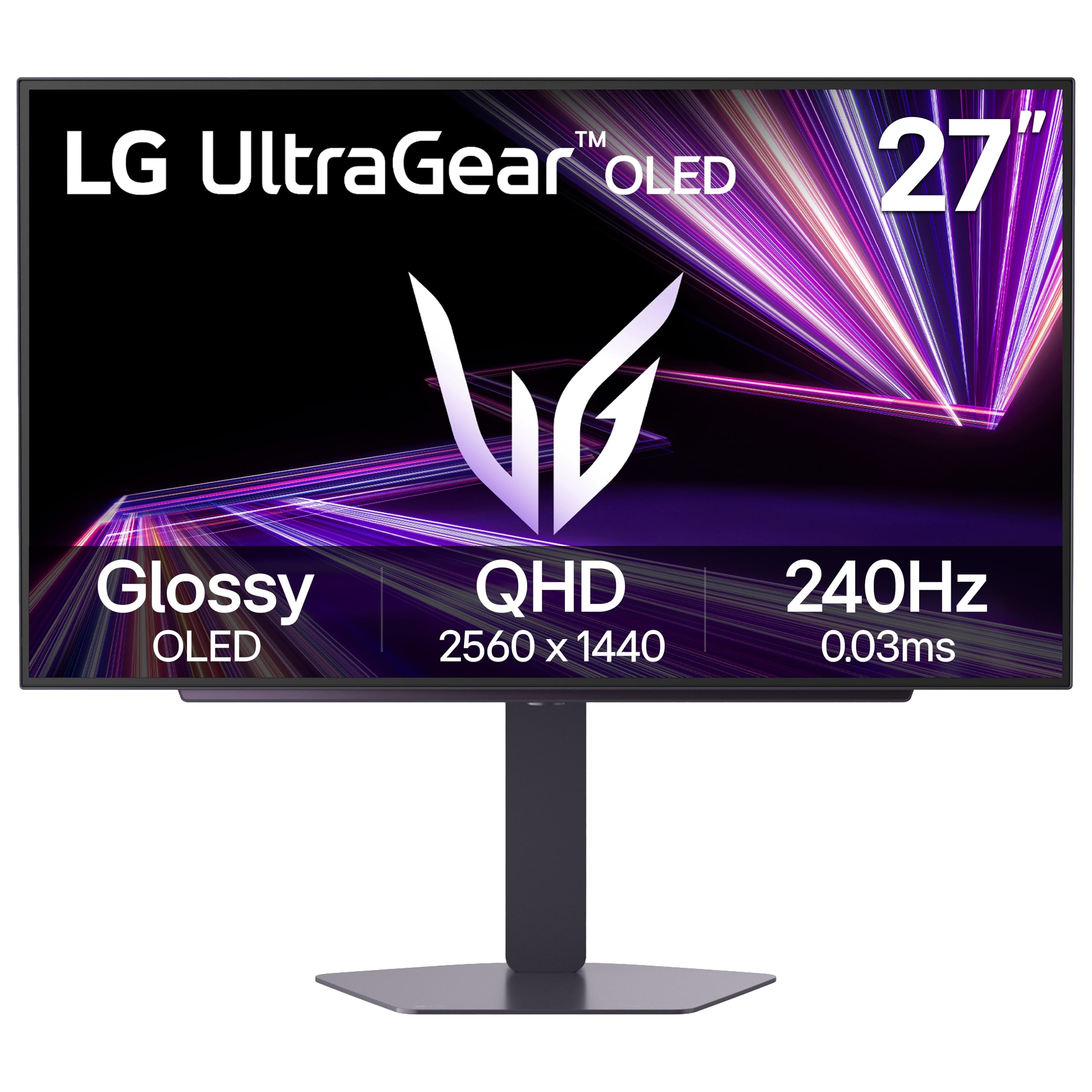
The LG 27GX704A-B delivers a glossy OLED panel that reaches a peak brightness of 1300 nits for HDR highlights, making explosive effects and bright scenes incredibly vivid while maintaining the true blacks characteristic of OLED technology. The 240Hz refresh rate and 0.03ms response time ensure fluid motion, and the VESA DisplayHDR True Black 400 certification guarantees deep, detailed shadows.
Users commend the monitor’s excellent color accuracy with 98.5% DCI-P3 coverage, and the triple UL certifications for anti-glare, flicker-free operation, and low blue light make extended gaming sessions more comfortable. The fully adjustable stand with height, tilt, swivel, and pivot provides comprehensive ergonomic adjustments, and the dual HDMI 2.1 ports ensure full compatibility with next-gen consoles.
Some users note that poor source material looks noticeably worse on this high-contrast display, and the panel feels very thin and potentially fragile when handling. The default settings require tuning of Black Level and Black Stabilizer to avoid crushed shadows in dark games.
Why it’s great
- 1300 nits peak brightness delivers spectacular HDR performance
- Glossy OLED provides exceptional contrast with minimal reflection issues
- Triple UL certified for anti-glare, flicker-free, and low blue light
Good to know
- Low-quality video content appears worse due to high native contrast
- Thin panel construction feels delicate when mounting or adjusting
- Default settings require calibration to avoid crushed black levels
8. Alienware AW2725DF OLED Gaming Monitor

The Alienware AW2725DF elevates competitive gaming with a 360Hz refresh rate on its 26.7-inch QD-OLED panel, providing motion clarity that gives a tangible advantage in fast-paced esports titles like Counter-Strike 2 and Valorant. The 0.03ms gray-to-gray response time virtually eliminates motion blur, and the DCI-P3 99.3% color coverage delivers stunning visual fidelity in single-player games.
Users consistently praise the monitor’s dual HDR modes—Peak 1000 and True Black 400—which allow switching between maximum brightness for bright scenes and deeper black levels for dark content. The 3-year burn-in warranty provides peace of mind, and the adjustable stand with height, tilt, swivel, and pivot offers extensive ergonomic range for long play sessions.
The pixel refresh maintenance can be intrusive, requiring the monitor to run an automatic cleaning cycle after four hours of cumulative use, which may pause gaming sessions. Some units have minor text clarity issues due to the QD-OLED subpixel layout, and the IPS-like brightness of 250 nits in SDR is not as high as premium IPS panels.
Why it’s great
- 360Hz refresh rate provides unmatched motion clarity for esports
- Dual HDR modes (Peak 1000 and True Black 400) for flexible viewing
- 3-year burn-in warranty protects the OLED investment
Good to know
- Pixel refresh cycle can interrupt gameplay after extended sessions
- Text clarity is slightly blurred compared to IPS displays
- SDR brightness is modest and may not suit very bright environments
9. ASUS ROG Strix XG27ACDNG 26.5″ QD-OLED Gaming Monitor

The ASUS ROG Strix XG27ACDNG combines a 360Hz refresh rate with a custom heatsink and advanced airflow design to reduce the risk of burn-in, making it one of the most future-proof 1440p OLED monitors available. The QD-OLED panel produces 99% DCI-P3 color gamut coverage with Delta E < 2 accuracy, ensuring professional-grade color fidelity out of the box.
Users report that the ROG-exclusive OLED Anti-flicker technology effectively eliminates flicker during refresh-rate fluctuations, providing a stable image even when frame rates vary. The DisplayWidget Center software allows OLED Care functions and settings adjustments via mouse, eliminating the need to navigate the on-screen menu system repeatedly.
Height adjustment is limited compared to competing models, which may be a drawback for users with specific ergonomic needs. Some users find the pixel cleaning pop-up disruptive to immersion, and certain older games may not display correctly on the panel’s native resolution and refresh rate.
Why it’s great
- Custom heatsink and OLED Care+ provide robust burn-in prevention
- ROG Anti-flicker technology stabilizes the image during frame drops
- DisplayWidget Center software enables easy mouse-based adjustments
Good to know
- Limited height adjustment range on the included stand
- Pixel cleaning pop-up can interrupt gaming sessions
- Some legacy games may not recognize the 360Hz display properly
FAQ
Is 144Hz enough for competitive gaming, or should I go higher?
Does QD-OLED text clarity affect productivity work?
What is the difference between G-Sync Compatible and G-Sync Ultimate?
Final Thoughts: The Verdict
For most users, the 1440p 144hz screen winner is the LG 27GL83A-B because it delivers excellent color accuracy, reliable G-Sync performance, and a fully adjustable stand at a price that leaves room in your budget for a GPU upgrade. If you want true blacks and infinite contrast for immersive single-player gaming, grab the Acer Predator X27U. And for competitive esports where every frame matters, nothing beats the ASUS ROG Strix XG27ACDNG with its 360Hz QD-OLED panel and advanced burn-in protections.