
Advanced 3D printing is no longer defined by how much you can tinker, but by how well a machine translates high-speed motion into flawless, dimensionally accurate parts. The current wave of CoreXY printers, heated chambers, and multi-material systems means the bottleneck has shifted from the hardware’s potential to the user’s ability to match the right tool to the right workflow—whether that’s production-grade nylon prototypes or intricate 16-color display models.
I’m Min — the co-founder and writer behind Gadgets Feed. I’ve spent hundreds of hours analyzing technical specifications, build volumes, extrusion systems, and chamber heating capabilities across dozens of FDM and resin machines to separate genuine professional-grade performance from marketing noise.
This guide breaks down the specific hardware decisions, material compatibility trade-offs, and automation features that define a truly capable machine, helping you select the best 3d printer for advanced users that fits your exact application and scale of production.
How To Choose The Best 3D Printer For Advanced Users
For an advanced user, the decision is no longer about whether a printer works, but how efficiently it can produce high-quality, functional parts with minimal intervention. You need to evaluate the motion system, thermal management, material handling, and the software ecosystem as a single integrated package.
Motion System: CoreXY vs. Cartesian vs. Resin Tilt-Release
CoreXY architectures dominate the high-speed FDM market because they move the print head on a stationary gantry, reducing mass and enabling accelerations above 20,000 mm/s² without sacrificing precision. For resin printers like the ELEGOO Saturn 4 Ultra, tilt-release technology reduces peel forces, allowing higher speeds up to 150 mm/h while preserving fine detail. Closed-loop motors, as seen on the QIDI Max4 Combo, actively correct positioning errors, a feature essential for large-format production where belt stretching can cause dimensional drift.
Thermal Management: Heated Chamber and High-Temp Hotend
Printing advanced materials like PA6-CF, PPS-CF, or PC requires a chamber capable of maintaining 60°C to 70°C to prevent warping and delamination. The QIDI Plus4 and QIDI Max4 Combo feature active chamber heating with dual insulation, while the enclosed Bambu Lab P1S creates a passively stable environment for ABS and ASA. Pair this with a hotend rated for 350°C or higher—the hardened steel nozzles on the Creality Ender 5 Max and QIDI machines handle abrasive carbon-fiber filaments without rapid wear.
Multi-Material Systems: CANVAS, AMS, and QIDI BOX
Multi-color printing adds a new layer of complexity. Auto-switching systems like the ELEGOO Centauri Carbon’s CANVAS, Bambu Lab’s AMS, and QIDI’s BOX allow seamless filament changes, but they introduce feed-path friction, purge waste, and potential jams. Advanced users must decide if the creative flexibility of 16-color prints outweighs the increased maintenance and per-print material cost. The Prusa XL solves this with a dual-toolhead system, physically swapping extruders instead of cutting and purging filament, which reduces waste at a higher upfront investment.
Quick Comparison
On smaller screens, swipe sideways to see the full table.
| Model | Category | Best For | Key Spec | Amazon |
|---|---|---|---|---|
| Creality Ender 3 V3 Plus | FDM | Large-volume prototyping | 300 mm³ build volume; 600 mm/s | Amazon |
| FLASHFORGE Adventurer 5M Pro | FDM | Compact high-speed detail | 600 mm/s; 35-sec heat-up to 200°C | Amazon |
| ELEGOO Centauri Carbon 2 | FDM | Multi-color engineering prints | 4-color CANVAS; 500 mm/s; 350°C nozzle | Amazon |
| Anycubic Kobra S1 Combo | FDM | Multi-color with integrated dryer | 600 mm/s; ACE PRO active drying | Amazon |
| ELEGOO Saturn 4 Ultra 16K | Resin | Ultra-fine detail models | 16K LCD; 150 mm/h; 30°C heated vat | Amazon |
| Bambu Lab P1S Combo | FDM | Reliable multi-material production | 500 mm/s; AMS up to 16 colors; enclosed | Amazon |
| Creality Ender 5 Max | FDM | Print farm & large-scale production | 400 mm³ build volume; 700 mm/s; 64-point leveling | Amazon |
| QIDI PLUS4 | FDM | Engineering-grade filaments (PPS, PA6) | 65°C chamber; 370°C hotend; 600 mm/s | Amazon |
| Original Prusa MK4S | FDM | Open-source reliability & tuning | Input shaping; 250 mm/s; 9.84″ build cube | Amazon |
| QIDI Max4 Combo | FDM | Large-format industrial production | 390 mm³; 65°C chamber; 800 mm/s; closed-loop motors | Amazon |
| Original Prusa XL 2-Toolhead | FDM | Multi-material, minimal waste | 14.17″ cube; dual-toolhead; segmented heated bed | Amazon |
In‑Depth Reviews
1. Bambu Lab P1S Combo
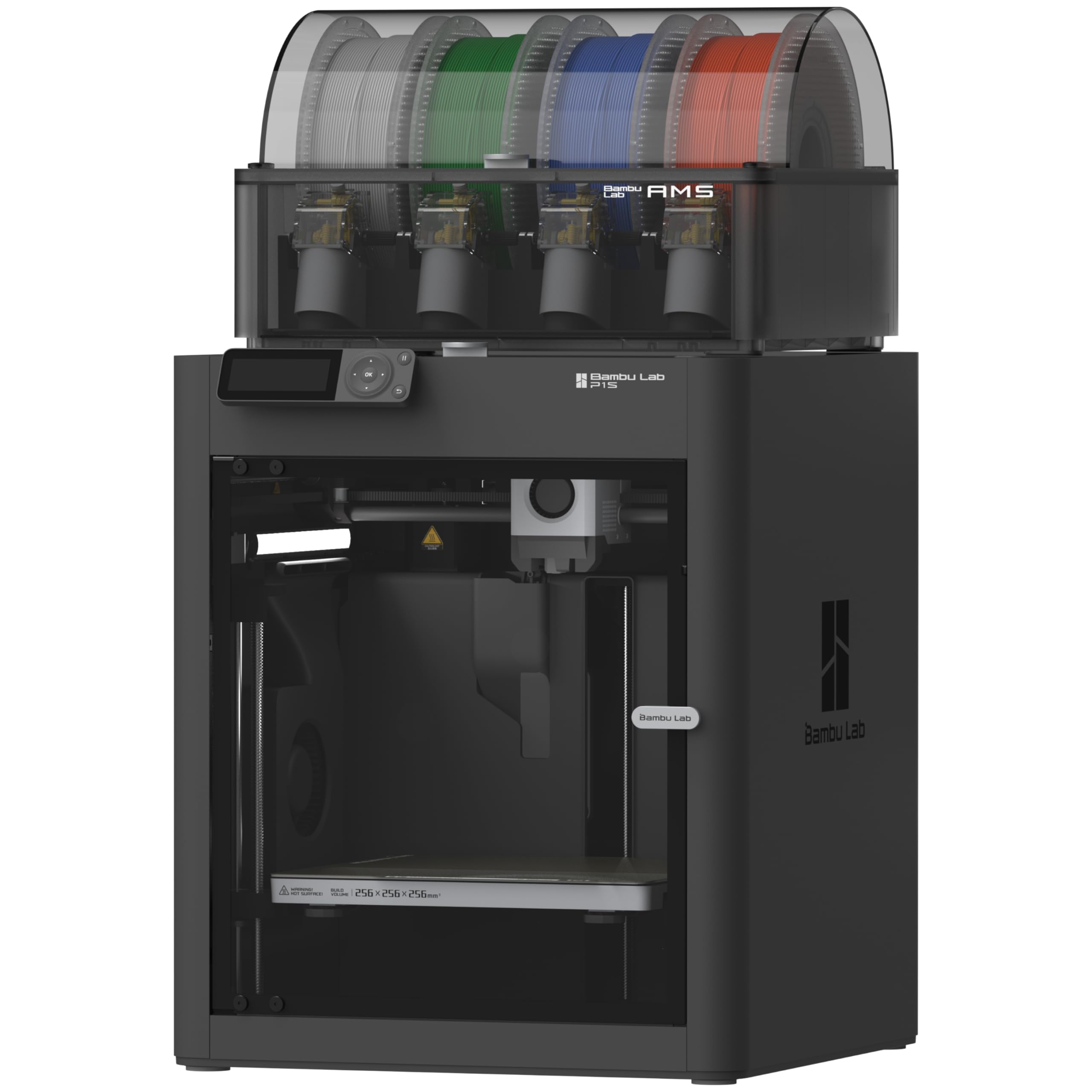
The Bambu Lab P1S Combo is the benchmark for closed-system reliability in the sub- FDM category. Its CoreXY motion system delivers consistent 500 mm/s print speeds with 20,000 mm/s² acceleration, and the fully enclosed body creates a stable thermal environment for ABS, ASA, and PETG without needing an actively heated chamber. The automatic bed leveling and 15-minute setup time mean you are printing functional parts within an hour of unboxing, not spending hours on calibration.
The included AMS (Automatic Material System) enables seamless switching between up to 16 colors or multi-material combinations, including soluble PVA supports. The integrated software ecosystem handles filament detection, pause-and-resume, and real-time monitoring via the mobile app. Users report a roughly 95% first-print success rate over hundreds of hours, with failures almost exclusively traced to user error or poor STL file preparation.
While the P1S does not support the highest-temperature engineering filaments (PA6-CF or PPS require a 300°C+ chamber), it prints PLA, PETG, TPU, and ABS flawlessly out of the box. The trade-off is a proprietary slicer and cloud dependency, but for advanced users who prioritize reliability and speed over open-source tinkering, this machine delivers the highest throughput per dollar in its class.
Why it’s great
- Exceptional out-of-box print quality with minimal calibration
- AMS system handles multi-color and multi-material switching automatically
- Strong community support and frequent firmware updates
Good to know
- Proprietary software ecosystem limits slicer flexibility
- Cloud connectivity required for some remote features
- Not recommended for abrasive carbon-fiber filaments without third-party upgrades
2. QIDI PLUS4

The QIDI PLUS4 is purpose-built for advanced users who need to print demanding engineering-grade materials like PPS-CF, PPA-CF, and PA6-CF. Its 400W active chamber heating system maintains a consistent 65°C internal temperature, which dramatically reduces warping on large nylon prints. The second-generation design adds air circulation and dual-layer insulation, eliminating the hot-spots and temperature gradients that plague passive enclosure designs.
The 80W hotend, paired with an integrated multi-metal throat nozzle, reaches 370°C and handles abrasive carbon-fiber and glass-fiber filaments without clogging. The all-metal direct drive extruder grips filament firmly, and the 10mm linear shafts and lead screws provide the rigidity needed for consistent layer adhesion across the 12-inch build cube. Users with over 4,000 hours of runtime report zero maintenance on the hotend and print quality that rivals the Bambu X1C for engineering parts.
One recurring issue is inconsistent factory quality on early units—some users report jammed hotends or failed OTA updates requiring manual USB firmware installation. The QIDI support team is responsive, but you may need to accept some initial tuning. For users committed to printing carbon-fiber nylons at scale, the PLUS4 offers open-source Klipper freedom and a material range that the P1S cannot match.
Why it’s great
- Active 65°C chamber enables reliable high-temp filament printing
- 370°C hotend with hardened nozzle handles abrasive materials
- Open-source Klipper firmware allows full customization
Good to know
- Initial QC may require customer support interaction
- No built-in filament runout sensor on some early units
- QIDI BOX multi-material system was still in development at launch
3. QIDI Max4 Combo
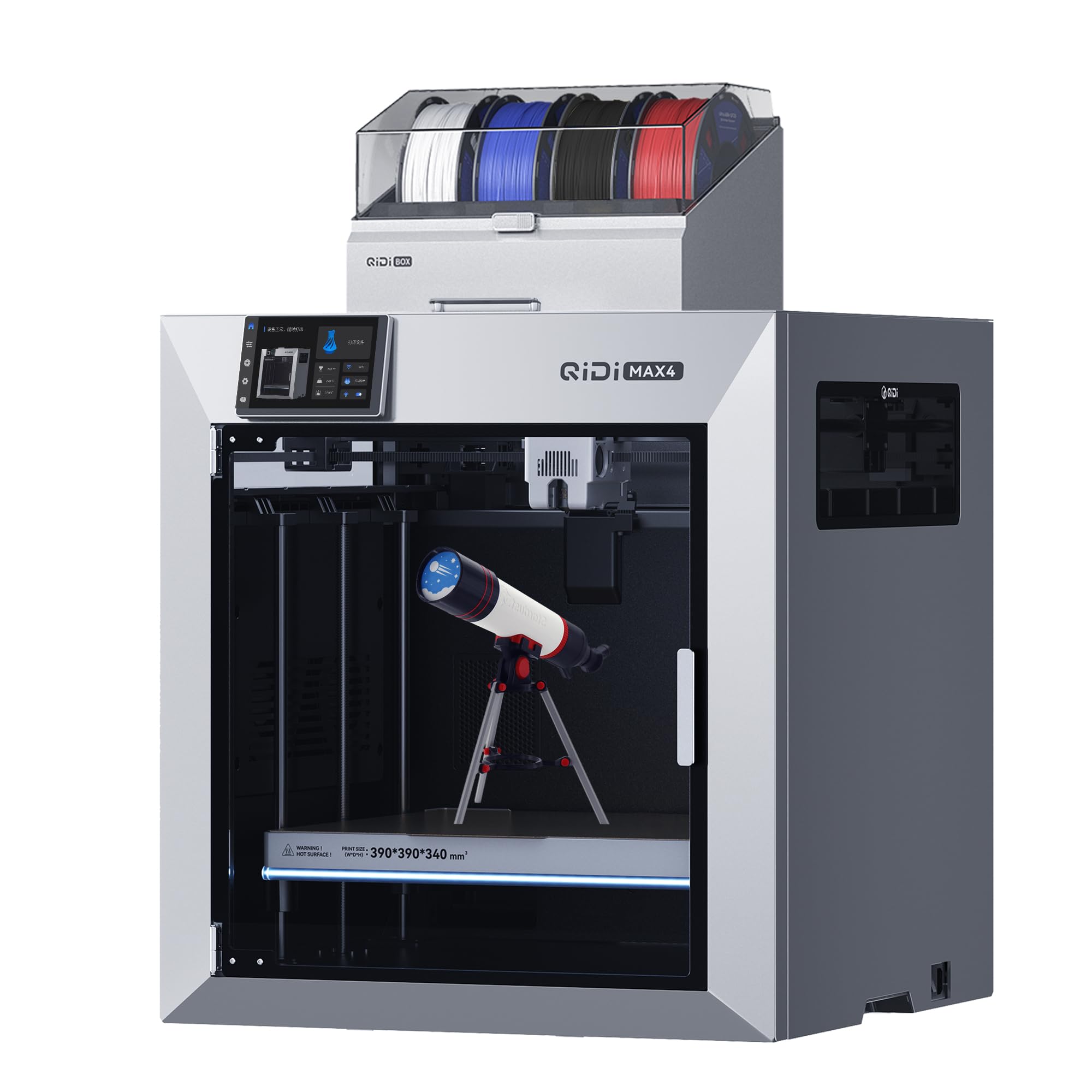
The QIDI Max4 Combo is a production-grade machine designed for users who need to print large industrial parts, molds, or complex prototypes without splitting models. Its 390×390×340mm build volume is 55% larger than the Max3, and the full-surface silicone heated bed ensures even temperature distribution across the entire platform, preventing the edge warping that plagues budget large-format printers.
The closed-loop motors on the X/Y axes actively correct positioning errors, maintaining accuracy at the maximum 800 mm/s speed and 30,000 mm/s² acceleration. The 40 mm³/s high-flow hotend and 65°C active chamber allow it to handle PPS-CF, PC, and carbon-fiber nylons with consistency. The integrated AI camera detects spaghetti failures and pauses prints automatically, saving material on long multi-day builds.
The QIDI BOX multi-material add-on supports up to 16 colors, but users report that the filament tangle sensor and MMU gears can shred brittle filaments. The machine also requires significant floor space—120 pounds of printer and a 28-inch footprint. For advanced users running a small print farm or prototyping large assemblies, this machine provides the most capable large-format package in its price bracket.
Why it’s great
- Huge build volume for industrial-scale parts without splitting
- Closed-loop motors maintain precision at high speeds
- Active 65°C chamber and 370°C hotend handle wide material range
Good to know
- Very heavy—requires sturdy table or stand
- Long pre-print start time and high filament purge on color changes
- MMU can jam with brittle or recycled filaments
4. Original Prusa XL 2-Toolhead
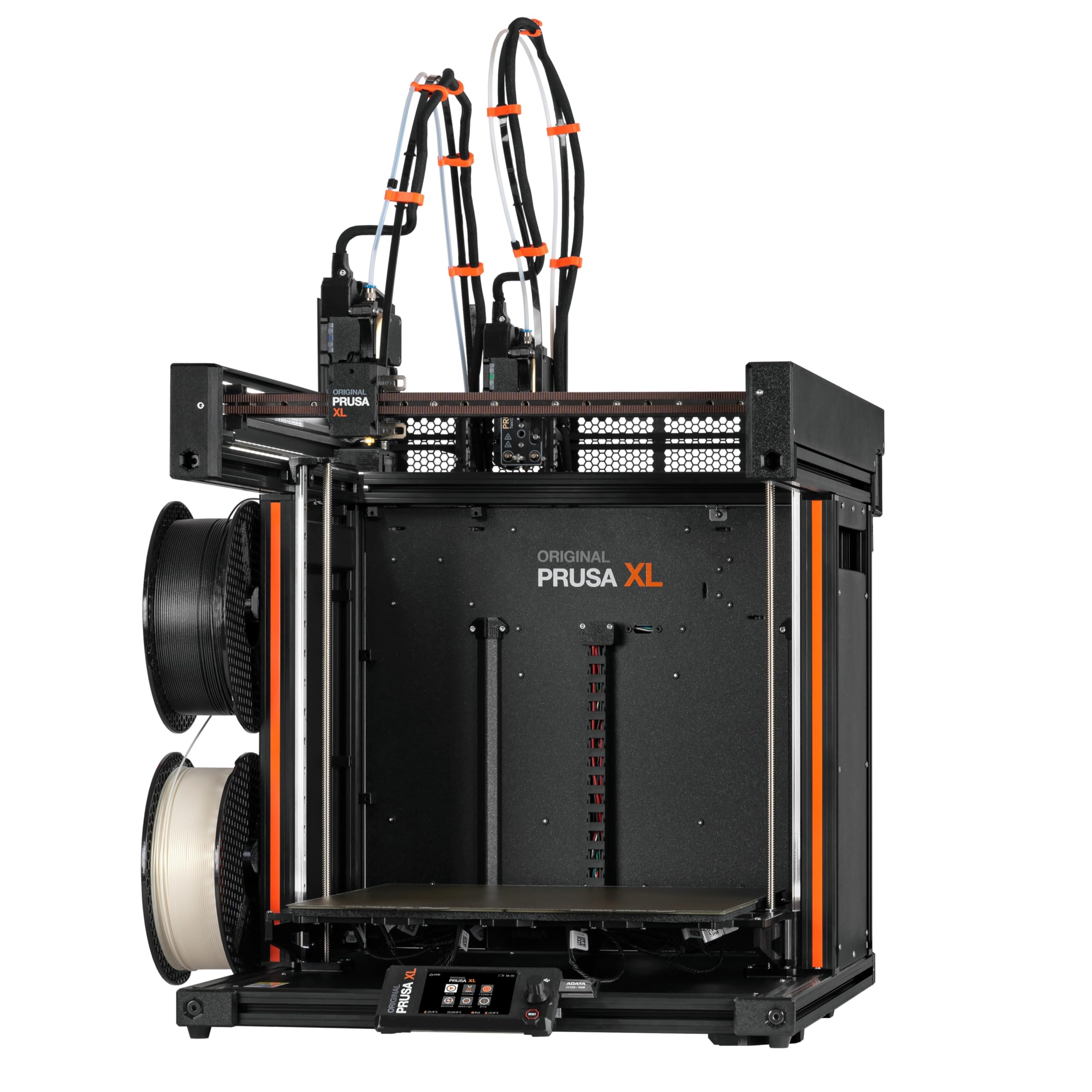
The Original Prusa XL 2-Toolhead is the gold standard for professional multi-material printing where waste reduction and material purity are critical. Unlike single-nozzle MMU systems that purge significant amounts of material between color changes, the XL’s dual physical toolheads switch instantly without cross-contamination, making it ideal for soluble support structures and multi-color functional prototypes where material integrity matters.
The segmented heated bed zones independently regulate temperature across the 14.17-inch build cube, reducing energy consumption and preventing warping on large PETG or ABS parts. The CoreXY motion system delivers fast, precise tool movement, and the fully open-source Prusa ecosystem—including PrusaSlicer and Printables.com—gives users complete control over every print parameter without cloud dependence or proprietary software locks.
There are drawbacks: the XL requires partial assembly despite being marketed as “assembled,” and the software experience can be less polished than Bambu’s ecosystem. Users report spending half a day installing extruder heads and troubleshooting network connectivity. However, for professionals who value right-to-repair, open firmware, and minimal filament waste on multi-material jobs, the Prusa XL is the most thoughtful tool in this category.
Why it’s great
- Dual-toolhead eliminates filament purge waste
- Fully open-source with no cloud dependency
- Segmented heated bed provides energy-efficient, even heating
Good to know
- Requires significant assembly despite “assembled” designation
- Software and connectivity setup can be finicky
- Premium price reflects professional-grade construction
5. Original Prusa MK4S
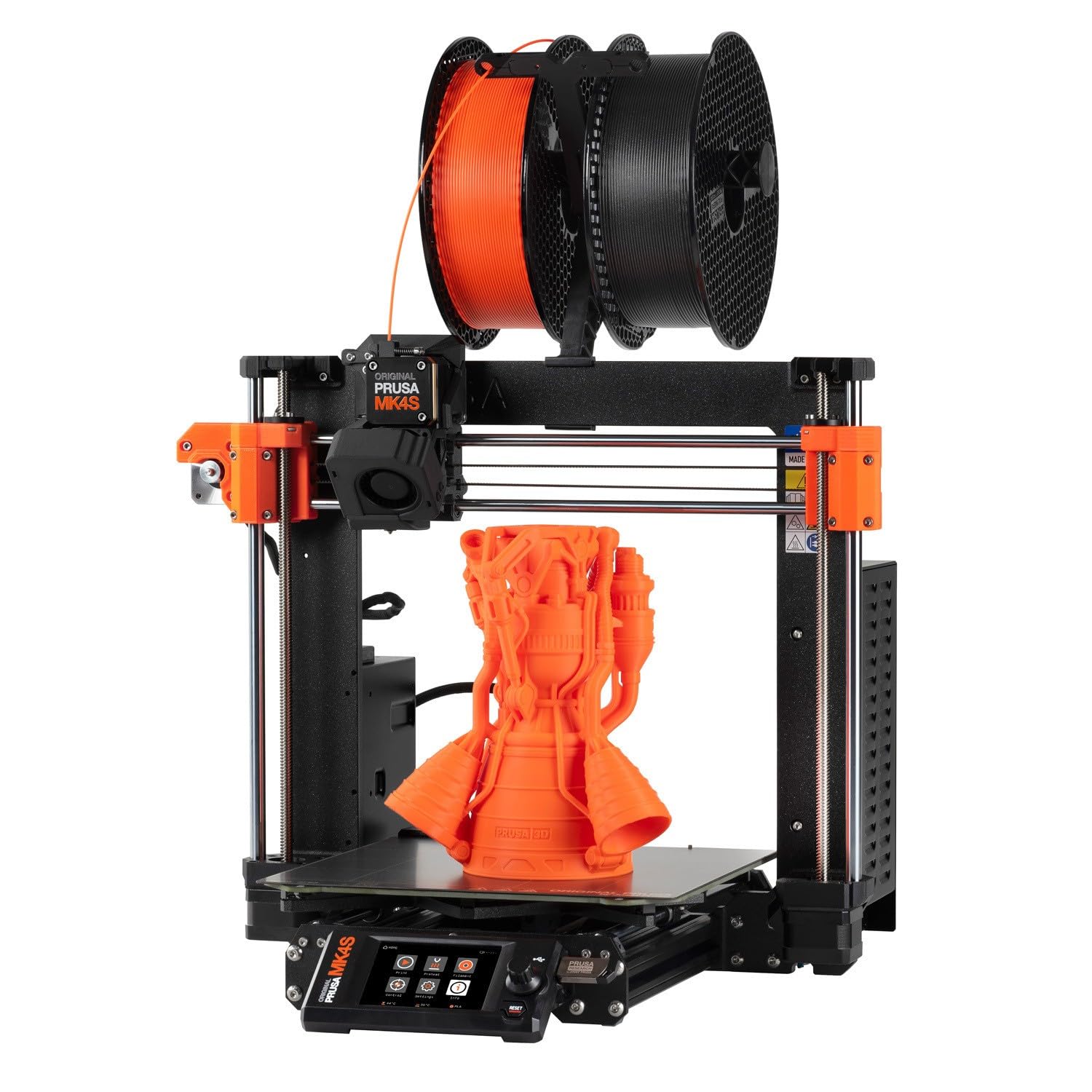
The Original Prusa MK4S represents the pinnacle of the open-source Cartesian design philosophy. Its input shaping firmware compensates for mechanical ringing, delivering sharp corners and clean surfaces at higher speeds that were previously impossible on a Prusa. While the maximum print speed of 250 mm/s lags behind CoreXY machines, the reliability and dimensional accuracy are unmatched—the MK4S consistently prints complex geometries without supports that would fail on less rigid systems.
The complete Prusa ecosystem, including PrusaSlicer, Prusa Connect, and remote monitoring via the Buddy camera, makes this printer easy to integrate into a workshop without proprietary lock-in. Users report that the MK4S handles everything from PLA to PETG to TPU with generic profiles, requiring minimal tuning. The optional upgrade paths and long-term firmware support mean this printer stays relevant for years, not months.
The primary limitation is the build volume—9.84 inches cube is restrictive for large-scale work. At over , it also sits in an awkward price position between faster CoreXY machines and the more capable Prusa XL. But for advanced users who value open-source repairability, consistent output, and a massive community knowledge base, the MK4S remains the most proven workhorse available.
Why it’s great
- Proven reliability with consistent print quality over thousands of hours
- Fully open-source with upgradeable hardware and firmware
- Works with generic filament profiles without custom tuning
Good to know
- Small build volume limits large-part capability
- Lower maximum speed compared to CoreXY competitors
- Higher price per cubic inch of build volume
6. Creality Ender 5 Max
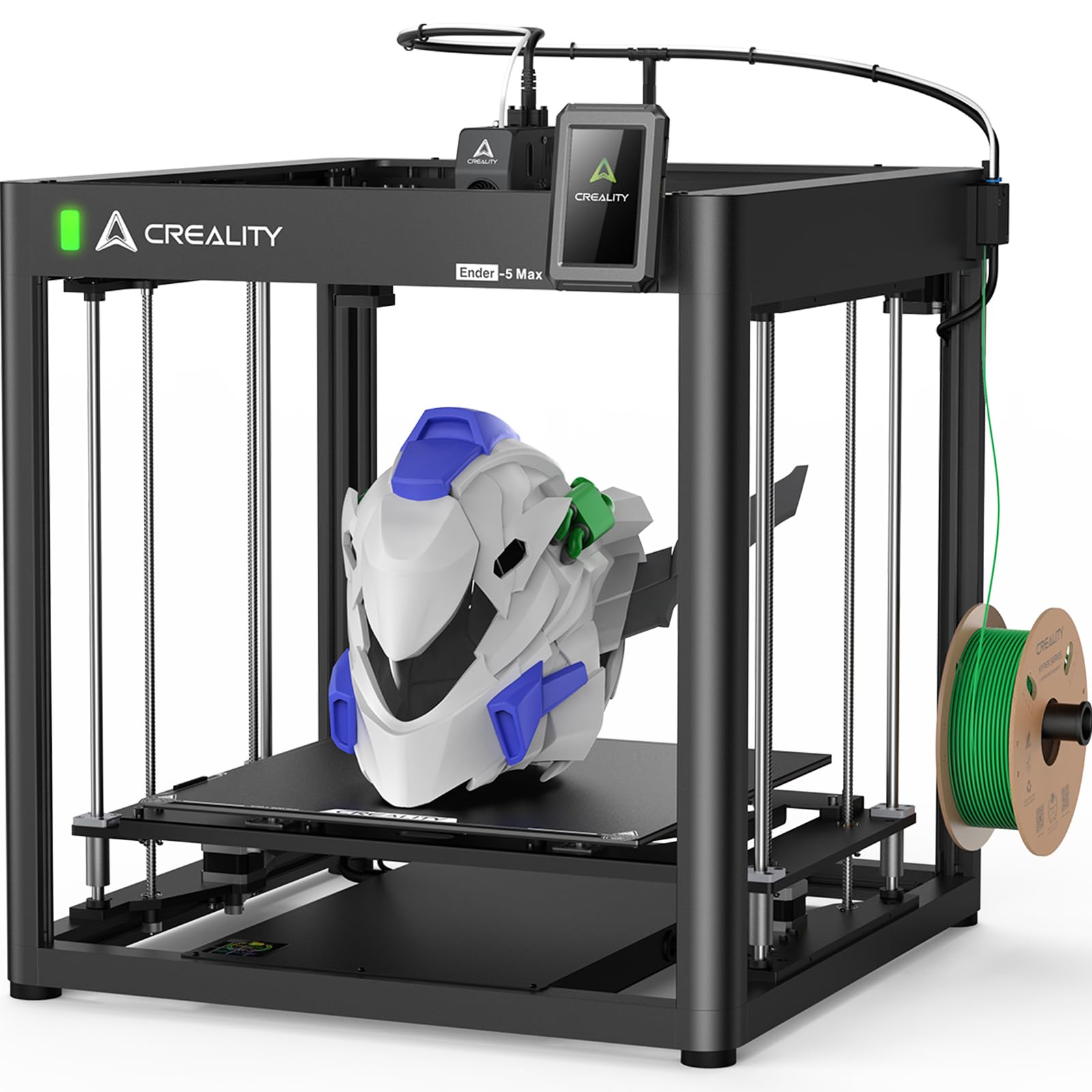
The Creality Ender 5 Max is engineered for print farm operators who need large-scale throughput without paying industrial prices. Its 400×400×400mm build volume is the largest in this guide among mainstream FDM printers, and the 700 mm/s maximum speed with 64-point automatic leveling allows batch production of large parts. The reinforced die-cast aluminum frame and X-axis linear rail minimize vibration, ensuring consistent layer adhesion across the full build plate.
The WLAN multi-printer control system lets you manage groups of Ender 5 Max units from a single interface, with a tri-color status LED visible from across the room. The dual-gear direct drive extruder is built for 24/7 operation, and the 1000W rapid-heating bed reaches working temperature in minutes, supporting PLA, PETG, ABS, ASA, PA, and more. The 64-point auto-leveling system and automatic Z-offset eliminate the manual calibration that consumes hours in the Ender 3 workflow.
QC issues are the most serious concern—multiple users report units shaking so violently that they break their own extruder casing, and replacement parts are not immediately available. The Creality AI failure detection is also unreliable. For users willing to risk some QC variability in exchange for the largest build volume at this price, the Ender 5 Max can be a powerful farm tool, but a thorough initial inspection is mandatory.
Why it’s great
- Massive 400mm³ build volume for oversized production
- WLAN multi-printer management for farm scaling
- Rapid 1000W heated bed reduces cycle times
Good to know
- Inconsistent QC—some units have structural or leveling defects
- Creality AI failure detection is unreliable
- Very heavy—68.9 pounds requires sturdy support
7. ELEGOO Centauri Carbon 2
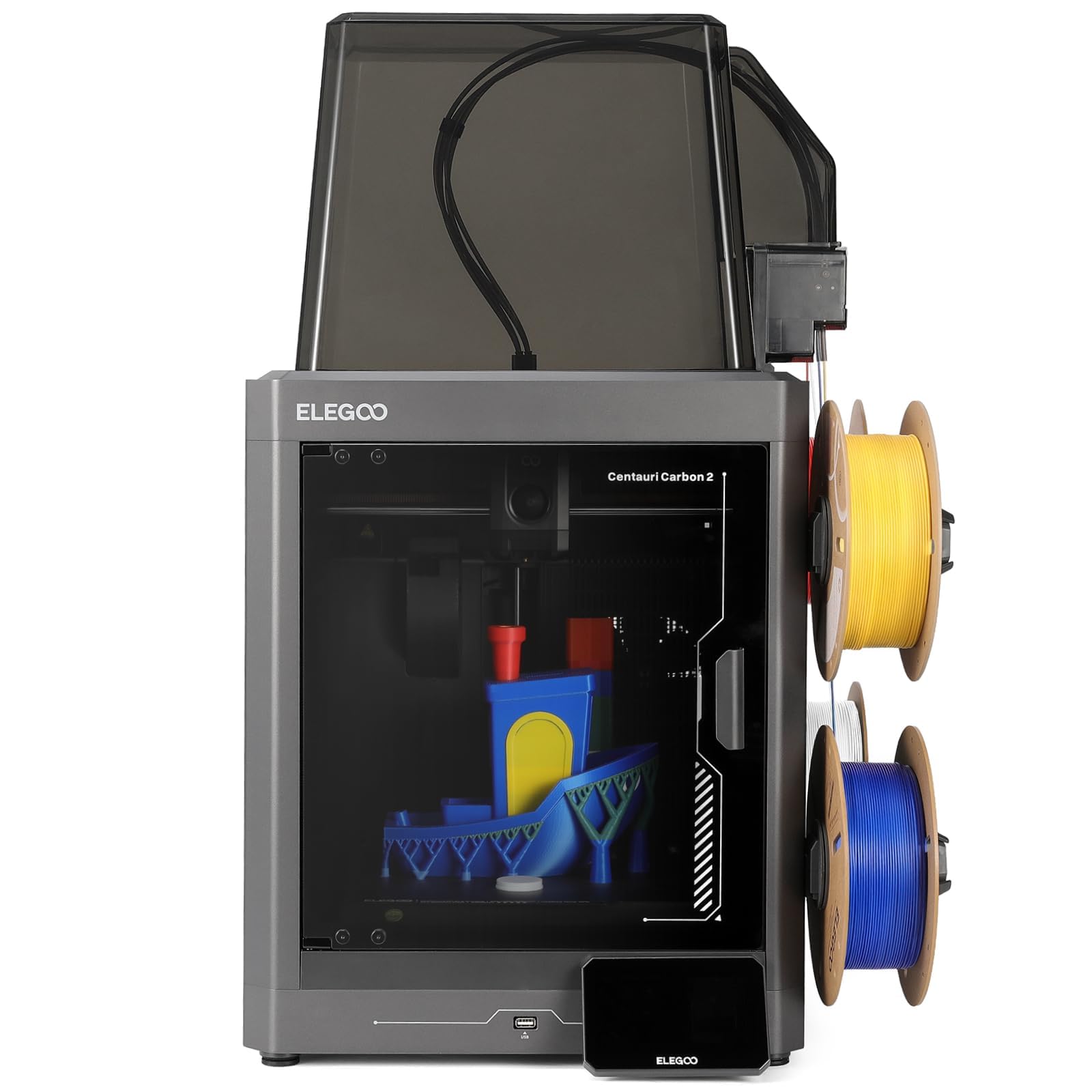
The ELEGOO Centauri Carbon 2 offers the best balance of multi-color capability and print quality at its price point. The integrated CANVAS system handles automatic filament switching between four colors with smart detection for tangles and refills, reducing the multi-color setup friction that plagues budget MMU conversions. The CoreXY motion system hits 500 mm/s with 20,000 mm/s² acceleration, and the 350°C hotend supports a wide range of materials from PLA to PETG to flexible filaments.
The 31-sensor suite provides fully automatic calibration—load filament, tap print, and walk away. Users report excellent out-of-box print quality on the 256mm³ build plate, with smooth surfaces achieved through active vibration compensation. The ELEGOO ecosystem provides seamless connectivity through the Canvas slicer and mobile app, though some users note that the closed ecosystem and lack of Linux slicer support limit advanced use cases.
The most significant risk is firmware stability. Multiple users report connectivity failures after updates, and there is a documented “Glob of Death” issue where firmware problems destroy the print head. ELEGOO support appears responsive, but the platform is still maturing. For advanced users willing to accept some software growing pains, the Centauri Carbon 2 delivers multi-color performance that rivals printers costing twice as much.
Why it’s great
- Excellent multi-color integration with CANVAS auto-switching
- 350°C hotend enables wide material compatibility
- 31-sensor auto calibration minimizes manual adjustment
Good to know
- Firmware stability issues reported after OTA updates
- Closed ecosystem limits slicer and control flexibility
- No native Linux support for the slicer
8. Anycubic Kobra S1 Combo
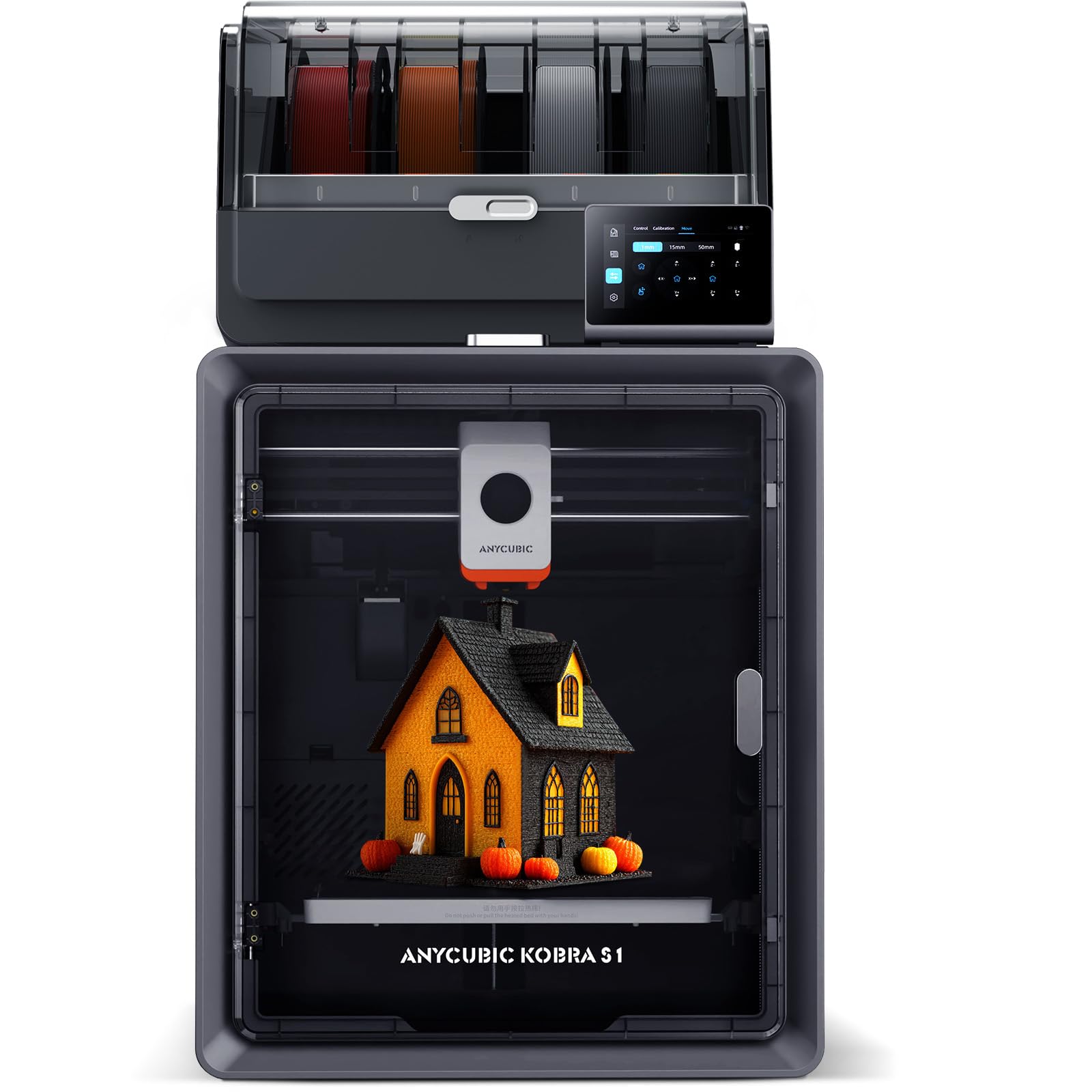
The Anycubic Kobra S1 Combo is the only printer in this guide with an integrated active filament drying system. The ACE PRO uses dual PTC heating modules and 360° hot air circulation to keep filament at optimal humidity levels during printing, which is a game-changer for hygroscopic materials like PETG, nylon, and TPU. This feature alone saves users the cost of a separate filament dryer and the hassle of transferring spools mid-print.
The CoreXY motion system delivers 600 mm/s speeds with 20,000 mm/s² acceleration, and the Anycubic Kobra OS provides flow compensation for consistent surface quality. The ACE PRO supports 4-color printing out of the box, with the option to daisy-chain two units for 8-color prints. Users report excellent build quality and easy 30-minute setup, with the enclosed design maintaining stable temperatures for consistent layer adhesion.
Early units had significant issues with hotend clogs and sensor failures, but Anycubic has addressed these with revised components including metal tabs and a PTFE-free hotend design. Some users still report WiFi connectivity problems and a web-based app that feels unfinished. The Kobra S1 is an excellent value for users who print PETG or nylon regularly, where the integrated dryer eliminates a common source of part failure.
Why it’s great
- Integrated ACE PRO dryer keeps hygroscopic filaments print-ready
- High build quality with 500+ hour reliability reports
- Expandable to 8-color printing with second ACE PRO
Good to know
- Early units had hotend clogs—ensure you get revised version
- WiFi connectivity and app experience can be buggy
- Some users report blue clip assembly is fiddly
9. ELEGOO Saturn 4 Ultra 16K
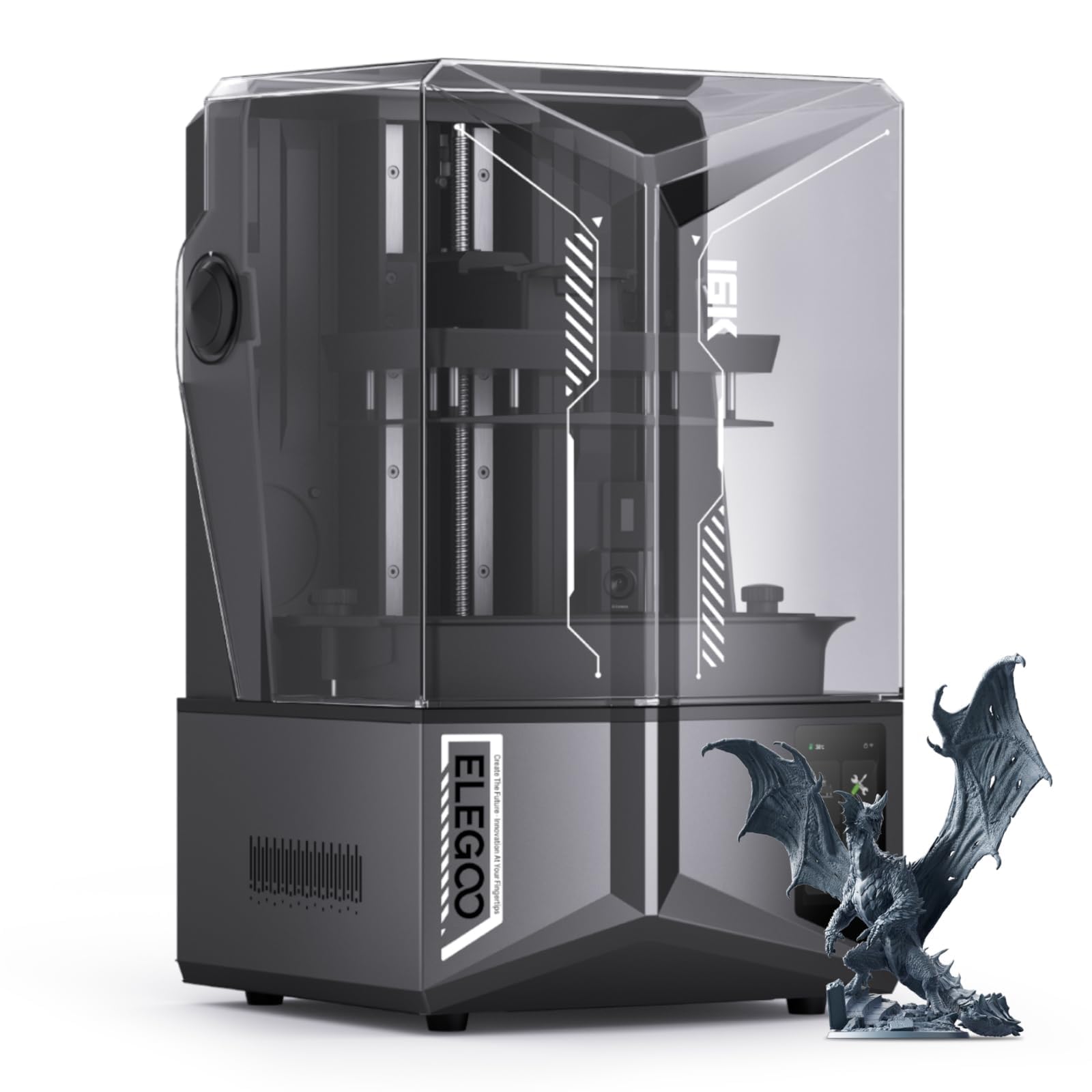
The ELEGOO Saturn 4 Ultra 16K is the highest-resolution resin printer in this guide, with a 10-inch 16K mono LCD that delivers truly exceptional surface detail and texture reproduction. The tilt-release technology moves the resin vat instead of the build plate, reducing peel forces and enabling print speeds up to 150 mm/h—dramatically faster than conventional resin lift mechanisms. The integrated smart tank heating maintains resin at a precise 30°C, reducing viscosity for better layer adhesion and fewer defects.
The AI camera provides real-time monitoring with detection for empty build plates and warped models, plus automatic time-lapse capture. The 8.33×4.66×8.66-inch build volume is generous for resin printing, and the automatic leveling eliminates the tedious manual calibration that defines budget resin printers. Users moving from older 4K or 8K machines report a significant leap in detail quality, particularly on miniatures and jewelry patterns where surface smoothness is critical.
The resin pooling on the build plate after prints is a minor annoyance that users solve by printing a drip bracket. Some users report that firmware updates can cause unrecovered settings issues, so careful backup is recommended. The Saturn 4 Ultra 16K is the definitive choice for advanced users whose work demands the highest possible resolution, such as dental models, fine jewelry, and collectible figurines.
Why it’s great
- 16K resolution produces unmatched surface detail
- Tilt-release technology enables faster, more reliable resin printing
- Heated resin vat improves layer adhesion and success rate
Good to know
- Resin pooling on build plate requires user-printed accessories
- Firmware updates may reset settings
- Resin printer requires dedicated ventilated workspace
10. FLASHFORGE Adventurer 5M Pro

The FLASHFORGE Adventurer 5M Pro packs professional features into a compact 220mm³ format that fits on a standard desk. Its 600 mm/s maximum speed and 35-second heat-up to 200°C make it one of the fastest in its class, and the quick-detachable 280°C nozzle system lets users swap between 0.25mm, 0.4mm, 0.6mm, and 0.8mm nozzles in seconds without tools. The CoreXY all-metal frame provides the rigidity needed for high-speed detail work.
The built-in HEPA and carbon filtration system is a standout feature for users printing ABS or ASA in shared spaces—something most compact printers lack. The automated pressure-sensing bed leveling and dual-sided PEI platform eliminate the need for print rafts, reducing material waste. The Flash Maker mobile app enables remote monitoring, real-time progress tracking, and parameter adjustments.
QC issues remain the biggest concern. Multiple users report receiving units with faulty extruders or broken components, requiring replacement. The FlashPrint 5 software may not install correctly on the latest macOS versions, and the slicer ecosystem is less refined than Bambu or Prusa. However, for advanced users who need a fast, enclosed printer with good filtration and a small footprint, the Adventurer 5M Pro is a compelling option when you receive a properly assembled unit.
Why it’s great
- Quick-swap nozzle system for material flexibility
- HEPA + carbon filtration for safer fume management
- Very fast heat-up and 600 mm/s print speed
Good to know
- QC issues reported—some units arrive defective
- Proprietary slicer may not work on latest macOS
- Small 220mm³ build volume limits large parts
11. Creality Ender 3 V3 Plus

The Creality Ender 3 V3 Plus is the best entry point into large-volume FDM printing for advanced users on a tight equipment budget. Its 300×300×330mm build volume allows printing life-size items in one piece or batch-producing many small parts, and the 600 mm/s CoreXZ motion system delivers print speeds up to 12 times faster than the original Ender 3. The direct drive extruder with bolster spring and ball plunger provides consistent 1,000-hour clog-free extrusion.
The tri-metal “Unicorn” nozzle uses a hardened steel tip for durability while maintaining smooth material discharge, and the one-tap auto calibration handles Z-offset and leveling without manual paper pulling. The upgraded XZ belt system requires no manual tension adjustment and resists slipping at high speeds, and the dual Y-axis motors with linear rods handle heavy prints without wobble. Users report excellent reliability for the first 6–12 months with consistent print quality.
The most significant caveat is a reported failure mode where the feed mechanism jams and destroys the hotend, sometimes burning out the mainboard. This appears to be a known issue with Creality’s pancake extruder design. The fans are also notably loud at high speeds. For advanced users who can diagnose and repair these issues, the V3 Plus is unmatched value per cubic inch of build volume, but it is not a “set and forget” machine.
Why it’s great
- Large 300mm³ build volume at a budget-friendly price
- 600 mm/s speed with CoreXZ and dual Y-axis motors
- Auto calibration and quick assembly reduce setup time
Good to know
- Known failure mode with extruder jams and mainboard burnout
- Loud fan noise during high-speed operation
- Requires some technical ability for long-term maintenance
FAQ
Is a CoreXY printer always better than a Cartesian for advanced users?
What minimum chamber temperature do I need for carbon-fiber nylon filaments?
Why does multi-color printing create so much filament waste?
Final Thoughts: The Verdict
For most users, the best 3d printer for advanced users overall is the Bambu Lab P1S Combo because it delivers the most reliable multi-material output with minimal setup time and a proven software ecosystem. If you need to print engineering-grade materials like PPS-CF or PA6-CF, grab the QIDI PLUS4 for its active 65°C chamber and 370°C hotend. And for large-format industrial production with closed-loop motor precision, nothing beats the QIDI Max4 Combo.