
Printing a helmet that actually fits your head, a chest plate that curves with your body, or a prop weapon that doesn’t shatter at the first convention bump — that’s the difference between a cosplay that wows and one that falls apart. FDM and resin printers each serve a role in the prop-making workflow, but choosing the wrong machine means wasting hours on failed prints, unusable layer lines, or brittle parts that snap during sanding.
I’m Min — the co-founder and writer behind Gadgets Feed. I’ve analyzed hundreds of print profiles, cross-referenced material compatibility charts, and broken down the core XY kinematics, build volume constraints, and layer resolution specs that actually matter when you’re printing wearable armor or display-grade props.
Whether you need massive 390mm plates for a single-piece pauldron or ultra-fine 14K detail for an intricate face mask, this guide isolates the machines that reliably deliver in the demanding world of costume fabrication. This is a concentrated look at the 3d printer for cosplay that balances speed, scale, and surface finish.
How To Choose The Best 3D Printer For Cosplay
Cosplay printing lives at the intersection of size, surface finish, and material strength. A printer that excels at tiny D&D minions will struggle to produce a single-piece helmet, while a giant FDM workhorse might leave layer lines so thick they require hours of filler primer. Here is how to evaluate the specifications that directly affect your prop-building workflow.
Build Volume — The Helmet Threshold
Your first consideration should be whether you can print a full helmet or large pauldron in one piece. Most adult head circumferences require a build area of at least 250x250x250 mm for one-piece helmets. Anything smaller forces you to splice parts with superglue or epoxy, which introduces seams that need filling and sanding. The 390x390x340 mm machines open up chest plates that print as single shells rather than four separate quadrants.
Layer Resolution vs. Print Speed
For FDM printers, a standard 0.2 mm layer height works for structural armor, but visible step lines will appear. A printer that can reliably run at 0.12 mm or 0.08 mm layers cuts your post-processing time dramatically. Core XY printers like the Creality K1C or Flashforge AD5X maintain speed at fine layer heights because their gantry design minimizes ringing and ghosting across tall Z-axis prints like swords and staffs.
Material Compatibility and Enclosure
PLA is easy to print and rigid, making it good for display armor, but it warps in heat and snaps under stress. For durable parts that survive drops and weather, you need ABS, ASA, PETG, or nylon. These materials require a heated chamber (above 45-60°C) to prevent warping and delamination. A fully enclosed printer like the QIDI Max4 Combo or the Bambu Lab P1S gives you the thermal stability needed for engineering-grade filaments, so your gauntlets don’t crack mid-convention.
Quick Comparison
On smaller screens, swipe sideways to see the full table.
| Model | Category | Best For | Key Spec | Amazon |
|---|---|---|---|---|
| ELEGOO Centauri Carbon | Mid-Range FDM | Budget-friendly high-speed cosplay parts | 500 mm/s print speed, 256mm³ build volume | Amazon |
| ELEGOO Saturn 3 | Resin MSLA | Ultra-detailed face masks, jewelry | 11520×5120 12K LCD, 19×24μm XY resolution | Amazon |
| Flashforge AD5X | Mid-Range FDM | Multi-color prints with 4-color unit | 600 mm/s, 300°C direct-drive, 220mm³ volume | Amazon |
| Creality K1C | Mid-Range FDM | Carbon fiber armor parts, 300°C capability | 600 mm/s, clog-free extruder, 220mm³ volume | Amazon |
| Bambu Lab A1 Combo | Mid-Range FDM | Beginner-friendly multi-color props | 10000 mm/s² acceleration, 48dB quiet print | Amazon |
| Anycubic Kobra S1C | Mid-Range FDM | Multi-day prints with active filament drying | 600 mm/s CoreXY, fully enclosed, 8-color | Amazon |
| ANYCUBIC Photon Mono M7 PRO | Premium Resin | 14K micro-detail for small cosplay accessories | 13312×5120 14K, 170 mm/h, 8.8″×4.9″×9″ volume | Amazon |
| Bambu Lab P1S Combo | Premium FDM | Reliable enclosed printing up to 16 colors | 500 mm/s, 20000 mm/s² acceleration, 256mm³ | Amazon |
| IdeaFormer IR3 V2 | Specialty FDM | Continuous long prints (swords, signs, staffs) | 250×250×∞mm belt, 400 mm/s, Klipper | Amazon |
| Original Prusa MK4S | Premium FDM | Reliable precision with open-source ecosystem | Input shaping, 250×210×210mm, Prusament included | Amazon |
| QIDI Max4 Combo | Premium Large FDM | Massive full-body armor in single pieces | 390×390×340mm, 800 mm/s, 65°C heated chamber | Amazon |
In‑Depth Reviews
1. Bambu Lab P1S Combo
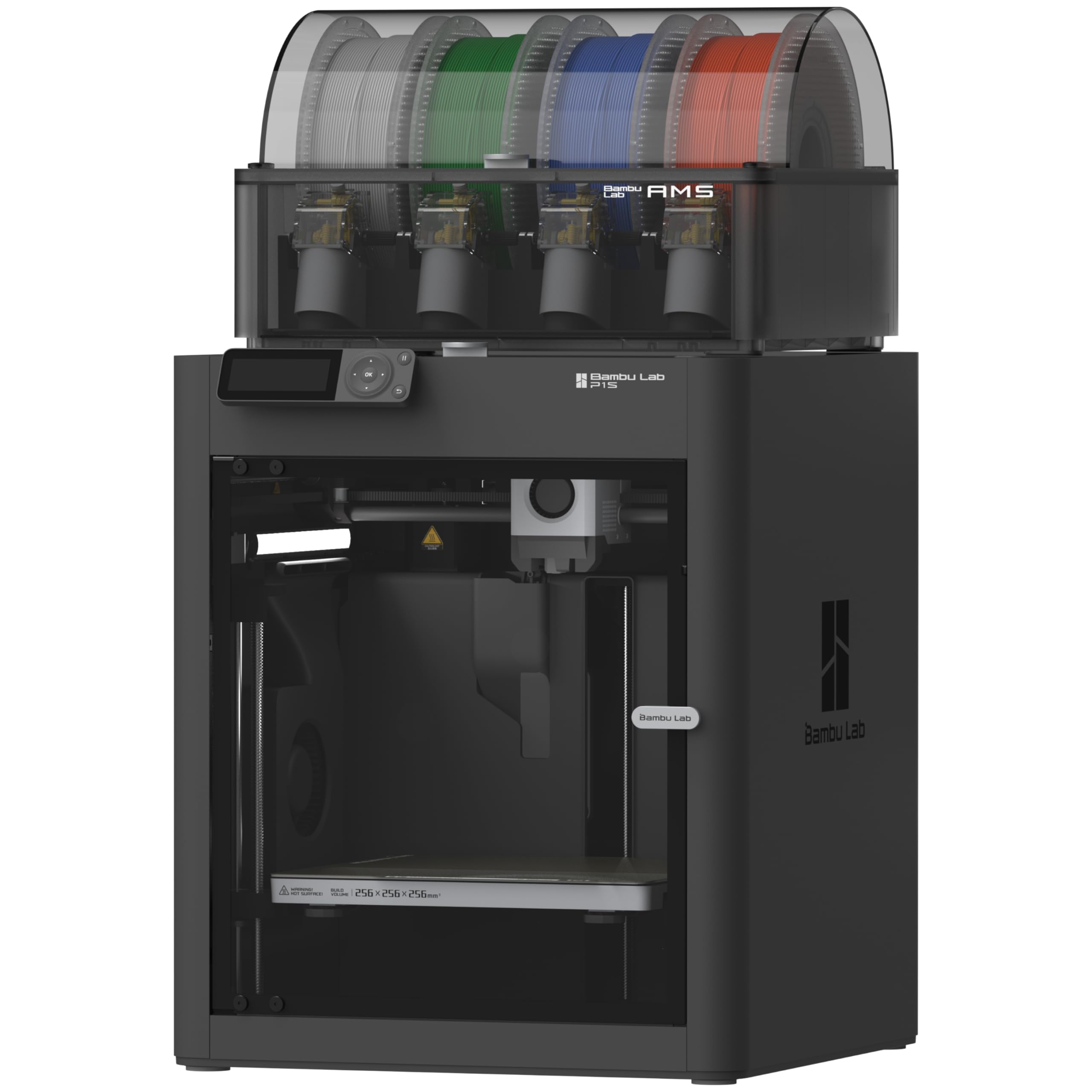
For cosplayers who require reliability above all else, the P1S Combo establishes a baseline that few other machines in its tier match. The 500 mm/s CoreXY motion paired with 20,000 mm/s² acceleration means a full-sized Mandalorian helmet prints in under eight hours with consistent layer stacking. The enclosed chassis stabilizes chamber temperature, allowing PETG and ASA to print without the warping that ruins pauldron edges.
Multi-material capability via the included AMS unit enables four-color prints in a single run, which is immediately useful for printing multi-tone emblems and armor trim without post-painting. The full-auto calibration handles bed leveling and vibration compensation on every cycle, so you never need to manually adjust Z-offset between prints. With a 95% reported success rate across user reviews, this printer minimizes the frustration of failed overnight helmet runs.
The main limitation is its build volume. At roughly 256mm in each dimension, it fits most helmet shells in one piece, but full chest plates require splitting. The closed nature of the Bambu ecosystem also limits some advanced slicing customizations that Prusa users take for granted. For a cosplayer looking for a complete, enclosed system that prints consistently out of the box, this is the current benchmark.
Why it’s great
- Exceptional reliability ideal for overnight prints of full helmets and props
- AMS delivers seamless four-color prints without manual filament swaps
- Enclosed design handles engineering filaments like ASA and PETG consistently
Good to know
- Build volume limits one-piece chest plates to smaller frames
- Proprietary slicer and closed-source firmware reduce tinkering flexibility
2. QIDI Max4 Combo
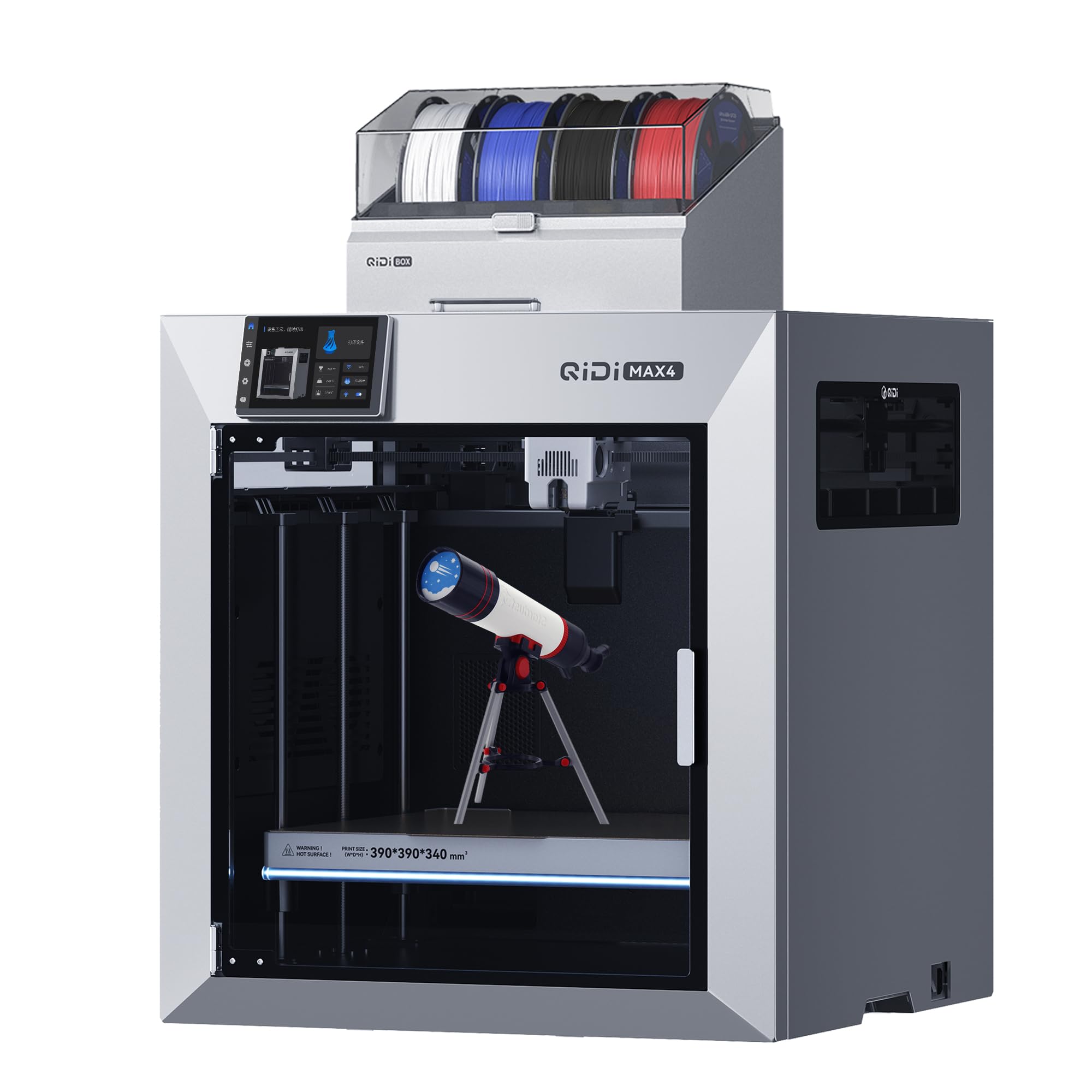
A 390x390x340 mm build volume fundamentally changes how you approach cosplay fabrication. With the Max4 Combo, a full chest plate, a complete helmet with visor, or a thigh armor set can be printed as single solid shells rather than four parts glued and filled. The 55% larger volume over its predecessor means even a Buster Sword prop cuts in fewer sections, reducing seam lines by a huge margin.
The closed-loop motors on the X and Y axes deliver 800 mm/s top speed with 30,000 mm/s² acceleration, and the 65°C actively heated chamber provides the thermal envelope needed for PA-CF and PPS-CF engineering filaments. For cosplayers working with abrasive carbon fiber-infused nylons, this machine runs those materials reliably without nozzle degradation fears, thanks to the hardened steel nozzle and high-flow 40mm³/s hotend.
The tradeoff is weight and footprint. At 120 pounds, you dedicate a permanent workshop corner to this machine. The UI is functional but choppy, and initial pre-print warmup cycles are longer due to the large chamber volume. Multiple reviews note occasional warped beds that Qidi replaces under warranty, reinforcing the importance of checking flatness on delivery. For cosplayers who print large-scale, engineering-grade parts, the Max4 delivers capability no smaller machine can match.
Why it’s great
- Massive build area prints full chest plates, pauldrons, and helmets as single pieces
- Heated 65°C chamber enables advanced abrasion-resistant filaments like PA-CF
- 16-color Qidi Box expandability for multi-material armor panels
Good to know
- Heavy 120-pound machine requires a dedicated workspace and strong table
- Longer warmup cycles and occasional warped bed require initial QC check
3. ANYCUBIC Photon Mono M7 PRO 14K

When your cosplay demands jewelry-level detail on face masks, ornate pauldron filigree, or mechanical inner frames with 0.3 mm diameter holes, FDM printers cannot match the resolution of a 14K monochrome LCD. The Photon Mono M7 Pro achieves a 16.8×24.8 μm XY resolution with a 13312×5120 panel, making it the finest detail-for-dollar machine in this roundup. Holes smaller than 0.3 mm print cleanly, and layer lines are invisible to the naked eye after a light sanding.
Speed is where this resin printer surprises. The 170 mm/h high-speed mode with 0.1 mm layers lets you print a detailed full-face helmet mask in under six hours. The dynamic temperature-controlled vat keeps resin at optimal viscosity during long runs, reducing failures caused by temperature swings. The resin auto-fill and one-key recycle features cut down on the messy handling that usually makes resin printing a chore for casual cosplayers.
Resin printing has inherent tradeoffs: part brittleness, post-curing requirements, and the need for PPE and ventilation. The M7 Pro’s built-in air filter helps, but you still need a dedicated well-ventilated space. The UI is occasionally unresponsive, and some users report persistent vat-blockage error codes that require specific light-off delay tuning. For display-grade props and accessories where glossy, smooth surfaces matter more than impact strength, this machine is unmatched.
Why it’s great
- 14K resolution delivers sub-25 micron detail for jewelry-grade prop finishing
- 170 mm/h high-speed mode with heated vat cuts production time on masks
- Built-in auto-fill and one-key resin return reduce messy handling
Good to know
- Resin parts are brittle and require careful handling for wearable uses
- Requires dedicated ventilation, gloves, and post-curing setup
4. ELEGOO Centauri Carbon
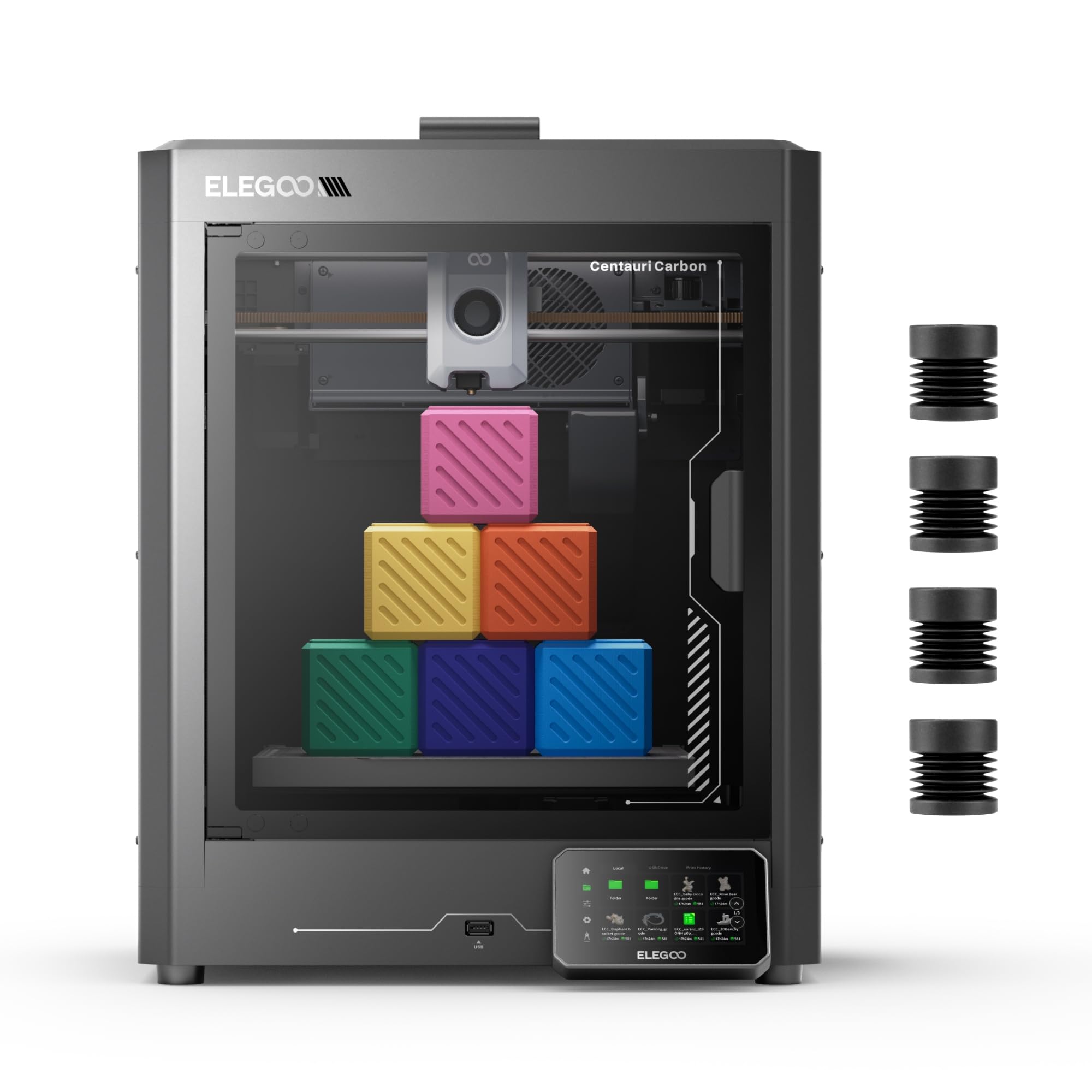
The Centauri Carbon is a fully-assembled CoreXY machine that arrives pre-calibrated and printing within minutes. The 256 mm cubic build volume handles most cosplay helmet shells without splicing, and the 500 mm/s top speed with 20,000 mm/s² acceleration gets a detailed bracer printed in about four hours. The 320°C high-flow hotend with a hardened steel nozzle supports abrasive filaments, meaning you can graduate from PLA to carbon fiber-reinforced nylon for structural armor components.
Auto bed leveling and vibration compensation eliminate the first-layer frustration that plagues cheaper bedslinger designs. The built-in chamber camera with dual LED lighting lets you remotely monitor overnight prints and capture time-lapses. Users consistently report excellent adhesion with the dual-sided plate, which uses a PLA-specific surface for minimal warping at lower bed temperatures — ideal for beginners building their first Iron Man helmet.
Reliability is where the Centauri Carbon shows its price tier. A small number of reviewers reported early failures ranging from USB-C cable defects to motherboard replacements within the first week. While Elegoo support eventually resolved these issues, the turnaround time for US-based users extended to several weeks. For the price point, the speed and feature set are impressive, but consider the extended warranty or purchase from a vendor with a generous return policy.
Why it’s great
- Fully pre-assembled with auto calibration for immediate printing
- 500mm/s CoreXY speed with 320°C hotend for abrasive materials
- Integrated camera and dual LEDs enable remote overnight monitoring
Good to know
- Quality control issues reported in early units; support can be slow
- Build volume is adequate for helmets but not full chest plates
5. Flashforge AD5X
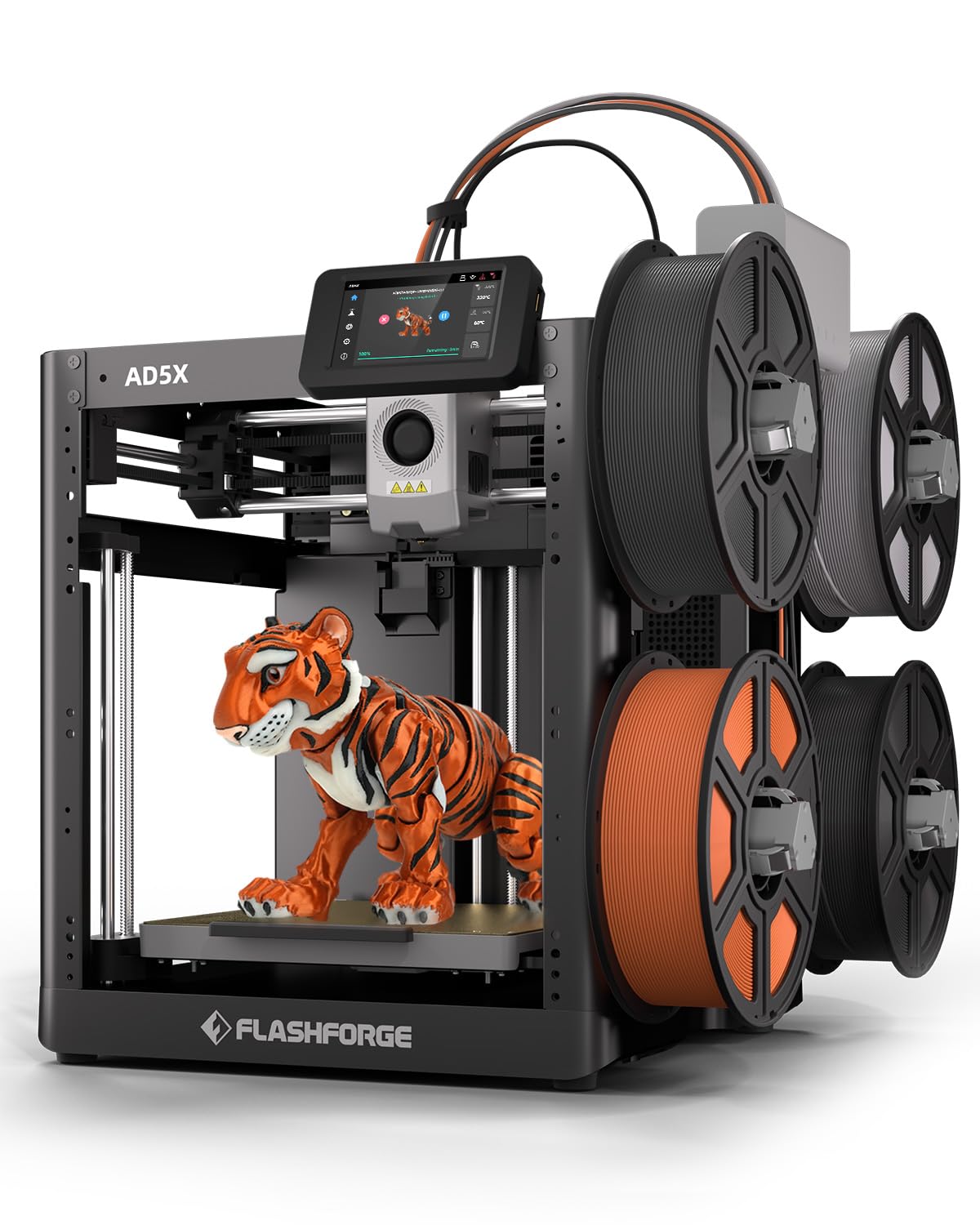
The AD5X brings four-color printing to a 220 mm cube with its IFS (Independent Filament System) that automatically handles filament changes mid-print without requiring a separate unit. For cosplayers, this means model embeds, accent colors, and layered logos can be printed in a single pass rather than hand-painted after. The CoreXY kinematics push 600 mm/s with 20,000 mm/s² acceleration, making rapid prototyping of multiple prop iterations feasible within a single weekend.
The 300°C direct-drive extruder supports four interchangeable nozzle sizes from 0.25 mm up to 0.8 mm, so you can swap from ultra-fine 0.25 mm for detailed emblems to 0.8 mm for infill-heavy structural cores. Vibration compensation and dual-channel cooling keep overhangs clean even at high speed, which is essential for printing curved armor panels with aggressive angles. Users report excellent bed adhesion with the PEI plate, requiring only alcohol wipes between builds.
Software is the weak link. The stock Orcaslicer configuration requires manual setup for IFS color changes, and the phone app is widely panned as unresponsive. The 4-in-1 filament connector can occasionally jam, especially when switching between different brands of filament mid-print. For cosplayers comfortable with a bit of slicing tweaking, the AD5X offers multi-color capability at a much lower entry point than the Bambu ecosystem.
Why it’s great
- Integrated 4-color printing without external AMS unit
- Interchangeable nozzles (0.25-0.8mm) allow detail and speed flexibility
- Excellent vibration compensation for clean overhangs on curved panels
Good to know
- Stock software requires manual slicing tweaks for multi-color printing
- Filament connector can jam with mixed-brand use; 220mm volume limits large helmets
6. Original Prusa MK4S
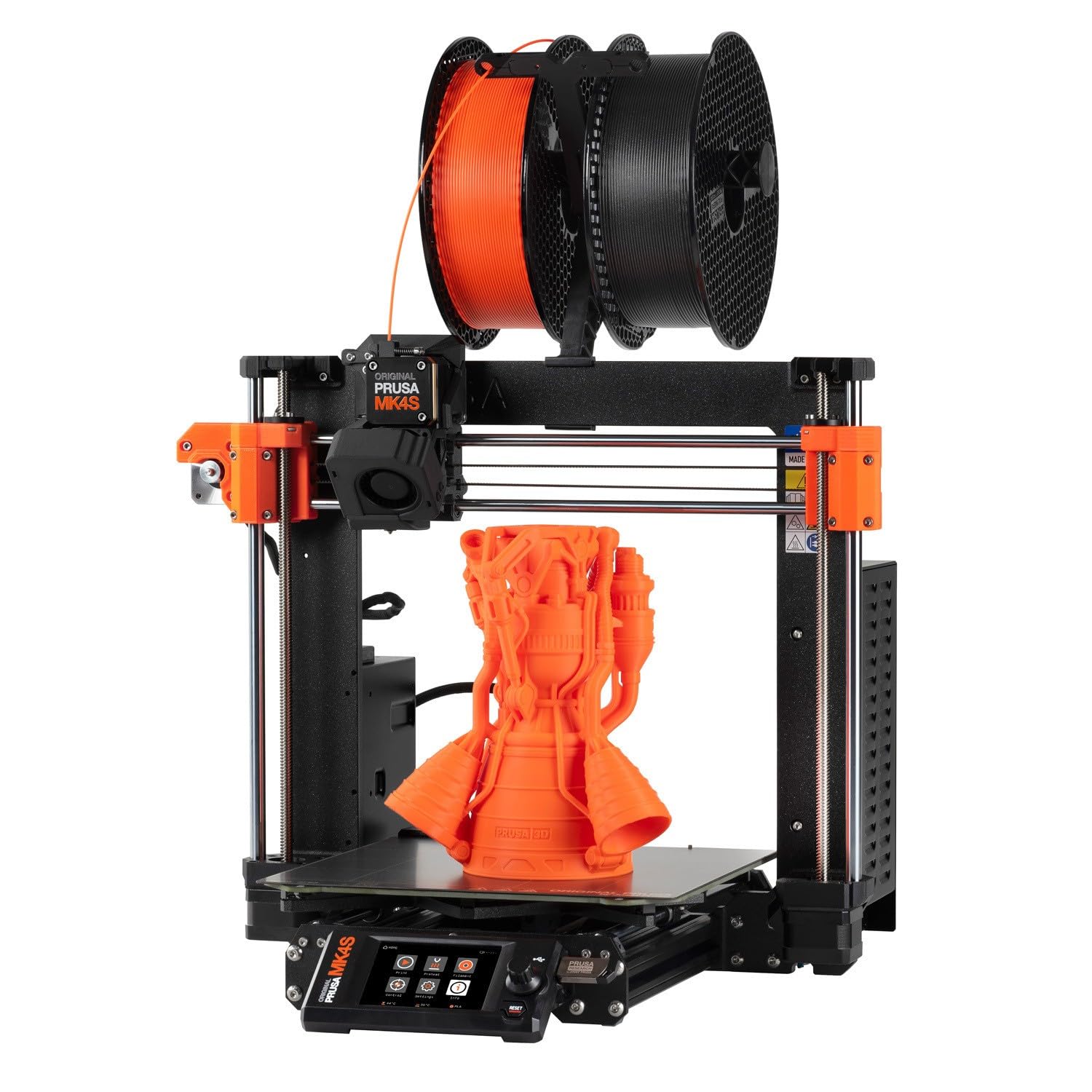
Prusa built its reputation on consistent, reliable print output, and the MK4S delivers input shaping for higher speeds without losing the dimensional accuracy that makes Prusa prints stand out. For cosplay, this means armor pieces join together with tolerances tight enough that you can friction-fit snap connectors without gluing. The 250x210x210mm build volume is smaller than the CoreXY competitors here, but the open-source ecosystem allows for hardware upgrades and custom firmware tweaks that extend its life far beyond typical consumer machines.
The MK4S includes a 1 kg spool of Prusament PLA Galaxy Black, and default profiles in PrusaSlicer produce exceptional first layers with zero manual tuning. The interactive kit assembly includes detailed online comments from the community that troubleshoot every step. For a cosplayer who wants to understand how their machine works, this is the only printer on this list that teaches the craft of printer mechanics during assembly. The lifetime technical assistance from Prusa Research is a genuine safety net for long-term ownership.
The cost versus performance ratio is difficult to justify against the Bambu P1S, which offers higher speed and a fully enclosed chamber for less money. The MK4S also lacks an enclosure standard, so printing ABS or ASA requires an optional enclosure purchase. For cosplayers who value long-term repairability and community support over raw speed, the MK4S remains the gold standard for open-source reliability.
Why it’s great
- Open-source design with long-term upgrade path and available spare parts
- Reliable default slicer profiles produce consistent dimensional accuracy
- Detailed online build guide with active community troubleshooting
Good to know
- Cost is higher than comparable CoreXY machines with more features
- No standard enclosure limits engineering filament printing without add-on
7. Anycubic Kobra S1C

The Kobra S1C solves one of the most common cosplay failures: wet filament causing bubbles, clogs, and layer adhesion issues on multi-day prop prints. The built-in active filament drying system maintains optimal moisture levels for each material profile, which directly improves success rates on a 48-hour helmet print where even a single bubble layer can ruin the entire surface. The fully enclosed CoreXY structure reaches 600 mm/s top speed with auto-leveling and flow rate calibration that eliminates manual tweaking.
Multi-color expansion supports up to eight colors with two ACE Pro units, giving comic-accurate character armor panels that would normally require four separate dye sublimation passes. The quick-swap nozzle design reduces maintenance time to seconds, and the Anycubic App allows remote monitoring via the built-in camera. Users consistently note the smooth surface quality during testing, with one review describing the prints as requiring almost no post-sanding before priming.
The ACE Pro unit itself is the weakest link in the system. Some users report brittle filament breaking at the ACE Pro’s entrance, causing clogs that are difficult to clear. The camera is low-resolution, useful only for basic monitoring rather than detailed time-lapses. At 56 pounds, the S1C is significantly heavier than the Bambu P1S, requiring a sturdy stand. For cosplayers who print infrequently and leave spools exposed to humidity, the active drying feature alone may justify the upgrade.
Why it’s great
- Active filament drying prevents moisture-induced print failures on long jobs
- Enclosed design with 600mm/s CoreXY and full auto calibration
- Expands to 8-color printing with dual ACE Pro units
Good to know
- ACE Pro unit can cause filament jams with brittle spools
- Heavy 56-pound machine requires a dedicated workspace
8. Creality K1C

The K1C is Creality’s refined CoreXY that targets the exact intersection of speed and material versatility. The 300°C clog-free direct extruder with a steel-stipped copper nozzle and titanium alloy heatbreak is built specifically for carbon fiber-reinforced filaments, which produce armor parts that are both lightweight and stiff. The 600 mm/s top speed and 20,000 mm/s² acceleration match the fast-paced prototyping cadence of cosplay work, and the AI camera with spaghetti failure detection pauses prints before they create a massive waste of material.
The auto calibration suite handles Z-offset, bed leveling, and input shaping in a single boot-up routine, so you can reload a new filament profile and start printing within three minutes of unboxing. The three-fan cooling system includes a hotend fan for heat creep prevention, a part cooling fan for bridging, and an auxiliary fan for chamber-level overhang cooling. This triple-fan layout lets you print aggressive overhang angles required for curved shoulder armor without supports, saving both filament and post-processing time.
The build volume of 220x220x250mm is restrictive for full helmets. Most adult-size armored helmets will require splitting into two or three parts. User reviews highlight quality control variance — some units arrive with loose gantry screws or inconsistent first-layer adhesion that requires disassembly to fix. For cosplayers willing to invest a few hours in initial tuning, the K1C delivers carbon fiber-ready speed at a fraction of the cost of comparable enclosed machines.
Why it’s great
- Dedicated carbon fiber extruder with titanium heatbreak for abrasive materials
- Triple-fan cooling produces clean overhangs with minimal support structures
- AI camera with spaghetti detection prevents failed print waste
Good to know
- Build volume is too small for one-piece helmet prints
- Quality control requires initial disassembly and gantry checks
9. ELEGOO Saturn 3 MSLA 12K

For cosplay accessories that demand extreme detail — intricate jewelry, mechanical inner frames with interlocking gears, or highly detailed face masks — the Saturn 3’s 12K monochrome LCD with 11520×5120 resolution delivers XY resolution down to 19×24 μm. The 10-inch screen allows a build volume of 218x122x250mm, which is generous for resin printing and fits full-sized mask pieces in a single orientation. The COB light source with Fresnel collimating lens achieves light uniformity above 90%, ensuring consistent exposure across the entire build plate with zero dim corners.
The 70 mm/h print speed with standard resin is respectable, and the open-source GOO file format is compatible with CHITUBOX and Lychee Slicer, giving you freedom to tune support structures for complex geometries. The laser-carved build plate provides exceptional first-layer adhesion, reducing the failure rate on delicate, fine-detailed prints. Users report consistent successful prints out of the box with the default ABS-like resin profile.
The bundled Voxeldance Tango slicer is generally considered inferior to third-party alternatives, and the included USB thumbstick is unreliable — swap it immediately. Resin printing remains messy and requires dedicated ventilation, gloves, and a wash-and-cure station. Some units exhibit persistent delamination from one corner of the build plate, suggesting occasional QC issues with screen flatness. For cosplayers who want 12K resolution at a price point far below desktop industrial machines, the Saturn 3 delivers a massive step up in detail capability.
Why it’s great
- 12K resolution (19×24μm XY) delivers class-leading detail for display props
- Large 10-inch LCD supports full-sized mask pieces in one print
- Open-source format works with third-party slicers for tuning flexibility
Good to know
- Bundled slicer and USB stick are unreliable; use third-party tools
- Resin printing requires dedicated PPE, ventilation, and post-curing station
10. Bambu Lab A1 Combo
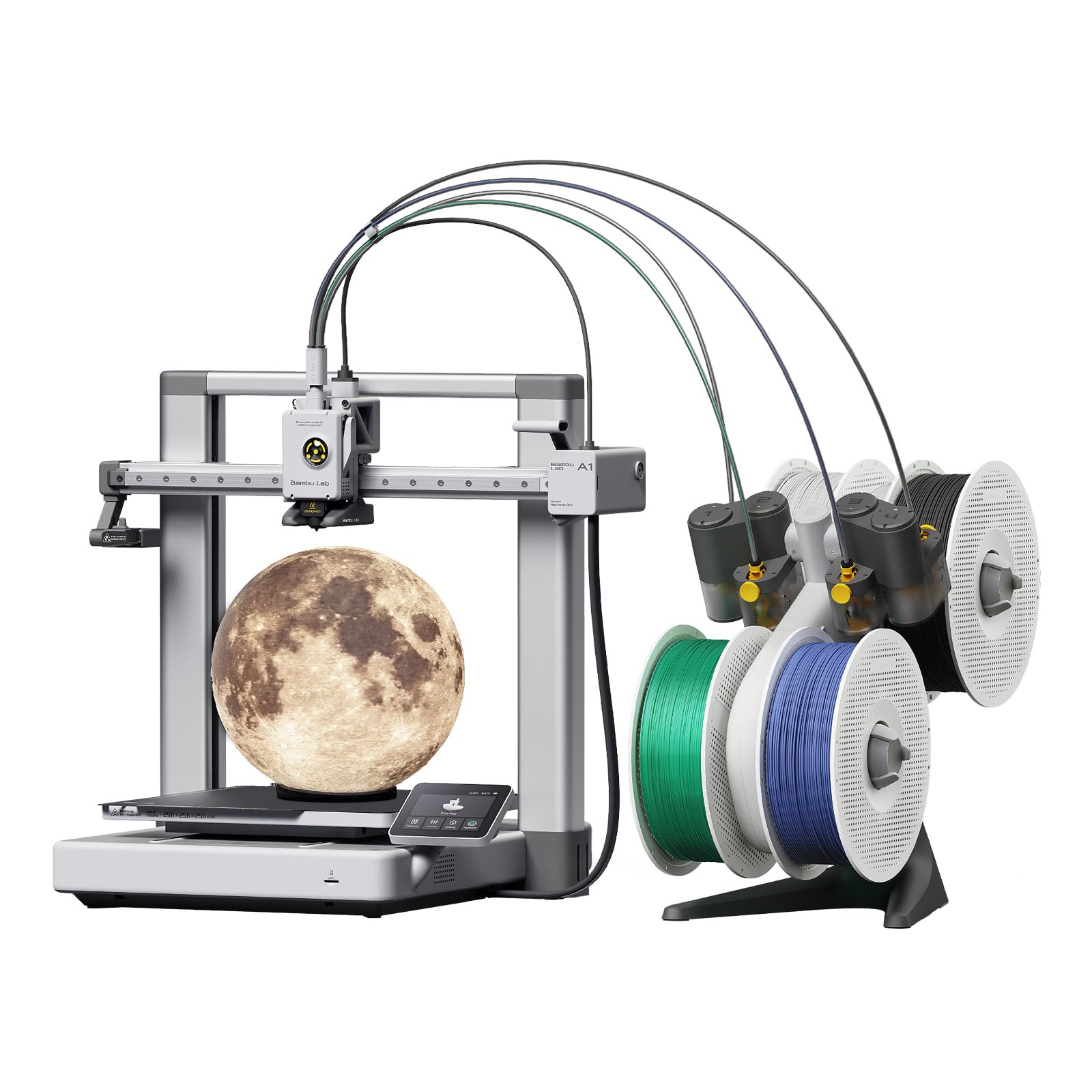
The A1 Combo is the entry-level gateway into the Bambu ecosystem, offering the same AMS multi-color capability as the P1S in a quieter, open-frame design rated at ≤48 dB. For cosplayers starting their first build, the full-auto calibration, active flow rate compensation, and 1-Clip quick-swap nozzle eliminate every technical barrier that stops beginners. The 10,000 mm/s² acceleration delivers surprisingly fast prints for a bedslinger design, easily handling props like swords, staffs, and small armor panels.
The included AMS lite handles four colors and works with multiple PLA brands using printed adapters. Users consistently report printing full-size swords in sections for cosplay, with one reviewer noting they replaced expensive Etsy orders by printing daily. The phone app with camera and time-lapse functionality allows remote monitoring, and the maker lab app provides thousands of community-designed prints ready to slice. The LED Lamp Kit bundled in this combo adds functional lighting to printed models for decorative display pieces.
The open-frame design limits material compatibility — the A1 cannot maintain the chamber temperature needed for ABS or ASA. Reviewers note the printer is noisy during multi-color changes due to the purge “poop” mechanism, though the quiet printing mode reduces this. The included filament spool is small and runs out quickly, so order additional reels alongside the printer. For a cosplayer on a budget who wants multi-color capability with minimal tuning, the A1 Combo is the least intimidating path into the hobby.
Why it’s great
- Extremely quiet operation at 48dB is ideal for apartment cosplay setups
- Full-auto calibration and AMS lite make multi-color printing beginner-accessible
- Phone app with camera and time-lapse allows remote overnight monitoring
Good to know
- Open frame limits materials to PLA and PETG; no ABS or nylon support
- Multi-color purge waste can be messy; small included filament spool runs out quickly
11. IdeaFormer IR3 V2

The IdeaFormer IR3 V2 uses a conveyor belt printer design that enables infinite Z-axis printing, making it the only machine on this list capable of producing a full-length cosplay sword, staff, or spear as a single continuous print up to 250×250×∞ mm. The upgraded metal PEI-coated belt ensures proper layer adhesion at the 45° angle, and the Klipper firmware with roller gearbox delivers 400 mm/s speed with smooth XY-axis motion. For cosplay production runners printing identical props in batches, this is the most throughput-efficient design available.
The infinite Z-axis also produces support-free complex overhangs by taking advantage of the belt’s 45° angle, which changes how overhangs behave relative to standard flat-bed printers. One-click auto-leveling with a Y-offset strain sensor eliminates the frustrating manual bed leveling that plagues belt printers. Users report successful mass production runs where the printer runs 24/7 for a week without intervention, making it ideal for Etsy sellers or guilds producing coordinated cosplay sets.
Belt printers are specialized machines that require a different approach to model orientation and slicing compared to Cartesian or CoreXY printers. The 45° tilt creates overhang issues with standard models designed for flat beds, and the machine needs recalibration after every move. The software ecosystem relies on IdeaMaker for slicing and a Fluidd web GUI for control, which is a steeper learning curve than Bambu’s integrated workflow. For a cosplayer whose primary need is long, continuous prints or batch production, the IR3 V2 is a unique tool that nothing else on this list replicates.
Why it’s great
- Infinite Z-axis prints full-length swords, staffs, and spears in one piece
- Klipper firmware and roller gearbox deliver smooth 400 mm/s continuous printing
- Support-free overhangs from 45° belt angle reduce post-processing on complex shapes
Good to know
- 45° tilt creates compatibility issues with standard flat-bed models
- Specialized workflow requires different slicing and orientation skills
FAQ
Can I print a full helmet in one piece with these printers?
Which is better for cosplay: FDM or resin printing?
What build volume do I need for a one-piece cosplay helmet?
Do I need an enclosed printer for cosplay materials?
Final Thoughts: The Verdict
For most users, the 3d printer for cosplay winner is the Bambu Lab P1S Combo because it balances fully enclosed multi-material capability, reliable 500mm/s speed, and a build volume that fits most full helmets without splicing. If you need massive single-piece armor plates and engineering-grade filament support, grab the QIDI Max4 Combo. And for display-grade props where 14K surface detail matters more than impact resistance, nothing beats the ANYCUBIC Photon Mono M7 PRO.