
The right pair of fins transforms everything. Instead of fighting to get onto a wave, you feel the blade catch water and launch you forward with a single kick. The wrong pair slips off, chafes your heel raw, or leaves you gasping after ten minutes of paddling. This guide isolates exactly what separates a great bodysurfing fin from a frustrating one — from blade stiffness and foot pocket geometry to the specific rubber compounds that survive saltwater abuse.
I’m Min — the co-founder and writer behind Gadgets Feed. I’ve spent hundreds of hours analyzing customer feedback, testing blade designs, and comparing rubber formulations across dozens of models to separate marketing claims from actual performance in the water.
Whether you live in the shore break or only get to the coast twice a year, this guide will help you select the ideal pair of body surfing fins for your specific body type, skill level, and wave conditions.
How To Choose The Best Body Surfing Fins
Not all swim fins work for bodysurfing. Pool training fins are too short. Diving fins are too long and stiff. You need a fin that balances blade surface area with a flexible foot pocket — one that can generate quick bursts of acceleration without cramping your calves after thirty minutes. Here are the three specs that matter most.
Blade Length and Stiffness
Bodysurfing demands short, powerful kicks. A blade that is too long creates drag when you are snapping into a wave. A blade that is too flexible wastes energy because it bends instead of pushing water. The sweet spot sits between 15 and 20 inches of blade, with a stiffness that flexes at the tip but remains rigid near the foot pocket. This gives you the acceleration to catch waves early and the control to steer with small adjustments.
Foot Pocket Material and Geometry
Natural gum rubber molds to your foot better than silicone or polyurethane, which means fewer pressure points and less chafing during long sessions. The pocket should hug your heel without a strap — bodysurfing fins with open heels or adjustable straps tend to slip off when a wave hits you from behind. Look for a closed heel pocket with a comfortable inner lining that does not abrade your Achilles tendon.
Drainage and Weight
A fin that traps sand, pebbles, or water inside the foot pocket becomes a drag anchor. Small drainage holes near the toe allow debris to flush out with each kick. Weight matters too — a heavy fin tires your ankles during long swims, but a fin that is too light may not cut through the water cleanly. Aim for fins that float (so you never lose them if kicked off) but remain dense enough to transfer force efficiently.
Quick Comparison
On smaller screens, swipe sideways to see the full table.
| Model | Category | Best For | Key Spec | Amazon |
|---|---|---|---|---|
| DORSAL Bodyboard Bodysurfing Floating Swimfins | Premium | Maximum thrust for wave catching | 100% Malaysian gum rubber | Amazon |
| Churchill Makapuu Pro Swimfins | Premium | Bodyboarding and body surfing | Dolphin fin blade design | Amazon |
| Classic Swim Fins by DaFin | Premium | Comfort for all-day sessions | Strakes for power and control | Amazon |
| Flow Premium Rubber Long Fins | Mid-Range | Youth and small adult training | Closed ankle, long blade design | Amazon |
| Sporti Adult-Kids Swim Fins | Mid-Range | Pool lap training and recreation | Buoyant floating rubber fins | Amazon |
| TYR Crossblade Fins 2.0 | Mid-Range | Leg strength and kick technique | Short blade, natural rubber | Amazon |
| FYJS Short Swim Fins | Budget | Travel and casual snorkeling | Short blade, compact design | Amazon |
In‑Depth Reviews
1. DORSAL Bodyboard Bodysurfing Floating Swimfins

The DORSAL fins use a web tail design that produces noticeably more thrust per kick than typical long-blade fins. The blade is stiff enough to drive through turbulent water but flexes at the tip to avoid calf cramping. The 100% Malaysian gum rubber foot pocket stretches just enough to accommodate a wide foot without needing a strap, and the closed heel stays locked on even when a wave rips past you.
Bodyboarders and bodysurfers who tested these in waist-high shore break reported catching waves earlier and holding their line longer. The toe drainage hole flushes sand and small pebbles instantly — a feature that matters when you are tumbling through the wash. At roughly 1.7 kilograms per pair, they are light enough to pack in a duffel without feeling flimsy.
Rescue swimmers observed a time saving of about seven seconds per hundred meters compared to standard mini fins. The open toe design allows water to flow through freely, which reduces drag on the recovery phase of the kick. These are purpose-built for ocean conditions, not pool laps.
Why it’s great
- Excellent thrust from stiff blade and side ridges
- Closed heel stays secure without chafing
- Light enough for travel, tough enough for surf
Good to know
- Soft rubber on top may rub some skin without fin socks
- Large size runs closer to US 10.5 — size up for larger feet
2. Churchill Makapuu Pro Swimfins

The Churchill Makapuu Pro is a legend in the bodyboarding world, and for good reason. Its dolphin-like blade profile generates consistent thrust without the harsh snap that some stiff fins deliver. The natural gum rubber foot pocket includes neoprene inserts that cushion the top of your foot and a heel pad that prevents the fin from sliding off during aggressive kicks.
These fins float, which eliminates the heart-sinking moment of watching your gear sink into deep water after a wipeout. The ankle tether adds extra security, though most users find the closed heel holds well enough on its own. Sizing runs slightly small — most buyers recommend choosing one size larger than your shoe size, especially if you plan to wear neoprene booties underneath.
Bodyboarders riding green waves report excellent control and comfortable wear for two-hour sessions without blisters. The blade is stiffest near the center and softens toward the edges, which gives you a progressive feel — gentle kicks produce modest forward movement while full-power bursts deliver real acceleration into a steep face.
Why it’s great
- Authentic dolphin blade design balances thrust and control
- Neoprene inserts prevent heel blisters
- Floating fins — no risk of losing them in the ocean
Good to know
- Sizing runs small — order one size up from your shoe size
- Return process for wrong size is not handled directly by Amazon
3. Classic Swim Fins by DaFin
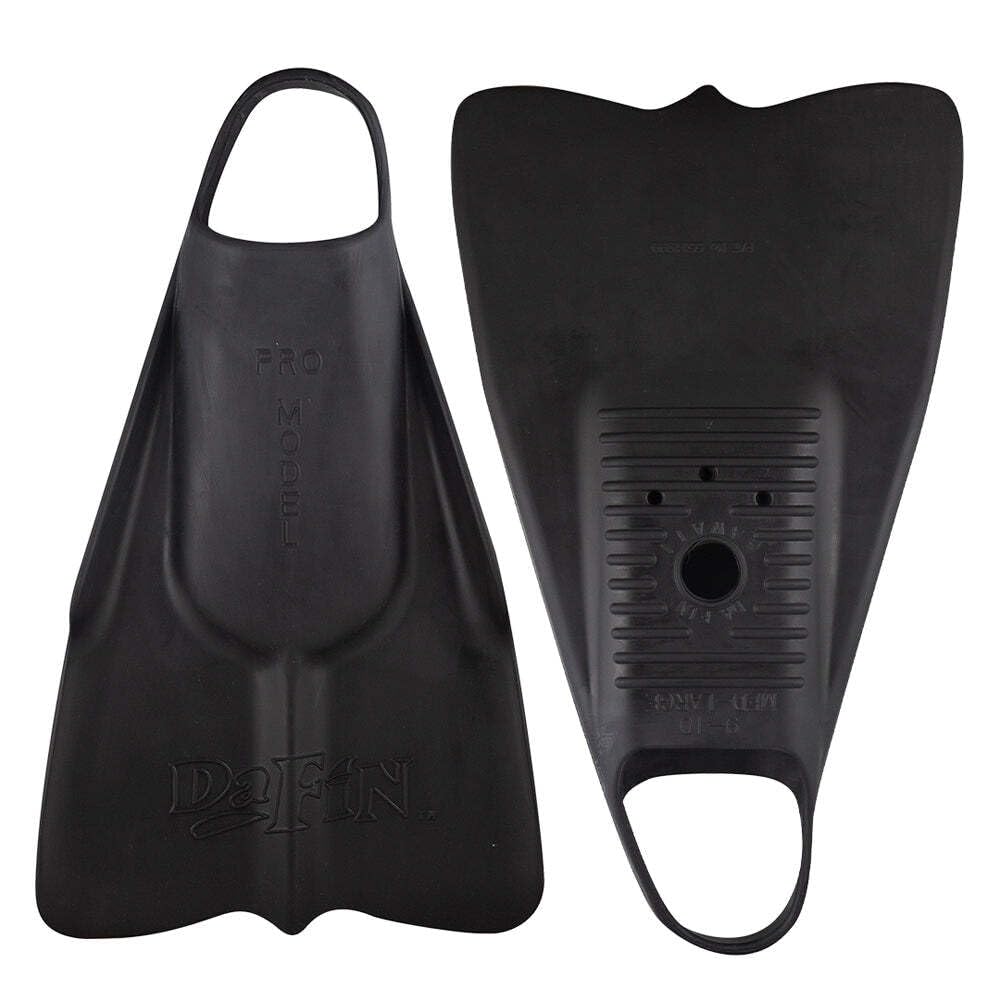
DaFin is the fin endorsed by the Hawaiian Lifeguard Association, and once you slide them on, you understand why. The foot pocket uses a polyurethane blend that feels soft against bare skin yet stays rigid against the blade, eliminating the harsh pressure points common in all-rubber fins. The strakes — small ridges along the blade surface — channel water in a way that provides consistent forward thrust even when your kick angle is imperfect.
Longtime Churchill users who switched to DaFin report significantly less ankle fatigue and better control when side-surfing. The fins weigh roughly 3.5 pounds per pair, which is heavier than some competitors, but that weight translates into dense, responsive kicks that cut through chop without flutter. There is no left-right difference, so you can swap feet without adjusting.
Body surfers and boogie boarders praise the comfortable fit for full-day sessions. The topside remains soft and supple while the bottom is stiffer, mimicking the natural mechanics of a dolphin tail. The PU material holds up well against sun, salt, and sand, though it does not float as naturally as pure gum rubber variants.
Why it’s great
- Exceptional comfort for extended wear without blisters
- Strakes provide stable power even with sloppy kick form
- Lifeguard-approved reliability in real ocean conditions
Good to know
- Heavier than pure rubber fins at 3.5 lbs per pair
- Not a floating fin — if kicked off, it sinks
4. Flow Premium Rubber Long Fins

The Flow Premium Rubber Long Fins are one of the few options that offer true youth sizing without compromising blade length. The long-blade design forces young swimmers to kick from their hips rather than their knees, building proper technique from the start. The closed ankle fits securely over small feet without needing a strap, and the soft rubber foot pocket accommodates growing feet comfortably.
Parents report that children as young as seven with shoe sizes 13-13.5 find the sizing accurate when following the provided chart. The rubber is soft enough to avoid blistering the back of the heel but stiff enough along the blade to provide real propulsion. The fins float in both fresh and salt water, which makes them harder to lose during pool sessions.
One minor frustration: the sizing varies noticeably between color options. Some colors fit true to size while others run large. Buyers should measure their child’s foot length and compare it directly to the size chart instead of relying on age recommendations. When sized correctly, these fins last through several growth spurts.
Why it’s great
- Youth sizing that actually fits small feet
- Soft foot pocket eliminates heel blisters
- Floating design prevents loss during training
Good to know
- Sizing consistency varies between colors — measure carefully
- Long blade design may feel cumbersome for very narrow feet
5. Sporti Adult-Kids Swim Fins

The Sporti long floating fins are built for pool lap training rather than open ocean surfing. The buoyant blade lifts your legs toward the surface automatically, which helps swimmers of all levels maintain proper body alignment. The natural rubber foot pocket is flexible enough to accommodate wider feet without compressing the top, and the long blade provides consistent resistance throughout the kick cycle.
Swimmers training four days a week year-round report excellent durability as long as the fins are kept out of direct sunlight. The rubber shows a slight oil coating from the factory — this is normal and washes off with soap and water. Some units arrive with the foot pocket slightly misshapen due to packaging, but the natural memory effect of the rubber returns the fins to spec after a few uses.
Sizing can be tricky for narrow feet — Sporti recommends wearing fin socks if the fit feels loose. The long blade does generate noticeable drag during fast flutter kicks, which makes these better suited for endurance training and technique work rather than sprint intervals.
Why it’s great
- Buoyant blade helps correct body position automatically
- Natural rubber foot pocket fits wide feet without pressure
- Durable enough for year-round pool training
Good to know
- Long blade creates drag during fast kicks
- Narrow feet may require fin socks for a snug fit
6. TYR Crossblade Fins 2.0
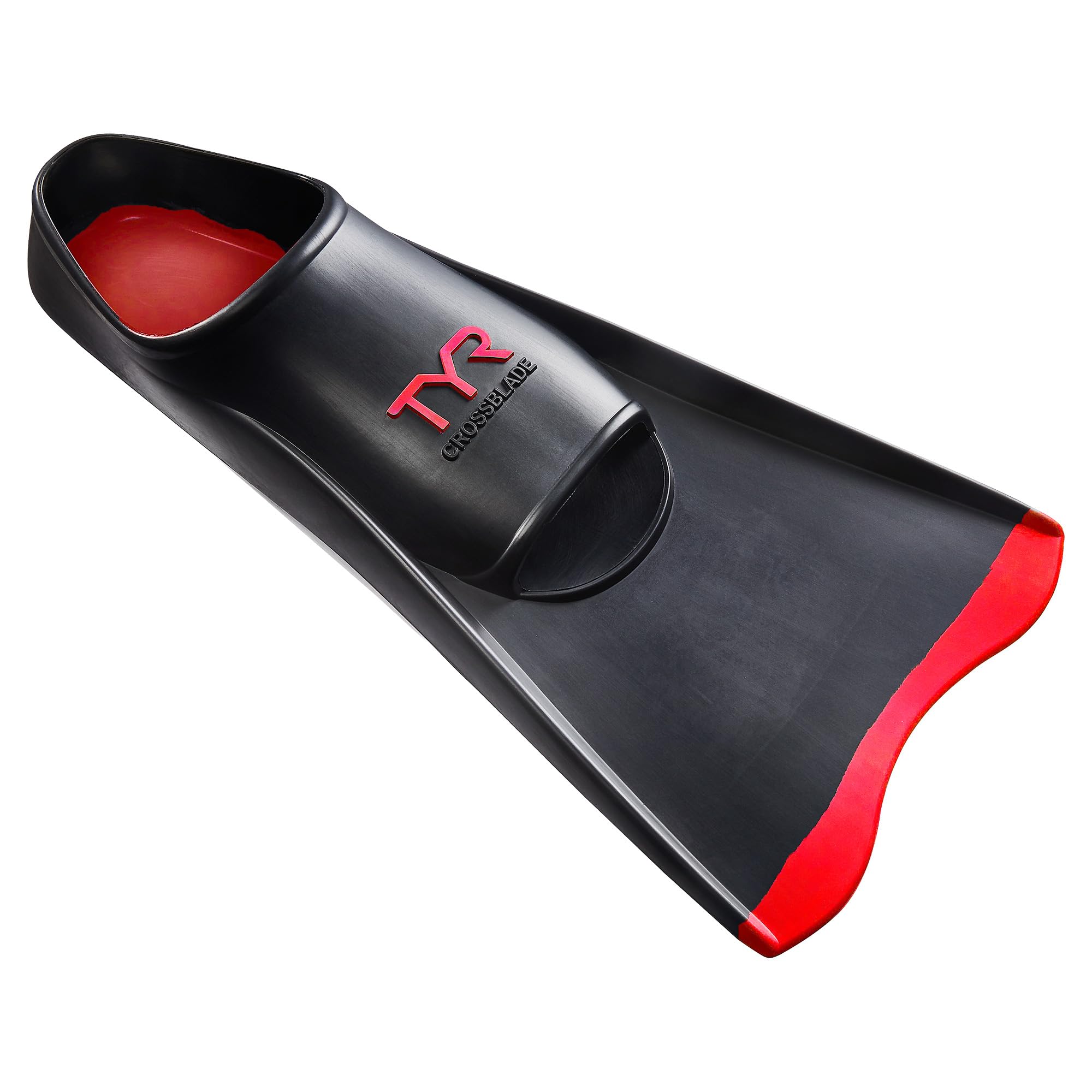
The TYR Crossblade 2.0 is a short-blade fin that prioritizes leg strength and kick mechanics over raw speed. The blade length is short enough to avoid altering your natural kick rhythm, which makes it an excellent tool for competitive swimmers looking to improve their flutter kick. The natural rubber foot pocket fits snugly and resists slipping, even during explosive push-offs from the wall.
Swimmers transitioning from longer fins appreciate how the Crossblade forces the legs to work harder — there is less blade surface to push against, so you have to generate more force per kick. This builds endurance and reinforces proper kicking form from the hip rather than the knee. The rubber compound is dense and holds its shape well after months of daily use.
A note on fit: the rubber version fits tighter than the silicone version, and some users with sensitive heels report blistering along the ankle edge. Wearing thin fin socks solves this issue completely. The fins work well for pool, lake, and open water training, though the short blade is less effective for catching waves than purpose-built bodysurfing fins.
Why it’s great
- Short blade builds leg strength without altering kick rhythm
- Dense natural rubber holds shape through heavy use
- Excellent for competitive swimmers focused on technique
Good to know
- Rubber version runs tight — may cause blisters without fin socks
- Short blade lacks the thrust needed for ocean wave catching
7. FYJS Short Swim Fins

The FYJS short fins are the most affordable entry point in this guide, and they deliver surprising value considering the price. The blade uses a blend of sturdy rubber and solid PP that provides enough rigidity for casual swimming and surface snorkeling without tiring your legs. The self-adjusting foot pocket flexes to accommodate different foot shapes, and the anti-slip sole helps prevent cramps during extended wear.
Travelers love the compact size — the fins come with a quick-dry mesh bag and fit easily into carry-on luggage. The short blade length makes them less powerful than full-size fins, but that trade-off is exactly what makes them comfortable for long pool sessions or island-hopping trips where you need to walk between breaks. Users report a secure fit for sizes up to US 13 when ordering the XL option.
Several customers noted that the fins show slight blade curvature after walking on them, but performance does not degrade noticeably. The plastic inserts that ship with the fins help maintain shape during storage. These are not the right choice for serious bodysurfing in strong currents, but for the occasional wave and pool workout, they get the job done without breaking the bank.
Why it’s great
- Compact travel size fits in most carry-on bags
- Self-adjusting foot pocket fits a wide range of foot shapes
- Anti-slip sole reduces foot fatigue and cramping
Good to know
- Short blade lacks the power for strong currents or deep diving
- Blade may curve slightly from walking — use the included inserts
FAQ
Should I get open heel or closed heel body surfing fins?
How tight should body surfing fins fit?
Do body surfing fins need drainage holes?
Final Thoughts: The Verdict
For most users, the body surfing fins winner is the DORSAL Bodyboard Bodysurfing Floating Swimfins because the web tail design delivers exceptional thrust while the closed heel pocket stays locked on in rough conditions. If you prioritize comfort for all-day sessions, grab the Classic Swim Fins by DaFin — the strake technology and soft PU foot pocket make them the most comfortable option on this list. And for the perfect balance of tradition and value, nothing beats the Churchill Makapuu Pro Swimfins with their floating dolphin blade design that has been trusted by bodyboarders for decades.