
The difference between a great day on the trail and a miserable one often comes down to three things: how your feet feel, how your back feels, and whether your gear stays dry. The wrong boots can turn every step into a negotiation with a blister. A pack that doesn’t fit properly will shift your center of gravity, tiring your shoulders and hips long before the scenery gets old. Finding the right combination of support, capacity, and weather protection is the single most impactful upgrade you can make to your outdoor experience.
I’m Min — the co-founder and writer behind Gadgets Feed. I’ve spent hundreds of hours analyzing technical specifications, comparing load-bearing frame designs, waterproofing standards, and fabric denier ratings across dozens of hiking models to build this guide.
Whether you’re planning a thru-hike or just a long weekend escape, these carefully vetted picks represent the best options available right now for anyone seeking the best awesome hiking gear.
How To Choose The Best Awesome Hiking Gear
Selecting gear for the trail is a balance of weight, durability, and fit. A 65-liter pack is overkill for a day hike, but a 20-liter pack won’t suffice for an overnight trip. Similarly, boots with aggressive lugs that excel on muddy slopes are less comfortable on flat pavement. Understanding your intended terrain, trip duration, and personal biomechanics is the first step toward a kit that works with you, not against you.
Backpack Capacity and Frame Type
Capacity is measured in liters. Day hikes rarely need more than 30L. Overnight trips typically require 40–60L, while multi-day expeditions may demand 65L or more. Frame type matters just as much: internal frame packs (like the Osprey Rook and Kestrel) transfer load from your shoulders to your hips via a rigid structure, allowing you to carry 30–50 pounds comfortably over long distances. Frameless packs are lighter but quickly become painful above 15 pounds.
Boot Height and Waterproofing
Low-cut shoes offer the best ankle mobility but the least support for uneven terrain and heavy packs. Mid-height boots (like the KEEN Targhee 4) provide a compromise: enough ankle coverage to prevent rolling without the stiffness of a full-height mountaineering boot. A waterproof membrane like KEEN.DRY keeps moisture out but does trap heat — consider whether you’ll be crossing streams and hiking in wet grass (requiring waterproofing) or dry, hot trails (where breathability matters more).
Trekking Pole Materials and Lock Mechanisms
Aluminum poles (like the TrailBuddy’s 7075 alloy) offer a better strength-to-weight ratio than steel, and they bend rather than snap under extreme stress. The lock mechanism is equally critical: lever locks can be adjusted with one hand and grip the shaft with constant pressure, while twist locks require two hands and can slip if overtightened or dirty. Carbide tips provide the most durable grip on rock and ice, while rubber tips preserve traction on pavement.
Quick Comparison
On smaller screens, swipe sideways to see the full table.
| Model | Category | Best For | Key Spec | Amazon |
|---|---|---|---|---|
| Osprey Rook 65L | Backpack | Multi‑day backpacking | 65L capacity / 3.7 lb weight | Amazon |
| Osprey Kestrel 48L | Backpack | Technical treks | 48L capacity / 4.4 lb weight | Amazon |
| KEEN Targhee 4 Mid WP | Boots | All‑day comfort & support | KEEN.DRY waterproof membrane | Amazon |
| Helly‑Hansen QD Cargo Pants | Apparel | Fast‑drying travel pants | Softshell / quick‑dry fabric | Amazon |
| Water Buffalo Sherpa 22L | Hydration Pack | Day hikes with water bladder | 22L capacity / 2L bladder | Amazon |
| Sea to Summit Ultra‑Sil 20L | Packable Daypack | Ultra‑compact emergency use | 20L / 2.5 oz weight | Amazon |
| TrailBuddy Trekking Poles | Poles | Balance & knee relief | 7075 aluminum / cork grip | Amazon |
In‑Depth Reviews
1. Osprey Rook 65L Men’s Backpacking Backpack

The Osprey Rook 65L is the gold standard for multi-day backpacking in this guide. Its AirSpeed suspension system uses a tensioned mesh backpanel that keeps the pack off your back, reducing sweat buildup on long climbs. The LightWire internal frame transfers up to 85% of the load to the padded hipbelt, which means your shoulders will still feel fresh at mile 15. At 3.7 pounds, it’s remarkably light for a 65-liter framed pack, and the removable integrated raincover means you don’t have to rummage for a separate dry bag when the sky opens up.
The design prioritizes simplicity without sacrificing crucial features. The floating top lid provides a large zippered pocket for quick-access items like a map or sunglasses, while the zippered sleeping bag compartment at the bottom lets you organize gear by frequency of use. The Daylite-compatible attachment system allows you to clip a smaller daypack onto the front for summit scrambles, effectively giving you two packs in one system. Reviewers consistently praise its comfort at loads up to 35 pounds, with one user logging a 26-mile day under 30 pounds without issue.
Where this pack truly earns its place at the top is its attention to the details that matter on multi-night trips. The angled water bottle pockets allow for one-handed access without removing the pack, and the compression straps effectively stabilize the load whether the bag is full or half-empty. The included raincover is stowed in its own dedicated pocket and deploys quickly. For anyone tackling a 3-to-5-day trek through variable weather, this pack delivers the most balanced blend of weight, capacity, and load management in its class.
Why it’s great
- AirSpeed ventilated backpanel reduces sweat dramatically on warm climbs
- Comfortable shoulder straps and hipbelt handle loads up to 35 pounds without digging in
- Integrated raincover and 65L capacity make it ready for multi-day trips in any weather
Good to know
- No large external mesh pocket for wet gear or quick-dry items
- Lack of rear panel access means you must dig through the top to reach bottom contents
2. Osprey Kestrel 48L Men’s Backpacking Backpack

The Osprey Kestrel 48L is the technical specialist of this lineup. It’s built for backpackers who venture into rocky, uneven terrain where a stable, close-to-body carry is paramount. The injection-molded AirScape backpanel conforms to your back while maintaining airflow, and the adjustable torso length ensures the hipbelt sits squarely on your iliac crests rather than riding up. At 4.44 pounds, it’s heavier than the Rook, but that weight pays for thicker shoulder straps, denser hipbelt padding, and a tougher outer fabric that shrugs off abrasion from rock walls.
Organization is a standout here. The integrated bright-green raincover is stored in a dedicated bottom pocket and is nearly impossible to lose. The side-access zipper allows you to grab a jacket or water filter from the middle of the main compartment without unpacking everything from the top. Daisy chain attachments on the front let you strap on extra gear like a sleeping pad or tent footprint, and the fixed hipbelt includes zippered pockets for snacks or a phone. Users who’ve put hundreds of miles on this pack note that the thicker padding on the waist belt makes a noticeable difference when carrying 30+ pounds over technical trail.
Its 48-liter capacity hits a sweet spot for weekend-to-week-long trips where you need enough room for a bear canister and puffy jacket without the bulk of a 65L pack. The Kestrel also compresses down well for day hikes when you only need the top portion filled. But if your typical outing involves scrambling over boulders or bushwhacking through dense growth, the Kestrel’s bombproof construction and superior organization make it worth every gram.
Why it’s great
- Thicker shoulder pads and waist belt provide exceptional comfort for technical, heavy loads
- Side-access zipper and integrated raincover add real convenience on the trail
- Daisy chain attachments and trekking pole loops offer endless customization for gear
Good to know
- Heavier than other 48L packs at 4.44 pounds
- Some units arrive with a strong chemical odor from the fabric coating; washing may be required
3. KEEN Targhee 4 Mid Height Waterproof Hiking Boots
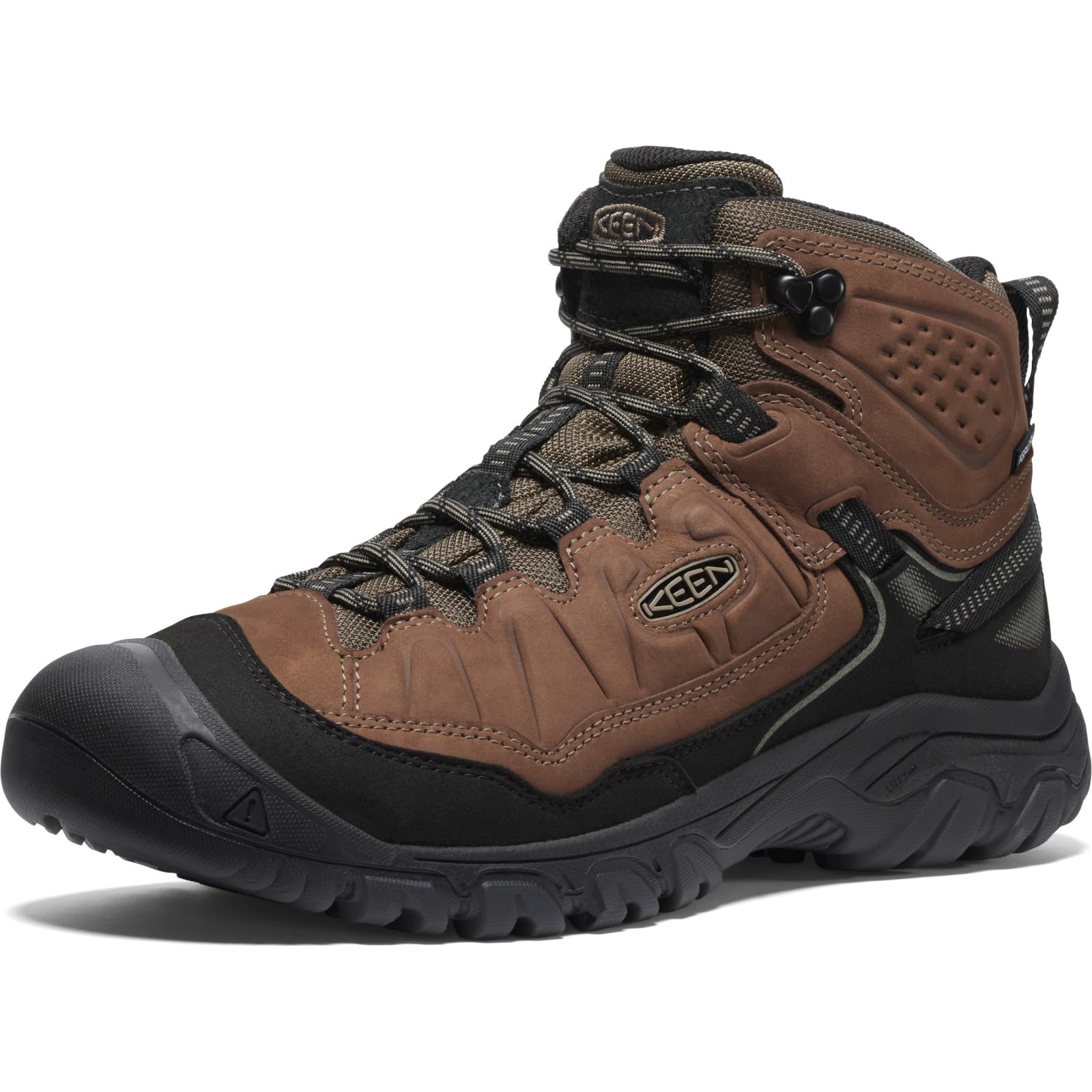
Few hiking boots achieve the “comfortable out of the box” reputation of the KEEN Targhee 4. The upper is built with a direct-attach construction that fuses the outsole to the leather and mesh without traditional cement, dramatically reducing the risk of delamination over years of use. The KEEN.DRY waterproof membrane keeps moisture out while allowing vapor to escape, and the wide toe box — a KEEN signature — gives your toes room to splay on descents, preventing black toenails. Weighing in at 620 grams per boot (size 9), it’s heavier than trail runners but far more protective against roots and rocks.
Underfoot, the Targhee 4 uses an all-terrain rubber outsole with multi-directional lugs that bite into loose dirt and mud. The upgraded K-30 insole provides more arch support than previous versions, though some reviewers with flat feet found it inadequate for full-day carries past 30 pounds and swapped in a custom orthotic. The nylon eyelets are corrosion-resistant, and the heel cup locks the foot in place to reduce friction blisters. The fusion construction is a genuine innovation — the boot’s midsole and outsole are integrated as a single unit, eliminating the gap where boots traditionally separate and let water in.
Where the Targhee 4 truly distinguishes itself is in sustained comfort across varied terrain. Users with neuropathy or wide feet repeatedly report that KEEN’s last shape is the only one that doesn’t cause pain after 10+ miles. The mid-height cut provides enough ankle support for loaded daypacks without restricting mobility. If your primary hiking involves wet undergrowth, rocky stream crossings, or uneven trail with a pack under 35 pounds, these boots will keep your feet dry, supported, and blister-free for seasons to come.
Why it’s great
- Fusion direct-attach construction eliminates the main failure point for waterproof boots
- Roomy toe box accommodates wide feet and reduces toe bang on descents
- KEEN.DRY membrane is reliable waterproofing without excessive heat buildup
Good to know
- Upgraded K-30 insole still needs replacement for serious mileage or heavy loads
- Inconsistent quality control on early units — inspect stitching carefully before first use
4. Helly-Hansen Men’s QD Cargo Pants

The Helly-Hansen QD Cargo Pants are the Swiss Army knife of hiking pants. Built from a lightweight softshell material, they dry remarkably fast after a stream crossing or unexpected downpour, and the two-way stretch allows unrestricted movement during high-step maneuvers over fallen logs. The cargo pockets sit flat against the leg without the bulky flap that makes tactical pants look out of place on trail, and the trim fit looks equally at home in a pub after the hike. Sailors have long favored these pants for their quick-dry properties and compact packability.
The fabric is 100% polyester softshell with a durable water-repellent (DWR) finish that beads up light rain and morning dew. The elasticized waistband with belt loops offers a secure fit without cinching uncomfortably after a big meal. The tapered leg openings fit easily inside boot shafts without bunching, and the gusseted crotch prevents any binding during lunges or squats. They’re not insulated, so they work best as a three-season pant for temperatures from 40°F to 80°F — below that, you’ll want a base layer underneath.
Durability is where these pants surprise. Multiple reviewers report using them for years under harsh conditions — welding sparks, rope friction, and repeated washing — with only normal wear at the cuffs. The softshell fabric resists tearing from thorns better than nylon hiking pants, and the DWR finish can be reactivated with a quick spray treatment. For the traveler or day hiker who wants one pair of pants that transitions from the trail to the town without looking like adventure gear, the QD Cargo is the most versatile option in this guide.
Why it’s great
- Fast-drying softshell fabric recovers quickly from rain or stream crossings
- Trim, non-tactical silhouette works for both trail and casual social settings
- Lightweight and packable — compresses into a small stuff sack for a carry-on
Good to know
- Runs significantly long in the inseam — order a shorter length if in between sizes
- DWR finish fades after multiple washes and requires reactivation to maintain beading
5. Water Buffalo Sherpa 22L Hydration Backpack
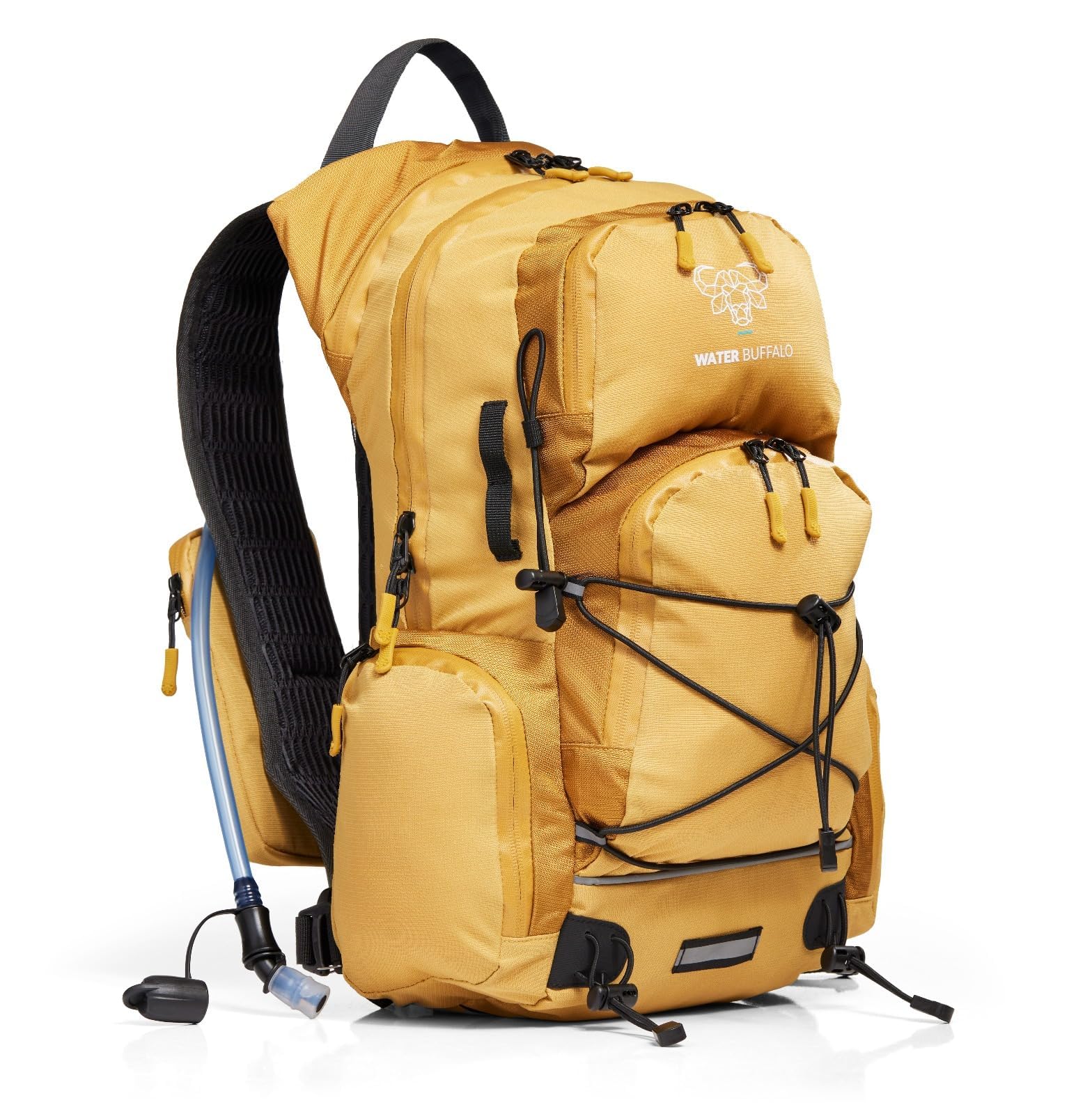
The Water Buffalo Sherpa 22L is a daypack that solves the most common frustration with hydration packs: where to put everything else. With six separate storage pockets, you can stash snacks, a rain jacket, a first aid kit, and a map without the chaos of a single cavernous compartment. The dedicated 2-liter BPA-free bladder sits in a sleeve against your back, keeping the weight centered and stable. The bite valve is mounted on a magnetic clasp that clicks onto the sternum strap — a small detail that makes one-handed drinking feel natural.
The pack body uses 150D ripstop polyester and 420D jacquard nylon for a good balance of weight and puncture resistance. The hip belt and sternum strap are adjustable, and the pack sits close to the body, reducing the bouncy feeling that cheap hydration packs produce when jogging on descents. Trekking pole holders on the front let you stow your poles without taking the pack off, and the waterproof zipper liners keep the contents dry during unexpected rain. At 22 liters, it’s sized for 5-to-10-mile day hikes where you need water, food, and a few extra layers.
The most honest feedback from long-term users concerns the included bladder. While functional, the bite valve requires a firm suck to release water, and the bladder tube lacks insulation — cold water will warm up quickly in direct sun. Several users recommend replacing the stock bladder with a better third-party unit. However, the pack itself — the harness, pocket layout, and waterproofing — is well-reviewed for durability, with one user reporting that the pack’s handle held their full body weight during a slip on snow. For the price, the Sherpa delivers a comfortable, organized hydration solution that outperforms its cost.
Why it’s great
- Six pockets including a secure stash pocket and trekking pole loops keep gear organized
- Waterproof zipper liners protect contents during sudden downpours
- Adjustable hip and chest straps provide a bounce-free fit for active hiking
Good to know
- Stock bladder has a difficult bite valve and fragile tube threading
- No insulation on the hydration tube — water temperature outside the pack matches ambient
6. Sea to Summit Ultra-Sil Ultralight Day Pack

The Sea to Summit Ultra-Sil 20L Day Pack is not a primary backpack — it’s a secondary pack that lives in your main bag, ready to deploy when you need to shed weight for a summit push or explore a town without carrying your full load. Made from 30-denier siliconized Cordura nylon, it weighs just 2.5 ounces and packs down to the size of a tennis ball. The fabric is water-resistant enough for light drizzle, though sustained heavy rain will eventually soak through. The included stuff sack clips to your belt loop or attaches to a carabiner for quick access.
The ergonomic shoulder straps are simple but functional — they’re not padded, so you won’t want to carry more than 5–8 pounds for long periods. The two-way zipper closure offers full access to the 20-liter main compartment, and the webbing loops on the front accommodate a bike light or small accessory. The Cordura fabric is impressively tough for its denier count; one user reported using their Ultra-Sil as a daily bag for four years without failure. The lack of any frame or padding means everything inside will conform to the pack’s shape, which can make finding small items tricky but saves significant weight.
This pack shines in specific scenarios: as a summit bag you strap to the outside of your 65L pack, as an emergency carry when you unexpectedly need extra space at a store or market, or as a flat packable bag for air travel where you need a small daypack at your destination. The main downsides are the thin fabric’s transparency in lighter colors (the HighRise Grey reveals outlines of dark objects inside) and the relatively high cost per ounce of capacity. But for the gram-conscious hiker who already has a primary pack, the Ultra-Sil is the most weight-efficient backup solution available.
Why it’s great
- Weighs 2.5 ounces and compresses smaller than a tennis ball for effortless storage
- 30D siliconized Cordura is remarkably durable for such lightweight fabric
- Two-way zipper and 20L capacity make it genuinely usable for trips and errands
Good to know
- Unpadded straps become uncomfortable with loads over 5 pounds
- Light-colored fabric is semi-transparent and shows the contents inside
7. TrailBuddy Trekking Poles
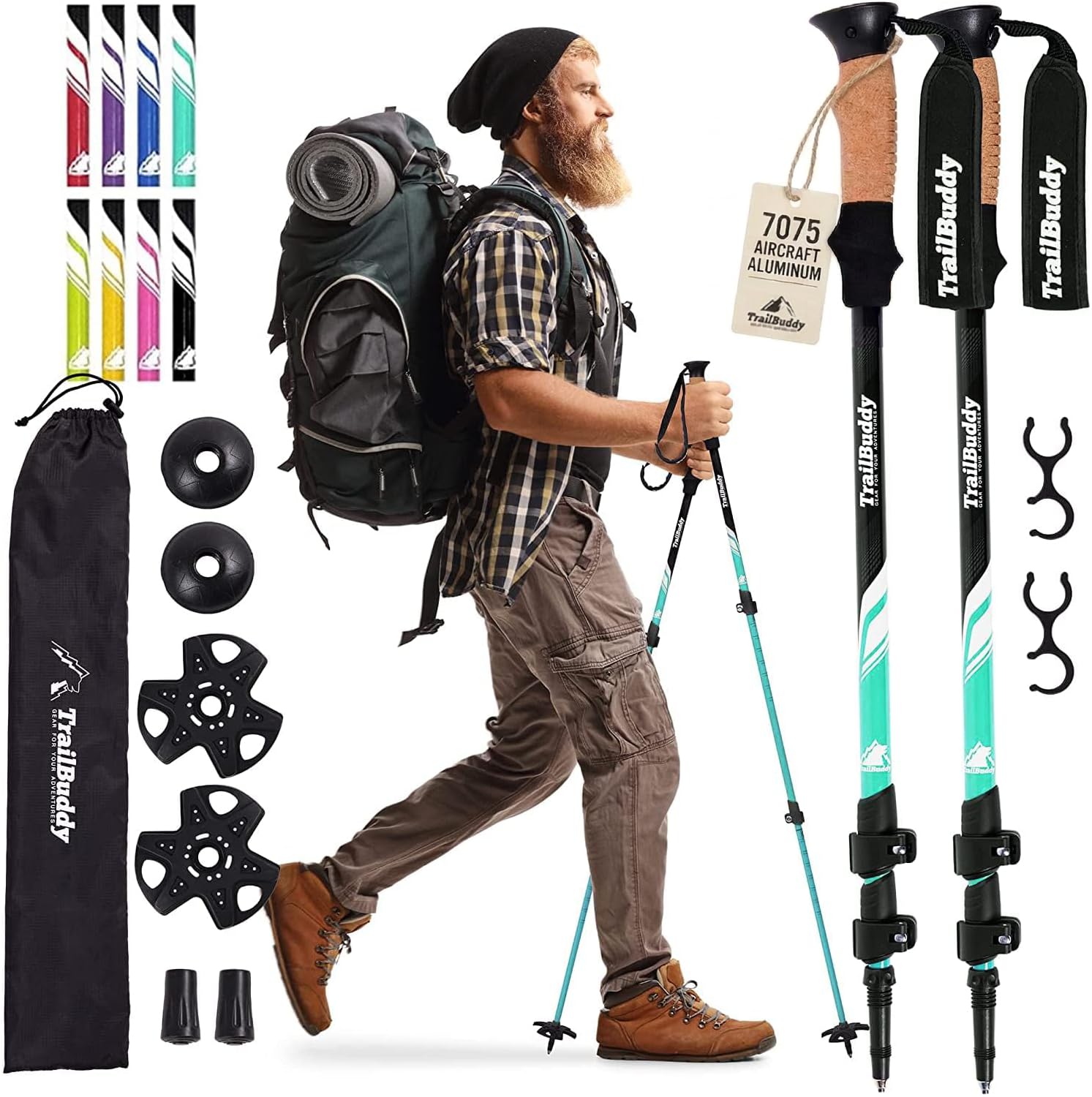
The TrailBuddy Trekking Poles deliver features typically found on poles costing three times as much. The shaft is 7075 aircraft-grade aluminum — a material choice that prioritizes strength and impact resistance over the lighter but more brittle 6061 alloy used in budget poles. At 9.7 ounces per pole, they’re weight-competitive with mid-range options while offering a lever-lock system that can be adjusted with one hand, unlike the two-handed twist locks on many comparably priced poles. The cork handles are contoured and moisture-wicking, molding to your hand over time for a personalized grip that synthetic foam can’t match.
The included accessory kit is generous: four tungsten-carbide carbide tips that replace individually, two mud baskets, two snow baskets, and four rubber walking tips for pavement. The tungsten-carbide carbide tip is the same material used in premium poles like Black Diamond’s — it bites into rock and ice with authority and lasts for hundreds of miles. The telescoping adjustment spans from 24.5 inches collapsed to 54 inches extended, covering users from kids to tall adults. The lever locks use a cam mechanism that applies even pressure around the shaft, preventing slippage better than friction-based twist locks.
Where these poles shine is in the customer feedback from diverse users: seniors report feeling confident on uneven terrain, hikers credit them with eliminating knee pain on descents, and long-term users report the lever locks still holding tight after a year of regular use. The main compromise is the non-replaceable sections — if you damage a segment, you need to replace the entire pole rather than just the broken section. But considering the total package weight, adjustable range, and accessory set, the TrailBuddy poles offer a phenomenal entry point for anyone needing reliable stability without paying premium prices.
Why it’s great
- 7075 aluminum shaft and tungsten‑carbide tips match premium-pole materials
- One‑handed lever locks are faster and more secure than twist‑lock mechanisms
- Cork handles absorb sweat and conform to your hand for long‑term comfort
Good to know
- Initial adjustment screws may be very tight and require a tool to loosen the first time
- Replacement sections are not sold individually — a damaged segment means a complete replacement
FAQ
What size backpack do I need for a 3-day hiking trip?
How do I know if a waterproof boot is right for my hike?
Why are cork grips better than foam on trekking poles?
Can I use a hydration pack bladder for purposes other than water?
How should hiking pants fit for maximum comfort on trail?
Final Thoughts: The Verdict
For most users, the best awesome hiking gear winner is the Osprey Rook 65L because it delivers the best blend of load-carrying comfort, ventilation, and multi-day capacity in a reasonably lightweight package. If you want a more technical pack with better organization for rocky terrain and heavier loads, grab the Osprey Kestrel 48L. And for day hikers who need reliable waterproof boots that won’t need breaking in, the KEEN Targhee 4 Mid is the most comfortable option straight out of the box.