
A traditional home alarm system tethered to a landline is a relic that leaves you vulnerable the moment a burglar snips the phone wire. GSM wireless alarm systems bypass that entire weakness by using cellular networks to call your phone directly, with no internet dependency blocking the alert path. These systems deliver professional-grade deterrence using cellular connectivity that functions reliably even during power outages or when Wi-Fi is down.
I’m Min — the co-founder and writer behind Gadgets Feed. My analysis of GSM wireless home security alarm systems focuses on cellular reliability, sensor range in meters, siren decibel output, and the practical usability of remote arm/disarm workflows that real buyers encounter daily.
The phone-line era is over, and the most robust security starts with cellular communication directly to your pocket. This guide cuts through the noise to help you identify the best gsm wireless home security alarm systems without paying for monitoring contracts you do not need.
How To Choose The Best GSM Wireless Home Security Alarm Systems
Selecting a GSM alarm system requires evaluating network reliability, sensor expandability, and the practical trade-offs between self-monitoring and professional response. The following factors determine whether a system will protect your property or frustrate you with false alarms and complicated setup procedures.
Cellular Connectivity and SIM Card Compatibility
The core advantage of a GSM system is that it uses a standard SIM card to place calls and send SMS messages when sensors are triggered. Check that the panel supports the specific GSM frequencies used by carriers in your region—850/900/1800/1900 MHz bands cover most global networks. T-Mobile and AT&T GSM bands work with these systems, but verify your local carrier compatibility before purchase. The panel does not include the SIM card, so budget for an active talk/text plan from a mobile provider.
Sensor Count, Zone Capacity, and Siren Loudness
Wireless defense zones determine how many independent areas your system can monitor. Entry-level kits support around 20 zones, while mid-range units handle 99 wireless zones plus several wired zones. A 120 dB siren is generally loud enough to deter intruders and alert neighbors. The practical range between sensors and the base station matters—look for systems that maintain reliable communication at 20 meters or more through walls and concrete construction.
DIY Installation and Expandability Without Monthly Fees
Most GSM systems use peel-and-stick sensors that require no drilling, with setup times under 30 minutes. The true value lies in avoiding recurring monitoring contracts—you pay only for the SIM card data plan. However, confirm that the system allows later addition of extra door sensors, motion detectors, and panic buttons without compatibility issues. Systems offering both Wi-Fi app control and GSM backup provide the most flexible remote access.
Quick Comparison
On smaller screens, swipe sideways to see the full table.
| Model | Category | Best For | Key Spec | Amazon |
|---|---|---|---|---|
| SimpliSafe 11 Piece Gen 3 | Premium | Professional monitoring + cellular | 24-hour battery backup + cellular | Amazon |
| OSI Alarm System Gen 2 | Premium | Large touchscreen + 4G SMS | 7-inch HD 1024×600 display | Amazon |
| Ring Alarm 8-Piece Kit | Mid-Range | Ecosystem integration + backup | Cellular backup via AT&T | Amazon |
| tolviviov 15-Piece Kit | Mid-Range | High sensor count + Alexa | 120 dB siren output | Amazon |
| D1D9 24-Piece Kit | Mid-Range | Full coverage + 4G/WiFi dual | 23 sensors + wired siren | Amazon |
| AGSHOME 99+7 Zone | Budget | High zone capacity + auto-dial | 99 wireless + 7 wired zones | Amazon |
| LWOHSI PG108 | Budget | WiFi + 4G dual-network | 32-bit Cortex-M3 CPU | Amazon |
In-Depth Reviews
1. SimpliSafe 11 Piece Wireless Home Security System Gen 3
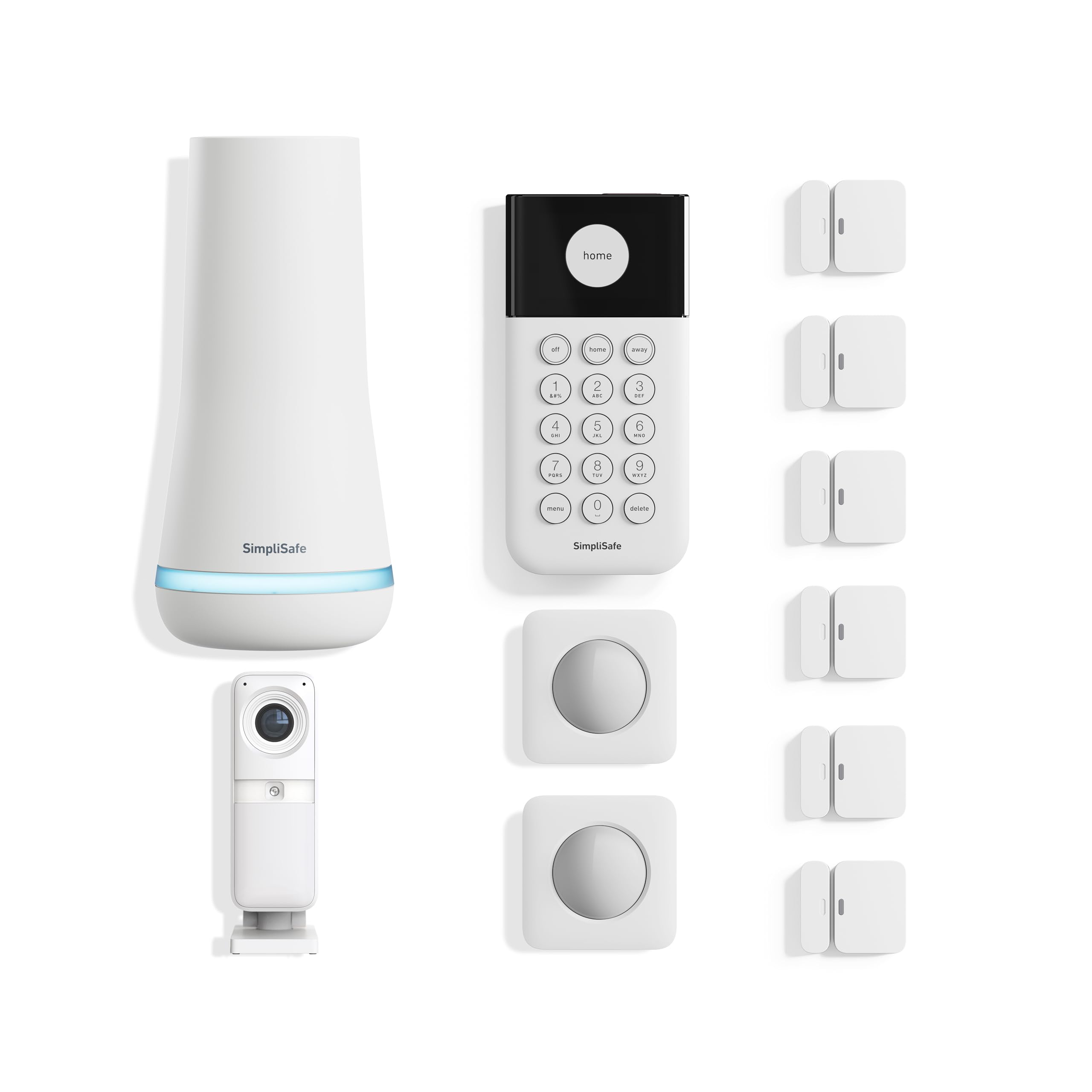
The SimpliSafe Gen 3 system represents the gold standard for hybrid GSM/Wi-Fi security at this price tier. The base station provides 24-hour battery backup and optional cellular backup through a professional monitoring plan, ensuring the alarm network remains active even when the power grid or internet connection fails. The 11-piece kit delivers meaningful hardware: one base station, one indoor wireless camera, one keypad, two motion sensors with a 35-foot detection range and 90-degree field of view, plus six entry sensors for comprehensive coverage.
Professional monitoring agents can verify break-ins through the wireless indoor camera using two-way audio, enabling priority dispatch for faster police response. The system integrates seamlessly with Alexa and Google Assistant for voice arm/disarm commands, and the smash-safe keypad ensures the system cannot be disabled by physically destroying the keypad. Users report zero false alarms over months of use when sensors are properly positioned away from heat sources.
The trade-off is that optional monitoring subscriptions unlock the full cellular backup and video verification features, though the system functions perfectly in self-monitoring mode with app notifications alone. The single base station account limitation means shared household member access requires the subscription tier, and the app primarily logs major events rather than providing granular sensor history. Overall, this is the most refined out-of-box experience for users who want the option of professional response without long-term contracts.
Why it’s great
- Professional monitoring with video verification speeds police dispatch
- 24-hour backup battery and cellular backup keep security active during outages
- Smash-safe keypad prevents intruders from disabling the system
Good to know
- Camera image quality is mediocre compared to dedicated security cameras
- Free app limits event history and shared user accounts
2. OSI Alarm System Gen 2 (4G) 11pc Kit
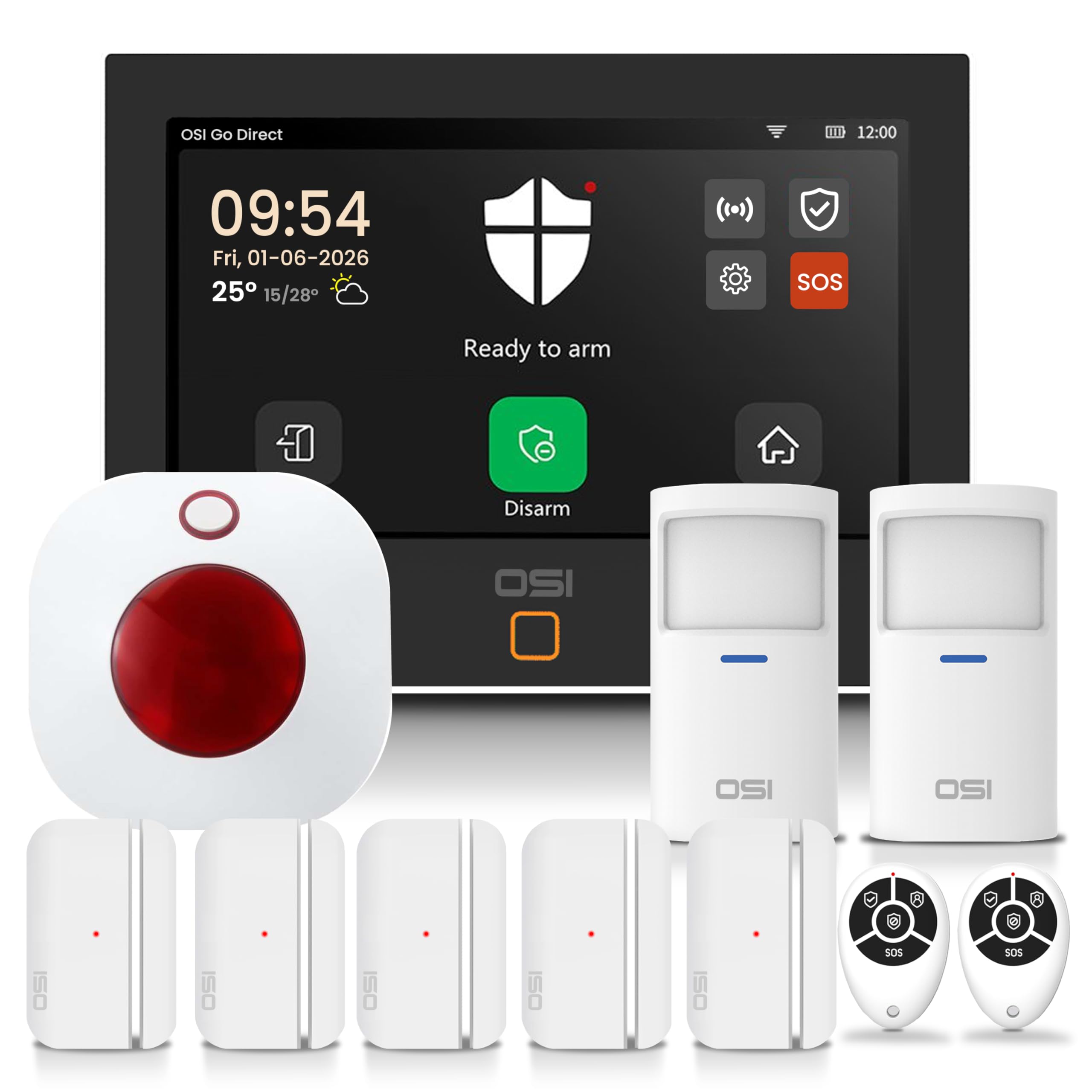
The OSI Alarm System Gen 2 distinguishes itself from every other GSM alarm in this roundup with a 7-inch HD 1024×600 anti-fingerprint touchscreen interface that rivals dedicated smart home panels. The control panel uses a 32-bit architecture to manage up to 160 wireless sensors, six controllers, six doorbells, and six keypads—scalability that suits large homes and small business environments equally well. The 4G GSM module supports optional SMS alerts via a SIM card, while the Smart Life app provides complete remote control and push notifications for all alarm events.
The interactive setup wizard guides users step-by-step through sensor enrollment, eliminating the manual programming guesswork that plagues budget systems. The 24-hour backup battery maintains full security functionality during power interruptions, and the SOS panic button on the display, app, and remote triggers immediate siren activation with app notifications to shared users. Real-world testing confirms that the 433MHz wireless sensors maintain reliable communication through cement and rebar construction, a significant advantage for multi-unit buildings.
The plug-in wired siren occupies two AC socket spaces and feels less substantial than the rest of the kit, and the Smart Life app lacks granular event history deletion and displays poorly on tablet-sized screens. The disarm confirmation wording in the app can be confusing during initial setup. Despite these interface quirks, the hardware quality and expandability make this the strongest choice for users who want a central touchscreen panel rather than a basic keypad.
Why it’s great
- Large responsive 7-inch touchscreen with intuitive setup wizard
- 160-sensor capacity with 4G SMS backup and 24-hour battery
- 433MHz sensors penetrate concrete walls reliably
Good to know
- Plug-in siren is bulky and lacks premium build quality
- App interface has limited event history management
3. Ring Alarm 8-Piece Kit (Newest Model)
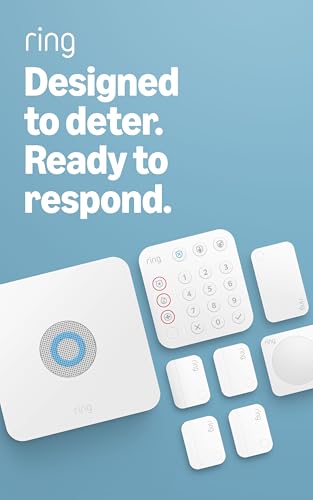
The Ring Alarm 8-Piece Kit delivers Amazon’s ecosystem integration advantages—voice control through Alexa, seamless pairing with Ring doorbells and cameras, and optional 24/7 professional monitoring with cellular backup via AT&T. The base station combines Ethernet, Wi-Fi, cellular, and battery backup in a compact unit with proper cable management, supporting continuous operation during network failures. The kit includes a keypad with emergency police/fire/medical buttons, four contact sensors, one motion detector, and a range extender for larger homes.
The setup experience is genuinely plug-and-play: each sensor has a unique 5-digit pairing code, and the Ring app provides guided walkthroughs that even users with minimal technical experience find manageable. The backup battery maintains the system for extended periods, and the system reconnects quickly after power restoration. Ring Protect subscription at roughly per year unlocks cellular backup, cloud recording for cameras, and professional monitoring, which is significantly cheaper than traditional alarm companies charging per month.
The system works with Schlage Z-Wave deadbolts for direct arm/disarm from the lock, and the contact sensors use standard CR2032 batteries that are easy to replace without removing the sensor mounting plate. The 8-piece kit suits 1-2 bedroom homes, but expanding coverage requires purchasing additional sensors that add up in cost. Some users report frustration with the 14-piece kit shipping separate parcels that arrive on different days, so confirm the shipping method at checkout.
Why it’s great
- Deep integration with Ring cameras and Alexa voice control
- Cellular backup via AT&T with affordable professional monitoring
- Easy sensor replacement without removing mounting plates
Good to know
- Expanding sensors costs add up compared to all-inclusive kits
- Base station cord could be longer for high ceiling placement
4. tolviviov Alarm System 15-Piece Kit

The 120 dB siren output is among the loudest in this roundup and effectively deters intruders while alerting neighbors. The system supports Wi-Fi app control through the Smart Life platform, works with Alexa and Google Assistant for voice arm/disarm, and uses 2.4GHz Wi-Fi with clear instructions about 5GHz incompatibility.
Setup is genuinely DIY-friendly—the sensors come pre-linked to the base station, though experienced users recommend deleting and re-linking each sensor individually to ensure proper zone identification. The contact sensors have generous tolerance for misalignment, making installation more forgiving on uneven door and window frames. The system supports expansion up to 20 sensors and five remote controls, which is adequate for most homes but less expandable than the 99-zone systems available at similar prices.
The primary limitation is the Wi-Fi-only connectivity—there is no GSM cellular module, meaning the system depends entirely on your home internet connection. During power or internet outages, the system loses remote alert capability, though the base station still sounds locally. The included batteries are basic alkaline cells that should be replaced with fresh name-brand batteries for reliable long-term performance. For households with stable internet, this kit offers the best sensor-per-dollar ratio available.
Why it’s great
- 10 door sensors in one kit provide extensive entry point coverage
- 120 dB siren is genuinely loud and deters potential intruders
- Contact sensors have generous alignment tolerance for easy install
Good to know
- Wi-Fi only with no GSM cellular backup for outage protection
- Maximum 20-sensor limit restricts expansion in larger properties
5. D1D9 24-Piece 4G WiFi GSM Alarm System
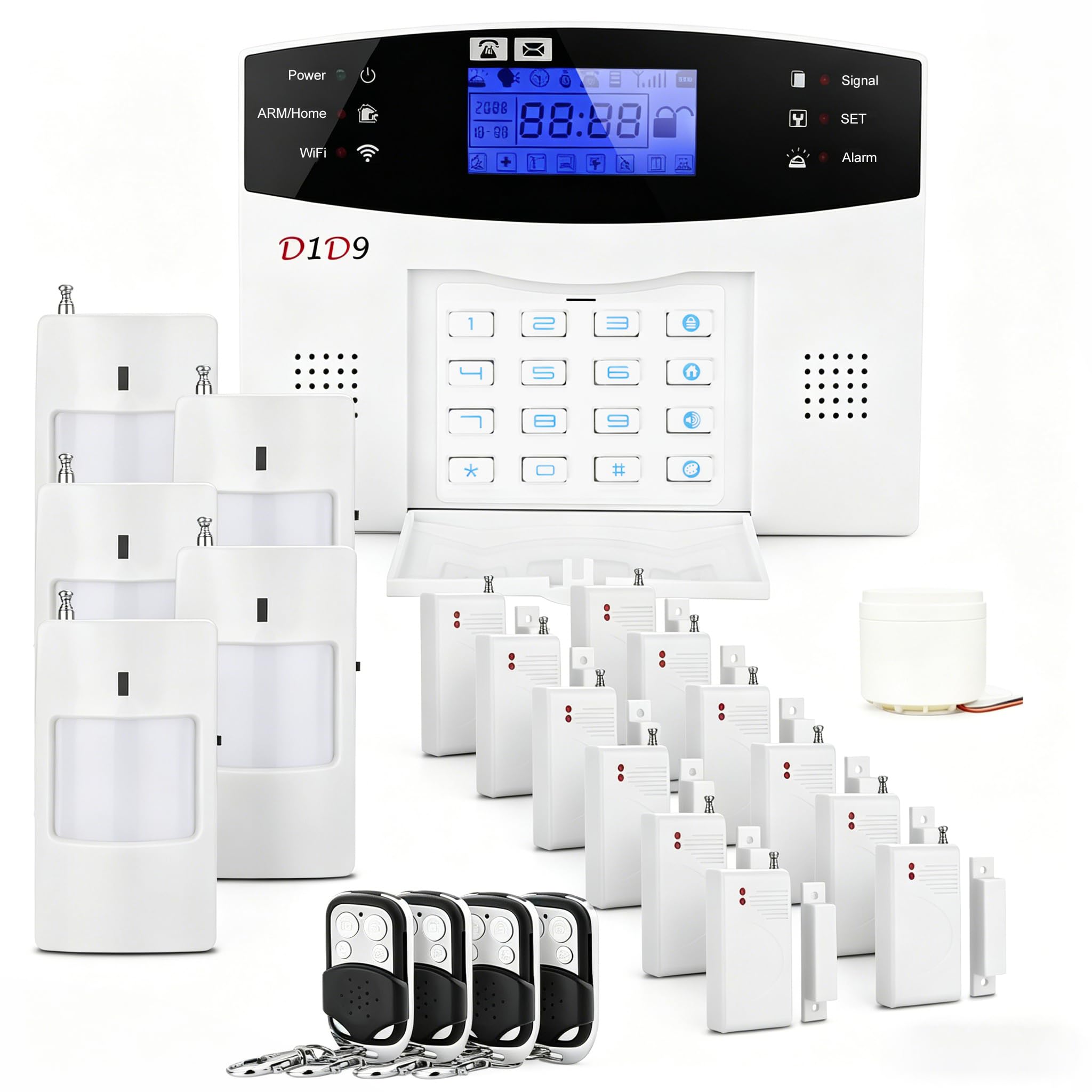
With 23 individual sensors in the box—12 door/window sensors, five motion detectors, four remote controls, plus a wired siren and the main panel—the D1D9 kit delivers the highest raw sensor count in this guide. The panel supports both 4G GSM and Wi-Fi connectivity, giving you cellular SMS and phone call alerts alongside the convenience of app-based control. The system supports scheduled arm/disarm for five time periods daily, which is useful for vacation properties or businesses with predictable operating hours.
Installation is genuinely no-drill with peel-and-stick sensors, and the battery backup keeps the system operational during power outages—a feature that matters for security continuity. The 4G module sends SMS alerts to your phone with customizable phone number lists, so you can notify multiple family members simultaneously. The control panel has a modern appearance and sensible menu structure, though the user manual translation quality varies and requires some patience during initial configuration.
The wired external siren has intermittent reliability issues in some units—the remote siren may not always trigger, leaving the built-in panel siren as the only audible alert when the panel is placed indoors. Motion sensors can generate false alarms from insects or small temperature changes, and the system lacks pet immunity for motion detectors. The included batteries are promotional-grade and should be replaced immediately with standard alkaline cells. For buyers who prioritize maximum sensor quantity and cellular backup, this kit provides the most complete coverage package.
Why it’s great
- 23 sensors cover an entire house with minimal additional purchases
- 4G GSM and Wi-Fi dual connectivity ensures alerts through two channels
- Battery backup maintains security during electrical outages
Good to know
- Wired external siren has intermittent reliability in some units
- Motion sensors lack pet immunity, may trigger false alarms
6. AGSHOME Security Alarm System 99+7 Zone

The AGSHOME system offers the highest expandability of any budget GSM alarm panel—99 wireless defense zones plus seven wired zones make this suitable for large residential properties and commercial spaces. The GSM module supports 850/900/1800/1900 MHz frequency bands for global compatibility and provides six groups of calling alert phone numbers plus two SMS help numbers. The 10-second manual voice recording feature lets you leave personalized warning messages that play when the alarm triggers, adding a dimension of direct communication not found in other budget panels.
Users report excellent sensor range in spaces up to 6000 square feet, with remote key fobs that operate reliably through walls and survive impact drops onto concrete floors without damage. The external alarm siren is genuinely loud and shrill, providing effective deterrence. Setup can be completed in roughly 20 minutes with sensors pre-programmed out of the box, though you must read the user manual thoroughly because the printed instructions are dense and poorly organized.
The most significant drawback is the inconsistent quality control—some units never successfully send SMS or call alerts despite proper SIM card configuration, indicating potential GSM module defects in specific manufacturing batches. The motion detector has known sensitivity issues near furnaces and heating vents, triggering false alarms from warm air currents. The remote lacks confirmation feedback, so you cannot be certain whether an arm/disarm command registered. Battery life for sensors is unstated, adding uncertainty about long-term maintenance cycles.
Why it’s great
- 99+7 zone capacity surpasses all other systems at this price point
- Global GSM frequency compatibility for international use
- Manual voice recording for personalized alarm messages
Good to know
- Quality control varies, some units have GSM module failures
- Motion sensor triggers false alarms near heat sources
- User manual is poorly written and difficult to follow
7. LWOHSI PG108 WiFi+4G Alarm System
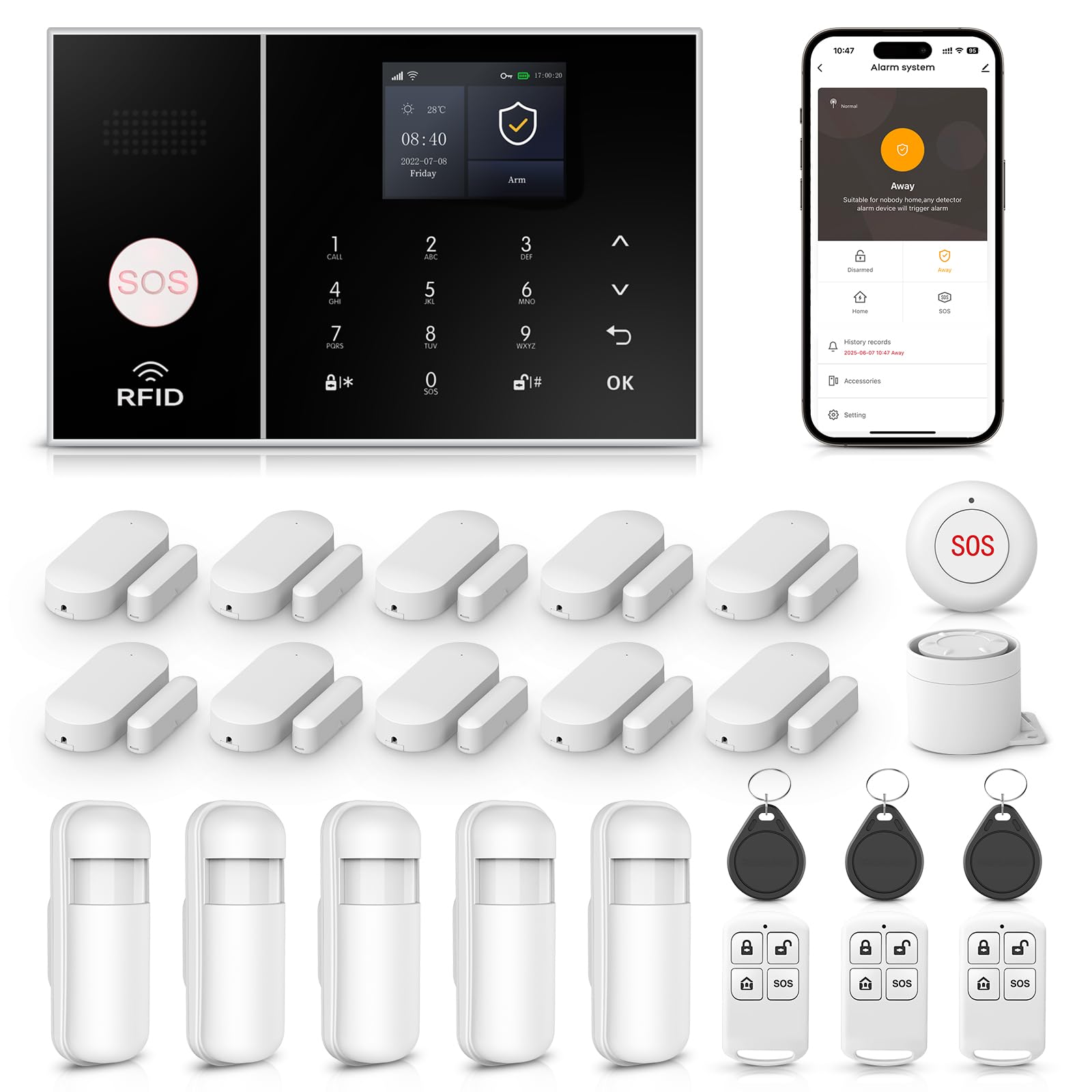
The LWOHSI PG108 brings a modern dual-network approach with both Wi-Fi app push notifications and 4G GSM cellular alerts through the Tuya/Smart Life platform. The central panel runs a 32-bit Cortex-M3 processor, providing responsive menu navigation and reliable multi-channel alarm delivery. You can program five groups of telephone alarm numbers and two SMS alarm groups, ensuring that multiple family members receive notifications when any sensor triggers.
The system supports up to 100 wireless detectors, RFID cards, and remote controls in its learning storage, making this the most expandable option in the budget tier. The Tuya app integration provides a polished remote control experience with push notifications, voice control compatibility with Alexa and Google Assistant, and customizable alarm scenarios for front door, bedroom, window, and emergency zones. The installation is straightforward with screw-in mounts for the main panel and peel-and-stick sensors for doors and windows.
Menu navigation on the panel is cumbersome for non-technical users—the Smart Life app uses the same notification sound for both alarm events and door open chimes, causing confusion about what triggered the alert. The system lacks zone-specific arming, meaning you cannot leave certain areas unarmed while protecting others. Some users report difficulty with the initial configuration flow, particularly around sensor number assignment and entry delay settings. The panel also lacks a physical stand option, requiring wall mounting or creative propping on shelves.
Why it’s great
- Dual Wi-Fi and 4G GSM connectivity with Tuya app support
- 32-bit Cortex-M3 processor provides responsive panel performance
- 100-device capacity for extensive system expansion
Good to know
- App uses same sound for alarm and door chime, causing confusion
- No zone-specific arming for partial home coverage
- Panel lacks a stand option, requires wall mounting
FAQ
Will a GSM alarm system work if my Wi-Fi goes down?
What SIM card do I need for a GSM home alarm system?
How many wireless zones do I actually need for my home?
Can I add more sensors to an existing GSM alarm system later?
Final Thoughts: The Verdict
For most users, the best gsm wireless home security alarm systems winner is the SimpliSafe 11 Piece Gen 3 because it combines professional monitoring infrastructure with a cellular backup option in a genuinely easy-to-install package. If you want a large touchscreen panel and massive sensor expandability, grab the OSI Alarm System Gen 2. And for the highest sensor-per-dollar value with dual Wi-Fi and 4G connectivity, nothing beats the D1D9 24-Piece Kit.