
Choosing a block plane means deciding between two fundamentally different cutting philosophies: the Western push motion versus the Japanese pull stroke. The wrong choice can turn a simple chamfer into an hour of fighting tear-out and chatter. A properly matched block plane, however, turns difficult end grain and reversing grain into glass-smooth surfaces with zero sanding required.
I’m Min — the co-founder and writer behind Gadgets Feed. My approach to block planes is rooted in analyzing blade metallurgy, bed angles, and sole flatness tolerances across dozens of models, pulling from thousands of verified user experiences rather than surface-level specs.
This guide sorts through the real-world performance data to help you identify the best block plane for your specific woodworking needs, whether you prioritize out-of-the-box sharpness, adjustable mouth precision, or the weight of the cast iron body.
How To Choose The Best Block Plane
Block planes are deceptively simple tools, but the differences in bed angle, blade steel, adjuster mechanism, and overall weight dramatically affect how they perform in specific tasks. Understanding these variables is the difference between a tool that produces gossamer shavings on end grain and one that frustrates with chatter and tear-out.
Bed Angle: Low Angle vs. Standard Angle
The bed angle — the angle at which the blade rests against the plane body — dictates how the blade engages the wood fiber. Low-angle block planes (12° to 13.5°) position the blade bevel-up, creating an effective cutting angle of around 37° with a standard 25° bevel. This lower angle slices through end grain and reversing grain with significantly reduced resistance, making it the preferred configuration for trimming, chamfering, and mitre work. Standard angle planes (20° bed) place the blade bevel-down and produce a higher effective angle (45°), better suited for general smoothing on long grain but prone to chatter on end grain. For a block plane’s primary role — one-handed, precision work — low-angle designs dominate the recommendations.
Blade Steel Thickness and Edge Retention
The thickness of the blade iron directly impacts chatter resistance and tuning stability. Entry-level planes often use 2mm-thick blades that flex under pressure, requiring frequent sharpening and precise cap-iron mating to avoid vibration. Mid-range and premium block planes use blades 3mm to 4.75mm thick, typically in A2 tool steel or laminated Japanese high-carbon steel. A thicker blade absorbs vibration, holds a sharp edge longer through abrasive woods like white oak or jarrah, and allows you to take heavier cuts without the blade deflecting. The trade-off comes during sharpening: thicker blades require more effort on water stones or diamond plates.
Mouth Adjustment Range
The mouth is the opening between the blade edge and the leading edge of the sole. An adjustable mouth — controlled by a lever or knob that shifts the frog or the entire blade assembly — lets you close the gap for fine finishing shavings (critical for reducing tear-out on figured wood) or open it wide for thicker, preliminary passes. Budget planes often offer a fixed mouth or a very limited adjustment range (2-3mm), which forces you to choose between finishing quality and stock removal speed. Premium planes like the Woodriver and the Stanley Sweetheart provide a 6-8mm adjustment range, giving you the versatility to handle both tasks with one tool.
Quick Comparison
On smaller screens, swipe sideways to see the full table.
| Model | Category | Best For | Key Spec | Amazon |
|---|---|---|---|---|
| Faithfull 6012 Block Plane | Mid-Range | Budget-friendly cast iron entry | Cast iron body, 13.5° bed | Amazon |
| KAKURI Japanese Hand Plane 42mm | Mid-Range | Replaceable blade convenience | 42mm blade, white oak body | Amazon |
| SUIZAN Kanna Japanese Wood Planer 2″ | Mid-Range | Traditional Kanna pull plane value | 2″ blade, laminated steel | Amazon |
| KAKURI Large Hand Plane 60mm | Mid-Range | Large surface smoothing | 60mm blade, 10.1″ white oak body | Amazon |
| Woodriver Low Angle Block Plane | Premium | Precision low-angle work | Ductile iron, 12° bed, 1.125″ blade | Amazon |
| STANLEY No.62 Low Angle Jack | Premium | Low-angle jack plane versatility | A2 steel blade, 15.8″ ductile iron | Amazon |
| Stanley 1-12-137 Sweetheart Jack | Premium | Heavy-duty end grain shooting | 6.29 lbs, 0.187″ A2 blade | Amazon |
In‑Depth Reviews
1. Woodriver Low Angle Block Plane With Adjustable Mouth

The Woodriver Low Angle Block Plane delivers the most refined out-of-box experience in the mid-to-premium tier. The ductile iron body holds exceptional mass — 2.04 pounds — which dampens vibration effectively during end-grain cuts on dense white oak. The 12-degree bed angle paired with a 25-degree blade bevel produces an effective 37-degree cutting angle, precisely the sweet spot for low-angle block plane work on end grain and mitred edges.
Users report that the sole arrives remarkably flat, requiring minimal to no lapping, and the 1/8-inch thick high-carbon steel blade holds an edge through extended sessions on abrasive hardwoods. The knuckle-style lever cap allows rapid blade swaps without losing adjustment, and the adjustable mouth orifice spans from a tight 1mm gap for ultra-fine finishing shavings to a wider opening for stock removal. The fingertip hollows on the body are ergonomically carved to reduce hand fatigue during repetitive chamfering.
One consistent note is that the blade’s back required some initial flattening to remove a slight cup, and the tension screw on the lever cap may need a quarter-turn snug to prevent it from popping loose during heavy cuts. Overall, the combination of ductile iron weight, precise mouth adjustability, and minimal setup time makes this the strongest all-around contender for a serious woodworker.
Why it’s great
- Very flat sole out of the box; minimal lapping required
- Knuckle lever cap enables quick blade changes without losing depth
- 12° bed angle excels on end grain and reversing grain with low tear-out
Good to know
- Blade back may have a slight cup requiring initial flattening
- Lever cap tension screw can loosen; needs a quarter-turn snug
2. KAKURI Large Hand Plane 60mm for Woodworking

The KAKURI Large Hand Plane shifts the paradigm from push to pull, offering a 60mm blade width that covers wide boards in fewer passes. The blade is laminated Japanese high-carbon steel with a soft iron backing — a construction that combines a razor-sharp edge with easy honing and increased durability. The white oak body, measuring 10.1 inches long, provides substantial bearing surface to bridge low spots during planing.
At 34.4 ounces, this is the heaviest of the Japanese-style planes in this guide, and that mass is distributed evenly so the tool glides under its own weight when pulled. The chipbreaker (two-blade structure) minimizes wood splitting compared to single-blade Japanese planes, making it safer for figured woods. Experienced woodworkers note that the setup requires about one hour of initial fitting — squaring the chipbreaker to the blade and seating the dai (body) — but once tuned, it produces ultra-thin, translucent shavings on hard maple and walnut.
The pulling motion naturally aligns the body with the wood grain, reducing effort on long passes. The 60mm width, however, makes this less ideal for one-handed chamfering on narrow stock; it is best suited for surfacing panels and flattening wide boards. The blade comes sharp from the factory, but the laminated edge may chip on hidden knots until the user develops a feel for detecting irregularities during the pull stroke.
Why it’s great
- Laminated Japanese steel blade holds an edge and sharpens easily
- 60mm blade width covers large surfaces efficiently
- Pull stroke reduces fatigue and improves control on long grain
Good to know
- Setup requires one hour of fitting and squaring the chipbreaker
- Not ideal for one-handed chamfering on small stock
3. STANLEY Hand Planer, No.62, Low Angle Jack (12-137)

The Stanley No.62 Sweetheart Low Angle Jack Plane bridges the gap between a dedicated block plane and a bench plane. Its 15.8-inch length provides the bearing surface needed for edge jointing and shooting boards, while the low-angle, bevel-up design (12° bed) keeps it effective on end grain. The 1/8-inch thick A2 tool steel blade offers exceptional edge retention compared to standard high-carbon steel, staying sharp through several board feet of dense African padauk and jarrah.
The ductile iron casting is heavy at 6.03 pounds, and multiple users confirm the sole arrives flat with sides square to 90 degrees, requiring only a quick blade hone before producing gossamer shavings. The cherry wood handle and knob provide a warm, comfortable grip that reduces fatigue during extended use. The Norris-type adjuster allows fine blade depth increments, though some users find the lateral adjustment stiff until the lever cap is loosened slightly.
The adjustable throat plate opens wide for thick stock removal or closes to a 1mm gap for fine finishing on figured maple. A minor but recurring criticism involves the paint quality on the lever cap — some units show flaking after moderate use. The plane is also slightly front-heavy, which takes a few passes to acclimate to, but this weight distribution aids in maintaining consistent pressure throughout the cut on shooting board operations.
Why it’s great
- A2 steel blade delivers excellent edge retention on abrasive hardwoods
- 15.8″ length serves as both a block plane and a shooting board plane
- Sole arrives flat and square with minimal tuning needed
Good to know
- Norris adjuster requires disassembly if not functioning smoothly out of box
- Paying close attention to grain direction is required to prevent tear-out
4. Stanley 1-12-137 62-Low Angle Sweetheart Jack Plane

The Stanley 1-12-137 represents the heavy-hitter of low-angle jack planes. Weighing in at 6.29 pounds with a blade thickness of 0.187 inches (4.75mm), this tool is built to power through end grain and hard maple without chatter. The one-piece base and frog casting virtually eliminates the blade vibration common in two-piece designs, delivering record stability in a production plane at a fraction of the cost of boutique brands.
Users report that the sole is flat and square out of the box, and the blade arrives sharp enough to produce fine, translucent shavings on oak and poplar with minimal tear-out. The patented lateral adjustment locking feature holds the blade alignment securely even during heavy cuts, preventing the frustration of the blade drifting mid-pass. The extra mass is particularly advantageous for shooting board work, where the weight drives the plane through the cut without requiring excessive downward force.
The cherry handle arrived loose on some units, requiring tightening before first use. Additionally, the plane body is cast in Mexico, and some users noted the sole required an hour of flattening with sandpaper and a diamond stone to achieve dead-flatness across the entire length. Despite this, the combination of extreme blade thickness, heavy ductile iron casting, and secure lateral adjustment makes this the preferred choice for woodworkers who regularly work with dense, exotic hardwoods.
Why it’s great
- 0.187″ thick A2 blade eliminates chatter on even the hardest exotics
- One-piece base/frog design maximizes rigidity and stability
- Patented lateral adjustment lock keeps blade aligned during heavy cuts
Good to know
- Sole may need significant flattening (up to one hour) out of the box
- Cherry handle may arrive loose from the factory
5. SUIZAN Kanna Japanese Wood Planer 2″
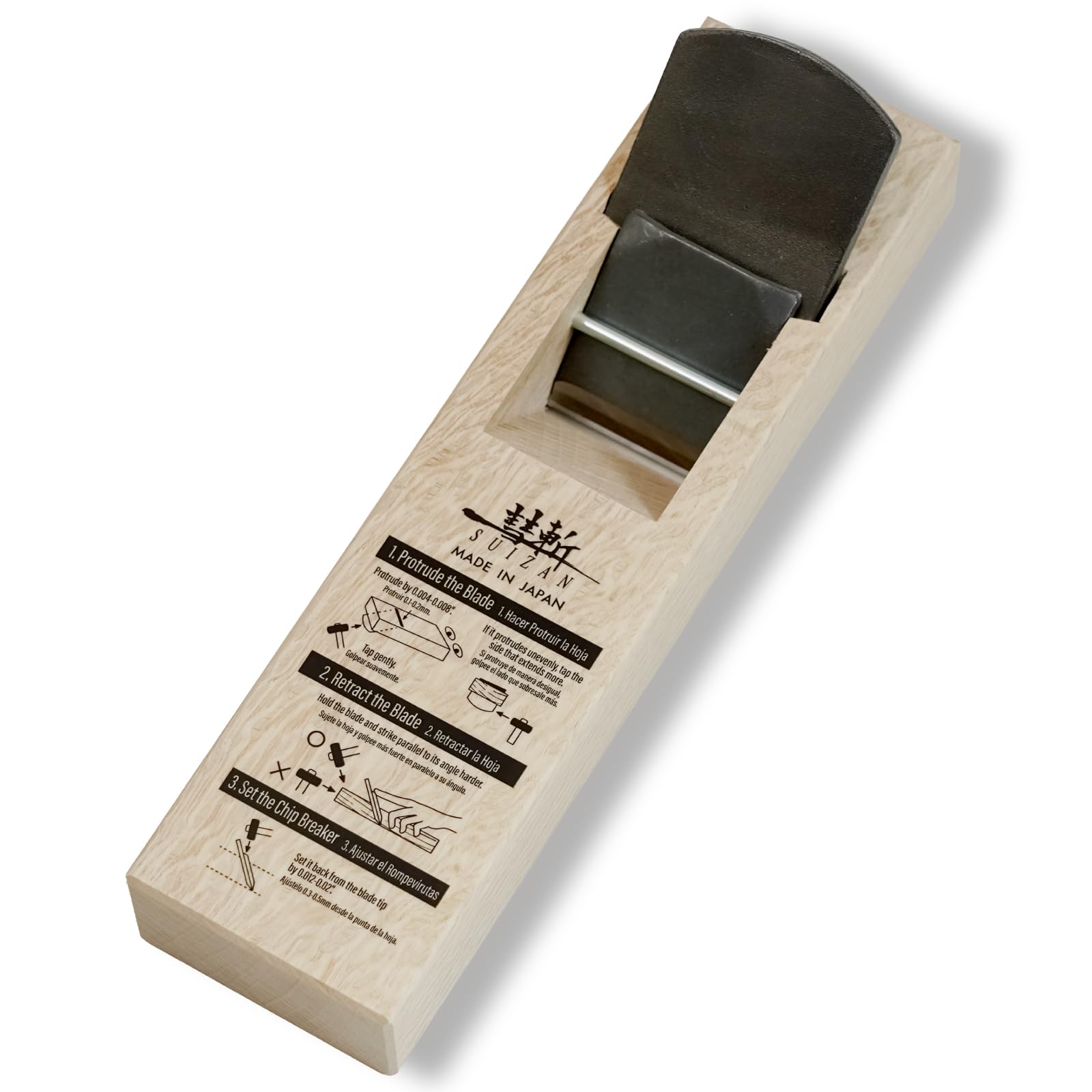
The SUIZAN Kanna delivers an authentic Japanese pull-plane experience at a price point that undercuts many Western block planes. The 2-inch (50mm) laminated Japanese steel blade is mounted in a white oak body, and user reports consistently praise the sharpness out of the box — producing paper-thin shavings on red oak and poplar within minutes of minimal setup. The pull stroke naturally aligns the blade with the grain, reducing tear-out on difficult woods like bird’s-eye maple.
At 1.5 pounds, this is significantly lighter than cast iron block planes, but the oak body provides enough mass for controlled, chatter-free cuts on softwoods and mild hardwoods. Setup is straightforward: square the chipbreaker to the blade (about 20 seconds of filing) and lightly tap the wedge to adjust the blade depth. Multiple users note that the body required about 20 minutes of lapping to ensure a perfectly flat sole, but once tuned, the plane produces a finish that eliminates the need for sanding.
The 9.4-inch body length offers good stability for edge chamfering and surface smoothing, but the 2-inch blade width makes this less suitable for flattening wide boards in a single pass. One caveat: some units arrived with the blade iron glued into the body, requiring careful removal with a vise. For woodworkers exploring the Japanese pull-plane technique without a large investment, this Kanna offers the most accessible entry point with legitimate performance.
Why it’s great
- Laminated Japanese steel blade delivers a shaving-sharp edge out of the box
- Pull stroke mechanics reduce tear-out and improve grain alignment
- Oak body provides adequate mass for chatter-free cuts
Good to know
- Dai may need significant flattening (20 minutes) for dead-flat sole
- Some units ship with blade glued into the body, requiring careful disassembly
6. KAKURI Japanese Hand Plane 42mm for Woodworking

The KAKURI 42mm Japanese Hand Plane eliminates the sharpening overhead entirely through its replaceable blade system. Each blade tip insert is pre-sharpened to a mirror finish, and when dull, you swap it out in seconds — no water stones, no diamond plates, no honing guide. For beginners or professionals who value workflow speed, this is a game-changing approach to traditional Kanna woodworking. Replacement blades run approximately each in sets of six.
The body is constructed from natural Japanese white oak with a compact 7-inch length, making it highly maneuverable for chamfering, trimming, and detail work on small projects. The chipbreaker attachment mechanism is designed for quick setup: it clips onto the main blade without requiring the traditional gap adjustment, saving significant tuning time. Users report the base arrives exceptionally flat, with slight relief machined behind the blade opening to prevent drag, and the blade cuts smoothly on old-growth Douglas fir and end grain without tear-out.
The thin replaceable blades, however, are more prone to chatter on wide surfaces (over 2 inches of contact). This plane excels at narrow edge work and chamfering rather than broad panel smoothing. The pull-stroke technique takes some practice to adjust the blade depth via light taps on the body, but the provided English instructions guide first-timers through the process. For woodworkers who want Japanese Kanna quality without the sharpening ritual, this system delivers consistent performance.
Why it’s great
- Replaceable blade system eliminates the need for sharpening and honing
- Compact 7-inch body is highly maneuverable for detail and chamfer work
- Base arrives exceptionally flat with relief behind the blade
Good to know
- Thin replaceable blades can chatter on surfaces wider than 2 inches
- Blade depth adjustment requires practice with the tapping method
7. Faithfull 6012 Block Plane in Wooden Storage Box
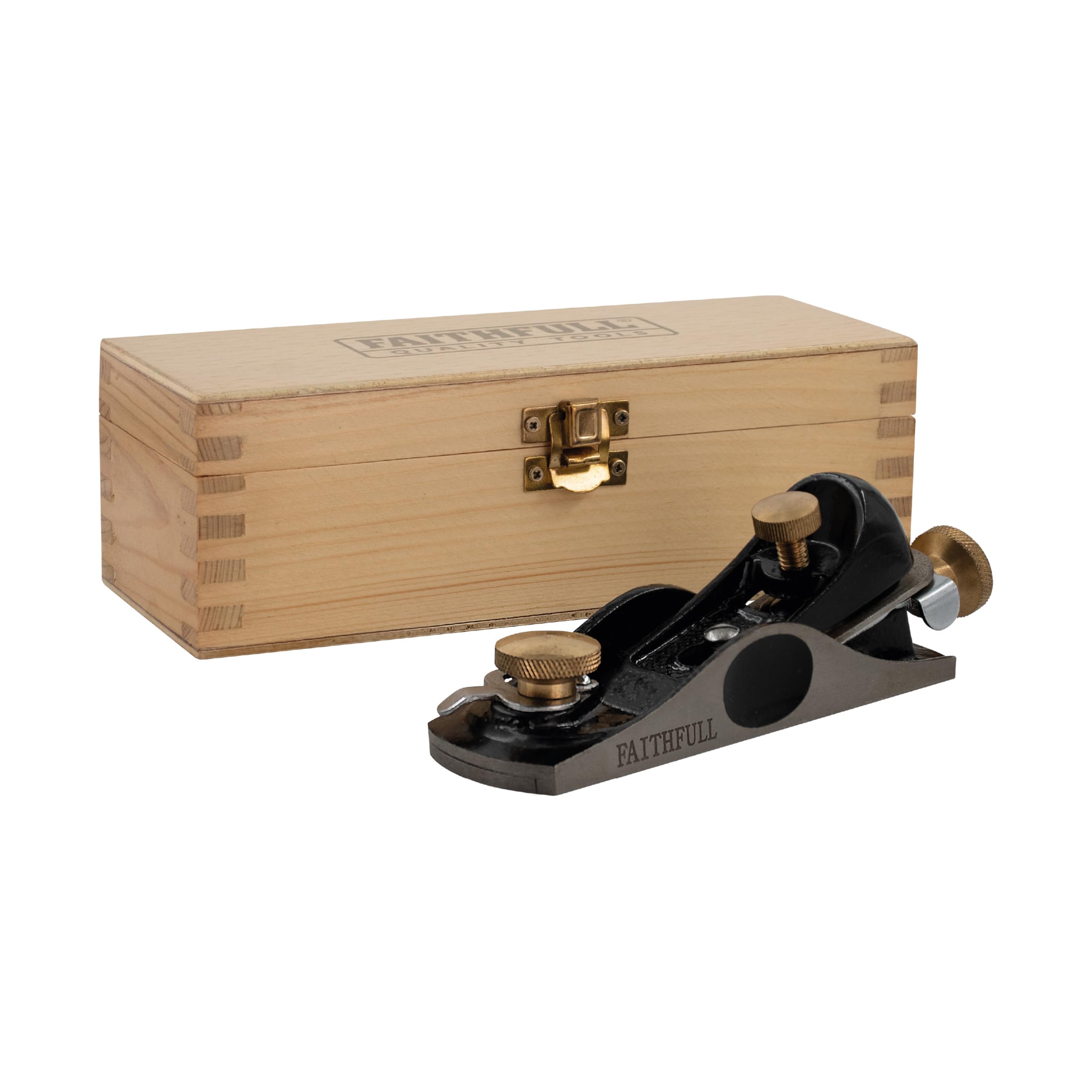
The Faithfull 6012 Block Plane enters the budget tier with a full grey cast iron body and a 13.5° low-angle cutter specifically designed for end grain and laminates. At 948 grams (2.09 pounds), it carries enough mass to dampen vibration during trimming and mitre fitting. The adjustable mouth opens quickly for clearing jams or transitioning from coarse to fine shavings, making it functional for a variety of woodworking tasks around the workshop.
Included in the package is a fine-hinged wooden storage box, a thoughtful addition that protects the plane from damage and keeps the blade edge safe during transport. The 160mm (6.3-inch) length makes this compact enough for one-handed use in confined spaces, and the thumb rests on the body are shaped for comfort during extended chamfering sessions. The Faithfull 5-year manufacturer guarantee provides added peace of mind for buyers on a tight budget.
The main compromise comes in the sole flatness and blade quality. Multiple user reports indicate the sole requires hours of flattening to remove a pronounced low spot, and some units arrived with the blade chipped at the edge. The thin blade dulls faster than premium alternatives and may not hold an edge through heavy use on abrasive woods. For a starter or backup tool used on softwoods and basic trim work, the Faithfull can be coaxed into service with significant setup time — but it demands patience.
Why it’s great
- Cast iron body provides adequate mass for vibration dampening
- Adjustable mouth allows quick transitions between coarse and fine cuts
- Wooden storage box protects the plane from damage
Good to know
- Sole often requires hours of flattening to remove low spots
- Thin blade dulls quickly and may arrive chipped
FAQ
How does the pull stroke of a Japanese Kanna differ from a Western push block plane?
What does adjustable mouth clearance do for block plane performance?
Is a thicker blade always better for a block plane?
Final Thoughts: The Verdict
For most users, the best block plane winner is the Woodriver Low Angle Block Plane because its ductile iron mass, 12° low-angle bed, and adjustable mouth deliver precision end-grain performance without requiring hours of setup. If you want the versatility of a longer plane that handles both shooting board work and chamfering, grab the STANLEY No.62 Low Angle Jack. And for woodworkers who prefer the control of the Japanese pull stroke and want to eliminate sharpening overhead, nothing beats the KAKURI 42mm Japanese Hand Plane with its replaceable blade system.