
A stiff, vinyl glove that refuses to close is the fastest way to kill a young player’s confidence on the diamond. Finding a real leather glove that breaks in fast, holds its shape, and fits a growing hand without wrecking a budget is the real challenge. The market is flooded with plastic “toy” gloves that look the part but fail the first time a liner hits the pocket.
I’m Min — the co-founder and writer behind Gadgets Feed. I’ve spent countless hours analyzing leather grades, web designs, and break-in timelines across dozens of youth and adult models to separate the diamonds from the cheap synthetics in this specific price bracket.
This guide focuses on the metrics that actually matter when the budget is tight: full-grain leather construction, glove weight, break-in level out of the box, and position-specific web designs. After comparing seven of the top contenders, I’ve found the best baseball gloves under $100 that deliver real performance for tee-ball starters and weekend league regulars alike.
How To Choose The Best Baseball Gloves Under $100
When you’re shopping under $100, every dollar spent on marketing fluff is a dollar stolen from leather quality. The key is knowing exactly which specs separate a glove that lasts two seasons from one that falls apart by June. Focus on four factors: leather grade, break-in level, web style for position, and size relative to hand length.
Leather Grade: Full-Grain vs. Top-Grain vs. Synthetic
Full-grain leather is the gold standard for durability and pocket memory — it retains its shape after hundreds of catches. Top-grain leather (used on the Wilson A500) is slightly thinner but lighter, making it ideal for younger players who struggle with heavy mitts. Avoid any glove labeled “synthetic” or “vinyl” at this price point; they lack the stiffness recovery needed for reliable fielding and often crack within a single season.
Web Design and Position Fit
An H-web (Wilson A500) provides a clear window for tracking fly balls, making it a strong choice for outfielders and young infielders learning to see the ball. A basket or modified trapeze web (Rawlings Sure Catch, Mizuno Prospect) offers deeper pocket concealment, preferred by infielders who want to hide the ball from runners. A fully closed web is exclusively for catchers — don’t buy one for a shortstop unless they’re playing behind the plate.
Break-In Level: Game-Ready vs. Traditional
“Game-ready” gloves (90% factory break-in) are designed to be playable immediately with minimal effort — crucial for young players who lack the hand strength to pound a stiff mitt for weeks. Traditional gloves require a lengthy break-in process involving glove oil, mallet work, and repeated catch sessions. For under $100, prioritize game-ready construction to ensure the glove actually gets used rather than left in the garage.
Quick Comparison
On smaller screens, swipe sideways to see the full table.
| Model | Category | Best For | Key Spec | Amazon |
|---|---|---|---|---|
| Wilson A700 | Outfield | Large hands & outfield depth | Full grain leather, 12.5″ | Amazon |
| Wilson A500 | Infield | Youth infield control | Top grain leather, 10.5″ | Amazon |
| Easton Tournament Elite | Catcher | Transitional catcher mitt | Oil-tanned cowhide, 14U | Amazon |
| Mizuno Prospect PowerClose | Youth | Small hands & easy close | Pigskin leather, 10″–10.5″ | Amazon |
| Easton Prime Slowpitch | Slowpitch | Adult slowpitch softball | Oil-tanned leather, 12.5″–14″ | Amazon |
| MacGregor Infield Trainer | Training | Glove-to-throw transition drills | Pancake style, leather | Amazon |
| Rawlings Sure Catch | T-Ball | First glove for ages 10 & under | Leather shell, 10″ | Amazon |
In‑Depth Reviews
1. Wilson A700
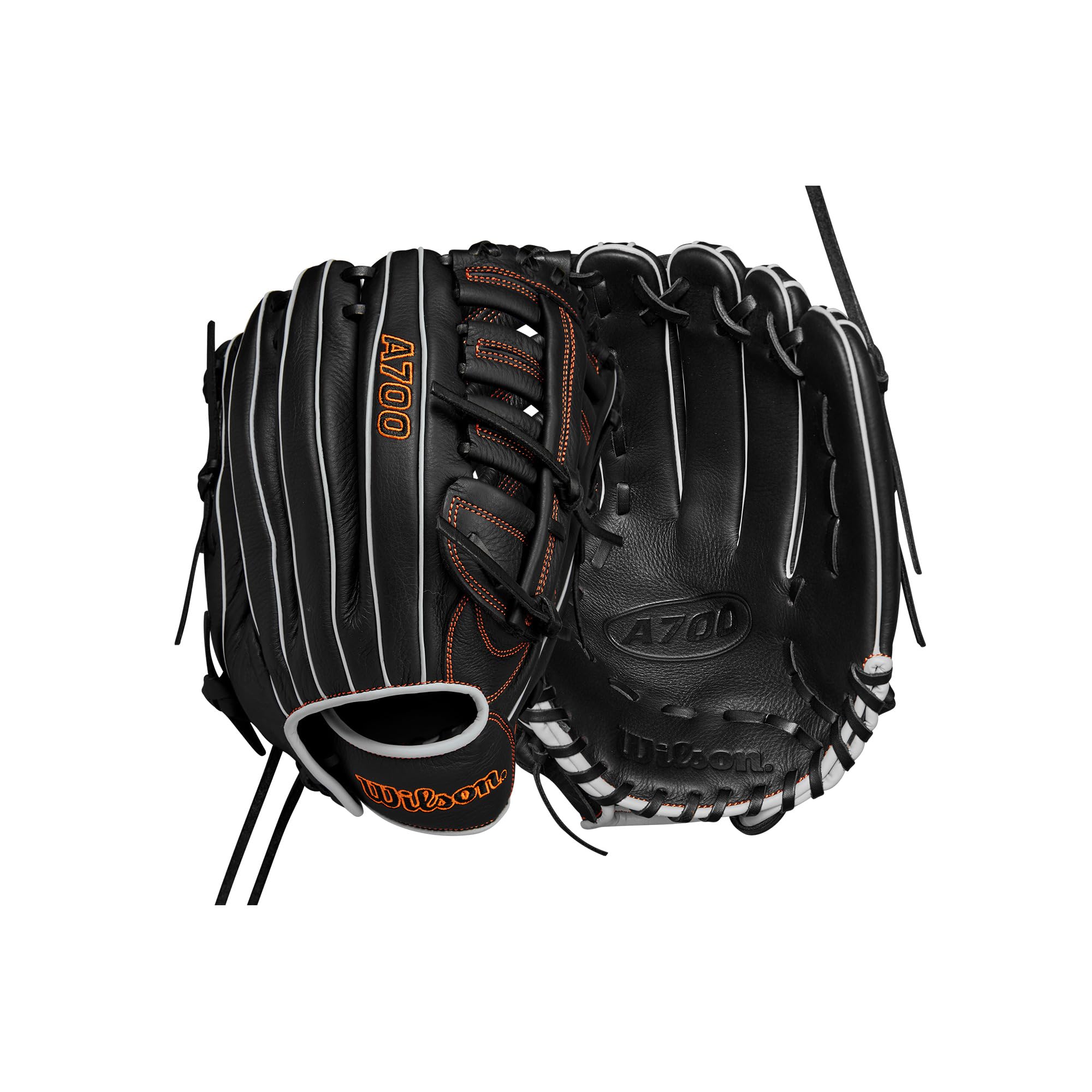
The Wilson A700 is the anomaly in this price bracket — a full-grain leather glove that feels like it costs twice its sticker. At 12.5 inches, the outfield-specific pattern uses a Single Post & 3 Bar web that creates a deep, stable pocket for tracking fly balls while remaining light enough for quick transfers. The leather lining adds a layer of durability that the top-grain A500 skips, and the 70% factory break-in means it’s functional after just a few catch sessions rather than weeks of pounding.
Parents report this glove fitting hands that normally require $100+ models, thanks to a generous finger stall and adjustable wrist closure that accommodates both growing youth and adults with larger palms. The rolled finger binding reduces pressure points, a detail usually reserved for pro-tier gloves. For a right-hand throw outfield mitt, the balance of weight to stiffness is nearly perfect — it holds its shape without feeling like a brick on the hand.
The tradeoff is the outfield-specific sizing; at 12.5 inches, it’s too large for infielders or tee-ball players who need quick glove-to-hand transfers. The black/silver/orange colorway is clean but limited, and the single post web won’t suit catchers or pitchers. For anyone needing a legit outfield glove that won’t disintegrate by mid-season, this is the safest bet under $100.
Why it’s great
- Full-grain leather at a mid-range price
- Deep outfield pocket with 3-bar stability
- 70% break-in ready for quick game use
- Generous fit for larger hands
Good to know
- Too large for youth infield play
- Single web type limits position flexibility
- Color options are limited
2. Wilson A500
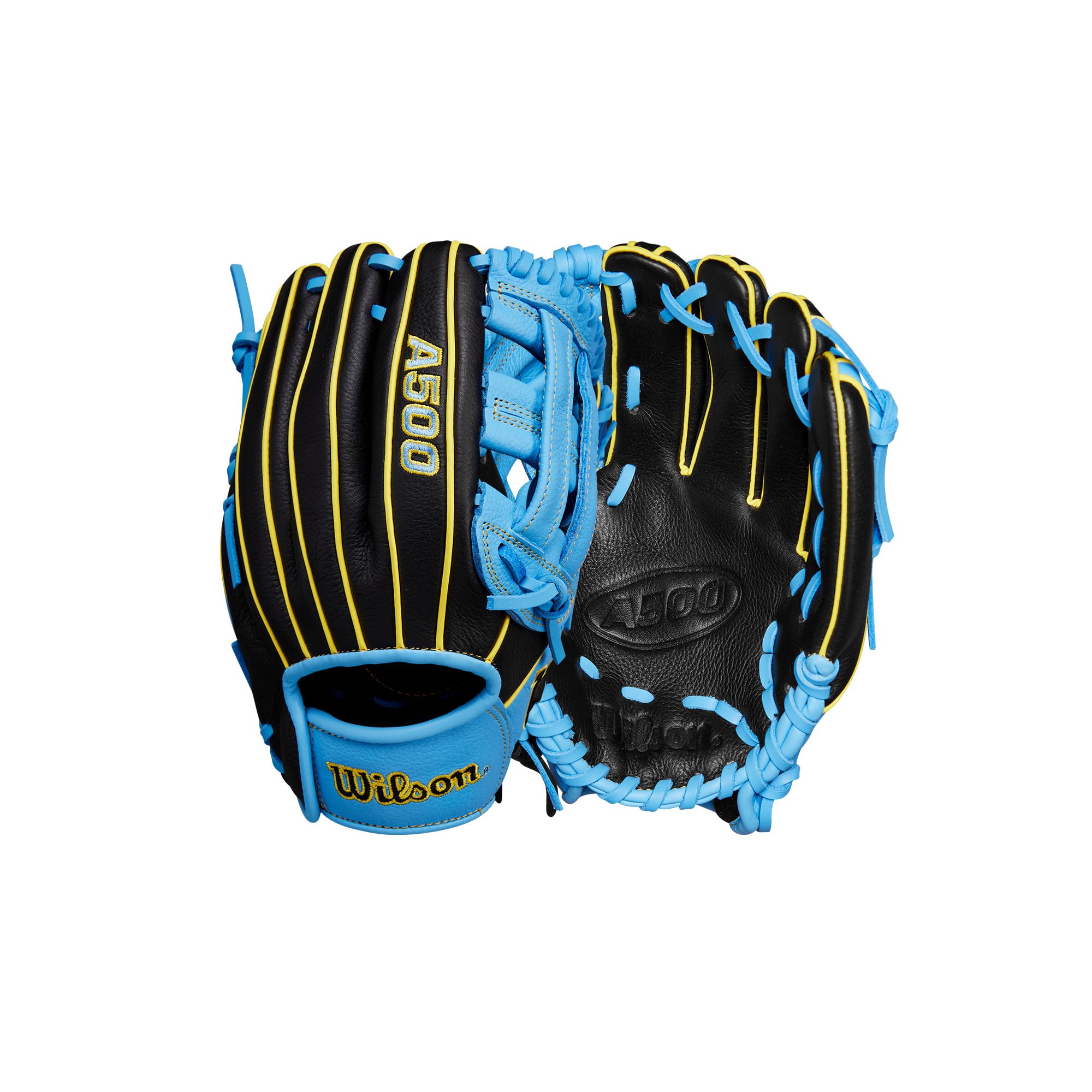
The Wilson A500 10.5-inch infield model is engineered specifically for youth players who need a glove that opens and closes reliably without excessive weight. The top-grain leather shell is noticeably lighter than full-grain alternatives, which matters when a 7-year-old is trying to field grounders for two hours. The H-web design provides a clear sightline to the ball — critical for infielders learning to track hops into the pocket — while the Quick Fit wrist system locks the glove in place without slipping.
Parents who bought this for 6- to 9-year-olds report immediate improvements in catch rate because the rolled dual welting helps the glove maintain pocket shape even when the leather is still fairly stiff. The two-in-the-pinkie feature allows smaller hands to get better leverage on the closure, and the 13.12-ounce total weight means it won’t drag down a young player’s arm during practice. It arrives game-ready, requiring minimal break-in — most users say it’s usable out of the box with just a few minutes of flexing.
The downside is the top-grain leather won’t hold up as long as full-grain if the player is hard on gear. For the youngest age group (tee-ball through 8U), this isn’t an issue, but competitive 10U players may outgrow its durability before they outgrow its size. The 10.5-inch pattern is also exclusively for infield work — outfielders or pitchers should look at the A700 or a larger pattern.
Why it’s great
- Ultra-light top grain leather reduces arm fatigue
- H-web improves ball tracking for young infielders
- Game-ready out of the box
- Quick Fit wrist system stays secure
Good to know
- Top-grain less durable than full-grain
- Limited to infield positions
- May need replacement by competitive 10U
3. Easton Tournament Elite
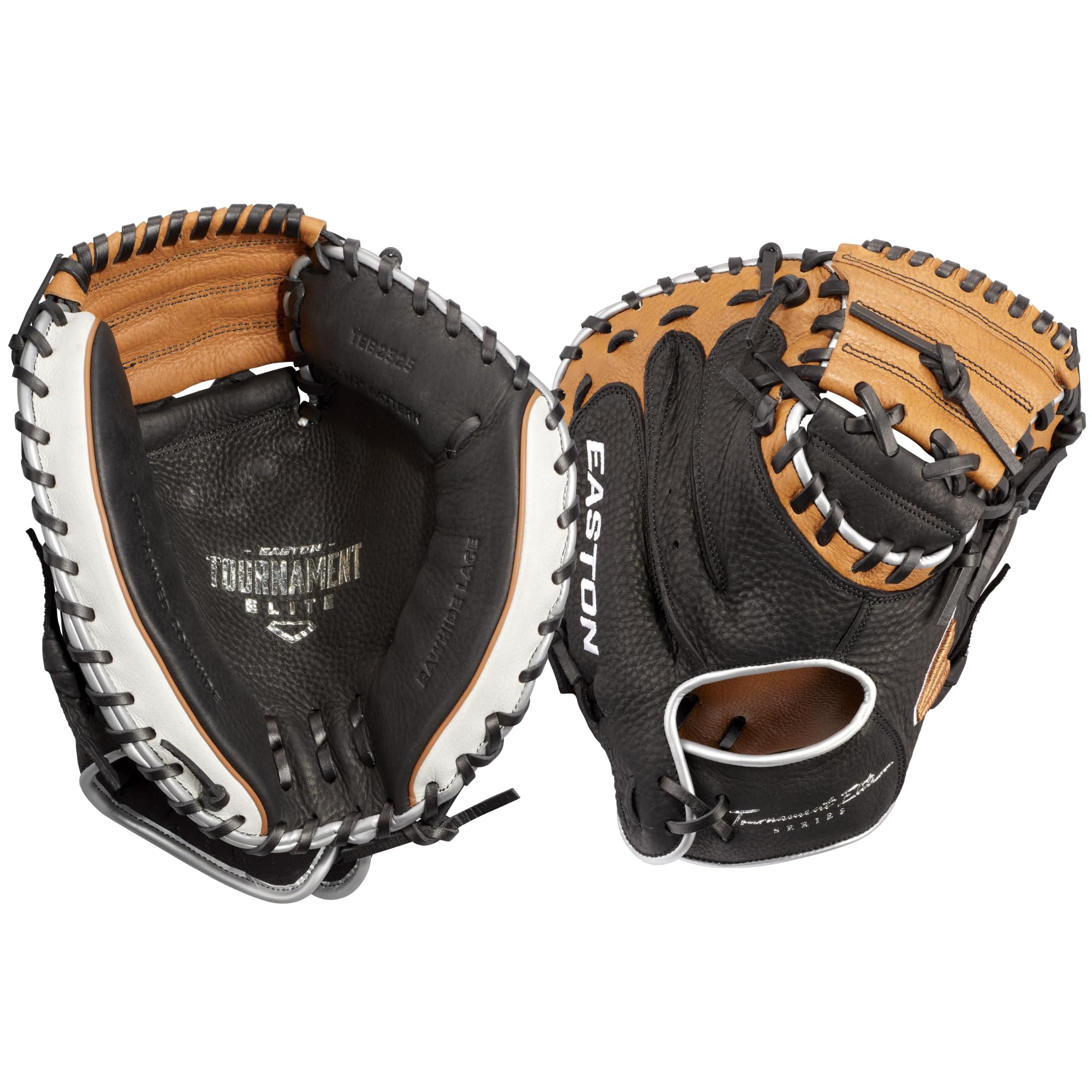
The Easton Tournament Elite is a transitional glove designed for the 14U player moving into more competitive ball, and its fully closed solid web makes it a dedicated catcher’s mitt. The oil-tanned cowhide shell offers a balance of durability and flexibility that full-grain leather sometimes lacks at this price — it shapes to the hand faster while still protecting against hard throws from the mound. The full-grain palm lining adds an extra layer of impact absorption, crucial for catchers who take repeated hits on the palm pad.
The Ideal Fit System includes a pro-style open back with an adjustable on-the-fly closure, which is rare in the under-$100 catcher mitt market. The repositioned pinkie loop allows for two fingers in the pinkie stall, giving catchers better control when framing pitches. Despite being a closed web, the glove is surprisingly light for its size, and the soft microfiber lining with foam back prevents the hand fatigue that typically plagues budget catchers mitts during long innings.
The tradeoff is specialization — this is a catcher-only glove. The fully closed web blocks visibility for infield play, and the 32.5-inch pattern is too small for outfield work. Some users noted it requires a slightly longer break-in than advertised, especially compared to the Wilson A500. For a young catcher upgrading from a generic all-purpose mitt, this is the best dedicated option in the category.
Why it’s great
- Oil-tanned cowhide breaks in faster than standard leather
- Fully closed web protects catcher’s hand
- Palm lining adds shock absorption
- Adjustable open back for custom fit
Good to know
- Catcher-only design limits versatility
- Break-in takes longer than some competitors
- Not suitable for under-12U players
4. Mizuno Prospect PowerClose

The Mizuno Prospect PowerClose uses full-grain pigskin leather, which is naturally lighter and more pliable than cowhide but still durable enough to survive a full youth season. The 10-inch and 10.5-inch sizes are tailored for 4- to 8-year-old hands, and the basket web is ideal for infielders and pitchers who need a deep, concealed pocket. The PowerClose technology pairs a V-Flex notch at the heel with a Parashock palm pad, creating a hinge point that lets small hands close the glove without excessive force.
Players and parents consistently report that this glove delivers the easiest break-in of any under-$100 model, with most units requiring only about an hour of conditioning before forming a usable pocket. The Buttersoft palm liner enhances grip and ball control, which directly translates to fewer dropped balls — a critical factor for beginners building confidence. The MZO lining wicks moisture away, keeping the interior dry through humid summer doubleheaders. After five practices, the glove still looks new, with no loose stitching or shape distortion.
The pigskin leather, while soft, isn’t as abrasion-resistant as cowhide. For a 6-year-old playing tee-ball, this is a non-issue, but a competitive 10U infielder might wear through it by mid-season. The basket web also means the glove isn’t ideal for outfielders who need a deep basket-style pocket — the V-Flex notch limits the pocket depth slightly. For the entry-level youth player, this is the most comfortable glove money can buy under $100.
Why it’s great
- Pigskin leather is lightweight and soft
- PowerClose hinge makes closing easy for small hands
- Fast break-in with minimal conditioning
- Moisture-wicking lining for comfort
Good to know
- Pigskin less durable than cowhide
- Basket web limits outfield use
- Best suited for ages 4 to 8
5. Easton Prime Slowpitch

The Easton Prime Slowpitch series is built specifically for adult slowpitch softball, featuring a wider heel and deeper pocket than standard baseball gloves. The oil-tanned leather palm and web are game-ready out of the wrapper, with a super soft palm lining that improves grip on the larger 11-inch and 12-inch softball sphere. Sizes range from 12.5 inches to 14 inches, accommodating outfielders who want a massive catch radius and infielders who prefer a quicker transfer.
The Dual Bar H-web strikes a balance between pocket depth and visibility, making it suitable for both infield and outfield play in slowpitch. The rawhide lace adds structural integrity to the fingers, and the rolled welting accelerates break-in significantly compared to traditional patterns. The repositioned pinkie loop allows two fingers in the pinkie stall, a pro-level feature that gives the user more leverage on closing strength. Multiple reviews confirm it works well for large adult hands, with the 14-inch pattern feeling comparable to premium gloves costing double.
The primary limitation is specialization — this is a slowpitch glove, not a baseball glove. The wider heel and deeper pocket can feel awkward when handling a standard 9-inch baseball, and the oil-tanned leather, while soft, isn’t as stiff as full-grain cowhide for competitive hardball. For recreational slowpitch leagues, it’s arguably the best value in the under-$100 space.
Why it’s great
- Oil-tanned leather is game-ready immediately
- Wider heel and deeper pocket for softball
- Dual Bar H-web suits multiple positions
- Fits large adult hands comfortably
Good to know
- Not designed for baseball-sized balls
- Softer leather less durable for competitive hardball
- Limited to slowpitch play
6. MacGregor Infield Training Glove

The MacGregor Infield Training Glove sacrifices every feature of a standard glove for one specific purpose: forcing a quick glove-to-throw transition. The “pancake” design eliminates the pocket entirely, creating a flat leather surface that cannot hold the ball — the fielder must immediately transfer it to their throwing hand. This is a specialized training tool, not a game-day glove, and it excels at breaking the bad habit young infielders develop of fishing the ball out of a deep pocket before throwing.
The leather construction provides a durable striking surface that holds up to repeated practice, and the 0.51-pound weight is light enough for a 7-year-old to handle without fatigue. Coaches and parents report significant improvement in fielding mechanics after just a few sessions, with kids learning to keep their glove up and their eyes on the ball rather than looking down at the pocket. The 4-pack option makes it easy for team drills, and the consistent feedback from multiple age groups confirms its effectiveness.
This glove is not for any game scenario — trying to use it as a primary glove will lead to dropped balls and frustration. It’s also not suitable for outfielders, who need a deep pocket to secure fly balls. For infield-specific training (shortstop, second base, third base), particularly for 7- to 12-year-olds learning the fundamentals, it’s the best tool available under $100.
Why it’s great
- Flat design forces fast glove-to-throw transfer
- Leather construction holds up to high-rep drills
- Lightweight enough for youth players
- Affordable for team bulk purchases
Good to know
- Cannot be used for game play
- Not suitable for outfield training
- Requires separate game-day glove
7. Rawlings Sure Catch

The Rawlings Sure Catch is the entry-level glove designed specifically for tee-ball players aged 10 and under who are picking up a mitt for the first time. The standout feature is the Sure Catch technology — a heel cutout that creates a hinge point, making the glove dramatically easier for small hands to close. The soft all-leather shell is game-ready at 90% factory break-in, which means minimal pounding required before a 6-year-old can actually catch a ball with it.
The modified trapeze web provides a solid pocket without being too deep for young fielders, and the cushioned finger linings prevent hot spots during long practices. The adjustable wrist strap ensures a secure fit on various hand sizes, and the Jackson Holiday signature model gives young players a pro-style look that builds excitement. Multiple parents report this was the first glove their child could close independently, directly boosting confidence and reducing frustration during catch sessions.
The limitations are tied to its target audience — the 10-inch size is too small for most players over age 10, and the soft leather won’t hold up to competitive play at higher levels. The stitching is adequate for tee-ball but may not survive a full season of machine pitch. For a first-time glove for a preschool or kindergarten-aged player, this is the most effective design in the under-$100 segment.
Why it’s great
- Heel cutout makes closing easy for small hands
- Game-ready out of the box with minimal break-in
- Cushioned linings prevent discomfort
- Pro-style design builds excitement
Good to know
- 10-inch size only suitable for ages 10 and under
- Soft leather not durable for competitive play
- Stitching may not survive full machine pitch season
FAQ
Can I use a baseball glove for slowpitch softball?
How do I know if my child needs a 10-inch or 10.5-inch glove?
What is the difference between a basket web and an H-web?
How long should I break in a game-ready glove before using it in a game?
Final Thoughts: The Verdict
For most users, the best baseball gloves under $100 winner is the Wilson A700 because full-grain leather at this price is rare, and its outfield pocket depth rivals gloves costing twice as much. If you want the easiest break-in for a youth player, grab the Mizuno Prospect PowerClose. And for a dedicated catcher upgrading from a generic mitt, nothing beats the Easton Tournament Elite.