
A camera that costs too little can ruin a podcast before the first word is spoken. Grainy video, hunting autofocus, and a hard 30-minute record limit turn even the best conversation into a technical disaster. Finding the right tool means understanding which specs actually matter for a fixed, well-lit, audio-first production environment.
I’m Min — the co-founder and writer behind Gadgets Feed. I’ve spent hundreds of hours analyzing video quality, autofocus reliability, clean HDMI output, and audio input options to identify the cameras that genuinely serve a podcast setup without demanding a second mortgage.
This guide is built around hours of spec analysis and real-world feedback to help you choose the right affordable camera for podcasting that delivers professional visuals without the professional price tag.
How To Choose The Best Affordable Camera For Podcasting
The perfect podcast camera does more than just record video. It must lock focus on a stationary subject, deliver a clean signal to a computer or switcher, and never stop recording after half an hour. These three pillars define every recommendation in this guide.
Autofocus Reliability Over Resolution
Podcasters sit still. A camera that hunts for focus every time you gesture will ruin the flow. Look for reliable face or eye-detection autofocus that stays locked on the subject without visible pulsing. Phase-detection systems on Sony and Canon mirrorless bodies deliver the most consistent performance in this scenario.
Unlimited Recording and Clean HDMI Output
Many consumer cameras enforce a 29:59 recording limit. That is a dealbreaker for any podcast longer than a teaser clip. The ability to output a clean, uncompressed 4K signal over HDMI is equally essential if you plan to record or stream via a computer or capture card.
Audio Input and Heat Management
A 3.5mm external microphone jack is mandatory for decent audio, even if you record sound separately. Cameras that overheat during long recording sessions will force breaks in your workflow. Prioritize models with active cooling through good chassis design or those specifically engineered for extended video capture.
Quick Comparison
On smaller screens, swipe sideways to see the full table.
| Model | Category | Best For | Key Spec | Amazon |
|---|---|---|---|---|
| Sony ZV-E10 Bundle | Mirrorless | All-in-one podcast rig | APS-C 24.2MP, 4K30p | Amazon |
| Nikon Z 30 | Mirrorless | Unlimited recording | APS-C 20.9MP, 4K30p | Amazon |
| Sony ZV-1F | Compact | Tight setups | 1″ 20.1MP, 4K30p | Amazon |
| DJI Osmo Pocket 3 | Gimbal Camera | Ultra-portable B-roll | 1″ CMOS, 4K120fps | Amazon |
| OM SYSTEM E-M10 IV | Mirrorless | Compact interchangeability | MFT 20MP, 5-Axis IBIS | Amazon |
| Canon EOS R100 | Mirrorless | Canon RF entry point | APS-C 24.1MP, 4K24p | Amazon |
| Canon EOS 2000D Kit | DSLR | Budget starter kit | APS-C 24.1MP, 1080p30 | Amazon |
| Xtra Atto | Action Camera | Unique hands-free POV | 1/1.3″ Sensor, 4K60p | Amazon |
| Nikon Z50 II | Mirrorless | Dual-lens versatility | APS-C 20.9MP, 4K60p | Amazon |
In‑Depth Reviews
1. Sony ZV-E10 Mirrorless Camera with 16-50mm Lens, 128GB Card & Deluxe Bundle

The Sony ZV-E10 is the most complete podcast camera package in this lineup. Its 24.2-megapixel APS-C sensor and 425-point phase-detection autofocus lock onto a speaker’s face and stay there, even during animated discussions. The side flip-out touchscreen makes framing yourself simple, while the Background Defocus button instantly separates the host from the background with a single press.
This deluxe bundle includes a 16-50mm power zoom lens, a spare battery, a tripod, and editing software. The camera outputs clean 4K30p video via HDMI without overlays, making it a one-cable solution for streaming setups. Users report that the battery lasts several days of moderate podcast use, though having the spare in the kit eliminates any downtime worry.
The big value here is that the ZV-E10 does not impose a 30-minute recording limit, a critical feature the Canon 2000D lacks. Combined with the 3-capsule directional microphone and windscreen, you can record a full hour-long episode with high-quality audio straight into the camera for backup.
Why it’s great
- Reliable eye and face autofocus with no hunting
- Clean HDMI output works perfectly for streaming
- Bundle includes everything needed to start recording
Good to know
- Original kit lens is adequate but not optically sharp
- No headphone jack for live audio monitoring
2. Nikon Z 30 with 16-50mm Wide-Angle Zoom Lens

Nikon engineered the Z 30 specifically for creators who need long, uninterrupted recording sessions. There is no 30-minute cap, no overheating shutdown worries, and the body stays cool even after recording a multi-hour podcast. The 20.9-megapixel DX sensor delivers pleasing skin tones right out of camera, reducing grading time in post-production.
The autofocus system tracks people and pets with eye-detection, and the flip-down touchscreen monitor automatically activates selfie mode when rotated for easy framing. A red REC light on the top tells guests when recording is active. Live streaming over USB-C at Full HD 60p is plug-and-play, and the 4K30p over HDMI is clean and reliable.
Built-in stereo microphone sensitivity is adjustable, but the 3.5mm external mic jack is what makes this viable for podcast use. The 16-50mm retracted lens keeps the camera compact, but there is no built-in flash or viewfinder — tradeoffs for its light weight and creator-first design.
Why it’s great
- No recording limit, perfect for long podcasts
- Constant power over USB-C keeps it running indefinitely
- Excellent low-light performance for indoor setups
Good to know
- No electronic viewfinder; screen-only composition
- Kit lens aperture is slow at f/3.5-f/6.3
3. Sony ZV-1F Vlog Camera

The ZV-1F uses an ultra-wide 20mm lens that captures the host and a guest without moving the camera. Its 1-inch sensor and f/2.0 aperture produce a naturally blurred background at arm’s length, and the steady autofocus with Eye-AF keeps both speakers sharp. The side-articulating touchscreen is bright enough for well-lit podcast studios.
Sony packed a directional 3-capsule microphone with a windscreen that handles standard dialog well. The Product Showcase mode automatically pulls focus to an object held near the lens. The camera supports 4K30p and outputs a clean signal via micro HDMI, but users should note the battery lasts roughly 45 minutes in 4K — buying a spare or keeping it on USB-C power is wise for longer sessions.
The main concern is physical fragility: several users report that even a light drop can misalign the autofocus. For a stationary podcast desk setup, the risk is manageable, and the image quality remains excellent for the size. This is the best choice for tiny desks where a larger body feels intrusive.
Why it’s great
- Ultra-wide lens fits two people in frame easily
- Intuitive one-press background defocus
- Compact enough to mount on a small tripod
Good to know
- Battery life is short; external power recommended
- No hot shoe for external mic mounting
4. DJI Osmo Pocket 3
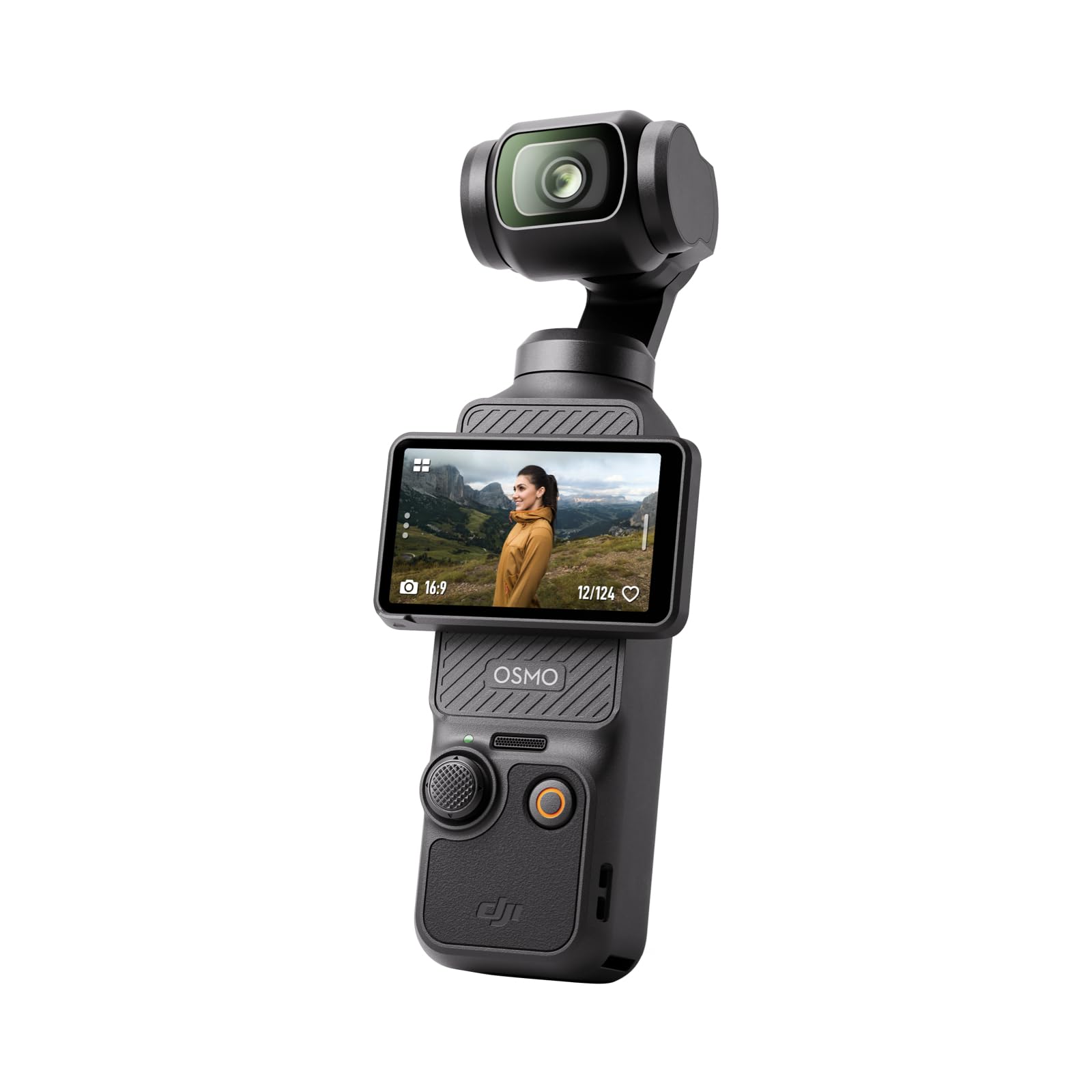
The Osmo Pocket 3 packs a 1-inch CMOS sensor and a 3-axis mechanical gimbal into a body that fits in a jacket pocket. For podcasters who shoot B-roll or want to incorporate smooth walking shots, the stabilization is unmatched. The 2-inch rotating touchscreen switches between horizontal and vertical video instantly, a time-saver when repurposing podcast clips for social media.
ActiveTrack 6.0 keeps the subject centered even if they move, and the fast phase-detection autofocus maintains sharpness. Recording 4K120fps allows buttery-slow-motion segments. The integrated stereo microphones capture usable audio, and the camera connects directly to two DJI Mic 2 transmitters for wireless host and guest audio.
Battery life is rated at 166 minutes, and USB-C fast charging adds significant runtime quickly. The pocket size means less heat dissipation, so it can become warm during extended 4K recording, but DJI has tuned the firmware to avoid thermal shutdown within normal podcast durations.
Why it’s great
- Gimbal stabilization makes walk-around segments smooth
- Rotating screen for quick vertical/horizontal switching
- Compact design is perfect for travel and small studios
Good to know
- Fixed lens limits framing options
- No external microphone input without adapter
5. OM SYSTEM Olympus E-M10 Mark IV with 14-42mm EZ Kit

The E-M10 Mark IV delivers class-leading 5-axis in-body image stabilization rated for 4.5 stops of compensation. This matters for podcasters who handhold the camera for dynamic shots or shoot in less-than-perfect lighting without a tripod. The 20-megapixel Micro Four Thirds sensor and quick contrast-detect autofocus with 121 points lock onto faces reliably.
A unique flip-down monitor enables a dedicated selfie mode that activates automatically. The camera is compact, especially with the 14-42mm EZ pancake lens retracted, fitting in a larger jacket pocket. For podcasters wanting a retro aesthetic look without sacrificing interchangeable lenses, this body offers 16 Art Filters including Instant Film.
The main limitation is 4K30p video without the ultra-high frame rates of the Sony sensors. The built-in flash is useful as a fill light in dim studios. Note that the camera uses a non-USB-C charger, and the Wi-Fi transfer app is slow, but the core video quality and stabilization are strong for the price tier.
Why it’s great
- 5-Axis IBIS delivers steady handheld footage
- Compact body with excellent build quality
- Selfie mode simplifies host-only recording
Good to know
- No USB-C charging; uses proprietary charger
- Burst mode and Wi-Fi transfers are slow
6. Canon EOS R100 with RF-S18-45mm F4.5-6.3 IS STM Kit

The EOS R100 is Canon’s smallest and lightest EOS R series body, making it an affordable entry into the interchangeable-lens mirrorless ecosystem. Its 24.1-megapixel APS-C sensor paired with the DIGIC 8 processor and Dual Pixel CMOS AF provides human face and eye detection across 143 zones. The autofocus is dependable for a seated podcast host.
The kit includes the RF-S18-45mm F4.5-6.3 IS STM lens with optical stabilization, which reduces the effects of small table vibrations. The 4K video is capped at 24fps, which works for cinematic podcasts but feels restrictive for standard production. Full HD at 60fps is smoother for general use. The camera offers a 6.5 frames-per-second burst for still photography alongside video use.
Battery life is rated for a full day of casual use, and the menu system is beginner-friendly. The lack of 4K60p and a slower kit lens aperture are the main compromises. Podcasters wanting the cleanest Canon color science on a budget will find this a practical starting point that can grow with lens upgrades.
Why it’s great
- Dual Pixel AF is smooth and reliable for video
- Lightest EOS R body for easy mounting
- Clear menu system for beginners
Good to know
- 4K is limited to 24fps
- Kit lens is slow in low light
7. Canon EOS 2000D / Rebel T7 DSLR with EF-S 18-55mm + SanDisk 32GB & Accessories Bundle (Renewed)

The Canon 2000D is a classic entry-level DSLR offered in a bundle that includes a tripod, case, wide-angle and telephoto lenses, and a 32GB card. The 24.1-megapixel APS-C sensor produces decent stills and 1080p video, but the 9-point autofocus system is noticeably slow and prone to hunting in video mode. For a podcast where the host remains static, manual focus is the better choice.
The optical viewfinder is a holdover from the DSLR era, familiar to photographers but less useful for video composition. The 18-55mm kit lens provides a standard field of view, and the bundle adds a wide-angle attachment that can frame two guests at a standard desk. Wi-Fi and NFC allow wireless remote control and image transfer via the Canon Camera Connect app.
The critical flaw for podcasting is the 29-minute and 59-second recording limit without a clean HDMI output. This camera is a fine starter for learning exposure fundamentals, but a dedicated podcast setup will quickly outgrow its video limitations. The renewed condition keeps the cost low for absolute beginners.
Why it’s great
- Extensive accessory bundle covers all basics
- Good image quality for the entry-level price
- Optical viewfinder is excellent for still photography
Good to know
- No external microphone input jack
- 30-minute recording limit breaks podcast workflow
8. Xtra Atto Wearable 4K Action Camera (128GB)
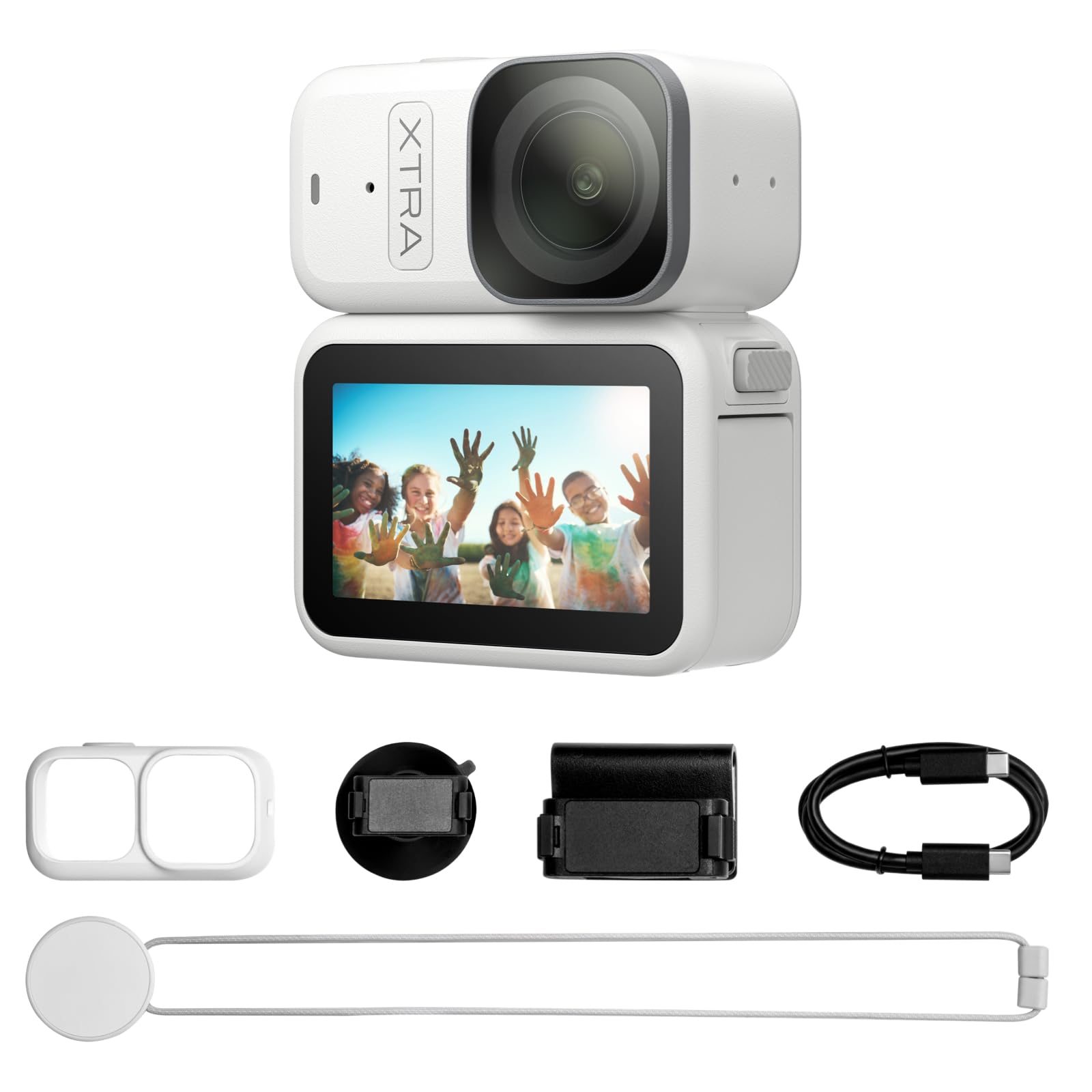
The Xtra Atto is a 54-gram wearable action camera designed for a unique hands-free first-person perspective. Its 1/1.3-inch sensor records 4K60fps video with solid stabilization, and the magnetic mounting system — hat clip, lanyard, and ball-joint adapter — allows angle adjustments without a tripod. For podcasters who demonstrate products or want an over-the-shoulder camera angle, this fills a gap traditional cameras cannot.
Built-in 128GB storage and 600MB/s transfer speeds via the Vision Dock move large files quickly to a computer. The 5-minute pre-recording buffer captures moments before you press record, useful for live-streamed podcasts. The 220-minute extended runtime with the dock covers a full recording day without battery swaps.
The wide-angle lens produces a fisheye effect typical of action cameras, which is less flattering than a standard lens for close-up face shots. The built-in microphone picks up wind noise outdoors. This camera is best used as a second angle or specialty cam, not the primary host camera.
Why it’s great
- Unique magnetic mounts enable creative POV angles
- Fast file transfer speeds save editing time
- Long battery life with the Vision Dock
Good to know
- Wide-angle lens distorts facial features
- Microphone quality is wind-sensitive
9. Nikon Z50 II with Two Lenses (16-50mm & 50-250mm)

The Nikon Z50 II brings a larger viewfinder, a 20.9-megapixel DX sensor, and advanced 231-point hybrid autofocus with subject detection for people, dogs, cats, birds, and vehicles. The 31 built-in Picture Control presets let podcasters dial in a look without grading, and dedicated bird and airplane modes highlight the AF’s precision. It records 4K60p with no record limit.
The two-lens kit includes the 16-50mm f/3.5-6.3 VR standard zoom and the 50-250mm f/4.5-6.3 VR telephoto zoom. The 50-250mm is an odd choice for podcasting, but the 16-50mm at its wide end frames two to three guests easily. The built-in flash and Night Portrait mode help in dark recording spaces. SnapBridge transfers files to a phone quickly for social media uploads.
The Z50 II’s menu system is comprehensive but takes time to learn. The two-lens kit adds weight and bulk compared to single-lens options, and the telephoto lens may never be used in a studio context. For podcasters who also shoot interviews, corporate events, or product footage, the versatility is a strong asset, though the price is the highest in this guide.
Why it’s great
- No 30-minute recording limit
- Excellent subject-detection autofocus
- Built-in presets reduce color grading work
Good to know
- Two-lens kit is heavier than single-lens options
- Menu system has a steep learning curve
FAQ
Why does a 30-minute recording limit matter for podcasting?
What is a clean HDMI output and do I need it?
Final Thoughts: The Verdict
For most users, the affordable camera for podcasting winner is the Sony ZV-E10 Bundle because it combines reliable autofocus, unlimited 4K30p recording, clean HDMI output, and a complete accessory kit in one package. If you want plug-and-play unlimited recording with the best heat management, grab the Nikon Z 30. And for ultra-compact multi-angle setups, nothing beats the Xtra Atto as a secondary wearable cam.