
The drag from a loose, heavy sock at 25 mph costs you real wattage that your legs worked hard to produce. Aero socks are not a style accessory; they are a piece of drag-reducing equipment that interfaces directly with your cleats and calf muscles. The wrong pair will bunch, retain sweat, and literally slow you down over a century ride or a time trial segment.
I’m Min — the co-founder and writer behind Gadgets Feed. My deep market research and spec analysis for this guide focused specifically on wind-tunnel data, fabric weave densities, and the real-world compression gradients that define legitimate aero sock design versus simple fashion imitations.
Whether you are chasing a personal best in a triathlon or shaving seconds off your club ride, the best aero socks combine breathable, low-profile knits with stay-put compression to give you a measurable advantage without sacrificing foot comfort.
How To Choose The Best Aero Socks
Not every tall cycling sock is an aero sock. The core distinction lies in how the fabric behaves under wind shear and moisture load. Look for a dense, smooth-knit face that reduces surface turbulence, paired with a compression profile that prevents the sock from sagging into the airstream. These three criteria will separate the truly fast from the merely fashionable.
Fabric Density and Surface Texture
An aero sock’s primary job is to present a smooth, uniform surface to the wind. Look for a high denier-per-inch weave (typically 200+ denier) that creates a closed, non-porous face. Rougher, fluffy knits create micro-turbulence that increases drag. The best aero socks use a tight, flat-lock weave that feels almost slick to the touch, minimizing the boundary layer disruption around your calf.
Compression Gradient and Cuff Grip
Graduated compression—firmest at the ankle, lighter near the calf—serves a dual purpose. It supports blood return to reduce leg fatigue, and it mechanically locks the sock in place so it cannot bunch or twist during a pedal stroke. A weak compression gradient or an elastic cuff without silicone grippers will let the sock migrate, creating fabric folds that act like a parachute. Look for 15-20 mmHg of compression for a balance of performance and comfort.
Moisture Management and Thermoregulation
Wet fabric increases drag exponentially. Aero socks must wick sweat from the skin and dry rapidly. Pure cotton or high-cotton blends are counterproductive—they absorb moisture, grow heavy, and cling to the skin. Instead, choose a blend of nylon, polyester, elastane, and sometimes merino wool for its natural temperature regulation. A hydrophobic treatment on the outer face helps rain or road spray bead off without soaking into the weave.
Quick Comparison
On smaller screens, swipe sideways to see the full table.
| Model | Category | Best For | Key Spec | Amazon |
|---|---|---|---|---|
| Swiftwick ASPIRE Three-Pack | Premium Compression | Endurance racing and firm calf support | Firm compression (20+ mmHg), thin 4-inch cuff | Amazon |
| CASTELLI Fast Feet 3 | Premium Aero Knit | Road and gravel racing, bare-foot feel | Grooved Lycra fabric for textured drag reduction | Amazon |
| CEP Core Run Ultralight | Medical-Grade Compression | Recovery and high-intensity running/cycling | 20-30 mmHg graduated medical-grade compression | Amazon |
| Swiftwick PERFORMANCE Four | Mid-Range Workhorse | All-day mixed terrain and daily training | Moderate compression, reinforced heel/toe, medium cushion | Amazon |
| SLS3 Triathlon Socks | Multisport Hybrid | Triathlon transitions and dual-run/ride use | Honeycomb knit, light compression, flat seams | Amazon |
| Aero Socks (Generic Brand) | Budget Basic | Entry-level aero sock experience | Uniform thin fabric, moderate elastic grip | Amazon |
| Cycling Socks Three-Pack | Budget Value Pack | Casual riding and everyday training | Three pairs, breathable mesh upper, lightweight | Amazon |
In‑Depth Reviews
1. Swiftwick ASPIRE (3 Pairs) Quarter Crew
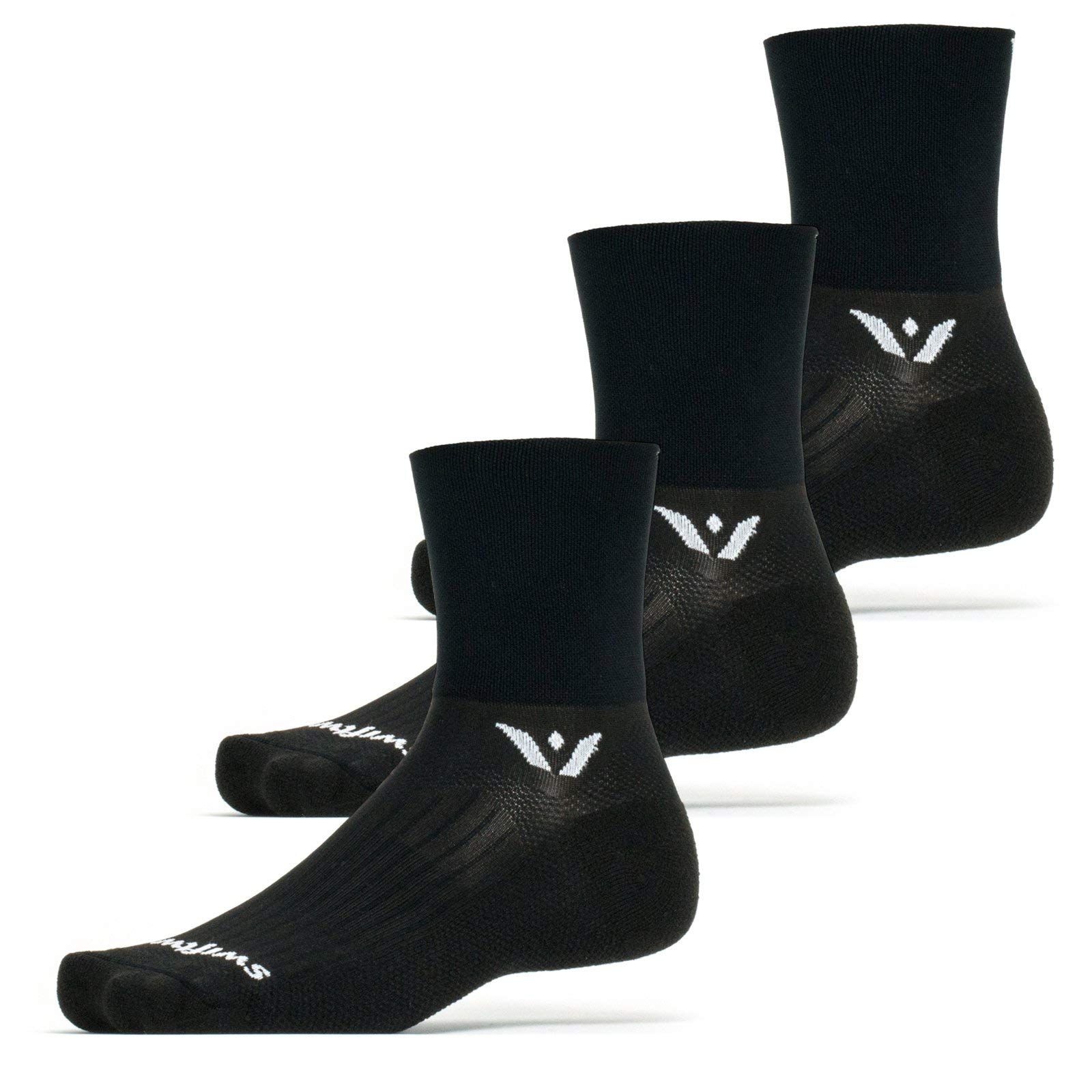
The Swiftwick ASPIRE is engineered with a firm compression profile (20+ mmHg) that wraps the entire foot and calf in a thin, low-drag nylon-polyester blend. At a 4-inch crew height with a double-cuff construction, it stays locked in place even during the hardest sprints out of the saddle. The barely-there cushion means maximum pedal feedback and minimal fabric interference inside your cycling shoe.
Reviewers consistently note the sock’s ability to wick sweat and remain dry on 100+ mile rides, a direct result of the high-performance moisture-transport fibers. The firm compression does more than reduce fatigue—it also prevents any fabric bunching behind the ankle, maintaining the smooth aerodynamic profile you paid for.
One drawback is the relatively snug calf opening: cyclists with particularly large or muscular calves may find the donning/doffing process a minor chore. Once on, however, the grip is secure and the thin footprint in the cleat area prevents any hot spots. For serious road racers and triathletes who prioritize every watt, these are the benchmark.
Why it’s great
- Firm compression locks the sock flat against the calf, eliminating drag from wrinkling
- Thin construction provides excellent proprioception and shoe fit
- High-vis color options improve safety during low-light rides
Good to know
- Calf opening is tight; sizing up may be necessary for larger legs
- Premium tier pricing reflects the USA-made engineering
2. CASTELLI Fast Feet 3
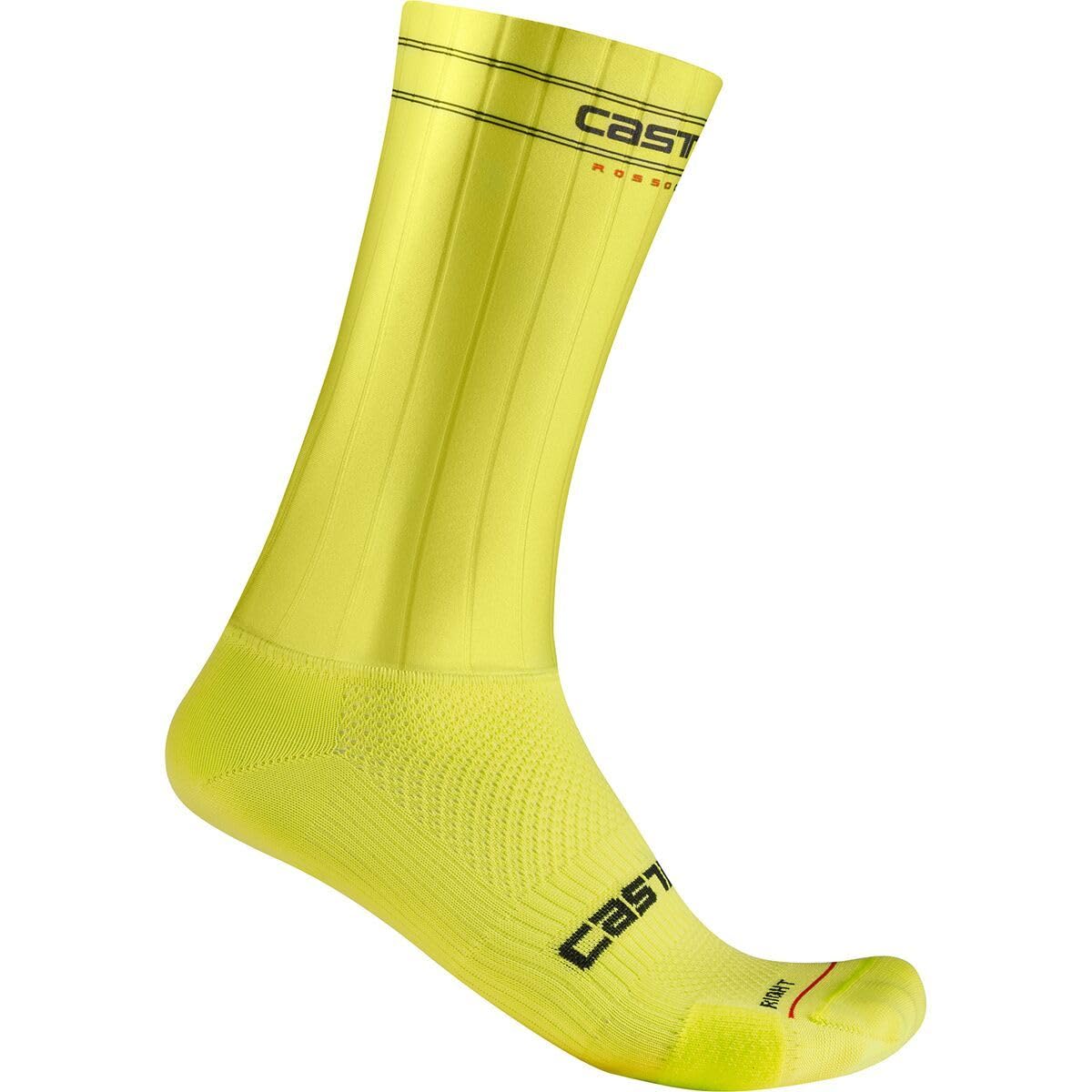
CASTELLI’s Fast Feet 3 uses a grooved Lycra fabric that establishes a textured surface designed specifically to manage airflow over the calf. The result is a sock that feels almost like a second skin—ultra-thin, highly compressive, with a midfoot support band that reduces arch fatigue during long pedaling sessions. The one-pair packaging reflects its specialized role as a race-day tool rather than a daily trainer.
User feedback highlights the sock’s exceptional fit on size M and L, with the fabric stretching comfortably without losing its elastic memory. The “bare-foot feel” inside the shoe is a recurring theme, meaning no bunching at the toes or heel, which directly translates to better power transfer through the pedal stroke. For riders who want the absolute thinnest barrier between foot and cleat, this is the top choice.
The primary trade-off is durability: the lightweight, aero-optimized knit is more delicate than a reinforced training sock. Riders report that these are not ideal for gravel or trail use where debris and abrasion are common. They are purpose-built for tarmac speed and should be treated as such. If your focus is road racing time trials, the Fast Feet 3 delivers measurable gains.
Why it’s great
- Grooved Lycra texture actively manages airflow for drag reduction
- Extremely low profile transfers maximum pedal feel
- Midfoot support structure reduces hot spots on long rides
Good to know
- Less durable than padded training socks; avoid abrasive terrain
- Single pair purchase for a premium price point
3. CEP Core Run Ultralight

The CEP Core Run Ultralight brings medical-grade graduated compression (20-30 mmHg) to the aero sock category. This compression level is typically seen in post-surgical or travel compression hose, but CEP has engineered it into a breathable, ultralight running sock that supports shin splint prevention, Achilles support, and accelerated venous return. The mesh zones at the instep and calf increase airflow, preventing heat buildup during summer rides.
Riders and runners who push hard in warm conditions appreciate the sock’s ability to keep legs feeling fresh even after a two-hour threshold effort. The 3D anti-slip technology at the heel ensures zero movement inside the shoe, which preserves the sock’s aerodynamic positioning. For athletes balancing race performance with recovery, the dual-use design—wear during exertion and keep on post-ride—makes this a versatile piece of gear.
The main consideration is the height: at a tall crew length, shorter riders may find the sock extends uncomfortably high. Additionally, the 20-30 mmHg compression can feel excessively tight for casual use—this is an active-performance sock, not a lounge accessory. If you prioritize compression science over pure fabric thinness, CEP’s gradient is unmatched in this list.
Why it’s great
- Medical-grade graduated compression reduces fatigue and aids recovery
- Mesh zones provide superior ventilation in hot conditions
- Anti-slip heel keeps the sock in place during high-intensity efforts
Good to know
- Tall cuff may not suit shorter leg proportions
- Compression level is high; allow a break-in period if new to compression wear
4. Swiftwick PERFORMANCE Four (3 Pairs)

The Swiftwick PERFORMANCE Four sits in a sweet spot between the firm compression of the ASPIRE and a casual training sock. With moderate compression and a medium-cushion footbed, it offers more comfort for all-day wear while still maintaining the low-profile, moisture-wicking knit that defines the brand. The reinforced heel and toe add durability for gravel grinders and trail runners who need a sock that can handle abrasive conditions.
Customer feedback reinforces its reputation as a nearly indestructible daily driver. The nylon in the heel and toe resists wear well past the lifespan of standard cycling socks, making the three-pack a strong value proposition for riders who log high weekly mileage. The moderate compression is enough to keep the sock in place without restricting movement, and the 4-inch crew height sits neatly below most cycling bibs.
The trade-off is that the moderate compression and medium cushion produce a slightly looser fit than the ASPIRE, which could allow minor fabric movement at very high pedal cadences. For pure aerodynamic efficiency, the ASPIRE is superior; for a durable, comfortable sock that still performs well in the wind, the PERFORMANCE Four is the smarter buy.
Why it’s great
- Reinforced heel and toe vastly extend the sock’s usable life
- Medium cushion adds comfort on rough terrain without excess bulk
- Three-pack provides excellent per-pair value
Good to know
- Moderate compression is not as race-tight as the ASPIRE series
- Medium cushion may feel warm in extreme summer heat
5. SLS3 Triathlon Socks
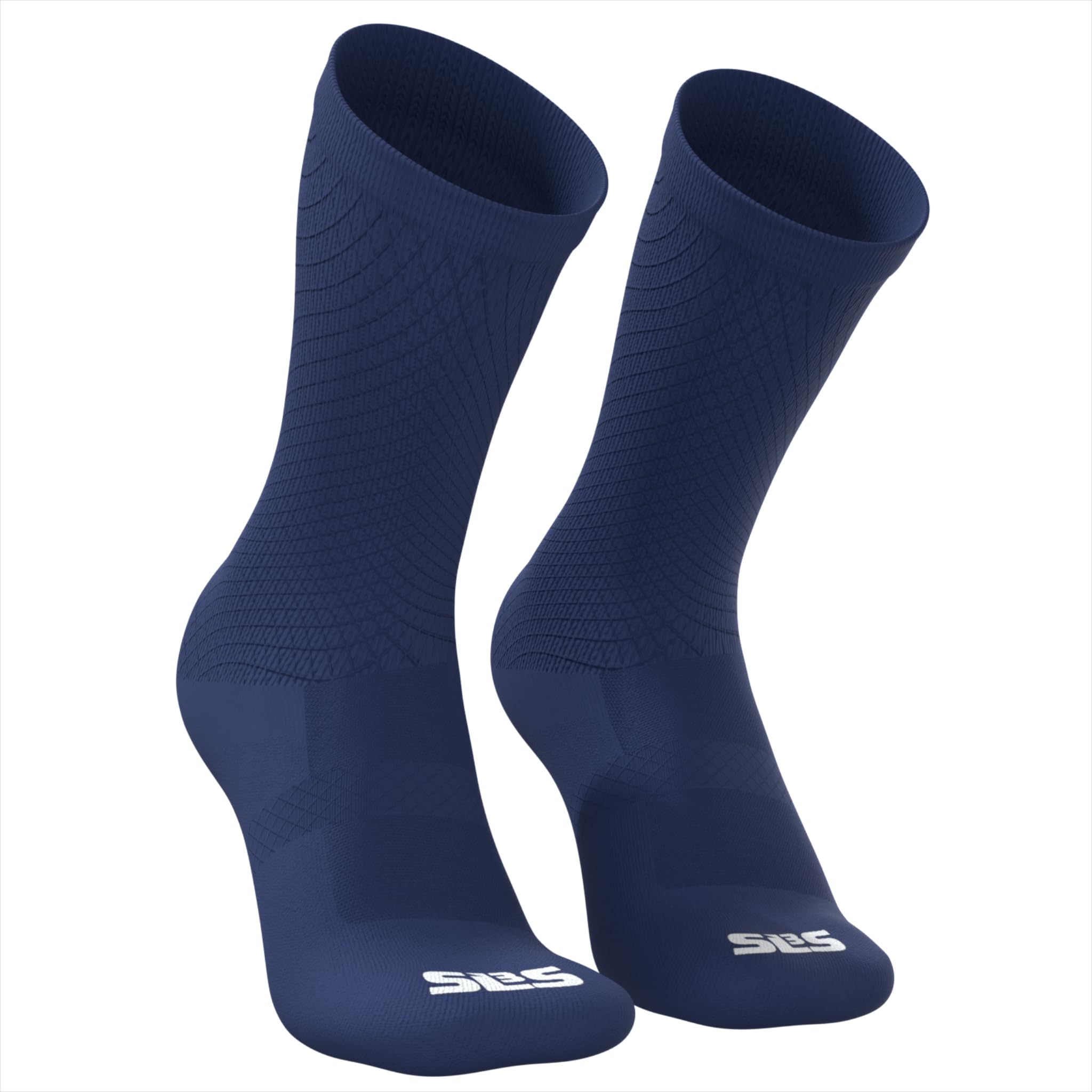
The SLS3 Triathlon Socks feature a fine honeycomb knit that balances breathability with a lightweight, form-fitting structure. Designed specifically for the dual demands of cycling and running in a triathlon, these socks use flat seams and strategically reinforced contact points to minimize irritation during the run leg after a hard bike effort. The light compression targets the calves, ankles, and arches to support muscle recovery without restricting movement.
Reviewers highlight the sock’s excellent moisture management during training—feet stay dry and cool, and riders report no blister formation even after multiple transitions. The anatomical shape includes a reinforced hem that prevents the sock from slipping down during wet conditions, a common failure point for lesser aero socks. The minimalist design also cleans up well with most tri kits, for a cohesive race-day look.
One limitation is the light compression level: athletes who require firm, medical-grade support for chronic calf fatigue may find these insufficient. The honeycomb structure, while breathable, also creates a slightly textured surface that might introduce micro-turbulence compared to a fully smooth Lycra sock. For the triathlete who needs a single sock that works across two disciplines, this is a strong choice.
Why it’s great
- Honeycomb knit provides exceptional ventilation during high-heat efforts
- Flat seams prevent blister hotspots during run transitions
- Light compression aids muscle recovery without impeding flexibility
Good to know
- Light compression may not satisfy those needing high medical-grade support
- Textured knit surface is slightly less aero than a smooth Lycra face
6. Aero Socks (Generic Brand)
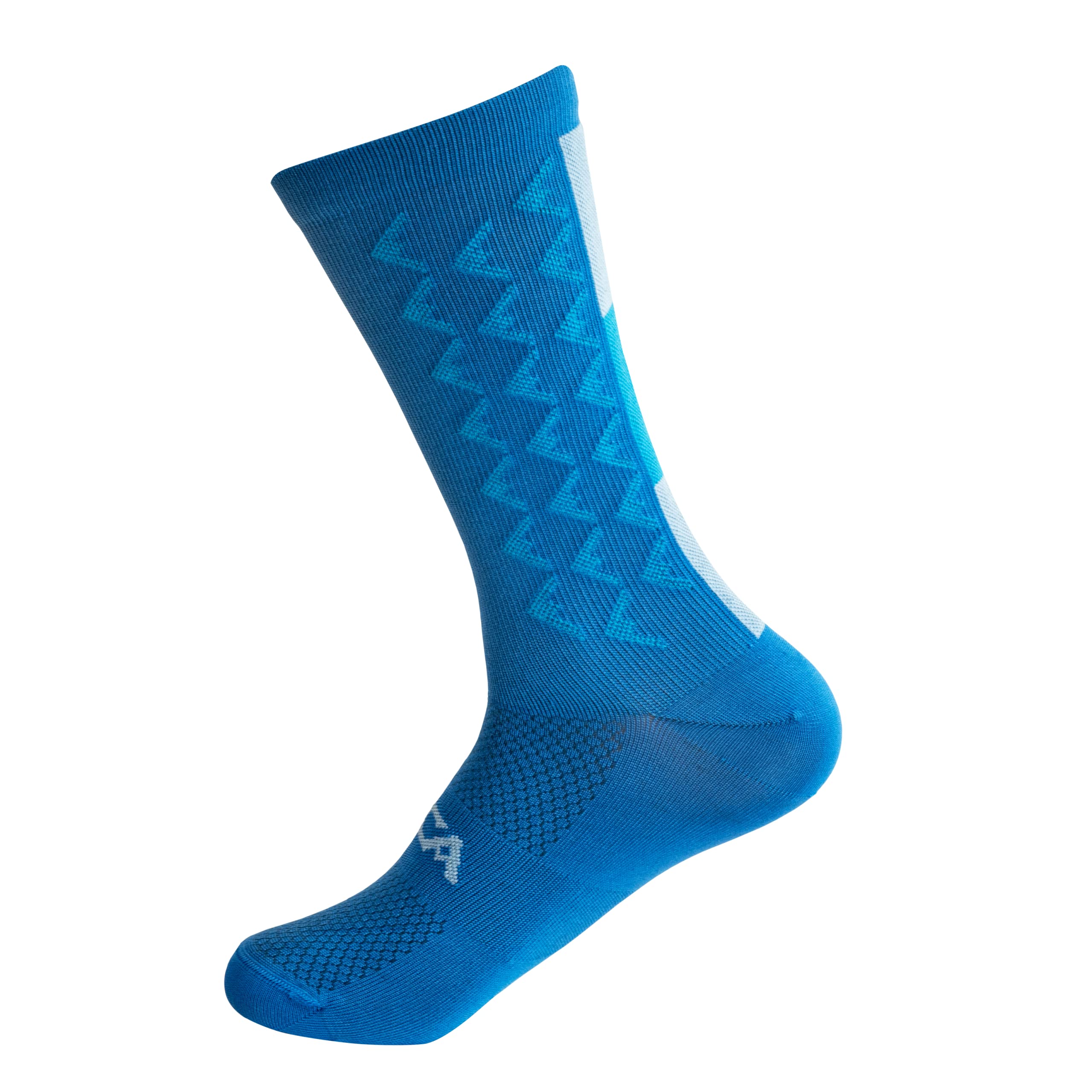
The generic “Aero Socks” product offers a no-frills entry point into the aero sock category. Using a uniformly thin fabric with a moderate elastic grip around the calf, these socks perform the basic functions well: they stay up during a ride, they fit true to size on a men’s 8 to 10, and they dry reasonably fast after a wash. The fabric is smooth to the touch, which helps reduce visual turbulence compared to a thick cotton sock.
User reviews consistently note that the socks are comfortable and comparable to “regular socks” in feel, which is both a strength and a weakness. For riders transitioning from basic athletic socks, the comfort is reassuring. However, the lack of graduated compression or targeted reinforcement means these are more of a basic aerodynamic upgrade than a performance-optimized tool.
The key downside is the absence of specific technical features: there is no silicone grip at the cuff, no reinforced heel/toe, and no proven compression gradient. Over time, the elastic may wear out faster than a premium brand. For the budget-conscious cyclist who wants to experiment with aero socks without a large investment, this is a perfectly functional starting point.
Why it’s great
- Affordable entry into the aero sock category
- Thin profile works well inside most cycling shoes
- Stays in place during average-length rides
Good to know
- Lacks graduated compression for muscle support
- No reinforced heel or toe area; durability is limited
7. Cycling Socks Three-Pack
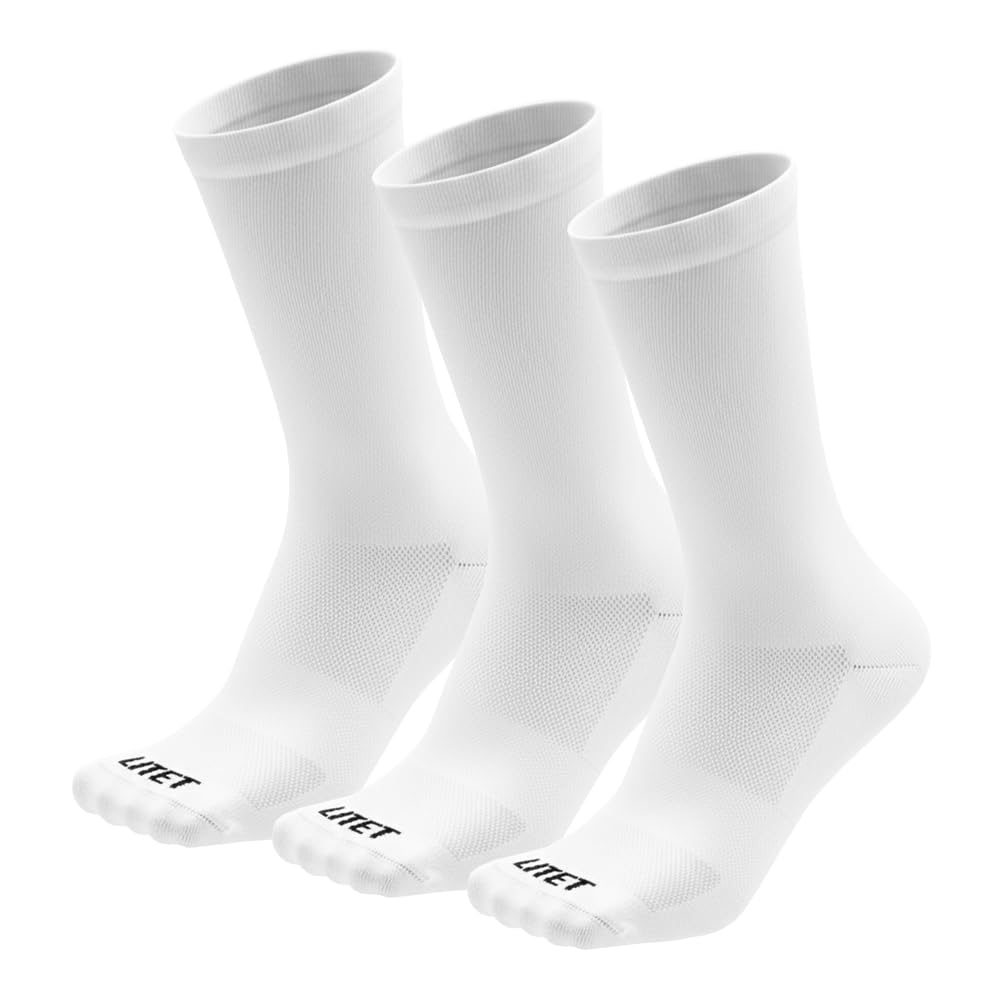
This three-pack from a generic cycling brand focuses on delivering breathability and a lightweight feel at a low per-pair cost. The socks feature a mesh upper that promotes airflow, and users report that they do not trap heat even during summer gravel or mountain bike rides. The fabric blend is soft and does not squeeze too tightly, making them comfortable for riders who dislike compression.
Customer reviews highlight the sock’s resilience after a year of use—color retention is good, and the elastic holds up reasonably well. For riders who primarily do casual club rides or MTB sessions where aerodynamics are less critical than comfort and ventilation, this pack represents a solid value. The availability of multiple colors (blue, black) also makes them a versatile wardrobe staple.
The lack of any aero-specific features—no compression gradient, no smooth-face fabric, no grip cuff—means these are more of a general-purpose cycling sock than a true aero sock. The mesh texture is inherently more porous, which increases drag compared to a tight-weave Lycra. For pure speed, step up to the Swiftwick PERFORMANCE; for budget-friendly daily rotation, these work fine.
Why it’s great
- Three-pack provides great value for everyday training
- Breathable mesh prevents overheating on hot summer rides
- Soft fabric is comfortable for riders who dislike tight compression
Good to know
- Mesh weave is not optimized for aerodynamic drag reduction
- No compression gradient or specialized grip features
FAQ
Do I really gain watts from switching to aero socks?
Should I wear aero socks over my calf or under my bib shorts?
What is the difference between a running compression sock and an aero cycling sock?
How do I measure my calf for the correct aero sock size?
Final Thoughts: The Verdict
For most users, the best aero socks winner is the Swiftwick ASPIRE Three-Pack because of its race-proven firm compression, minimal cushion profile, and exceptional moisture management that keeps the sock flat against the leg at speed. If you want the absolute thinnest, most specialized aero knit with a textured airflow face, grab the CASTELLI Fast Feet 3. And for a durable, versatile daily sock that handles both training and light racing without breaking the bank, nothing beats the Swiftwick PERFORMANCE Four.