
Buying a graphics card for 1440p gaming is a balancing act between raw rasterization performance, enough video memory to handle high-resolution textures for years, and a thermal solution that stays quiet under sustained loads. The difference between a disappointing 1440p experience and a buttery-smooth one comes down to picking a card that couples the right core architecture with sufficient VRAM capacity to avoid stuttering when modern titles demand more than 10GB.
I’m Min — the co-founder and writer behind Gadgets Feed. This guide is built on hundreds of hours cross-referencing benchmark data, analyzing VRAM utilization across AAA game titles, and mapping cooling performance trends across current-generation models to find exactly which cards deliver consistent frame timing at 2560×1440.
After evaluating eleven different GPUs across the budget, mid-range, and premium tiers, I’ve narrowed the field to the most reliable options available. This is the definitive guide to the best graphics card for 1440p gaming today, backed by real customer feedback and technical specification analysis.
How To Choose The Best Graphics Card For 1440P
Selecting the right 1440p graphics card is less about chasing the absolute highest frame rates and more about ensuring consistent performance as game textures evolve. Three specific technical decisions dominate this purchase.
VRAM Capacity Matters More Than Clock Speed
8GB cards already struggle with texture-heavy titles at 1440p when maxing out settings. This makes 12GB the absolute floor and 16GB the recommended ceiling for anyone wanting four years of relevance. Cards with 16GB GDDR6, like the RX 9060 XT series, give you headroom for future high-resolution texture packs without hitting a memory wall mid-game.
Cooling Form Factor Versus Case Compatibility
Triple-fan open-air coolers like the GIGABYTE WINDFORCE units offer quieter operation under sustained 1440p loads because they move more air at lower RPMs. But if you are building in a small-form-factor (SFF) case, a compact dual-fan model at 200mm length might be the only card that physically fits without forcing chassis modifications.
Ray Tracing Performance: AMD vs. Nvidia at 1440p
At 1440p, the ray tracing gap shrinks considerably compared to 4K because the lower resolution places less strain on ROPs and tensor cores. Nvidia cards still hold an edge with DLSS 4 upscaling techniques, but AMD’s RDNA 4 architecture with FSR 4 closes that gap enough that raw rasterization value becomes the deciding factor for most buyers.
Quick Comparison
On smaller screens, swipe sideways to see the full table.
| Model | Category | Best For | Key Spec | Amazon |
|---|---|---|---|---|
| Sapphire Pulse RX 9060 XT | Mid-Range | Best Overall 1440p Gaming | 16GB GDDR6, 3290 MHz Boost, 182W TDP | Amazon |
| ASUS Dual RX 9060 XT | Mid-Range | Compact 1440p Builds | 16GB GDDR6, 3250 MHz, 0dB Technology | Amazon |
| ASRock Challenger RX 9060 XT | Mid-Range | Best Budget 1440p Card | 16GB GDDR6, 3290 MHz, 249mm Length | Amazon |
| XFX Swift RX 9060 XT | Mid-Range | Value 1440p Gaming | 16GB GDDR6, 3320 MHz Boost, 10.63″ Length | Amazon |
| GIGABYTE RX 9060 XT Gaming OC | Mid-Range | Quiet 1440p Operation | 16GB GDDR6, WINDFORCE 3-Fan Cooling | Amazon |
| PowerColor Reaper RX 9060 XT | Mid-Range | SFF 1440p and Entry 4K | 16GB GDDR6, 200mm Length, 500W PSU | Amazon |
| EVGA RTX 3070 XC3 Ultra | Premium | Ray Tracing 1440p with DLSS | 8GB GDDR6, 1770 MHz Boost, iCX3 Cooling | Amazon |
| PNY RTX 5070 Epic-X OC | Premium | High-End 1440p Gaming | 12GB GDDR7, 2685 MHz, Blackwell DLSS 4 | Amazon |
| GIGABYTE RTX 5070 WINDFORCE OC | Premium | Silent 1440p Gaming | 12GB GDDR7, WINDFORCE 3-Fan, SFF-Ready | Amazon |
| ASUS Prime RTX 5070 | Premium | Competitive 1440p with OC | 12GB GDDR7, 2.5-Slot, Axial-tech Fans | Amazon |
| MSI RTX 5070 Ventus 2X OC | Premium | Compact Premium 1440p | 12GB GDDR7, 2557 MHz, 236mm Length | Amazon |
In‑Depth Reviews
1. Sapphire Pulse RX 9060 XT 16GB

The Sapphire Pulse RX 9060 XT nails the 1440p sweet spot with a 3290 MHz boost clock and 16GB of GDDR6 memory on a 128-bit bus running at 20 Gbps. Real-world gaming at ultra settings delivers 90 FPS on an i3-12100 and spikes to 150–220 FPS in optimized titles, with edge temperatures staying at a cool 55–60°C under sustained load. The compact PCB and single 6+2 pin power connector make it an easy drop-in upgrade for older systems running 3060 or 570-class cards, and the 182–200W power cap keeps electricity costs in check without sacrificing rasterization performance.
The 16GB VRAM buffer is the defining feature here. Modern 1440p titles like Cyberpunk 2077 and Starfield regularly push past 10GB of memory usage when using high-resolution texture packs, and having six extra gigabytes prevents the micro-stuttering that plagues 8GB cards when the GPU starts swapping textures through system RAM. Linux users report plug-and-play compatibility on Devuan with no driver headaches, and the card handles local LLM inference and Blender workloads almost as well as it games.
Firmware updates have raised the power limit to 200W, and undervolting the card actually improves boost clock stability because the thermal headroom increases. The Sapphire Pulse series has a reputation for reliable caps and clean PCB layouts, and this generation continues that trend with no coil whine reports across verified purchases. This is the baseline recommendation for any 1440p build where price-to-performance ratio matters most.
Why it’s great
- 16GB VRAM eliminates future worries about texture memory at 1440p
- Low 182W typical power draw with excellent 55-60°C edge temps
- Outstanding Linux compatibility for creators and developers
Good to know
- Thick back bracket can make installation tight in smaller cases
- Ray tracing performance trails Nvidia but FSR 4 closes the gap
2. ASUS Dual Radeon RX 9060 XT 16GB
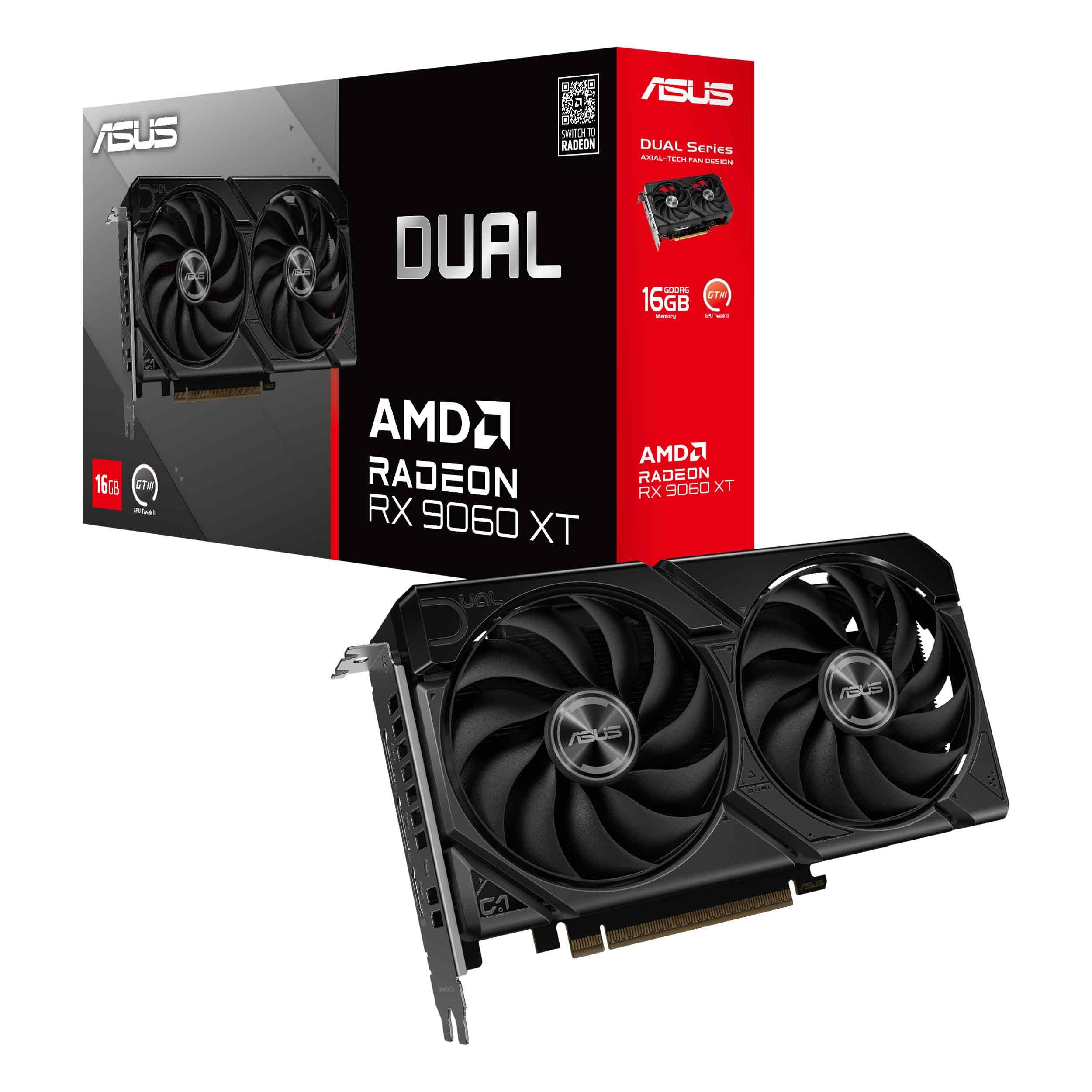
The ASUS Dual RX 9060 XT brings the full 16GB GDDR6 experience to small-form-factor builds without cutting core clock speeds. Measuring just 8 inches long with a 2.5-slot profile, this card fits in ITX cases that reject longer triple-fan models while still delivering 3250 MHz boost clocks and 1440p ultra settings at stable frame rates. The smaller fan hub design uses axial-tech blades with a barrier ring to push downward air pressure through a compact fin stack, achieving load temperatures around 60–75°C even inside cramped chassis with limited airflow.
The dual BIOS switch is a meaningful feature for 1440p users who alternate between quiet desktop work and demanding gaming sessions. Flicking to Quiet mode enables 0dB technology that stops the fans entirely during light loads, while Performance mode keeps the card cool during sustained gaming. Customer reports highlight smooth Destiny 2 at 120 FPS capped and 180 FPS maximum at 1440p, with no stuttering or overheating issues in compact enclosures. The rear vents must stay unblocked, but the small footprint makes cable management significantly easier than in full-size cards.
Video editing and 3D rendering benefit from the same 16GB VRAM pool, and the AMD Adrenaline software stack gives granular control over fan curves and power tuning. The card uses a single 8-pin power connector with a 1.3-pound weight that rarely needs anti-sag brackets. If your 1440p build prioritizes case space and low noise over multi-fan RGB aesthetics, this ASUS Dual card is the smart choice.
Why it’s great
- Compact 8-inch length fits most ITX and SFF cases
- Dual BIOS with 0dB fan stop for silent desktop operation
- 16GB VRAM extends 1440p viability well into future titles
Good to know
- Plastic backplate feels less premium than metal alternatives
- Cooling capacity is adequate but runs warmer than triple-fan models
3. ASRock Radeon RX 9060 XT Challenger 16GB OC
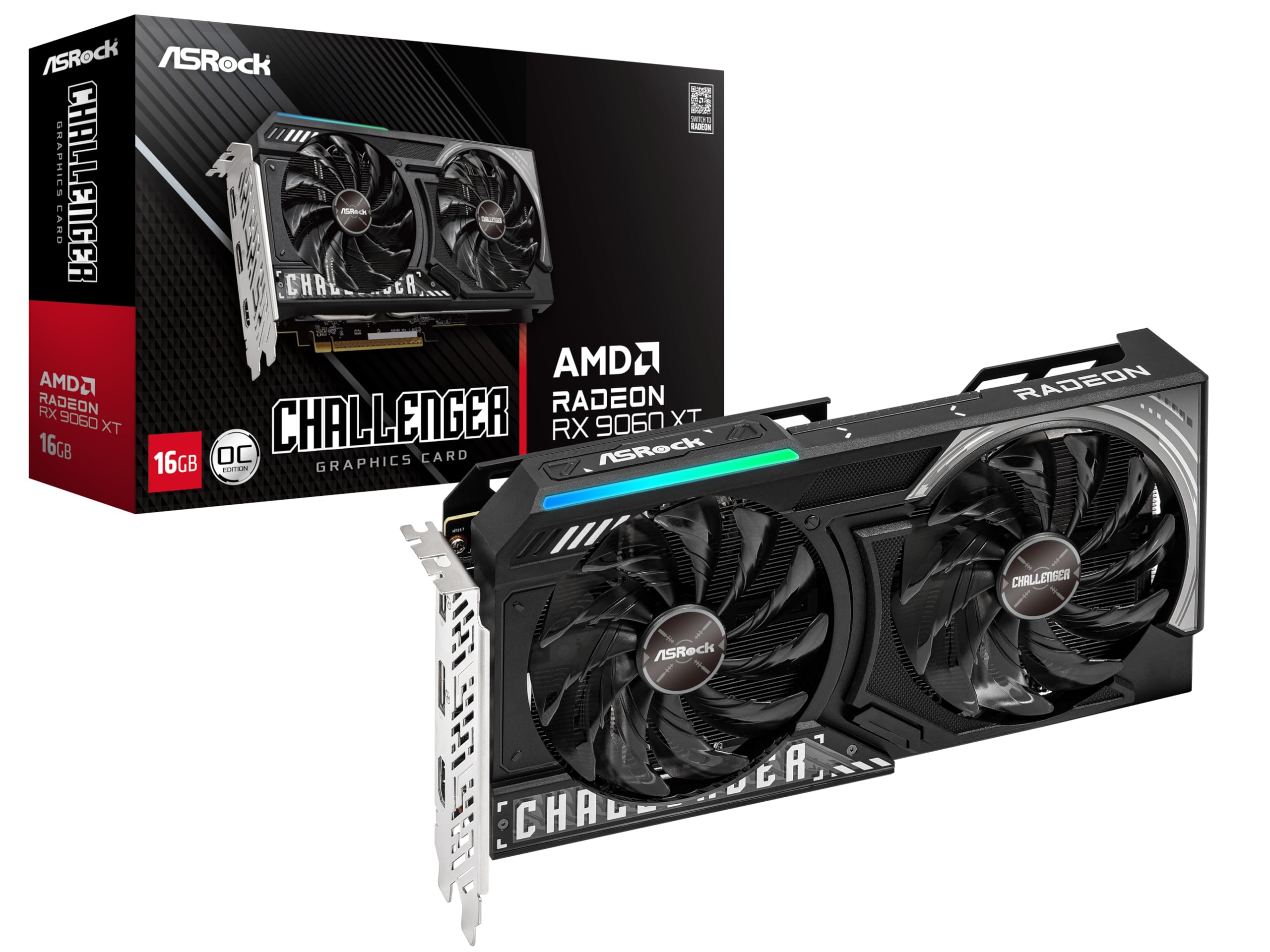
The ASRock Challenger RX 9060 XT proves that a 1440p graphics card does not need to drain your budget to deliver serious performance. With a 3290 MHz boost clock and 16GB of GDDR6 memory on a PCIe 5.0 interface, this card delivers 165 FPS at high settings in modern shooters while remaining virtually silent thanks to striped axial fans that stop entirely under low load. The 249mm length and 2-slot profile with a single 8-pin power connector mean it slides into most mid-tower cases without clearance issues, and the 550W PSU recommendation keeps the overall build cost reasonable.
What makes this card stand out at its price tier is the inclusion of RDNA 4 architecture with 32 Compute Units, 3rd-gen ray tracing accelerators, and 2nd-gen AI accelerators. FSR 4 support gives 1440p gamers a meaningful upscaling path for demanding titles, though ray tracing performance naturally trails Nvidia’s RTX 50 series. The dual DisplayPort 2.1a and single HDMI 2.1b outputs support up to three 8K displays, giving multi-monitor 1440p setups plenty of headroom.
The LED indicator includes a physical on/off switch, a small but appreciated detail for users who want a clean build without RGB. The metal backplate adds structural rigidity without adding much weight, and the Super Alloy components improve long-term reliability. For buyers looking to get 1440p ultra textures without paying the premium for an RTX 5070, the ASRock Challenger is the most cost-effective gateway into RDNA 4 gaming.
Why it’s great
- Crushes 1440p ultra settings at a lower price point than Nvidia equivalents
- RDNA 4 architecture with FSR 4 and PCIe 5.0 support
- 0dB Silent Cooling keeps fans off during low-load desktop tasks
Good to know
- Dual-fan cooling runs warmer than triple-fan designs under sustained load
- Ray tracing performance is decent but not competitive with Nvidia RTX 50 series
4. XFX Swift AMD Radeon RX 9060 XT 16GB OC
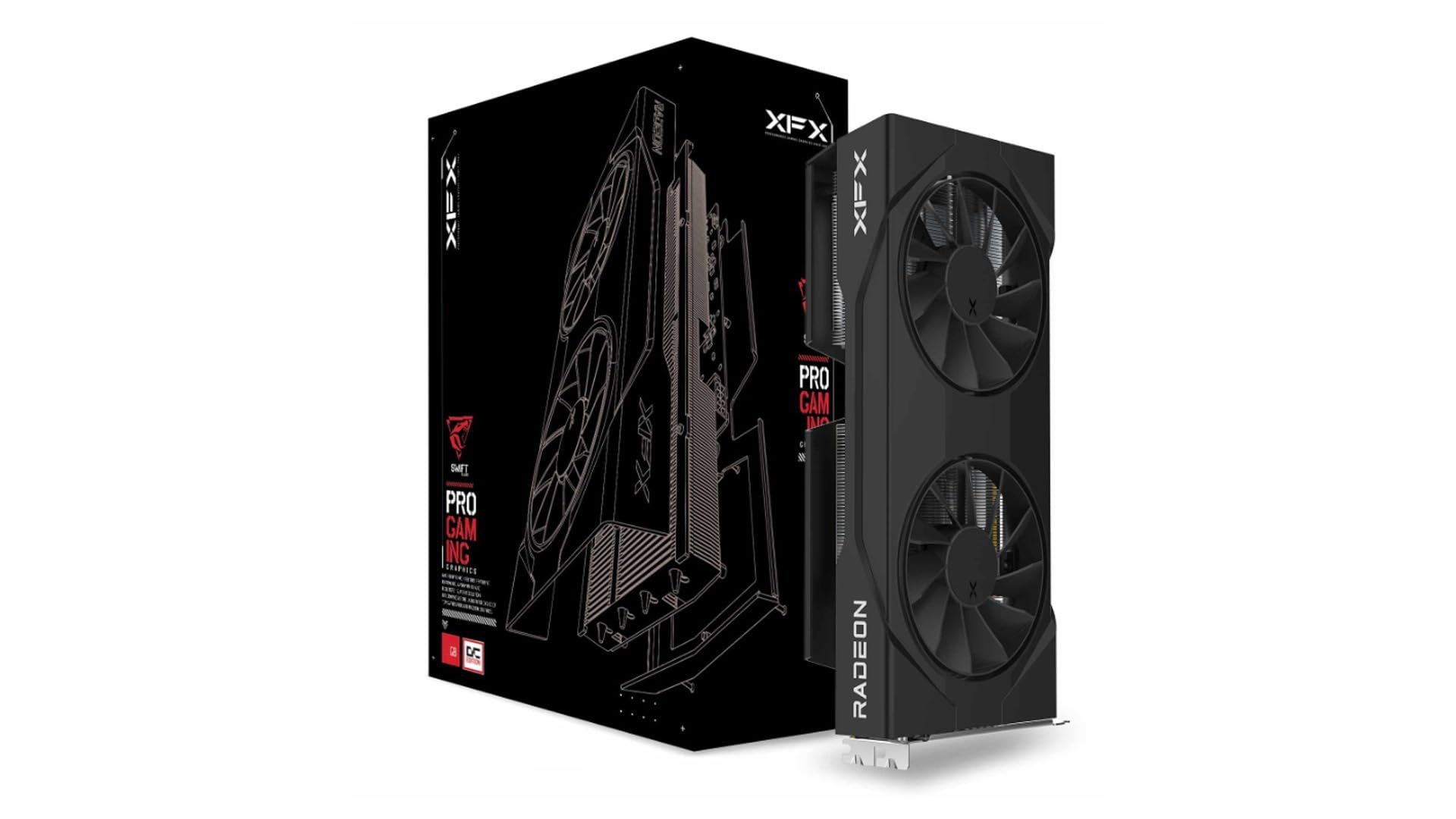
The XFX Swift RX 9060 XT pushes the boost clock to 3320 MHz, making it the fastest factory-overclocked RX 9060 XT in this lineup. That extra clock speed translates to about 3-5% real-world frame rate gains at 1440p without requiring manual tuning, giving it an edge in competitive titles where each frame matters. The SWFT dual-fan cooling solution keeps load temperatures around 60°C with a Time Spy score approaching 17,000, proving the card handles sustained 1440p gaming without thermal throttling. The 10.63-inch length is longer than dual-fan cards but still fits comfortably in standard ATX cases.
The 16GB GDDR6 buffer handles 95% of AAA games at max settings comfortably, and the card runs cool enough that the fans rarely spin audibly even during intense sessions. Customers upgrading from 6650 XT or similar mid-range cards report immediate and dramatic improvements in both frame rate stability and overall image quality at 1440p. The XFX Swift also includes two DisplayPort and one HDMI output, supporting up to three monitors — a minor note if you run a multi-monitor 1440p setup.
Power efficiency is a highlight here, as the card draws roughly the same wattage as competing 16GB models while clocking higher out of the box. The XFX build quality is solid with no glitch reports across verified purchases, and the clean black aesthetic fits most build themes. If you want the highest stock clock speed among RX 9060 XT cards for a slight edge in 1440p gaming, the XFX Swift is the performance leader in this segment.
Why it’s great
- Highest factory boost clock at 3320 MHz among RX 9060 XT variants
- Quiet and cool operation, stays around 60°C during 1440p gaming
- Excellent price-to-performance value at the mid-range level
Good to know
- Only three display outputs (2x DP, 1x HDMI) limit multi-monitor options
- Ray tracing performance is functional but not class-leading
5. GIGABYTE Radeon RX 9060 XT Gaming OC 16G

The GIGABYTE RX 9060 XT Gaming OC brings the company’s proven WINDFORCE cooling system to the RDNA 4 platform, using three Hawk fans with alternating rotation, composite heat pipes, and server-grade thermal gel to keep 1440p gaming temperatures well below 70°C even during extended sessions. The 11-inch length is typical for a triple-fan card, but the 2.5-slot profile allows it to fit most standard cases. The RGB lighting on the fan hub adds visual flair without looking overdone, and the sturdy metal backplate prevents PCB sag over time.
At 1440p ultra settings, this card delivers over 100 FPS in demanding titles while keeping fan noise to a whisper thanks to the zero-RPM mode that stops all fans during light workloads. AV1 encoding support makes it a strong choice for streamers who want to broadcast their 1440p gameplay at high quality with low bitrate. FSR 4 compatibility gives the card room to handle ray tracing at 1440p if you drop settings to high, though native rasterization remains the card’s primary strength.
GIGABYTE claims the server-grade thermal conductive gel offers better long-term thermal performance than standard paste, which matters for 1440p cards that stay under load for hours of daily gaming. The PCIe 5.0 interface future-proofs the card for motherboard upgrades, though PCIe 4.0 systems see no real-world bottleneck. For 1440p buyers who prioritize cool and quiet operation above all else, the GIGABYTE Gaming OC’s triple-fan solution is hard to beat.
Why it’s great
- WINDFORCE triple-fan cooling keeps thermals and noise low
- 16GB GDDR6 and AV1 encoding ideal for 1440p streaming
- Zero-RPM mode enables silent desktop operation
Good to know
- Large size requires careful case compatibility checking
- Ray tracing is adequate but not competitive with Nvidia RTX cards
6. PowerColor Reaper AMD Radeon RX 9060 XT 16GB

At only 200mm in length, the PowerColor Reaper is the absolute smallest 16GB 1440p graphics card on the market, making it the default choice for serious SFF builds or anyone cramming a GPU into a restrictive case. The dual-fan cooler measures just 39mm thick and weighs 658 grams, so it requires no support bracket and frees up space for cable management. Despite the tiny footprint, it still packs a full RX 9060 XT GPU with 16GB GDDR6 and a single 8-pin power connector that only needs a 500W PSU to run.
Customer experiences show this card handles 4K at 53 FPS average in native resolution gaming and crushes everything below that resolution, making it a dual-purpose card for 1440p gaming and occasional 4K media consumption. The compact heatsink means load temperatures reach 72–76°C on the core and 88–91°C on the hotspot, which is warm but within safe operating limits for RDNA 4 silicon. The card runs silently at full load according to verified reports, with no coil whine or fan clicking at any RPM.
The plug-and-play Linux compatibility extends to local LLM workloads, and the sub-500W power requirement means you can pair this card with a wide range of PSUs without upgrades. Older titles from the RX 580 era get a massive generational uplift, though very ancient games may face compatibility quirks. For SFF builders who need maximum 1440p performance in the smallest physical envelope, the PowerColor Reaper is the undisputed king.
Why it’s great
- Smallest 16GB 1440p card at just 200mm in length
- Plenty of power for 1440p ultra and 4K medium/60fps
- Single 8-pin power, 500W PSU requirement is very accessible
Good to know
- Hotspot temps can hit 88-91°C under sustained load
- Drivers may require tuning to prevent instability with frame gen
7. EVGA GeForce RTX 3070 XC3 Ultra Gaming 8GB

The EVGA RTX 3070 XC3 Ultra remains a strong 1440p option for buyers who value mature ray tracing and DLSS support over raw VRAM capacity. Built on Ampere architecture with 8GB of GDDR6, this card delivers 150+ FPS in standard 1440p games and over 30 FPS in Port Royal ray tracing benchmarks, putting it ahead of AMD’s RX 9000 series in path-traced titles. The iCX3 cooling system uses three HDB fans with individual temperature monitoring sensors that let EVGA’s Precision X1 software adjust fan speeds independently, keeping the card at 62–65°C under load with fan speeds at just 35–45%.
The 8GB VRAM buffer is this card’s main limitation for future 1440p gaming. Modern titles like Control already push past 8GB when using high-resolution textures, forcing the card to stream data from system RAM and causing stuttering. For 1440p gaming focused on competitive shooters and older titles, the 3070 still feels fast and responsive, but buyers should expect to drop texture quality in newer releases. The all-metal backplate and adjustable ARGB give it a premium look that EVGA was famous for before exiting the graphics card market.
DLSS 2.0 support helps offset the VRAM limitation by rendering at a lower internal resolution, allowing the 3070 to hit smooth frame rates in games like Cyberpunk 2077 even at 1440p with ray tracing enabled. The card requires 650W minimum PSU and draws 220W under full load, which is less efficient than newer generations but acceptable for the performance level. This is a card for enthusiasts who know exactly which games they play and want ray tracing at a budget-friendly price premium.
Why it’s great
- Class-leading ray tracing performance at 1440p for the generation
- iCX3 cooling stays quiet and cool under sustained gaming loads
- Excellent build quality with premium metal backplate and ARGB
Good to know
- 8GB VRAM is the absolute floor for 1440p and will bottleneck new titles
- Ampere architecture draws more power than RDNA 4 or Blackwell
8. PNY NVIDIA GeForce RTX 5070 Epic-X ARGB OC 12GB
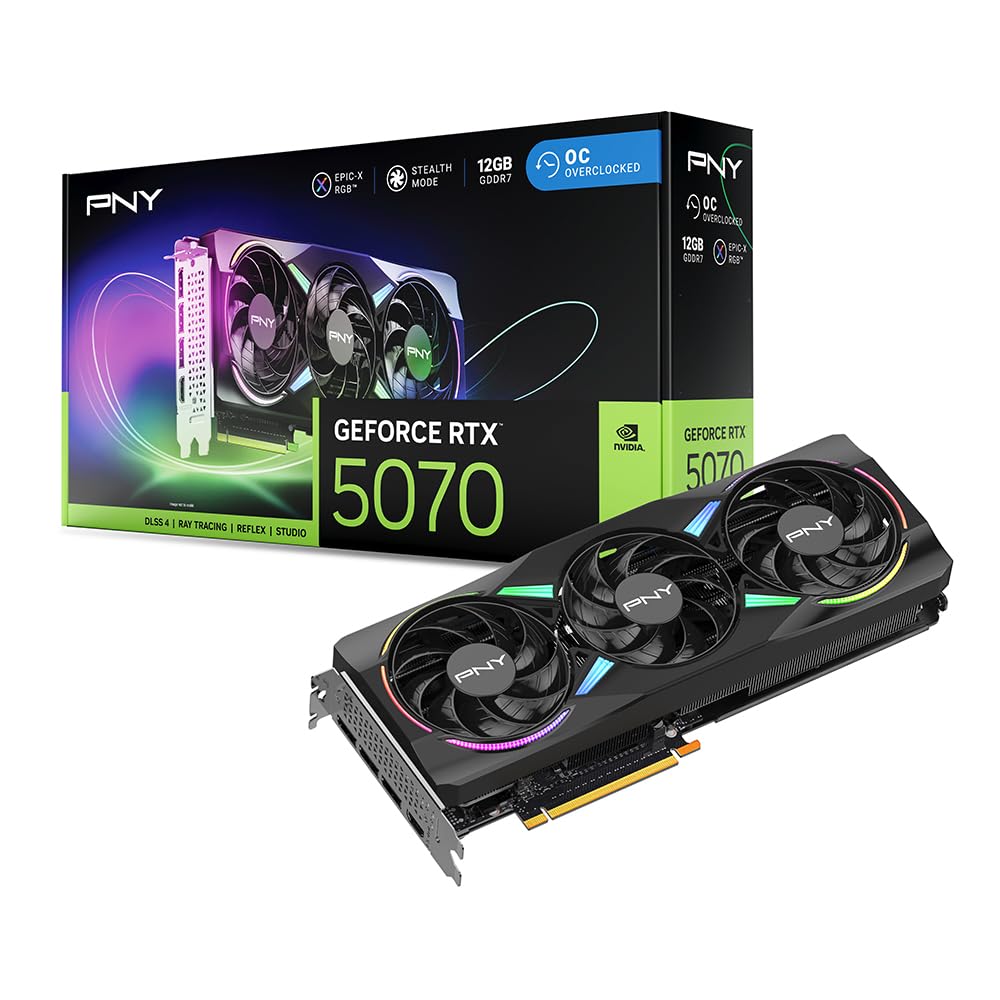
The PNY RTX 5070 Epic-X OC brings NVIDIA’s Blackwell architecture to the 1440p battlefield with 12GB of GDDR7 memory on a 192-bit interface, delivering 672 GB/s of memory bandwidth that eliminates texture streaming bottlenecks entirely. The card ships with an 8% factory overclock hitting 2685 MHz boost, and customer benchmarks confirm significant real-world gains over the RTX 4070 Super in raw rasterization, with higher frame rates even before enabling DLSS or frame generation. The 2.4-slot triple-fan design keeps thermals under control while remaining SFF-ready for small builds.
DLSS 4 is the headline feature for 1440p gamers who value ray tracing. The multi-frame generation technology can effectively double perceived frame rates in supported titles, turning 60 FPS path-traced experiences into buttery 120+ FPS visuals at 1440p. The fourth-gen ray tracing cores handle path-traced scenes in Cyberpunk 2077 and Alan Wake 2 with noticeably better efficiency than previous generations. The 16-pin power adapter supports standard dual 8-pin PSU connections, making it compatible with most modern power supplies.
Customer reports note the card runs exceptionally quiet under max load and fits in smaller cases like the HP Z4-G4 mini tower. The PNY Epic-X series has historically offered strong binning for good overclocking headroom, and this 5070 variant continues that trend with extra MHz available through manual tuning. If you want the absolute best ray tracing experience at 1440p without stepping up to the 5070 Ti price tier, the PNY RTX 5070 Epic-X is the logical step up from AMD’s RX 9000 series.
Why it’s great
- DLSS 4 transforms 1440p ray tracing into high-frame-rate gaming
- 12GB GDDR7 on 192-bit bus eliminates texture streaming issues
- Outperforms RTX 4070 Super in raw performance and thermals
Good to know
- Higher price tier compared to 16GB AMD alternatives
- Requires careful case clearance check despite SFF-friendly design
9. GIGABYTE GeForce RTX 5070 WINDFORCE OC SFF 12G

The GIGABYTE RTX 5070 WINDFORCE OC pairs the powerful Blackwell architecture with the same triple-fan WINDFORCE cooling that made its AMD counterpart a hit, creating a premium 1440p solution that stays below 75°C on max settings while running quieter than the previous-generation RTX 2080s it replaces. The 11.1-inch length is standard for a high-end card, but the NVIDIA SFF-ready certification means it fits in cases specifically designed for compact high-performance builds. The no-nonsense design omits RGB entirely, appealing to gamers who want a professional look with excellent thermal performance.
At 1440p with a 180Hz HDR monitor, this card reaches the full refresh rate in most titles at max settings, including demanding shooters and open-world RPGs. The 12GB GDDR7 VRAM on a 192-bit bus provides the memory bandwidth needed to maintain consistent frame pacing in high-detail scenes, and the PCIe 5.0 interface ensures no bandwidth bottlenecks even with future CPU upgrades. The blow-through fin design helps exhaust heat out of the case, keeping overall system temperatures lower than traditional closed coolers.
Customer reviews highlight the significant temperature drop compared to older cards like the RTX 3080, with idle temps around 42°C and load temps staying in the mid-60s. The dual-slot profile makes it compatible with standard ATX motherboards without blocking additional PCIe slots. For 1440p builders who want the combination of Blackwell architecture, DLSS 4 support, and silent triple-fan cooling in a single package, the GIGABYTE WINDFORCE OC is the premium sweet spot.
Why it’s great
- Runs 1440p at 180Hz max settings with minimal fan noise
- DLSS 4 and Blackwell architecture for future ray tracing support
- WINDFORCE triple-fan cooling keeps thermals well below 75°C
Good to know
- No RGB lighting may disappoint users wanting aesthetic customization
- Slightly longer at 11.1 inches, requires case compatibility check
10. ASUS SFF-Ready Prime NVIDIA GeForce RTX 5070 12GB

The ASUS Prime RTX 5070 takes the Blackwell architecture and optimizes it specifically for SFF builds without cutting corners on cooling or performance. The 2.5-slot design with axial-tech fans featuring barrier rings pushes air through a dense fin stack, keeping the GPU at around 67°C under full gaming load. The phase-change GPU thermal pad ensures optimal heat transfer that improves as the card warms up, maintaining boost clocks during long 1440p sessions. The 12-inch length is the largest in this SFF-focused tier, so double-check your chassis dimensions before buying.
Competitive 1440p gaming is where this card shines. Paired with a 7800X3D processor, it delivers smooth frame rates in competitive titles while having enough headroom for occasional AAA gaming at high settings. The dual BIOS switch lets owners toggle between Performance and Quiet modes depending on whether they prioritize silence or maximum clock speeds. Manual overclocking yields around 10% extra performance with +300 core and +1500 VRAM adjustments, and dropping the power limit to 85% preserves most performance while reducing heat output.
For creative professionals who also game, the card handles CAD workloads and video rendering without issue. The clean jet-black design integrates well into dark-themed builds, and the sturdy construction prevents PCB flex even in vertical mounting orientations. The 3-year warranty from ASUS adds peace of mind for buyers planning to keep this card for multiple upgrade cycles. If you need RTX 5070 performance in an SFF build and want the extra OC headroom of ASUS’s Prime series, this is the card to target.
Why it’s great
- Excellent OC headroom with 10% extra performance possible
- Phase-change thermal pad maintains consistent boost clocks
- SFF-ready design fits small builds while maintaining cooling
Good to know
- 12-inch length is long for SFF cards, verify case compatibility
- Runs warmer in quiet BIOS mode than performance profile
11. MSI Gaming RTX 5070 12G Ventus 2X OC

The MSI Ventus 2X OC RTX 5070 delivers Blackwell architecture in a compact dual-fan package that measures just 236mm, making it one of the few RTX 50 series cards that fits comfortably in smaller mid-tower cases. The TORX Fan 5.0 design uses ring-arc blades to stabilize high-pressure airflow, and the nickel-plated copper baseplate transfers heat from the GPU and memory into a dense fin stack that keeps load temperatures at 65–72°C. This card runs significantly cooler than the previous-generation RTX 3070 while offering 45–60% better performance at 1440p and 4K resolutions.
The 12GB GDDR7 VRAM at 28 Gbps on the 192-bit interface delivers 672 GB/s bandwidth, which eliminates the memory bottleneck that limited 8GB cards in modern 1440p titles. Games like Cyberpunk 2077 and Starfield now run above 60 FPS at Ultra settings with ray tracing enabled, and DLSS 4 multi-frame generation transforms the experience into buttery smooth 100+ FPS gameplay. Media server enthusiasts report the card’s low power consumption makes it viable for home server builds running Frigate and local LLMs, extending the use case beyond pure gaming.
The metal backplate with airflow vent design strengthens the card while allowing heat to escape through the back of the PCB, reducing overall case temperature. The 650W PSU requirement is standard for this performance tier, and the included dual 8-pin adapter ensures compatibility with existing power supplies. For 1440p users upgrading from RTX 3070 or similar cards, the MSI Ventus 2X offers the biggest generational leap in performance while retaining a physically compact footprint that doesn’t compromise on cooling.
Why it’s great
- Compact 236mm length fits smaller cases while running cool at 65-72°C
- DLSS 4 eliminates previous-gen VRAM bottlenecks at 1440p
- 45-60% improvement over RTX 3070 in real-world 1440p gaming
Good to know
- Dual-fan design offers less overclocking headroom than triple-fan models
- Requires 650W PSU and 16-pin cable adapter for installation
FAQ
How much VRAM do I really need for 1440p gaming in 2025?
Is AMD RDNA 4 or Nvidia Blackwell better for 1440p ray tracing?
Will a dual-fan GPU be loud enough for 1440p gaming?
Final Thoughts: The Verdict
For most users, the best graphics card for 1440p winner is the Sapphire Pulse RX 9060 XT 16GB because it delivers the perfect balance of 16GB VRAM capacity, cool 55-60°C thermal performance, and power efficiency at a price that undercuts Nvidia equivalents while still hitting ultra settings in modern titles. If you want uncompromising ray tracing performance and DLSS 4 upscaling, grab the PNY RTX 5070 Epic-X OC 12GB. And for small-form-factor builds where every millimeter counts, nothing beats the PowerColor Reaper RX 9060 XT 16GB at 200mm length.