
A duck call that sounds amazing on the shelf but locks up with frozen spit on a 30-degree marsh morning is worse than useless—it costs you the only seconds you have to finish a flock. The narrow window of a working bird is defined by whether your call can deliver a clean hail call or a soft feed chuckle without sticking, freezing, or going airy. This guide walks through seven distinct calls built to handle the real-world conditions that separate a limit from a miss.
I’m Min — the co-founder and writer behind Gadgets Feed. I’ve spent countless hours breaking down the reed configurations, toneboard materials, and barrel construction that determine whether a call performs under wet timber pressure or fades when you need it most.
Whether you hunt open water, green timber, or public-land pressure, the best 737 duck call for your rig needs to pair the right reed count with a barrel that resists moisture and delivers consistent tone across volume ranges.
How To Choose The Best 737 Duck Call
Selecting a duck call comes down to understanding how reed count, barrel material, and toneboard design interact with your hunting environment. A call that crushes in open water can sound thin in flooded timber, and a timber specialist might lack the projection to turn birds over a wide river. Focus on three core specs.
Reed Configuration: Double vs Single
Double-reed calls are more forgiving with air pressure and produce a wider range of sound with less effort, making them ideal for hunters still developing breath control. Single-reed calls demand precise air modulation but reward the experienced caller with a raspier, more natural duck tone that cuts through wind. Most premium timber calls are single-reed because they allow finer control over the feeding chuckle and greeting call.
Barrel Material: Polycarbonate, Acrylic, or Wood
Polycarbonate barrels are lightweight, durable, and resist temperature-related warping, making them a solid choice for wet-weather hunts. Acrylic barrels offer superior volume and a crisp, bright tone that carries across open water, but they can be heavier and more brittle in extreme cold. Wood barrels, particularly bocote or cocobolo, produce a warm, nasal timber sound that many hunters swear by, but they require careful maintenance to prevent cracking from moisture absorption.
Toneboard and Wedge Design
The toneboard shapes the air channel that passes over the reed. Spit-Tech toneboards use a textured surface that prevents the reed from sticking when moisture builds up inside the call—critical for early-season humidity or late-season freezing conditions. Friction-fit wedge systems let you adjust reed tension without tools, allowing on-the-fly tuning as conditions change throughout the day.
Quick Comparison
On smaller screens, swipe sideways to see the full table.
| Model | Category | Best For | Key Spec | Amazon |
|---|---|---|---|---|
| Drake Slayer Double Reed | Acrylic Premium | Full volume range, open water & timber | Double-reed acrylic, hand tuned | Amazon |
| Rich-n-Tone RNT Daisy Cutter | Single-Reed Wood | Timber calling, realistic feed chuckle | Single-reed bocote wood construction | Amazon |
| Echo Diamonwood Timbers | Wood Timber | Close-range timber, soft calling | Double-reed wood, 3.84 oz | Amazon |
| Duck Commander Classic Commander | Wood Double-Reed | Timber, low nasally raspy sounds | Double-reed wood, friction fit wedge | Amazon |
| Buck Gardner Double Nasty Combo | Polycarbonate 2-Pack | Timber & marsh, wood duck hunting | Double-reed polycarbonate, Spit-Tech | Amazon |
| Timber Poly Double Reed | Polycarbonate Budget | Green timber, close-in calling | Double-reed polycarbonate, 4 oz | Amazon |
| Duck Commander Goose Call | Polycarbonate Goose | Canada goose hunting, short-reed | Short-reed polycarbonate, finger groove | Amazon |
In‑Depth Reviews
1. Drake Slayer Double Reed Duck Call
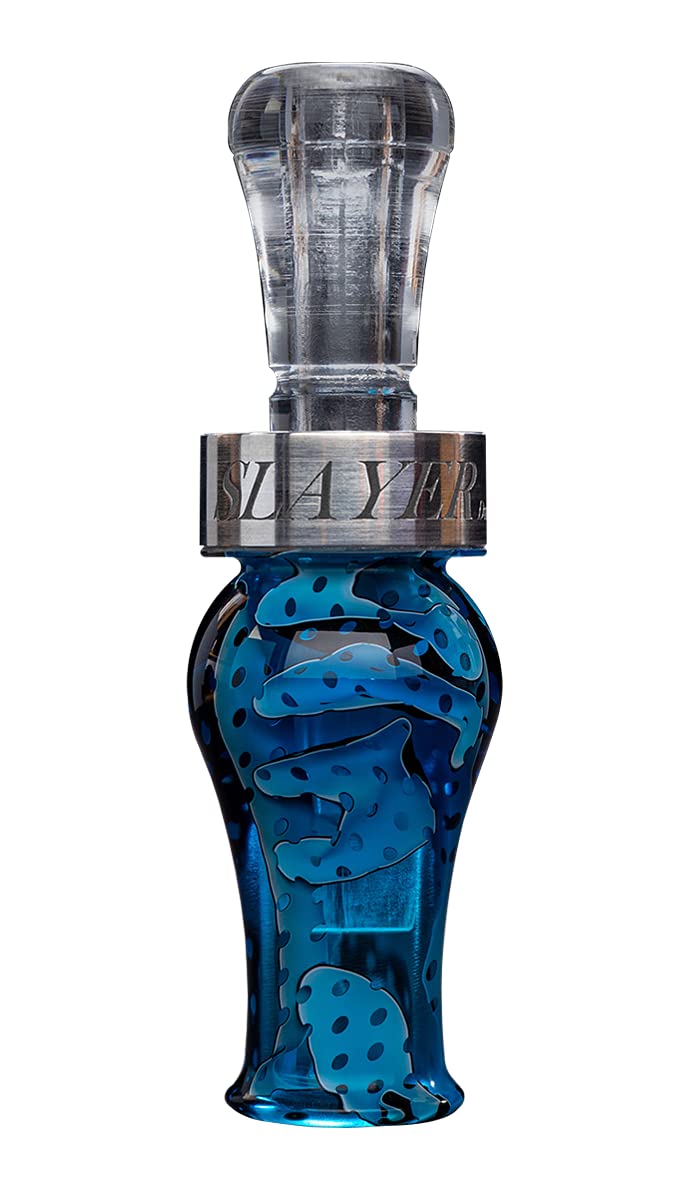
The Drake Slayer is an acrylic double-reed call tuned for hunters who need both raw volume and nuanced low-end control. Its acrylic barrel and insert produce a bright, cutting tone that carries across open water while the double-reed configuration keeps the call forgiving for hunters still mastering the bouncing hen and refuge feed sounds. Owner Bill Ayer personally tunes each unit, and customer service responses confirm the brand’s commitment to fit and finish.
The Blue Wing Mesh color option adds visual distinction on the lanyard, but the real win is the full volume range this call delivers. You can push it hard for a hail call over a distant flock or throttle back for soft feeder chuckles in tight timber. The acrylic body resists moisture absorption, so the tone remains consistent even after hours of wet-weather hunting.
Experienced callers will appreciate the control this call offers when shaping the bouncing hen and Cajun squeals—sounds that require precise air modulation. The double-reed design also reduces the risk of sticking compared to single-reed acrylic calls, making it a reliable choice across varying temperatures.
Why it’s great
- Full volume range from soft timber feeds to loud open-water hails
- Hand-tuned in the USA with excellent quality control
- Acrylic barrel resists moisture and delivers consistent tone
Good to know
- Premium price point compared to polycarbonate alternatives
- Acrylic feels heavier on the lanyard than polycarbonate calls
2. Rich-n-Tone RNT Daisy Cutter Bocote Wood Duck Call
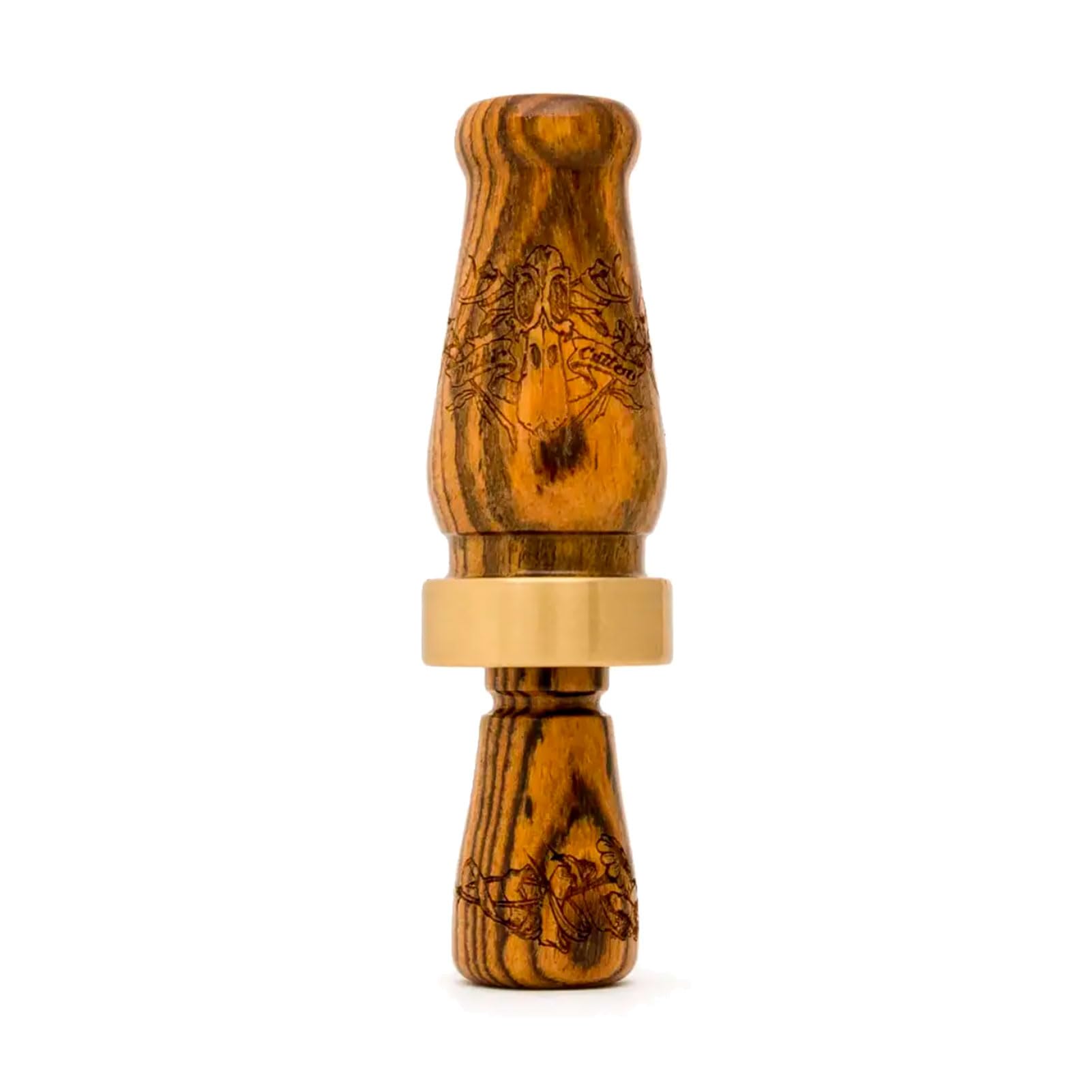
The RNT Daisy Cutter is a single-reed wood call built from bocote, a dense Central American hardwood prized for its rich tonal warmth and natural oil resistance. Single-reed calls require more deliberate breath control than double-reed models, but the payoff is a raspy, nasal timber sound that mimics a mature hen mallard with authenticity that polycarbonate calls struggle to match. The bocote barrel also adds a visual warmth that stands out on a lanyard of plastic calls.
Hunters report that this call has excellent range, allowing you to work birds from a distance and then switch to soft feeding sounds as they commit. The single-reed design rewards practice—once you dial in the air pressure sweet spot, the Daisy Cutter produces a feeder chuckle that drives dogs crazy. It is best suited for timber and marsh environments where the wood tone cuts through cover without sounding shrill.
The bocote wood requires slightly more care than acrylic or polycarbonate. Avoid leaving it in direct sunlight or a hot truck cab for extended periods, as temperature swings can affect the fit between the barrel and insert. With proper maintenance, this call will only improve as the wood acclimates to your breath pattern over multiple seasons.
Why it’s great
- Warm, nasal timber tone that sounds incredibly natural
- Beautiful bocote wood grain with a smooth hand feel
- Excellent range from distant hails to close feeder chuckles
Good to know
- Single-reed design requires practice for consistent tone
- Wood barrel needs care to prevent cracking from moisture or heat
3. Echo Diamonwood Timbers Double Reed Duck Call

The Echo Diamonwood Timbers is a wood-crafted double-reed call designed specifically for close-range timber hunting. Weighing just 3.84 ounces, it feels balanced on the lanyard and produces sounds that reviewers consistently describe as comparable to calls costing two to three times as much. The double-reed design makes it forgiving for newer callers while still delivering the low-end rasp and feeder chuckle that experienced hunters demand in timber situations.
Reviewers highlight the feeder chuckle as a standout feature—this call produces a realistic feeding chatter that turns birds that have already passed over decoys. The tonal range covers soft greeting calls and mid-range hails, though it lacks the top-end projection of acrylic calls for long-distance open-water work. It excels in green timber, flooded brush, and marsh edges where subtlety matters more than raw volume.
Echo backs this call with an excellent warranty, and customer feedback confirms consistent quality across production runs. The natural wood color blends well with timber environments, reducing glare that might spook wary birds. If you hunt primarily in timber and want a call that sounds premium without the premium price, this is the sweet spot.
Why it’s great
- Timber tone that rivals calls costing two to three times more
- Excellent feeder chuckle that finishes birds
- Lightweight wood construction feels natural on the lanyard
Good to know
- Limited high-pitch range for open water hail calling
- Wood barrel requires periodic oiling to prevent drying
4. Duck Commander Classic Commander Double Reed Call
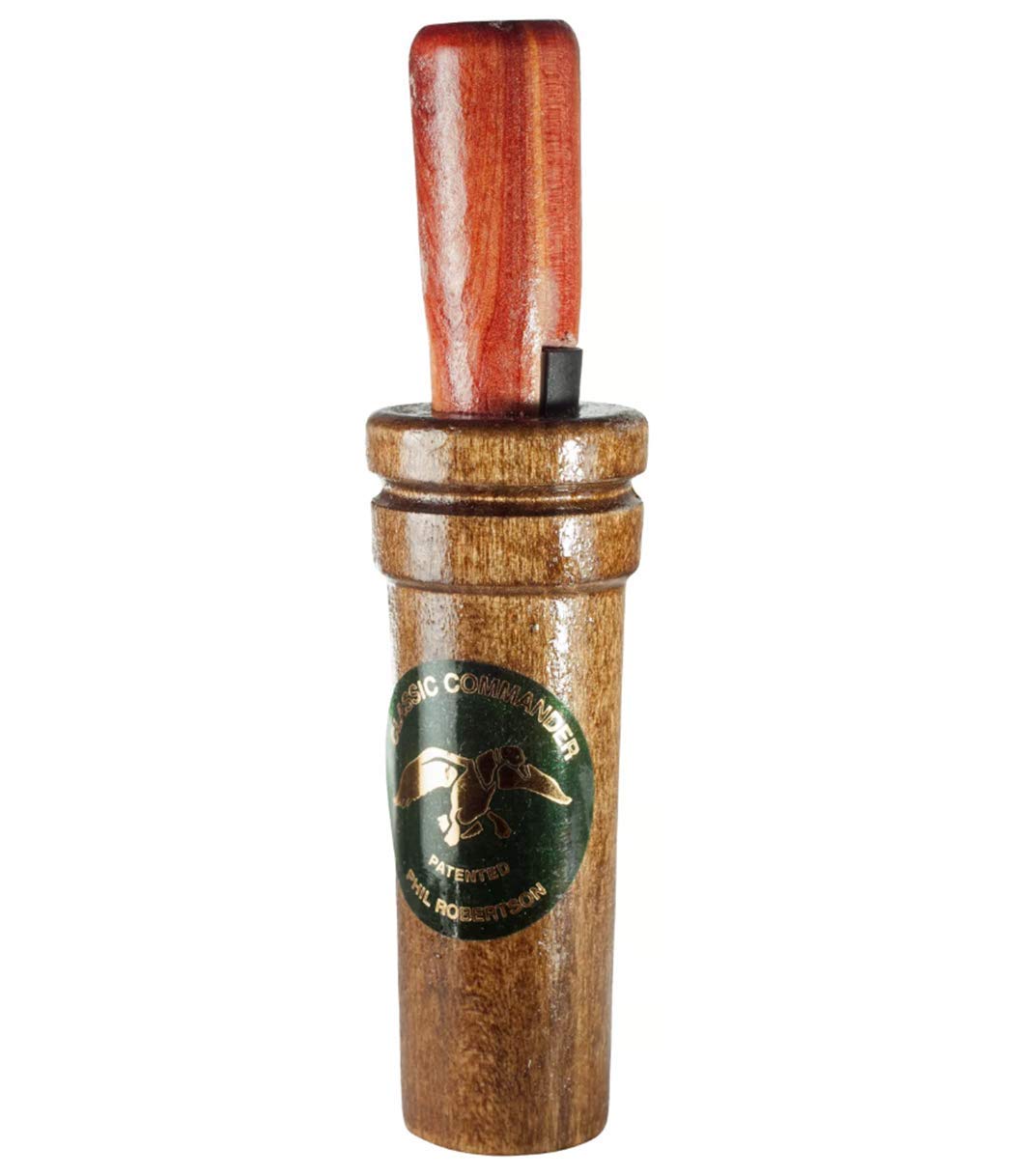
The Duck Commander Classic Commander is the call that built a dynasty—literally. Phil Robertson’s patented double-reed friction-fit system creates a low, nasally, raspy sound that works exceptionally well in timber environments. Each call is unique because the wood variations mean no two barrels sound exactly the same, giving your calling a signature tone that birds haven’t heard from other hunters. The all-wood four-piece construction with riveted reeds feels substantial in the hand.
The friction-fit wedge allows you to adjust reed tension without tools, which is critical for fine-tuning the call as temperature and humidity fluctuate. Reviewers note that the wedge can be very tight from the factory, so keep it slightly exposed to avoid cracking the barrel. The Double Commander produces a realistic mallard sound that outperformed other calls in blind tests, and hunters report killing limits running this call as their primary timber rig.
Some reviewers note that the call can sound too high-pitched initially for certain regions, but after a short break-in period and wedge adjustment, the tone settles into the classic Duck Commander sound. The absence of an instructional DVD in some packages is a minor complaint, but the call itself delivers the heritage and performance that made the Robertson name famous in waterfowl circles.
Why it’s great
- Patented friction-fit wedge allows tool-free tuning
- Wood variations make each call sound unique
- Proven track record in real-world timber hunting
Good to know
- Wedge can be very tight; careful adjustment needed
- Some units may need break-in before achieving ideal tone
5. Buck Gardner Double Nasty Duck Call & Wood Duck Call Combo

The Buck Gardner Double Nasty Combo gives you two specialized calls in one kit: a Double Nasty mallard double-reed call with Spit-Tech toneboard and a separate wood duck call. The Spit-Tech toneboard uses a textured surface that prevents the reed from sticking when moisture builds up—a common failure point in wet-weather hunts. The double-reed mallard call is forgiving with air pressure and produces loud, raspy hail calls alongside soft feeding sounds, making it versatile across timber and marsh environments.
The wood duck call produces the high-pitched whines and squeals needed to attract wood ducks and teal, which is a narrower but important niche for hunters working flooded timber and beaver sloughs. Both calls are built from durable polycarbonate that withstands temperature swings without warping. The combination saves you money compared to buying each call separately, and because they use different tone profiles, you can respond to whatever species shows up in the decoys.
Some reviewers report that the Double Nasty can freeze up in extended cold conditions, requiring a tap on the shotgun stock to clear the reed. This is a common issue with polycarbonate calls in sub-freezing temperatures, and the Spit-Tech reduces but does not eliminate the risk. The wood duck call is consistently praised for its loud, clear tone that carries well in thick cover.
Why it’s great
- Two specialized calls in one budget-friendly kit
- Spit-Tech toneboard reduces moisture sticking
- Durable polycarbonate handles rough field use
Good to know
- Mallard call can freeze up in extreme cold
- Wood duck call is very loud, limited to that species
6. Timber Poly Double Reed Duck Call

The Timber Poly Double Reed is the entry-level call that punches well above its weight class. Made by Echo Calls, this polycarbonate double-reed is designed specifically for green timber and close-in calling situations. Reviewers consistently rank its performance alongside calls costing three times as much, noting that it does not lock up in cold conditions like cheaper alternatives. The double-reed design makes it extremely easy to blow, so beginners can produce clean quacks and feeding chuckles within minutes of picking it up.
Versatility is this call’s superpower. In open water, it delivers enough volume to hail distant birds, and in swamps and timber, softer blowing produces a realistic ducky sound that turns birds on public land. The polished aluminum band adds durability and a subtle shine that doesn’t spook birds. At just 4 ounces, it stays light on any lanyard configuration.
Some users notice a slight sticking after prolonged blowing, but a quick tap on the shotgun stock clears the reed without losing your setup. The call holds up well in both warm and icy conditions, and the Bourbon/Water color option blends naturally with timber environments. For hunters on a tight budget or those buying their first call, this is the safest bet in the category.
Why it’s great
- Performance rivals calls costing significantly more
- Does not lock up in cold conditions
- Easy to blow for beginners, versatile across environments
Good to know
- Can stick slightly during extended calling sessions
- Polycarbonate lacks the warmth of wood barrel tone
7. Duck Commander Goose Call

The Duck Commander Goose Call is a short-reed polycarbonate call engineered to produce deep, raspy Canada goose sounds. The short-reed design requires less air volume to achieve the low-end growl that brings geese into gun range, and the finger groove on the barrel provides a secure grip when making quiet, subtle calls. This is a dedicated goose call, not a duck call, so it fills a specific role on your lanyard for mixed-species hunts.
Reviewers praise its durability across two seasons of hard use, and beginners find it approachable because the short reed produces sound with less practice than longer-reed goose calls. The worn-in guts style delivers natural goose clucks and moans without sounding mechanical. Some experienced callers note that the call requires significant air to break over into the deeper register, which can be limiting when trying to produce soft feeding murmurs.
The main criticism is that the call can be difficult to tune in the field—some reviewers report it being too loud and high-pitched for soft calling situations. This is common with budget-friendly goose calls, and the trade-off is reliability and ease of use for the price. If you hunt fields with mixed duck and goose opportunities, this call gets the job done without breaking the bank.
Why it’s great
- Deep, raspy Canada goose tone from a short-reed design
- Finger groove provides secure grip for quiet calling
- Durable construction survives two seasons of field use
Good to know
- Requires significant air to break into deeper register
- Difficult to tune for soft, subtle calling situations
FAQ
Which reed configuration is best for a beginner duck hunter?
Will a wood duck call work for mallards and other puddle ducks?
How do I prevent my duck call from freezing up in cold weather?
What is the difference between timber calls and open water calls?
Final Thoughts: The Verdict
For most hunters, the best 737 duck call is the Drake Slayer Double Reed because its hand-tuned acrylic construction delivers the full volume range needed to work birds in both open water and tight timber without sacrificing forgiveness. If you want the warm, nasal timber tone that comes from a single-reed wood call, grab the Rich-n-Tone RNT Daisy Cutter. And for budget-conscious hunters who need a versatile call that punches above its price, nothing beats the Timber Poly Double Reed.