
Every second counts when a loved one with dementia or limited mobility tries to get out of bed unsupervised. A bed pad alarm is the silent safety net that alerts you the instant pressure leaves the pad — before a fall happens, not after. These systems use a pressure-sensitive mat placed under the fitted sheet, connected to a caregiver pager that buzzes or rings elsewhere in the house, letting you respond without alarming the person in bed.
I’m Min — the co-founder and writer behind Gadgets Feed. I’ve spent countless hours comparing pressure-pad sensitivity, pager range, false-alarm rates, and durability across dozens of bed exit alarm systems to find the ones that actually earn their place beside a bed.
This guide breaks down the top-rated bed pad alarm for the elderly systems, comparing wireless range, pad size, volume control options, and which models reduce false alerts from shifting during sleep.
How To Choose The Best Bed Pad Alarm For The Elderly
Not all bed pad alarms deliver the same peace of mind. Some trigger false alerts from a simple turn in bed, while others fail to detect a slow, shuffling exit. Focus on the three variables that determine whether a system actually prevents falls: pad sensitivity, alert method, and placement flexibility.
Pad Sensor Type and Placement
The two main sensor technologies are weight-sensing pads and motion-detector beams. Weight-sensing pads use a pressure switch inside a thin vinyl mat — the alert triggers when the person’s weight lifts off the pad. Motion-detector systems, by contrast, use a passive infrared beam placed on the floor or bedside; they trigger when a leg crosses the beam. Weight-sensing pads are more reliable for bed use because they detect the actual act of getting up rather than a swinging limb, but they require precise placement. A pad under the shoulders provides the earliest alert, while placement under the hips allows more turning without false triggers.
Wireless Pager Range and Alert Modes
The pager’s effective range determines how far you can roam while still receiving alerts. Most wireless bed pad alarms claim between 300 and 400 feet of open-air range, but walls, floors, and interference from appliances can cut that distance. A pager that offers both sound and vibration modes is critical — vibration mode lets you stay aware without waking others, while a loud tone (90 dB or higher) ensures you hear it even while asleep or in another room. Systems with adjustable volume or silent vibration-only settings give caregivers more flexibility across day and night shifts.
False Alarm Resistance and Pad Durability
The leading cause of caregiver alarm fatigue is a pad that triggers when the user simply rolls over or scoots to the edge. Look for pads with a slight engineered delay of one to three seconds — this brief window lets the pad distinguish between repositioning and actual exit attempts without sacrificing response time. Pad material also matters: incontinence-resistant vinyl surfaces that wipe clean and resist cracking extend the pad’s usable life beyond six months. Some premium models place the sensor entirely under the mattress, eliminating crinkle noise and pad shifting entirely.
Quick Comparison
On smaller screens, swipe sideways to see the full table.
| Model | Category | Best For | Key Spec | Amazon |
|---|---|---|---|---|
| Lunderg Under Mattress | Under-Mattress | Patients who refuse pads | PreRise early-alert technology | Amazon |
| Smart Caregiver Wireless Bed Pad | Weight-Sensing | Expandable multi-sensor network | 300 ft. range, supports 6 sensors | Amazon |
| Lunderg Wireless Bed Alarm | Wireless Pad | No in-room noise | 400 ft. pager range | Amazon |
| Smart Caregiver Bed Exit Alarm | Wireless | USA customer support | Vibrate + sound pager | Amazon |
| Nesthao Upgraded Sensor | Motion Sensor | Non-pad floor detection | 918 ft. open-air range | Amazon |
| Patient Aid Bed Alarm | Wired Pad | Low cost + two sound options | 10″ x 30″ tear-resistant pad | Amazon |
| Sammons Preston Magnet Alarm | Clip-On Cord | Simple cord-and-clip design | 105 dB max volume | Amazon |
In‑Depth Reviews
1. Lunderg Under Mattress Bed Alarm for Elderly
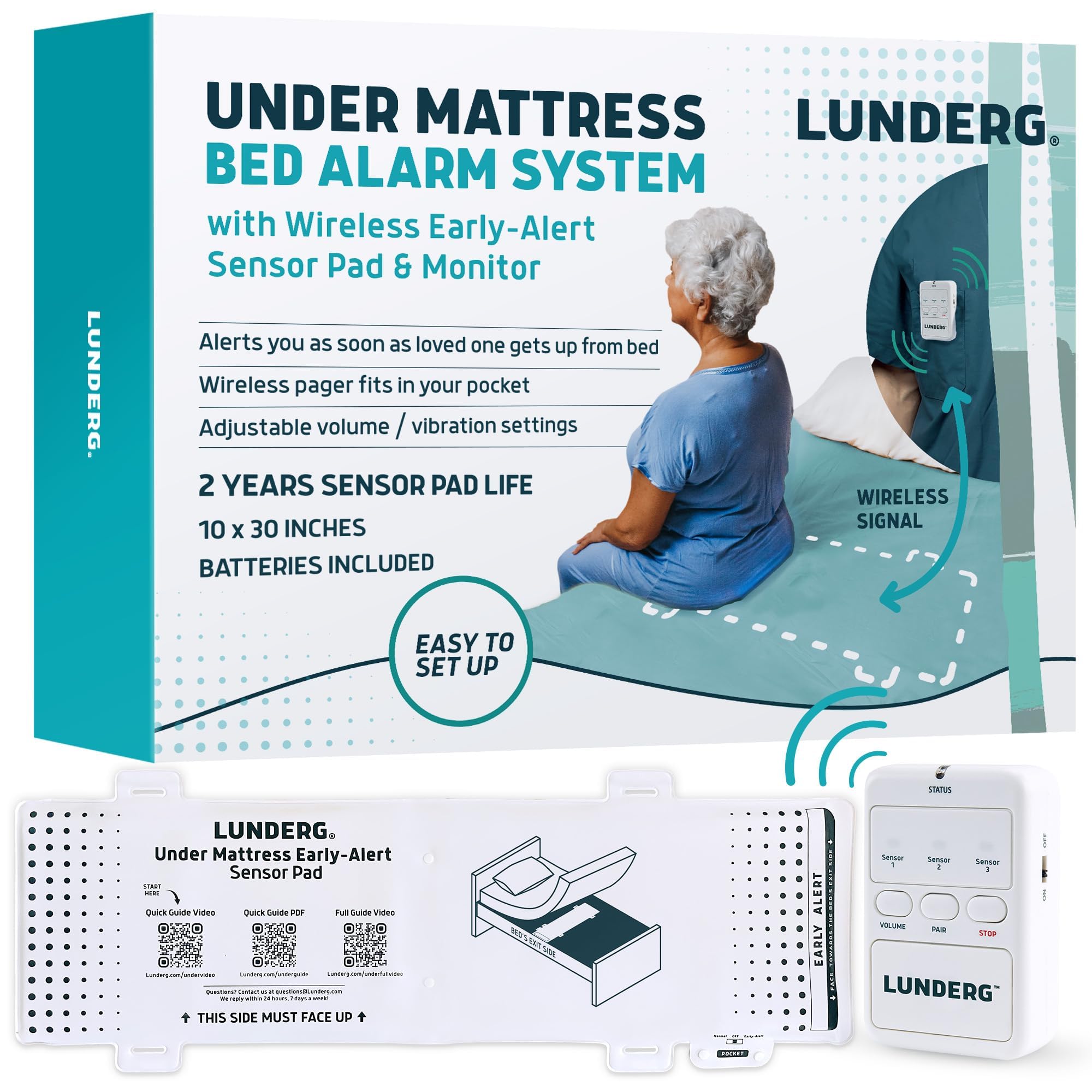
The Lunderg Under Mattress system solves the two biggest problems with traditional bed pad alarms: the patient can see or feel the pad, and the pad crinkles under the sheet. By placing the sensor under the mattress, the system becomes completely invisible and silent at the bedside. The patented PreRise technology alerts you before your loved one stands up — not after their feet touch the floor — which is the critical window for fall prevention. Designed for mattresses 13 inches or thinner, the sensor pad lasts up to 15 months, far longer than the typical 45-day wearable sensor life.
The included pager offers adjustable volume, vibration-only mode, and a 300-foot range, so caregivers can carry it anywhere in a large home. The system uses no Wi-Fi, no app, and no bedside noise that could startle or agitate a dementia patient. Reviewers consistently note that the under-mattress pad prevents the patient from pushing it away or refusing it, making this the only viable option for stubborn or combative individuals who fight every visible monitoring aid.
Batteries are included for both the pad module and the pager, and the unit is FSA/HSA eligible. The only practical limitation is mattress thickness — pads thicker than 13 inches may dampen the pressure sensitivity. For caregivers dealing with a loved one who refuses bed pads, this invisible system is the most reliable fall prevention tool available.
Why it’s great
- Completely invisible under mattress — no pad to refuse or push away
- PreRise technology alerts before the person stands, not after
- 15-month sensor pad lifespan beats most competitors by a wide margin
Good to know
- Works only with mattresses 13 inches or thinner
- Pad batteries are non-replaceable; whole pad must be replaced
2. Smart Caregiver Wireless Bed Pad Alarm System
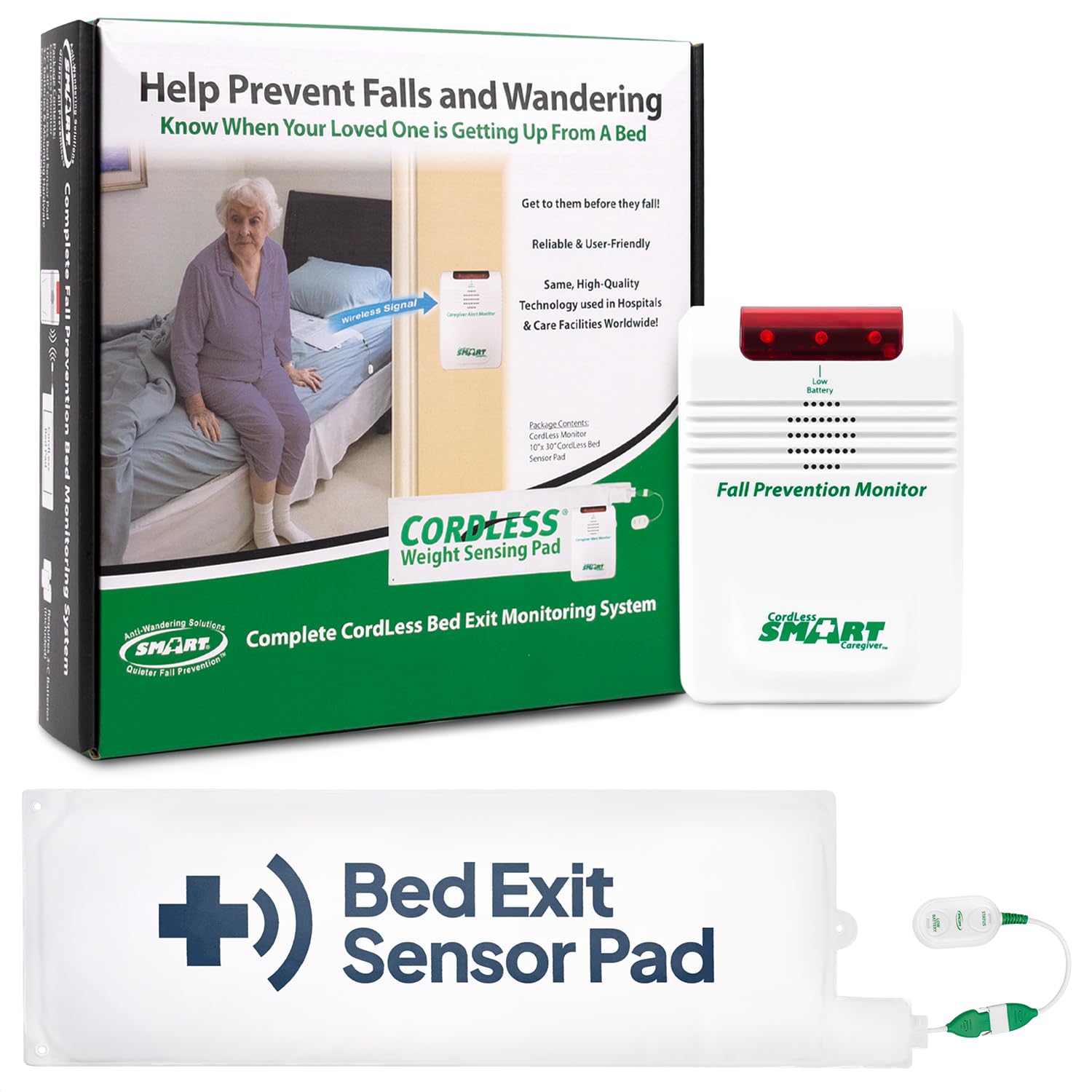
Smart Caregiver’s wireless bed pad system is built for caregivers who need to monitor multiple risk zones. The base kit includes one 10-by-30-inch weight-sensing pad and one wireless pager, but the pager can pair with up to six different Smart Caregiver sensors — including chair pads, floor mats, motion sensors, and door exit alarms. The pad uses a slight engineered delay of two to three seconds to prevent false alerts from rolling or repositioning in bed, a detail that matters when every sound triggers a response.
The pager operates on a 300-foot range with three volume settings and runs on three C batteries. Reviewers praise the easy setup and the peace of mind from being able to take the pager to the backyard or the opposite end of a large house. The vinyl pad surface wipes clean and is latex-free, making it suitable for sensitive skin. Placing the pad under the shoulders provides the earliest alert — about a one- to two-second head start over hip placement, which is enough to reach the bedside before a fall.
One recurring note from long-term users is that the pad sensor can begin to crack or separate after roughly nine months of daily use, though the system carries a one-year warranty. For caregivers who want a single pager that covers the bed, the chair, and the doorway, this expandable ecosystem is the most practical mid-range investment.
Why it’s great
- Pager pairs with up to six sensors for whole-room fall prevention
- Engineered delay reduces false alerts from turning in bed
- 300-foot wireless range covers most homes easily
Good to know
- Pad may crack or separate after 9-12 months of heavy use
- No AC adapter included — runs entirely on C batteries
3. Lunderg Wireless Bed Alarm System for Elderly

The Lunderg Wireless Bed Alarm System keeps all alert noise on the caregiver’s pager and zero noise in the patient’s room. This design aligns with CMS guidelines that phased out in-room bed alarms in 2017, citing patient agitation and dignity concerns. The 10-by-30-inch pad uses a foam interior with an incontinence-resistant vinyl surface, and the system includes anti-slip stickers to keep the pad from shifting — the single most common cause of false alarms in budget-friendly systems.
The pager reaches up to 400 feet in open air and offers three settings: high volume, low volume, and vibration-only. The vibration mode is loud enough to wake a sleeping caregiver without disturbing the rest of the household. Setup is completely wireless — no Wi-Fi, no app, no pairing beyond inserting the included batteries. The pad triggers when the patient’s weight lifts off the sensor, alerting the pager almost instantly. Reviewers specifically note the absence of false alarms compared to the louder, wired systems they replaced.
Lunderg backs the system with a 24/7 human-staffed support line, which matters when a system needs troubleshooting at 3 AM. The pad, pager, batteries, wall mount bracket, and adhesive strips all ship in the box. For caregivers who want the reassurance of no bedside noise and a reliable alert tone, this system hits the premium sweet spot without crossing into over-engineering.
Why it’s great
- Zero sound in patient room — no startling or agitation
- 400-foot pager range with vibration-only option
- Anti-slip stickers dramatically reduce false alerts
Good to know
- May lose pairing periodically and require re-sync
- Cannot be used as an early-alert system — triggers on weight lift
4. Smart Caregiver Bed Exit Alarm with Wireless Pager
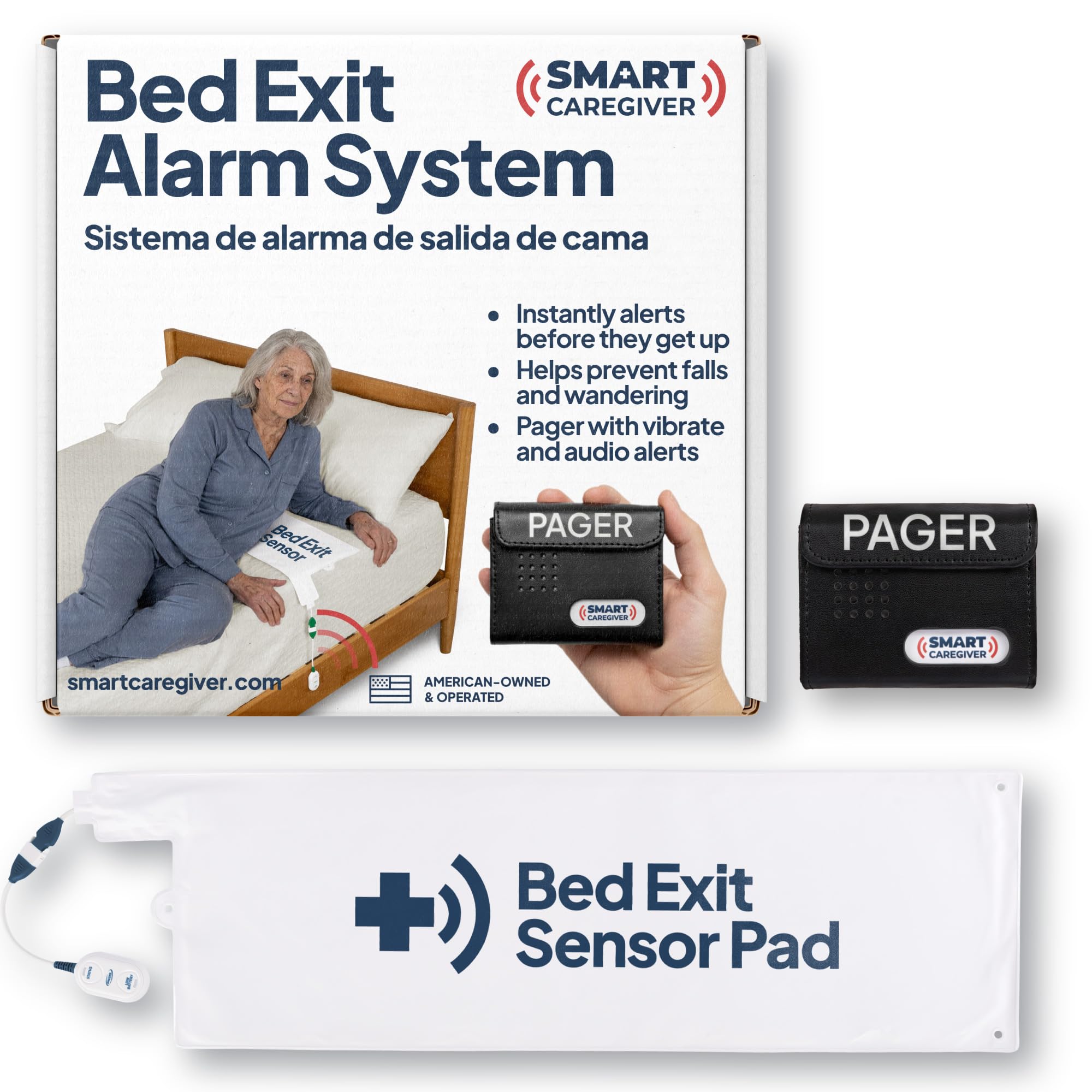
The Smart Caregiver Bed Exit Alarm delivers a reliable weight-sensing pad and a pager with both vibrate and tone alerts at a price point that undercuts most wireless systems. The 10-by-30-inch pad uses a full-coverage pressure sensor that triggers when the patient’s weight leaves the pad, and the pager includes a clip for belt or pocket carry. The pager can also pair with up to six Smart Caregiver sensors, making it easy to add a chair pad or door sensor later without buying a new receiver.
The pad is designed to minimize false alarms through its large contact surface area — the wider sensor distributes pressure detection so that a simple shift in sleep position doesn’t trigger the alert. Placement under the shoulders gives the earliest possible warning, and the pager’s vibration mode is strong enough to feel through clothing. The system runs on two AA batteries included in the box, and the manufacturer is a U.S.-based company with 30 years of experience in fall prevention products, which means actual phone support when you need it.
Reviewers consistently mention that the pad can slip out of position under the fitted sheet, requiring a daily check or double-sided tape to keep it aligned. The alert tone is fixed — described by most as similar to a doorbell — and cannot be changed. For caregivers who value responsive customer support and a straightforward system that covers the basics without unnecessary complexity, this is the most balanced value pick.
Why it’s great
- Vibrate and sound pager with strong vibration motor
- U.S.-based customer support with actual phone assistance
- Pager supports up to six different sensor types
Good to know
- Pad tends to shift under sheet; needs daily re-check
- Alert sound is fixed and resembles a doorbell tone
5. Nesthao Upgraded Version Bed Sensor Alarm

The Nesthao system replaces the traditional pressure pad with a motion sensor placed on the floor under the bed. When the patient’s foot swings down and crosses the beam, the sensor triggers a wireless pager. This design completely eliminates the problems of pad shifting, incontinence damage, and patient discomfort from lying on a sensor pad — a major advantage for caregivers who have dealt with false alarms from wet pads or crinkling vinyl.
The sensor offers a 918-foot open-air range, far exceeding most pad-based systems, and the pager includes both LED lights and sound alerts. The system also supports dual power: alkaline batteries (included) or Micro USB, providing a backup if batteries die. Placement flexibility is another strong point — the motion sensor can also monitor a doorway, giving caregivers two use cases from one device. The sensor has a self-test cycle of about 20 seconds when first powered on, after which it enters full detection mode.
Reviewers note that the sensor beam is quite wide and may require DIY blinders or careful aiming to avoid triggering from pets or passing family members outside the intended detection zone. The volume, while adjustable, still registers as fairly loud even on the lowest setting. For caregivers who prefer a pad-free solution that avoids the hygiene and maintenance issues of bed sensors, the Nesthao motion sensor is a creative and affordable alternative.
Why it’s great
- No bed pad — eliminates crinkle noise, shifting, and incontinence damage
- 918-foot range is the longest in this comparison
- Dual power supply with USB backup
Good to know
- Wide sensor beam can false-alert from pets or nearby movement
- Lowest volume setting is still relatively loud
6. Patient Aid Bed Alarm with 10″ x 30″ Sensor Pad

The Patient Aid Bed Alarm is the most affordable wired system in this guide, and it earns its place through straightforward reliability. The 10-by-30-inch pad is made of advanced vinyl that resists tearing and water damage, and it connects to the alarm unit via a thin, flat wire that won’t tangle or snag. The alarm box offers two sound modes — alarm and music — at two volume levels: 80 dB and 90 dB, both loud enough to hear two rooms away.
Setup is quick: mount the alarm unit on the bed rail with the U-bracket, on the wall with the included screws, or on a flat surface with adhesive Velcro strips. Place the pad under the patient’s shoulders or buttocks, and press the test button for a three-second preview. A foot controller lets you silence the alarm without bending down, which matters during rushed nighttime responses. The system runs on a single 9-volt battery (included), but it lacks an AC adapter, so battery life typically spans one to two weeks depending on usage.
Reviewers consistently praise the one-button reset and the choice of tones — the music setting is less jarring for dementia patients. The wired design means no pairing issues, no wireless interference, and zero setup fuss. The major downside is that the alarm sounds in the patient’s room, which can startle a confused person and potentially contribute to fall risk. Caregivers managing this often pair it with a baby monitor to hear the alert from another room. For its price, it delivers dependable fall detection without any wireless complexity.
Why it’s great
- One-button reset is fast and simple during nighttime alerts
- Choice of alarm or music tone reduces patient agitation
- Tear-resistant vinyl pad wipes clean and resists incontinence damage
Good to know
- Alarm sounds in patient room — may startle and contribute to fall risk
- No AC adapter; 9V battery lasts one to two weeks
7. Sammons Preston Magnet Alarm

The Sammons Preston Magnet Alarm is not a pad-based system — it uses a spring-loaded clip and a magnetic cord that attaches to the patient’s clothing. When the patient stands and moves beyond the cord’s length (adjustable up to 30 inches), the magnet pulls away and triggers a 105 dB alarm. This simplicity makes it an excellent backup option or a solution for situations where a bed pad is impractical — for wheelchairs, recliners, or patients who sleep on their side and frequently shift off a pad.
The alarm unit is compact at 5 by 2 by 1.25 inches and clips to a bed rail, wheelchair frame, or any flat surface. The cord provides a 30-inch personal boundary, and the alarm offers two volume settings: 90 dB and 105 dB. A red LED flashes when the alarm triggers and also acts as a low-battery indicator. The unit passed an independent 500-drop test, and the battery door remains secure during drops, preventing the patient from accidentally disabling the alarm by knocking it to the floor.
Reviewers recommend clipping the magnet to the back of the patient’s shirt near the neck — this placement allows turning in bed without disconnecting the magnet, but separates the alarm when the patient scoots to the bed edge. The main limitation is that the cord must be reattached every time the patient returns to bed, adding a step to the routine. For caregivers who want a simple, loud, and affordable fall detection system that works across chairs, beds, and wheelchairs, this magnet alarm delivers reliable coverage without any pads or sensors to maintain.
Why it’s great
- 105 dB alarm is loud enough to hear in a large house
- Versatile clip design works on beds, wheelchairs, and recliners
- 500-drop tested — won’t break or malfunction from falls
Good to know
- Must reattach cord each time patient returns to bed
- No wireless pager — caregiver must hear audible alarm
FAQ
How do I prevent false alarms from my bed pad shifting during sleep?
Can a bed pad alarm be used with an incontinence pad or diaper?
What is the difference between a bed pad alarm and a motion sensor alarm?
How long do bed pad alarm batteries typically last?
Will a bed pad alarm work for a lightweight person under 100 pounds?
Final Thoughts: The Verdict
For most users, the bed pad alarm for the elderly winner is the Lunderg Under Mattress Bed Alarm because its invisible placement solves the refusal problem and its PreRise technology alerts before the patient stands, giving caregivers the critical seconds needed to prevent falls. If you want an expandable monitoring network that covers the bed, chair, and doorway from one pager, grab the Smart Caregiver Wireless Bed Pad Alarm System. And for simple, loud, and versatile cord-based fall detection across beds and wheelchairs, nothing beats the Sammons Preston Magnet Alarm.