
Finding a reliable bat that doesn’t drain your wallet is the real challenge for parents and new players entering the game. The market pushes flashy, expensive alloys and composites, but the best entry point often lies in understanding what the drop weight and barrel diameter actually mean for a young hitter’s development, not the price tag.
I’m Min — the co-founder and writer behind Gadgets Feed. I’ve spent hundreds of hours analyzing bat construction materials, drop-weight ratios, and league certification requirements to pinpoint the options that offer genuine value without hiding disappointing performance behind a high price.
These specific models were chosen because they pass a critical filter: they provide usable pop, proper swing weight, and the right league approval for the money. This guide delivers the most culled list of options for the budget baseball bat market that actually makes sense for growing players.
How To Choose The Best Budget Baseball Bat
Selecting a bat on a budget means ignoring the marketing noise and focusing on three key levers: the material type (wood vs. alloy), the drop weight (a negative number that dictates how light the bat feels), and the barrel diameter. These specs determine whether a young player can swing the bat with proper mechanics.
Match the Drop Weight to the Player
The drop weight is the numeric difference between the bat’s length in inches and its weight in ounces. A -12 drop means a 28-inch bat weighs about 16 ounces. Younger, smaller players need a more negative drop (like -11 or -12) to generate bat speed without being over-powered by weight. A bat that is too heavy creates a looping, slow swing that is hard to time.
Wood, Alloy, or Composite on a Budget
Budget-friendly wood bats (beech, birch, or maple) offer a true, classic feel and are incredibly durable for practice and cage work. Entry-level one-piece alloy bats, like the Easton Moxie or Rawlings 5150, provide a stiffer feel with more consistent pop across the barrel and are approved for USA youth leagues. Composites at this price point often cut corners on materials, making a good one-piece alloy a safer bet for game-ready performance.
League Certification is Non-Negotiable
Before buying, check that the bat carries the USA Baseball stamp if your child plays in Little League, Cal Ripken, or Babe Ruth leagues. A non-certified bat will be rejected at the plate. Most budget alloy bats explicitly state their league approval, so do not skip reading that line on the spec sheet.
Quick Comparison
On smaller screens, swipe sideways to see the full table.
| Model | Category | Best For | Key Spec | Amazon |
|---|---|---|---|---|
| Rawlings 5150 Youth | Alloy | Youth League Power | -11 / -10 / -5 Drop | Amazon |
| Louisville Slugger Solo 619 | Alloy | USA League Pop | -11 Drop / 2-5/8″ Barrel | Amazon |
| Easton Moxie | Alloy | First-Year Minors | -12 Drop | Amazon |
| Rawlings Big Stick Elite | Maple Wood | Adult / Wood League | R243 Profile / Maple | Amazon |
| Mizuno Bamboo Classic | Bamboo Wood | Versatile Training | 34″ / BBCOR Approved | Amazon |
| Louisville Slugger Y125 | Wood | Practice & Derby | 28″ / Y125 Turning | Amazon |
| KOTIONOK Beech Wood | Wood | Backyard & Display | 31″ Solid Beech | Amazon |
In‑Depth Reviews
1. Rawlings 5150 Youth Baseball Bat

The Rawlings 5150 delivers the best blend of pop and swing speed in the budget alloy category. Its aerospace-grade aluminum barrel measures 2-5/8 inches, providing a noticeably larger sweet spot than youth bats with a standard 2-1/4 inch barrel. This extra surface area makes a real difference when a young batter is still learning to square up the ball.
Thin-walled alloy construction makes this bat ultra-lightweight, especially in the -11 and -10 drop options, which helps generate faster bat speed through the zone. Parents report that the bat holds up well over multiple seasons, and the sleek black and electric blue finish gives it a premium look that does not fade easily.
One consideration: the -5 drop version swings notably heavier and is better suited for older, stronger players rather than beginners. The bat also transmits more sting into the hands on off-center hits compared to composite models, but that is typical for one-piece alloy bats at this price tier.
Why it’s great
- Large 2-5/8 inch barrel for an extended sweet spot
- Ultra-light swing weight in -11 and -10 drops
- Aerospace-grade alloy holds up over multiple seasons
Good to know
- Stings hands noticeably on miss-hits
- -5 drop version is heavy for younger players
2. Louisville Slugger Solo 619 USA Bat
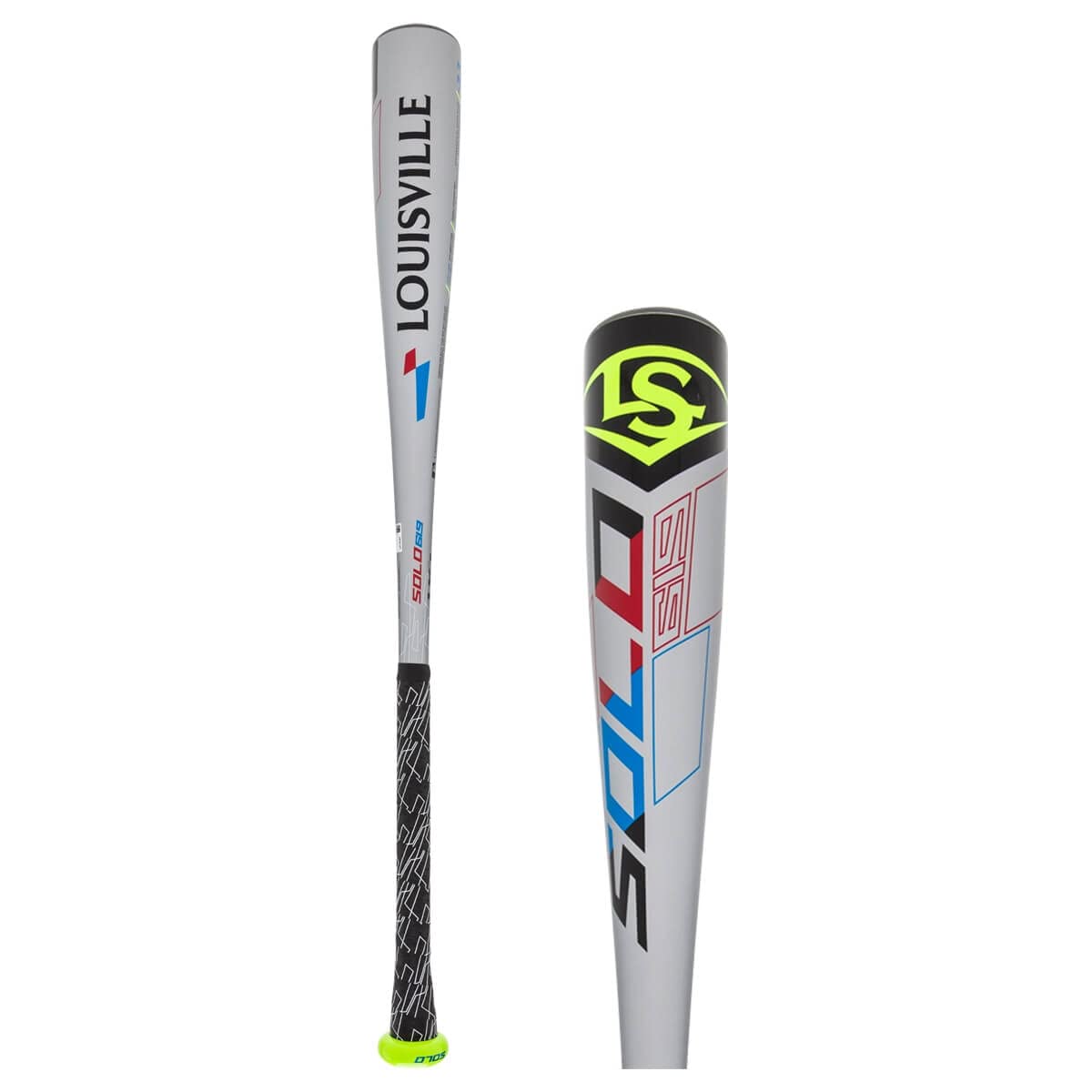
The Solo 619 offers surprising pop for a USA-certified bat without the premium price tag. Its one-piece SL Hyper Alloy construction provides a stiff feel that transfers maximum energy on contact, and the Speed Ballistic Composite end cap reduces weight in the barrel tip for better control through the hitting zone.
At a -11 drop and 2-5/8 inch barrel, this bat is tailor-made for youth players in kid-pitch leagues where the extra inch of barrel reach helps them catch up to faster deliveries. The LS Pro Comfort grip offers a nice mix of tack and cushion that outlasts many standard grips on other budget bats, reducing the need for a re-wrap mid-season.
The trade-off is vibration dampening. Several reviews note that the Solo 619 stings the hands more than composite bats on miss-hits, especially in colder weather. It is best suited for consistent contact hitters rather than beginners who are still finding the barrel.
Why it’s great
- Surprising pop for a USA-certified alloy bat
- Light -11 drop allows quick bat speed
- Comfortable grip that lasts a full season
Good to know
- Stings hands on mishits, especially in cold weather
- Not ideal for beginners making inconsistent contact
3. Easton Moxie Baseball Bat
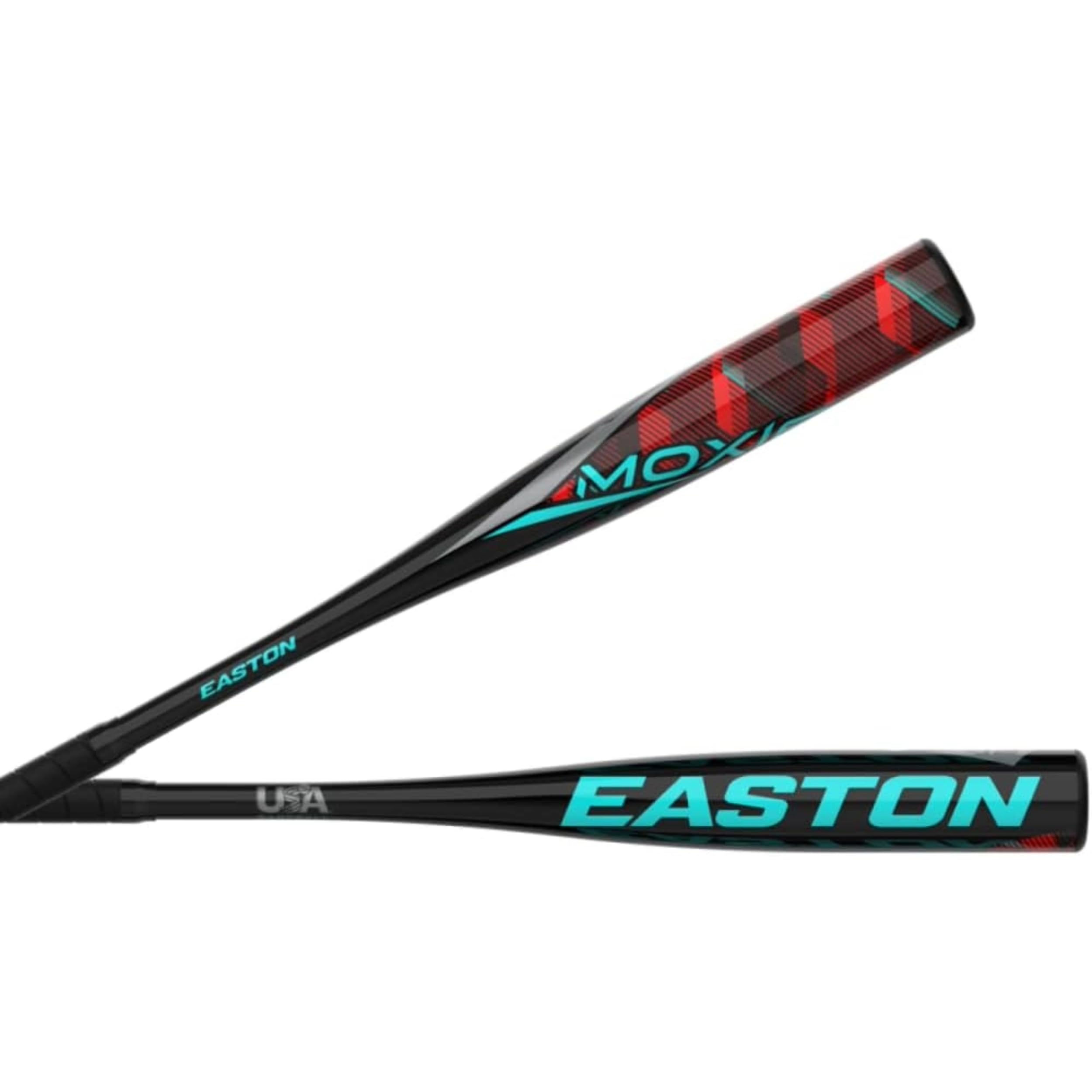
The Easton Moxie is engineered for the absolute beginner. With a -12 drop weight, a 28-inch model weighs just 16 ounces, making it one of the lightest swinging bats in this roundup. That is critical for a 7- or 8-year-old who lacks the strength to control a heavier bat and will develop better swing mechanics with a lighter tool.
Its ALX100 Military Grade Alloy construction and concave end cap provide a balanced feel that is forgiving during coach-pitch and early machine-pitch play. The 2-1/4 inch barrel is smaller than the 2-5/8 inch standard, but the enlarged sweet spot helps young hitters make more consistent contact without needing perfect barrel alignment.
The Moxie is not built for elite exit velocities or big power numbers. It is a developmental bat. A few users mentioned needing extra grip tape after extended use because the stock 2.2mm grip wears down under heavy summer practice schedules.
Why it’s great
- Ultra-light -12 drop for younger or smaller players
- Enlarged sweet spot improves contact rate
- USA and USSSA certified for league play
Good to know
- Stock grip may wear down before the season ends
- 2-1/4 inch barrel limits barrel mass for power hitting
4. Rawlings Big Stick Elite Wood Bat
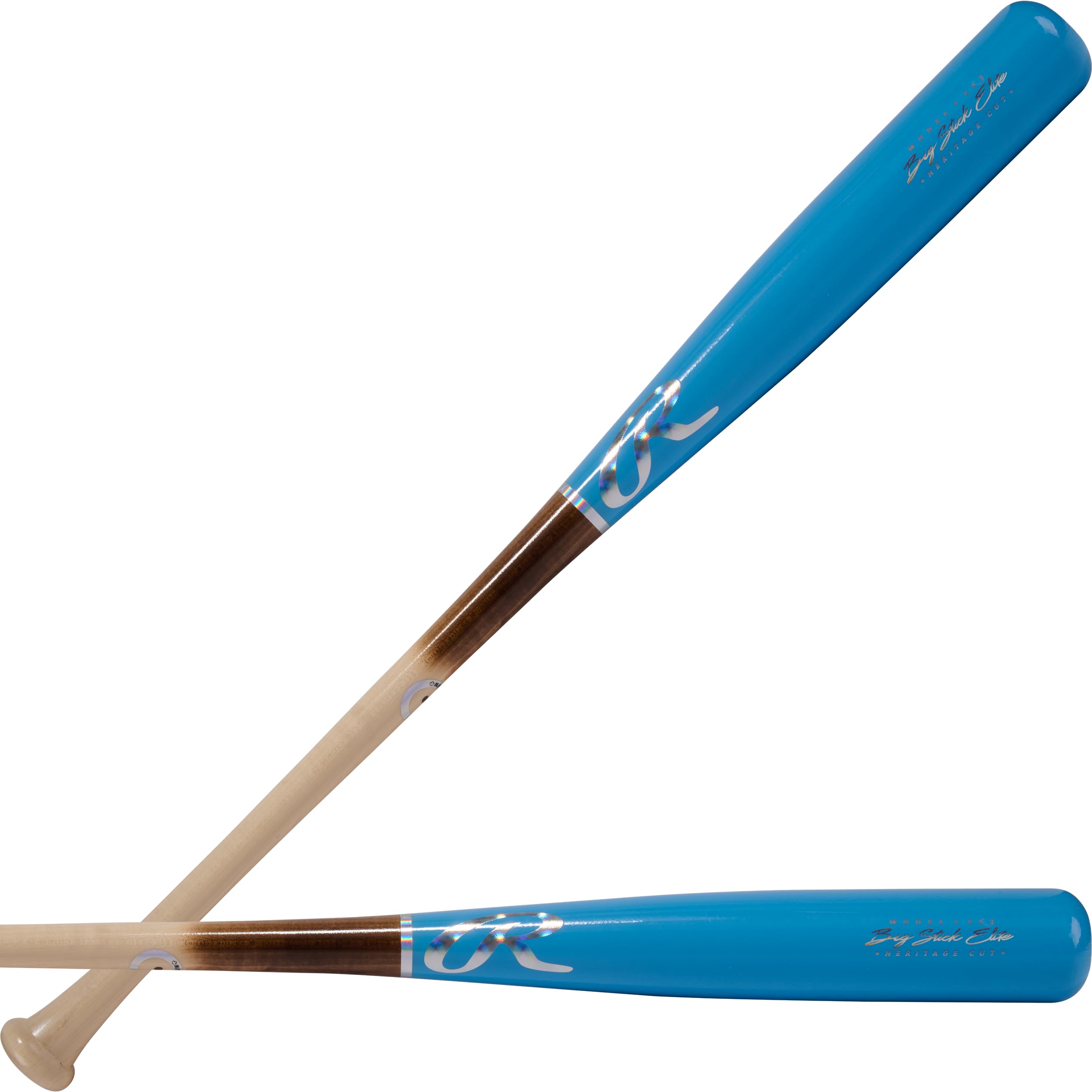
The Rawlings Big Stick Elite brings professional-grade maple construction to the budget conversation. The R243 profile features a traditional, balanced handle and a slightly thicker 2.5 inch barrel that delivers the firm, dense contact feel serious wood bat players look for. Maple is inherently harder than birch or ash, which means more pop off the barrel and less flex through the swing.
This bat is BBCOR certified, making it legal for high school and collegiate wood bat leagues, and the sleek blue and silver barrel finish gives it a clean, pro-ready aesthetic. Players who have used it for multiple seasons report that the paint holds up well after hundreds of batted balls, and the balance point feels natural for both contact hitters and power guys.
The primary criticism is that wood bats, at any price, have a finite lifespan. One review noted the bat broke after tournament-level use, which is the nature of maple. A separate user mentioned the need to buy an aftermarket grip because the standard handle finish is slick.
Why it’s great
- Hard maple construction for premium pop and feel
- Traditional balanced R243 profile suits all swing styles
- BBCOR certified for high school and adult wood leagues
Good to know
- Maple bats are prone to breaking under heavy tournament use
- Stock handle is slick; an aftermarket grip is recommended
5. Mizuno Bamboo Classic MZB 243

Bamboo bats offer unique durability that outlasts standard maple or ash because the fibers run in multiple directions, reducing the chance of catastrophic breakage. The Mizuno Bamboo Classic uses laminated bamboo strips to create a dense, stiff barrel with a slightly end-loaded swing feel that generates good power for players who can handle a heavier bat.
At 34 inches and around 31 ounces, this is a full-sized adult bat with BBCOR certification, making it a solid choice for wood bat league games, batting practice, or even soft-toss training. The matte furniture-grade finish looks refined and holds up against scuffs better than a glossy lacquer. The cupped end helps keep the swing weight manageable despite the bamboo’s density.
There have been some durability concerns with early breakage. One user reported the bat cracking after roughly 15 quality swings, though Mizuno’s warranty process was described as smooth and responsive. Insulated grip feels comfortable but may be too thick for players who prefer a direct, tactile handle feel.
Why it’s great
- Bamboo construction is more crack-resistant than standard wood
- BBCOR approved for competitive use
- Cupped end reduces swing weight for a denser bat
Good to know
- Some units have experienced early breakage under heavy use
- Thick insulated grip may not suit all preferences
6. Louisville Slugger Youth Y125

The 28-inch length and Y125 turning model deliver a balanced, mid-weight swing that feels heavier than a -12 alloy bat, which is actually beneficial for strength training. Swinging this bat in practice develops forearm and core strength that translates to faster bat speed with lighter game bats.
It features a natural to black hardline finish with a cupped end, and the mix wood construction offers decent durability for a wood bat at this price point. Several parents reported that it survived 300 to 400 hits during summer derby use and regular practice without cracking, which is impressive for a sub-premium wood bat.
Do note that the Y125 has no grip and no tape included — you will need to add your own. The paint finish is also known to transfer onto baseballs after repeated contact, which is cosmetic but worth noting if you plan to use it with game balls.
Why it’s great
- Great for building strength versus swinging lightweight alloys
- Durable enough to survive hundreds of practice swings
- Trusted Louisville Slugger brand at an affordable tier
Good to know
- No grip included; requires aftermarket tape or sleeve
- Paint can transfer to baseballs after frequent contact
7. KOTIONOK Solid Beech Wood Bat
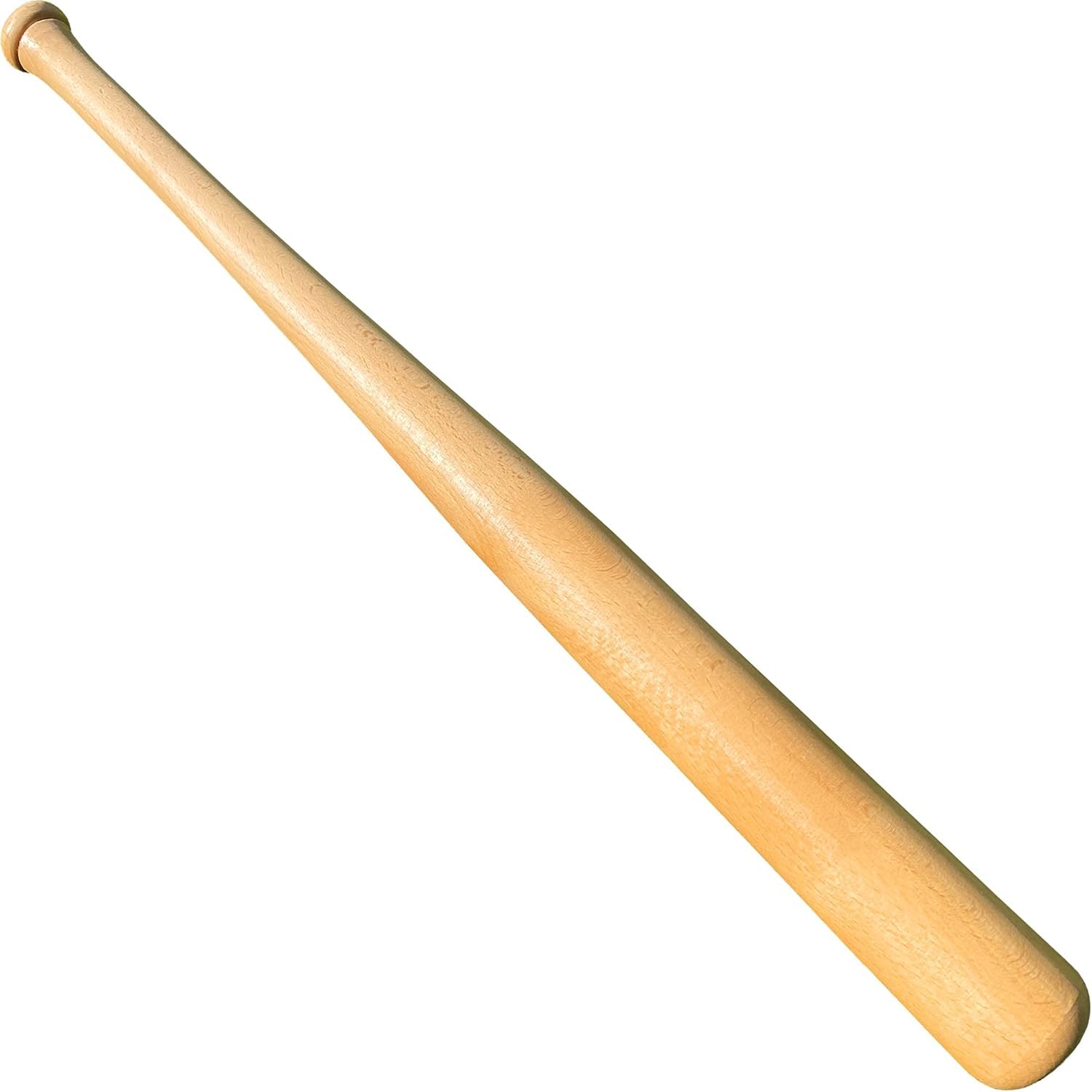
The KOTIONOK beech wood bat is the most affordable option in this guide, but it is not a toy. Beech is a dense hardwood that offers a slightly more flexible feel than maple while still providing good feedback on contact. The 31-inch length works well for boys aged 8 to 12 who are transitioning from tee-ball to coach-pitch and want to experience a real wood bat.
Its traditional tapered end cap and comfortable pommel knob give it a classic look and feel that is suitable for both batting cage practice and casual backyard games. Several buyers have also repurposed this bat as a decorative item for themed rooms or baby showers, noting its clean natural wood grain finish.
The main downsides are its slow shipping speed reported by some customers and the fact that beech wood, while solid, lacks the consistent pop of premium maple or composite bats. This bat is best used for light practice, training, and casual play rather than competitive league at-bats.
Why it’s great
- One-piece solid beech construction at a low price
- Classic design that looks good on display or in the cage
- Good entry-level wood bat for young players
Good to know
- Wood grain and finish are purely aesthetic; pop is limited
- Shipping delays reported; not ideal for time-sensitive orders
FAQ
How do I find the correct bat length for my child?
What is the difference between USA and USSSA bats at this budget level?
Why does a one-piece alloy bat sting my hands more than a composite bat?
Final Thoughts: The Verdict
For most users, the budget baseball bat winner is the Rawlings 5150 Youth because it combines a large 2-5/8 inch barrel, ultra-light swing weight, and genuine USA league approval at a price that does not hurt. If you want a lightweight bat for a first-year player, grab the Easton Moxie. And for wood bat training that builds real strength, nothing beats the Louisville Slugger Y125.