
The used market for classic cartridges is cost prohibitive, and original hardware often fails. A modern horizontal retro handheld sidesteps that entire headache by running emulation on dedicated Linux or Android hardware, giving you thousands of titles in a pocketable, rechargeable package. The challenge is filtering out the units with poor screens, unstable firmware, or batteries that die after one commute.
I’m Min — the co-founder and writer behind Gadgets Feed. I have spent hundreds of hours analyzing the technical specifications, customer complaints, and real-world performance data of these portable emulation machines to separate the contenders from the e-waste.
After combing through seven distinct models ranging from entry-level open-source units to a premium Android powerhouse, this guide identifies the single best budget horizontal retro handheld that delivers a crisp screen, solid battery life, and reliable emulation without the hidden flaws.
How To Choose The Best Budget Horizontal Retro Handheld
Not all horizontal handhelds are built the same. The form factor is generally more comfortable for adult hands than vertical “Game Boy” clones, but internal specs vary wildly. You need to look past the flashy box art and focus on four pillars: the processor, the display, the battery, and the firmware ecosystem.
Processor and Emulation Ceiling
The chipset dictates what systems the device can handle. Entry-level units using the RK3326 or a similar Cortex-A53 chip can run most 2D consoles (NES, SNES, Genesis, Game Boy Advance) and PlayStation 1 without issue. For smooth PSP, Dreamcast, or N64 emulation, you need a more modern SoC like the Unisoc T820 or the Snapdragon 865 found in the Retroid Pocket 5. Always confirm the chipset before buying — “upgraded processor” without a model number is a red flag.
Display Quality and Resolution
A 3.5-inch IPS panel at 640×480 is the baseline for pixel-perfect integer scaling of classic 4:3 content. Jumping to a 4.96-inch 720×1280 screen (like the Trimui Smart Pro) gives you more real estate for PSP widescreen titles, but requires a more powerful GPU to push the extra pixels without lag. Beware of TN panels listed as “HD” — they wash out at any angle. An OCA full-lamination IPS screen is what you want for vivid color and zero air gap.
Battery Capacity and Real-World Life
The mAh number is only half the story. A 3500mAh battery powering a 3.5-inch screen will easily last seven hours, while the same cell driving a 5.5-inch OLED drains faster. Look for devices with at least 3200mAh for a 3.5-inch screen, and aim for 5000mAh for the larger 5-inch class. USB-C fast charging is now standard, but some units still ship with micro-USB — skip those.
Firmware and Community Support
Stock firmware on budget handhelds is often buggy or poorly translated. A strong community — like the Knulli, CrossMix, or MuOS projects — can transform a mediocre device into a polished emulation machine. Before buying, check if the handheld has a dedicated GitHub or Discord community. Devices that ship with a raw Linux OS (like the Trimui Smart Pro or the Anbernic RG35XX H) have the best upgrade path. Android-based units like the Retroid Pocket 5 require more initial setup but offer the widest app and emulator compatibility.
Quick Comparison
On smaller screens, swipe sideways to see the full table.
| Model | Category | Best For | Key Spec | Amazon |
|---|---|---|---|---|
| Trimui Smart Pro | Mid-Range | Widescreen PSP and Dreamcast | 4.96-inch 720×1280 IPS | Amazon |
| Anbernic RG35XX H | Mid-Range | PS1 and below with dual sticks | H700 quad-core, 3300mAh | Amazon |
| R36MAX | Mid-Range | Sharp square display for 2D | 4.0-inch 720×720 IPS | Amazon |
| Anbernic RG35XX Pro | Mid-Range | Dual-stick gaming with TV out | 3.5-inch 640×480 IPS | Amazon |
| R36T | Entry-Level | Large game library with CRT filter | 3.5-inch 640×480 IPS | Amazon |
| G350 | Entry-Level | Long battery life for 2D gaming | RK3326, 3200mAh | Amazon |
| Retroid Pocket 5 | Premium | PS2, GameCube, and modern Android | Snapdragon 865, OLED | Amazon |
In‑Depth Reviews
1. Trimui Smart Pro
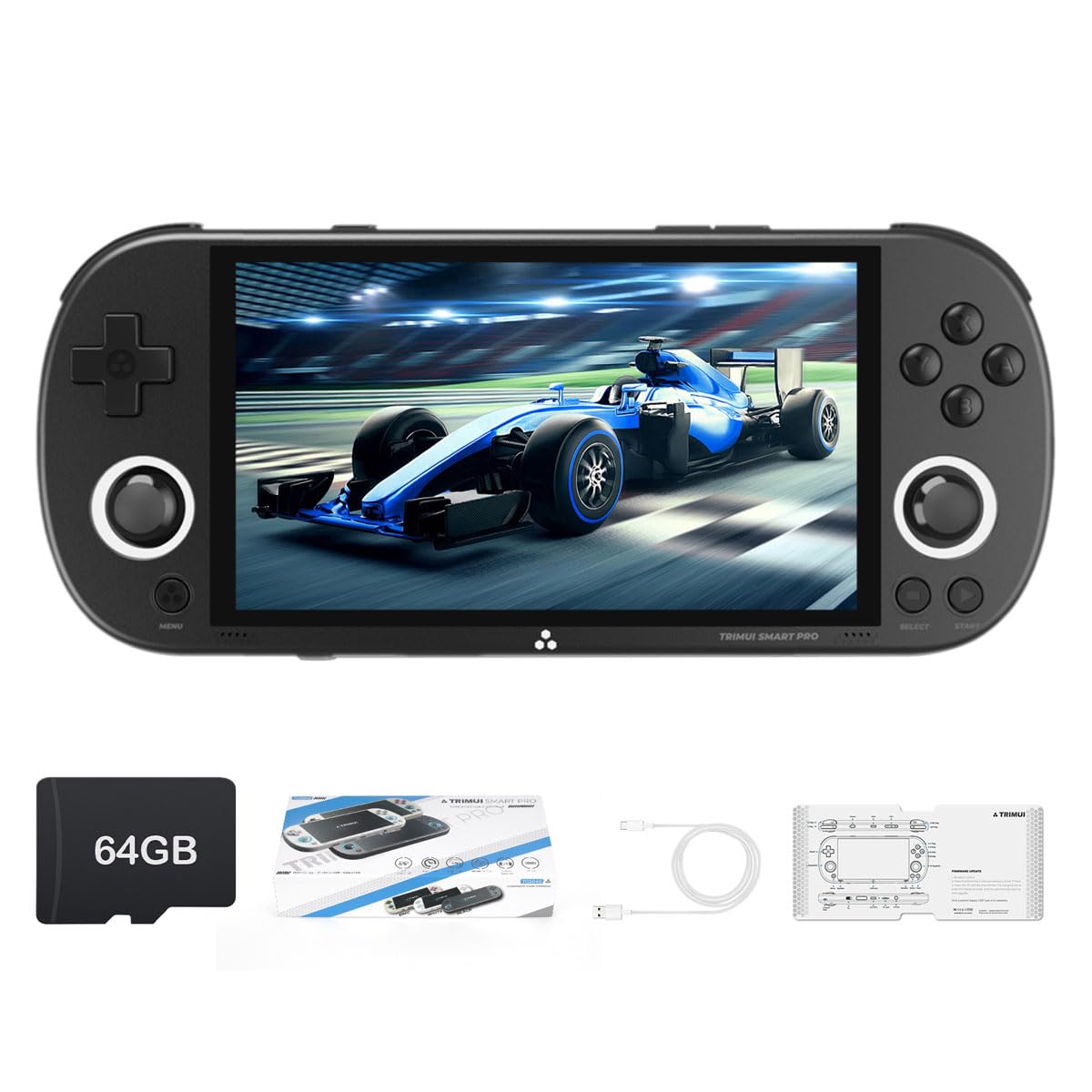
The Trimui Smart Pro distinguishes itself with a 4.96-inch 720×1280 IPS panel that is far larger and sharper than the 3.5-inch screens dominating this price bracket. That extra resolution makes PSP and Dreamcast games look native rather than squished, and the OCA full lamination keeps colors vivid even under harsh lighting. The A133plus Cortex-A53 quad-core chip, clocked at 1.8GHz, handles most 2D and early 3D titles without noticeable frame drops.
Its 5000mAh battery delivers roughly six hours of mixed gameplay, which is competitive for a 5-inch class device. The stock Linux Trimui UI is functional, but the real unlock is the CrossMix OS community firmware available on GitHub — it cleans up the menu navigation and adds per-system configuration. The dual LED joystick lighting is a nice cosmetic touch, but the joystick feel itself is serviceable rather than premium.
Note that the unit ships with a 64GB card containing largely Atari-era titles and no Nintendo games, so a computer to add your own ROMs is essential. The plastic build feels solid, and the 7.5-inch width provides a comfortable grip for adult hands over long sessions. For the asking price, this is the most screen and battery you can get in a true horizontal form factor.
Why it’s great
- Large 4.96-inch high-resolution widescreen display
- 5000mAh battery provides extended play time
- Strong CrossMix community firmware support
Good to know
- No Nintendo games preloaded; requires manual ROM transfer
- Stock joystick and D-pad feel slightly loose
- Cannot play demanding PSP or N64 titles without slowdown
2. Retroid Pocket 5
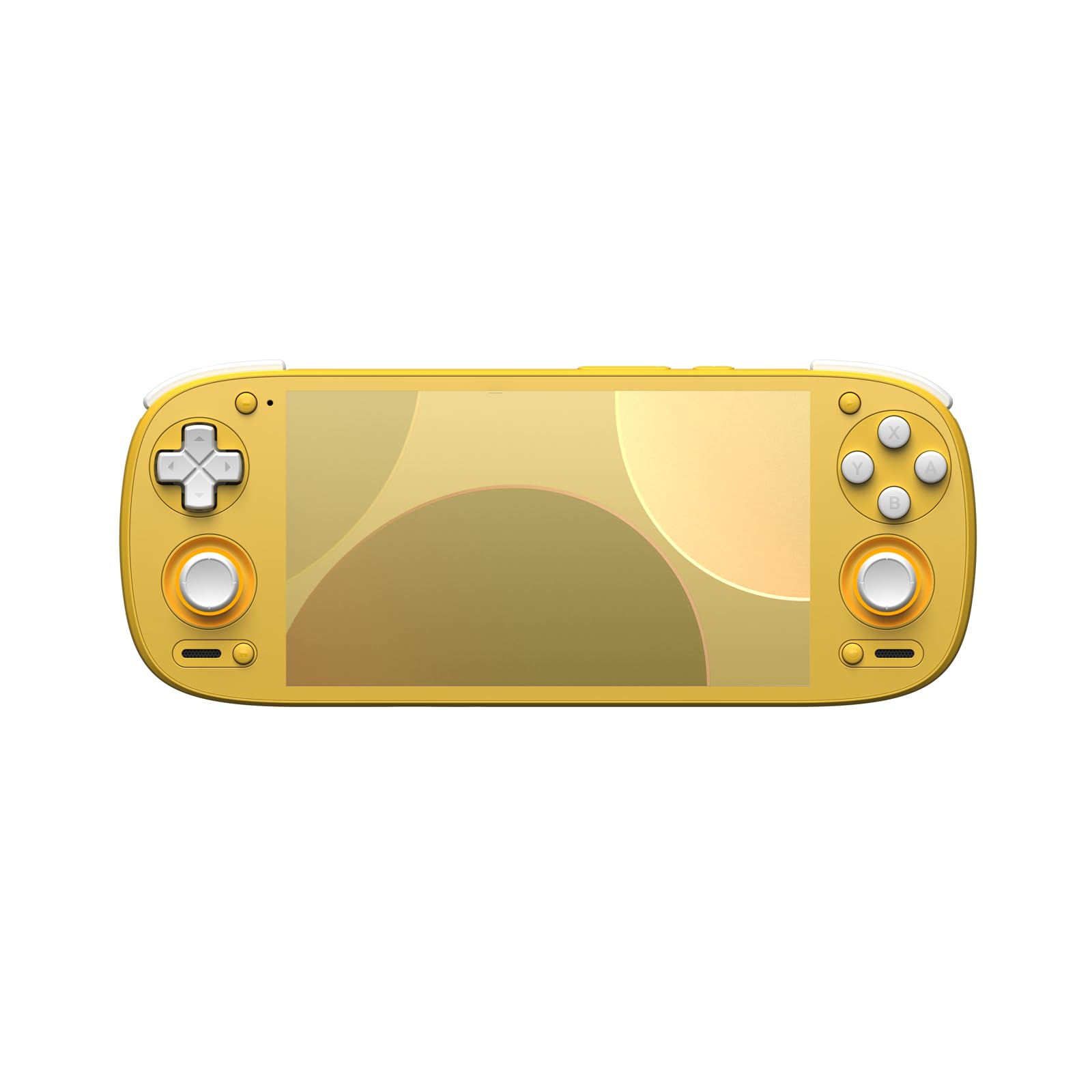
The Retroid Pocket 5 runs Android 13 on a Snapdragon 865 with an Adreno 650 GPU, making it the only device here capable of emulating PlayStation 2, GameCube, and even some Nintendo Switch titles. The 5.5-inch 1080p OLED touchscreen delivers inky blacks and rich color saturation that completely outclasses the budget IPS panels. With 8GB of RAM and 128GB of internal storage, this is a full-fledged Android gaming tablet in a handheld shell.
The 5000mAh battery pairs well with the efficient 865 chip, lasting roughly six to eight hours of mixed emulation, and the Hall effect analog sticks eliminate the stick drift issues common on cheaper units. It supports WiFi 6 and Bluetooth 5.1, so cloud gaming services like Xbox Remote Play and Steam Link run without noticeable latency. The build quality is notably higher than the budget tier, with a sleek matte finish and comfortable ergonomics for larger hands.
The major trade-off is setup effort — the device ships with zero preloaded games and requires you to install individual emulators from the Google Play store and source your own ROMs. The listed price is a significant jump from the rest of this lineup, but you are paying for a chipset that can handle three generations of console emulation that cheaper ARM chips cannot even touch. If your library extends beyond PS1, this is the only choice.
Why it’s great
- Snapdragon 865 runs PS2, GameCube, and some Switch titles
- Stunning 5.5-inch 1080p OLED display
- Hall effect joysticks with no drift issues
Good to know
- No preloaded games; requires significant initial setup
- Price is in a different tier than budget segment
- May need an additional grip case for extended comfort
3. Anbernic RG35XX H
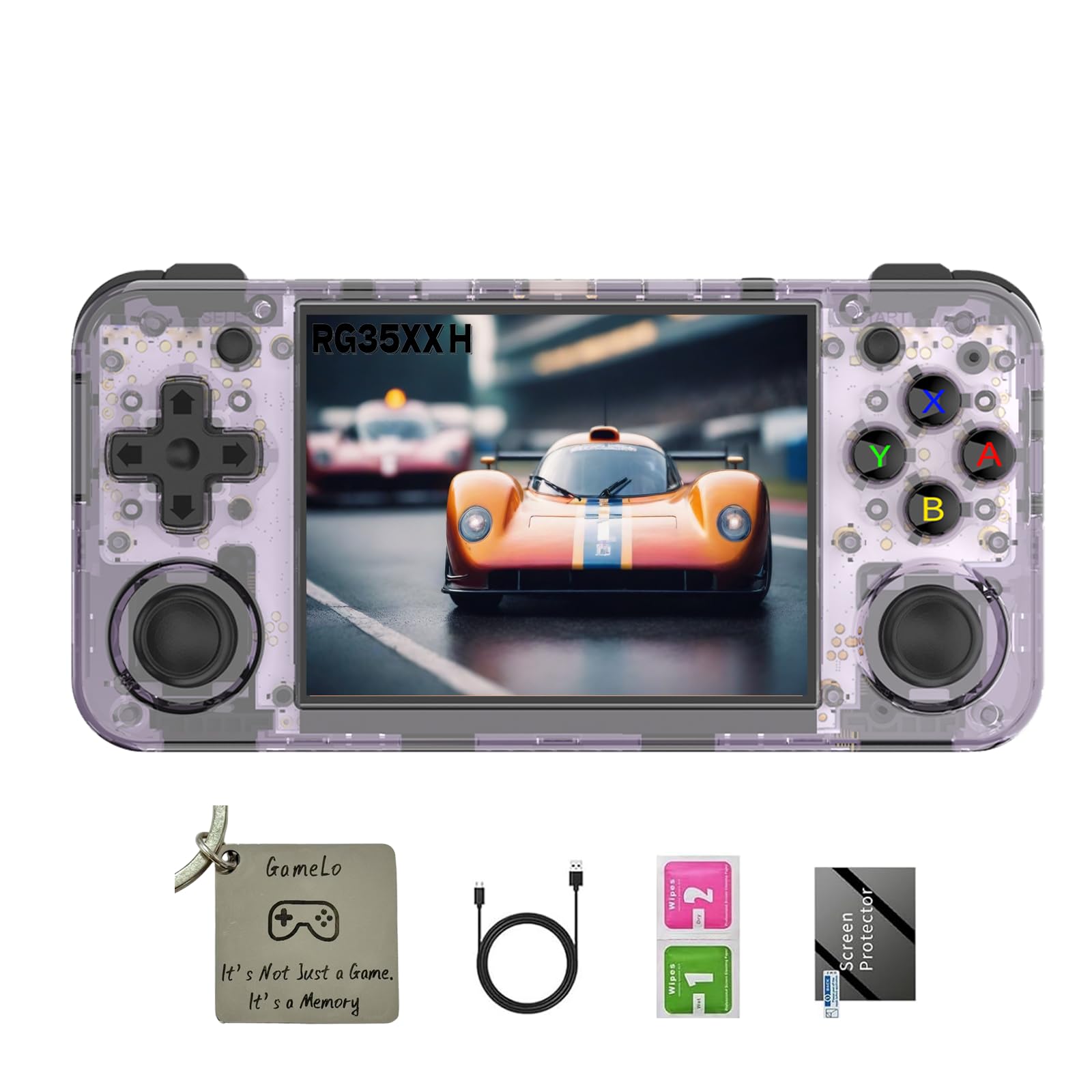
The RG35XX H swaps the vertical layout of its sibling for a horizontal body that fits naturally in the palms, and the dual joystick design makes PS1-era 3D titles like Crash Bandicoot or Tony Hawk feel controllable. At its heart is the H700 quad-core ARM Cortex-A53 clocked at 1.5GHz — the same chip found in many entry-level Anbernic models — paired with a 3.5-inch IPS screen at the classic 640×480 resolution that integer scales 4:3 content perfectly.
The 3300mAh battery is advertised for up to eight hours, though real-world mixed use typically lands around six hours with WiFi turned off and medium brightness. It ships with a 64GB card loaded with games across 10+ emulators, but the stock game selection leans heavily on MAME arcade ROMs. The community firmware Knulli (a fork of Batocera) is available and recommended for a cleaner interface and better performance tuning.
Vibration motors and dual speakers add a layer of immersion that most budget horizontal handhelds omit entirely, and the HDMI output lets you play on a TV with a Bluetooth controller. The plastic shell feels slightly less premium than the Trimui Smart Pro, and the analog sticks have a short travel distance, but for the price, the RG35XX H offers the most balanced package of comfort, features, and performance for 2D and early 3D gaming.
Why it’s great
- Comfortable horizontal layout with dual analog sticks
- Excellent Knulli firmware support for customization
- HDMI output and Bluetooth for TV multiplayer sessions
Good to know
- N64 and PSP emulation is not playable at full speed
- Stock SD card games are mostly MAME arcade titles
- Analog sticks have minimal travel for accurate control
4. R36MAX
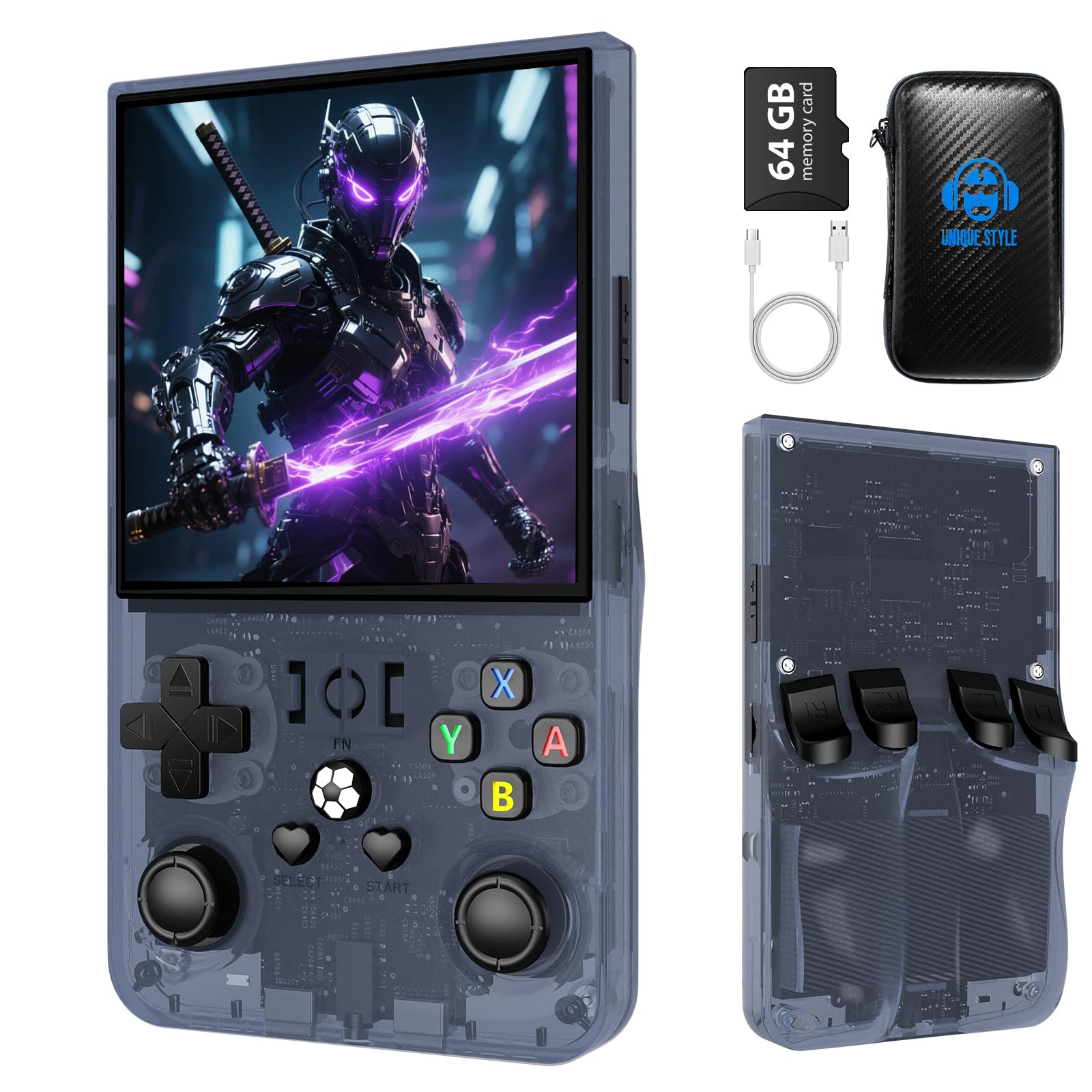
The R36MAX stands out for its unusual 4.0-inch IPS display at a 720×720 square resolution. This format offers a larger canvas than the standard 3.5-inch panels without going fully widescreen, giving 4:3 retro games plenty of room without black bars on the sides. The increased pixel density over a standard 640×480 screen makes text and pixel art look noticeably sharper during gameplay.
Powered by an open-source Linux system, the R36MAX prioritizes stability over flashy features. The 4000mAh battery delivers the advertised six hours of continuous play, and the included 64GB of onboard storage means the preloaded game library is ready to go out of the box. The unit comes with a carrying case and a screen protector, which is a welcome addition for portable use.
Some users report that many games boot into Chinese language by default, and the menu system requires a few extra button presses to navigate compared to more polished custom firmwares. The controller feel is adequate but not exceptional, with a slightly mushy D-pad that may frustrate fighting game enthusiasts. For the user who prioritizes a large, crisp screen over premium controls, the R36MAX delivers unique value in the sub- segment.
Why it’s great
- Unique 4.0-inch 720×720 square IPS display
- Comes with carrying case and screen protector
- Large 4000mAh battery for extended play sessions
Good to know
- Many games default to Chinese language settings
- Stock firmware navigation is clunky
- D-pad lacks tactile precision for fast games
5. Anbernic RG35XX Pro
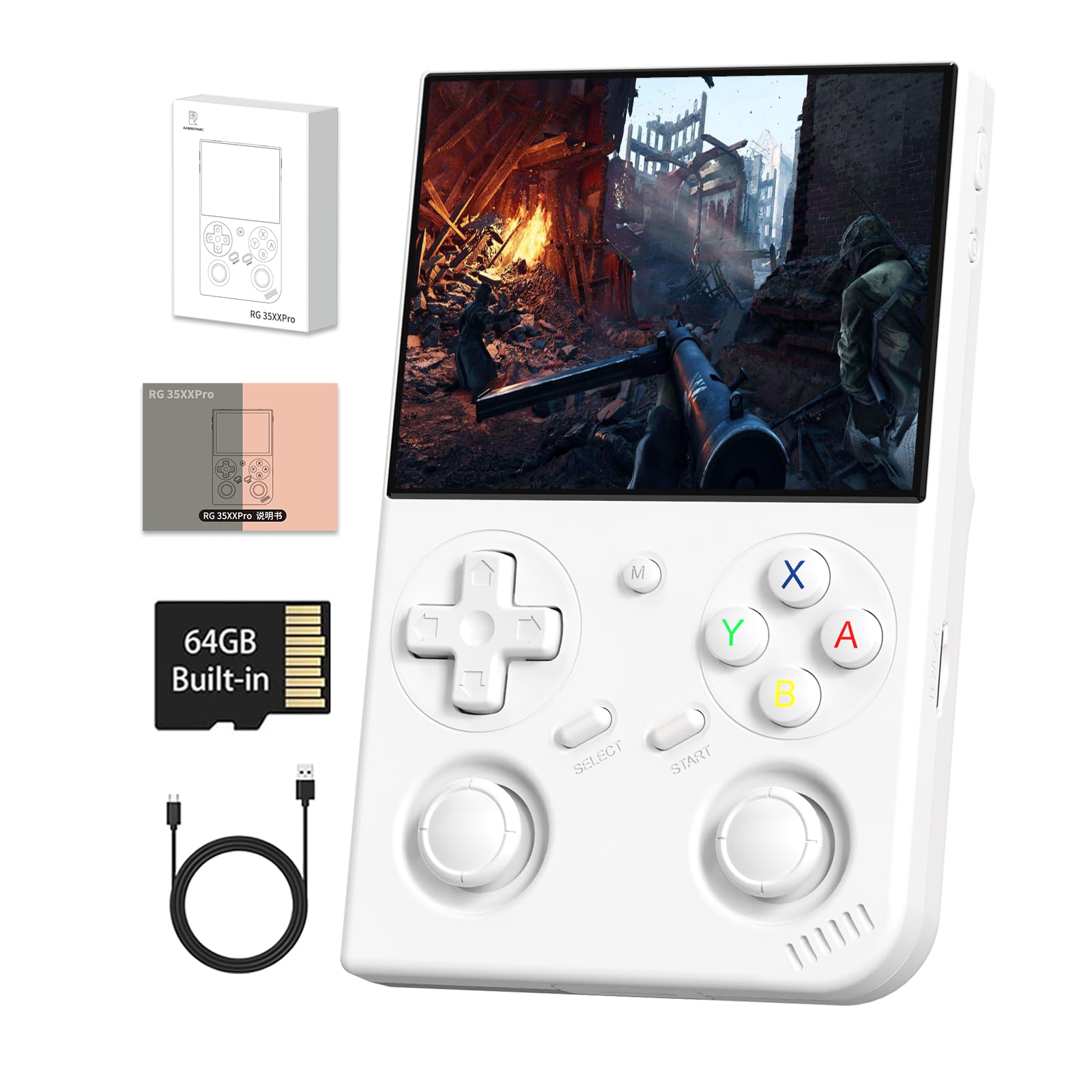
The RG35XX Pro is the horizontal twin of Anbernic’s popular vertical device, sharing the same 3.5-inch 640×480 IPS panel and OCA full lamination that delivers excellent clarity for pixel-art games. The true advantage of this variant is the inclusion of dual analog joysticks, which unlock more intuitive control for PS1 dual-stick shooters and N64 games that require precise camera movement.
Built around a custom chipset that handles PS1 and below without breaking a sweat, the RG35XX Pro includes 64GB of onboard storage with over 3,000 preloaded titles across 30+ emulators. The 3200mAh battery is rated for up to eight hours, though real-world use with WiFi active lands closer to six. HDMI output works cleanly for TV play, and Bluetooth connectivity enables wireless controller pairing for local multiplayer sessions.
The biggest drawback is the stock firmware — many reviewers note the included games are dominated by MAME arcade ROMs with sparse Nintendo, Sega, and Sony content. Replacing the SD card with a clean install of Knulli or MuOS is almost mandatory for a good experience. Additionally, the build quality reports are mixed, with a handful of units showing premature failure. It is a strong option for those comfortable with firmware flashing, but not the best out-of-box pick.
Why it’s great
- Sharp 3.5-inch fully laminated IPS screen
- Dual joysticks with HDMI and Bluetooth support
- Strong third-party firmware community (Knulli, MuOS)
Good to know
- Stock game selection is heavily MAME-focused
- Adding ROMs incorrectly can brick the system
- Build quality reports are inconsistent
6. R36T
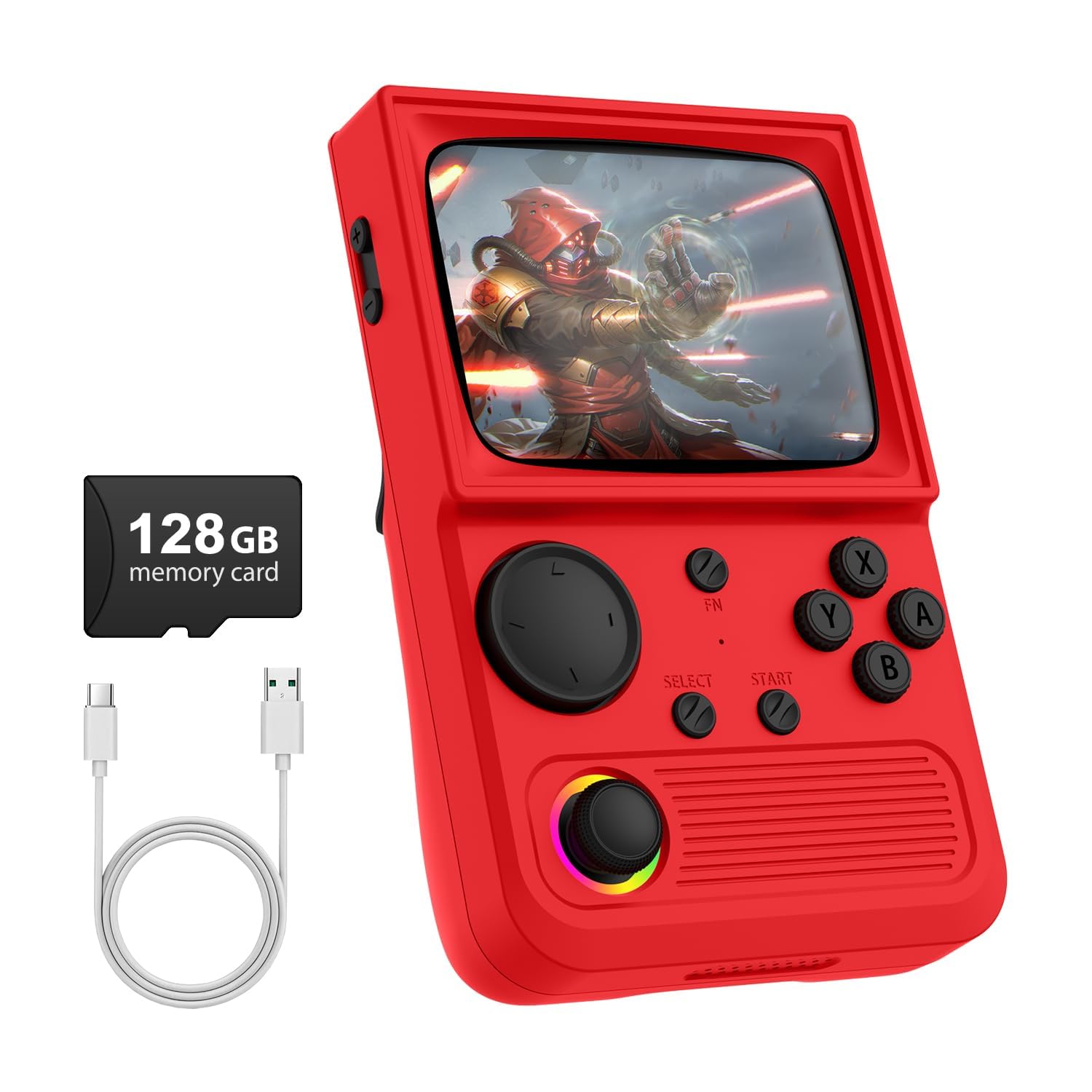
The R36T aims directly at the buyer who wants maximum game count at minimum spend. With a claimed 18,000+ preloaded titles on a 64GB card, it covers nearly every 8-bit and 16-bit system, plus a generous selection of PlayStation 1 games. The 3.5-inch IPS panel at 640×480 includes a CRT-inspired bezel overlay that adds a layer of scanline-like filtering for a more authentic retro look on classic 2D titles.
The 3500mAh battery provides between six and eight hours of continuous use depending on screen brightness and WiFi activity, and the inclusion of a portable carrying case makes it a true grab-and-go device. WiFi support enables online multiplayer for compatible titles, and the OTG port allows connection of wired controllers. The RGB joystick lighting with 16 million colors is frankly excessive, but the built-in speaker quality is surprisingly clear for the price tier.
Reliability is the main concern. Customer feedback includes reports of units failing entirely after a few weeks, with the device refusing to power on. The stock EmuELEC system is functional but not as polished as the custom firmware available for Anbernic hardware. For the budget-conscious buyer who understands the risk and wants immediate access to a massive library without setup, the R36T delivers — but the longevity gamble is real.
Why it’s great
- Massive 18,000+ preloaded game library
- CRT-inspired screen bezel for retro authenticity
- Includes portable carrying case and USB-C charging
Good to know
- Firmware failure and hardware bricking reported after weeks
- No parental controls or game removal options
- Stock EmuELEC system is not as refined as custom firmware
7. G350
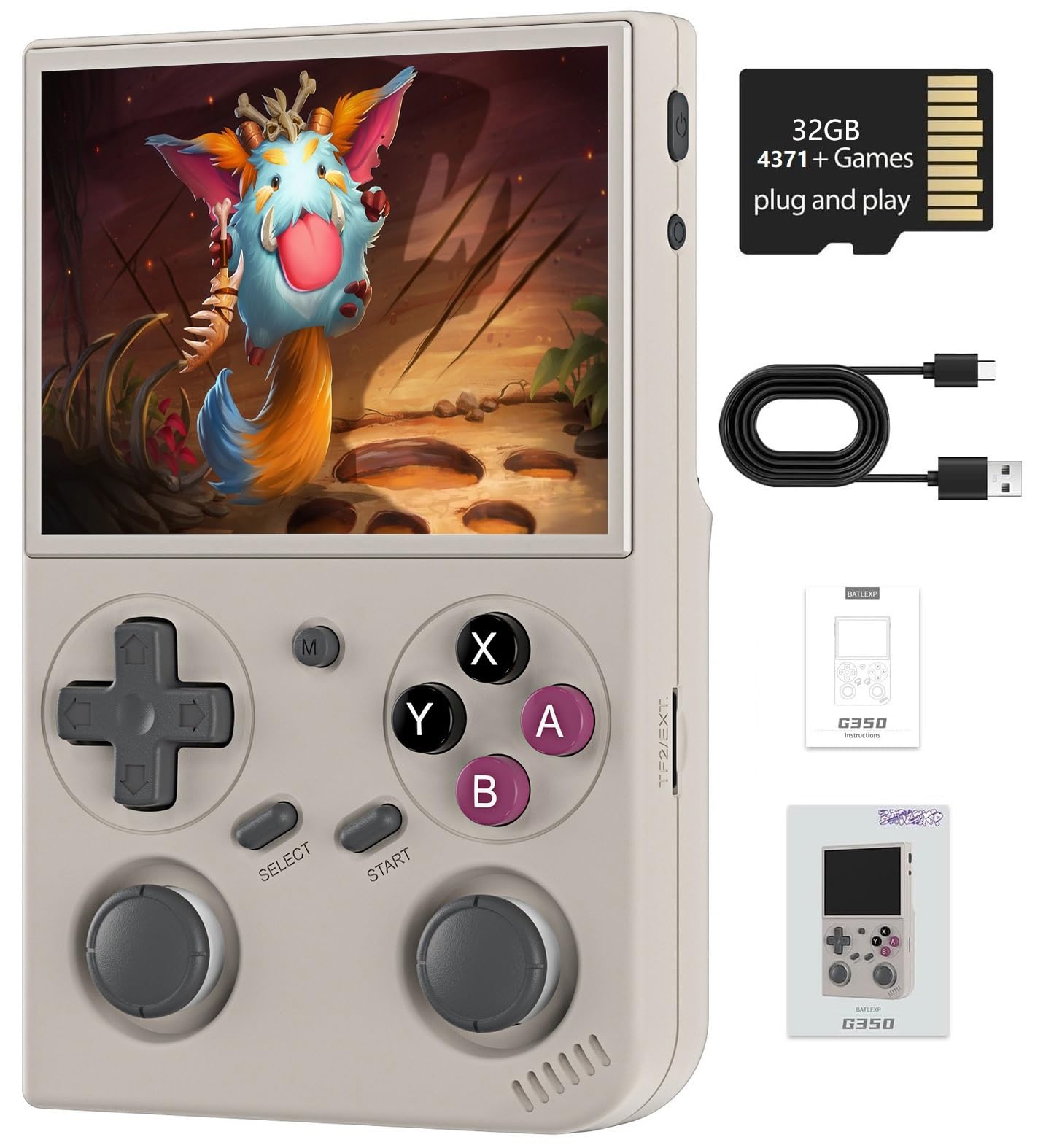
The G350 uses the familiar RK3326 chipset, a proven workhorse for 2D emulation that handles NES, SNES, Genesis, and Game Boy Advance without stutter. The 3.5-inch 640×480 IPS panel is crisp and bright, and the OCA full lamination with tempered glass provides a premium feel uncommon at this price. It ships with a 32GB card loaded with roughly 5,000 games across 10+ system formats, which is a more curated selection than the R36T’s quantity-first approach.
With a 3200mAh battery, the G350 can run for up to seven hours on 2D titles, making it a strong companion for long flights or commutes. The Linux system supports external WiFi for online multiplayer and wired controller connectivity via a dongle. The high-fidelity speakers produce clear audio through the built-in speakers, and the 3.5mm headphone jack is present for private listening.
Performance on more demanding systems like PSP is poor — GTA Vice City specifically has been reported as jerky and unplayable. Some units arrive with defects such as missing Nintendo games (“Entries not found” errors) or rapid battery drain. The build quality is noticeably more plastic than the Anbernic or Trimui offerings, lacking the heft that signals durability. It is a functional entry-level device for those who stick to NES through PS1, but the QC lottery makes it a less safe recommendation.
Why it’s great
- Proven RK3326 chip runs 8- and 16-bit games flawlessly
- Bright, fully laminated 3.5-inch IPS screen
- Long 7-hour battery life for 2D gaming sessions
Good to know
- PSP and N64 performance is unusable
- Quality control issues with missing games and battery problems
- Build materials feel cheap and lightweight
FAQ
Can a budget horizontal retro handheld run PlayStation 2 games?
Why do some handhelds ship with missing game titles?
Is a horizontal form factor better than a vertical one for retro gaming?
Final Thoughts: The Verdict
For most users, the best budget horizontal retro handheld winner is the Trimui Smart Pro because it combines a large high-resolution widescreen display with a long-lasting 5000mAh battery and a strong community firmware ecosystem. If you want dual-stick comfort for PS1 gaming with TV output, grab the Anbernic RG35XX H. And for the user whose library extends beyond PS1 into PS2 and GameCube territory, nothing at this price point compares to the Retroid Pocket 5.