
A 3D printer with an enclosure is the single most important upgrade you can make if you want to move beyond trinkets and start printing functional parts in ABS, ASA, Nylon, or Polycarbonate. Without a sealed chamber that holds a stable temperature, those materials warp, crack, and delaminate — wasting hours and entire spools of filament. An enclosure isn’t an accessory; it’s the dividing line between hobby-grade tinkering and true prosumer capability.
I’m Min — the co-founder and writer behind Gadgets Feed. I spend my time cross-referencing heated chamber specs, filtration ratings, build volumes, and motion systems across dozens of printer listings to separate the machines that deliver on their promises from those that leave you troubleshooting a failed print at 11 PM.
Choosing the right model means weighing speed against material support, build size against footprint, and open-source flexibility against closed-ecosystem polish. This guide breaks down real-world performance to help you find the best 3d printer with enclosure for your specific projects and budget.
How To Choose The Best 3D Printer With Enclosure
Not all enclosures are created equal. A simple acrylic box keeps drafts off a PLA print, but it won’t let you reliably print ABS or Nylon. The real performance drivers are found deeper in the spec sheet: heated chamber temperature, active filtration, motion system architecture, and software ecosystem all determine whether your investment translates into success or frustration.
Heated vs. Passive Chamber
A passive enclosure simply traps ambient warmth from the heated bed. This is sufficient for PLA and PETG but falls short for high-temperature engineering materials. An active heated chamber — one that uses a dedicated PTC heater to maintain temperatures of 55°C to 65°C — is essential for printing ABS, ASA, Polycarbonate, and Nylon without warping. The QIDI Q2 and QIDI Max4 both feature active 65°C heated chambers, while the Bambu Lab P1S relies on a passive setup that works well for ABS but struggles with more demanding filaments.
Motion System: CoreXY vs. Bedslinger
A CoreXY architecture moves the print head along the X and Y axes using fixed motors and a belt system, allowing the bed to move only on Z. This design enables much higher speeds and accelerations — 500 mm/s to 800 mm/s — without the ringing and ghosting that plague fast bedslingers. Most enclosed printers at the mid-range and above use CoreXY because it also saves space by eliminating the forward-backward bed travel that requires a larger desk footprint.
Filtration and Safety
Printing ABS, ASA, or Nylon releases volatile organic compounds and ultrafine particles. A quality enclosure should include a recirculating filtration system with a HEPA filter and activated carbon. The QIDI Q2 uses a triple-stage G3 pre-filter plus H12 HEPA and carbon media, while the Flashforge AD5M Pro uses a dual-layer dust and smoke block. If you plan to place the printer in a living space or office, filtration isn’t optional — it’s a health consideration.
Multi-Material and Multi-Color Systems
Many enclosed printers now support automatic filament changers that enable multi-color prints. The Bambu Lab P1S works with the AMS system for up to 16 colors, the Anycubic Kobra S1C connects two ACE Pro units for 8 colors, and the ELEGOO Centauri Carbon uses its proprietary Canvas system for 4-color operation. Be aware that multi-material add-ons add complexity, waste filament during purge cycles, and can introduce failure modes like tangled filament or jams in the feeder path.
Quick Comparison
On smaller screens, swipe sideways to see the full table.
| Model | Category | Best For | Key Spec | Amazon |
|---|---|---|---|---|
| QIDI Q2 | Premium Mid | Engineering-grade materials | Active 65°C heated chamber | Amazon |
| Bambu Lab P1S Combo | Premium Mid | Polished, consistent multi-color | AMS 16-color, 500 mm/s | Amazon |
| Anicubic Kobra S1C | Mid-Range | Beginner-friendly multi-color | ACE Pro 4/8-color, 600 mm/s | Amazon |
| Flashforge AD5M Pro | Mid-Range | Entry-level enclosed printing | Quick-swap 280 °C nozzle | Amazon |
| ELEGOO Centauri Carbon | Mid-Range | Budget multi-color system | 500 mm/s, 256 mm³ build | Amazon |
| Anicubic Kobra 3 Max Combo | Premium | Extra-large 420 mm build | 420 x 420 x 500 mm volume | Amazon |
| Creality Ender 5 Max | Premium | Print farm scale-up | 700 mm/s, 400 mm³ volume | Amazon |
| ELEGOO Saturn 4 Ultra 16K | Mid-Range | Resin high-detail printing | 16K mono LCD, 150 mm/h | Amazon |
| Creality K2 Plus Combo | Premium-Plus | Large-format multi-color | 30,000 mm/s² accel, dual AI | Amazon |
| Original Prusa CORE One | Premium-Plus | Long-term reliability | Active 55 °C chamber | Amazon |
| QIDI Max4 Combo | Flagship | Industrial-grade large builds | 65 °C chamber, 800 mm/s | Amazon |
In‑Depth Reviews
1. QIDI Q2 3D Printer
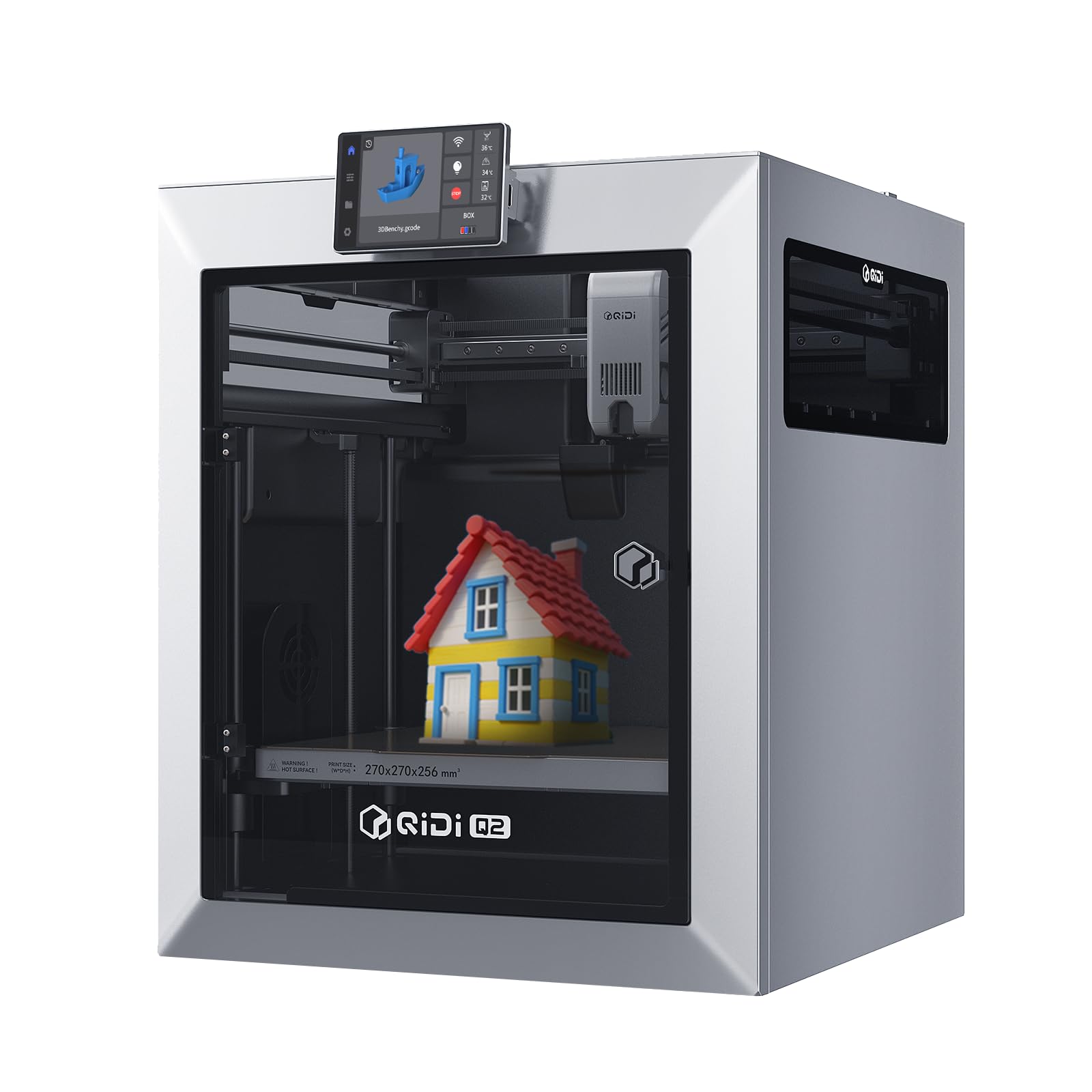
The QIDI Q2 stands apart because it delivers an actively heated 65°C chamber at a price point where competitors offer purely passive enclosures. That active heat is what lets you print ABS, ASA, Nylon, and Polycarbonate without the corner lifting and layer separation that plague prints in unheated boxes. The second-generation PTC heater maintains uniform chamber temperature, and the all-metal hotend reaches 370°C — enough for carbon-fiber reinforced composites.
Print quality out of the box is exceptional, thanks to a unique auto-leveling system that uses the nozzle itself as the sensor, removing any bed-surface variability from the equation. The 1.5GT synchronous belt reduces vibration artifacts that cause surface ripples, and the triple filtration system (G3 pre-filter, H12 HEPA, activated carbon) makes it safe for indoor operation. The CoreXY structure hits 600 mm/s with linear rails ensuring stable high-speed motion.
The Q2 supports the QIDI BOX for up to 16-color multi-material printing, though that accessory is sold separately. Some users report the AI spaghetti detection triggers false positives, and the stock firmware can feel unrefined compared to Klipper-based alternatives. That said, the open-source Klipper firmware is fully accessible for those who want to customize. For the user who prioritizes engineering-grade material compatibility above all else, this is the most capable machine in its class.
Why it’s great
- Active 65°C heated chamber enables true engineering material printing
- Nozzle-based auto-leveling delivers perfect first layers every time
- Triple-stage filtration makes ABS and ASA safe for indoor use
Good to know
- Bundled QIDI BOX for multi-color is sold separately
- AI anomaly detection can produce false positives
2. Bambu Lab P1S Combo
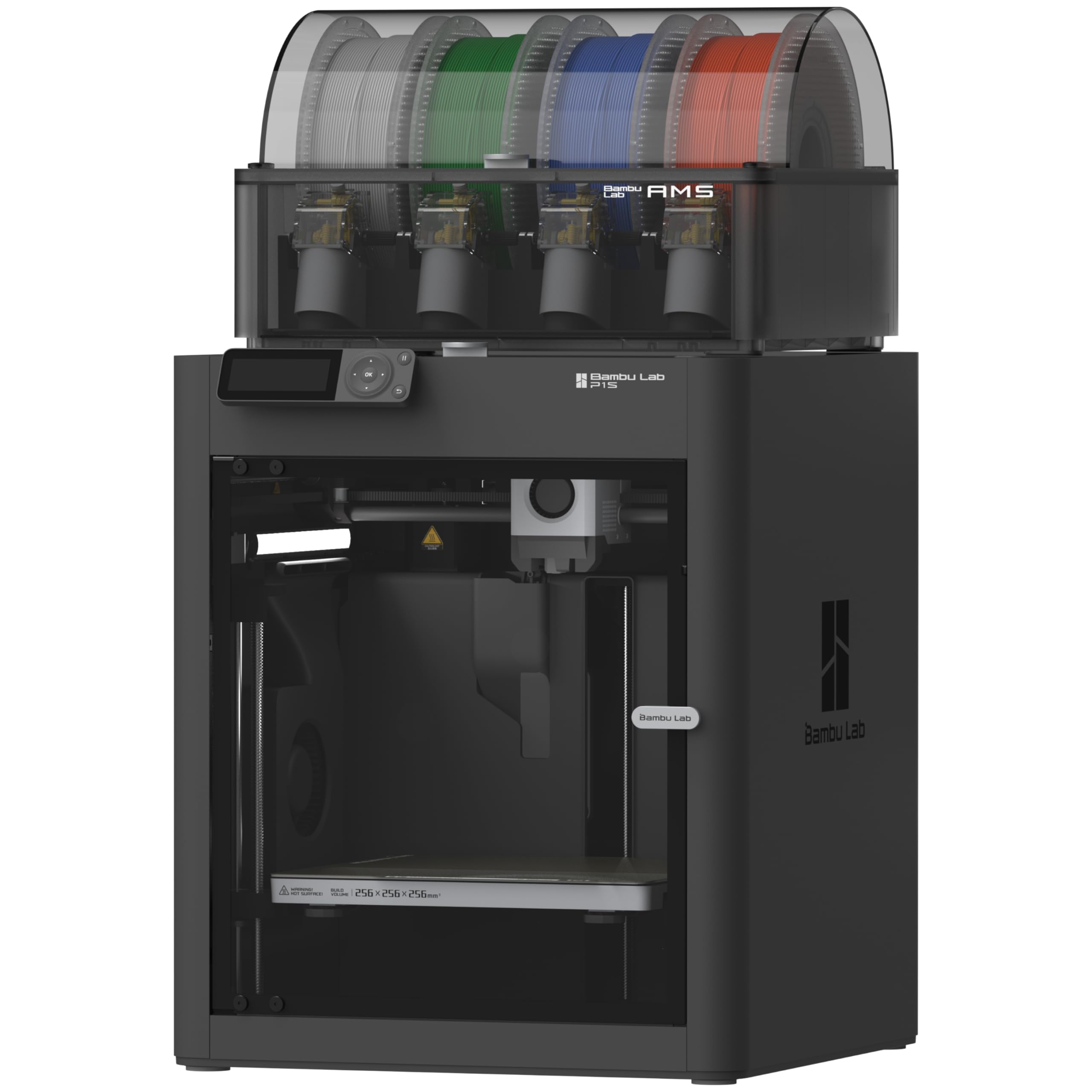
The Bambu Lab P1S Combo is the machine that convinced a generation of makers that enclosed 3D printing can be as simple as using a paper printer. The fully enclosed CoreXY design, combined with the Automatic Material System (AMS), allows up to 16 colors and multi-material prints with automatic filament switching. Setup takes roughly 15 minutes, and the auto bed leveling means you can print with confidence from the first layer.
The P1S operates at 500 mm/s with 20,000 mm/s² acceleration, and the vibration compensation algorithm keeps surface finish clean at those speeds. The enclosure is passive — it traps heat from the bed rather than actively regulating it — which works excellently for PLA, PETG, and ABS but may struggle with more demanding materials like Nylon or Polycarbonate. The build volume of 256 x 256 x 256 mm is adequate for most hobbyist projects but not oversized.
Bambu Lab’s ecosystem is the standout feature here. The slicer, mobile app, and cloud connectivity all work together seamlessly. The main trade-off is a closed software ecosystem — you cannot run Klipper or third-party firmware. Users who want full control over their printer’s motion parameters may find the P1S restrictive, but for anyone who simply wants high-quality, multi-color prints with minimal tinkering, this remains the gold standard.
Why it’s great
- Outstanding user experience with 15-minute setup and auto-leveling
- AMS system enables hassle-free 16-color printing
- Excellent vibration compensation for clean, fast prints
Good to know
- Closed ecosystem prevents third-party firmware like Klipper
- Enclosure is passive, not actively heated
3. Anycubic Kobra S1C

The Anycubic Kobra S1C brings multi-color printing and a fully enclosed CoreXY design at a price that undercuts the Bambu Lab P1S while maintaining a similar feature set. The ACE Pro system supports up to 8 colors when connecting two units, and the filament drying functionality built into the ACE Pro prevents moisture-related failures during long multi-day prints — a genuine pain point that competing systems ignore.
Print speed reaches 600 mm/s with a stable CoreXY structure, and the 300°C all-metal hotend handles PLA, PETG, ABS, and TPU. The one-click auto-leveling and vibration compensation remove the need for manual calibration. Users consistently report clean first layers and sharp detail reproduction on standard and fast modes. The enclosure is fully sealed and keeps chamber temperatures stable, enabling ABS and ASA printing without warping.
Where the S1C falls short is the ACE Pro hardware itself: some users report cracked latches during shipping and difficulty loading matte PLA. The bundled slicer works, but the mobile app experience is less polished than Bambu’s offering. The 56-pound weight and large footprint mean this printer needs a dedicated spot. For those willing to accept minor ecosystem roughness, the S1C delivers remarkable multi-color capability at a budget-friendly entry point.
Why it’s great
- ACE Pro filament dryer prevents moisture failures during multi-day prints
- Auto-leveling and 600 mm/s speed for fast, reliable output
- Fully enclosed chamber handles ABS and ASA without warping
Good to know
- ACE Pro units can ship with cracked parts or struggle with matte PLA
- App and software ecosystem less refined than Bambu’s
4. Flashforge AD5M Pro

The Flashforge AD5M Pro is the most approachable enclosed printer on this list, designed for users who want to skip the learning curve. Setup takes about 10 minutes, and the one-click auto bed leveling removes the most common source of beginner frustration. The 220 x 220 x 220 mm build volume is small but adequate for educational projects, household parts, and prototyping.
The printer uses a CoreXY system with a top speed of 600 mm/s, though the 32.2-pound weight and compact footprint make it easy to fit on a desk. The 3-second quick-swap nozzle system lets you switch between 0.4 and 0.6 mm nozzles without tools, and the direct-drive extruder handles flexible TPU reliably. The dual-layer filtration system blocks dust and smoke, making it classroom-safe.
Some users report that the included USB drive comes with outdated software, and a few have experienced extruder failures after limited use. The built-in camera offers basic remote monitoring but lacks AI detection features found on more expensive models. For the user who wants a simple, reliable entry into enclosed printing without the complexities of multi-color add-ons, the AD5M Pro is a solid starting point.
Why it’s great
- 10-minute setup with automatic bed leveling is beginner-optimized
- Quick-swap nozzles let you change sizes without tools in seconds
- Dual-layer filtration keeps the printer safe for schools and living spaces
Good to know
- Build volume is smaller than competing enclosed printers
- Some early units have reported extruder failure and clogs
5. ELEGOO Centauri Carbon 2 Combo
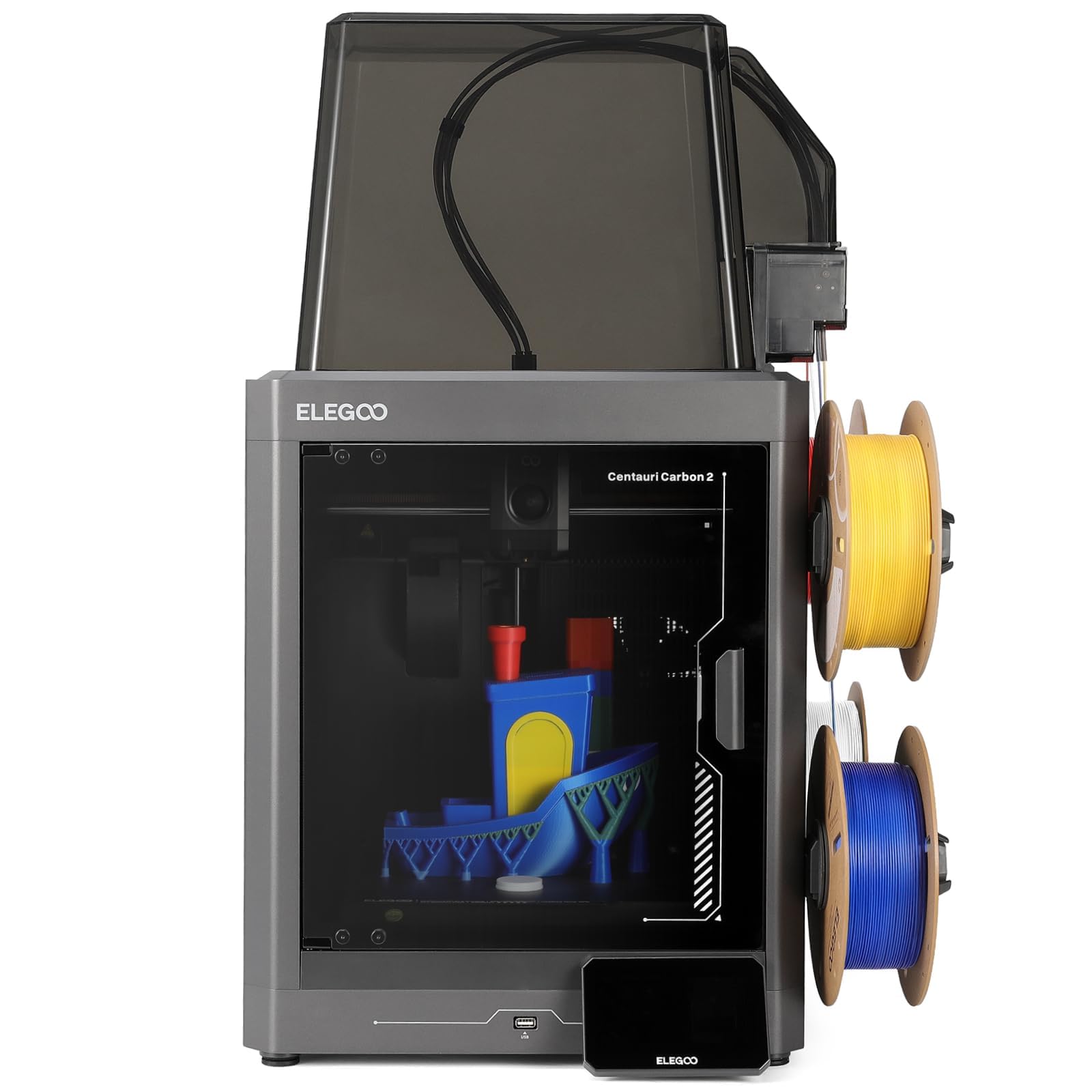
The ELEGOO Centauri Carbon 2 Combo packs a 4-color automatic filament swapping system (Canvas) into a fully enclosed CoreXY chassis at a price that makes multi-color printing accessible to budget-conscious buyers. The 256 x 256 x 256 mm build volume is competitive with the Bambu P1S, and the 500 mm/s print speed with 20,000 mm/s² acceleration ensures fast turnaround.
The 350°C high-temperature nozzle opens up engineering-grade materials, and the fully automated calibration — one-click auto leveling — means you can load filament and start printing with minimal intervention. The machine runs at approximately 45 dB, making it one of the quieter enclosed options. The built-in camera offers remote monitoring, and power-loss recovery protects long prints from interruptions.
However, the Centauri Carbon uses a closed software ecosystem that limits user control. The bundled slicer is not the latest version, and there is no support for Klipper or Orca slicer. Some users have reported firmware update failures that bricked connectivity, and the bundled PLA lacks RFID tags, meaning the printer cannot automatically identify filament types. For users who want multi-color capability at the lowest possible price and can accept ecosystem constraints, this is the best value in the category.
Why it’s great
- 4-color Canvas system brings affordable multi-color printing to the budget tier
- 350°C nozzle handles engineering-grade materials
- Very quiet operation at ~45 dB
Good to know
- Closed ecosystem locks you into ELEGOO’s slicer and firmware
- Firmware updates have caused connectivity loss for some users
6. ELEGOO Saturn 4 Ultra 16K
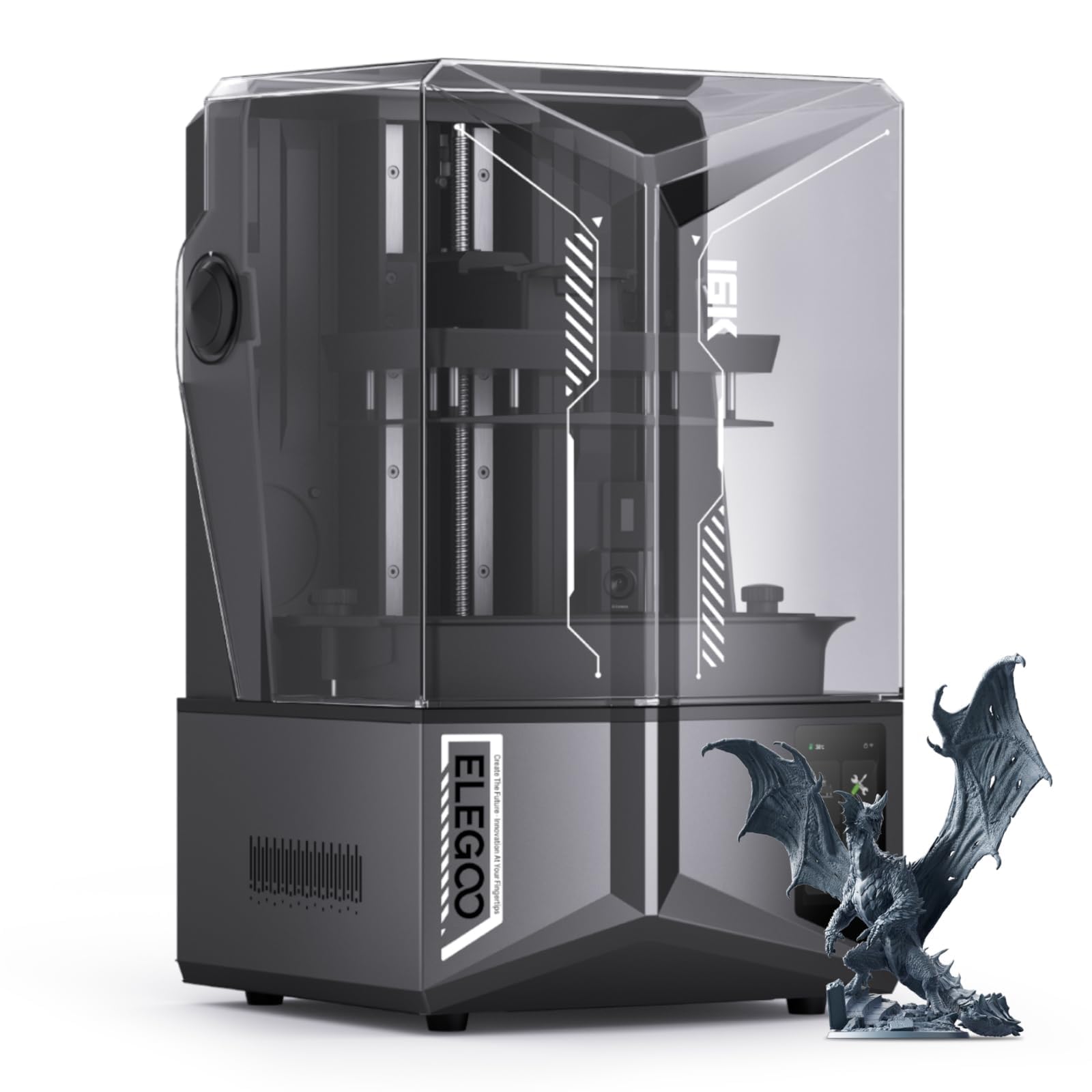
The Saturn 4 Ultra 16K is the resin printer in this guide, included because its fully enclosed body is essential for safe resin printing — resin fumes are toxic, and an enclosure with a filter is not optional. The 16K mono LCD delivers an astonishing pixel resolution that captures skin pores, fabric textures, and fine mechanical threads. The 10-inch screen covers a build area of 8.33 x 4.66 x 8.66 inches.
The smart tank heating system maintains the resin at 30°C, ensuring consistent viscosity and reducing layer separation defects. The tilt-release mechanism accelerates peeling from the FEP film, achieving print speeds up to 150 mm/h — faster than most consumer resin printers. The AI camera detects empty build plates and warped models, alerting you mid-print to save resin and time.
Resin printing remains messier than FDM. Post-processing requires washing and curing stations, and the resin itself costs more per print. The Saturn 4’s WiFi connectivity works for most users but firmware updates have introduced setting issues for some. For model makers, jewelers, and miniature painters who demand the finest surface detail, this printer is unmatched.
Why it’s great
- 16K resolution delivers exceptional surface detail and smoothness
- Tank heating at 30°C reduces print failures from temperature variation
- AI camera with time-lapse monitoring provides remote oversight
Good to know
- Requires separate wash and cure station for post-processing
- Resin costs and disposal are higher than FDM filament
7. Anycubic Kobra 3 Max Combo

The Anycubic Kobra 3 Max Combo is built for users who need to print large — real-world large. The 420 x 420 x 500 mm build volume is the biggest in this guide, letting you create life-size prototypes, furniture components, or multiple parts in a single run. The CoreXY motion system reaches 600 mm/s with 20,000 mm/s² acceleration, powered by G-sensor vibration compensation to keep layers aligned.
The all-metal hotend reaches 300°C and supports PLA, PETG, TPU, and ABS. The dual-sided PEI spring steel build plate offers 100% adhesion reliability and easy part removal. The filament runout sensor and power-loss recovery make it safe to leave long prints running unattended. The enclosed design helps maintain temperature stability for high-quality ABS prints.
Reliability is a concern: some users report frequent jams at high speed, and customer support responsiveness varies. The machine is massive — you need a dedicated sturdy table. The enclosure panels help trap heat but this printer lacks an active heated chamber, so demanding materials like Nylon may still warp. For makers and small businesses that need the largest possible build area at a mid-range price, the Kobra 3 Max is the clear choice.
Why it’s great
- Industry-leading 420 x 420 x 500 mm build volume for large prototypes
- G-sensor vibration compensation maintains quality at 600 mm/s
- Dual-sided PEI build plate provides strong adhesion and easy release
Good to know
- Some users report jams and clogs at maximum speed settings
- Lacks an active heated chamber for demanding engineering filaments
8. Creality Ender 5 Max
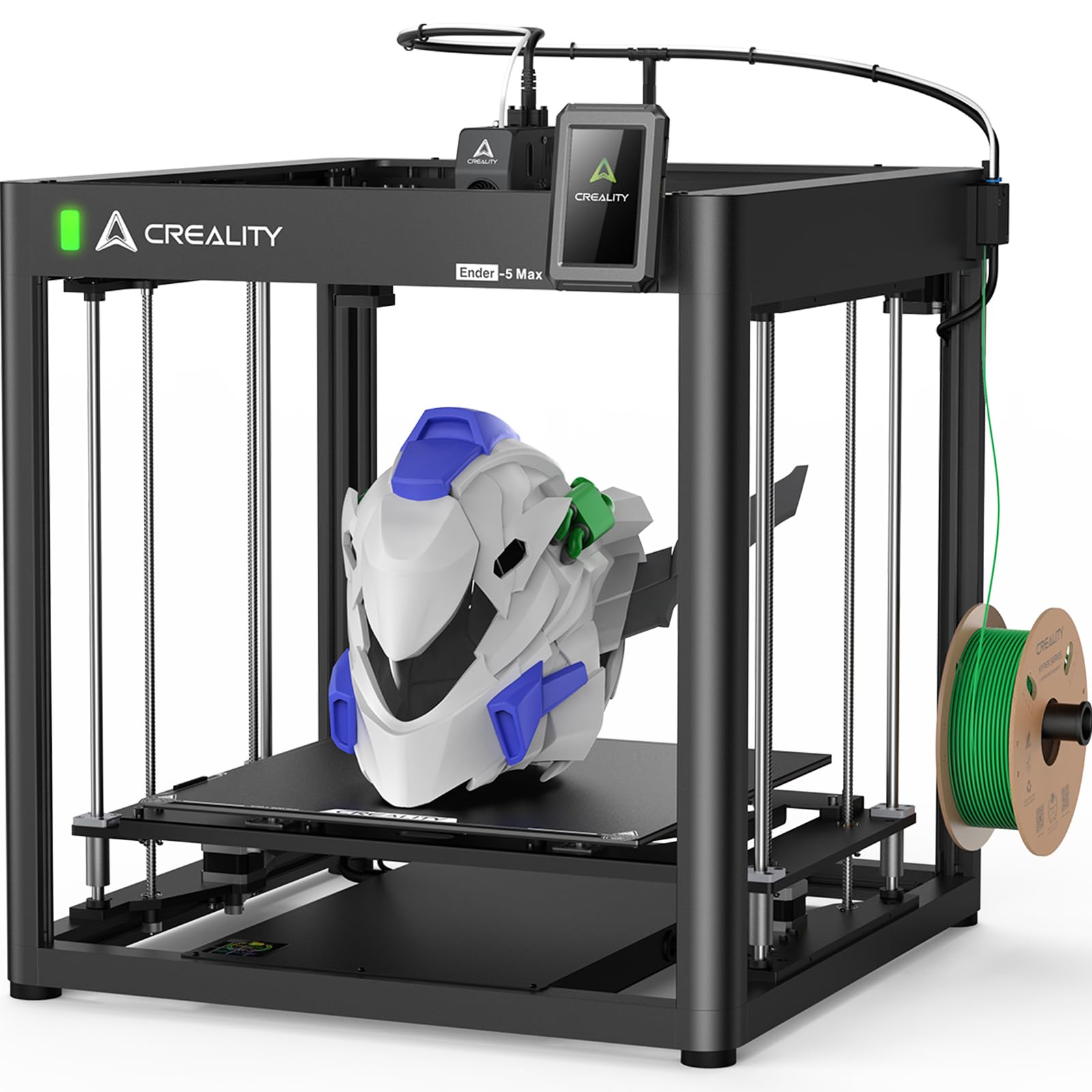
The Creality Ender 5 Max is a production-oriented machine with a 400 x 400 x 400 mm build volume that targets print farms and business users. The CoreXY system hits 700 mm/s, and the 1000W rapid-heating bed reaches operating temperature in minutes, reducing downtime between jobs. The WLAN multi-printer control lets you manage an entire print farm from a single interface, with a tri-color status indicator visible from across the room.
The all-metal die-cast frame minimizes vibration, and the X-axis linear rail ensures accuracy across the full 400 mm width. The 64-point auto leveling system and automatic Z-offset eliminate manual calibration, making the Ender 5 Max accessible to operators with various skill levels. The dual-gear direct drive extruder provides consistent extrusion for 24/7 operation across PLA, PETG, ABS, ASA, and PA.
The enclosure panels are included but the printer requires a taller riser to prevent the PTFE tube from scraping the top. Some users report persistent bed adhesion issues and parts loosening during shipping — two negative reviews mention complete breakdown within hours of first use. The Creality AI camera is less reliable than dedicated third-party monitoring solutions. For those building a print farm and willing to invest time in tuning, the Ender 5 Max offers unmatched volume per dollar.
Why it’s great
- 400 mm³ build volume is ideal for large-scale batch production
- WLAN multi-printer control streamlines print farm management
- 1000W heated bed reaches temperature in minutes
Good to know
- Reports of bed adhesion failures and parts loosening during transport
- AI camera less reliable than external monitoring solutions
9. Creality K2 Plus Combo

The Creality K2 Plus Combo represents the high-end of what a fully enclosed CoreXY printer can do when speed and multi-material capability are the primary goals. The step-servo motor system delivers a staggering 30,000 mm/s² acceleration with a 40 mm³/s high-flow hotend, making it one of the fastest large-format FDM printers available. The 350 x 350 x 350 mm build volume is substantial, and the combo package includes one CFS (Creality Filament System) for 4-color printing, expandable to 16 colors with additional units.
The actively heated chamber and high-temperature hardened steel nozzle support PLA, ABS, PETG, PA-CF, PLA-CF, PPA-CF, and more. The dual AI cameras provide real-time monitoring for spaghetti failures, foreign objects, and idle prints. The anti-tilt auto leveling uses dual independent Z-axis motors with strain gauge compensation to ensure perfect first layers every time.
Despite the impressive specs, quality control issues persist. Some users report servo communication failures, extruder motors spinning the wrong direction, and poor assembly documentation. The unit is very heavy at nearly 100 pounds and requires two people to unbox. The closed Creality ecosystem means you are limited to their slicer and firmware. For the user who values extreme speed and multi-color capability above all else and is comfortable with potential QC variance, the K2 Plus delivers.
Why it’s great
- 30,000 mm/s² acceleration makes it among the fastest large printers
- Actively heated chamber handles engineering-grade composites
- Dual AI cameras provide comprehensive print monitoring
Good to know
- Quality control issues reported including motor direction and connectivity failures
- Very heavy unit requires two people for setup
10. Original Prusa CORE One
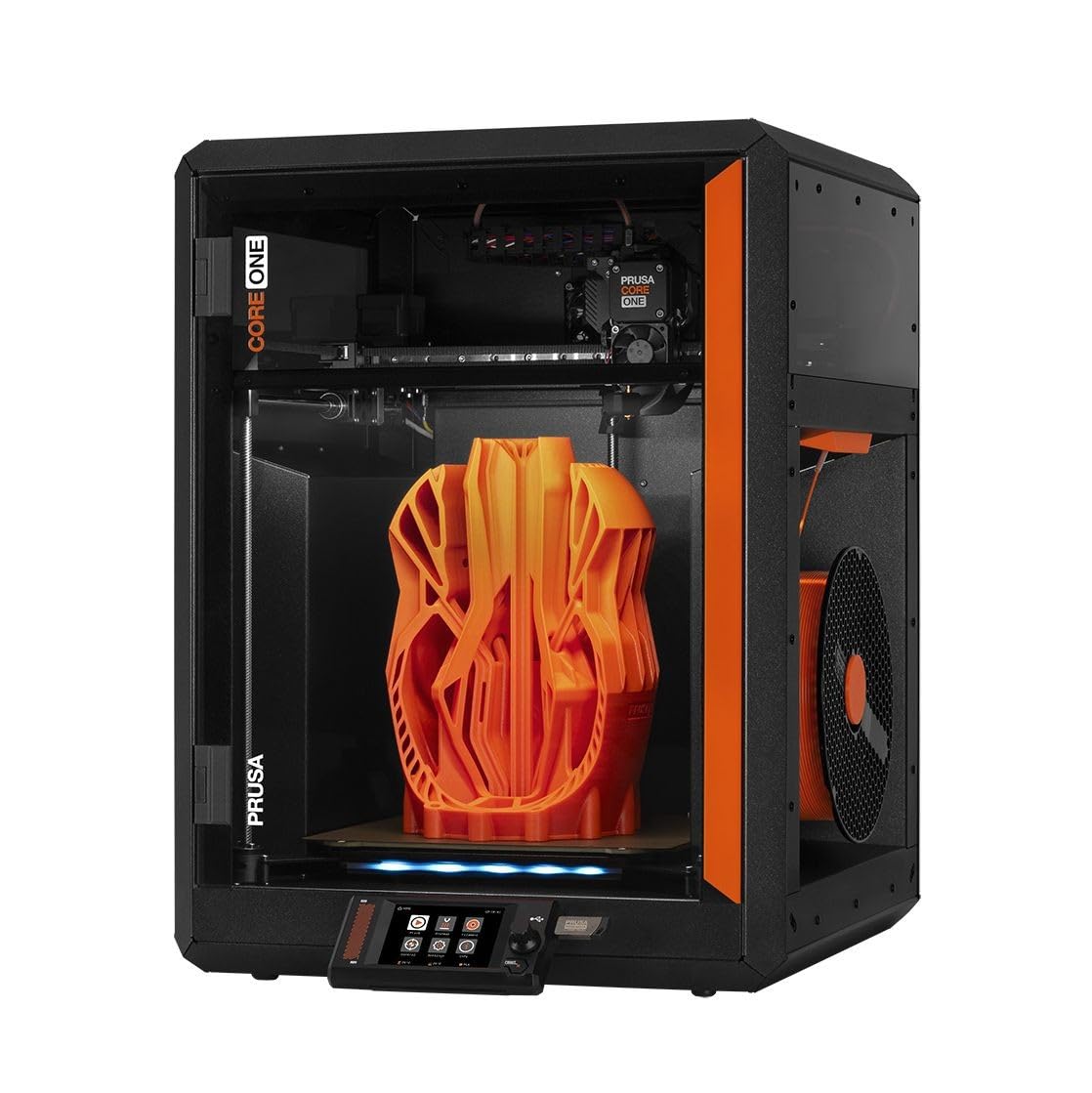
The Prusa CORE One is engineered with a “made to last” philosophy that differentiates it from the disposable-consumer approach of many competitors. The all-steel exoskeleton frame provides exceptional rigidity, and the actively heated chamber reaches 55°C with precise temperature control, enabling prints in PLA, PETG, ASA, PC, and Nylon. The CoreXY design offers a 250 x 220 x 270 mm build volume and print speeds that far exceed the older MK3S.
Prusa ships the CORE One fully assembled and tested — you can be printing within 15 minutes of opening the box. The removable magnetic print sheets make part removal effortless, and the included 1 kg spool of Prusament PLA gets you started immediately. The printer is entirely open-source, using a custom version of Klipper firmware that gives you full control over parameters. The right-to-repair ethos and availability of spare parts ensure this machine can serve for years, not months.
The main drawbacks are the price and the lack of a built-in multi-color system. The MMU3 add-on exists but is expensive and mechanically complex. Some early units have shipping-related issues like tight Z screws or loose set screws that require minor adjustment. Prusa’s customer service has received mixed reviews, with slow response times in some cases. For the user who values reliability, open-source freedom, and long-term support over raw speed or multi-color gimmicks, the CORE One is the right choice.
Why it’s great
- Steel exoskeleton frame ensures exceptional rigidity and longevity
- Open-source firmware and full right-to-repair support
- Fully assembled and tested, printing within minutes out of the box
Good to know
- Multi-color system is an expensive and complex add-on
- Customer service response times have been slow for some users
11. QIDI Max4 Combo
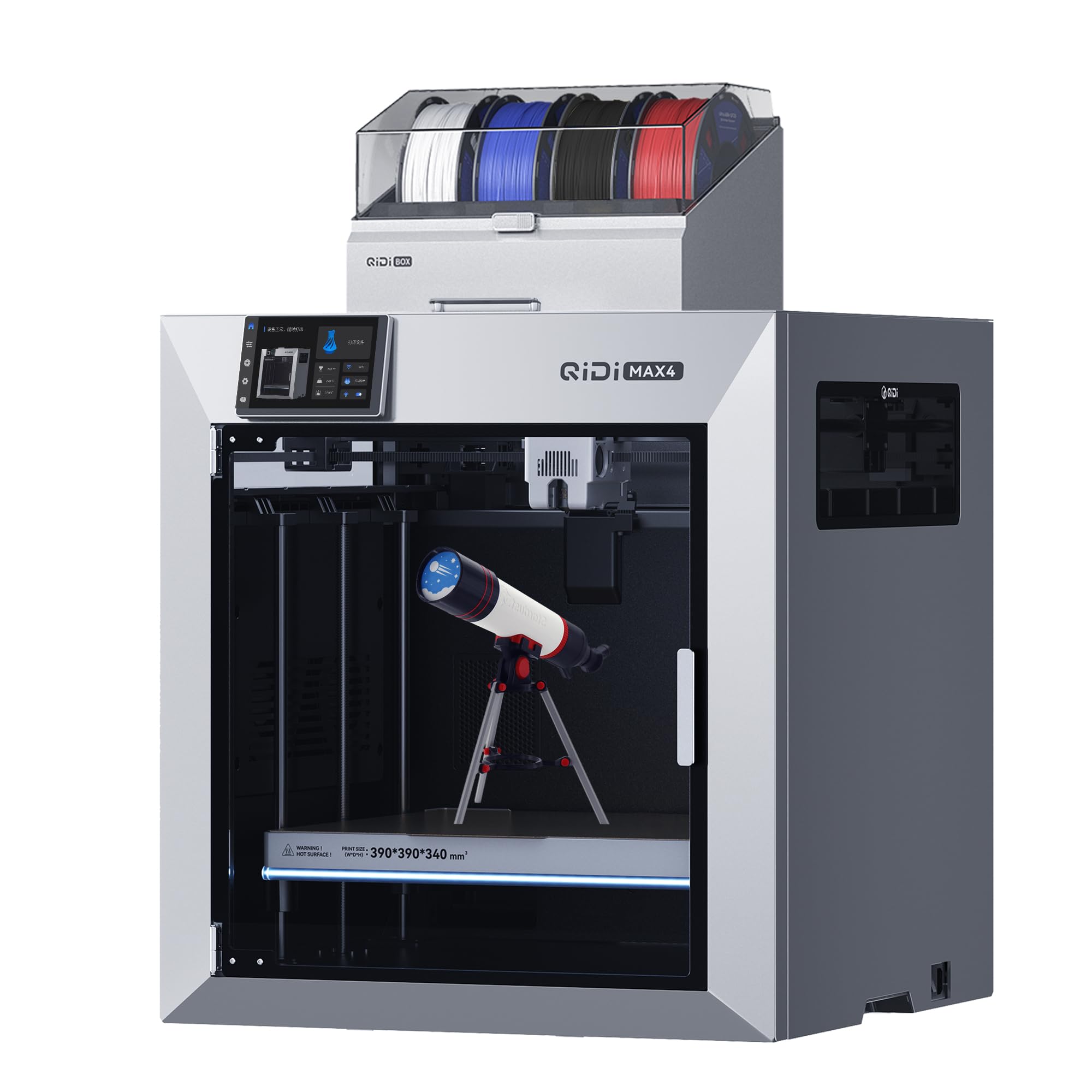
The QIDI Max4 Combo is the ultimate enclosed FDM printer for users who need industrial-scale build volume and engineering material support. The 390 x 390 x 340 mm build area is 55% larger than the MAX3, and the closed-loop motors on the X and Y axes deliver 800 mm/s printing with 30,000 mm/s² acceleration. The 2 mm lead screw and anti-backlash nut on the Z axis eliminate layer gaps, producing surfaces that rival machined parts.
The active 65°C heated chamber is the highest in this guide, and the self-developed Polar Cooler (sold separately) creates ideal conditions for high-temperature materials like ABS-CF, PC, and PPS-CF. The 40 mm³/s high-flow hotend with hardened steel nozzle handles carbon-fiber reinforced nylon without issue. The QIDI BOX accessory enables up to 16-color multi-material printing with intelligent filament management.
The Max4 has a significant footprint and weighs 120 pounds, requiring a dedicated industrial cart. The pre-print preparation time is long, and the initial chamber heating consumes substantial power. Some users received units with warped beds, though QIDI replaced them quickly. The user interface feels less polished than the Bambu ecosystem. This machine is for professionals and serious enthusiasts who need massive build volume, extreme material compatibility, and don’t mind the size and power requirements.
Why it’s great
- Class-leading 65°C active heated chamber for high-temp materials
- Closed-loop motors deliver 800 mm/s with high positional accuracy
- 390 x 390 x 340 mm build volume handles industrial-scale parts
Good to know
- Weighs 120 pounds and requires a large, sturdy table
- Long pre-print preparation and high initial power consumption
FAQ
What is the difference between a passive enclosure and an active heated chamber?
Can I print PLA inside an enclosed printer with active heating?
Do I need a multi-color system like AMS or ACE Pro to print in color?
What filtration should I look for if printing ABS or ASA indoors?
Is a heated chamber necessary for printing carbon-fiber reinforced filaments?
Final Thoughts: The Verdict
For most users, the best 3d printer with enclosure is the QIDI Q2 because it offers an actively heated 65°C chamber, triple filtration, and engineering-grade material support at a mid-range price. If you want seamless multi-color printing with a polished app experience, grab the Bambu Lab P1S Combo. And for industrial-scale builds and extreme material compatibility, nothing beats the QIDI Max4 Combo.