
The search for an audiophile headset is a search for truth in audio — the specific, measurable ability to hear the texture of a snare brush, the decay of a piano note in a live hall, or the subtle breath that precedes a vocal line. In this narrow category, the core spec isn’t battery life or wireless range; it’s the measurable combination of driver type (planar magnetic vs. dynamic), impedance, sensitivity, and frequency response linearity that determines whether a headphone disappears and lets the recording speak.
I’m Min — the co-founder and writer behind Gadgets Feed. My specialty involves dissecting the technical specifications that define the audiophile experience: comparing diaphragm thickness in microns, analyzing total harmonic distortion figures, and mapping how a headphone’s impedance curve interacts with amplifier output impedance to reveal its true performance ceiling.
For this guide, I’ve analyzed hundreds of hours of community listening reports and laboratory measurements to bring you the definitive list of the best audiophile headset choices, ranked by their ability to deliver transparent, emotionally engaging sound across a range of prices and design philosophies.
How To Choose The Best Audiophile Headset
Choosing an audiophile headset is about matching your listening preferences and gear chain to a specific technical profile. The wrong choice can leave a premium headphone sounding dull or harsh simply because its impedance doesn’t match your amplifier’s output.
Driver Type: Planar Magnetic vs. Dynamic
Planar magnetic drivers use a thin diaphragm suspended between two magnetic arrays, delivering faster transient response and lower distortion, especially in the bass region. Dynamic drivers, the traditional design, use a voice coil and cone, often providing a more natural midrange and higher efficiency. Planar headphones like the Audeze LCD-X excel in bass control and detail retrieval, while dynamic designs like the Sennheiser HD 660S2 offer a more intimate, vocal-forward presentation.
Impedance and Sensitivity: The Amplifier Question
Impedance (measured in ohms) and sensitivity (measured in dB/mW) together determine how much power a headphone needs. Low-impedance, high-sensitivity headphones (like the FiiO FT1 at 32Ω) can run directly from a phone or laptop. High-impedance models (like the original HD 600 series) often require a dedicated headphone amplifier to deliver sufficient voltage swing. The Beyerdynamic DT 990 Pro X, at 48Ω, strikes a practical balance, working well with most interfaces while still benefiting from a clean source.
Open-Back vs. Closed-Back: Soundstage vs. Isolation
Open-back headphones, such as the HIFIMAN Edition XS, have perforated earcups that allow air to pass through, creating an expansive, speaker-like soundstage. They offer superior spatial imaging and natural tonality but leak sound and provide no isolation. Closed-back headphones like the Sony MDR-M1 contain the sound, offering privacy and bass punch, but often have a smaller, less airy soundstage. Your choice depends on whether you prioritize immersion (open-back) or practicality (closed-back).
Quick Comparison
On smaller screens, swipe sideways to see the full table.
| Model | Category | Best For | Key Spec | Amazon |
|---|---|---|---|---|
| Sennheiser HD 490 PRO | Premium Open-back | Studio Reference & Mixing | 5 Hz–36 kHz | 120Ω | Dynamic | Amazon |
| Audeze LCD-X | Premium Planar | Critical Listening & Mastering | 106mm Planar | 20Ω | 103dB | Amazon |
| Sennheiser HD 800 S | Flagship Open-back | Massive Soundstage & Detail | 56mm Ring Radiator | 300Ω | Amazon |
| HIFIMAN Edition XS | Mid-Range Planar | Wide Soundstage on a Budget | Stealth Magnet | 18Ω | 92dB | Amazon |
| Sennheiser HD 660S2 | Mid-Range Open-back | Vocal Intimacy & Warmth | 42mm Dynamic | 300Ω | 104dB | Amazon |
| HIFIMAN Sundara | Entry Planar | Detail & Clarity King | Planar Magnetic | 37Ω | 94dB | Amazon |
| Beyerdynamic DT 990 Pro X | Value Open-back | Gaming & General Use | STELLAR.45 Driver | 48Ω | Amazon |
| Sony MDR-M1 | Professional Closed-back | Critical Monitoring | 40mm Dynamic | 5 Hz–80 kHz | Amazon |
| FiiO FT1 | Budget Closed-back | Warm, Fun, Easy to Drive | 60mm Dynamic | 32Ω | Amazon |
In‑Depth Reviews
1. Sennheiser HD 490 PRO

The HD 490 PRO redefines what a professional open-back headphone can be at a mid-range price point. With an impedance of 120Ω and high sensitivity of 104dB, it is one of the easiest high-end headphones to drive, sounding clean and dynamic even from a laptop’s headphone jack. The frequency response stretches from 5 Hz to 36 kHz, providing sub-bass extension and airy treble without the sibilance that plagues lesser studio monitors. The Open-frame Architecture keeps total harmonic distortion remarkably low, preserving every nuance in a mix.
What sets the HD 490 PRO apart is its thoughtful design for extended professional use. It weighs significantly less than planar magnetic competitors like the HIFIMAN Edition XS, and the multi-directional earcups adjust to any head shape effortlessly. Two sets of ear pads are included — one for producing, one for mixing — each altering the bass response and soundstage depth. The balanced 4-pin mini-XLR cable includes a patented coil structure that eliminates microphonic noise, a critical detail for studio work.
Reviews consistently highlight its extraordinary comfort for 8-hour sessions and its neutral, balanced sound that works across genres. It’s equally praised for competitive gaming due to its precise imaging and ability to reveal every footstep. The only trade-off is the proprietary ear pad attachment system, but the pads themselves are washable and replaceable, adding long-term value. For pure sound quality, comfort, and versatility, the HD 490 PRO is the benchmark.
Why it’s great
- Extremely easy to drive with high sensitivity
- Exceptional comfort with lightweight build
- Two included ear pad sets for different use cases
- Neutral, detailed sound with low distortion
Good to know
- Proprietary ear pad attachment limits third-party options
- Open-back design leaks sound and provides no isolation
2. Audeze LCD-X

The Audeze LCD-X is a professional-grade planar magnetic headphone that has become a staple in commercial recording studios for mixing and mastering. Its 106mm ultra-thin diaphragm, driven by double-sided neodymium magnets, produces bass that is both deep and distortion-free — a characteristic that planar magnetics excel at compared to dynamic drivers. The frequency response extends from 12 Hz to 50 kHz, but its real strength is the linear, controlled bass response down to 20 Hz without the bloat that plagues many closed-back competitors.
Hand-crafted in California and individually calibrated, the LCD-X features a revised 2021 ear pad design that improves comfort over the earlier generations, though its weight of roughly 600 grams remains the primary ergonomic limitation. The impedance of 20Ω and sensitivity of 103dB mean it can be driven by a wide range of amplifiers, though a powerful amp is recommended to unlock its full dynamic swing. The all-metal construction with a premium leather headband feels indestructible.
User feedback emphasizes that out of the box, the LCD-X can sound slightly dark, requiring EQ to reach its neutral potential. With EQ correction, reviewers describe it as having “insane, distortion-free bass” and “phenomenal clarity.” It’s best suited for critical listeners who prioritize resolution, bass texture, and build durability above all else — and who are willing to manage its weight. The included carry case and multiple cable terminations add professional polish.
Why it’s great
- Exceptional bass extension with zero distortion
- Premium all-metal build with individual calibration
- Wide, immersive soundstage with excellent instrument separation
Good to know
- Heavy weight causes neck fatigue during long sessions
- Benefits significantly from EQ for neutral response
3. Sennheiser HD 800 S

The Sennheiser HD 800 S is the reference-grade open-back dynamic headphone known for its massive, three-dimensional soundstage. Its 56mm ring radiator transducer is the largest dynamic driver ever used in a consumer headphone, and it combines with an angled earcup design to create a sense of space that rivals electrostatic systems. The frequency response is ruler-flat in the mids but with a slight treble elevation, requiring careful source pairing to avoid sibilance. The 300Ω impedance makes it highly dependent on a quality amplifier; a tube amp can transform its tonality.
Build quality is exceptional, with metal yokes, a lightweight carbon fiber headband, and a minimalist aesthetic. The included balanced 4.4mm cable and single-ended 1/4-inch cable offer flexibility for high-end DACs. The HD 800 S weighs just 330 grams, making it far lighter than the Audeze LCD-X, and the plush microsuede ear pads ensure fatigue-free listening. The open-back design provides virtually no isolation, so it’s strictly for quiet environments.
Owner feedback consistently praises its ability to reveal detail and placement in complex mixes — “precision audio instrument” and “superb three-dimensional depth” are recurring phrases. The primary criticism is that it can sound bass-light compared to warmer competitors, requiring EQ for those who prefer more low-end impact. It is the definitive choice for those who prioritize soundstage size, imaging precision, and build elegance, and who have a high-end amplifier chain to match.
Why it’s great
- Unmatched soundstage width and positional accuracy
- Extremely lightweight and comfortable for its size
- Exceptional build quality with premium materials
Good to know
- Requires a high-quality amplifier to perform optimally
- Bass can sound lean without EQ correction
4. HIFIMAN Edition XS

The HIFIMAN Edition XS brings affordable planar magnetic performance into the mid-range, incorporating technology from the company’s flagship models. Its NEO Supernano Diaphragm is 75% thinner than older designs, enabling faster transient response and more detailed imaging. The Stealth Magnet design reduces wave diffraction turbulence, resulting in a noticeably cleaner sound compared to conventional planar models. The impedance of 18Ω makes it easy to drive for a planar, but the 92dB sensitivity means it still appreciates a dedicated amplifier to prevent a compressed low end.
The headband uses a suspension-style strap with memory foam padding, but the low clamp force combined with the headphone’s size can cause it to slip on smaller heads. The ear cups are large and accommodate most ear shapes well, but the overall weight of 405 grams is noticeable during extended listening. Users report that the soundstage is remarkably wide — wider than the Sennheiser HD 600 series — and that the bass is punchy and clean when properly amplified, though it lacks the sub-bass authority of the Audeze LCD-X.
Community feedback highlights the Edition XS as the “best bang-for-buck after 1.5 years” when paired with a DAC/amp like the Topping DX3 Pro+. Many users recommend applying the Oratory1990 EQ preset to correct a slight treble peak and add a few dB of bass. Some units have reported driver rattling issues, so a 20 Hz–20 kHz sweep test is advised upon arrival. For those seeking a wide, detailed planar sound without a premium price tag, this is the gateway.
Why it’s great
- Wide soundstage with excellent imaging for the price
- Fast, detailed treble and transparent midrange
- Stealth Magnet technology reduces audible distortion
Good to know
- Large frame and low clamp force may not fit smaller heads well
- Potential quality control issues with driver rattling
5. Sennheiser HD 660S2
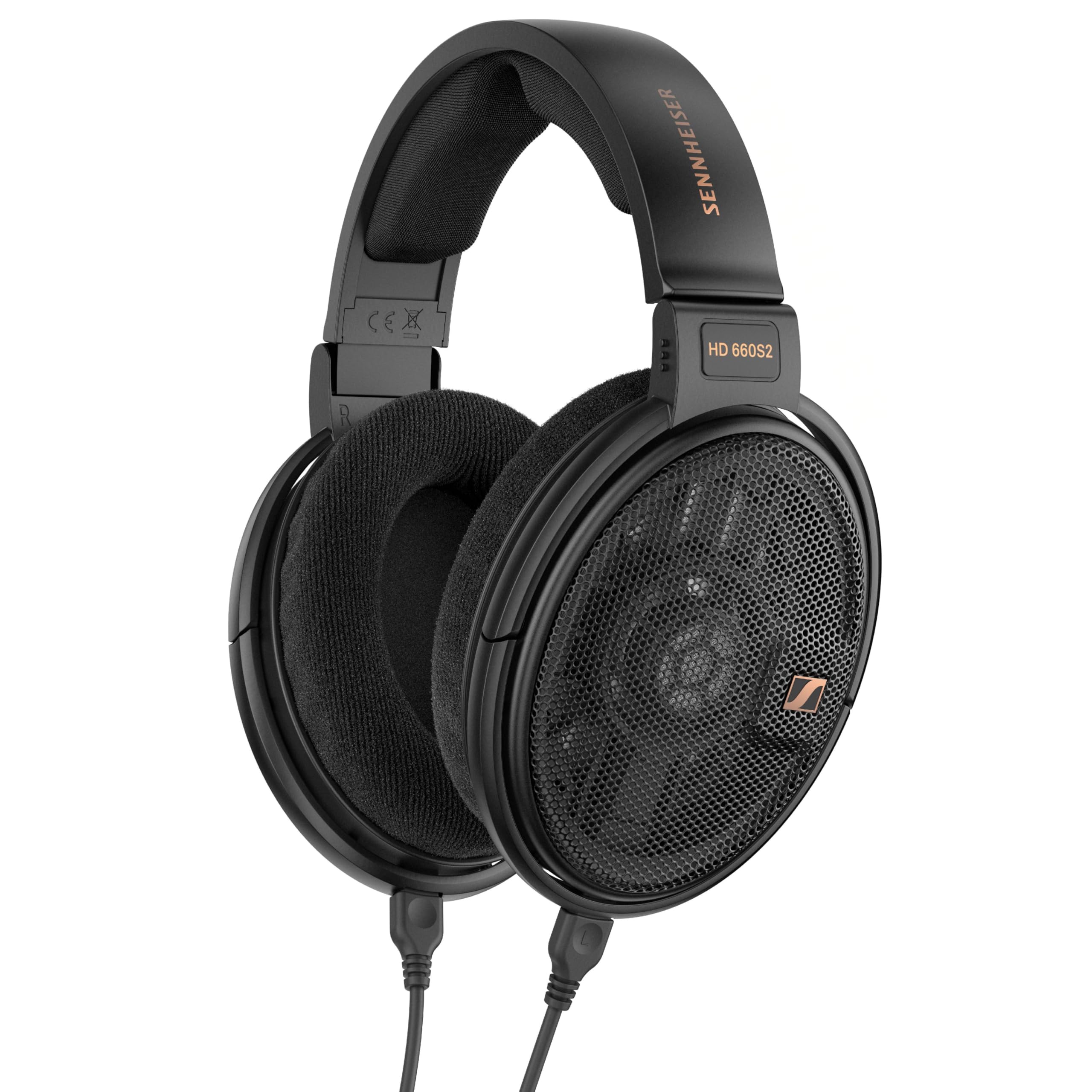
The Sennheiser HD 660S2 refines the classic HD 600-series formula with a redesigned 42mm dynamic driver that delivers deeper bass extension and a warmer, more engaging tonality. The impedance of 300Ω and sensitivity of 104dB mean it still requires a powerful amplifier, especially when used with its balanced 4.4mm cable, but the reward is a midrange that feels hauntingly realistic — vocals are presented with a lifelike presence and excellent micro-detail. The frequency response is natural and forgiving, avoiding the treble fatigue that some planars exhibit.
Build quality is typical Sennheiser: a robust plastic and metal construction that feels durable despite its light weight. The ear pads are plush and breathable, and the open-back design provides a spacious, airy presentation even though its soundstage is narrower than the HD 800 S. Two detachable cables are included: a 1.8m 6.3mm and a 1.8m 4.4mm balanced cable, plus a 6.3mm to 3.5mm adapter. The included carry pouch is functional but offers less protection than a hard case.
User reviews frequently describe the HD 660S2 as “magic” when paired with a tube amplifier, which smooths out its already-pleasant treble and adds to its vocal richness. It is less suited for competitive gaming than the HD 490 PRO due to its more intimate soundstage, but it excels for acoustic, jazz, and vocal music. The only notable drawback is that it is best purchased on sale — its list price places it in direct competition with the more technically capable HD 490 PRO. For vocal lovers with a dedicated tube amp, it remains a specialist’s choice.
Why it’s great
- Exceptional vocal realism and midrange clarity
- Warm, non-fatiguing tonality suitable for long sessions
- Includes both single-ended and balanced cables
Good to know
- Requires a powerful amplifier for best performance
- Soundstage is more intimate than open-back competitors
6. HIFIMAN Sundara

The HIFIMAN Sundara is the headphone that democratized planar magnetic performance, offering a level of detail and clarity that was previously unheard of at a mid-range price. Its NEO Supernano Diaphragm is 80% thinner than earlier HIFIMAN models, resulting in faster transient response and extended frequency response. The impedance of 37Ω and 94dB sensitivity mean it benefits from a dedicated amplifier, but it can run from a laptop or a good USB-C dongle in a pinch. The sound signature is neutral-bright: excellent treble extension and airy highs without being harsh, a flat but highly responsive low end, and a midrange that is less intimate than the HD 600 series but more detailed.
The build is predominantly metal, giving the Sundara a premium feel for its price point, though the headband design has been updated to include a suspension strap that distributes weight better than earlier models. The ear cups are comfortable for most users, and the standard 3.5mm connectors on the cable make replacement easy. The Sundara’s soundstage is wide and layered, making it excellent for complex orchestral music and acoustic genres.
User sentiment is overwhelmingly positive, with many calling it the “value king” for its ability to compete with headphones costing twice as much. Reviewers note that it surpasses the Sennheiser HD 560S in bass impact, mids transparency, treble refinement, soundstage, and overall resolution. Potential reliability issues with driver rattling and a short 1-year warranty are the main concerns. For detail-oriented listeners who prioritize resolution and are comfortable using EQ to add a few dB of bass, the Sundara remains a top recommendation.
Why it’s great
- Exceptional detail retrieval and transient speed for its price
- Neutral-bright tonality with excellent clarity
- Mostly metal build feels more expensive than it is
Good to know
- Benefits from a headphone amplifier to unlock full potential
- Reported quality control concerns with some units
7. Beyerdynamic DT 990 Pro X

The Beyerdynamic DT 990 Pro X introduces the new STELLAR.45 driver — a 45mm dynamic driver designed to offer the classic Beyerdynamic sound (bright, analytical treble) while improving bass control and treble smoothness over the original DT 990 Pro. The 48Ω impedance is lower than the 250Ω original, making it directly compatible with laptops, consoles, and portable DACs without needing a powerful amplifier. The frequency response stretches from 5 Hz to 40 kHz, and the open-back design provides a wide, natural soundstage with excellent spatial imaging for gaming and critical listening.
The build is classic Beyerdynamic: sturdy metal yokes, a durable padded headband, and the iconic soft velour ear pads that are extremely comfortable for long sessions. The detachable cable with a locking mini-XLR connector is a major upgrade over the original DT 990’s fixed cable, and the included 3m cable provides ample length for studio use. The headphones are handcrafted in Germany, and all parts are user-serviceable — pads, cables, and even the headband can be replaced.
User feedback is mixed but trending positive. Many praise its refined sound — “clear highs, rich mids, wide soundstage” — and find it an excellent all-around choice for music, gaming, and movies. Others note that out of the box it can sound a bit flat compared to the original DT 990’s V-shaped signature, but that EQ can unlock its potential. The clamping force is moderate, and the velour pads can cause warmth in hot climates. For those seeking a versatile, durable, and easy-to-drive open-back headphone, the DT 990 Pro X is a compelling option.
Why it’s great
- Easy to drive with lower 48Ω impedance
- Detachable cable with locking mini-XLR connector
- Fully serviceable parts, made in Germany
Good to know
- Out-of-box sound may benefit from EQ for some listeners
- Velour ear pads can get warm over time
8. Sony MDR-M1

The Sony MDR-M1 is a professional closed-back monitor headphone designed for recording, mixing, and critical listening, developed in collaboration with industry engineers. Its 40mm dynamic driver is tuned for ultra-wideband playback from 5 Hz to 80 kHz, providing accurate reproduction across the entire audible spectrum. The closed acoustic structure offers high sound isolation, making it ideal for tracking vocals or instruments in a noisy environment. The impedance and sensitivity are well-balanced, allowing it to be driven effectively by audio interfaces and portable DACs.
Weighing approximately 216 grams, it is one of the lightest professional headphones available, and the soft, thick ear pads ensure comfort during extended sessions. The ear cups can be folded flat for storage, and the headband is adjustable for a secure fit. The detachable dual cables include a 1.2m 3.5mm cable for portable use and a 2.5m 6.3mm cable for studio work, both with a screw-in jack that prevents accidental disconnection. The MDR-M1 replaces the legendary MDR-7506 with a more refined sound signature.
User reviews highlight its neutral, balanced sound with a slight bass emphasis that adds warmth without bleeding into the mids. The soundstage is surprisingly wide for a closed-back design, and imaging is precise. The main criticisms are that the ear pads can become warm after long periods and that no storage case is included. For professionals who need accurate monitoring in noisy environments or listeners who want a closed-back headphone that rivals open-back transparency, the MDR-M1 is an excellent choice.
Why it’s great
- Lightweight design is comfortable for long tracking sessions
- Excellent isolation with neutral, accurate sound
- Ultra-wide frequency response for detailed monitoring
Good to know
- No storage case is included in the package
- Ear pads can get warm with prolonged use
9. FiiO FT1

The FiiO FT1 is a closed-back dynamic headphone that has taken the entry-level market by storm, offering a 60mm dynamic driver with a nano wood fiber composite diaphragm. The diaphragm’s base material — 90-year-old spruce from Northern Europe — combined with carbon fiber reinforcement, achieves a thickness of approximately 0.1mm, balancing light weight with stiffness. The impedance of 32Ω and high sensitivity make it exceptionally easy to drive from a phone or laptop, delivering deep, punchy bass and a warm, immersive tonality without the need for a separate amplifier.
The FT1 features solid wood ear cups — a rare material choice at this price point — which contribute to its premium aesthetic and also help dampen resonances. The W-shaped independent suspension design increases the diaphragm’s effective vibrating area by 25.8%, improving bass extension and overall dynamics. The headband uses a ball-slide rail system with 11 notches for precise adjustment, and the suede fabric on the headband contact area adds comfort. Two detachable cables are included: a 1.5m 3.5mm single-ended and a 1.5m 4.4mm balanced cable, both oxygen-free copper with silver plating.
User feedback is overwhelmingly enthusiastic, with phrases like “mind-blowing in sound and value” and “the hype is real.” The sound signature is warm and slightly V-shaped, with deep, non-muddy bass, present and lively mids, and smooth highs that avoid sibilance. The isolation is average for a closed-back, and the included cable is microphonic for some users. For budget-conscious audiophiles who want a fun, engaging sound with great build quality and don’t want to invest in an amplifier, the FiiO FT1 is an easy recommendation.
Why it’s great
- Exceptional bass depth and texture for its price
- Gorgeous wood cups with premium build quality
- Easy to drive without needing a separate amplifier
Good to know
- Warm, slightly V-shaped sound is less neutral than competitors
- Included microphonic cable can be improved with an aftermarket option
FAQ
Do I need a separate amplifier for every audiophile headphone?
Is an open-back headphone always better than a closed-back for sound quality?
What does “burn-in” mean for audiophile headphones, and is it necessary?
Final Thoughts: The Verdict
For most users, the best audiophile headset winner is the Sennheiser HD 490 PRO because it combines a neutral, detailed frequency response with exceptional comfort and easy drivability, making it suitable for both professional and audiophile use. If you want massive bass extension and studio-grade build with a planar driver, grab the Audeze LCD-X. And for a portable, fun, and budget-friendly closed-back option, nothing beats the FiiO FT1.