
A bike computer is the difference between guessing your effort and knowing your power, between hoping a trail connects and seeing the turn on a map. Whether you train with structured intervals, chase PRs on gravel, or simply want a reliable navigation tool that doesn’t drain your phone battery, the modern bike computer delivers GPS accuracy, sensor integration, and ride analysis that yesterday’s cyclist could only dream of.
I’m Min — the co-founder and writer behind Gadgets Feed. I’ve spent countless hours analyzing satellite positioning chipsets, battery endurance figures, and sensor protocol compatibility across the current bike computer market to build this guide around real-world data and user experience.
From entry-level units that track essential metrics to premium models with multi-band GNSS and adaptive coaching, these reviews cover the full spectrum of what matters. This is the definitive guide to finding your perfect best bike computer based on how you actually ride.
How To Choose The Best Bike Computer
Selecting a bike computer is a balance between navigation depth, sensor ecosystem, battery endurance, and screen readability. The right choice depends almost entirely on the type of riding you do most — solo endurance rides, competitive racing, bikepacking, or casual gravel exploration.
Navigation: Breadcrumb vs. Full Map vs. Turn-by-Turn
Entry-level computers and some mid-range models show a simple breadcrumb trail — a line on a blank background that tells you where you’ve been and where the route goes. Mid-range units like the iGPSPORT BSC100S and Magene C506 offer basic navigation without detailed street maps. Premium computers from Garmin, Wahoo, and SRAM Hammerhead render full color maps with searchable points of interest, turn-by-turn voice prompts, and automatic rerouting when you miss a turn. If you ride unfamiliar routes or explore new regions, full map navigation is the single most important differentiator.
Sensor Compatibility: ANT+ and Bluetooth
Every bike computer in this guide supports ANT+ and Bluetooth dual protocol, which means you can pair speed sensors, cadence sensors, heart rate monitors, power meters, and even electronic shifting groupsets from Shimano Di2 and SRAM eTap. The Magene C506 goes further by supporting up to nine simultaneous device connections, including radar tail lights and smart trainers. If you plan to use a power meter for structured training, confirm the computer supports ANT+ power meter profiles — the Garmin Edge 540 and Edge 1040 include Power Guide and Stamina features that actively use power meter data to recommend effort levels.
Battery Life and Charging
Battery life is measured in demanding use cases (navigation active, sensors paired, backlight on) and battery saver mode (GPS only, minimal screen activity). The iGPSPORT BSC100S leads with 40 hours of real-world endurance, ideal for multi-day touring without charging. The Garmin Edge 1040 delivers up to 35 hours in demanding mode and 70 hours in saver mode. At the lower end, the Beeline Velo 2 provides 11 hours — sufficient for a long day ride but requiring a mid-ride charge for ultra-distance events. All models here now use USB-C charging, a welcome shift from the older micro-USB standard.
Quick Comparison
On smaller screens, swipe sideways to see the full table.
| Model | Category | Best For | Key Spec | Amazon |
|---|---|---|---|---|
| Garmin Edge 540 | Premium | Performance Training & Navigation | 42h battery saver; multi-band GNSS; ClimbPro | Amazon |
| iGPSPORT BSC100S | Mid-Range | Long-Distance Touring & Value | 40h battery; IPX7; includes cadence + speed sensors | Amazon |
| Magene C506 | Mid-Range | Smart Features & Indoor Training | 2.4″ touchscreen; WiFi; 9-sensor support | Amazon |
| Beeline Velo 2 | Mid-Range | Minimalist Navigation | 11h battery; compass mode; strap mount | Amazon |
| Wahoo ELEMNT ROAM V3 | Premium | Dual-Band GPS & Route Sharing | 2.8″ color display; IPX7; on-demand routing | Amazon |
| SRAM Hammerhead Karoo | Premium | Smartphone-Like Interface & MTB | 3.2″ touchscreen; 64GB storage; 15h battery | Amazon |
| Garmin Edge 1040 | Flagship | Ultimate Touring & Performance | 3.5″ color display; 70h battery saver; multi-band GNSS | Amazon |
In‑Depth Reviews
1. Garmin Edge 540

The Garmin Edge 540 sets the standard for a button-controlled GPS cycling computer that doesn’t compromise on performance metrics. Its multi-band GNSS locks onto satellites faster and maintains position in dense forests and urban canyons far better than standard GPS receivers. The 2.3-inch LCD display is crisp in direct sunlight, and the physical buttons remain responsive even when you’re wearing full-fingered winter gloves — a real advantage over touchscreen-only units mid-ride.
ClimbPro ascent planner now works on every ride, not just pre-loaded courses, showing remaining ascent and grade so you can pace climbs intelligently. The Power Guide feature recommends wattage targets throughout a course when paired with a compatible power meter, and the Stamina insight tracks how much longer you can sustain your current effort. Battery life reaches 26 hours in demanding use and stretches to 42 hours in battery saver mode, making it a competent choice for multi-day events without a recharge.
The data field customization is deep — you can display speed, cadence, heart rate, power, gradient, temperature, and dozens of other metrics across multiple pages. The USB-C port is a welcome modern touch, and the entire unit feels solidly built with a durable, weather-resistant chassis. Some users report a steep learning curve with the Garmin Connect ecosystem, but once configured, the Edge 540 delivers training insights that cheaper units simply cannot match.
Why it’s great
- Multi-band GNSS provides exceptional positional accuracy in challenging environments
- ClimbPro and Power Guide deliver course-specific pacing intelligence
- 42-hour battery saver mode supports ultra-distance rides
Good to know
- Dashboard setup through Garmin Connect requires significant time investment
- No touchscreen — button-only navigation can feel slower for map zooming
2. iGPSPORT BSC100S
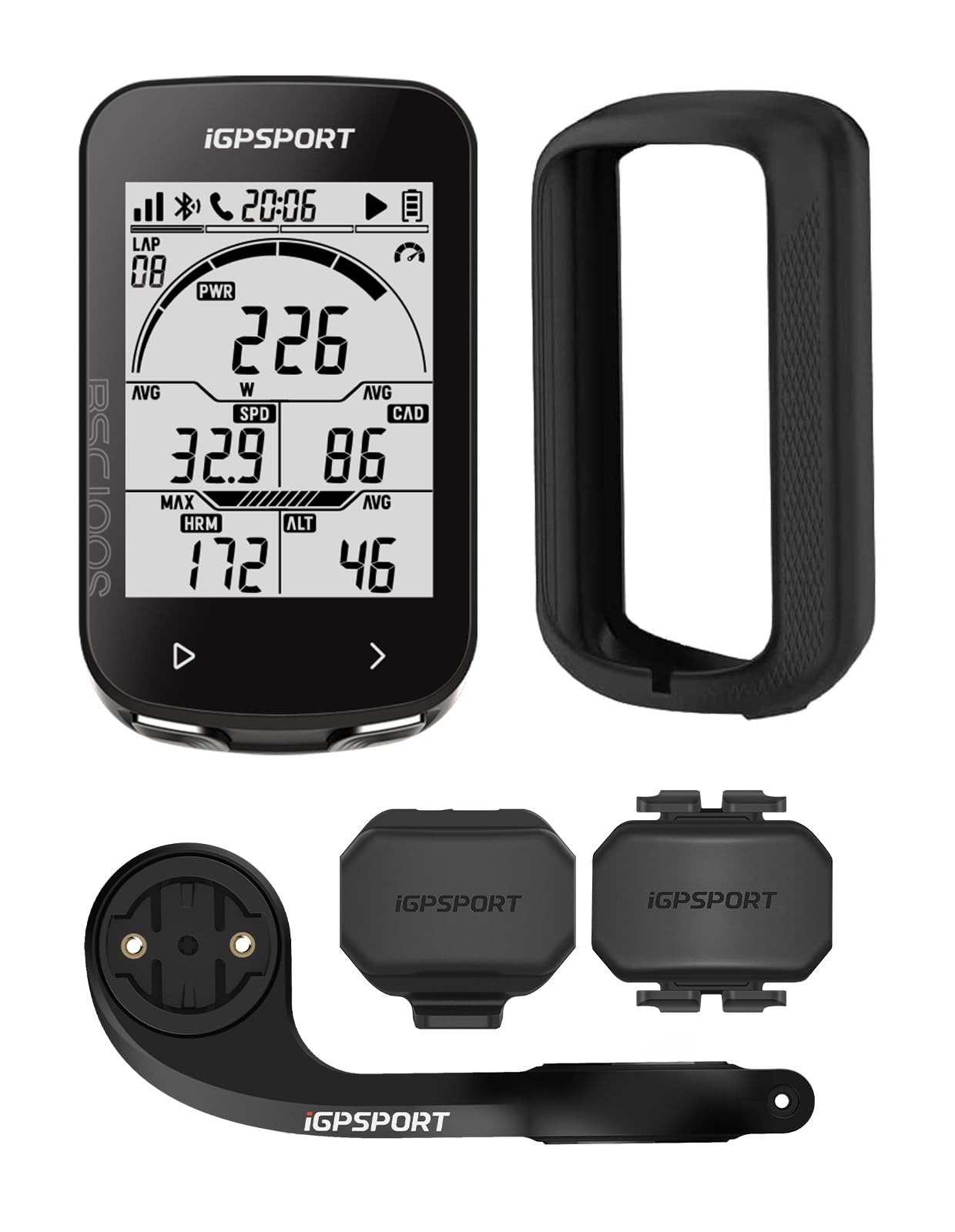
The 2.6-inch anti-glare LCD is readable in direct sunlight, and the 600mAh battery delivers a genuine 40 hours of ride time, making it the longest-lasting computer in this guide outside the Garmin Edge 1040’s battery saver mode.
Global positioning uses five satellite constellations — GPS, BeiDou, GLONASS, Galileo, and QZSS — resulting in quick lock times and accurate track recording even in partially wooded areas. The computer connects via ANT+ and Bluetooth 5.0, so it pairs seamlessly with power meters, HR straps, and third-party sensors. Data syncs to the iGPSPORT app and then to Strava or Komoot, though the app interface is basic and occasionally displays advertisements.
The two-button interface is simple to learn but limits screen navigation — you cannot customize data pages as freely as with a Garmin, and there is no turn-by-turn navigation or color map rendering. A few users have reported the device freezing mid-ride, which resets and loses un-synced data. Still, for riders who want reliable GPS tracking, long battery endurance, and sensor pairing without spending a premium, the BSC100S is the strongest value proposition in the entire category.
Why it’s great
- Includes cadence and speed sensors at no extra cost
- 40-hour battery life exceeds most premium models
- Five-constellation GPS ensures accurate tracking
Good to know
- No turn-by-turn navigation or detailed map rendering
- Occasional freeze requires reset, losing unsaved ride data
3. Garmin Edge 1040

The Garmin Edge 1040 is the flagship GPS bike computer for riders who demand the largest display, the longest battery endurance, and the most complete training analysis Garmin offers. The 3.5-inch color touchscreen is immediately legible in all lighting conditions, and it combines touch input with physical buttons so you can operate the device gloved or sweaty without frustration. Battery life reaches 35 hours in demanding use — with navigation, sensors, and backlight active — and an incredible 70 hours in battery saver mode, enough for multi-day bikepacking trips without a power bank.
Multi-band GNSS provides pinpoint positioning in the toughest satellite environments: deep forest canopy, narrow urban corridors, and slot canyons where standard GPS fails. The Power Guide feature uses a connected power meter to recommend wattage targets for every segment of a course, and the Stamina insight tracks real-time energy reserve. Garmin’s ride type-specific maps highlight popular road, MTB, and gravel routes, and the unit supports automated climb detection even when no course is loaded.
The included package is generous — the Edge 1040 ships with a speed sensor, cadence sensor, and premium heart rate monitor, covering every base for a rider stepping into serious training. The Garmin Connect ecosystem is deep, with personalized daily suggested workouts that adapt based on your recovery and training load. The main drawback is the size and cost — the 3.5-inch body is bulky on some handlebars, and the premium price positions it exclusively for committed cyclists who will extract value from every feature.
Why it’s great
- 70-hour battery saver mode is unmatched for ultra-distance and touring
- 3.5-inch color display with touch + button control is best-in-class for readability
- Full sensor bundle included (speed, cadence, HR monitor)
Good to know
- Large form factor may crowd handlebar space, especially with lights or a bell
- Premium price places it well above mid-range alternatives
4. Magene C506
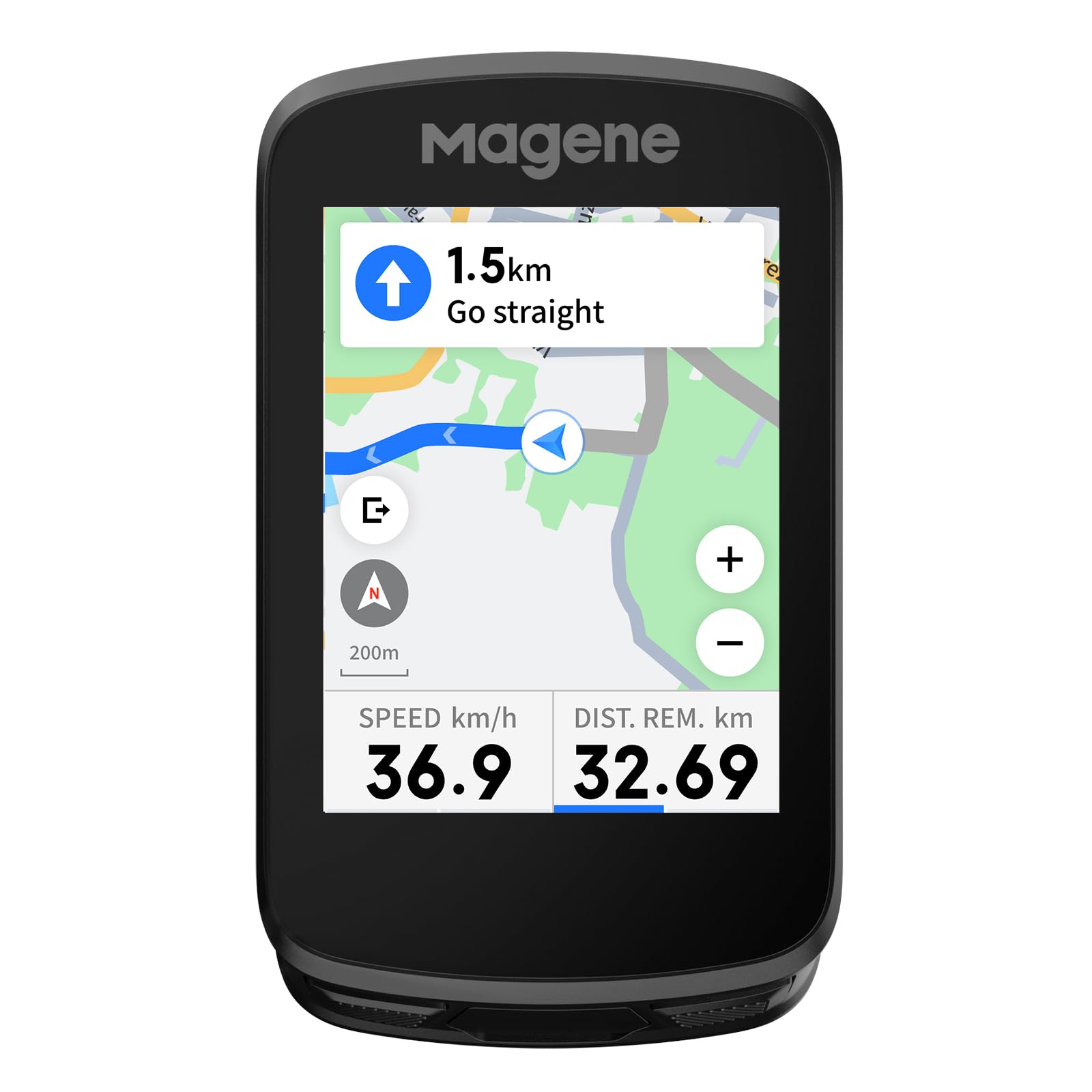
The Magene C506 brings color touchscreen navigation and WiFi connectivity to the mid-range segment at a price that undercuts Garmin’s premium line by a wide margin. The 2.4-inch touchscreen is paired with three physical buttons, giving you redundant control options when gloves or rain make touch input unreliable. The Airoha chipset locks GPS in approximately five seconds using AGNSS pre-positioning data, and the WiFi protocol syncs ride files 28 times faster than Bluetooth — a meaningful time saver after long rides.
Smart navigation includes free global map downloads and turn-by-turn directions with custom route creation through the OnelapFit app or imported GPX files. The riding assistant feature automatically activates connected Magene tail lights at 10 km/h and sends hydration and energy reminders. For indoor training, the C506 uploads FIT files to compatible smart trainers, allowing structured workouts with resistance control and gradient simulation — a rare feature at this price point.
The device supports nine simultaneous device connections, including SRAM eTap and Shimano Di2 electronic shifting, plus radar tail lights and power meters. Battery life maxes out at 24 hours in endurance mode, which trails the iGPSPORT BSC100S but is enough for most day-long rides. The OnelapFit app interface has a steeper learning curve and occasionally poor translations, but the core navigation and data recording are accurate and reliable. For riders who want color maps, touchscreen interaction, and smart light control without stepping into flagship pricing, the C506 is a compelling middle ground.
Why it’s great
- Color touchscreen with free global map downloads and turn-by-turn navigation
- WiFi sync is significantly faster than Bluetooth-only units
- Indoor trainer compatibility with resistance and gradient control
Good to know
- OnelapFit app is clunky and contains poor translations
- Touchscreen requires multiple presses for reliable registration
5. Wahoo ELEMNT ROAM V3
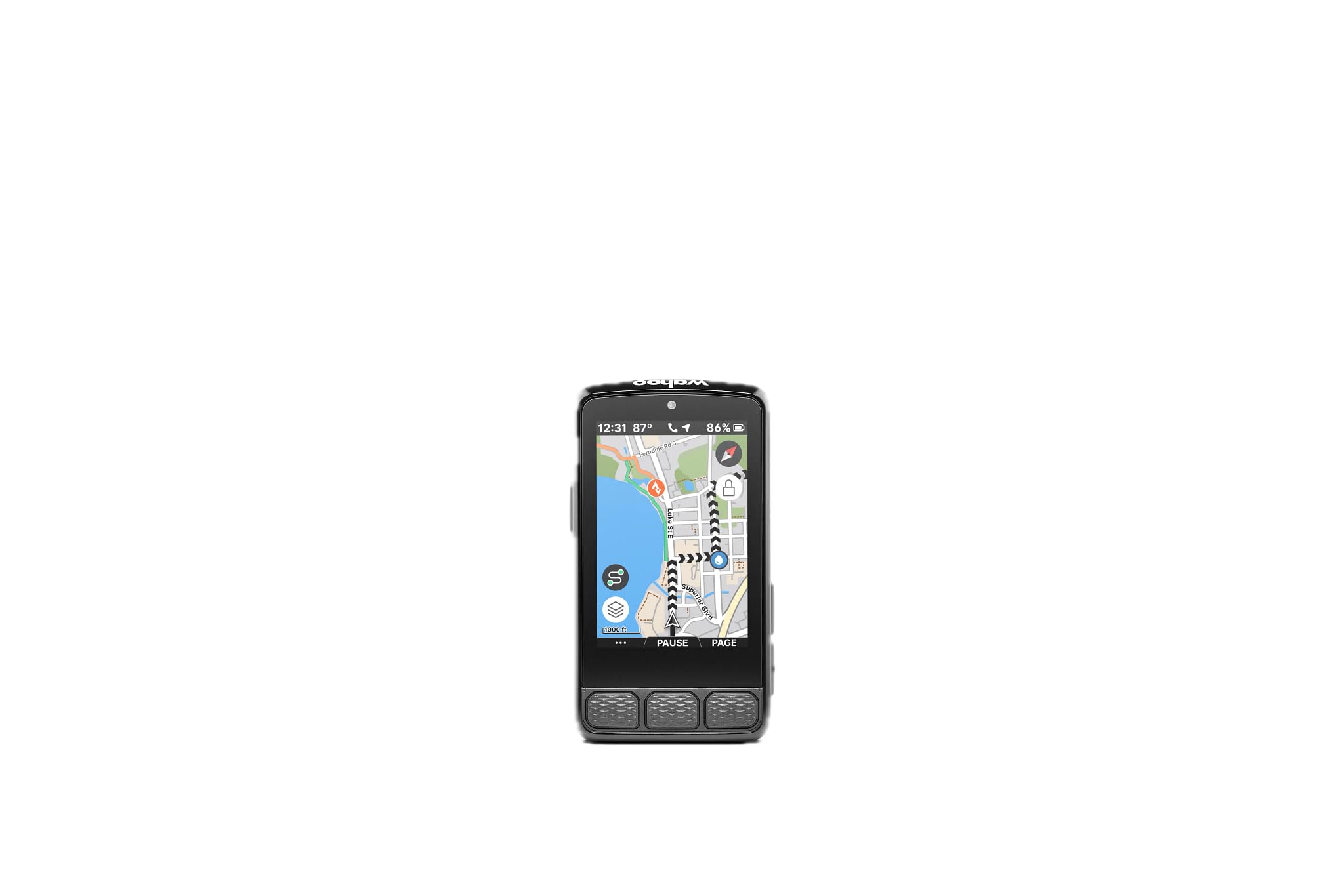
The Wahoo ELEMNT ROAM V3 is a navigation-first bike computer designed for riders who prioritize route finding and map interaction above all else. Its dual-band GPS uses GPS, GLONASS, BeiDou, Galileo, QZSS, SBAS, and NavIC satellites to maintain positional accuracy in environments where standard GPS receivers drift — deep forests, narrow city streets, and mountainous terrain. The 2.8-inch color LCD is bright and readable in direct sunlight, with auto-illumination that adjusts brightness based on ambient light conditions.
On-demand route generation lets you pan and zoom the map directly on the device, select a point, and generate a turn-by-turn route without needing a smartphone. Public route sharing allows nearby ELEMNT users to load your route into their device, which is valuable for group rides. The physical buttons are well-spaced and clicky, and the touchscreen adds the ability to quickly swipe through elevation profiles and map zoom levels. The integrated bike bell feature is a thoughtful touch that uses the device’s speaker to alert pedestrians.
Battery life is rated at 25 hours, competitive with the Garmin Edge 540 but lower than the Edge 1040. The IPX7 waterproof rating means the unit survives heavy downpours without issue. Some users have reported sensor pairing hiccups and occasional Strava sync failures, and the customization options are limited to the companion app — you cannot rearrange data fields directly on the device. For riders who value intuitive navigation and simple setup over deep training analytics, the ROAM V3 is an excellent companion.
Why it’s great
- Dual-band GPS with seven satellite constellations for superior positional accuracy
- On-device route generation with pan/zoom map interaction
- IPX7 waterproof rating survives sustained heavy rain
Good to know
- Data field customization requires the companion app — no on-device editing
- Occasional sensor pairing and sync bugs reported by users
6. SRAM Hammerhead Karoo

The SRAM Hammerhead Karoo feels like a smartphone mounted to your handlebars, and that is its greatest strength. The 3.2-inch LCD touchscreen has the highest resolution in this guide, rendering maps and data fields with crisp text and vivid colors that remain readable even with polarized sunglasses. The interface is built around intuitive touch gestures — tap, swipe, pinch-to-zoom — supplemented by three hardware buttons for gloved or wet conditions. The Karoo runs on a Linux-based OS with 64GB of storage and 4GB of RAM, enabling fast map rendering and smooth transitions between pages.
Multi-band GNSS technology provides centimeter-level accuracy across road, MTB, and gravel surfaces. The routing engine lets you choose surface-specific routing types, so a gravel ride avoids paved roads, and a mountain bike route prioritizes singletrack. Automatic climb detection works with or without a pre-loaded route, and the elevation profile is displayed as an interactive graph that responds to touch. The free global maps are detailed and include searchable points of interest, making it easy to navigate to a café mid-ride without a phone.
Battery life is 15 hours — noticeably shorter than the Garmin Edge 540 or 1040, which means multi-day bikepackers will need to charge nightly. Some users find the mountain bike trail overlay difficult to read without manually editing the track style, though this is a one-time fix. The Karoo pairs seamlessly with SRAM AXS components, ANT+ sensors, and Bluetooth devices. For riders who want a responsive, phone-like interface with exceptional map rendering, the Karoo sets a high bar that few competitors match.
Why it’s great
- Industry-leading 3.2-inch touchscreen with high resolution and fast rendering
- Surface-specific routing for road, MTB, and gravel
- 64GB internal storage holds detailed global maps without compromise
Good to know
- 15-hour battery life trails most competitors in the premium segment
- MTB trail overlay requires manual track style editing for clear readability
7. Beeline Velo 2

The Beeline Velo 2 takes a minimalist approach to bike navigation that some riders will find refreshing and others limiting. Instead of a traditional GPS computer with a large screen and deep metrics, the Velo 2 is a compact puck with a monochrome LCD that shows a simple arrow and distance to your destination — or a breadcrumb trail if you prefer. The compass mode displays a directional pointer that lets you navigate freely without following a specific route, which is ideal for spontaneous exploration.
Route planning happens in the Beeline companion app, where you can import GPX files from Komoot and Strava or create custom routes. The device syncs via Bluetooth and provides turn-by-turn directions with audio beeps for upcoming turns. The strap mount is universal — it wraps around any handlebar or stem without needing a dedicated bracket, and the unit can be removed with a simple twist. Battery life is rated at 11 hours, sufficient for a full day of riding but requiring mid-day charging for ultra-distance efforts.
The sensor fusion technology improves ride data quality by combining GPS with the phone’s motion sensors, reducing drift when satellite signal is weak. The Velo 2 works with the free companion app on iOS and Android, and rides can be automatically uploaded to Strava. The main trade-offs are the lack of ANT+ sensor support — no power meter or HR monitor pairing — and the small screen that shows limited data at a glance. For cyclists who want clean, distraction-free navigation without data overload, the Velo 2 is a focused and affordable option.
Why it’s great
- Compass mode enables free exploration without a fixed route
- Universal strap mount works on any handlebar without tools
- Minimalist interface removes data clutter for focused riding
Good to know
- No ANT+ sensor support — cannot pair power meters or HR monitors
- 11-hour battery life is short relative to other models in this guide
FAQ
Can I use a bike computer without a smartphone?
How does battery saver mode differ from demanding use?
Will a bike computer work with my smart trainer?
What screen size do I need for comfortable reading while riding?
Final Thoughts: The Verdict
For most users, the best bike computer winner is the Garmin Edge 540 because it delivers multi-band GNSS accuracy, ClimbPro intelligence, and 42-hour battery life in a button-controlled package that works perfectly in all weather. If you want long-range touring capability with the largest display and 70-hour battery saver mode, grab the Garmin Edge 1040. And for budget-conscious riders who still want GPS tracking, sensor pairing, and extraordinary endurance, nothing beats the value of the iGPSPORT BSC100S.