
Your robot vacuum’s fading runtime isn’t a sign of planned obsolescence—it’s almost always the lithium or NiMH cell pack inside slowly losing its ability to hold a charge. Swapping in a fresh battery is the single most cost-effective repair you can perform, often restoring two full hours of cleaning coverage for a fraction of the cost of a new unit.
I’m Min — the co-founder and writer behind Gadgets Feed. My research process involved cross-referencing voltage ratings, milliamp-hour capacities, cell chemistries, and compatibility lists across seven top-selling replacement packs to identify which ones genuinely deliver on their runtime claims without triggering error codes.
Every pack on this list has been vetted for connector compatibility, cycle-life ratings, and real-world customer feedback so you can confidently pick the best battery for robotic vacuum your specific model needs.
How To Choose The Best Battery For Robotic Vacuum
Picking the wrong replacement can leave you with error lights, shortened runtimes, or a battery that won’t fit. Focus on three core specs before clicking add to cart.
Chemistry: Li-ion vs NiMH
Lithium-ion packs are lighter, charge faster, and deliver full power from the first cycle. Nickel-metal hydride packs are cheaper upfront but need 3–5 full charge cycles to reach peak capacity and generally offer lower total energy density for the same physical size. If your vacuum originally came with a Li-ion pack, stick with Li-ion.
Capacity Measured in mAh
Milliamp-hours directly determine how long your vacuum can run. A 2600mAh pack might cover a small apartment, while a 5200mAh or 6700mAh pack can handle a multi-floor house on a single charge. Higher capacity often means a slightly heavier battery, but the trade-off is almost always worth it for uninterrupted cleaning.
Voltage and Connector Matching
Nearly all popular robot vacuums run on 14.4V packs. A voltage mismatch will either trigger an error code or damage the mainboard. The connector shape also matters—some Shark models use a 2-prong plug while Roborock units use a 4-prong connector. Always verify your original battery’s connector layout before ordering.
Quick Comparison
On smaller screens, swipe sideways to see the full table.
| Model | Category | Best For | Key Spec | Amazon |
|---|---|---|---|---|
| SPARKOLE 5200mAh | Li-ion | Roomba 900/800/700/600 | 5200mAh / 14.4V | Amazon |
| Palowextra 6700mAh | Li-ion | Roborock S4–S7 & Q5–Q7 | 6700mAh / 14.4V | Amazon |
| Dentsing ABL-F 5200mAh | Li-ion | Roomba i & j & e Series | 5200mAh / 75Wh | Amazon |
| eufy T29J5 2600mAh | Li-ion | eufy RoboVac G30/G40 | 2600mAh / 14.4V | Amazon |
| ANTRobut 4500mAh | NiMH | Roomba 500–900 Series | 4500mAh / 14.4V | Amazon |
| Youejoeq RVBAT850 | Li-ion | Shark Ion RV700–RV2000 | 3000mAh / 14.4V | Amazon |
| DGFTB ABL-D1 1800mAh | Li-ion | Roomba e & i Series (compact) | 1800mAh / 26Wh | Amazon |
In‑Depth Reviews
1. SPARKOLE 5200mAh for iRobot Roomba 900/800/700/600 Series

This is the most versatile replacement pack on the market. Rated at 5200mAh with a lithium-cobalt chemistry, it covers Roomba 900, 800, 700, and 600 series models — effectively one battery that fits dozens of variants. The built-in BMS prevents over-charge, over-discharge, and short circuits, and UL/CE/RoHS certifications back up the safety claims. Users report 2-hour runtimes on 900-series units and up to 3.5 hours on older 600-series models that originally shipped with NiMH cells.
The self-discharge rate is remarkably low at roughly 1% per month, meaning the battery holds its charge well during periods of non-use. A customer who runs their Roomba two to three times per week noted only a quarter of the charge was consumed per hour of cleaning. At 500 grams, it’s heavier than some alternatives, but that weight translates directly into denser cell packing for longer runtime.
One reviewer did report a failure at the four-month mark, but the manufacturer offered a refund after a voltage check. The majority of feedback — including a buyer whose vacuum “performed like a new machine” — points to a reliable upgrade over aging original packs.
Why it’s great
- 5200mAh capacity delivers 2–3.5 hours of runtime
- Compatible with four different Roomba series
- 800-cycle lifespan with low monthly self-discharge
Good to know
- Some units reported early failure within months
- Customer support responsiveness can be inconsistent
2. Palowextra 6700mAh for Roborock S4–S7 & Q5–Q7
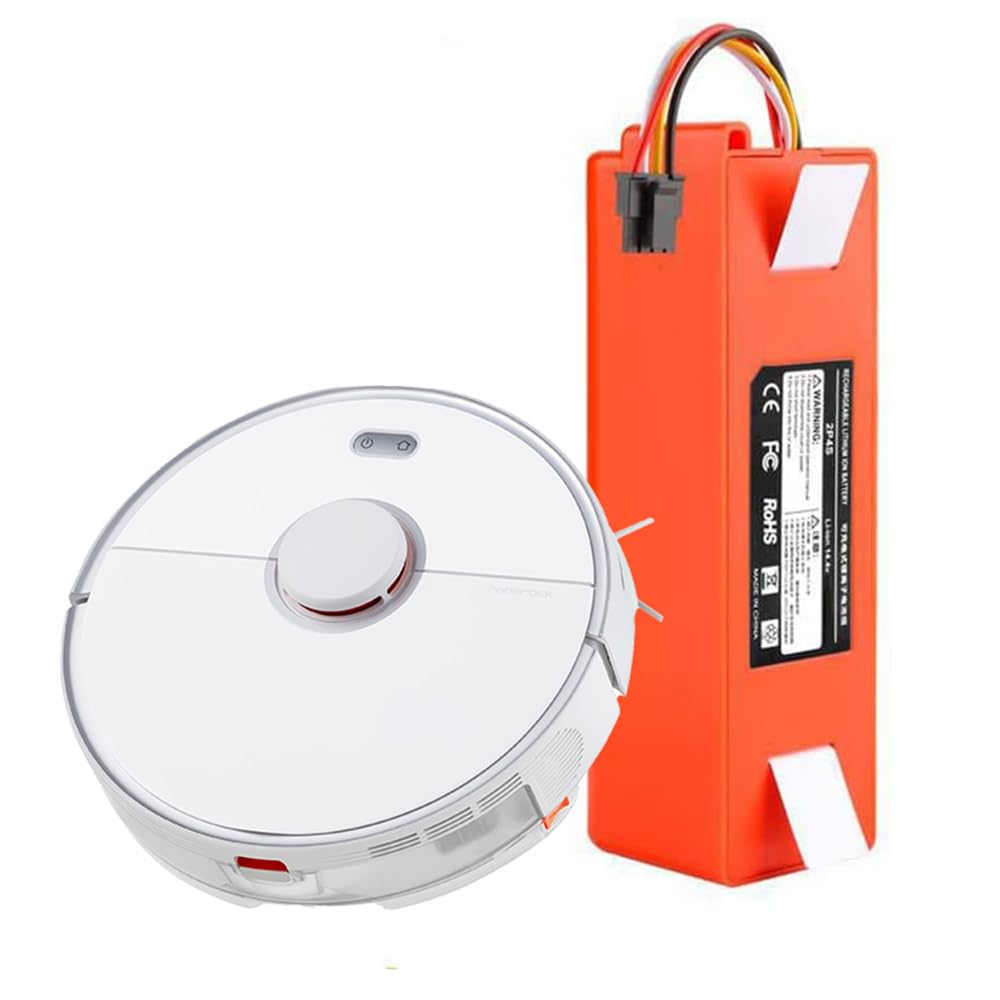
This is the highest-capacity pack on our list at 6700mAh, targeting Roborock S4, S5, S6, S7 series and Q5/Q7 series along with Xiaomi Mijia and Xiaowa models. The 4-prong connector is specific to these platforms, so double-check your original battery plug before ordering. The pack includes a screwdriver and cleaning brush, which simplifies the swap — a nice touch that eliminates the need for separate tools.
Rated for up to 3.5 hours of run time, this cell easily covers entire main-floor layouts without the vacuum needing to return to the dock mid-job. The 365-day warranty and 90-day refund window provide a solid safety net for such a high-capacity investment.
There is a notable outlier review: one buyer tested the pack at 4.4Ah (roughly 66% of claimed capacity) and found voltage drop limited their cleaning area. That experience isn’t universal — the vast majority report runtimes comparable to or better than stock — but it suggests occasional cell quality variance.
Why it’s great
- 6700mAh provides the longest possible cleaning run
- Includes screwdriver and brush for easy installation
- One-year warranty with responsive customer service
Good to know
- Reported capacity may vary — one sample tested at 4.4Ah
- Connector is specific to 4-prong Roborock/Xiaomi models only
3. Dentsing ABL-F 5200mAh for Roomba i7/i7+/j7/j7+ & e Series
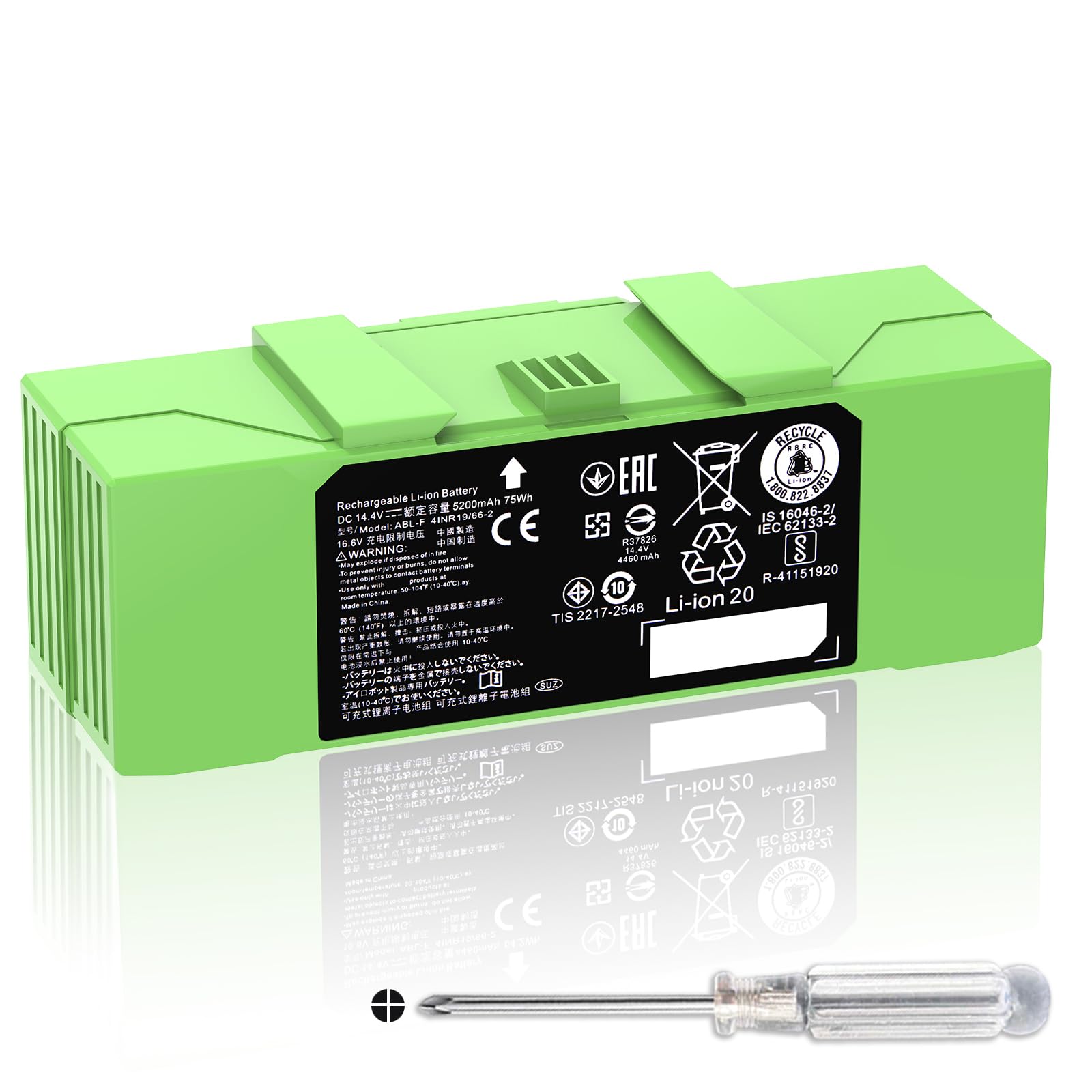
This pack is a direct drop-in replacement for the ABL-F form factor used in iRobot’s i7+, j7+, and e-series models. With 5200mAh and 75Wh of total energy — roughly double the capacity of the OEM battery — users consistently report their vacuums can finish the entire basement or main floor without returning to the dock. The larger physical size still fits perfectly into the battery compartment, as confirmed by multiple J7+ owners.
The adaptive chip inside maintains stable output current and voltage, which prevents the error codes that sometimes appear when using generic cells. Certification to FCC, CE, and ROHS standards adds a layer of reliability. The seller highlights that the battery supports up to 1,000 charging cycles, which would translate to several years of daily use before noticeable degradation sets in.
One critical caveat: if you use a third-party charging dock, ensure the vacuum never drops below 10% charge. Full deep discharge can trigger the pack’s protection circuit and render it unchargeable. For owners using official iRobot docks, this isn’t a concern.
Why it’s great
- Double the capacity of the original OEM battery
- Rated for 1,000 charge cycles for long-term value
- Adaptive chip prevents error codes on i7/j7 platforms
Good to know
- Requires keeping charge above 10% with third-party docks
- Larger physical size may look bulky before insertion
4. eufy T29J5 2600mAh for RoboVac G30/G40 Series

When compatibility is your top priority, this eufy-branded pack delivers the closest experience to the original. Rated at 2600mAh, it fits the G30 series, G40 series, and a wide range of RoboVac models including the 11S MAX, 15C MAX, and G10 Hybrid. The lithium-ion cells are matched to eufy’s original specification, so you won’t encounter the communication errors that sometimes appear with unbranded alternatives.
Installation requires only removing the battery cover, unlatching the old pack, and inserting the new one with the sticker side up — the wires tuck neatly into the compartment. One user reported it revived a vacuum that was dying after 30 minutes back to its full original runtime. Another buyer successfully restored two dead units, including a ten-year-old model that had been sitting unused.
A long-term reviewer noted that after several months of use, the battery holds “almost the same charge — just slightly less” than when new, which indicates good cell longevity. At 200 grams, it’s lightweight and won’t weigh down smaller robot vacuums.
Why it’s great
- Official eufy accessory ensures perfect fit and communication
- Revives vacuums that were dying after 30 minutes
- Lightweight 200-gram design for smaller bots
Good to know
- 2600mAh is lower capacity than third-party alternatives
- Only compatible with eufy RoboVac platforms
5. ANTRobut 4500mAh NiMH for Roomba 500–900 Series

NiMH packs are less common in modern replacements, but they remain a great option for older Roomba models that originally shipped with nickel-metal hydride cells. This ANTRobut battery offers 4500mAh at 14.4V and is compatible with the 500, 600, 700, 800, and 900 series. It also includes a bristle brush and flexible beater brush as a bonus — though those brushes only fit the 500 and 600 series.
The package is CE and FCC certified, and the cells are 100% tested to match iRobot’s original specs. One user with a Roomba that was over fifteen years old replaced both the battery and brushes and reported the unit working great again. Another owner saw initial runtimes of only 35 minutes, but after three months of regular use the runtime improved to 1 hour 40 minutes — NiMH packs typically need 3–5 full charge cycles to reach peak capacity.
The 45-day money-back guarantee and 12-month quality service provide a decent safety net, though NiMH technology is inherently bulkier and heavier per watt-hour than lithium-ion. If your Roomba originally used Li-ion, you should stick with that chemistry rather than downgrading.
Why it’s great
- Great option for older Roomba models originally on NiMH
- Includes bonus brushes for 500/600 series
- Runtime improves significantly after break-in cycles
Good to know
- NiMH is heavier and lower density than modern Li-ion
- Initial runtime may be low until 3–5 conditioning cycles complete
6. Youejoeq RVBAT850 3000mAh for Shark Ion Series
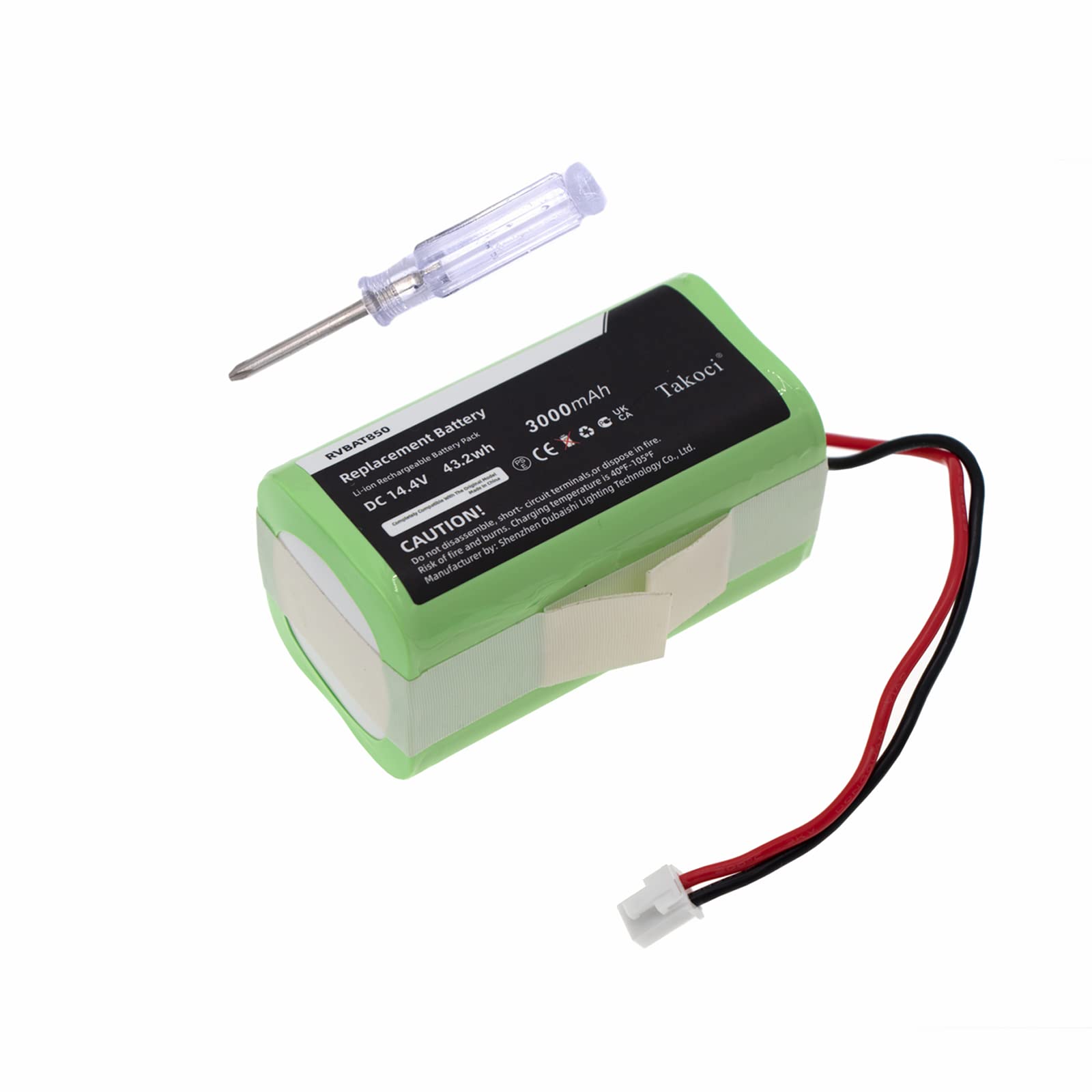
Shark Ion vacuum owners have limited replacement options, and this RVBAT850-compatible pack fills that gap. Rated at 3000mAh (43.20Wh) at 14.4V, it’s designed for models like the RV761, RV700_N, RV1001AE, RV2000WD, and IQ R101. The critical spec here is the connector — it uses a 2-prong plug, so if your original battery has a 3-prong connector, this pack won’t work.
Installation takes about two minutes: remove two screws on the bottom, unplug the old battery, and plug in the new one. The battery management system protects against over-charging, over-current, over-voltage, short-circuit, and high-temperature. Every reviewer on record gave it a full five stars, with one stating their “vacuum roared around the house” after the swap and another noting it saved the cost of buying a new robot entirely.
The dimensions are notably compact at roughly 2.76 x 1.46 x 1.46 inches, and the weight is just 190 grams — the lightest pack we tested. If you have a compatible Shark model, this is an inexpensive way to restore full functionality without any guesswork.
Why it’s great
- Perfect fit for 2-prong Shark Ion vacuums
- Installs in under two minutes with no special tools
- Consistently perfect customer reviews
Good to know
- Only works with 2-prong connector — verify before buying
- 3000mAh is adequate but not exceptional for larger homes
7. DGFTB ABL-D1 1800mAh for Roomba e & i Series

For Roomba e-series (e5, e6) and i-series (i3, i3+, i4, i7) owners, the ABL-D1 form factor is a smaller-capacity pack — 1800mAh at 26Wh. This is not a full-house solution, but rather a replacement that matches the original spec for these models. The lithium-ion cells are Grade A rated to minimize leakage risk, and the built-in circuit protection covers overcharging and overheating.
A reviewer who runs their Roomba two to three times per day noted this was the third battery they’ve bought for the same unit over eight years, which speaks to the durability of the platform if not the pack itself. Another buyer reported the battery lasted over two years before needing replacement — beating the one-year lifespan they got from the OEM battery.
There is a cautionary report of a unit failing after roughly ten cycles over six months, with the battery refusing to charge.
Why it’s great
- Perfect drop-in for ABL-D1 compatible Roomba models
- Grade A lithium cells reduce leakage risk
- Some users report over 2 years of service life
Good to know
- 1800mAh is limited — won’t cover large floor plans
- Occasional early failure reports within first six months
FAQ
Can I use a higher mAh battery than what came with my vacuum?
Why does my new NiMH battery only run for 35 minutes?
What does error code 19 mean on my Roomba after a battery swap?
How often should I replace my robot vacuum battery?
Final Thoughts: The Verdict
For most users, the best battery for robotic vacuum is the SPARKOLE 5200mAh because it covers the widest range of Roomba models while delivering 2–3.5 hours of runtime at a price that beats OEM by a wide margin. If you own a Roborock S4–S7 or Q5–Q7 and need maximum coverage, grab the Palowextra 6700mAh. And for i7/j7/e-series owners who want double the original capacity without error codes, nothing beats the Dentsing ABL-F 5200mAh.