
A carburetor that stumbles on acceleration, idles rough, or refuses to start after sitting for a week is telling you one thing: the internal passages are clogged with gum, varnish, and carbon deposits left behind by modern ethanol-blended fuel.
I’m Min — the co-founder and writer behind Gadgets Feed. For this guide, I analyzed the chemical formulations, application methods, and real-world results of the most popular carb cleaners on the market, comparing solvent strength, spray precision, and safety on oxygen sensors and catalytic converters.
Whether you’re reviving a lawn mower, tuning a classic motorcycle, or refreshing a snow blower, the best carb cleaner must balance aggressive deposit removal with component-safe chemistry to restore proper air-fuel mixture without damaging sensitive engine parts.
How To Choose The Best Carb Cleaner
Every carb cleaner promises to dissolve deposits, but the real difference lies in the solvent type, delivery method, and what the cleaner leaves behind. Picking the wrong formula can strip paint, damage rubber gaskets, or fail to penetrate the hard carbon crust that forms in idle circuits.
Chlorinated vs. Non-Chlorinated Solvents
Chlorinated formulas (like Gunk M4824) are extremely aggressive on varnish and gum, making them ideal for fully disassembled carburetors where you can control exposure. Non-chlorinated alternatives (like Berryman B-12 and CRC 03077) are safer for oxygen sensors and catalytic converters, allowing you to clean without removing the carb from the engine. For vehicles with modern emissions controls, non-chlorinated is the safer bet.
Aerosol Spray vs. Immersion Dip
Aerosol cans with a straw attachment give you pinpoint control for cleaning choke plates, throttle bores, and external passages without disassembly. Immersion cleaners like Berryman 0996 Chem-Dip require you to pull the carb off and submerge it entirely, but they reach internal galleries that no spray can touch. Choose spray for quick fixes and routine maintenance; choose dip for full rebuilds where the carb is already off the manifold.
VOC Compliance and Formulation Quality
Many states restrict the volatile organic compound content of aerosol cleaners. A 50-state VOC compliant formula like Gumout 800002231 works everywhere but may require more solvent to do the same job as older, stronger blends. Check the item volume — a 19 oz can with aggressive chemistry often outlasts a 12 oz can of watered-down formula, especially on heavy carbon deposits.
Quick Comparison
On smaller screens, swipe sideways to see the full table.
| Model | Category | Best For | Key Spec | Amazon |
|---|---|---|---|---|
| Berryman 0996 Chem-Dip | Immersion Dip | Full rebuild soaking | 0.75 Gallon capacity | Amazon |
| CRC Carb & Choke Cleaner 03077 | Aerosol Spray | Small engine fast fix | 12 wt. oz aerosol | Amazon |
| Berryman B-12 0120C | Aerosol Spray | Oxygen sensor safety | 20 oz can | Amazon |
| Gunk M4824 Carb-Medic | Chlorinated Spray | Heavy gum deposits | 19 oz can | Amazon |
| Gumout 800002231 (6-Pack) | Multi-Pack Spray | Stocking multiple engines | 14 oz x 6 cans | Amazon |
| Gunk M4814 Chlorinated | Chlorinated Spray | Soaking small parts | 12.5 oz can | Amazon |
| Lucas Oil 10020-12PK | Fuel Additive | Fuel injector maintenance | 5.25 oz x 12 pack | Amazon |
In‑Depth Reviews
1. Berryman 0996 Chem-Dip Carburetor Cleaner

When a carburetor is so clogged that aerosol spray barely scratches the surface, immersion is the only real solution. The Berryman 0996 Chem-Dip holds nearly a gallon of fast-acting liquid that dissolves gum, varnish, and hard carbon without the need for hours of scrubbing. The removable internal basket lets you submerge the entire carb body, jets, and small passages while keeping parts accessible for retrieval.
Users consistently report that a 30-to-60 minute soak loosens deposits that aerosol cleaners left untouched, and the formula is safe for plastic, rubber, and most painted components. A follow-up rinse with warm water and a soft brush restores the carb to like-new condition. The dip retains its potency — several users noted the liquid remained effective after a year of intermittent use with 70% volume still remaining.
This is not a quick-fix tool for an on-engine spray; the carb must be removed and disassembled. But for anyone rebuilding a classic motorcycle, an old lawn tractor, or a marine carb, the 0996 delivers deep cleaning that no can of aerosol can match. It is the only option here that tackles internal galleries you cannot reach with a straw.
Why it’s great
- Dissolves heavy carbon and varnish after one hour soak
- Safe for plastic, rubber, and painted parts
- Basket design keeps small parts organized during cleaning
Good to know
- Requires full carb removal from engine
- Heavy 7.5 lb container when full
2. CRC Carb & Choke Cleaner 03077

The CRC 03077 is the aerosol spray that small-engine owners reach for first when a mower, generator, or string trimmer refuses to start. Its low-VOC formula removes sludge and varnish from carburetors and chokes without the harsh fumes of chlorinated alternatives, making it more pleasant to use in a garage or driveway without full respiratory gear.
Real-world results back the chemistry: users report a single spray into the carb throat brought dead generators back to life immediately, and the cleaner proved effective on the surging idle issue in Honda HRX lawn mowers by clearing the low idle jet. The can includes a precision straw for targeting choke plates, throttle bores, and EGR valves without overspray damaging nearby components.
Cleaners in the 12 oz range run out faster than 20 oz cans, especially on larger jobs. But for routine maintenance and quick revival of small engines — where you use a few seconds of spray per job — this is the most cost-effective option available. It is also safe for oxygen sensors and catalytic converters, so you can use it on modern automotive carbs without worry.
Why it’s great
- Fast-acting formula revives stubborn small engines instantly
- Low-VOC and safe for oxygen sensors
- Straw attachment reaches tight carb passages
Good to know
- Only 12 wt. oz per can — smaller than competitors
- Not ideal for heavy carbon dip cleaning
3. Berryman B-12 Carburetor Cleaner 0120C

Berryman’s B-12 formula has been a workshop staple since 1918, and the 20 oz can gives you enough solvent to tackle multiple jobs without switching cans mid-project. The non-chlorinated chemistry is tough on gum, varnish, and carbon deposits but safe for the oxygen sensors and catalytic converters found on modern vehicles. This makes it the go-to choice for anyone cleaning a carb that remains connected to the emissions system.
The fast-drying, no-residue formulation means you can spray, wipe, and reassemble without waiting for the cleaner to evaporate. Users report noticeable improvements in cold starts and acceleration, with rough idling and stalling eliminated after a thorough cleaning of the choke and throttle body. The aerosol stream is strong enough to dislodge loose debris without needing to disassemble the carb completely.
One trade-off is that the non-chlorinated formula may require slightly more contact time on hardened carbon crust compared to chlorinated alternatives. But the convenience of using it on-engine, the generous 20 oz volume, and the proven track record make the B-12 the most versatile aerosol cleaner in this lineup for DIYers who work on multiple types of engines.
Why it’s great
- Safe for oxygen sensors and catalytic converters
- Large 20 oz can lasts through multiple jobs
- Fast-drying formula leaves no sticky residue
Good to know
- Non-chlorinated blend is less aggressive on extreme carbon
- Spray stream may not reach deep internal passages
4. GUNK M4824 Carb-Medic
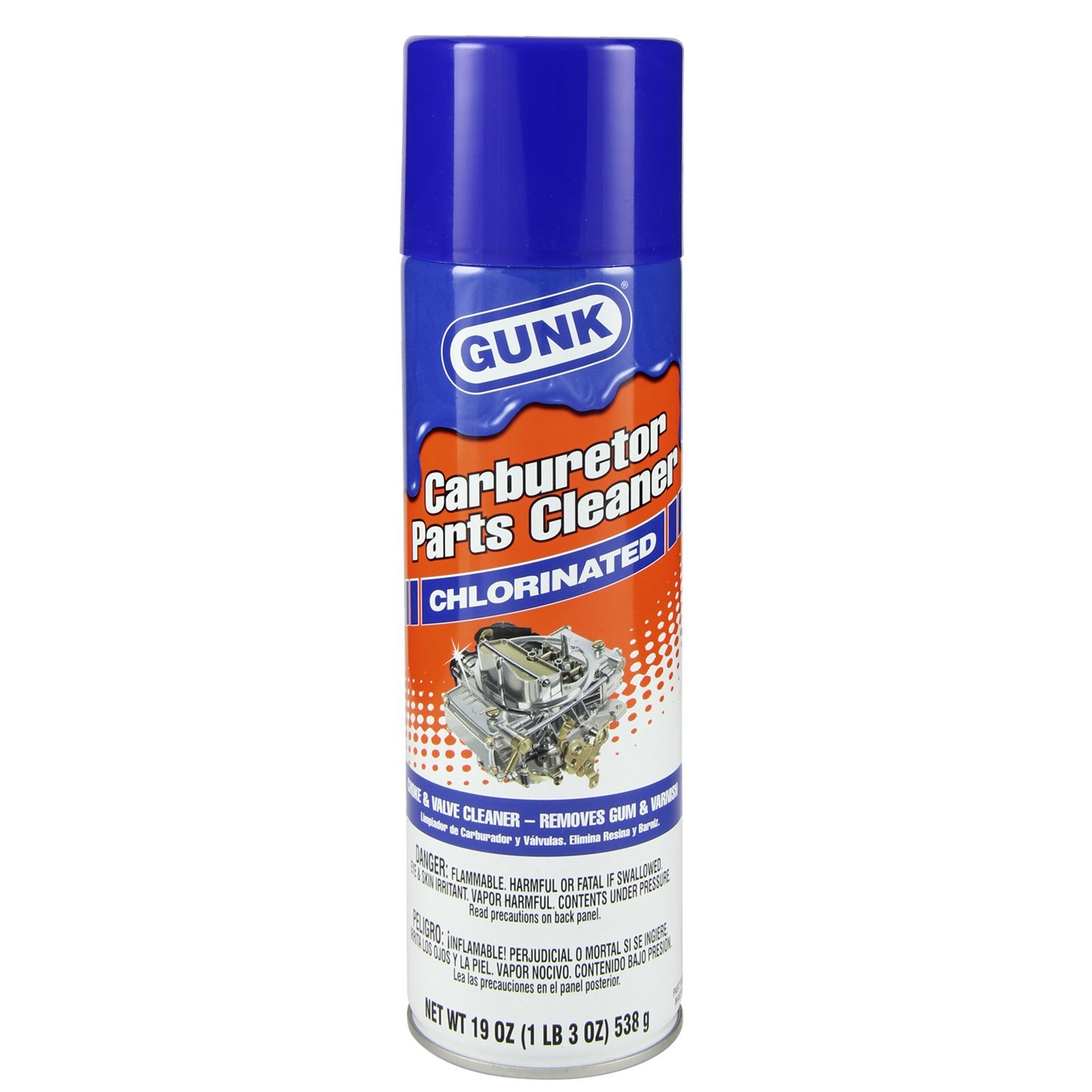
GUNK M4824 Carb-Medic uses a chlorinated solvent base that cuts through dirt, varnish, gum, carbon deposits, and sludge faster than nearly any non-chlorinated competitor. This is the formula you reach for when the carb has been sitting for years with old ethanol fuel turned to hard varnish. The 19 oz can provides ample solvent for multiple cleaning sessions on cars, motorcycles, and lawn equipment.
Users praise its ability to restore function to lawnmower carburetors clogged with debris and to strip the junk left behind by modern ethyl gasoline. The chlorinated chemistry is powerful enough to clean combustion chamber deposits when used through the intake, making it effective beyond just the carburetor body. Experienced mechanics who have tested multiple brands identify this as the only carb cleaner that consistently delivers results on tough jobs.
The downside is that the aggressive solvent can damage paint, plastic, and rubber components if left in contact too long. The included straw is taped rather than molded, which some users found tends to pop off during use. Use this cleaner on disassembled metal parts only, and store the can with the straw secured to avoid losing it inside your toolbox.
Why it’s great
- Chlorinated formula dissolves the toughest gum and varnish
- Works on both carburetors and combustion chambers
- Large 19 oz can offers good value per ounce
Good to know
- Not safe for oxygen sensors or painted surfaces
- Taped straw attachment can detach during use
5. Gumout 800002231 Carb/Choke Cleaner (6-Pack)

Gumout’s 6-pack configuration of 14 oz cans is built for the person who maintains a fleet of small engines — multiple lawn mowers, chainsaws, generators, and motorcycles. The 50-state VOC compliant formulation works everywhere from California to New York, and the precise spray nozzle delivers a focused stream that reaches into narrow carb passages without wasteful overspray.
Users confirm that this cleaner cuts through gum, varnish, and grime on carburetors and chokes quickly, making it a reliable choice for small engine revival. The multi-pack pricing brings the cost per can significantly below single-can retail, making it the most economical option for heavy users. The formula also works well as a general degreaser on engine parts, brake components, and even bicycle chains — giving each can multiple uses beyond carb cleaning.
The solvent is strong enough to damage some plastics and dyes, so careful application is necessary. But for the mechanic who goes through a can every few weeks, having six cans ready prevents mid-project supply runs. Each can’s 14 oz volume is slightly smaller than the 19-20 oz competitors, but the pack total of 84 oz means you will not run out anytime soon.
Why it’s great
- Six cans provide excellent value for high-volume users
- VOC compliant in all 50 states
- Works on carbs, brakes, electrical contacts, and more
Good to know
- Can damage some plastic and painted surfaces
- Individual can size (14 oz) is smaller than some single cans
6. GUNK M4814 Chlorinated Carburetor Parts Cleaner

The GUNK M4814 is a smaller 12.5 oz can of the same chlorinated formula used in the larger Carb-Medic line, making it a budget-friendly entry point for anyone who needs the aggressive solvent power but only for a single job. The chlorinated base dissolves dust, dirt, and debris from lawnmower carburetors effectively, with users reporting clean results on weed wacker gas engines after one can.
Like its larger sibling, this cleaner handles the ethyl gasoline residue that builds up in modern carburetors and injectors, restoring idle quality and throttle response on small engine equipment.
The can does not include a precision straw, making it less precise for targeting small passages. Users noted that the tape-on straw design can be inconvenient. This cleaner is best suited for dip-style cleaning of small, disassembled parts rather than on-engine spraying. If you need precision application, step up to the M4824 or CRC 03077.
Why it’s great
- Low entry price for a chlorinated formula
- Effective on small engine carburetor deposits
- Compact can fits in tool bags easily
Good to know
- No precision straw for direct spray application
- 12.5 oz can empties quickly on larger jobs
7. Lucas Oil Fuel Injector Cleaner 10020-12PK

While this is not a spray cleaner for disassembled carbs, the Lucas Oil fuel injector cleaner fills a maintenance niche for fuel-injected engines and carburetors running on modern fuel. The 5.25 oz bottle treats a full tank of gas, cleaning and lubricating the entire fuel system — from the pump to the injectors — while neutralizing problems caused by low-sulfur diesel and ethanol blends.
Users with diesel trucks report measurable improvements in mileage and smoother idle when added every other fill-up. Gasoline car owners note that regular use keeps injectors clean and prevents the carbon buildup that leads to rough running. The 12-pack provides enough supply for a full year of maintenance on a single vehicle, or for treating multiple cars and small engines.
This is a preventive maintenance tool, not a rescue cleaner for a carburetor already clogged with hard varnish. If your engine is already running poorly, you still need an aerosol or immersion cleaner to remove existing deposits. Use Lucas Oil every few fill-ups to keep the system clean after the initial restoration is complete.
Why it’s great
- Lubricates fuel system components while cleaning
- Effective for both gasoline and diesel engines
- 12-pack provides long-term maintenance supply
Good to know
- Not a substitute for aerosol or dip cleaning of clogged carbs
- Requires regular reapplication for sustained results
FAQ
Can I use a chlorinated carb cleaner on a modern car with oxygen sensors?
How long should I soak a carburetor in immersion cleaner?
What is the difference between carb cleaner and brake cleaner?
Final Thoughts: The Verdict
For most users, the best carb cleaner winner is the Berryman 0996 Chem-Dip because it provides deep, complete cleaning of every internal passage that aerosol sprays simply cannot reach. If you want the best on-engine aerosol for quick fixes, grab the CRC Carb & Choke Cleaner 03077. And for high-volume maintenance across multiple small engines and vehicles, nothing beats the value of the Gumout 800002231 6-Pack.