
That persistent ache just below your elbow that flares up when you lift a coffee cup, shake a hand, or grip a racket — it is not just soreness. It is a signal from your forearm extensor tendons that they are under chronic strain, and a properly designed brace is the fastest way to interrupt the pain cycle without rest or drugs.
I’m Min — the co-founder and writer behind Gadgets Feed. I have analyzed over 200 customer reviews, clinical specs, and engineering details on forearm braces to pinpoint which designs actually offload the tendon insertion point versus which just squeeze the arm for show.
This guide breaks down the exact mechanism, sizing logic, and material science that separate a real brace for forearm pain from a generic sleeve that merely warms the skin without unloading the tendon.
How To Choose The Best Brace For Forearm Pain
The right brace does not just feel snug — it mechanically reduces the tension on the common extensor or flexor tendon origin at the epicondyle. Buyers who grab the first sleeve off the shelf often end up with a product that only compresses the muscle belly, leaving the inflamed tendon attachment untouched. Here are the three specs that matter most.
Strap vs. Sleeve Design
A counterforce strap — a narrow band worn one to two finger-widths below the elbow — applies a focused pressure pad directly over the extensor muscle belly, changing the angle of pull so the tendon origin at the bone experiences less force. Sleeves, by contrast, wrap the entire forearm with uniform compression. They improve blood flow and proprioception but do not mechanically offload the tendon. If your pain is sharp at the bony knob of the elbow (lateral epicondylitis), choose a strap. If you have diffuse forearm ache or need recovery compression after activity, a sleeve works fine.
Compression Grade and Material Breathability
Graduated compression sleeves (like the KEKING at 20-30 mmHg) deliver higher pressure at the wrist and lower pressure at the elbow, which actively moves fluid upward and reduces swelling. For straps, the material must be firm enough to stay in place during dynamic motion but padded enough to avoid cutting into the skin — neoprene blends retain heat for muscle warming, while moisture-wicking double-knit fabric works better for all-day wear. A strap that slides down the forearm after ten swings of a hammer is useless, so look for a non-slip silicone strip or a D-ring locking mechanism.
Pad Type and Tendon Contact
The most effective straps incorporate a built-in pressure nub, gel pad, or compression tube that sits directly over the extensor muscle, not over the elbow bone. The Mueller Gel Pad version uses a silicone-like insert that stays soft against the arm while delivering targeted relief, whereas the BraceAbility strap uses a firm circular compression tube. A hard plastic pad risks digging into the muscle during curl motions and can cause more irritation than relief. If you plan to wear the brace during sleep, prioritize a flat silicone pad that does not leave red marks when you wake.
Quick Comparison
On smaller screens, swipe sideways to see the full table.
| Model | Category | Best For | Key Spec | Amazon |
|---|---|---|---|---|
| Zensah Compression Tennis Elbow Sleeve | Compression Sleeve | All-day discreet wear | Flip cuff for extra pressure; 7″-11″ arm range | Amazon |
| MUELLER Tennis Elbow Support Strap | Counterforce Strap | Sport and activity support | Neoprene warmth; fits 7″-14″ circumference | Amazon |
| Mueller Tennis Elbow Support with Gel Pad | Gel Pad Strap | Cushioned targeted relief | Integrated gel pad; moisture-wicking fabric; 10″-14″ | Amazon |
| BraceAbility Epicondylitis Brace | Double-Ring Strap | One-handed adjustability | Compression tube; D-ring; fits up to 15″ arm | Amazon |
| Copper Compression PowerKnit Elbow Sleeve | Copper-Infused Sleeve | Arthritis and joint warmth | Copper-infused PowerKnit; S/M, L/XL, XXL | Amazon |
| NUFABRX Medicine-Infused Arm Sleeve | Medicated Sleeve | Targeted topical drug delivery | Capsaicin-infused fabric; lasts 15+ washes | Amazon |
| KEKING Compression Arm Sleeves | Graduated Sleeve Pair | Recovery and swelling reduction | 20-30 mmHg graded compression; nylon-spandex blend | Amazon |
In‑Depth Reviews
1. Zensah Compression Tennis Elbow Sleeve
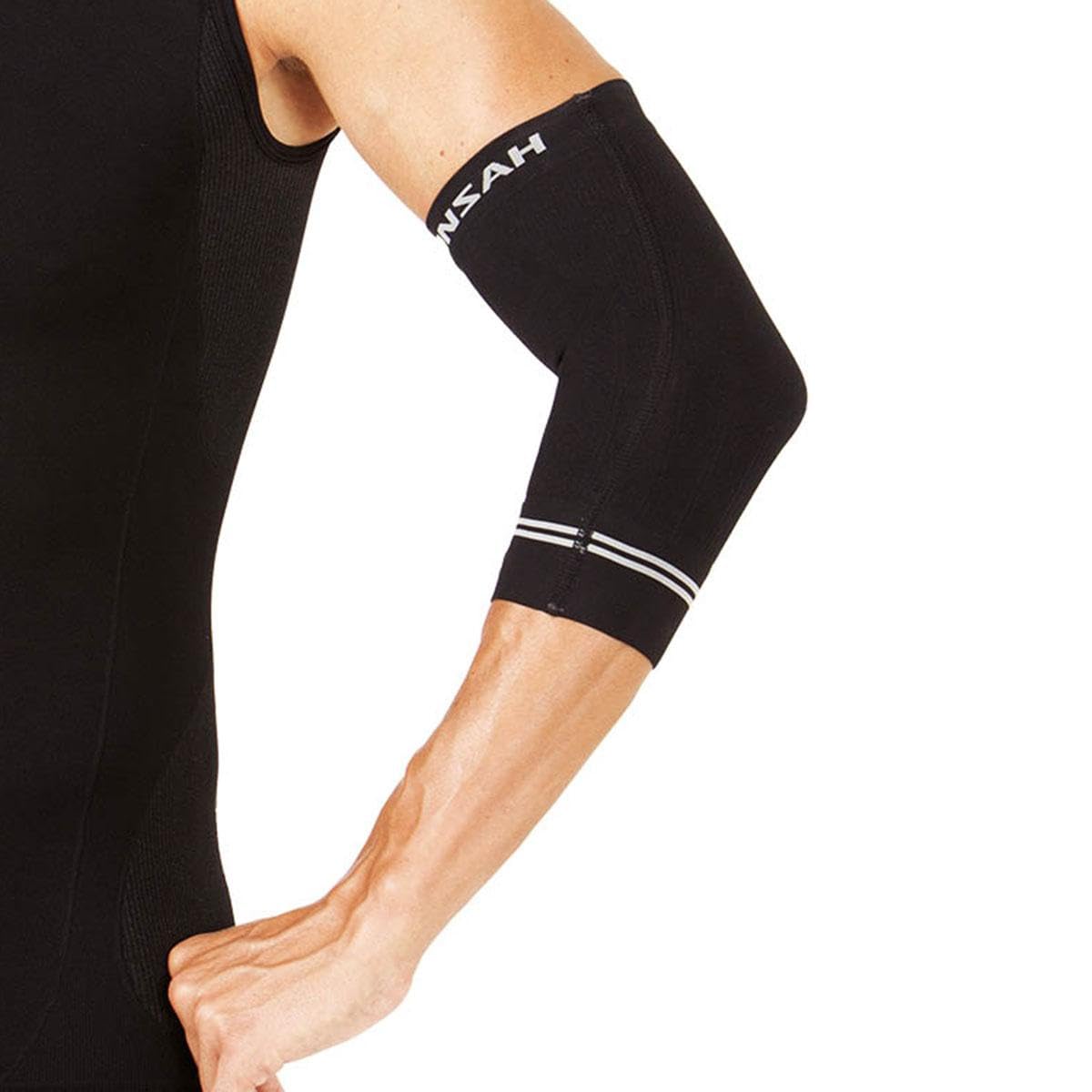
The Zensah sleeve manages what few sleeves can: it delivers graduated compression that feels supportive without being restrictive, thanks to a flip-cuff design that lets you dial up targeted pressure exactly at the tendon insertion point. At a weight under an ounce, it is the most wearable option for people who need relief through a full workday or a long pickleball match — moisture-wicking fabric keeps sweat from building up inside the knit.
Customer feedback across three sizes consistently reports that the sleeve stays put during dynamic arm movements; the no-slip cuff at the elbow prevents the bunching and creeping that cheaper tubular sleeves suffer. That stability means the compression pad does not wander off the extensor muscle during a tennis serve or a heavy set of rows, which is the single biggest failure point for budget sleeves.
The trade-off is that this is a sleeve, not a counterforce strap, so it does not mechanically offload the tendon origin the way a rigid strap does. For minor to moderate tennis or golfer’s elbow, the combination of targeted compression, breathability, and discreet profile under dress shirts makes it the most versatile all-around solution on the list.
Why it’s great
- Breathable moisture-wicking knit for all-day wear
- Flip cuff creates adjustable extra pressure at the tendon site
- Stays in place during high-motion activities
Good to know
- Not a mechanical offload strap — works via compression only
- Fabric can stretch out over many months with frequent washing
2. MUELLER Tennis Elbow Support Strap

This is the gold-standard counterforce strap that has been on the market for decades, and it works because the neoprene blend retains body heat to increase blood flow to the extensor muscles while the adjustable strap applies a focused pressure band just below the elbow. Users report that elbow pain from tennis, pickleball, and weight lifting drops noticeably within three to five days of daily wear — not a placebo, but the actual mechanical offload of the common extensor tendon.
The one-size-fits-most design accommodates arms from 7 to 14 inches in circumference, which covers nearly all adults, and the hook-and-loop closure lets you fine-tune tension while the strap is on the arm. It sits flat enough to fit under a long-sleeve work shirt, and because there is no bulky pad, it can be worn during sleep without digging into the elbow when you bend your arm.
On the downside, the neoprene can trap sweat during hot-weather sports, and some users with sensitive skin find the edge of the strap chafes after extended wear. The absence of a gel pad also means the pressure is spread across the full width of the band, which works well for general tendinitis but may miss the exact trigger point if your pain is highly localized.
Why it’s great
- Mechanical counterforce reduces tendon origin strain
- Neoprene warmth improves muscle blood flow and healing
- Easy one-handed adjustment with hook-and-loop closure
Good to know
- Can feel sweaty during prolonged activity in heat
- No specific gel or pressure nub for trigger-point relief
3. Mueller Tennis Elbow Support with Gel Pad

This is the same trusted Mueller strap platform upgraded with a silicone gel pad sewn into the compression zone, giving you the mechanical offload of a counterforce strap plus the localized cushion that targets the exact epicondyle tender point. The gel pad stays soft against the arm during flexion and extension, so you do not get the hard plastic edge that cheaper straps press into your muscle when you curl a dumbbell.
The moisture-wicking double-knit fabric is a meaningful upgrade from standard neoprene — it breathes better during summer activities and does not retain the musty odor that neoprene develops after repeated use. The adjustable range of 10 to 14 inches is narrower than the basic strap, so measure your forearm before buying; the integrated gel pad also adds a slight bulk that may show under very tight long sleeves.
Customers with severe tennis elbow report that the gel pad sometimes migrates off the tendon during aggressive motion and needs a quick nudge back into place. If you need a strap that stays locked on the same spot for hours of continuous activity, consider the double-ring design of the BraceAbility option for a more secure anchor.
Why it’s great
- Soft gel pad targets the exact tender point without a hard edge
- Moisture-wicking fabric keeps the strap dry and odor-free
- Same reliable Mueller hook-and-loop closure system
Good to know
- Fits only 10″-14″ arms — not suitable for very slender or large forearms
- Gel pad can shift during high-intensity movement
4. BraceAbility Epicondylitis Brace

The BraceAbility strap differentiates itself with a double-ring closure system that lets you pull the strap to your exact tension and lock it there without fighting a Velcro patch that grabs halfway down. The embedded compression tube — a firm cylindrical pad — sits directly over the extensor muscle belly to apply the counterforce that unloads the lateral or medial epicondyle, and the D-ring gives one-handed adjustability that is rare in this price tier.
At just 0.02 pounds, it is featherlight, and the elastic material contours to the arm without creating a bulky bulge under a jacket. Users with smaller forearms consistently report that this strap fits better than the one-size-too-loose Mueller because the double-ring system lets you dial down to a snug circumference that does not slip during repetitive overhead motion like painting or tennis serves.
The compression tube is firm plastic — not a soft gel — which some users find uncomfortable during prolonged wear or when resting the arm on a desk. If you have sensitive skin, the rough edge of the nylon strap can irritate the underside of the forearm after hours of rubbing, so a thin undersleeve may be necessary for all-day comfort.
Why it’s great
- Double-ring closure offers precise one-handed tension adjustment
- Lightweight at 0.02 lbs — barely noticeable during wear
- Compression tube targets tendon origin effectively
Good to know
- Firm plastic pad may press into muscle during flexion
- Rough material edge can irritate sensitive forearm skin
5. Copper Compression PowerKnit Elbow Sleeve

Copper Compression’s PowerKnit sleeve uses copper-infused fibers that purport to reduce inflammation through ionic exchange, and while the clinical evidence for copper is mixed, the real value here is the dense, seamless knit that provides consistent compression from bicep to mid-forearm without the restrictive bands that cut into circulation. The lightweight fabric dries fast and breathes well, making it a solid choice for post-workout recovery rather than heavy activity.
Three distinct sizes (S/M, L/XL, XXL) mean you can match the compression to your actual arm circumference rather than forcing a one-size-fits-all tube to do double duty. Customers who found sleeves too tight at the bicep and too loose at the forearm report that the size segmentation solves the migration problem — the sleeve stays in place even after hours of walking or light lifting.
This sleeve does not deliver targeted counterforce pressure to the tendon origin, so if your pain is localized to the exact lateral epicondyle point, you will get more relief from a strap. It also runs snug compared to generic sleeves, so measure your bicep carefully — customers caught between sizes recommend going down for a firmer compression that stays put.
Why it’s great
- Three distinct sizes for a precise, non-slip fit
- Breathable copper-infused knit for all-day comfort
- Excellent for general joint warmth and arthritis relief
Good to know
- No mechanical offload — only uniform compression
- Runs snug; measure carefully to avoid a too-tight fit
6. NUFABRX Medicine-Infused Arm Sleeve
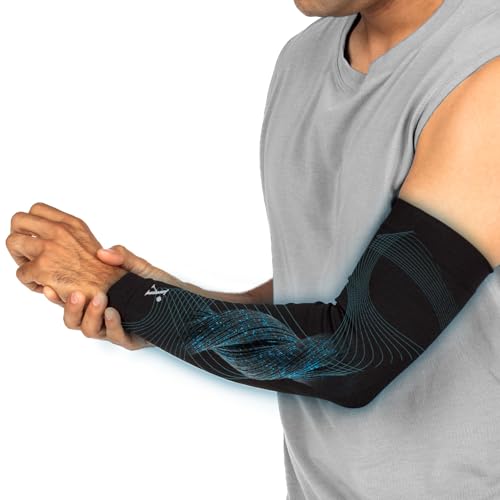
NUFABRX takes a fundamentally different approach: instead of just squeezing the arm, the fabric itself is woven with capsaicin — the active compound from chili peppers that desensitizes pain receptors through repeated exposure. Sliding the sleeve on activates the medicine through skin contact and body heat, delivering topical analgesic effect that can last an entire workday without reapplying cream or gel.
The compression is moderate (not graded like the KEKING), but the capsaicin infusion creates a consistent warmth that compounds over the hours, turning a simple cotton-poly sleeve into a drug delivery system. Users with arthritis and chronic tendonitis report that the medicated effect reduces the sharp flare-ups that normally require ibuprofen, and one sleeve lasts through about 15 cold-water washes before the capsaicin begins to fade.
The one-size design is the biggest limitation — it fits average forearms but runs large for slender arms and tight for muscular builds. The fabric also has a distinct peppery smell when new, and capsaicin can cause a stinging sensation on broken skin or if you have a sensitivity to hot peppers, so patch-test before committing to a full day of wear.
Why it’s great
- Capsaicin infusion provides all-day topical pain relief
- No messy creams — just pull on and go
- Effective for arthritis and chronic tendinitis flare-ups
Good to know
- One-size design may not fit very small or large forearms
- Capsaicin can irritate sensitive skin or open cuts
7. KEKING Compression Arm Sleeves
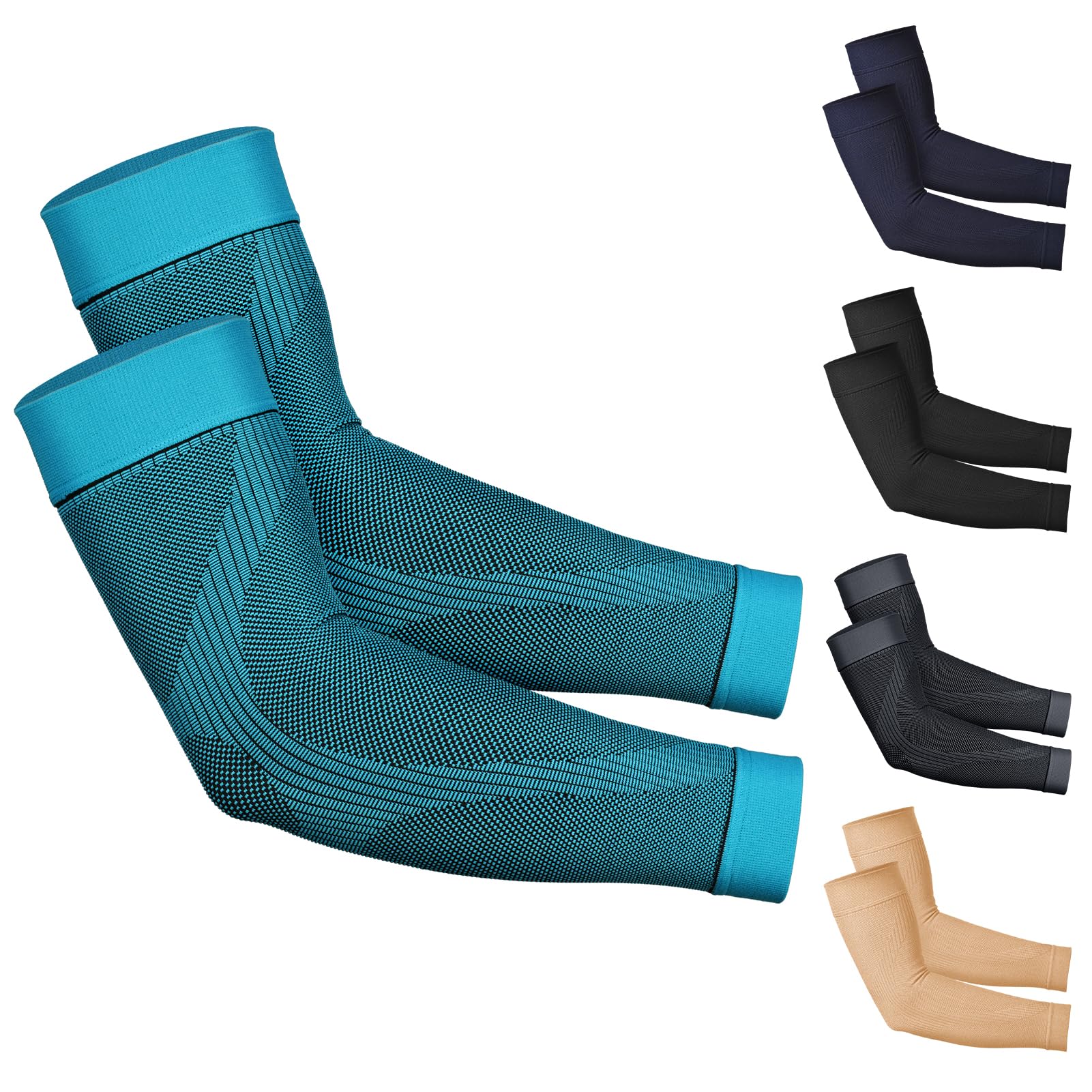
For the budget-conscious buyer who needs two sleeves (one for each arm or a spare for rotation), the KEKING pair delivers a legitimate 20-30 mmHg graduated compression — the same grade used in medical lymphedema sleeves — without the high price tag. The nylon-spandex blend is moisture-wicking and latex-free, and the graded pressure tapers from wrist to bicep, which actively pushes fluid out of the forearm to reduce post-activity swelling.
Customer reviews consistently praise the accurate fit — unlike many cheap sleeves that slip down after twenty minutes, the KEKING graded knit stays anchored on the forearm during basketball, cycling, and gym sessions. The fabric is durable enough to survive repeated machine washing without losing elastic recovery, which is the most common failure point among sub- sleeves.
Graduated compression sleeves provide broad fluid management and warmth, not focal tendon offload. If your pain is strictly the sharp lateral epicondyle type, you need a counterforce strap, not these sleeves. Some users also note that the fabric runs warm during summer outdoor sports — the trade-off for the tight knit required to maintain the 30 mmHg gradient.
Why it’s great
- True 20-30 mmHg graduated compression for swelling control
- Pair pack offers exceptional value for two-sleeve rotation
- Durable nylon-spandex knit resists stretching and slipping
Good to know
- Does not offload the tendon origin — uniform compression only
- Can feel warm and tight in hot weather
FAQ
Should I sleep with a forearm brace on?
Why does my forearm brace slide down during activity?
Can a forearm brace cure tendonitis permanently?
Final Thoughts: The Verdict
For most users, the brace for forearm pain winner is the Zensah Compression Tennis Elbow Sleeve because it balances targeted flip-cuff compression with the discreet comfort needed for all-day wear across work, sport, and sleep. If you need true mechanical tendon offload for sharp lateral epicondylitis, grab the MUELLER Tennis Elbow Support Strap — its counterforce design is the proven standard. And for recovery-focused buyers who want graduated fluid management, nothing beats the value of the KEKING Compression Arm Sleeves pair.