
The gap between a fairway wood and a long iron is where scoring rounds go to die. A 357 hybrid club bridges that gap with a head shape that launches higher than a 3-wood and a shaft length that’s easier to control than a 2-iron, making it the single most versatile club in a mid-handicapper’s bag. The market now offers everything from budget-friendly complete sets to premium single-club solutions engineered with carbon-fiber crowns and AI-designed faces.
I’m Min — the co-founder and writer behind Gadgets Feed. I’ve spent hundreds of hours analyzing hybrid geometry, face technology, and turf interaction specs to separate the clubs that genuinely fix your miss from those that just look good at address.
This guide compares nine of the top contenders across every price tier, from value-packed iron replacements to Tour-level rescues, to help you find the best 357 hybrid golf club for your specific swing and course conditions.
How To Choose The Best 357 Hybrid Golf Club
A hybrid club is the most impactful club change a recreational golfer can make. Getting the right one depends on three factors: the clubhead design, the offset profile, and the shaft flex that matches your swing speed.
Clubhead Size and Design Philosophy
Standard hybrids look like compact fairway woods with a flatter sole. Hy-Wood designs blend a fairway wood’s profile with a hybrid’s shaft length, creating a unique in-between option. Larger heads offer more MOI and forgiveness on off-center strikes but can feel bulky at address for players who prefer a more iron-like appearance. The key spec to check is the clubhead volume in cubic centimeters — most hybrids range from 120cc to 140cc, while Hy-Woods push closer to 150cc.
Offset and Face Technology
Offset is the distance the clubface sits behind the shaft’s leading edge. More offset helps players who slice by giving the face more time to close before impact, but it can produce left misses for players with a neutral or inside-out path. Face technology like variable-thickness faces, Rebound Frames, or Jailbreak structures flex more at impact to preserve ball speed on mishits. If you struggle with low-face strikes, a Speed Pocket or MainFrame XL design is worth prioritizing.
Shaft Flex and Weight
Graphite shafts dominate the hybrid category because they dampen vibration and add swing speed. Regular flex (around 55-65 grams) fits most recreational players with swing speeds between 75-85 mph. Senior or Lite flex shafts (45-55 grams) suit slower tempos. Stiff shafts (65-75 grams) are for players generating over 90 mph with their woods. Grabbing the right flex prevents the two most common hybrid misses: the low-left hook (shaft too whippy) and the weak fade (shaft too stiff).
Quick Comparison
On smaller screens, swipe sideways to see the full table.
| Model | Category | Best For | Key Spec | Amazon |
|---|---|---|---|---|
| Cleveland Launcher Halo XL Hybrid | Mid-Range | Weekend golfers needing max forgiveness | 24° loft, GlideRail sole | Amazon |
| Cleveland Halo XL Hy-Wood | Mid-Range | Replacing a 3-wood with a hybrid | 20° loft, 9.6 oz weight | Amazon |
| Callaway Mavrik 22 Hybrid | Mid-Range | Players wanting iron-like feel with wood distance | 20° loft, Jailbreak + Face Cup | Amazon |
| Callaway Rogue ST Max Hybrid | Mid-Range | Stronger lofts for additional distance | 3 Hybrid, 2022 version | Amazon |
| TaylorMade SiM 2 Max Rescue | Premium | Slow swing speeds needing high launch | 19° loft, Twist Face, V Steel | Amazon |
| TaylorMade Stealth 2 Rescue | Premium | Infinity carbon crown for more MOI | 19° loft, Speed Pocket | Amazon |
| Callaway Paradym AI Smoke Max Fast Hybrid | Premium | Maximum distance and proper gapping | 24° loft, AI Smoke design | Amazon |
| Performance Golf 357 Fairway Hybrid | Premium | Hybrid-wood replacement for 3-wood distance | 21° loft, Tri-Fusion face | Amazon |
| Pinemeadow Excel EGI Hybrids | Budget | Full iron replacement on a budget | Available from 3H to PW | Amazon |
In‑Depth Reviews
1. Cleveland Golf Launcher Halo XL Hybrid
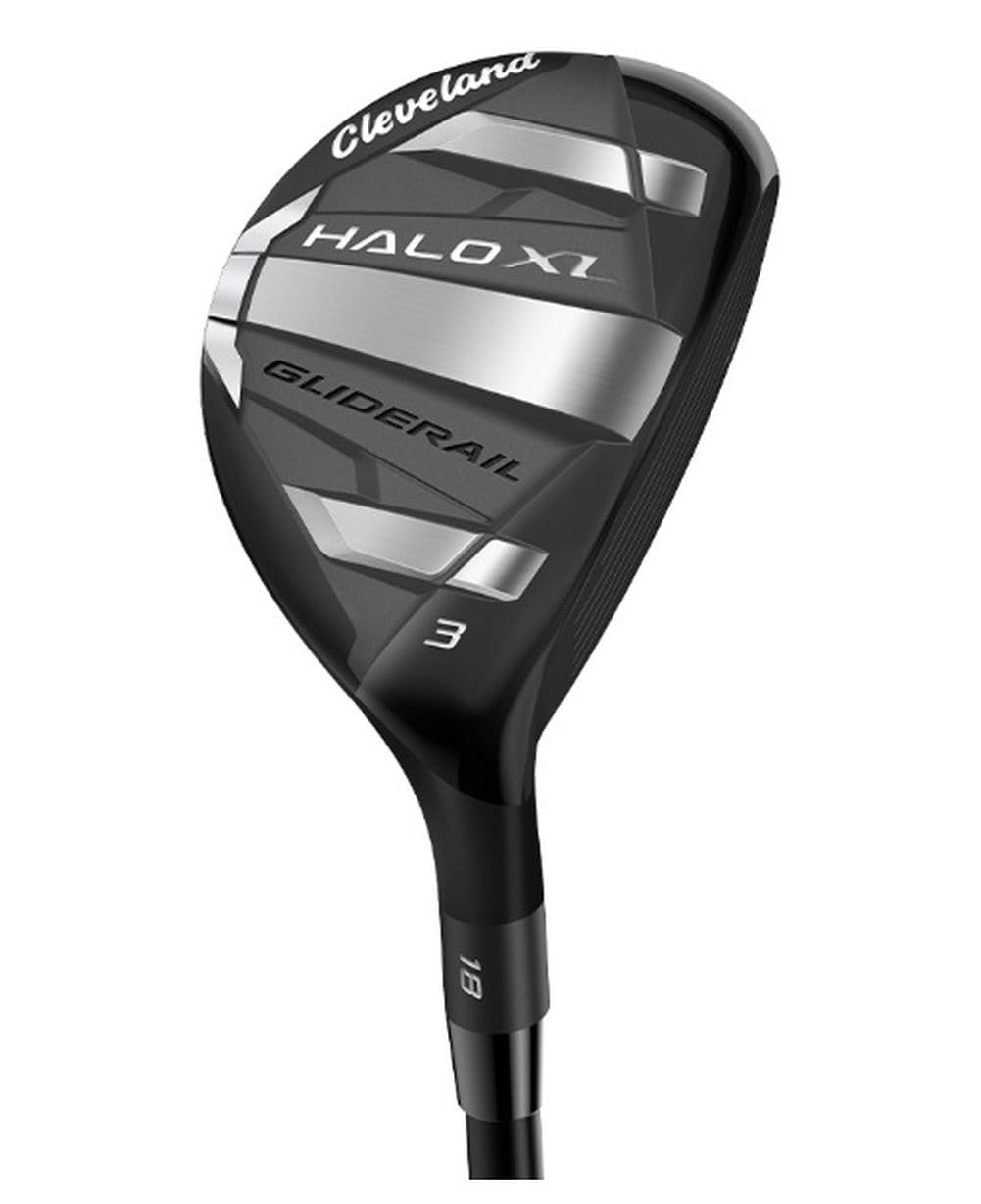
The Cleveland Launcher Halo XL Hybrid packs an 8% larger head than its predecessor, pushing the MOI high enough to keep toe-and-heel mishits from turning into penalty strokes. The MainFrame XL face uses a variable-thickness pattern that flexes more at impact, and the low-and-deep weighting produces the kind of high-launching ball flight that holds greens from 180 yards out. The 24-degree configuration tested here sits at the perfect gapping zone for players who need a 4-iron replacement they can actually hit.
GlideRail Technology deserves the spotlight: three rails along the sole cut through rough and tight lies without the leading edge digging or bouncing. Real-world feedback from weekend golfers confirms this club turns 15-handicap misses into playable results, with consistent distance even when contact drifts toward the heel or toe. The included headcover protects the XL head during transport.
Some players report noticeable offset that can produce left-biased misses if your natural swing path is already inside-out. If you struggle with a hook, this club may exaggerate it. For the vast majority of mid-handicappers, however, the forgiveness and launch justify the mid-range investment.
Why it’s great
- GlideRail sole delivers clean contact from any lie, including deep rough
- XL head design and low-deep weighting produce effortless high launch
- MainFrame XL face preserves ball speed on off-center strikes
Good to know
- Significant offset may cause left misses for neutral or draw-biased swings
- Not available in as many loft options as budget-friendly sets
2. Cleveland Golf Halo XL Hy-Wood

The Halo XL Hy-Wood is not a standard hybrid — it occupies the space between a 3-wood and a typical 3-hybrid. The clubhead size and shape fall squarely between a fairway wood and a hybrid, with a lightweight fairway wood shaft that encourages an easy sweeping motion. The 20-degree head delivers 3-wood distance (200+ yards from the fairway) with the forgiveness profile of a 7-wood, eliminating the need to carry both clubs. The MainFrame XL face and Rebound Frame technology give you two flex zones that work together to maintain ball speed on thin strikes.
Customer reports highlight this club as the savior for players whose swing speeds have slowed with age. The combination of a 1.5-inch shorter shaft than a standard driver and the high-launch head eliminates the over-the-top swing path that produces slices. Players report carrying it 200-215 yards straight, with enough height to hold firm greens from that distance.
The sole design with GlideRail works better from the fairway than from deep rough, where the wider head can occasionally get tangled. Build quality is solid but not quite at the level of Cleveland’s wedge lineup — the finish is functional rather than luxurious.
Why it’s great
- Unique Hy-Wood design blends 3-wood distance with 7-wood forgiveness
- Lightweight fairway shaft promotes a smooth, easy tempo
- Rebound Frame with two flex zones preserves ball speed on thin contact
Good to know
- Wider head struggles in thick rough compared to standard hybrids
- Finish quality doesn’t match premium fairway wood offerings
3. Callaway Golf Mavrik 22 Hybrid

The Callaway Mavrik hybrid is a masterclass in feel — it plays like an iron at address but launches like a fairway wood through impact. The Flash Face uses artificial intelligence to create a variable-thickness pattern that maximizes ball speed across a wider area, while the Jailbreak structure connects the crown and sole to stiffen the body and allow the face to flex more. The 20-degree 4-hybrid version tested here replaces a traditional 4-iron but delivers stopping power on par with a 5-wood, thanks to the high-launching head shape.
On tight lies, the Mavrik shines. The sole profile sits flatter than many competitors, reducing the chance of blading the ball off hardpan. Players consistently note the swing weight feels balanced — not head-heavy like some budget hybrids — which translates to consistent strike location round after round. The included headcover is a welcome addition for bag protection.
The Mavrik line is a few generations old now, so it lacks the carbon-fiber weight savings and AI-optimized faces of the current Paradym line. Shaft options are limited to standard regular and stiff flexes, so players needing a senior or extra-stiff build may need to look elsewhere or reshaft.
Why it’s great
- Iron-like feel at address with wood-like launch performance
- Jailbreak + Face Cup combination preserves ball speed across the face
- Flat sole design performs exceptionally well on tight and hard lies
Good to know
- Previous-generation technology; lacks current carbon-infused designs
- Limited shaft flex options out of the box
4. Callaway Rogue ST Max Hybrid

The Rogue ST Max Hybrid is built for raw distance. Callaway used slightly stronger lofts across the line — the 3-hybrid tested here plays closer to a traditional 2-iron in yardage — while maintaining the forgiveness profile of a hybrid. The Tungsten Speed Cartridge positions 20 grams of weight low and deep, dropping the CG enough to launch the ball high despite the stronger loft. The result is a club that carries 5-10 yards farther than the comparable Mavrik without sacrificing stopping power.
Customer feedback highlights the club’s ability to hold greens on approach shots, even at these stronger lofts. The 4- and 5-hybrid options are popular enough that many players grab a matching 6-hybrid to extend the set, reporting significantly better long-iron performance than their previous clubs. Off the tee, the 3-hybrid is a reliable driver replacement on narrow fairways where accuracy matters more than maximum distance.
The Rogue ST Max sits at an awkward spot in Callaway’s lineup — it’s been superseded by the Paradym line but remains close in price to the Mavrik. The stock grip is standard rubber, which some players find slick in humid conditions. Also, the headcover does not fit as snugly as the Cleveland or TaylorMade offerings.
Why it’s great
- Stronger lofts produce 5-10 extra yards over comparable hybrids
- Tungsten Speed Cartridge keeps launch high despite stronger face angles
- Proven forgiveness on mishits across the face
Good to know
- Price gap with previous-gen Mavrik is small, making value less clear
- Stock grip feels slick in wet conditions
5. TaylorMade SiM 2 Max Rescue

The TaylorMade SiM 2 Max Rescue is a slow-swing-speed specialist. The V Steel sole design removes material from the heel and toe to reduce the sole area, improving turf interaction for players who tend to hit fat or thin. The C300 steel face is thinner and stronger than standard 17-4 stainless, and paired with Twist Face technology, it corrects the gear-effect spin that causes hooks and slices on heel and toe strikes. The 19-degree head is the longest in this lineup, making it a practical driver replacement for players whose max driver carry is under 220 yards.
Real-world reports from slower-swinging players (under 80 mph with a driver) show consistent 40+ yard distance improvements over their previous RBZ speedlites. The Thru-Slot Speed Pocket on the sole adds face flexibility on low strikes, turning thin hits into playable shots that still carry 165+ yards. The swing weight is set at D3, which feels substantial without being heavy.
The SiM 2 Max Rescue is two generations old now (replaced by Stealth and then Qi35), so the stock shaft options are dated. Players with swing speeds above 85 mph may overpower the regular flex shaft, producing a ballooning ball flight. If you generate more speed, the Stealth 2 Rescue or a stiff-shaft upgrade is worth the extra investment.
Why it’s great
- V Steel sole eliminates digging for players prone to fat contact
- Twist Face and Speed Pocket correct spin on mishits
- Swing weight D3 offers stability for slower tempos
Good to know
- Previous-generation design; shaft may be too whippy for faster swing speeds
- Ballooning flight possible for players over 85 mph with the stock shaft
6. TaylorMade Golf Stealth 2 Rescue

The Stealth 2 Rescue uses an Infinity Carbon Crown to save weight from the top of the clubhead and redistribute it to the rear perimeter. This increases the MOI to the highest point TaylorMade has ever achieved in a hybrid, resulting in a club that resists twisting on off-center hits better than anything in its price tier. The 19-degree 3-Rescue produces a towering ball flight that’s remarkably straight — players carrying this hybrid 190 yards report landing shots within a 10-yard circle with consistency that matches their mid-irons.
The Speed Pocket on the sole is flexible enough to preserve ball speed on strikes low on the face, which is the most common mishit pattern for recreational players trying to launch long irons. The Twist Face design proves its worth on the course: heel strikes produce less hook spin and toe strikes less slice spin, making the club playable for players who struggle with directional control off the tee.
The Stealth 2 Rescue carries a premium price tag that puts it against the Paradym line from Callaway. The headcover is basic and does not match the quality of the club itself. Left-handed availability is limited — the 4-Rescue/22-degree is offered for lefties, but the 3-Rescue/19-degree is right-handed only in the standard build.
Why it’s great
- Infinity carbon crown pushes MOI to TaylorMade’s highest hybrid mark
- Twist Face corrects spin on both heel and toe mishits
- Speed Pocket preserves ball speed on low-face contact
Good to know
- Premium price competes directly with Callaway Paradym line
- Left-handed options are limited to the 4-Rescue only
7. Callaway Paradym AI Smoke Max Fast Hybrid

The Paradym Ai Smoke Max Fast Hybrid is designed specifically for players who need to increase swing speed without changing their mechanics. The AI Smoke face uses artificial intelligence to create thousands of micro-thickness zones across the face, each tuned to produce optimal launch and spin for the impact location. The 24-degree 5-hybrid tested here is the ideal long-iron replacement for slower-swing-speed players — it launches high enough to hold greens from 145 yards while the lightweight build promotes an extra 2-3 mph of clubhead speed.
The Max Fast version features a lighter overall head weight and a more flexible shaft profile than the standard Paradym, making it suitable for players who struggle to generate enough spin to hold greens. Customer feedback praises the club’s ability to produce consistent carry distances, with one player noting the 7-hybrid produces predictable 110-yard shots. The high-launch, high-spin flight is forgiving enough to land softly on greens even from longer distances.
The premium price is the steepest in this group, and the build is clearly aimed at slower swing speeds — players generating more than 85 mph may find the Max Fast too light and spinny. Also, Callaway does not include a wrench for adjusting the loft sleeve, which is standard on competitors’ premium offerings. If you need adjustability, you’ll need to source a Torx wrench separately.
Why it’s great
- AI-optimized face promotes higher swing speed without extra effort
- High-launch, high-spin flight holds greens from longer distances
- Lighter head and flexible shaft suit slower tempos perfectly
Good to know
- Too light and spinny for players over 85 mph
- No adjustment wrench included in the box
8. Performance Golf 357 Fairway Hybrid
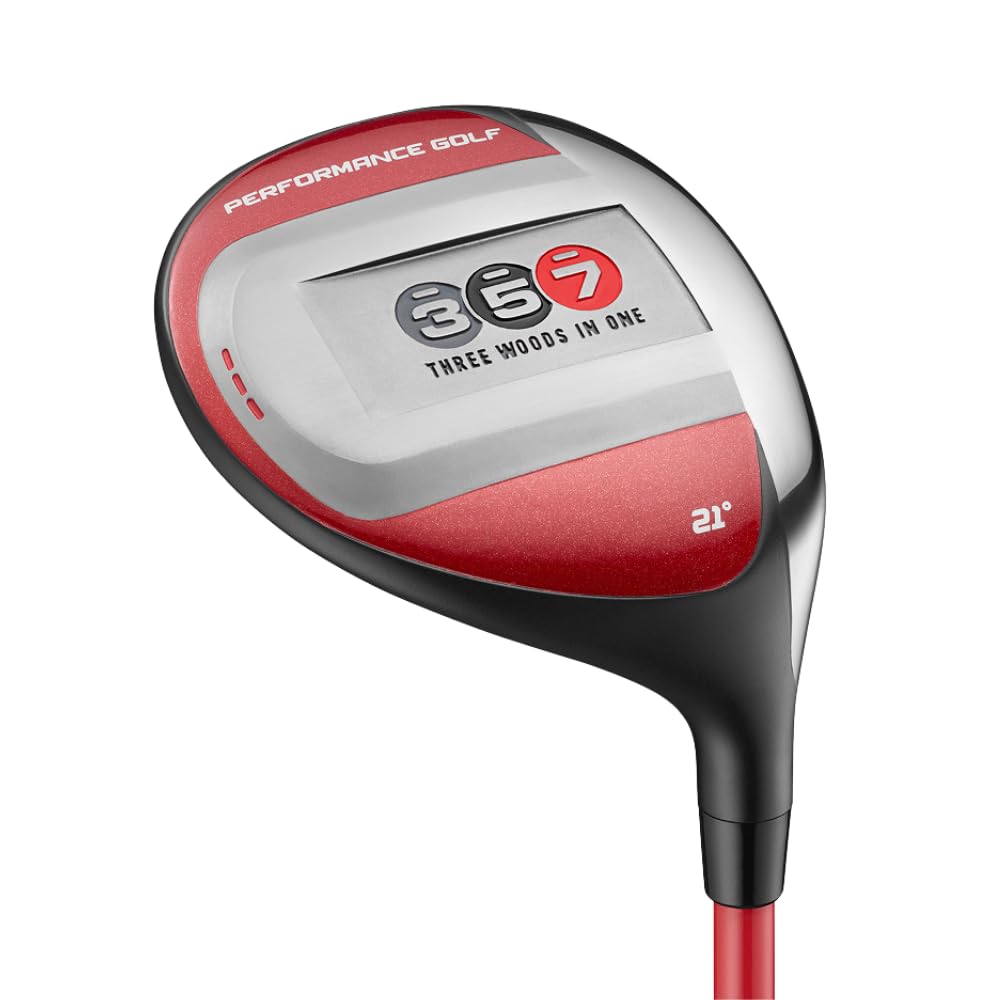
The Performance Golf 357 Fairway Hybrid is the namesake of this guide and the most technically ambitious entry. It combines a 3-wood-sized clubhead with a 7-wood launch angle, using patented Tri-Fusion technology that joins three distinct face zones to generate ball speed across a wider area than any single-piece face. The Power Scoop Crown drops the CG lower than standard hybrid designs, and the Dual Stability Rails on the sole prevent twisting on contact even when the strike is behind the ball. The 21-degree head carries 200+ yards from the fairway with a high-enough launch to stop the ball in under 10 feet of rollout.
Customer feedback from players who have integrated this club into their bag consistently reports accuracy improvements over their previous 3-wood, with one player noting the club “took a while to get to know,” but now works “far better than a 3-wood” for approach shots. The Load N Lag shaft is designed for slower swing speeds, storing energy in the lag phase and releasing it at impact to maximize distance without extra effort. The headcover is well-padded and fits securely.
The 357’s biggest drawback is its price — it is the most expensive club in this guide by a significant margin. The 21-degree fixed loft is not adjustable, so you cannot tweak the launch angle. Also, the vivid red color scheme is polarizing; some players find it visually appealing at address while others prefer a more traditional black or silver finish. The confidence-inspiring design is backed by a name-brand club-fitting expert with decades of tour-level experience.
Why it’s great
- Tri-Fusion face technology delivers 3-wood distance with 7-wood launch
- Power Scoop Crown and Dual Stability Rails improve contact from every lie
- Custom Load N Lag shaft stores energy for slower swing speeds
Good to know
- Highest price point in the guide; non-adjustable fixed loft
- Red color scheme is polarizing and may not suit traditional tastes
9. Pinemeadow Excel EGI Hybrids

The Pinemeadow Excel EGI Hybrids offer the lowest barrier to entry for players ready to replace their entire iron set with hybrids. The line runs from 3-hybrid (19 degrees) all the way to a pitching wedge hybrid (45 degrees), letting you carry nothing but hybrids and a sand wedge. The 45-degree PW hybrid tested here produces consistent 125-yard carries for a 60-year-old retiree — a usable gap between the 9-iron and wedge that traditional sets often leave open. The stainless steel clubhead paired with a Pinemeadow Graphite shaft provides a soft feel that dampens vibration on mishits.
Customer feedback overwhelmingly favors the Excel EGI line for accuracy improvement over traditional irons. A 61-year-old player reported straightening their fairway and mid-range shots, with 7-iron distance restored to ~150 yards. The bigger sweet spot design distributes weight across the entire clubhead, widening the area that produces usable ball speed. Every club ships with a headcover, which is rare at this price tier and adds significant bag protection value.
The quality control is not at the level of major OEMs — paint chips easily after a few rounds, and the significant offset can produce left misses for neutral swing paths. The head weight feels heavier than premium offerings, which some players report as fatiguing over 18 holes. If you are sensitive to offset or prefer a more traditional look, the Excel EGI line may not suit your eye or your swing.
Why it’s great
- Complete hybrid set from 3H to PW allows full iron replacement on a budget
- Bigger sweet spot design improves consistency for slower swing speeds
- Every club includes a headcover — rare at this price tier
Good to know
- Significant offset may cause left misses for neutral or draw-biased swings
- Paint chips easily after limited use; head feels heavy over a full round
FAQ
Can I replace my 3-wood with a 357 hybrid?
How much offset is too much offset in a hybrid?
What shaft flex should I choose for a 357 hybrid?
Should I buy a single hybrid or a full set of hybrids?
Do hybrids come with headcovers?
Final Thoughts: The Verdict
For most users, the best 357 hybrid golf club winner is the Cleveland Launcher Halo XL Hybrid because its GlideRail sole, MainFrame XL face, and XL head design deliver the highest forgiveness-to-price ratio in this class. If you want a true 3-wood replacement that launches like a 7-wood, grab the Cleveland Halo XL Hy-Wood. And for players who need to replace every long iron in their bag on a tight budget, nothing beats the value of the Pinemeadow Excel EGI full hybrid set.