
Watching your dog scrape a knuckle across the pavement is a specific, grinding frustration — the sound of nail on concrete, the raw patch of skin that refuses to heal, the subtle lean that says your dog is compensating for a leg that won’t lift properly. This is the daily reality of knuckling, a neurological or orthopedic failure that turns a simple walk into a damage report. Finding a brace that actually corrects the paw placement — not just covers the wound — is the difference between managing a symptom and solving the problem at its root.
I’m Min — the co-founder and writer behind Gadgets Feed. I’ve analyzed veterinary rehabilitation literature, customer stress tests on dozens of neoprene-and-splint designs, and the real-world failure modes of straps, toe lifts, and anchor paracords to separate the braces that correct gait from those that just slide down a furry leg.
This guide cuts through the sizing charts and product fluff to deliver the definitive analysis you need to confidently choose the right brace for dog knuckling — one that lifts the toe, stays put through a walk, and doesn’t chew up your dog’s skin in the process.
How To Choose The Best Brace For Dog Knuckling
Selecting a brace for knuckling isn’t like picking a generic leg wrap. You are addressing a neurological feedback failure — the dog’s brain doesn’t know where its foot is in space, so the paw drags. A successful brace must provide tactile feedback (proprioceptive stimulation) or mechanical lift to reposition the toe, all while surviving the abrasion of concrete and grass. Here are the critical factors to evaluate before committing to a single product.
Proprioception vs. Mechanical Lift
Some braces use a simple toe loop or paracord to physically hoist the knuckle off the ground. Others rely on a padded platform or pressure pad under the paw to stimulate the nerve endings, encouraging the dog to consciously lift the foot. For dogs with partial neurological function, proprioceptive stimulation can retrain the gait over time. For dogs with complete foot drop or severe weakness, mechanical lift is non-negotiable. Check whether the design includes a toe cord, a stiff splint, or a pressure pad — or a combination of both.
Material Toughness Against Pavement Drag
Knuckling braces get dragged across rough surfaces every step of every walk. The rubber sole and bottom fabric experience concentrated abrasion that will destroy thin neoprene in weeks. Look for a reinforced rubber outsole, a replaceable wear pad, or a design where the boot portion takes the punishment rather than the fabric straps. Reports of soles splitting in under two months are common with softer materials — prioritize brands that acknowledge this wear pattern with warranty terms or repair guarantees.
Sizing Accuracy and Anchor Stability
The single most repeated complaint in the knuckling brace category is the brace sliding down the leg during use. This happens when the anchor strap above the hock or carpus isn’t tight enough to hold against the downward pull of a dragging paw, or when the sizing chart doesn’t account for the taper of a dog’s leg. Measure the paw width in a weight-bearing position (not relaxed), and measure the circumference above the hock joint — not just the bone length. A brace that shifts position ceases to correct the knuckling and may create new friction points.
Quick Comparison
On smaller screens, swipe sideways to see the full table.
| Model | Category | Best For | Key Spec | Amazon |
|---|---|---|---|---|
| Ortocanis Proprioceptive Support | Premium | Neurological knuckling correction | Nylon construction with padded tarsal wrap | Amazon |
| Walkabout Toe’sUP Large | Premium | Mechanical toe lift for large dogs | Paracord lift with rubber outsole boot | Amazon |
| Walkabout Toe’sUP ML | Premium | Medium-large paw correction | Waterproof neoprene boot with anchor strap | Amazon |
| Balto Hock Brace XXS | Mid-Range | Small breed hock instability | Aluminum splint with adjustable straps | Amazon |
| Ortocanis Carpal Support S | Mid-Range | Carpal hyperextension stabilization | 2mm neoprene with steel splints | Amazon |
| Walkin’ Pets No-Knuckling Sock | Mid-Range | Rear paw proprioception training | Neoprene sock with fleece toe pad | Amazon |
| Balto Carpal/Tarsal Brace M | Mid-Range | Front leg fracture and sprain support | Aluminum splint with mesh fabric sleeve | Amazon |
In-Depth Reviews
1. Ortocanis Proprioceptive Support for Dog Knuckling

The Ortocanis Proprioceptive Support is the only unit in this lineup that explicitly targets the neurological feedback loop behind knuckling. Designed in Barcelona by Europe’s first canine orthotics specialists, this brace wraps around the tarsal area with a padded section that applies gentle pressure to the tendons and skin, stimulating the proprioceptors that tell the brain where the paw is. At size Large (14-20 cm), it accommodates larger breeds with spinal conditions, degenerative myelopathy, or post-surgical nerve damage — the exact population that needs a corrective, not just a protective, device.
The construction uses a tough nylon outer shell rather than soft neoprene, which gives it superior abrasion resistance against pavement dragging. The strap system cinches above the hock to anchor the brace in place, and the padded interior reduces the risk of hot spots that plague cheaper wraps. Users with Labrador mixes and German Shepherds report that the brace effectively lifts the knuckle off the ground during walks, preventing the raw wounds that develop from repeated scraping. The gradual adaptation protocol — starting with 15-minute sessions — is a sign that the manufacturer understands the importance of sensory acclimation for neurologically compromised dogs.
Where this brace stands apart from the competition is its dual-action approach: it mechanically prevents the paw from dragging while simultaneously providing sensory feedback that can retrain the dog’s gait over time. It doesn’t rely on a separate toe cord or external paracord — the corrective lift is built into the tarsal wrap geometry itself. The trade-off is that sizing must be precise; misjudging the hock-to-paw length will render the corrective lift ineffective. For owners dealing with neurological decline in a medium-to-large breed, this is the most thoughtfully engineered option on the market.
Why it’s great
- Proprioceptive design retrains gait while preventing paw drag
- Nylon outer shell resists pavement abrasion far better than standard neoprene
- Vet-recommended for degenerative myelopathy and spinal conditions
Good to know
- Requires careful hock-to-paw measurement — sizing errors negate the lift
- Adaptation period needed; not an instant on-and-go solution
2. Walkabout Toe’sUP No Knuckling Boot Brace
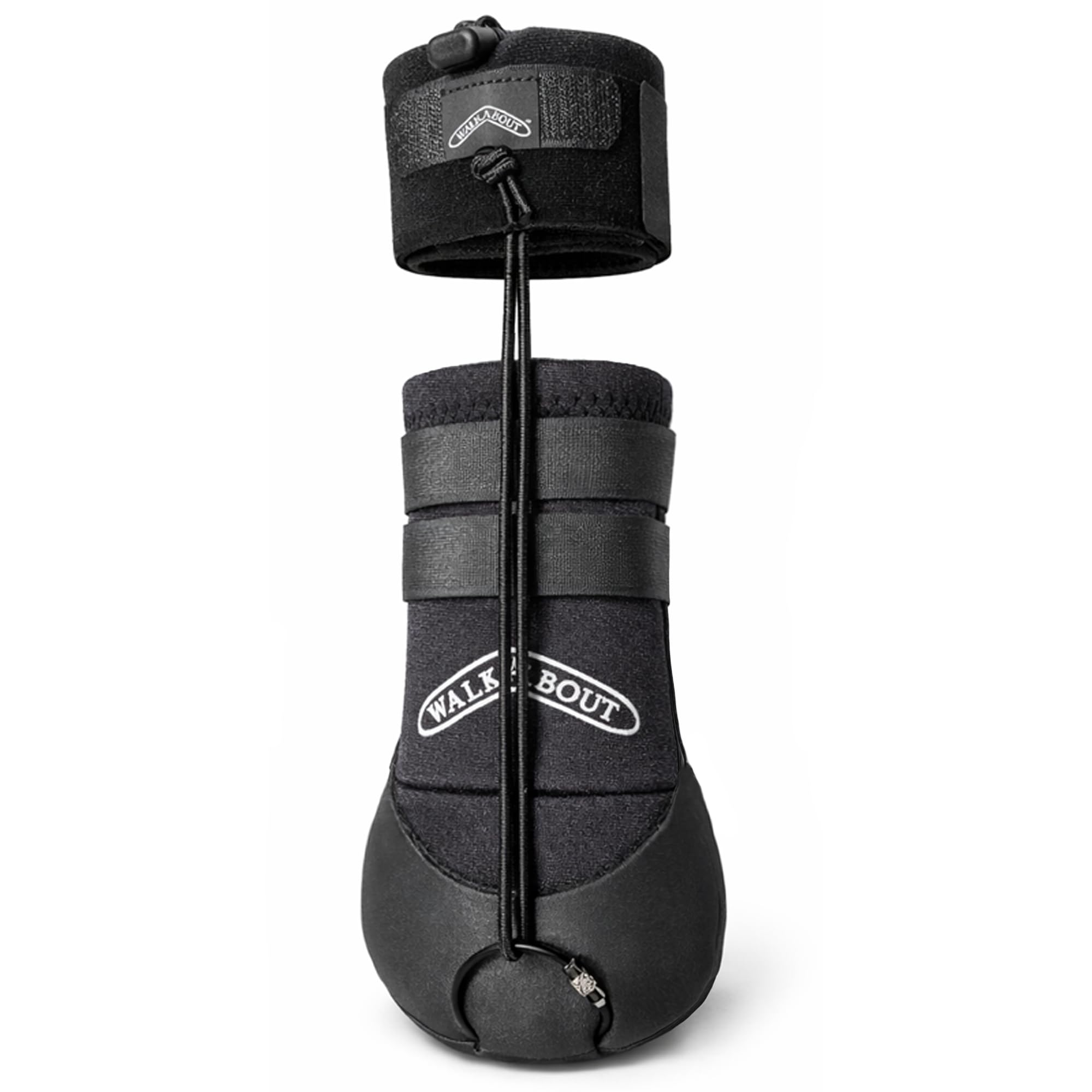
The Walkabout Toe’sUP takes a fundamentally different engineering approach to canine knuckling. Instead of relying on a wraparound proprioceptive pad, it uses a two-part system: a durable boot with a rubber outsole and a paracord assembly that runs from the boot, over the paw, and up the leg to an anchor strap. The paracord creates a mechanical sling under the paw that physically lifts the toe off the ground when the dog’s leg swings forward. This is a brute-force correction — it doesn’t rely on the dog’s nervous system at all, making it ideal for complete foot drop or severe neurological weakness where proprioceptive training isn’t an option.
The boot portion is constructed from waterproof neoprene with a fleece inner lining — designed for all-terrain use. The rubber outsole takes the brunt of pavement abrasion, protecting the dog’s paw pads from raw dragging. The anchor strap sits comfortably above the hock and can be cinched tight enough to prevent the entire assembly from sliding down, which is the failure mode of most toe-loop-only designs. The toggle system lets you adjust the paracord tension in seconds, so you can set the exact lift height your dog needs without over-correcting. For dogs with IVDD, spinal cord trauma, or arthritis-related knuckling in the rear legs, this design delivers immediate, observable correction.
The durability ceiling here is real — several long-term users report the rubber sole splitting and the elastic breaking after 1-2 months of daily use on medium to large breeds. The manufacturer offers a repair-or-replace guarantee for faulty workmanship, but not for wear-and-tear from dragging. If you have a heavy dog that drags aggressively, expect to budget for a replacement every 6-8 weeks. For lighter dogs or intermittent use (walks only, not all-day wear), the lifespan extends considerably. The corrective effect, however, is unmatched during the unit’s usable life.
Why it’s great
- Paracord mechanical lift works even on dogs with zero neurological feedback
- Rubber outsole protects paw from concrete abrasion
- Adjustable toggle system lets you dial in lift height per leg
Good to know
- Rubber sole and elastic wear out in 1-2 months with heavy daily use
- Sizing between medium and large can be unpredictable — measure paw width carefully
3. Walkabout Toe’sUP Anti-Knuckling Aid (Medium Large)

This Medium Large variant of the Walkabout Toe’sUP exists to bridge the frustrating gap between the standard Medium and Large sizes. The paw width measurement for this unit targets approximately 2.2 inches in a weight-bearing position, which covers the substantial paws of breeds like Border Collies, Australian Shepherds, and smaller Labradors. The core mechanism remains identical to the Large version — the paracord lift system paired with a reinforced boot — but the smaller geometry means less excess material to slide down the leg, which directly addresses the most common complaint from users of the larger variant.
The waterproof neoprene construction with fleece interior is a meaningful upgrade for dogs with sensitive skin, as the fleece layer prevents the rubber sole edges from rubbing the top of the paw raw. The anchor strap and toggle system are identical to the Large version, meaning you still get the same immediate mechanical correction. Customer feedback indicates that dogs wearing this size experience less boot rotation during walks than with the larger sizes, likely because the strap-to-boot ratio is better balanced at this scale. The boot stays positioned over the paw rather than migrating toward the hock.
The same durability caveats apply here as to the Large variant — the rubber sole is consumable under heavy drag conditions. However, because the boot is smaller and has less surface area in contact with the pavement, some users report slightly longer lifespan (2-3 months of daily walks) before the sole begins to separate. The repair-or-replace warranty from Walkabout Harnesses covers manufacturing defects, so document the initial fit with photos in case the sole delaminates prematurely. For owners of medium-sized dogs with moderate knuckling, this ML sizing provides the best balance of corrective lift and boot retention.
Why it’s great
- Better boot retention than larger sizes — less sliding and rotation
- Fleece interior protects sensitive paws from chafing
- Paracord lift works immediately on dogs with moderate to severe foot drop
Good to know
- Rubber sole still wears out faster than heavy-duty alternatives
- Return policy requires product to be free of dog hair — impractical for a dog boot
4. Balto Hock Brace XXS
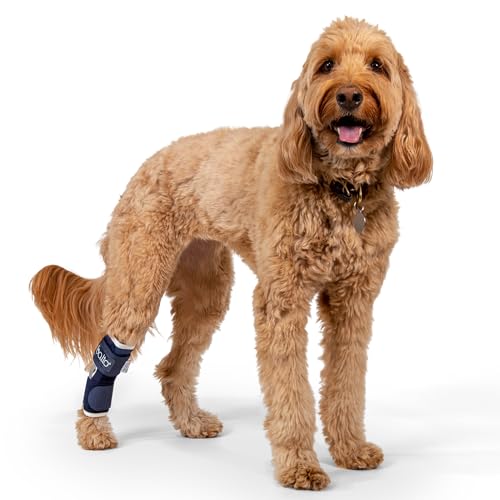
The Balto Hock Brace in Extra Extra Small is engineered for the smallest dogs — Chihuahuas, Pomeranians, Toy Poodles — who suffer from hock instability, minor dislocations, or arthritic stiffness that causes knuckling. The brace features removable aluminum splints that provide rigid stabilization of the tarsal joint, preventing the excessive flexion that allows the paw to roll under and drag. Without the splints, the brace functions as a compression sleeve that increases blood flow and joint temperature, which can reduce pain and improve proprioceptive awareness in milder cases. This dual-use capability makes it a versatile tool for both surgical recovery and conservative management.
Hand-crafted in Italy with foam padding and hook-and-loop closures, the Balto brace uses a material composition that is notably softer than the Ortocanis nylon offerings. The foam interior molds to the dog’s leg shape over a few wears, reducing pressure points. The strapping system has five adjustment points distributed along the length of the brace, allowing you to fine-tune the tension above and below the hock independently. This matters for small dogs whose legs taper dramatically — a single-strap design would either be too loose at the top or too tight at the paw.
Vet approval is a significant signal here: multiple canine rehabilitation therapists and surgeons recommend Balto braces for post-operative support. However, the foam construction and soft fabric are not designed for heavy pavement dragging. Dogs that actively drag their paw on concrete will abrade through the bottom fabric in weeks. The brace also requires a sock or liner underneath to prevent the aluminum splint edges from rubbing the skin — this adds bulk that can interfere with sizing. For tiny dogs with hock knuckling limited to indoor surfaces or short walks, this is an excellent fit. For aggressive outdoor draggers, the Walkabout Toe’sUP is the more appropriate tool.
Why it’s great
- Dual-mode: aluminum splint for rigid correction, compression-only for pain relief
- Five independent strap points for precise tension on tiny, tapered legs
- Vet-recommended for surgical recovery and arthritic hock support
Good to know
- Foam and fabric bottom not durable against pavement drag
- Requires a liner sock to prevent splint edges from rubbing skin
- Sizing chart often off — may need to order multiple sizes to find true fit
5. Ortocanis Carpal Support for Dogs
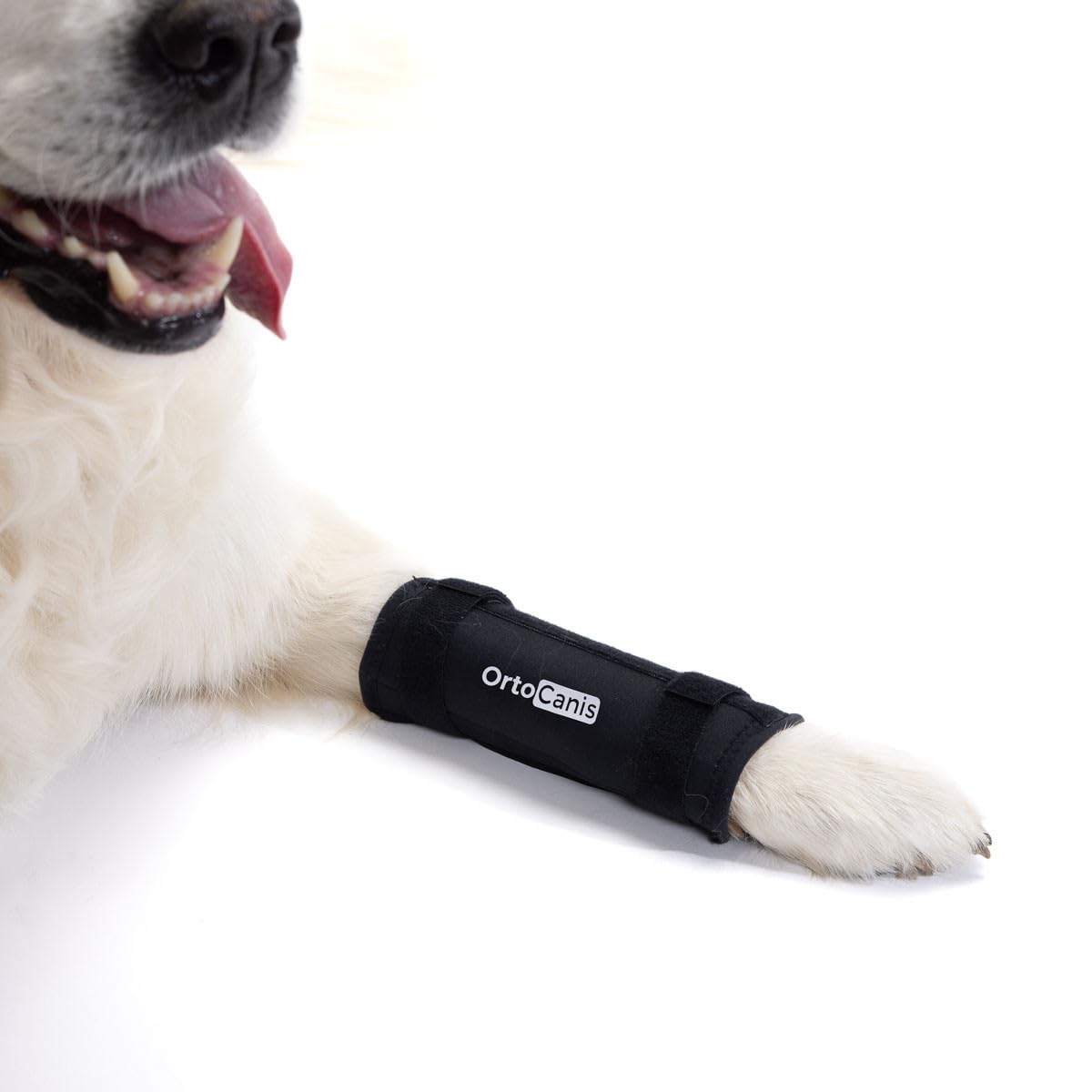
The Ortocanis Carpal Support is designed for a specific subset of the knuckling problem: carpal hyperextension and carpal osteoarthritis in the front legs. While many dogs knuckle due to rear leg neurological issues, front leg knuckling often stems from carpal joint instability or collapsed pasterns. This brace uses 2mm neoprene for compression and removable steel splints for adjustable immobilization, providing the rigid stabilization that prevents the carpus from buckling forward during weight bearing. For dogs whose knuckling is mechanically driven rather than neurologically driven, this brace addresses the root cause directly.
The ergonomic design wraps around the carpal joint with a contoured shape that reduces bulk compared to a Robert Jones bandage. The steel splints can be removed individually to dial in the exact degree of immobilization — useful for transitioning from full post-surgical rest to active rehabilitation. The neoprene construction is breathable and washable, which matters when the brace is worn for extended periods. Size Small fits paw circumferences of 6-8 cm, suitable for small-to-medium breeds like Cocker Spaniels, Beagles, and Boston Terriers.
The durability feedback is mixed and important to note. Multiple users report that the exposed Velcro edges catch on fabric and carpet, causing the dog to snag and pull the brace off. The stitching on the strap and splint pockets has been known to fail within a few months of daily use, and the Velcro hook-and-loop loses grip over time, especially if hair and debris accumulate on the fuzzy side. For short-term recovery (4-8 weeks) where you can monitor the brace’s integrity, the structural support is excellent. For long-term daily use, the fastener quality becomes a reliability concern. A common hack is to glue the splints into their pockets and reinforce the Velcro with zipties or extra strapping.
Why it’s great
- Adjustable steel splints provide genuine carpal immobilization
- Contoured neoprene design is less bulky than traditional bandages
- Removable splints allow graduated reduction of support during rehab
Good to know
- Velcro loses grip over time and catches on fabrics
- Stitching on strap and splint pockets can fail with extended daily use
- Some dogs experience hot spots where the neoprene edge presses on the carpal joint
6. Walkin’ Pets Rear No-Knuckling Training Sock

The Walkin’ Pets Rear No-Knuckling Training Sock takes a fundamentally different approach than the rigid braces above: it’s a training tool, not an immobilization device. The sock is constructed from lightweight neoprene and incorporates a fleece pad on the toe loop that provides tactile feedback to the top of the paw. This gentle pressure stimulates the dog’s proprioceptive system — the sense of self-movement and body position — encouraging the dog to consciously lift its rear paw higher during the swing phase of the gait. It is designed for dogs with mild to moderate knuckling caused by neurological conditions, spinal cord injuries, or post-surgical weakness where the motor signal is weak but not absent.
The fit is sized for small dogs up to 15 pounds with a hock-to-paw measurement of 3 inches, though larger versions are available under the Walkin’ Pets brand. The hook-and-loop closure wraps around the hock to secure the sock in place, and the fleece pad sits directly behind the toes. Users report that the sock is most effective during supervised walks and rehabilitation exercises, where the dog can focus on the tactile cue. Several reviews from owners of dogs with degenerative myelopathy and spinal stroke recovery note visible improvement in paw placement within 5-10 uses, with the dog learning to avoid the uncomfortable drag sensation.
The primary limitation is that this is not a corrective brace — it does not mechanically lift the paw. For dogs with complete foot drop or severe weakness where the paw drags regardless of feedback, the sock will not stop the abrasion. Additionally, the hook-and-loop straps are narrow and can lose grip on fluffy-coated breeds, causing the sock to slide and bunch around the ankle. The fleece pad wears down within a couple of weeks of pavement use, but the sock portion itself remains functional. At this mid-range tier, the No-Knuckling Sock is best viewed as a first-line tool for mild cases or as a complement to other therapies, not as a standalone solution for aggressive knuckling.
Why it’s great
- Lightweight proprioceptive training tool — encourages conscious paw lift
- Fleece pad provides gentle but noticeable tactile feedback
- Recommended by veterinary rehabilitation professionals for at-home therapy
Good to know
- Does not provide mechanical lift — ineffective for complete foot drop
- Velcro straps lose grip on fluffy fur and slide down the leg
- Fleece pad wears out quickly on pavement; not durable for heavy dragging
7. Balto Splint Carpal/Tarsal Brace Medium

The Balto Carpal/Tarsal Brace in Medium is designed for front leg carpal and tarsal injuries — fractures, sprains, hyperextension — in medium-sized breeds like Australian Shepherds and Border Collies. The brace integrates a rigid aluminum splint into a soft mesh fabric sleeve, providing structural support that prevents the wrist or hock from collapsing during weight bearing. For dogs whose knuckling is caused by a carpal instability rather than a neurological signal failure, this brace effectively eliminates the mechanical condition that allows the paw to drag. It is a classic orthopedic splint, not a proprioceptive trainer, and it excels within that specific domain.
The breathable mesh construction is a meaningful advantage for dogs that need to wear the brace for extended periods through the day. Heat buildup under neoprene can cause skin maceration and irritation; the open-weave mesh allows airflow that keeps the leg dry. The adjustable straps run the length of the brace, allowing you to tension the support independently at the carpal joint and along the lower leg. The aluminum splint is lightweight (the entire brace weighs under 3 ounces) and can be bent slightly to match the natural angle of the dog’s leg, though this should be done carefully to avoid creating pressure points.
The durability story here is a mixed bag. The mesh fabric is not abrasion-resistant — if the dog drags the bottom of the brace along concrete, the fabric will fray and develop holes. Several users note that the brace slips on smooth floors and requires the dog to wear a separate grippy boot or shoe on top of the splint, which adds bulk and complicates the fit. The hook-and-loop closures are adequate but not heavy-duty; they can lose grip after several months of daily wear, especially if the Velcro accumulates dog hair. For post-surgical recovery or short-term injury management where the dog is on restricted activity, the Balto Carpal Brace performs reliably. For active dogs that need both knuckling correction and pavement protection, the Walkabout Toe’sUP is a more complete package.
Why it’s great
- Breathable mesh prevents heat buildup during extended wear
- Aluminum splint provides genuine structural support for carpal instability
- Lightweight construction at under 3 ounces — won’t fatigue the leg
Good to know
- Mesh bottom abrades quickly if the dog drags the paw on pavement
- Slips on smooth floors — often requires a separate grippy boot over the brace
- Velcro closures collect hair and lose grip over months of daily use
FAQ
Can a dog brace fix knuckling caused by a spinal cord injury?
How do I prevent the brace from sliding down my dog’s leg?
How long should my dog wear a knuckling brace each day?
What is the difference between a carpal brace and a no-knuckling brace?
Final Thoughts: The Verdict
For most users, the brace for dog knuckling winner is the Ortocanis Proprioceptive Support because it combines corrective lift with sensory retraining in a durable nylon package that outlasts neoprene alternatives. If you need immediate, brute-force paw lift for a dog with complete foot drop or severe weakness, grab the Walkabout Toe’sUP. And for tiny breeds with hock instability, nothing beats the Balto Hock Brace in terms of joint-specific stabilization.