
A camping solar generator solves a specific problem gas generators cannot touch: silent, fume-free power delivered directly to your campsite without the smell of exhaust, the noise of a motor, or the hassle of hauling fuel cans. The real challenge is matching battery chemistry, inverter wattage, and solar recharge speed to the gear you actually bring—a CPAP machine at night needs a pure sine wave inverter, while a portable fridge demands steady 12V DC output that many budget units struggle to maintain. Get the capacity math wrong and you will wake up to a dead battery on day two of a weekend trip.
I’m Min — the co-founder and writer behind Gadgets Feed. I have spent months analyzing the full product stack of mid-range and premium camping solar generators, poring over datasheets and cross-referencing customer benchmarks to find which units actually deliver their rated capacity under real-world loads like a fridge, CPAP, or Starlink terminal.
The goal of this guide is to help you navigate the key trade-offs in battery type, inverter power, and solar input speed so you can pick the right best camping solar generator for your specific gear list and trip duration.
How To Choose The Best Camping Solar Generator
The best camping solar generator for you depends on three core factors: total battery capacity in watt-hours (Wh), inverter output in watts (W), and solar input speed. Miss one of these and you will either run out of power before the trip ends or struggle to recharge when the sun is weak. Here is how to think through each variable.
Battery Capacity and Chemistry
Capacity is measured in watt-hours (Wh). A weekend camper who needs to charge phones, a 12V fridge, and run lights typically needs 500–1000Wh. A family running a CPAP, a laptop, and a small electric cooler will want 1000–2000Wh. LiFePO4 (LFP) chemistry is the gold standard here: it lasts 3000–6000 cycles compared to the 500 cycles of older NMC batteries, and it does not pose the same fire risk if punctured or overheated.
Inverter Type and Surge Rating
Pure sine wave inverters deliver clean AC power that sensitive electronics like CPAP machines, laptops, and camera chargers need. The continuous wattage rating tells you what the unit can sustain; the surge rating covers startup spikes from appliances like mini fridges or pumps. A 1000W continuous inverter with a 2000W surge is a safe baseline for most camp gear, while power users running a small microwave or electric kettle should look for 1500W continuous.
Solar Input and MPPT
The maximum solar input wattage determines how fast you can replenish the battery from panels. A unit accepting 300W of solar can refill a 1000Wh battery in about 3 to 4 hours of direct sun with the right panel array. MPPT (Maximum Power Point Tracking) is a must—it extracts more energy from your panels than cheaper PWM controllers, especially under partial shade or cloudy conditions.
Quick Comparison
On smaller screens, swipe sideways to see the full table.
| Model | Category | Best For | Key Spec | Amazon |
|---|---|---|---|---|
| BLUETTI Elite 200 V2 | Premium | Extended off-grid trips | 2073.6Wh / 2600W inverter | Amazon |
| BLUETTI Elite 100 V2 | Premium | All-around camping & home backup | 1024Wh / 1800W inverter | Amazon |
| Jackery Explorer 1000 v2 | Premium | Family RV & kitchen appliances | 1070Wh / 1500W inverter | Amazon |
| EF ECOFLOW Delta 3 Classic | Premium | Versatile solar bundling | 1024Wh / 1800W inverter | Amazon |
| VTOMAN FlashSpeed 1000 | Mid-Range | Expandable capacity camping | 828Wh / 1000W inverter | Amazon |
| GRECELL EB1000 | Mid-Range | Budget 1000Wh class camping | 999Wh / 1000W inverter | Amazon |
| Jackery Explorer 300 | Mid-Range | Lightweight solo camping | 292Wh / 300W inverter | Amazon |
| Anker SOLIX C300 | Mid-Range | Ultra-portable with solar panel | 288Wh / 300W inverter | Amazon |
| LIBRIDS C600 | Mid-Range | Budget-friendly 640Wh backup | 640Wh / 600W inverter | Amazon |
In‑Depth Reviews
1. BLUETTI Elite 200 V2
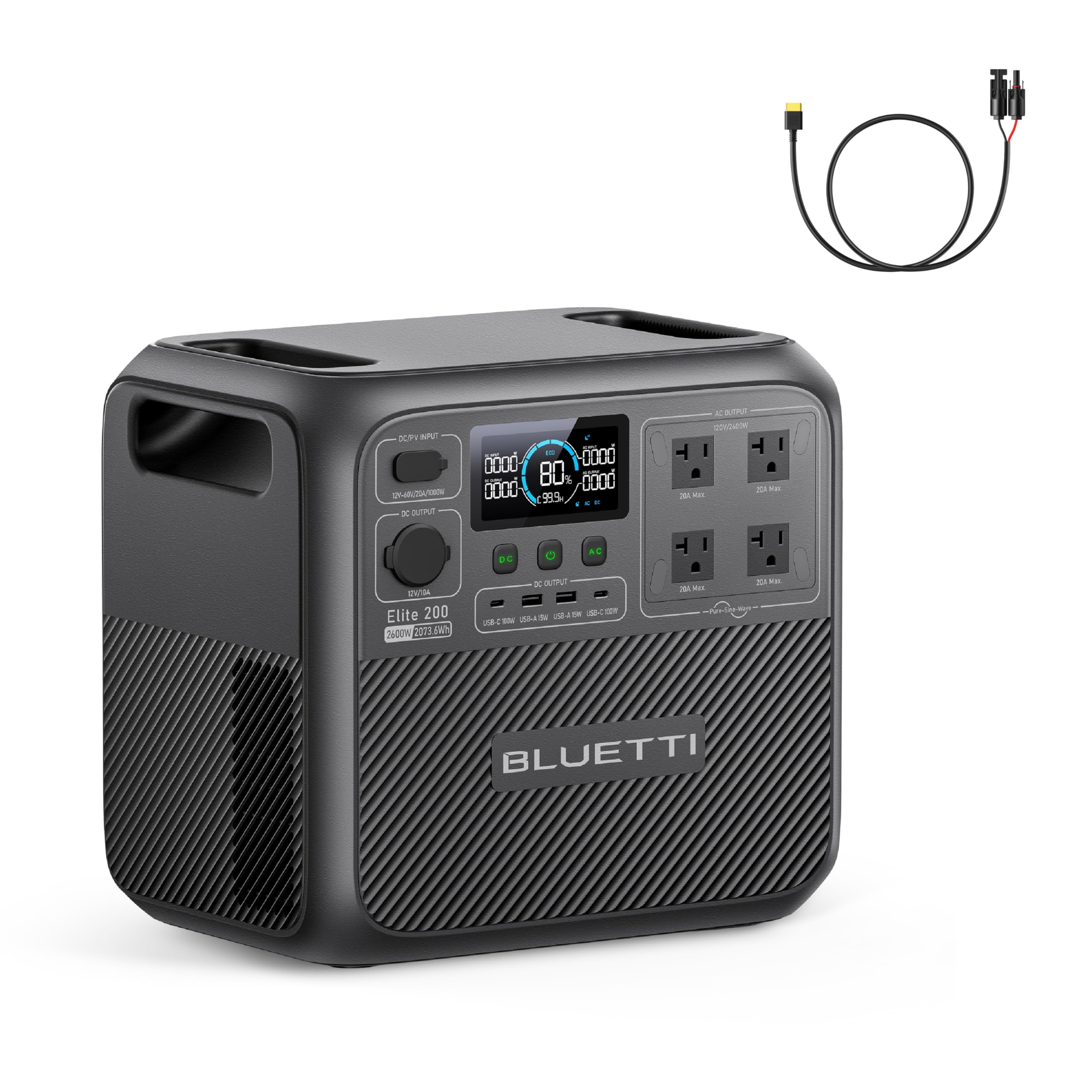
The BLUETTI Elite 200 V2 sits at the top of this list for a reason: a 2073.6Wh LiFePO4 battery with a 2600W continuous inverter (3900W Power Lifting surge) means it can handle a full campsite load—20-inch box fan overnight, 12V fridge at 34°F, 27-inch TV and Blu-ray player, plus phone charging—and still report 63% battery remaining the next morning.
What sets it apart is the 6000-cycle lifespan, certified to automotive-grade CNAS standards, translating to roughly 17 years of daily use before reaching 80% capacity. The AI-optimized BMS manages standby drain down to 10W, which is three times lower than competing 2kWh units, giving you extra runtime on the same charge. Dual AC plus DC charging can take the unit from 0–80% in 50 minutes, and a pair of 200W solar panels can fully recharge the battery in about 2.5 hours of direct sun.
At 53 pounds, this is not a backpacking station—but for car camping, RV use, or extended off-grid living where you need a serious energy reserve, the Elite 200 V2 delivers best-in-class longevity and real-world capacity that matches its sticker.
Why it’s great
- 6000-cycle LFP battery with 17-year usable lifespan
- 2600W continuous inverter handles fridges, coffee makers, and hair dryers
- Ultra-low 10W standby drain extends usable runtime
Good to know
- 53 lbs is heavy—best for car camping or stationary backup
- No built-in light or wireless charging pad
2. BLUETTI Elite 100 V2
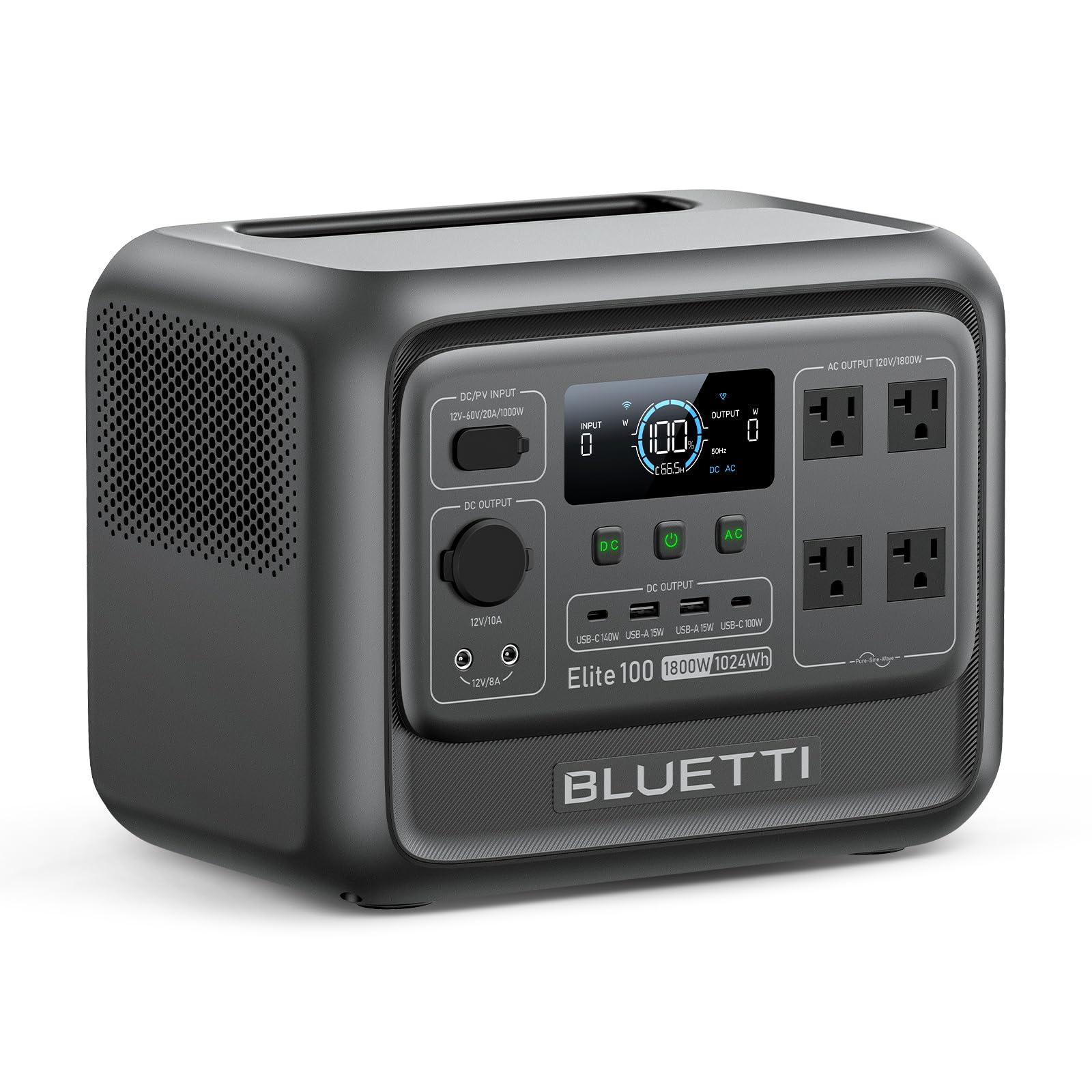
The BLUETTI Elite 100 V2 strikes a near-perfect balance for campers who need one reliable unit for both weekend trips and home emergency backup. Its 1024Wh LiFePO4 battery (4000+ cycles to 80% capacity) feeds an 1800W pure sine wave inverter with 3600W surge, enough to start a mini fridge or a pump without tripping the protection.
Portability is a strong suit here—25 pounds with a hidden handle makes it easy to move from the car to the tent. The 10ms UPS switchover keeps a CPAP or Wi-Fi router running through a blip, and the silent mode operates at 30dB, quieter than many fridge compressors. Solar input hits up to 1000W, which is unusually high for a 1kWh class unit, letting you refill the battery in roughly 70 minutes under good sun with the right panels. The BLUETTI app adds remote monitoring and OTA firmware updates.
One minor omission: there is no built-in LED light or wireless charging pad, so you will need to pack a separate lantern and cable. But given the power density, build quality, and rapid recharge speed, the Elite 100 V2 is the most versatile mid-capacity camping solar generator on the market today.
Why it’s great
- 1800W inverter handles 90% of appliances, including mini fridges and CPAP
- 1000W solar input refills 1024Wh in ~70 minutes
- 30dB silent mode for overnight tent use
Good to know
- No built-in LED light or wireless charger
- App connection can be finicky on first setup
3. Jackery Explorer 1000 v2

Jackery’s Explorer 1000 v2 updates the reliable formula with a 1070Wh LiFePO4 pack and a 1500W inverter capable of a 3000W surge. In real-world tests, it ran a microwave drawing 1370W for five minutes, dropping only 12% of its charge, and handled a kitchen refrigerator for eight hours with 53% remaining. That kind of headroom makes it a solid choice for families who want to run small cooking appliances at the campsite.
The fast-charge capability via the Jackery App lets you go 0–100% in one hour in emergency mode, though the default 1.7-hour charge preserves long-term battery health. At 23.8 pounds with a foldable handle, it is one of the lighter 1000Wh-class units, and the display shows remaining runtime clearly. The app also offers a 30dB quiet mode for overnight charging and an energy efficiency mode to extend cycle life. Note that the unit ships without a solar panel—you will need to add one separately, and it only works with Jackery-brand panels for solar input.
If you are already in the Jackery ecosystem or want a lightweight unit that can handle occasional high-draw appliances, the Explorer 1000 v2 is a refined and well-supported option with a 10-year design life.
Why it’s great
- 1500W inverter with 3000W surge handles microwaves and small appliances
- 1-hour emergency fast charge via app
- Lightweight at 23.8 lbs with foldable handle
Good to know
- Solar panel not included in base package
- Only compatible with Jackery solar panels
4. EF ECOFLOW Delta 3 Classic
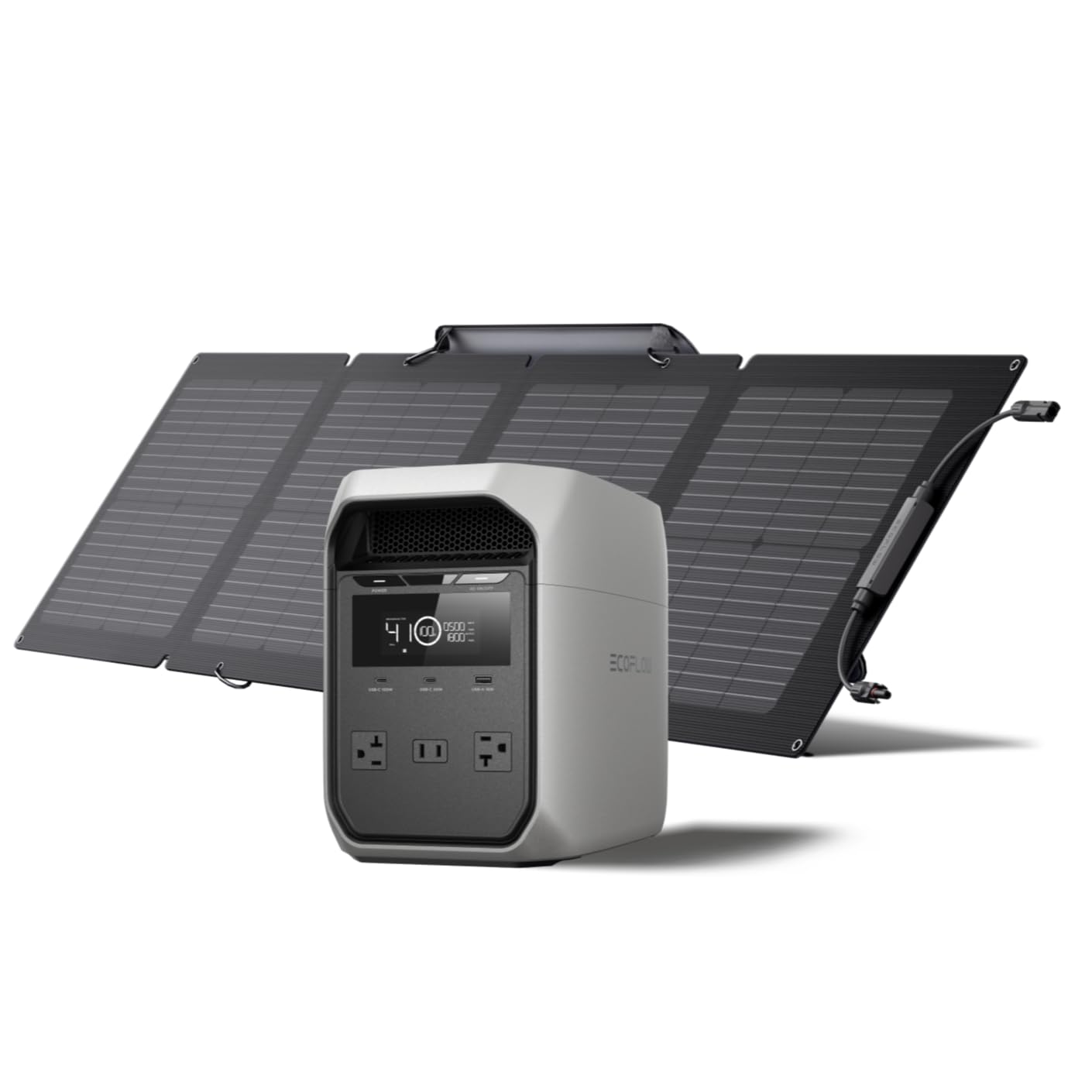
The EF ECOFLOW Delta 3 Classic comes bundled with a 110W solar panel, making it a true turnkey solar generator package. The core unit packs a 1024Wh LiFePO4 battery and an 1800W inverter with 3600W surge, supported by X-Stream AC charging that hits 0–80% in 45 minutes—one of the fastest AC recharge speeds in this class.
Real-world owners report the unit running a Starlink Mini and charging multiple phones and iPads flawlessly, powering a projector for a full movie night, and even running a window AC unit without hiccups. The <10ms UPS switchover protects sensitive gear during outages, and the EV-grade CTC design with a smart BMS ensures safe operation across temperature extremes. The bundled 110W solar panel has a 23% conversion efficiency, but full recharge from solar alone takes around 11.6 hours in good sun, so serious off-gridders will want to add a second panel or upgrade to a higher-wattage array.
If you want one box that includes a high-quality solar panel and a fast-charging station, the Delta 3 Classic delivers excellent hardware at a competitive bundled price.
Why it’s great
- 0–80% AC charge in 45 minutes with X-Stream technology
- Includes 110W solar panel with 23% conversion efficiency
- 3600W surge handles inductive loads like window AC units
Good to know
- 110W panel alone takes ~11.6 hours for full charge
- Unit ships separately from the solar panel
5. VTOMAN FlashSpeed 1000
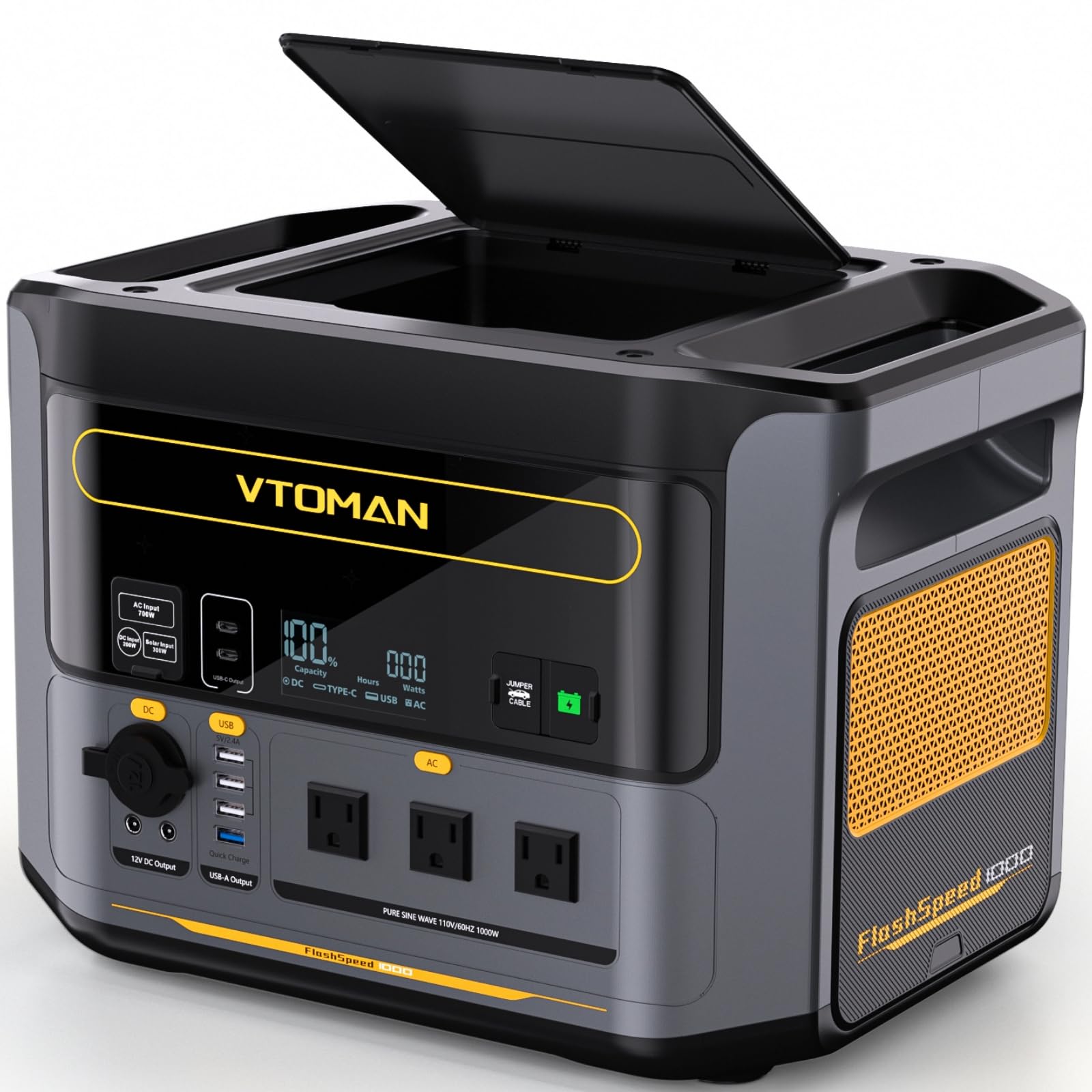
The VTOMAN FlashSpeed 1000 uses its 828Wh LiFePO4 battery (3000+ cycles) and 1000W inverter (2000W peak) as a base that can scale up to 2376Wh with the optional FlashSpeed 1500 extra battery. That expandability makes it a unique value proposition for campers who want to start smaller and add capacity later without buying a whole new unit.
V-Beyond technology allows the inverter to deliver constant 1000W output even when powering loads above its rated capacity, providing a temporary emergency solution for space heaters or ovens—though you should not rely on this as a daily use case. AC input hits 1000W for 0–80% in one hour, and the stackable design with a top storage box keeps cables organized. Owners confirm it handles a fridge for two days with the extra battery pack and recharges in roughly two hours via generator. The DC auto-shutdown with certain compressor fridges is a reported quirk, and the USB-C ports can feel slightly loose, but the core power delivery is solid for the price tier.
If you value future-proof capacity expansion over raw upfront watt-hours, the FlashSpeed 1000 offers a rare modular path at a mid-range entry point.
Why it’s great
- Expandable from 828Wh to 2376Wh with add-on battery
- 0–80% charge in one hour via 1000W AC input
- Flat-top stackable design with built-in cable storage
Good to know
- DC auto-shutdown may interrupt some 12V compressor fridges
- USB-C ports have reported looser fit than competitors
6. GRECELL EB1000
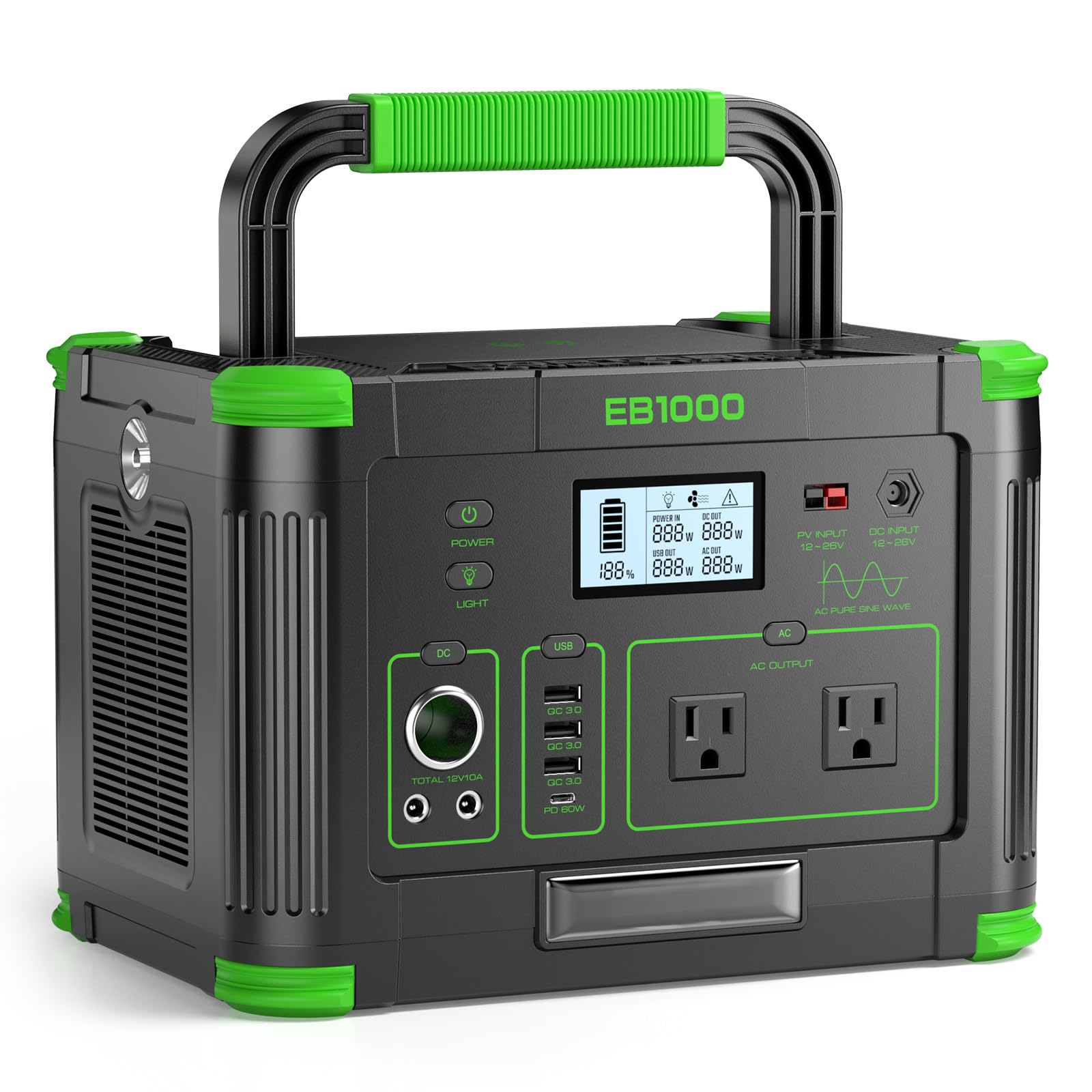
The GRECELL EB1000 delivers 999Wh of capacity and a 1000W pure sine wave inverter (2000W surge) in a 17.8-pound package that undercuts most competitors on weight and price for this capacity tier. The battery chemistry is NMC rather than LiFePO4, which means shorter cycle life (about 500–1000 cycles) but higher energy density—so you get a full kilowatt-hour of power in a smaller, lighter frame.
Port selection is generous: 2 AC sockets, a 60W USB-C PD port, 3 USB-A QC 3.0 ports, a wireless charging pad, a 12V car port, and 2 DC outputs, plus an individual switch for each module to prevent phantom drain. Owners confirm it runs a 200W mini rice cooker from 100% to about 50–56%, powers a mini PC for 4–5 hours of gaming, and pairs well with a 100W solar panel for off-grid recharging. The built-in MPPT controller extracts maximum solar yield, and the LED light with SOS mode adds practical campsite illumination.
If you are on a tighter budget and prioritize carrying a full kilowatt-hour of power in the lightest possible package, the EB1000 is the smart pick—just be aware of the shorter battery lifespan compared to LFP alternatives.
Why it’s great
- 999Wh capacity at 17.8 lbs is very light for 1kWh class
- 10 simultaneous ports including wireless charging and 60W USB-C
- Individual module switches prevent phantom drain
Good to know
- NMC battery chemistry has shorter cycle life than LiFePO4
- Fan noise is noticeable at sustained loads above 500W
7. Jackery Explorer 300
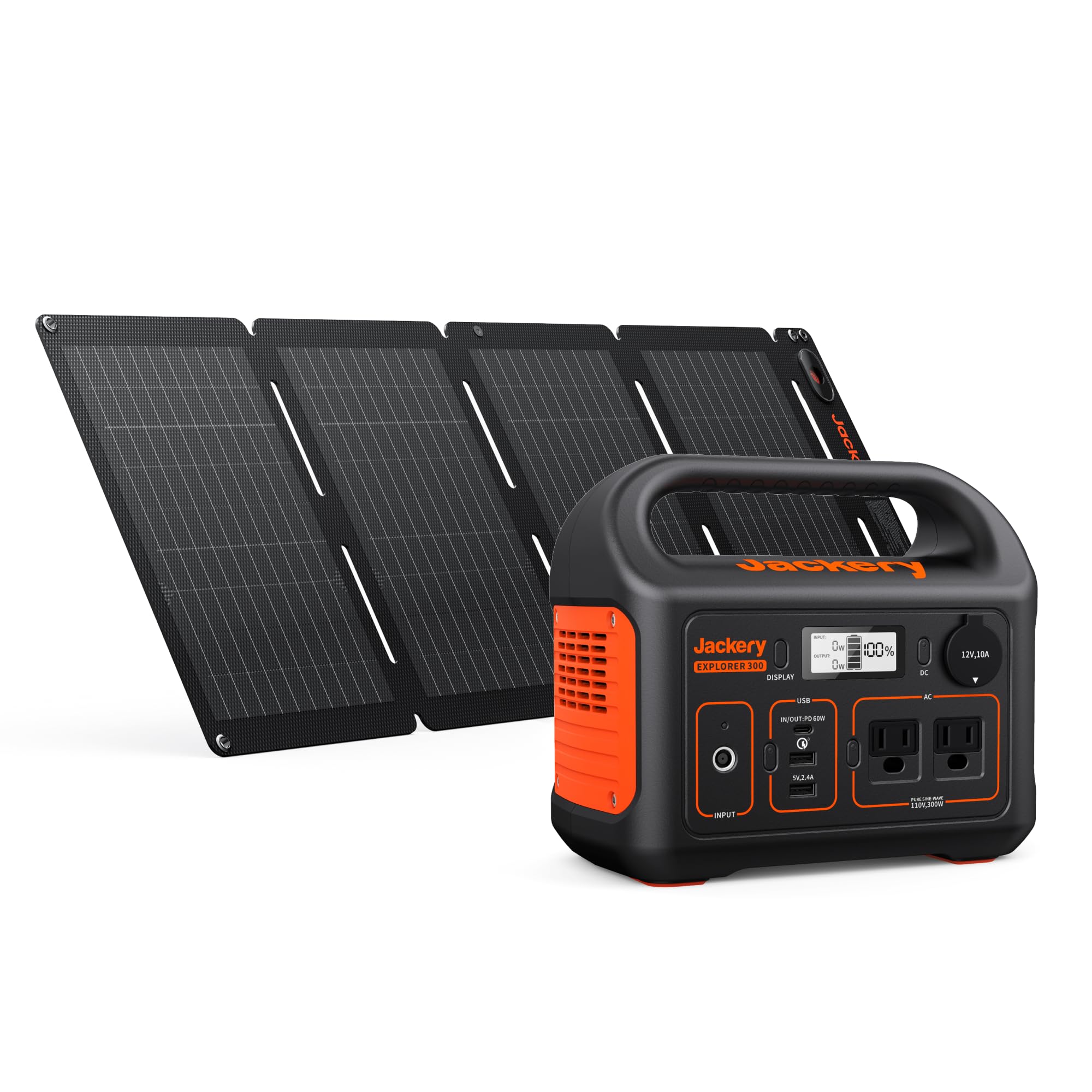
The Jackery Explorer 300 is built for the solo camper or minimalist who values weight savings over raw capacity. At 7.5 pounds with a 292Wh LiFePO4 battery and 300W inverter (600W surge), it fits in a daypack and handles the essentials: charging phones, running a USB fan, powering a laptop, or keeping a camera battery topped up for 2–3 days per charge.
The upgraded LiFePO4 chemistry delivers over 4000 cycles before hitting 70% capacity, translating to more than 11 years of service at a weekend-a-month usage pace. It includes 2 AC outlets, a 100W USB-C PD port, 2 USB-A ports, and a 120W car port, and pairs with Jackery’s 40W or 100W solar panels for off-grid refueling. One owner used it as the sole power source for a weekend camper van trip and reported it reliably ran a fan and charged electronics without issue. The solar panel charges slowly from the 40W panel (7.5 hours to 80%), but it gets the job done for multiday trips with good sun exposure.
If you are hiking into a backcountry site or need a grab-and-go battery for short car camping trips where weight is a factor, the Explorer 300 is the lightest reliable LFP option in this list.
Why it’s great
- 7.5 lbs with integrated handle—easy to pack
- 4000+ cycle LFP battery for over a decade of use
- 100W USB-C PD charges laptops at full speed
Good to know
- 292Wh limits runtime for larger appliances
- Included 40W solar panel charges slowly; upgrade recommended
8. Anker SOLIX C300

The Anker SOLIX C300 is a DC-only power station that prioritizes ultra-portability and USB-C ecosystem convenience. Its 288Wh LiFePO4 battery and 300W inverter (DC-side only, no AC outlet) are paired with two 140W two-way USB-C ports—one of the highest USB-C PD wattages available in a portable station—making it ideal for campers who power laptops, phones, tablets, and cameras directly over USB-C.
The design is 30% smaller than similarly rated stations, and it includes a 60W solar panel in the bundle for immediate off-grid use. Owners report it maintained a 100% charge while powering phones and a cooler at the beach, and powered three phones, a Bluetooth speaker, and DC USB-C fans 24/7 for a four-day camping trip. The Anker app tracks charge status, solar input, and controls a built-in light without needing Wi-Fi. One caveat: because it lacks AC outlets, you cannot plug in a CPAP, mini fridge, or any standard household appliance directly—this is strictly a USB-C and 12V ecosystem tool.
If your campsite gear is all USB-C powered and you want the smallest, most efficient solar generator for ultralight trips, the SOLIX C300 is a purpose-built winner.
Why it’s great
- Two 140W two-way USB-C ports charge laptops at full speed
- 30% smaller than equivalent capacity units
- Includes 60W solar panel in the bundle
Good to know
- No AC outlets—USB-C and 12V only
- Not compatible with standard household appliances
9. LIBRIDS C600
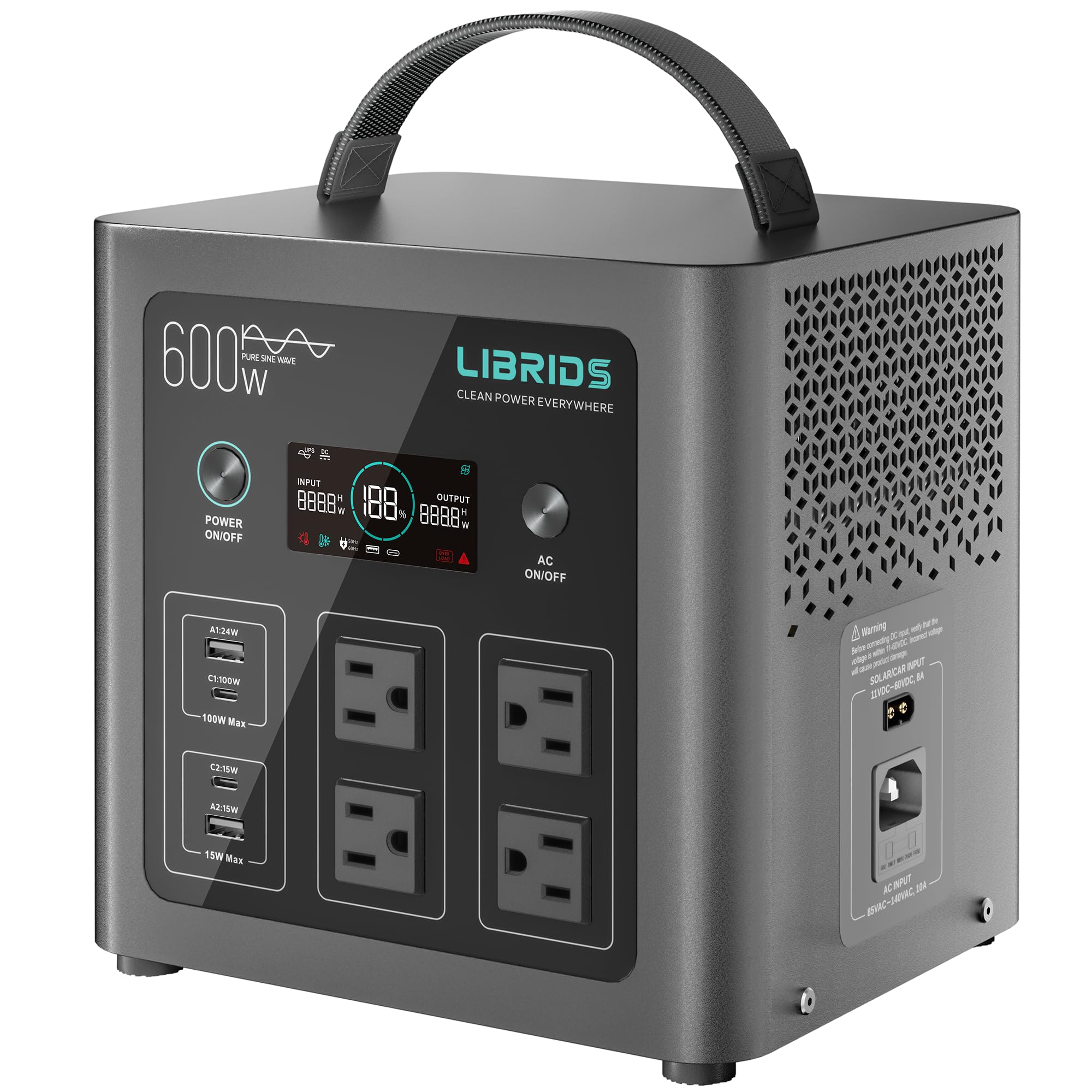
The LIBRIDS C600 delivers a compelling price-to-spec ratio: a 640Wh LiFePO4 battery, 600W pure sine wave inverter with 1200W surge, and a 10ms UPS backup designed to keep CPAP machines and Wi-Fi routers running during outages. The metal enclosure improves heat dissipation, and the smart LCD screen provides real-time battery percentage and input/output power readings.
Charging from AC takes just 1.5 hours to full, and the eight output ports (4 AC plus USB) can power up to eight devices at once. One CPAP user reported running a Resmed Airsense 11 for seven hours and using only 24% of the battery, which means the C600 can easily cover multiple nights of CPAP use on a single charge. Owner reviews consistently praise the build quality, quiet fan operation, and compact form factor. Note the UL-required label states “Indoor Use Only” for safety, but the unit can be used at dry campsites in clear weather as long as it is kept out of rain and wet conditions.
If you want a reliable, CPAP-friendly camping solar generator on a tight budget without sacrificing pure sine wave quality or LiFePO4 safety, the LIBRIDS C600 is the strongest entry-level value in this roundup.
Why it’s great
- 640Wh LFP battery with 4000+ cycles at a competitive entry price
- 10ms UPS backup protects CPAP and routers during outages
- Metal enclosure for better heat dissipation and durability
Good to know
- UL label restricts use to dry conditions—avoid rain
- 600W inverter is sufficient for small appliances but not high-draw cooking gear
FAQ
How many watt-hours do I need for a weekend camping trip?
Can I leave my camping solar generator plugged into the sun all day?
Is a pure sine wave inverter really necessary for camping?
Final Thoughts: The Verdict
For most users, the best camping solar generator winner is the BLUETTI Elite 100 V2 because it delivers 1024Wh of LiFePO4 storage, a 1800W inverter, and 1000W solar input in a 25-pound package that balances portability with real-world power for a fridge, CPAP, or small cooking appliances. If you want the longest possible lifespans and highest capacity for family-sized off-grid trips, grab the BLUETTI Elite 200 V2. And for a lightweight solo option that prioritizes weight savings and USB-C charging, nothing beats the Jackery Explorer 300.