
Nothing kills the mood of a classic vinyl session or a late-night talk show faster than the crackle and pop of a weak FM signal. That consumer-grade wire dipole included with most receivers is a compromise, often delivering a frustrating mix of static and stereo dropouts, especially in urban canyons or rural dead zones. The real fix involves swapping that freebie for a properly designed antenna that can actually pull in a clean, noise-free broadcast.
I’m Min — the co-founder and writer behind Gadgets Feed. I spend hundreds of hours analyzing the technical specifications of antennas, from VSWR curves and gain figures to impedance matching and build materials, to separate the permanent solutions from the temporary fixes.
After digging into the market, these seven models represent the spectrum of real-world performance, from rugged outdoor Yagi-style arrays to versatile indoor loops, all of which capture the true potential of any fm receiver antenna.
How To Choose The Best FM Receiver Antenna
Selecting the right antenna isn’t about the highest price tag or the loudest marketing claims; it’s about matching the antenna’s design to your specific listening environment and distance from broadcast towers. The wrong type can actually make reception worse.
Directional vs. Omnidirectional Design
This is the single most important decision you will make. A directional antenna, typically a Yagi design with multiple elements, focuses its gain in one direction. It is the only choice for pulling in weak, distant stations (60+ miles away) or for rejecting multipath interference from a strong local station you are trying to avoid. An omnidirectional design, like a turnstile or loop, catches signals equally from all 360 degrees. This is perfect if you are in a strong signal area and want to receive multiple stations from different directions without needing a rotator. Check the product’s description for forward gain (measured in dB) to quantify the directional advantage.
Build Quality and Environmental Durability
An antenna intended for outdoor or attic use must be built to survive. Look for heavy-duty aluminum tubing (like 6061 or 6063 grade) and UV-resistant plastic components. Cheap plastic or thin-gauge aluminum flexes in the wind, detunes the elements, and can corrode within a single season. The balun, or matching transformer, should be weather-sealed. A premium antenna that fails mechanically in 18 months is no bargain, regardless of its reception capability.
Frequency Range and Impedance Matching
Every FM receiver is designed to operate with a 75-ohm input impedance, matching standard RG6 coaxial cable. Some antennas come with a 300-ohm output and require a balun to convert to 75-ohm—check if this is included or if you need to buy it separately. Also, ensure the antenna is specifically tuned to the FM broadcast band (87.5–108 MHz). A TV antenna will work, but its performance across the FM spectrum will be suboptimal because it is designed for different frequency ranges, often causing uneven gain or high VSWR.
Quick Comparison
On smaller screens, swipe sideways to see the full table.
| Model | Category | Best For | Key Spec | Amazon |
|---|---|---|---|---|
| Channel Master CM-3026HD | Dipole | Long-range distant stations | 45-mile range / 66.5″ elements | Amazon |
| Stellar Labs 30-2460 | Yagi | Targeting weak stations | 7 dB forward gain | Amazon |
| Winegard HD-6010 | Turnstile | Multi-directional strong areas | 30-mile range / compact | Amazon |
| Britta Products FM-11 | Yagi | Omni-directional attic install | 47″ boom / vertical mount | Amazon |
| Britta Products FM-10A | Loop | General-purpose mid-range | 21.5″ diameter / 75 ohm | Amazon |
| FMUSER GP100 | Ground Plane | Low-power broadcasting | 3 dB gain / 50 ohm | Amazon |
| Five Star FSA-3806 | Motorized | TV+FM combo with rotation | 200-mile claim / 40ft cable | Amazon |
In‑Depth Reviews
1. Channel Master CM-3026HD

The Channel Master CM-3026HD sits at the top of this list because it delivers the kind of performance that is hard to find in a consumer-grade antenna. Its multi-directional dipole design, with two collinear elements spanning over five feet, provides a meaningful gain advantage over standard omnidirectional loops without the extreme directionality of a long-boom Yagi. At a 45-mile range, users report pulling in crystal clear stations from 50 to 55 miles away when mounted properly, demonstrating that its conservative rating is genuine.
Build quality is a standout feature here. The elements are crafted from premium 6061 and 6063 aluminum, while the heavy-duty matching transformer and UV-resistant ASA/PVC materials ensure this unit can survive years of Kansas-grade winds or coastal salt air. It is assembled and packaged in Chandler, Arizona, a rare point of pride in this category that shows in the tight tolerances of the hardware.
One nuance is that connecting this 75-ohm coax output to some older receivers with push-clip 300-ohm terminals will require a separate adapter, which is not included. However, for anyone with a modern receiver, a tuner, or an HD radio, this antenna represents the most honest, long-range, multi-directional performer available. It is the benchmark most others will be measured against.
Why it’s great
- Proven 50+ mile reception with dipole gain
- Heavy-duty aluminum and UV-resistant construction
- Assembled in the USA with tight quality control
Good to know
- Requires an adapter for 300-ohm receiver inputs
- Boom length of 66.5 inches requires adequate mounting space
- Mast and wall mount must be purchased separately
2. Stellar Labs 30-2460

When a distant low-powered station requires more push than an omnidirectional antenna can offer, the Stellar Labs 30-2460 becomes the specialist for the job. This four-element Yagi is a pure directional performer, offering a rated 7 dB maximum forward gain and a 15 dB front-to-back ratio. That spec translates to real-world performance: users have successfully pulled in stations over 160 miles away, although its directionality means you must aim it precisely with a good compass or phone app.
The construction uses polished aluminum elements and a waterproof plastic housing for the balun, which handles the built-in 300-to-75 ohm conversion. The wing-thumb screws for the elements are a known weak point, as the plastic wings can loosen over time. Some users have also noted that the boom droops slightly at full extension, which may require reinforcing tubing to prevent the signal pattern from shifting.
Despite these hardware quirks, the price-to-performance ratio here is exceptional. For a listener 60 to 70 miles from the transmitter who needs to lock onto a single weak station while rejecting side-lobe noise, this antenna is a true value play. Just be prepared to spend a few extra minutes reinforcing the mechanical assembly for a permanent outdoor mount.
Why it’s great
- High 7 dB forward gain for weak distant stations
- 15 dB front-to-back ratio effectively blocks behind-tower noise
- Affordable entry into real Yagi-class performance
Good to know
- Plastic wing nuts for elements are prone to loosening
- Boom may droop at full extension without reinforcement
- Detailed aim calibration required for best results
3. Winegard HD-6010
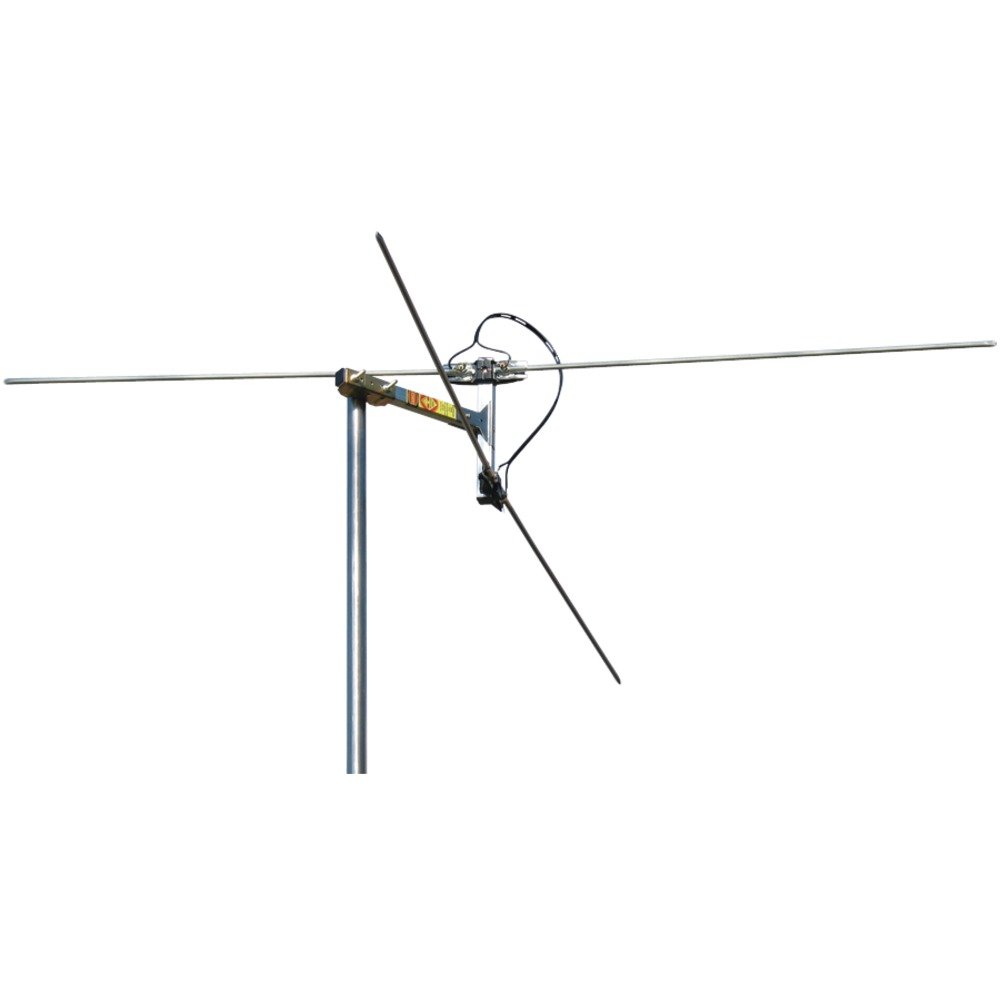
The Winegard HD-6010 is a staple of the FM reception community for good reason. Its turnstile design uses two crossed dipoles to create a near-omnidirectional pattern with moderate gain, making it ideal for listeners who are 30 miles or less from broadcast towers and want to switch between stations from different directions without a rotator. Users in New York and densely packed suburbs have reported that it easily outperforms a degraded or older antenna, pulling in strong, clear stereo with no amplifier required.
One of the strongest arguments for the HD-6010 is its simplicity. It features a one-piece construction that assembles in minutes, and it mounts to any mast pipe up to 2 inches in diameter. The built-in 300-to-75 ohm transformer means you can run standard RG6 coax directly. With no active components, it has a legendary lifespan—some users report the same unit surviving over a decade of outdoor exposure with zero degradation.
The trade-off is that its 30-mile range is a hard ceiling. Beyond that distance, its gain simply isn’t sufficient to pull in weak signals clearly, especially in hilly terrain. But for its target sweet spot—strong signal suburban and urban environments—this antenna offers the best combination of size, durability, and cost in a classic, proven package.
Why it’s great
- Proven turnstile design works well for multi-directional listening
- One-piece construction and simple tool-free assembly
- Extremely durable; many units last 10+ years outdoors
Good to know
- Limited to approximately 30-mile range for clear reception
- Not suitable for pulling in very weak distant signals
- Requires line-of-sight to towers for best performance
4. Britta Products FM-11
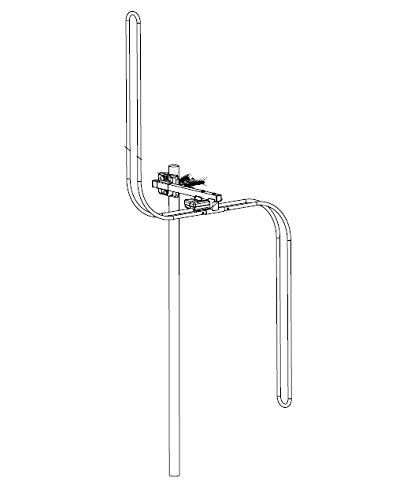
The Britta FM-11 is designed specifically for installations where an unobtrusive form factor is more important than raw directional gain. Its vertical mounting orientation and 360-degree reception capability make it a strong candidate for attic installations, where space is constrained and you cannot aim a long Yagi at a specific tower. Users in weak signal areas report a significant improvement over indoor dipole antennas, particularly in achieving solid stereo reception on a wider array of stations.
The heavy-duty aluminum tubing and integrated balun provide a solid mechanical foundation. The coax connection interface is a known weak point—several users report the connector breaking inside the plastic module after a few weeks of use, rendering the antenna useless. This is a failure mode to watch for, especially if the coax cable experiences any lateral stress at the connection point.
Another issue raised by a technically-minded user is that the antenna may not be perfectly tuned across the entire FM band. One report indicates the VSWR is more favorable around 88 MHz and drops off above 90 MHz, requiring physical shortening of the rods for flat band coverage. This makes the FM-11 a better fit for listeners focused on a specific band segment rather than the full 88-108 MHz spectrum.
Why it’s great
- Compact 47-inch design ideal for attic or RV mounting
- Omnidirectional pattern covers all 360 degrees
- High-quality aluminum tubing for long-term durability
Good to know
- Coax connection inside the balun is fragile and prone to failure
- VSWR is uneven across the full FM band for some units
- May require tuning modification for best broadband performance
5. Britta Products FM-10A

The Britta FM-10A is the often-overlooked workhorse of the FM antenna world. This large loop antenna, with a 21.5-inch diameter, is a fantastic general-purpose solution for the listener who is 25 to 30 miles from multiple stations but does not want to commit to a directional Yagi. Its omnidirectional pattern provides excellent off-axis signal capture; one user reported that it outperformed a beam antenna by a significant margin when the target station was not aimed perfectly dead-on.
The assembly is genuinely tool-free and takes less than three minutes. The heavy-duty tubing and integrated balun feel more substantial than the price might suggest. It is optimized for 75-ohm coax and includes a weather-resistant boot for the connection, though some users report the boot feels cheap and the included hardware bolts are zinc-plated rather than stainless, which may lead to corrosion in coastal environments within a couple of years.
A recurring theme among early reviews is missing or loose hardware in the box. Some users report missing bolts and nuts for the frame attachment, which is a frustration that can delay an otherwise straightforward installation. However, when the unit is complete and correctly mounted in an attic or on a mast, it delivers a massive improvement in signal strength, often doubling the number of clear stations compared to a standard indoor wire.
Why it’s great
- Excellent omnidirectional pattern with strong off-axis reception
- Tool-free assembly in under 3 minutes
- Large 21.5″ loop provides real signal gain over small dipoles
Good to know
- Inconsistent quality control; may be missing hardware in the box
- Zinc-plated bolts may not hold up in coastal/salt air environments
- Not sufficient for very distant stations beyond 30 miles
6. FMUSER GP100

The FMUSER GP100 occupies a unique position in this guide: it is designed specifically for low-power broadcasting rather than receiving. However, it is included here because its 3 dB gain and ultra-low VSWR (reportedly achieving 1:1 at 88.7 MHz) make it an exceptionally effective receiving antenna for specific use cases, such as a church, school, or Christmas light display where you also need to transmit. The 1/4 wave ground plane design provides true omnidirectional coverage.
The weatherproof aluminum alloy construction and waterproof connectors are a step above most consumer-grade receiving antennas. The included 26-foot TNC coax cable is on the thinner side, so for runs longer than that you will need a higher-quality LMR400 or similar cable with adapters. Users have reported outstanding results for reception in metal buildings where indoor antennas fail entirely.
The main caveat is that the 50-ohm impedance is a mismatch for a standard home receiver expecting 75 ohms. You will need an impedance matching transformer to use this purely as a receiving antenna for a standard FM tuner. Without it, signal loss will negate much of the gain benefit. This is a specialized tool, but for the right scenario, its build quality and performance are unmatched.
Why it’s great
- Ultra-low VSWR and 3 dB gain for clean signal capture
- Rugged weatherproof aluminum alloy construction
- True omnidirectional coverage ideal for challenging environments
Good to know
- 50-ohm impedance requires a matching transformer for most receivers
- Included TNC coax is thin; upgrade recommended for long runs
- Designed primarily for 0.5-100W transmitters, not standard receive-only use
7. Five Star FSA-3806

The Five Star FSA-3806 is a motorized hybrid antenna that handles both VHF/UHF TV and FM radio signals. Its 360-degree motorized rotation, controlled by an infrared remote, is a genuine convenience for users who want to scan channels from different directions without climbing a ladder. For FM reception specifically, the built-in amplifier (gain 15-35dB) with an LTE filter provides a boost that can help in metal buildings where signals are attenuated.
Several users have reported that the FM reception is surprisingly good, with one user in a metal building finally achieving a consistent clear FM signal after other antennas failed. The assembly is quick, but the parts are lightweight plastic and aluminum that bend easily—this is not a rugged, long-term outdoor antenna for harsh climates. The included 40ft RG6 coaxial cable is a welcome addition that eliminates an extra purchase.
The significant downside is reliability. Multiple reports describe the power pack failing intermittently or the motorized rotor ceasing to function shortly after installation. One user described the experience as frustrating enough to disassemble and return the unit to China. The motorized rotation direction is also apparently random, making fine-tuning a station difficult. This antenna is best reserved for users who need a budget-friendly TV+FM combo with motorized rotation and are willing to accept a higher risk of component failure.
Why it’s great
- Motorized 360-degree rotation with remote control
- Built-in amplifier with LTE filter for signal boosting
- Includes 40ft RG6 cable and works for both TV and FM
Good to know
- High failure rate for the motor rotor and power pack
- Lightweight build feels cheap and is prone to damage
- Rotation control is inconsistent; fine-tuning is difficult
FAQ
Can I use a TV antenna for my FM receiver?
What does VSWR mean and why does it matter for an FM antenna?
Final Thoughts: The Verdict
For most users, the fm receiver antenna winner is the Channel Master CM-3026HD because it offers the best balance of honest long-range performance, exceptional build quality, and a genuinely useful multi-directional pattern. If you want high directional gain to lock onto a single weak distant station, grab the Stellar Labs 30-2460. And for a classic compact design that works beautifully in strong signal areas and will still be working a decade from now, nothing beats the Winegard HD-6010.