
Finding the right bedding for your mice means navigating a minefield of dusty wood shavings, questionable chemicals, and materials that simply don’t hold up to the constant digging, tunneling, and nesting that defines a mouse’s daily life. The wrong choice can lead to respiratory issues, skin irritation, or a cage that smells within hours. The right one creates a clean, enriching environment where your mice can thrive.
I’m Min — the co-founder and writer behind Gadgets Feed. After spending countless hours cross-referencing material compositions, analyzing customer feedback on absorbency and dust levels, and comparing the specific ammonia-locking and burrow-holding performance of each option, I’ve built this guide to cut through the confusion.
Whether you prioritize dust control for a sensitive respiratory system, natural materials for nesting enrichment, or maximum odor absorption for a multi-cage setup, this deep dive into the best bedding for mice will help you match the perfect substrate to your specific needs.
How To Choose The Best Bedding For Mice
Mice spend a significant portion of their lives in their bedding — sleeping, burrowing, foraging, and even giving birth. The material you choose directly impacts their respiratory health, their natural behaviors, and how often you need to perform full cage changes. Three core factors separate effective bedding from problematic filler.
Dust Content & Respiratory Safety
Mice have extremely sensitive respiratory systems, and any particulate matter in the air can trigger infections or chronic inflammation. The gold standard is bedding advertised as “99.9% dust-free,” which indicates the material has been mechanically sifted or processed to remove fine particles. Kiln-dried products also reduce mold spores and volatile organic compounds (VOCs) that can irritate the lungs. Avoid any bedding that creates a visible dust cloud when you pour it into the cage.
Absorbency & Ammonia Locking
A bedding’s ability to wick moisture away from the surface and trap odor-causing ammonia is its single most important maintenance metric. Pine and hemp naturally absorb several times their weight in liquid, while paper-based options rely on capillary action to spread moisture. Look for official claims like “absorbs up to 2x its weight” — these are backed by real testing. A bedding that fails here will require full cage changes every two days instead of every five to seven.
Burrow Structure & Nesting Enrichment
Mice are instinctual burrowers. They need a substrate that holds tunnels without collapsing instantly. Fluffy, fibrous materials like cotton or soft aspen chips allow for complex tunnel systems, while heavy pellets or dense shavings force them to sleep on top. For breeding or enrichment, adding soft nesting material like natural cotton or dried flowers encourages foraging and nest-building, which reduces stress and promotes natural activity levels.
Quick Comparison
On smaller screens, swipe sideways to see the full table.
| Model | Category | Best For | Key Spec | Amazon |
|---|---|---|---|---|
| Fresh News Recycled Paper | Premium | Odor control & dust-free environment | 40 Liters, 99% dust-free | Amazon |
| Niteangel Flower Bedding | Premium | Natural enrichment & nesting | Orchard Grass & Flowers | Amazon |
| Eaton Hemp Bedding | Premium | High absorbency & long-lasting freshness | 28 Liters, Absorbs 2x weight | Amazon |
| Exotic Nutrition Cotton Nesting | Mid-Range | Nesting material for breeding or babies | 100% Cotton, 4 oz. | Amazon |
| PETSPICK Pine Shavings | Mid-Range | Budget-friendly general use | 24 Liters, Kiln-dried | Amazon |
| Tudomro Fleece Liners | Mid-Range | Reusable, washable cage liners | 8-Pack, 12×12 inch | Amazon |
| Zilla Aspen Litter | Value | Low-dust reptile-grade substrate | 24 Quarts, Heat-treated | Amazon |
In‑Depth Reviews
1. Fresh News Recycled Paper Bedding

The Fresh News bedding is the complete package for mice owners who want a no-compromise solution. At 40 liters, this bag delivers serious volume, but the real story is in the material engineering. The recycled paper fibers are processed into soft, fluffy pellets that expand on contact with moisture, locking ammonia inside the particle rather than letting it off-gas into the cage. Multiple verified customers confirmed it holds smells far better than traditional paper litters or shavings, with some reporting odor-free cages for up to three days between spot cleans.
From a respiratory safety standpoint, this is one of the few beddings on the market that backs up its “99% dust-free” claim with a non-allergenic certification. For a species prone to mycoplasma infections and chronic respiratory disease, that low-particulate environment is non-negotiable. The soft texture also encourages natural foraging behavior — mice will dig and sift through the paper without getting sharp splinters or inhaling fines.
The only trade-off is bag size versus cage coverage. The material is lightweight and fluffy, so while the volume is generous, it compresses easily and may need topping off more frequently in large enclosures. However, the combination of hypoallergenic safety, effective odor neutralization, and ease of spot cleaning makes this the most sensible choice for the vast majority of mouse owners.
Why it’s great
- Exceptional ammonia-locking technology keeps odor under control for days
- Certified non-allergenic and virtually dust-free, protecting mouse respiratory health
- Soft, fluffy texture encourages natural digging and foraging behaviors
Good to know
- Large bag volume compresses easily, so deeper bedding layers may require more frequent refills
- Some batches may contain small bits of plastic debris per customer reports
2. Niteangel Natural & Soft Hamster Bedding

The Niteangel bedding is less a substrate and more a complete environmental enrichment kit. It blends organic orchard grass, timothy hay, willow leaves, and a mix of dried flowers including myosotis, rose, and calendula. For mice, this isn’t just pretty — the varied textures and natural scents trigger instinctual foraging, shredding, and nest-building behavior. Many owners report their mice immediately begin sorting and carrying the different pieces to preferred nesting spots, which is a strong sign of positive welfare.
The dust profile is excellent. Because the materials are whole-plant components rather than processed pulp or shavings, there is virtually no airborne particulate. The natural flower scent also acts as a mild deodorizer, absorbing cage odors without the use of artificial perfumes that can irritate sensitive noses. The softness of the orchard grass and hay provides a comfortable base for sleeping, while the sturdier leaves add structural variety for tunnel reinforcement.
The primary downside is cost-per-volume. At this price point, the bag is relatively small compared to bulk paper or wood options, making it better suited as a supplemental enrichment layer on top of a base bedding. Some customers reported mold or bugs after extended storage, so freezing the bag for 48 hours before use is a smart precaution. Still, for owners prioritizing natural enrichment and sensory variety, the Niteangel mix is in a league of its own.
Why it’s great
- Multi-texture natural mix drives instinctual foraging and nest-building
- Virtually dust-free with a mild, natural floral scent that masks odors
- Soft, comfortable base material that doesn’t irritate paws or skin
Good to know
- High cost per volume makes it best as a topper rather than a full-cage substrate
- Stored organic material can harbor mold or pests; freezing before use recommended
3. Eaton Pet and Pasture Naturally Grown Hemp Bedding

Hemp bedding has emerged as a superior alternative to wood shavings, and the Eaton product is a textbook example of why. The stalks are processed into soft, flake-like fibers that are naturally hollow, creating massive internal surface area for wicking moisture. Eaton claims it absorbs twice as much liquid as traditional bedding, and customer reviews consistently back that up — users keeping mice, chickens, and rabbits report staying dry and odor-free for significantly longer intervals than with pine or paper.
The dust level is remarkably low. Because the hemp is grown without pesticides or herbicides and is mechanically cleaned rather than chemically treated, the fibers release almost no particulate when handled. This is a major advantage for mice with chronic respiratory issues. The structure also holds burrows exceptionally well — the flakes interlock during tunneling, creating stable chambers that don’t collapse under the weight of active diggers. The natural earthy scent is mild and dissipates quickly.
The only real friction point is the bag size. At 28 liters, it covers less volume than a similarly priced bale of pine shavings, so cost-conscious owners with large multi-mouse setups may find themselves reordering more frequently. Additionally, some users noted the shipping was slow since it’s a farmer-owned operation. But for those who prioritize absorbency, respiratory safety, and environmental sustainability, Eaton’s hemp bedding justifies every bit of its premium positioning.
Why it’s great
- Hollow hemp fibers absorb up to 2x their weight, dramatically extending cage freshness
- Near-zero dust output protects sensitive mouse respiratory systems
- Fibers interlock during digging, creating stable, long-lasting burrows
Good to know
- Higher per-unit cost compared to bulk pine shavings
- Bag volume is modest; large setups may require multiple bags per change
4. Exotic Nutrition All-Natural Nesting Material

This isn’t a full-cage substrate; it’s a targeted nesting supplement. The Exotic Nutrition product is 100% Virginia-grown cotton processed into a soft, airy fluff that mice instinctively grab, drag, and shape into insulated sleeping pods. For a breeding pair or a solo mouse that loves to nest, this material is unbeatable. The absence of dyes means no chemical leaching, and the natural crimp in the cotton fibers creates a springy structure that holds heat without matting flat like generic pet fluff.
From a safety perspective, the biggest concern with cotton nesting materials is thread entanglement. Long, continuous fibers can wrap around limbs or become ingested. Exotic Nutrition avoids this by processing the cotton into short-staple tufts that are less likely to cause binding. Customers using it for rehabilitating orphaned squirrels and wild birds reported the animals dragging it into nests without issue, which suggests the fiber length is well-controlled. The 4-ounce bag goes surprisingly far when used as a nesting supplement rather than a base layer.
The value proposition is solid, but the price per ounce is higher than loose paper or hay. Some users also noted that outdoor birds and squirrels made off with the entire bag in a single day, so indoor rodent use will find the 4-ounce supply lasting longer. For owners who want to provide the softest possible nesting material without risking respiratory irritation from dusty hay, this cotton blend is the safest and most effective option on the list.
Why it’s great
- Short-staple cotton fibers reduce entanglement risk compared to long-fiber alternatives
- Dye-free, chemical-free processing ensures no irritation during nesting
- Light, airy texture insulates well and encourages carrying/building instincts
Good to know
- Not a standalone substrate; best used as a nesting supplement over a base bedding
- Small 4 oz. bag is consumed quickly if used as the primary floor covering
5. PETSPICK Pine Small Pet Bedding

Kiln-dried pine remains the most cost-effective bulk bedding option, and PETSPICK executes it well. The key differentiator here is the 99.9% dust-free claim paired with a heat-treating process that removes the volatile aromatic oils (phenols) that make cedar and non-kiln-dried pine dangerous for small mammal lungs. This makes it one of the safest wood-based options for mice, who are particularly vulnerable to the respiratory damage caused by wet or uncured softwoods.
The shavings are small and fine, which is a double-edged sword. On one hand, they are incredibly soft and allow mice to easily course through and rearrange the material. On the other, they do not hold tunnels as effectively as larger chips or fibrous materials — the structure collapses under active digging. The absorbency is strong for a wood product, with several customers reporting 3-5 cage changes per bag for two medium enclosures, which speaks to its moisture-wicking capacity.
The primary friction comes from the fine particle size. While the dust level is low during the pour, the small shavings can become slightly dusty as mice break them down over a week of use. Spot cleaning is straightforward, but full changes will be more frequent than with high-end paper or hemp alternatives. For budget-conscious owners with healthy mice, PETSPICK’s pine bedding delivers exceptional value without the health risks of inferior wood products.
Why it’s great
- Kiln-dried process removes phenols, making it safe for mouse respiratory systems
- Exceptional value-per-bag for bulk cage filling
- Soft texture is comfortable for sleeping and light burrowing
Good to know
- Fine shavings do not hold burrows or tunnels well, collapsing under active digging
- Can generate low-grade dust after a week as mice shred the material
6. Tudomro Absorbent Guinea Pig Fleece Blankets
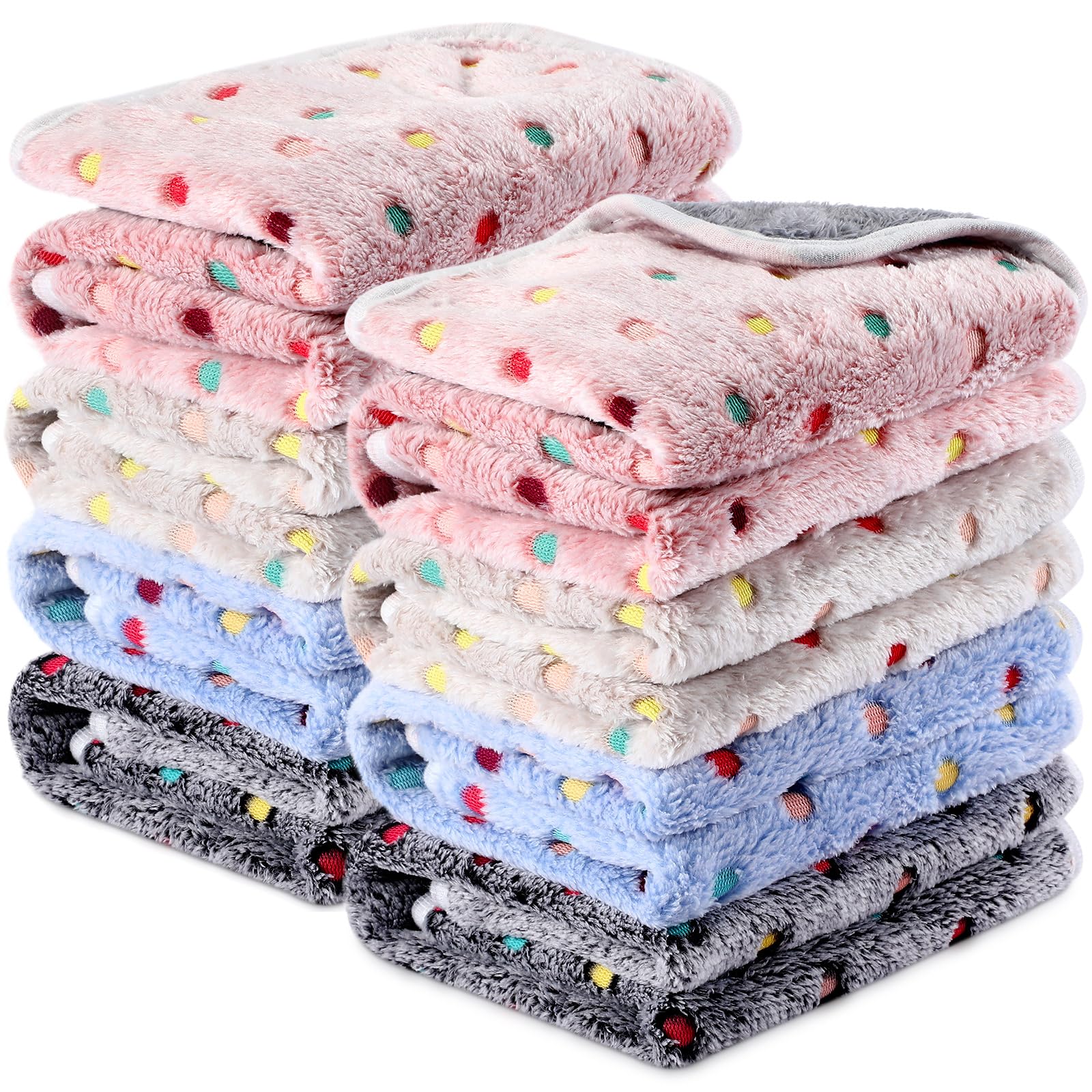
Fleece cage liners represent a fundamentally different approach to bedding — one that prioritizes reusability and zero airborne dust over natural burrowing. The Tudomro pack includes eight 12×12 inch pads built with a three-layer construction: a soft coral velvet top, an absorbent middle layer, and a waterproof backing membrane. For mice housed in bin cages or CritterNations with solid floors, these liners eliminate the loose-particulate problem entirely, which is a massive advantage for respiratory health.
The washability is the headline feature. Unlike loose bedding that must be fully discarded, these fleece squares can be shaken off, machine-washed with cold water, and dried on low heat. The waterproof backing genuinely prevents liquid from reaching the cage floor, which eliminates urine staining on plastic bases and reduces the biofilm smells that accumulate on bare surfaces.
The trade-off is that fleece does not support natural burrowing or tunneling. Mice cannot dig into the surface, so this is best for owners who provide separate nesting material or deep digging boxes elsewhere in the enclosure. Additionally, hay and loose food particles stick aggressively to the fleece fibers, requiring vacuuming or vigorous shaking before washing. For owners with dust-allergic mice who are willing to supplement with a dig box, the Tudomro fleece set offers the cleanest, most repeatable solution available.
Why it’s great
- Zero airborne dust — the ultimate respiratory-safe flooring option
- Machine-washable and reusable; a single set can last over a year
- Waterproof membrane prevents cage floor staining and biofilm buildup
Good to know
- Does not support burrowing; must be paired with a separate digging enrichment area
- Hay and food debris sticks aggressively to fleece fibers, requiring pre-vacuuming
7. Zilla Reptile Terrarium Aspen Bedding

Though marketed for reptiles, Zilla’s aspen bedding shares all the critical properties needed for safe mouse housing. Aspen is a hardwood, meaning it naturally lacks the aromatic phenols found in pine and cedar that cause liver and respiratory damage in small mammals. The heat-treating process further sterilizes the chips, eliminating mold spores and insect eggs — a crucial advantage over raw wood shavings that can introduce mites into a mouse enclosure.
The chip size is notably larger than the PETSPICK pine shavings, which is actually a benefit for tunnel stability. The aspen chips lock together under compression, allowing mice to dig and maintain burrow systems that persist between cage changes. The 24-quart bag provides generous coverage and the chips are highly absorbent, wicking moisture away from the surface quickly. Customers using this for corn snakes and sand boas praised the low dust output and easy spot cleaning, both of which translate perfectly to a mouse habitat.
The biggest limitation is availability — this is reptile-branded, so it may not be on the shelf at every pet store alongside mouse-specific products. Some users also noted that the chips can stick to moist food like fresh vegetables or thawed pinkies, which creates a minor ingestion risk. However, for owners looking for a non-phenolic, low-dust, tunnel-holding substrate that punches above its weight in quality, Zilla’s aspen chips are a smart and unexpected value play.
Why it’s great
- Heat-treated hardwood chips are free of toxic phenols, safe for mice
- Larger chip size interlocks for stable, long-lasting burrow systems
- Extremely low dust output and high absorbency for its price point
Good to know
- Chips can stick to moist food, posing a minor ingestion risk for messy eaters
- Sold as reptile bedding; may not be found in standard small-pet aisles
FAQ
Is it safe to use fleece liners instead of loose bedding for mice?
Why are cedar shavings dangerous for mice but pine is sometimes acceptable?
How deep should I layer bedding for my mouse enclosure?
Final Thoughts: The Verdict
For most users, the best bedding for mice winner is the Fresh News Recycled Paper Bedding because it combines certified dust-free safety, proven ammonia-lock odor control, and soft foraging texture in a single cost-effective bulk bag. If you want natural enrichment that encourages instinctual nest-building, grab the Niteangel Flower Bedding. And for maximum absorbency and the longest-lasting freshness between cage cleans, nothing beats the Eaton Hemp Bedding.