
A good audio system transforms a house into a home. Whether you want to feel the rumble of a movie explosion, pick out every instrumental layer in a new album, or simply fill a quiet room with crisp background music, the right setup makes all the difference. The challenge is cutting through the noise of channels, drivers, and wireless protocols to find a system that actually delivers on its promise without demanding an engineering degree to set up.
I’m Min — the co-founder and writer behind Gadgets Feed. I’ve spent hundreds of hours analyzing the technical specifications, customer feedback, and real-world performance data of the latest home audio systems to separate genuine performers from overpriced distractions. This guide focuses entirely on the specific components, connectivity options, and acoustic engineering that define a successful all-in-one setup.
After comparing dozens of models across essential categories like sound stage precision, subwoofer integration, and wireless stability, I’ve identified the systems that offer the best value for their core purpose. Here is my researched analysis of the current market to help you find the best all-in-one home audio system that fits your space and listening habits.
How To Choose The Best All-In-One Home Audio System
An all-in-one system is a balancing act — you get everything in a single package, which simplifies setup but makes every component choice critical. A flaw in the wireless subwoofer connection or a poorly integrated center channel can ruin the entire experience. Here are the key factors that determine whether a system earns its spot in your living room.
Channel Configuration and Height Performance
The first number in a system’s spec (like 5.1 or 7.1.4) tells you how many speakers it uses. The third number, if present, refers to dedicated height channels for overhead effects. Systems like the ULTIMEA Skywave X50 with a 5.1.4ch layout use physical up-firing drivers to bounce sound off the ceiling, creating a much more convincing rain or helicopter effect than virtualized processing alone. If your ceiling is higher than 12 feet, the effect dims, making DSP-powered virtual Atmos a better bet.
Subwoofer Integration and Bass Response
Subwoofer size and driver design dictate how low and how cleanly the system can reproduce bass. An 8-inch driver in a ported cabinet can hit around 35Hz, while a 10-inch driver in a well-vented enclosure can dig down to 25Hz. More important than raw size is the crossover point where the subwoofer hands off frequencies to the satellite speakers. A system with a poorly tuned crossover produces a gap where the sound feels thin between kick drums and deep rumbles. Look for systems where the subwoofer has its own dedicated amplifier and adjustable crossover frequency.
Wireless Reliability and Connectivity Suite
Wireless surround speakers are the biggest convenience upgrade in modern audio, but they’re also the biggest headache when they drop out during a movie. Dual-band 5GHz transmission, like the protocol used in the ULTIMEA Skywave X50, offers lower latency and less interference than standard 2.4GHz Bluetooth. HDMI eARC is the gold standard for passing lossless Dolby Atmos from your TV to the soundbar. If your system lacks HDMI eARC, you’ll be stuck with compressed Dolby Digital Plus, which loses the height channel data that makes Atmos special.
Quick Comparison
On smaller screens, swipe sideways to see the full table.
| Model | Category | Best For | Key Spec | Amazon |
|---|---|---|---|---|
| Nakamichi Shockwafe 11.2.6ch | Premium | Dedicated home theater | Dual 10″ subs, 6 height channels | Amazon |
| Sony BRAVIA Theater Quad | Premium | Wireless 360 spatial sound | 16 drivers, 4 wireless satellites | Amazon |
| JBL Bar 500MK2 | Premium | Simple powerful 5.1 | 10″ wireless sub, 750W | Amazon |
| ULTIMEA Skywave X50 | Mid-Range | Wireless 5.1.4 Atmos | Dual 5GHz wireless, 8″ sub | Amazon |
| Sony BRAVIA Theater System 6 | Mid-Range | Brand-matched clarity | Dolby Atmos/DTS:X, 5.1ch | Amazon |
| ULTIMEA Poseidon D80 | Mid-Range | Value 7.1 multichannel | 4 wired satellites, 6.5″ sub | Amazon |
| Philips TAM8905/37 | Mid-Range | CD & Wi-Fi music streaming | 100W, 5.25″ woofers, Wi-Fi | Amazon |
| Bobtot Home Theater System | Budget | Party & karaoke use | 10″ sub, 1200W peak, LED | Amazon |
| ONE-Q Vinyl Record Player | Budget | Vinyl playback & Bluetooth | AT-3600L cartridge, built-in | Amazon |
In‑Depth Reviews
1. Nakamichi Shockwafe Wireless 11.2.6ch Soundbar System
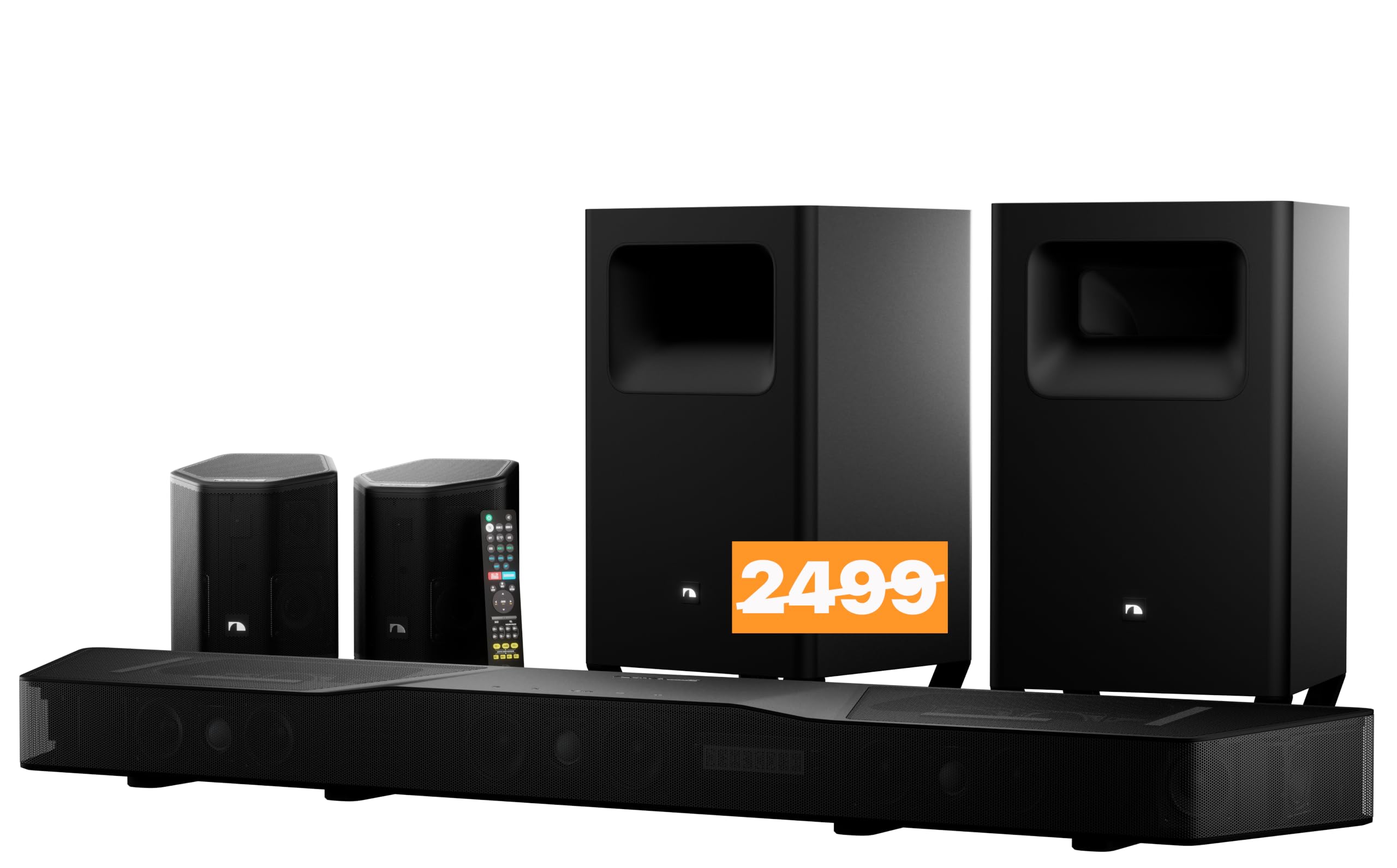
The Nakamichi Shockwafe 11.2.6ch is not a soundbar in the conventional sense — it is a full-scale, component-based home theater system disguised in a wireless-friendly package. Its 54-inch wide main bar moves serious air, and the dual 10-inch wireless subwoofers with flared port designs reach deep into sub-bass territory with speed and precision. The bipolar surround speakers fire sound from both sides and above, creating the presence of six discrete surround channels without requiring six physical speakers.
The AHD Ultra engine drives the bipolar surrounds and the six discrete height channels, producing hyper-real overhead effects that put you inside the scene. Users report that dialogue remains crystal clear even during chaotic action sequences, and the system handles Dolby Atmos, DTS:X, and 4K HDR passthrough through HDMI eARC with zero degradation. The system ships in three boxes and requires space, but setup is surprisingly simple with wireless subs and rears.
At its heart, this system is built for the enthusiast who wants theater-scale sound without a dedicated wiring project. The 2300-watt peak output is clean and distortion-free due to the advanced amplifier architecture. If you have the room and the budget, this is the benchmark for all-in-one home audio systems.
Why it’s great
- Dual 10-inch subs for deep, clean bass down to 20Hz
- Bipolar surround speakers create a six-speaker presence
- Six discrete height channels for true Atmos immersion
Good to know
- Physical footprint is large and requires substantial TV stand space
- Initial setup may require a firmware update for optimal sound
2. Sony BRAVIA Theater Quad 16-Speaker System

The Sony BRAVIA Theater Quad takes an entirely different approach to immersion. Instead of a large soundbar, it uses four compact wireless satellite speakers that you place around the room. Sony’s 360 Spatial Sound Mapping technology analyzes your room’s dimensions and creates phantom speakers — virtual audio points that fill gaps between physical speakers — resulting in a seamless bubble of sound that feels like it follows you.
The system supports Dolby Atmos, DTS:X, and IMAX Enhanced. The phantom center channel is particularly impressive, locking dialogue to the screen even without a dedicated center speaker. The four satellites each contain multiple drivers, and the included control box handles all processing and connectivity. Sound Field Optimization auto-calibrates the system to your specific room acoustics, adjusting for furniture and wall placement.
The Quad is best paired with a BRAVIA TV for menu-level control and Acoustic Center Sync, which uses the TV’s own speakers as a center channel. For music, the stereo separation and imaging are superior to any soundbar. The system lacks deep sub-bass below 30Hz without the optional subwoofer, making the SW5 or SW3 a worthwhile addition for bass-heavy content.
Why it’s great
- Phantom speaker technology creates seamless bubble of sound
- Four truly wireless satellites for flexible placement
- Excellent stereo separation and music reproduction
Good to know
- Requires optional subwoofer for deep bass extension
- Software setup can be buggy with dense Wi-Fi environments
3. JBL Bar 500MK2 5.1ch Soundbar System
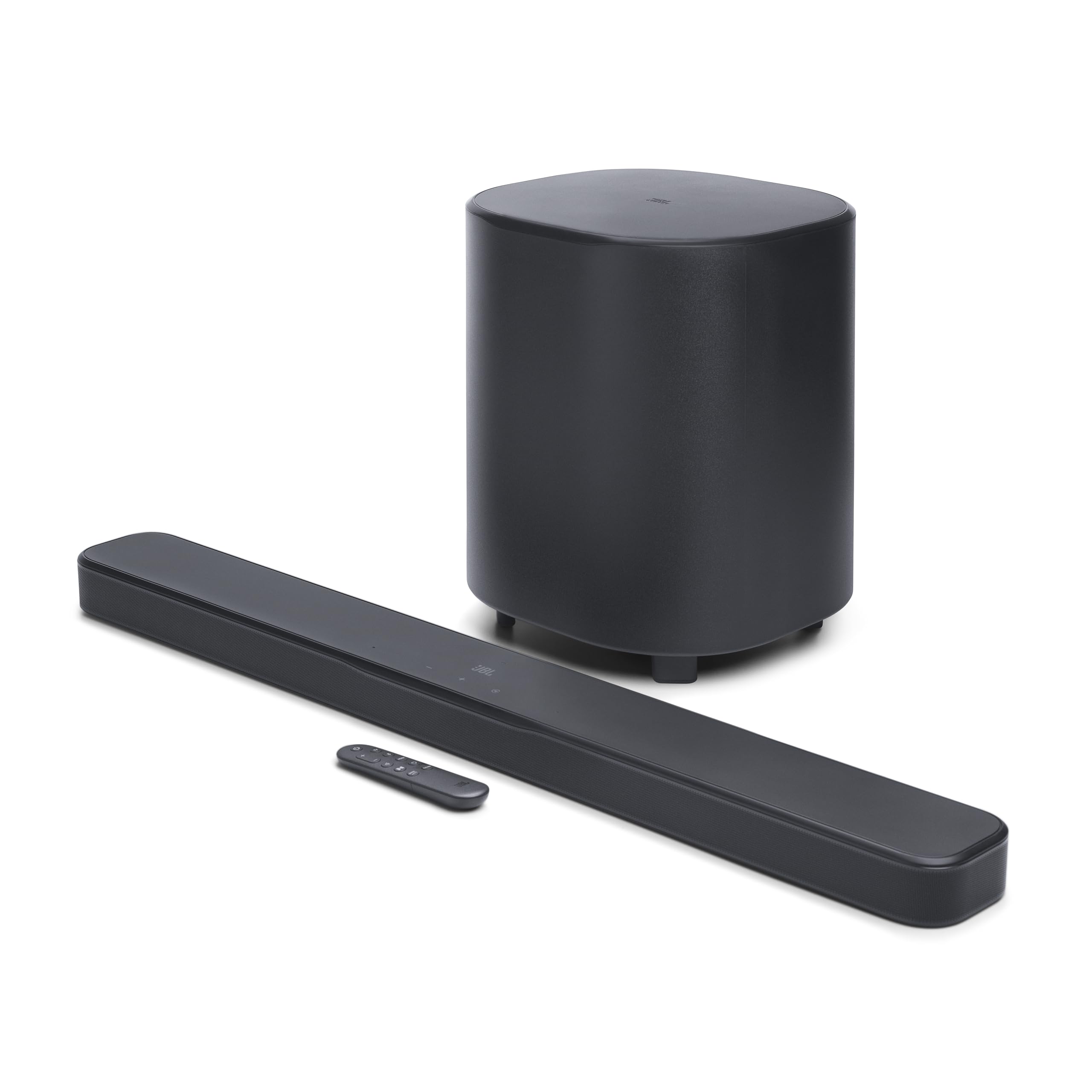
The JBL Bar 500MK2 is a 5.1-channel system that delivers premium performance without the complexity of dedicated surround speakers. Its 10-inch wireless subwoofer produces deep, room-filling bass that can rattle the couch during action scenes, yet remains controlled and distortion-free thanks to JBL’s advanced amplifier design. The 750-watt peak power is more than enough for medium to large living rooms.
MultiBeam 3.0 creates a wide soundstage from a single soundbar, using beamforming to bounce sound off walls and simulate rear channels. While it doesn’t match the precision of physical rear speakers, the effect is convincing enough for most listeners. PureVoice 2.0 is the standout feature — it analyzes ambient noise in the scene and dynamically adjusts dialogue levels so whispered lines remain clear even during explosions. The system also supports AirPlay, Google Cast, and Spotify Connect for seamless music streaming.
HDMI eARC with 4K Dolby Vision passthrough ensures you get lossless Atmos audio from your streaming devices. The JBL ONE app provides a 10-band EQ and software updates. Room calibration adjusts the sound signature to your specific space, optimizing the beamforming angles for the best surround effect.
Why it’s great
- 10-inch wireless sub delivers powerful, distortion-free bass
- PureVoice 2.0 ensures crystal-clear dialogue in any scene
- Multi-room streaming via AirPlay and Google Cast
Good to know
- No included rear surround speakers
- App requires Wi-Fi for full control features
4. ULTIMEA Skywave X50 5.1.4ch Wireless System
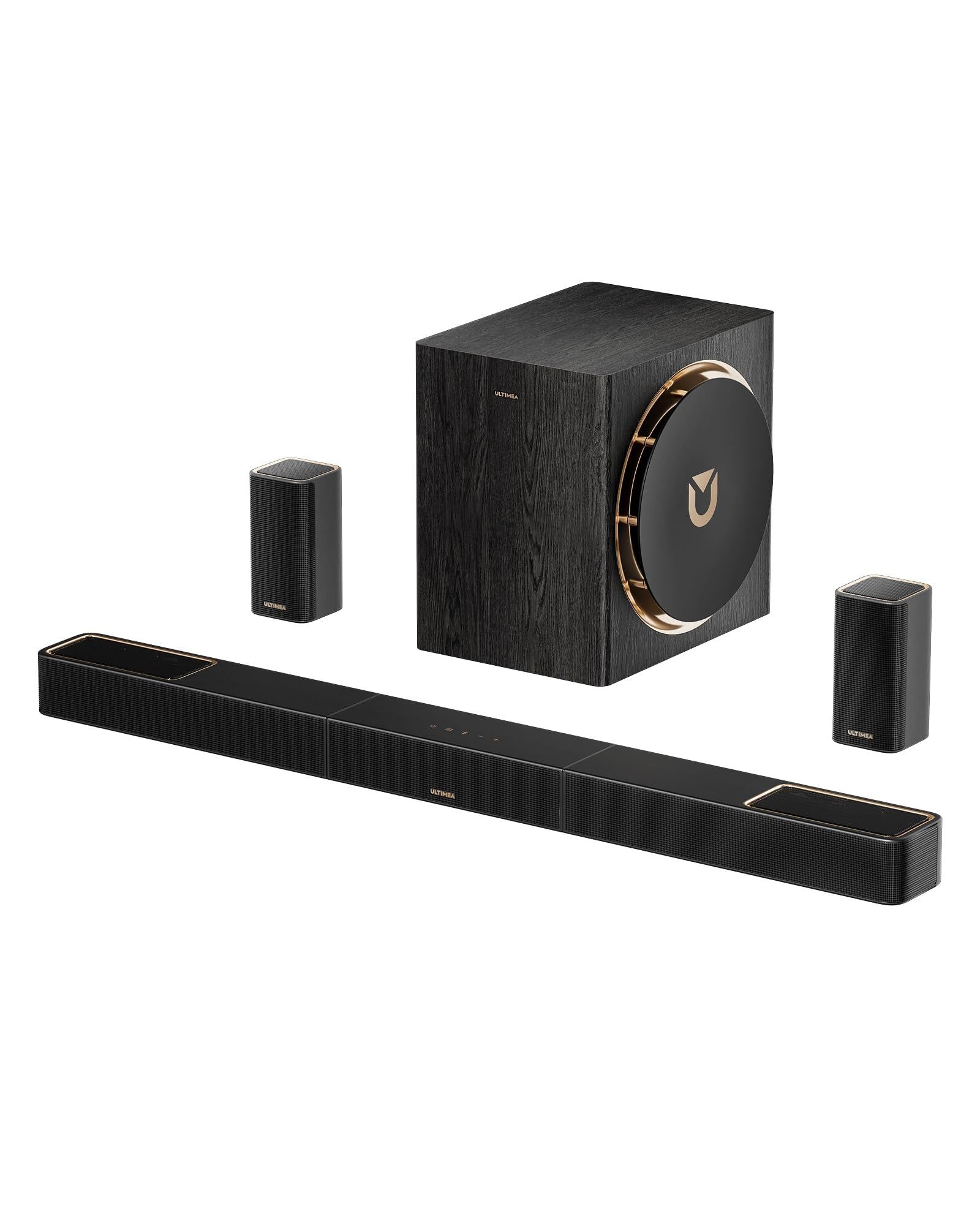
The ULTIMEA Skywave X50 is the most compelling value proposition in the mid-range category, delivering a true 5.1.4-channel Dolby Atmos experience with wireless rear speakers and a wireless subwoofer. The dual 5GHz wireless transmission protocol ensures rock-solid connectivity — no audio dropouts, no pairing headaches. The 8-inch subwoofer uses Gravus Ultra-Linear Bass Technology to produce clean, defined bass down to 28Hz.
The GaN (Gallium Nitride) amplifier is an industry-first in this price bracket, offering 98% efficiency and 8x faster response than traditional silicon amps. This translates to less heat, lower power draw, and cleaner audio at high volumes. The NEURACORE multi-channel audio engine processes 24-bit/192kHz audio with less than 0.5% distortion, driving the four height channels to create convincing overhead effects. Users report that the system rivals setups costing three times as much after EQ tuning via the app.
Setup is genuinely plug-and-play — the rear speakers and sub automatically sync with the soundbar. The app gives you 121 EQ presets across genres, plus a 10-band custom equalizer. The wood-crafted subwoofer enclosure and metal grille with rose gold accents make this a visually striking addition to any media console.
Why it’s great
- True 5.1.4 Atmos with wireless rears and subwoofer
- GaN amplifier delivers high efficiency and clean power
- Excellent app control with 121 EQ presets
Good to know
- Rear speakers require power outlets for wireless connection
- Bass can overpower dialogue at default settings
5. Sony BRAVIA Theater System 6 (HT-S60)

The Sony BRAVIA Theater System 6 comes as a complete 5.1-channel package with a soundbar, two rear speakers, and a wired subwoofer. The system is designed to integrate seamlessly with BRAVIA TVs, offering menu-level control and Voice Zoom 3, which enhances dialogue clarity when paired with a compatible Sony TV. The dedicated center channel speaker ensures that conversations remain anchored to the screen without the phasing artifacts that plague virtual center channels.
Sony’s up-mixing technology processes stereo content into multi-channel surround with impressive fidelity. The subwoofer must be connected to the soundbar via a wired connection, which ensures zero latency but does limit placement flexibility. The included rear speakers produce clear, directional effects that provide a genuine step up from soundbar-only systems.
The system supports Bluetooth streaming and the BRAVIA Connect app for control. Dialogue clarity is the standout advantage here — the dedicated center channel and Sony’s processing make this an exceptional choice for viewers who struggle to hear conversations in movies. The system’s overall presentation is balanced and refined, prioritizing clarity over raw power.
Why it’s great
- Dedicated center channel for outstanding dialogue clarity
- Seamless integration with BRAVIA TV interface
- Voice Zoom 3 enhances dialogue in compatible setups
Good to know
- Subwoofer requires wired connection to soundbar
- HDMI handshake issues reported with some TV brands
6. ULTIMEA Poseidon D80 7.1ch Soundbar

The ULTIMEA Poseidon D80 delivers a full 7.1-channel experience by including four wired surround speakers — two front and two rear — alongside a 6.5-inch wireless subwoofer. The system uses Dolby Atmos processing to create a 360-degree sound field, and the SurroundX technology with 360° Aural Spatial Localization ensures that sound objects move smoothly around the room. The result is an immersive bubble that outperforms soundbar-only systems significantly.
HDMI eARC with 4K passthrough simplifies connection to modern TVs. The ULTIMEA Smart App provides OTA updates and a 10-band equalizer with 121 presets across genres. Users note that the factory tuning is sharp for music, but the app’s EQ adjustments resolve this completely. The rear speakers ship with long cables (31 feet for the rears), allowing placement flexibility without worrying about signal dropouts.
The system is best suited for movies and gaming, where the four discrete surround channels create precise directional effects. The dialogue clarity in Movie and Voice modes is exceptional for the price range. The 7.1-channel layout provides a wider front soundstage than traditional 5.1 setups, making this a strong contender for larger living rooms.
Why it’s great
- Four wired surround speakers for reliable multichannel sound
- Extensive EQ customization via app with 121 presets
- HDMI eARC with 4K passthrough for lossless audio
Good to know
- Does not support DTS decoding
- Satellite speaker cables may require management
7. Philips Bluetooth & WiFi Stereo System (TAM8905/37)

The Philips TAM8905/37 is a traditional hi-fi micro system built for audiophile-grade music listening rather than cinematic surround sound. It features a pair of 5.25-inch woofers with bass-reflex ports and dome tweeters, driven by a 100-watt amplifier. The sound signature is warm and detailed, with crisp highs and enough low-end presence to fill a lounge or open-plan kitchen without sounding boomy.
Connectivity is the system’s modern strength — it supports Wi-Fi with Spotify Connect, Bluetooth, and internet radio alongside the classic CD player, FM tuner, and USB playback. The matte aluminum central unit and wooden speaker cabinets give it a premium retro-look that blends into stylish interiors. The color display shows album art and track info, adding to the tactile experience.
This system is not intended for TV surround sound. It is a music-first device for listeners who value physical media and streaming equally. The digital sound presets cover genres from hip-hop to classical, and the included remote control handles all key functions. For anyone building a dedicated music corner, the Philips delivers exceptional stereo performance.
Why it’s great
- True stereo hi-fi sound with bass-reflex ported cabinets
- Wi-Fi with Spotify Connect and internet radio support
- Premium wooden speaker cabinets with aluminum control unit
Good to know
- Not designed for TV or surround sound applications
- Bluetooth audio quality is noticeably lesser than wired
8. Bobtot Home Theater System 5.1/2.1ch
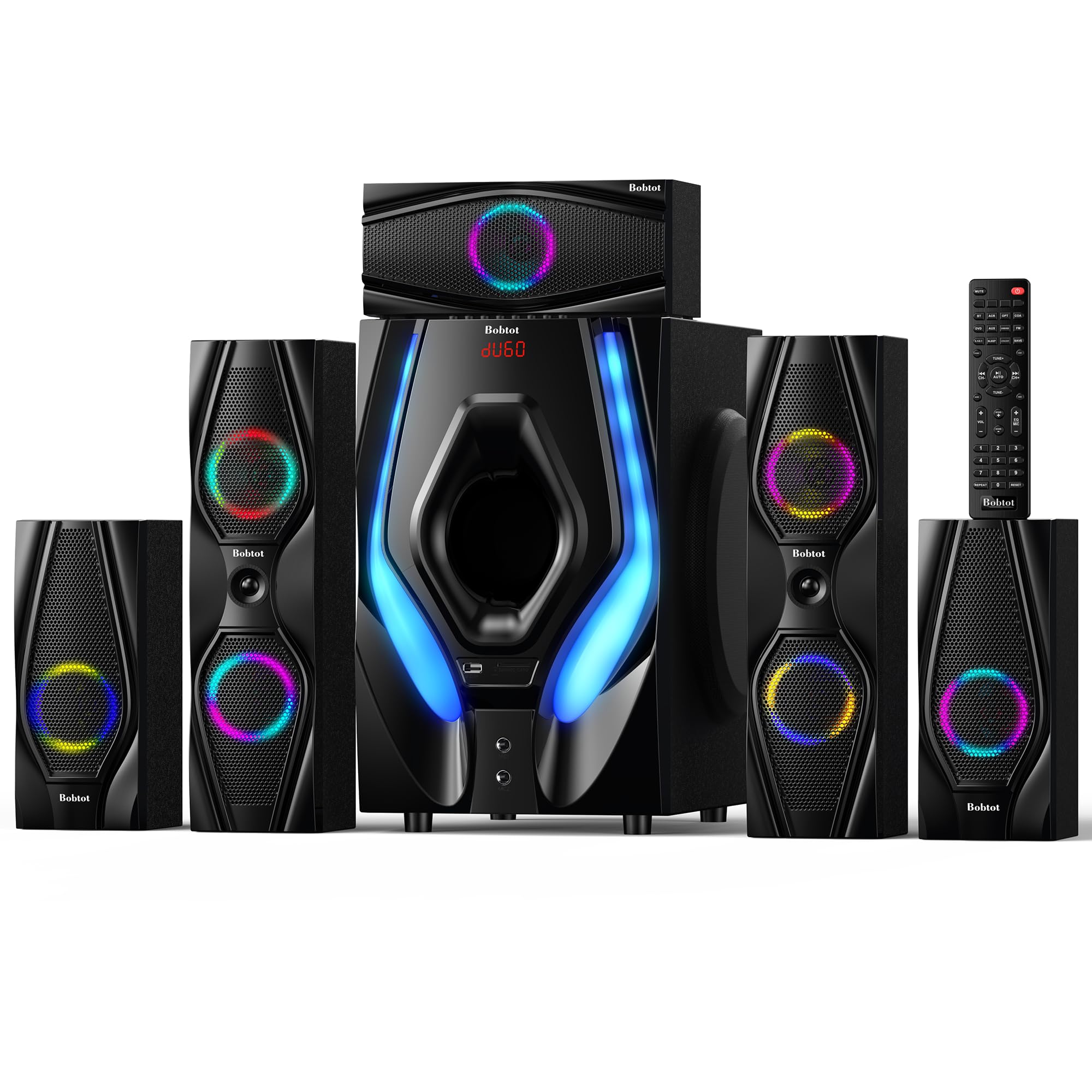
The Bobtot Home Theater System offers a true 5.1-channel surround experience with a massive 10-inch subwoofer at an entry-level price point. The system includes five wired satellite speakers, a center channel, and a subwoofer that houses the built-in receiver. The 1200-watt peak power rating produces thunderous bass that can fill a large party room, and the LED lighting modes — including spectrum EQ analyzer and beat-synced blink — add a visual party atmosphere.
The system supports Bluetooth 5.3, optical, coaxial, ARC, and USB inputs. Two 1/4-inch microphone inputs with echo control turn this into a karaoke machine for family gatherings. The remote control allows independent volume adjustment for each speaker, giving you granular control over the sound balance. The long speaker cables (31 feet for rears) allow placement in large rooms.
The trade-offs are in refinement. The highs and mids are decent but not audiophile-grade, and the subwoofer’s wireless design is actually a wired connection from the sub to the soundbar. Some early units had reliability issues, though customer service has been responsive in replacements. For budget-conscious buyers who prioritize raw power over precision, this system delivers explosive sound for parties and movies.
Why it’s great
- 10-inch subwoofer for deep, chest-thumping bass
- Dual microphone inputs with echo for karaoke
- LED lighting effects with multiple modes
Good to know
- Speaker cables are wired and cannot be extended
- Customer support is email-only and response time varies
9. ONE-Q All-in-one Vinyl Record Player
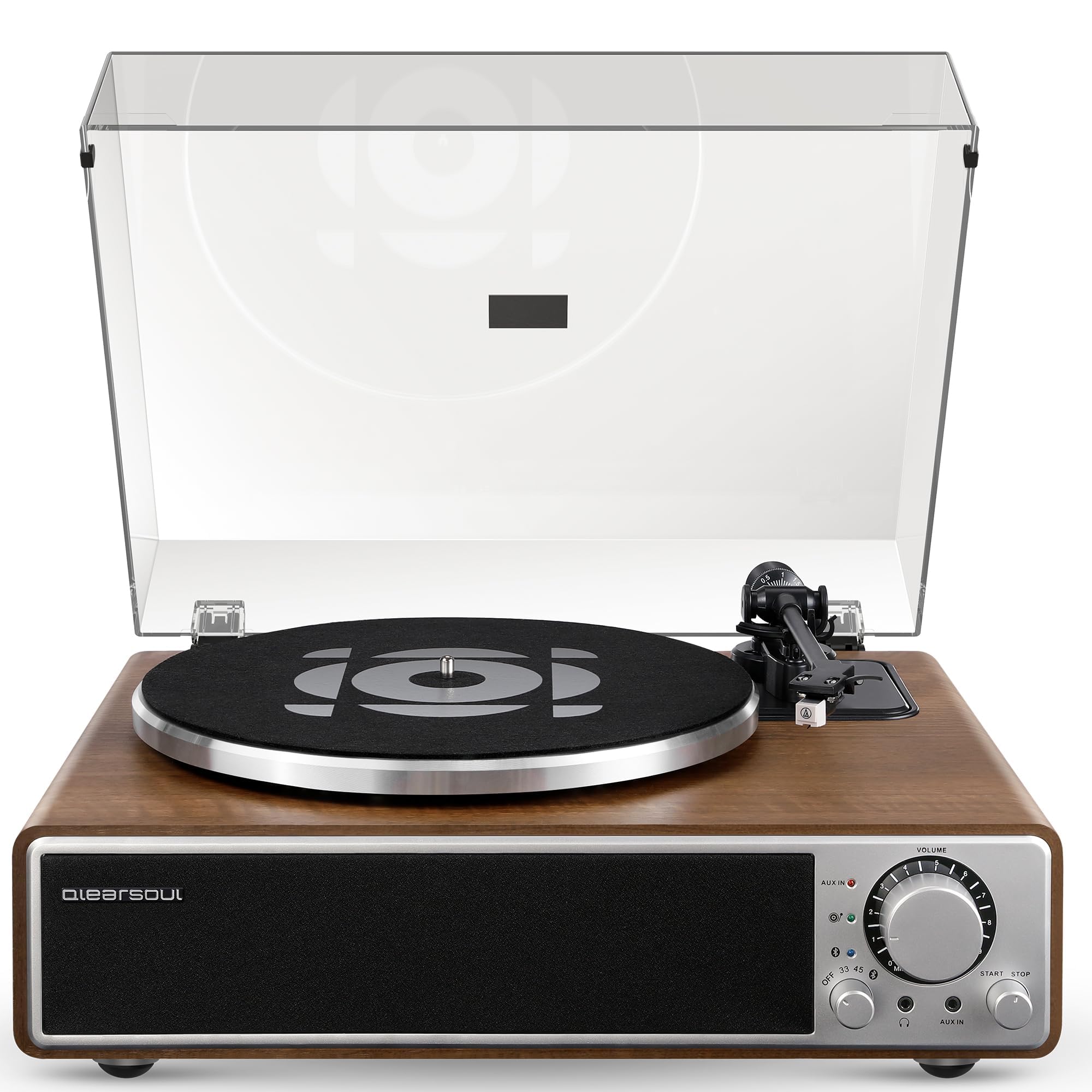
The ONE-Q All-in-one Vinyl Record Player is a belt-driven turntable with a built-in speaker system, offering a complete analog-to-modern experience in one package. It uses the Audio-Technica AT-3600L cartridge mounted on an 8.6-inch lightweight tonearm with adjustable counterweight, ensuring precise stylus tracking that minimizes skips and distortion. The four full-frequency speakers with advanced crossover deliver surprisingly rich sound for a self-contained unit.
Bluetooth 5.4 allows wireless input from any smartphone or tablet, letting you stream digital music through the same analog speakers. The three-point support structure isolates the turntable from the speaker vibrations, reducing feedback and rumble. The system includes a switchable phono preamp, aux-in, and headphone jack, plus an auto-off feature after 20 minutes of inactivity.
Users consistently note that the sound quality surpasses expectations for an all-in-one turntable, with warm, natural vinyl reproduction. A break-in period of a few hours improves bass response as the speakers loosen up. The retro wood cabinet and aluminum front panel make it a stylish centerpiece for any room. This is the perfect entry point for new vinyl enthusiasts or a space-saving solution for seasoned collectors.
Why it’s great
- AT-3600L cartridge with adjustable counterweight for accurate tracking
- Built-in speakers with anti-resonant isolation platform
- Bluetooth 5.4 input for versatile streaming
Good to know
- Built-in speakers lack deep sub-bass extension
- Speaker break-in period of several hours recommended
FAQ
What does the third number in a speaker configuration (like 7.1.4) mean?
Can I use a soundbar with wireless rears if my furniture doesn’t allow running speaker cables?
Is it worth paying extra for a GaN amplifier in a home audio system?
How important is HDMI eARC for Dolby Atmos?
Final Thoughts: The Verdict
For most users, the best all-in-one home audio system winner is the Nakamichi Shockwafe 11.2.6ch because its dual 10-inch subwoofers, six discrete height channels, and bipolar surround speakers deliver a true theater experience that no other all-in-one system can match. If you want a wireless-friendly setup with excellent value, grab the ULTIMEA Skywave X50 for its GaN amplifier and rock-solid 5GHz connectivity. And for music-first listeners who value stereo imaging and streaming versatility, nothing beats the Philips TAM8905/37 with its Wi-Fi streaming and classic CD playback.