
Dolby Atmos is the gold standard for immersive home theater, and the key to unlocking its full potential lies in the height channel. Without dedicated speakers engineered to reproduce overhead effects, the rain in *Blade Runner 2049* or the helicopter flyover in *Mission: Impossible* never truly escapes the horizontal plane of your ear level. Adding height speakers transforms your listening space from a flat soundstage into a three-dimensional audio bubble.
I’m Min — the co-founder and writer behind Gadgets Feed. I’ve spent hundreds of hours analyzing the acoustic driver configurations, crossover designs, and mounting flexibility of the current Atmos-enabled speaker market to find the modules that deliver genuine vertical immersion without demanding a renovation crew.
Whether you are building a dedicated theater or augmenting a living room system, choosing the right atmos height speakers requires balancing reflective upfiring performance against the precision of a direct-radiating design — a decision that defines your entire listening experience.
How To Choose The Best Atmos Height Speakers
Selecting the right Atmos height speaker is not just about picking a box with a Dolby logo. The physical characteristics of your room and your existing speaker ecosystem dictate the technical trade-offs you need to make.
Upfiring vs. Direct-Radiating Baffles
The most fundamental fork in the road is speaker design. Upfiring modules, like the Monoprice Premium or ELAC A4.2, project sound toward the ceiling where it bounces back down to the listening position. This approach relies on a flat, acoustically reflective ceiling — ideally between 7.5 and 10 feet. Direct-radiating speakers, such as the SVS Prime Elevation or the wall-mounted Klipsch RP-140SA, fire sound directly at the listener from a high position. They offer a more reliable and consistent height effect, especially if your ceiling is textured, angled, or composed of sound-absorbing materials like acoustic tiles.
Driver Size and Crossover Topology
An Atmos height speaker’s ability to produce convincing “headroom” is tied to its driver diameter and how it splits frequency duties. A 3-inch driver found in entry-level modules can provide adequate presence, but a 5.25-inch unit like that in the Klipsch RP-500SA moves more air, delivering a fuller low-end that helps objects feel weighty as they pass overhead. The crossover — whether it is a simple high-pass filter or a more sophisticated 2-way design — determines how cleanly the tweeter and woofer integrate. Switchable crossovers, featured on the JBL Stage 2 240H, allow you to optimize the speaker for either Dolby Atmos upfiring mode or as a traditional surround height channel.
Timbre Matching and System Integration
For a seamless sound field, the tonal signature of your height speakers should match the voicing of your main left, center, and right channels. If you already own speakers from a specific brand, choosing that brand’s height module usually ensures a consistent sonic palette. The Polk Monitor XT90 and Jamo S 8 ATM are explicitly designed to sit on top of their brand’s towers, creating a coherent acoustic presentation where pans from front to height feel natural rather than abrupt. A mismatched tweeter material — a soft dome from your mains versus a titanium dome from your heights — can make overhead effects sound distinctly “separate” from the rest of the mix.
Quick Comparison
On smaller screens, swipe sideways to see the full table.
| Model | Category | Best For | Key Spec | Amazon |
|---|---|---|---|---|
| SVS Prime Elevation (Pair) | Direct-Radiating | Most precise overhead effects | 4.5″ mid-woofer; multi-angle bracket | Amazon |
| Klipsch RP-500SA (Pair) | Switchable | Timbre-matched Klipsch setup | 5.25″ Cerametallic woofer; 1″ LTS tweeter | Amazon |
| JBL Stage 2 240H (Pair) | Switchable | Versatile mounting modes | 4.5″ Polycellulose woofer; HDI horn | Amazon |
| ELAC Debut 2.0 A4.2 (Pair) | Upfiring | Coherent ceiling bounce | 4″ Aramid Fiber woofer; concentric driver | Amazon |
| Klipsch RP-140SA | Upfiring / Wall-Mount | Compact Klipsch upgrade | 4″ driver; slot for wall mounting | Amazon |
| Jamo S 8 ATM | Upfiring | Budget Jamo system expansion | Designed for S803/S809 towers | Amazon |
| Polk Monitor XT90 (Pair) | Upfiring | Value-packed entry | 4″ Dynamically Balanced woofer | Amazon |
| Yamaha NS-IW280CWH (Pair) | In-Ceiling | Discreet in-ceiling installation | 6.5″ mica cone woofer; swivel tweeter | Amazon |
| Monoprice Premium Satellites (Pair) | Upfiring | Entry-level surround upgrade | 3″ upward-firing driver; 100W input | Amazon |
In‑Depth Reviews
1. SVS Prime Elevation Speaker (Pair)
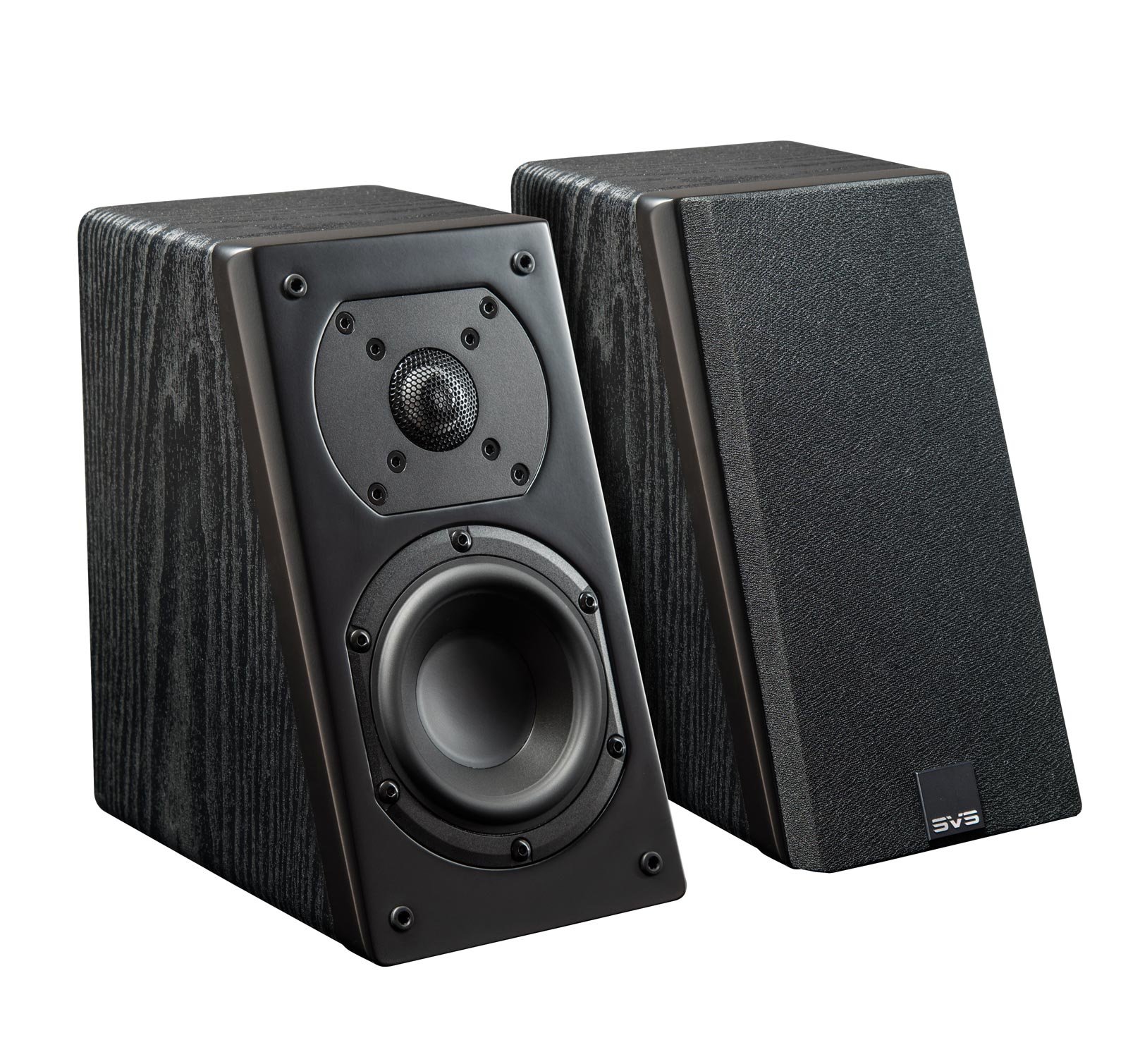
The SVS Prime Elevation redefines what a height speaker can be. Instead of relying on ceiling bounce, its patent-pending multi-angle wall bracket allows you to mount it as a down-firing height channel, side surround, or rear effects speaker. The 4.5-inch mid-woofer and 1-inch aluminum dome tweeter deliver a measured frequency response down to 50-60 Hz, which means objects like raindrops or bullets carry real physical weight, not just a tinny splash of treble.
In a 5.1.2 system, using the Prime Elevation as a front height or rear height channel creates a wall of sound that feels like the audio is coming from a foot above your head rather than from the ceiling 10 feet up. The integrated bracket makes positioning flexible, and the 12-ohm impedance loads well even on mid-range AVRs. Dirac Live calibration users will appreciate the speaker’s even phase response, which requires minimal correction to lock in a cohesive soundstage.
One design consideration: the binding posts are recessed and do not accept banana plugs, so plan on stripping bare wire or using pin connectors. The cabinet is acoustically inert and finished in a premium black ash vinyl that fits seamlessly into high-end furniture. For buyers who want the absolute most precise and powerful Atmos performance without cutting into ceilings, this is the benchmark.
Why it’s great
- Versatile multi-angle bracket fits any mounting scenario
- Full-range response extends low enough for convincing overhead weight
- Build quality and customer support are industry-leading
Good to know
- Binding posts do not accept standard banana plugs
- Price reflects premium engineering over basic modules
2. Klipsch RP-500SA Reference Premiere (Pair)

The RP-500SA is the larger, more capable sibling in the Klipsch Reference Premiere Atmos line, packing a 5.25-inch spun copper Cerametallic woofer behind a 1-inch titanium LTS vented tweeter with a Hybrid Tractrix horn. This driver combo delivers the classic Klipsch dynamics — efficient, crisp, and high-output — which translates into height effects that cut through dense soundtracks without needing to raise the AVR trim to max.
A key feature is the switchable crossover. Flick the toggle to the Dolby Atmos position for upfiring mode atop your RP-5000F or RP-6000F towers, or switch to the Surround position for wall-mounted front heights. Users report that the RP-500SA sounds best when wall-mounted near the ceiling, providing a direct overhead image that is far more reliable than the subtle bounce of upfiring mode, especially on textured ceilings.
The ebony finish is scratch-resistant and the magnetic grille adds a clean aesthetic. At 75 watts output capability, these speakers handle reference-level listening sessions without distortion. They are heavier than typical height modules, so ensure your tower speaker’s top plate is wide enough to accommodate them securely if using the upfiring configuration.
Why it’s great
- Switchable crossover offers flexibility for upfiring or direct mounting
- Large 5.25″ woofer provides fuller low-end for overhead effects
- Timbre-matches seamlessly with RP series floor-standers
Good to know
- Premium price over the smaller RP-140SA
- Sealed design limits low-end compared to larger bookshelf speakers
3. JBL Stage 2 240H (Pair)

The JBL Stage 2 240H brings the company’s professional-grade HDI (High Definition Imaging) horn and an anodized aluminum tweeter into the home Atmos space. Its 4.5-inch Polycellulose ribbed cone woofer is driven by a precision 2-way crossover, and the switchable mode lets you toggle between Dolby Atmos upfiring and dedicated Surround/Height operation. This makes the 240H a truly multi-role speaker for evolving systems.
In upfiring mode, the HDI horn’s controlled directivity minimizes sound scatter, so more of the ceiling-reflected energy lands at the listening position rather than washing the side walls. When switched to height mode and mounted on a wall, the 240H produces clear, detailed audio with a 20 Hz to 20 kHz frequency response that outpaces many entry-level modules. The espresso finish and faux dark cocoa wood veneer offer a furniture-grade look.
Some units shipped without the included hardware or speaker grilles, so check your package upon arrival. However, when complete, the sound quality is a clear step above budget modules. For users building a system around JBL Stage 2 towers, this is the obvious upgrade path for Dolby Atmos immersion.
Why it’s great
- HDI horn delivers focused, efficient sound dispersion
- Dual-mode crossover adjusts for Atmos or surround height duty
- Solid, furniture-grade cabinet with attractive wood veneer
Good to know
- Some packages arrive missing hardware or covers
- Requires careful manual AVR setup to maximize potential
4. ELAC Debut 2.0 A4.2 (Pair)

The ELAC Debut 2.0 A4.2 is a study in purposeful engineering for the upfiring Atmos category. Rather than a standard driver array, it uses a custom concentric driver — a 4-inch woven Aramid fiber woofer with a 0.5-inch polymer tweeter mounted at its acoustic center. This coaxial configuration eliminates the phase anomalies of separated drivers, providing a smoother, more extended response and superior directivity control as sound reflects off the ceiling.
In a small to medium room with a standard flat ceiling, the A4.2 creates a remarkably coherent overhead bubble. The aramid cone’s stiffness allows for a cleaner bass transition, so helicopter rotors and explosions have a tactile presence rather than a hollow echo. Because the Debut 2.0 series has a warm, neutral voicing, these modules pair beautifully with ELAC floor-standers or even other neutral speakers like Fluance or Wharfedale.
The cabinet is compact enough to sit on most towers without overhang, and the integrated keyhole slots allow for basic wall mounting if you want to experiment with near-ceiling placement. For the price, the A4.2 delivers a level of coherence and low-end extension that challenges modules costing significantly more.
Why it’s great
- Coaxial driver ensures phase-aligned ceiling reflection
- Aramid fiber cone offers superior stiffness for clean low-end
- Neutral voicing integrates well with multiple speaker brands
Good to know
- Upfiring only; less effective on vaulted or textured ceilings
- Requires a minimum of 4 speakers for best immersion
5. Klipsch RP-140SA Dolby Atmos Speaker

The Klipsch RP-140SA is the entry point into the Reference Premiere Atmos lineup. It features a 4-inch woofer and is designed primarily as an upfiring module that sits atop your existing floor-standing or bookshelf speakers. Its compact footprint means it stays put without sliding, even on slightly angled top plates.
Where the RP-140SA surprises is its versatility. A slot on the rear panel accepts standard keyhole wall-mount screws, allowing you to mount it near the ceiling as a direct-firing height channel. Many users report that this wall-mounted configuration yields far more convincing overhead effects than the upfiring bounce, especially in rooms with ceilings over 9 feet. The recommended crossover after auto-calibration is usually 80-100 Hz, with a trim boost of +2 to +3 dB to make the height channel audible without overpowering the mix.
At this price tier, the RP-140SA is a strong value proposition for Klipsch owners who want Atmos capability without jumping to the larger RP-500SA. The magnetic grille and premium finish maintain the brand’s signature look, and the speakers will not fatigue listeners over long movie marathons.
Why it’s great
- Compact size fits securely on most towers
- Rear slot enables easy wall mounting for direct height effects
- Classic Klipsch sound signature with clear, dynamic output
Good to know
- 4″ driver has less low-end presence than the RP-500SA
- Upfiring mode is subtle on vaulted or very high ceilings
6. Jamo S 8 ATM (Pair)

The Jamo S 8 ATM delivers a significant performance upgrade for anyone already invested in the Jamo S 800 series. These modules are physically and acoustically designed to mount on top of the S 803 bookshelf or S 809 floor-standing speakers, creating a seamless 3D soundstage without introducing a separate binding post configuration. For the price, the S 8 ATM provides a genuine Dolby Atmos dimension that lifts dialogue and effects above the front plane.
Setup requires attention to detail — the driver-to-ceiling distance must be measured and entered into your AVR’s speaker configuration, and a calibrated SPL meter is recommended to set levels after the receiver’s room correction runs. When properly dialed in, these speakers can produce soundstage peaks of 85-100 dB, with clarity that belies their plastic enclosure. Users with 5.1.2 systems report a convincing height layer for Atmos movies.
The main caveat is that the S 8 ATM works best when paired exclusively with Jamo’s own towers. Using them on non-Jamo speakers may result in a visual mismatch and an acoustic mismatch at the crossover point. For a budget-focused Jamo system, however, the S 8 ATM is the most cost-effective way to add the overhead channel.
Why it’s great
- Ideal height module for Jamo S 800 series systems
- Capable of high SPL peaks for convincing overhead action
- Clean, stylish design that matches Jamo’s aesthetic
Good to know
- Best results require same-brand tower or bookshelf speakers
- Ceiling bounce effect may disappoint in rooms without flat, reflective surfaces
7. Polk Monitor XT90 (Pair)

The Polk Monitor XT90 is a pair of purpose-built height speakers that fit naturally into the Monitor XT series ecosystem. With a 4-inch Dynamically Balanced woofer, these modules produce surprisingly solid mid-bass presence for the size, making special effects like thunderclaps or jet flyovers feel grounded rather than wispy. When placed atop the MXT70 floor-standers, the XT90s create a cohesive 3D image without needing to reconfigure room layout.
Installation is simple — the speakers sit securely on the included rubber pads or can be wall-mounted using the built-in keyhole slots. With a minimum 7-channel AVR, you can configure them as front height or rear height channels. The Polk design team ensured broad compatibility with both 4-ohm and 8-ohm amplifier outputs, so they integrate without current-hogging issues.
The trade-off is that the height effect is undeniably subtle in upfiring mode. Buyers with strict budgets who want a taste of Atmos without overhauling their wiring will be satisfied, but those seeking dramatic overhead panning should pair these with a subwoofer and carefully position the listening couch in the sweet spot of the ceiling bounce.
Why it’s great
- Dual-mount capability (top-of-tower or wall) adds placement flexibility
- Broad impedance compatibility works with nearly any AVR
- Solid build for the price with Polk’s reliability reputation
Good to know
- Height effect is subtle and requires proper ceiling conditions
- Limited value if not paired with Monitor XT series towers
8. Yamaha NS-IW280CWH In-Ceiling System (Pair)

The Yamaha NS-IW280CWH takes a different approach: instead of a module that sits on your floor-standing speakers, it is a 3-way in-ceiling system designed to be mounted directly overhead. This avoids the inconsistency of ceiling bounce entirely, as the dual 0.75-inch dome tweeters with SoundMax technology and the 6.5-inch polypropylene mica cone woofer fire directly into the room from above.
The swivel tweeters allow you to aim the high frequencies toward the main listening position, compensating for the off-axis placement that in-ceiling speakers often suffer from. This system projects a 100-watt maximum input, and the paintable aluminum grille lets you blend the speaker into your ceiling color. The included cardboard cutout template makes installation straightforward for DIY builders, and the spring-loaded connectors accept bare wire easily.
Audiophile reviewers consistently praise these for their value — they deliver sound quality that competes with dedicated bookshelf speakers for music playback, and the in-ceiling location provides the most authentic overhead Atmos effect possible. The installation requirement is the significant consideration: you need access to the ceiling cavity and the willingness to cut a 10.2-inch hole.
Why it’s great
- True in-ceiling design eliminates ceiling bounce issues
- Swivel tweeters allow precise aiming toward the listening area
- Excellent value for the sound quality delivered
Good to know
- Requires cutting a 10.2″ hole into the ceiling
- No built-in enclosure; back-box recommended for best isolation
9. Monoprice Premium Immersive Satellite Speakers (Pair)

The Monoprice Premium Immersive Satellite Speakers represent the most affordable entry into discrete channel-based Atmos. Each cabinet houses a 3-inch polypropylene upward-firing driver alongside a 3-inch woofer and a 0.75-inch aluminum dome tweeter. The upward driver projects sound toward the ceiling, which then reflects back into the room to create the height dimension without requiring any wall or ceiling wiring.
Reviewers note that the primary use case is as rear surround speakers that also contribute a height bubble. When used in this bipolar configuration — the standard drivers for surround content and the upward driver for Atmos metadata — they can enhance the overall sense of space. The binding post connectors are standard, and the compact 4.5 x 10.5 x 5.3-inch dimensions allow them to be tucked onto shelves or behind seating.
Build quality reports are mixed. Some units exhibit a crackling driver on low frequencies after break-in, and the thin plastic enclosure does not inspire the confidence of a solid MDF cabinet. For the price, these are a low-risk way to experiment with Atmos, but buyers should temper expectations regarding sheer sound quality and long-term durability when compared to mid-range options.
Why it’s great
- Very low entry price for adding Atmos channels
- Compact size fits easily into existing shelving
- Universal 1/4″-20 threaded insert offers flexible mounting
Good to know
- 3″ drivers lack the low-end heft for convincing overhead effects
- Some units report crackling or distortion on bass-heavy content
FAQ
Do Atmos height speakers work with any AV receiver?
Will upfiring speakers work with a vaulted or textured ceiling?
Can I use bookshelf speakers as height channels instead of purpose-built modules?
Final Thoughts: The Verdict
For most users, the atmos height speakers winner is the SVS Prime Elevation because its multi-angle bracket and full-range driver deliver the most convincing and flexible overhead performance without requiring in-ceiling construction. If you want a timbre-matched upgrade for an existing Klipsch system, grab the Klipsch RP-500SA. And for a budget-conscious build with a flat ceiling, nothing beats the price-to-performance ratio of the ELAC Debut 2.0 A4.2.