
Capturing a scene from every angle at once completely changes how you think about framing. Instead of pointing a lens at a subject, you record the entire sphere around you and choose your shots in post-production — which means you never miss the action because you were aiming the camera the wrong way. The challenge is that this category spans action cameras small enough to mount on a helmet, professional rigs designed for real estate virtual tours, and even drones that capture 360° aerial footage, so knowing exactly which specs matter for your use case is essential.
I’m Min — the co-founder and writer behind Gadgets Feed. I’ve spent countless hours dissecting lab tests, customer endurance reports, and side-by-side image quality comparisons to map exactly how sensor size, resolution, and stabilization translate into real-world 360 footage.
Whether you need an immersive content creation tool for social media, a reliable virtual tour camera for property listings, or a compact action cam for outdoor sports, finding the best 360 photography equipment comes down to matching resolution, stabilization, and workflow to your specific shooting environment.
How To Choose The Best 360 Photography Equipment
Every 360 camera shares the same fundamental concept — two or more ultra‑wide fisheye lenses capture overlapping images that are stitched into a spherical view — but the differences in sensor quality, processing power, and battery endurance determine whether your footage looks polished or disappoints. You need to weigh resolution for reframing latitude, stabilization for action use, and audio capture for professional productions.
Sensor Size and Video Resolution
Larger sensors (1‑inch versus the typical 1/2.3‑inch) collect more light, which directly improves dynamic range and low‑light performance — critical for indoor real estate tours or evening cityscapes. Higher resolution (8K versus 5.7K) gives you more pixels to crop into when reframing a 360° clip into a standard 16:9 video, so you can zoom into a subject without the image falling apart. Entry‑level cameras at 5.7K produce decent social‑media clips, but 8K is the current benchmark for pro‑level flexibility.
Stabilization and Horizon Lock
360 action cameras rely on gyroscopic electronic stabilization rather than gimbals. FlowState Stabilization (Insta360) and RockSteady (DJI) keep footage smooth during running, biking, or skiing. Horizon Lock is a separate feature that holds the horizon perfectly level even if the camera rotates a full 360 degrees — essential for mounting on a moving vehicle. Without Horizon Lock, you get distracting tilting in the final reframed clip.
Workflow and Stitching
Some cameras stitch the two lens feeds together inside the camera or directly in the companion app, which saves time but limits control. Others (like Ricoh Theta Z1) offer raw DNG capture for manual stitching in Adobe Lightroom, giving professionals the highest image quality at the cost of a slower post‑production pipeline. If you plan to upload directly to Google Street View or create virtual tours, look for a camera with in‑app stitching and direct export to those platforms.
Quick Comparison
On smaller screens, swipe sideways to see the full table.
| Model | Category | Best For | Key Spec | Amazon |
|---|---|---|---|---|
| Insta360 X4 | Action Cam | Outdoor adventure, POV | 8K 360°, 2290 mAh, 10m waterproof | Amazon |
| DJI Osmo 360 Standard | Action Cam | Low‑light 360 capture | 1‑inch sensor, 8K/30fps, 105GB storage | Amazon |
| DJI Osmo 360 Essential | Action Cam | Extended shoots (2‑battery combo) | 1‑inch sensor, 8K/30fps, 1.2m selfie stick | Amazon |
| GoPro MAX 360 (2025) | Action Cam | All‑around action with 50‑piece kit | 5.6K/30fps, 6‑mic audio, 1/4‑20 mount | Amazon |
| Ricoh Theta X | Pro Still Camera | High‑res 11K stills, GPS tagging | 11K stills, 60 MP, interchangeable battery | Amazon |
| MWE 360 Photo Booth | Event Photo Booth | Party/event 360 video booth | 23″ platform, RGB LED, APP control | Amazon |
| Owl Labs Meeting Owl 3 | Conference Cam | Hybrid meeting rooms | 1080p 360°, 18ft mic pickup | Amazon |
| Ricoh Theta Z1 | Pro Still Camera | Virtual tours, real estate | 1‑inch dual CMOS, 23 MP, 51GB | Amazon |
| Antigravity A1-360 Drone | 360 Drone | Immersive aerial 8K | 8K 360°, FPV goggles, 249g/39min | Amazon |
| Meeting Owl 4+ | Conference Cam | 4K enterprise conferencing | 4K 360°, speaker tracking, PoE | Amazon |
| Antigravity A1 Infinity | 360 Drone | Extended aerial sessions | 8K 360°, 3 batteries, 10km range | Amazon |
In‑Depth Reviews
1. Insta360 X4 Standard Bundle

The Insta360 X4 jumps straight to 8K 360° capture at 30fps, which gives you massive reframing latitude — you can pull a standard 16:9 4K clip out of the sphere without visible softening. Its 2290 mAh battery delivers up to 135 minutes of continuous recording, a 67% improvement over the X3, and the removable lens guards are now tool‑free, so you can swap them mid‑shoot on a dusty trail.
FlowState Stabilization paired with 360° Horizon Lock keeps motorcycle and mountain‑bike footage perfectly level even when the camera spins end over end. The 2.5‑inch Corning Gorilla Glass touchscreen is bright enough to review shots in direct sunlight, and the X4 handles temperatures down to -4°F without shutting down, so winter sports shooters can rely on it in deep cold.
AI‑powered reframing in the Insta360 app automates the most tedious part of 360 editing — you tap a subject and the software tracks it through the sphere. The invisible selfie stick effect disappears the mounting pole from the final 360 footage, creating the signature drone‑like third‑person perspective that makes 360 action clips go viral on social media.
Why it’s great
- True 8K 360° resolution for maximum reframing room
- 135‑minute battery life outlasts most action sessions
- Removable lens guards field‑swappable without tools
Good to know
- Selfie stick not included in the standard bundle
- AI editor can feel overwhelming before learning the workflow
2. DJI Osmo 360 Camera Standard Combo
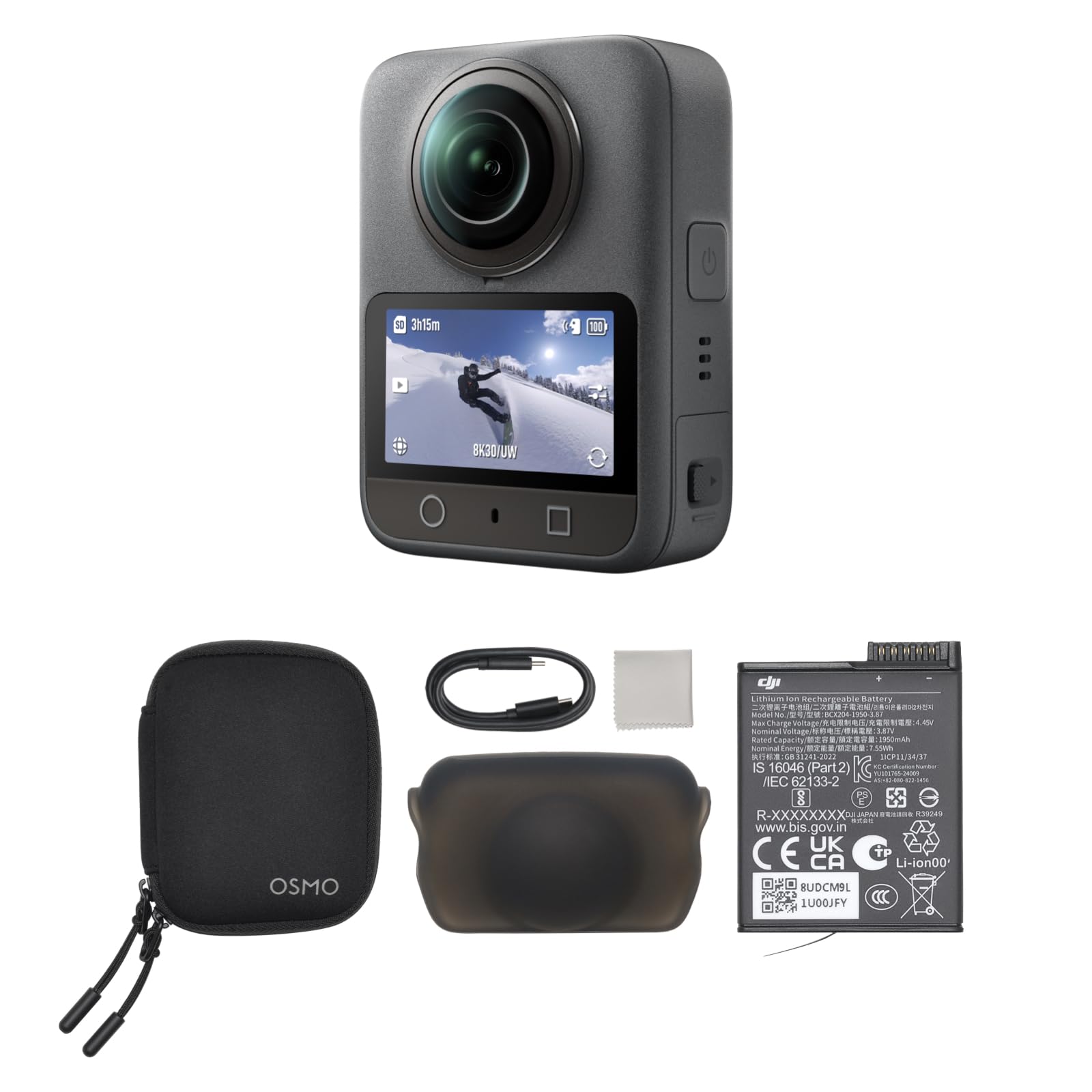
The DJI Osmo 360 is the first 360 action camera to pack dual 1‑inch CMOS sensors, which dramatically improves dynamic range and low‑light performance compared to the typical 1/2.3‑inch sensors in the rest of the category. It records native 8K 360° at 30fps and can output 4K/120fps in wide‑angle single‑lens mode, giving you both immersive sphere capture and high‑frame‑rate slow motion from the same body.
Built‑in 105GB of flash storage means you never need a memory card — DJI estimates 190 minutes of recording capacity, and the USB 3.1 Type‑C port transfers footage to a computer at high speed. Four microphones capture spatial audio from all directions, and the OsmoAudio system connects directly to up to two DJI wireless transmitters without an external receiver, which is a major convenience for vloggers who need clean voice tracking alongside 360 ambient sound.
The magnetic quick‑release mounting system lets you snap the camera between the 1.2‑meter invisible selfie stick and a helmet mount in seconds, and the 360° Horizon Lock holds the horizon steady even during barrel rolls. The DJI Mimo app handles stitching and reframing, though users note that the app was removed from Google Play and must be downloaded from DJI’s website directly.
Why it’s great
- Dual 1‑inch sensors deliver superior low‑light and dynamic range
- 105GB internal storage eliminates memory card dependency
- Magnetic quick‑release for fast mounting transitions
Good to know
- DJI Mimo app not available on Google Play — manual download needed
- Battery life varies significantly in cold weather shooting
3. DJI Osmo 360 Essential Combo
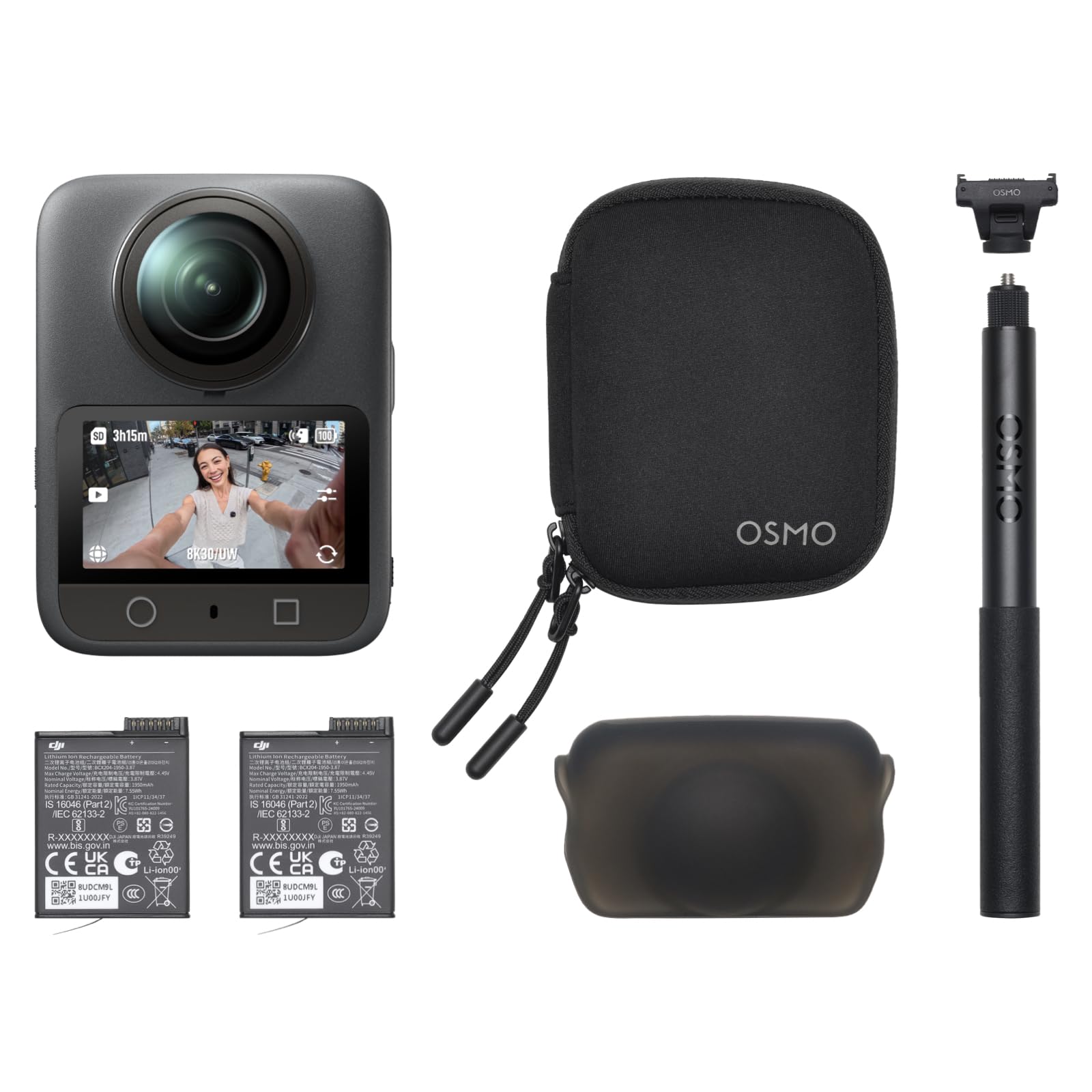
The Essential Combo version of the DJI Osmo 360 bundles a second 1950 mAh Extreme Battery Plus and the 1.2‑meter invisible selfie stick right in the box, making it the most complete out‑of‑box kit for long shooting days. The core camera is identical to the Standard Combo — dual 1‑inch sensors, 8K/30fps 360 video, and 105GB onboard storage — so you get the same pro‑level image quality with the convenience of a second hot‑swap battery.
With two batteries, you can capture roughly 200 minutes of total 360 footage before needing a wall outlet, which is enough to cover a full hiking trail or a full day of real estate walkthroughs without a recharge break. The included selfie stick collapses to a compact 29cm for packing and extends to the full 1.2m needed for the invisible third‑person perspective effect.
The magnetic quick‑release adapter works with the existing Osmo Action ecosystem and standard 1/4‑inch tripod threads, so you’re not locked into proprietary mounts. The learning curve for the DJI Mimo editing workflow is real — expect a few sessions to get comfortable with the timeline and reframing tools — but the video quality out of the sensor makes that effort worthwhile.
Why it’s great
- Comes with spare battery and 1.2m selfie stick included
- Same dual 1‑inch sensor performance as the Standard Combo
- Magnetic mounts compatible with Osmo Action gear and 1/4‑20 threads
Good to know
- Mimo app editing takes time to learn
- No tripod included in the box
4. GoPro MAX 360 (2025)

The 2025 GoPro MAX records 5.6K 360° video at 30fps and includes a 50‑piece accessory kit that covers helmet mounts, adhesive pads, and a carrying case — everything you need to start mounting the camera immediately. The new 1/4‑20 mounting thread on the body is a significant upgrade for 360 shooters, because it allows direct attachment to photography monopods, tripod heads, and slider rails without needing an adapter.
Six microphones capture immersive 360 audio with advanced wind‑noise reduction, and the built‑in in‑camera stitching means you can offload the already‑stitched clips to the GoPro Quik app without waiting for a desktop render. Switching to single‑lens HERO mode gives you standard 1440p video with Max SuperView, making this a dual‑purpose action camera for days when you don’t need 360 capture.
The waterproofing to 5 meters (16 feet) without a housing is adequate for pool, surf, and rain shooting, though serious divers will need a separate housing. The 5.6K ceiling is lower than the 8K cameras in this list, so your reframing headroom is more limited — but the audio quality and GoPro’s proven durability make this a strong choice for anyone already in the GoPro ecosystem.
Why it’s great
- 50‑piece accessory kit included in the box
- 1/4‑20 mount opens compatibility with photography gear
- In‑camera stitching reduces post‑production time
Good to know
- 5.6K resolution limits reframing compared to 8K models
- Waterproof only to 5m without a dive housing
5. Ricoh Theta X 360° Camera

The Ricoh Theta X shoots 11K (60‑megapixel) 360° stills that out‑resolve every other camera in this lineup, making it the undisputed choice for real estate photographers and virtual tour creators who need to deliver zoomable, client‑ready spherical images. The 5.7K video at 30fps is competent, but the still‑image capabilities — including RAW HDR‑DNG 16‑bit capture — are where this camera truly separates itself from action‑oriented 360 cams.
Built‑in GPS and A‑GPS embed location metadata directly into every photo, which streamlines creating Google Street View Blue Line tours and Matterport‑compatible walkthroughs without manually geotagging each frame. The large OLED touchscreen lets you preview and adjust settings without a phone, and the interchangeable battery means you can carry spares for all‑day property tours — a clear advantage over cameras with sealed batteries that force you to stop and charge.
The Theta X supports external microSD storage, so you can swap cards between shoots instead of being limited by internal memory. The downside is that the battery drains relatively fast with the screen on — reviewers report roughly 30 minutes of active use before needing a swap — and the low‑light video performance shows noticeable noise after sunset.
Why it’s great
- 11K still resolution highest in class for virtual tours
- Built‑in GPS geotags every image automatically
- Interchangeable battery and microSD card slot
Good to know
- Video resolution limited to 5.7K with visible low‑light noise
- Battery life short (~30 min) with screen active
6. MWE 360 Photo Booth Machine for Parties
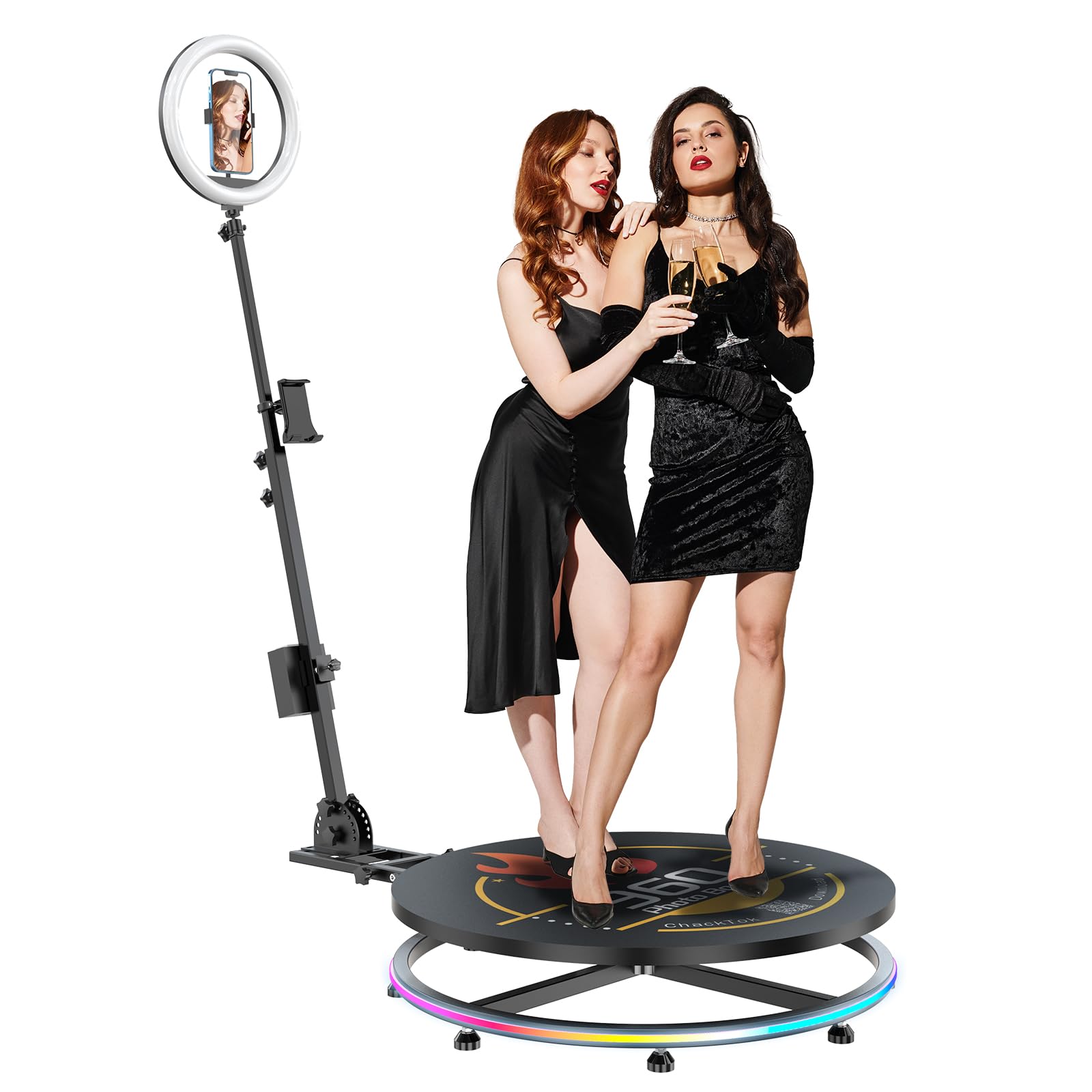
The MWE 360 Photo Booth is a complete rotating platform system designed for events, parties, and content‑creation stations in entertainment venues. The 23‑inch diameter platform supports 1–3 people and rotates at adjustable speeds controlled via a handheld remote or the ChackTok app, with the built‑in RGB ring light providing three color modes and ten brightness levels to match the event lighting.
Rather than recording 360 video with a camera that orbits the subject, this system spins the subjects themselves while a fixed camera — your own smartphone, GoPro, or DSLR mounted on the included selfie pole — captures the dynamic rotational shot. The flight case with rollers makes transport and storage straightforward, and the motor operates quietly enough not to interfere with event audio.
The platform is sturdy enough for repeated heavy use — the manufacturer claims an 800‑pound weight capacity — and the setup includes LED strip lights, stickers, and other props to increase the atmosphere. Since this is a platform rather than a camera, your final video quality depends entirely on the device you mount above it, but the system removes the difficulty of manually spinning a camera around a group of people.
Why it’s great
- Complete rotating platform with flight case for event use
- Remote and app control for rotation speed and direction
- Adjustable RGB ring light with multiple brightness levels
Good to know
- Requires your own camera/smartphone for capture
- 23” platform limits to 1–3 people per shot
7. Owl Labs Meeting Owl 3

The Meeting Owl 3 is a dedicated 360° conference room camera that captures 1080p HD video and 360° audio from up to 18 feet (5.5 meters) away, automatically framing the active speaker using the Owl Intelligence System. This is not an action camera or a creative tool — it is a purpose‑built business device designed to make hybrid meetings feel natural, with remote participants seeing a full panoramic view of the room while the camera zooms in on whoever is talking.
Set‑up from unboxing to first meeting averages about six minutes: plug the USB‑C cable into a laptop, place the Owl in the center of the table, and the device auto‑configures with Zoom, Google Meet, Teams, Webex, and virtually any web‑based platform. The 360° panoramic view shows the entire table layout, while the AI‑driven speaker tracking smoothly transitions between participants without jarring cuts.
The Owl Labs ecosystem allows pairing two Meeting Owls or adding an Expansion Mic for larger rooms, and IT administrators can manage multiple devices through The Nest cloud dashboard. The main drawback is the 1080p resolution — at this price point, some buyers feel a 4K sensor would better justify the investment for display on large conference‑room screens.
Why it’s great
- Six‑minute plug‑and‑play setup with all major platforms
- 360° speaker tracking ensures active participant is always shown
- 18‑foot 360° audio pickup covers most small‑to‑medium rooms
Good to know
- 1080p video looks soft on large 4K displays
- Requires power adapter — no battery power option
8. Ricoh Theta Z1 51GB

The Ricoh Theta Z1 remains a benchmark for 360 still image quality years after its release, thanks to dual 1‑inch back‑illuminated CMOS sensors that deliver 23‑megapixel (7K) 360° images with significantly less ghosting, flare, and chromatic aberration than smaller‑sensor competitors. The 51GB of internal memory stores roughly 900 RAW+JPEG pairs or 110 minutes of 4K video, so you can shoot an entire property tour without running out of space.
The Z1 supports full manual exposure control (aperture priority, shutter priority, and full manual) which is rare in the 360 category — most action cameras force automatic exposure. This makes the Z1 the preferred tool for interior photographers who need to lock exposure across a sequence of rooms for consistent virtual tours. The HDR image processing handles mixed indoor/outdoor lighting through windows without blowing out the sky or losing shadow detail.
Four‑channel microphone capture improves 360 audio immersion, and the USB 3.0 Type‑C port transfers the 51GB of data quickly. The magnesium‑alloy body feels premium and durable, but the non‑replaceable battery is a real limitation — after roughly an hour of active shooting you need to plug in, and there is no way to swap a fresh battery in the field. The Z1 also lacks a touchscreen, relying on physical buttons and the smartphone app for control.
Why it’s great
- Dual 1‑inch sensors produce best‑in‑class 360 stills
- Manual exposure controls for consistent virtual‑tour capture
- 51GB internal memory stores hundreds of RAW images
Good to know
- Battery is non‑replaceable and lasts roughly one hour
- No touchscreen — all settings managed via app
9. Antigravity A1-360 Drone with Camera 8K
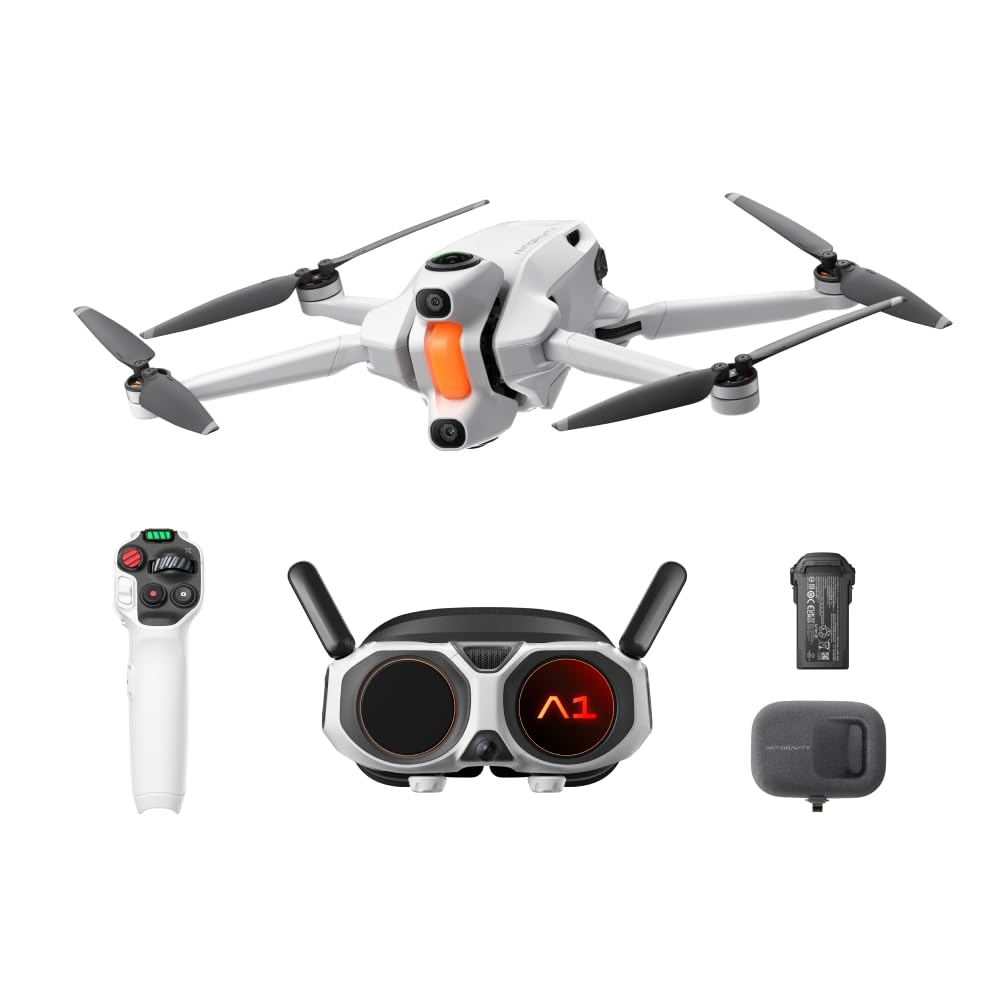
The Antigravity A1 is the first consumer drone to pair 8K 360° spherical capture with immersive FPV goggles in a single package. Instead of flying the drone while trying to frame a single subject, you capture the entire sphere and reframe in post — exactly like a ground‑based 360 action camera, but from the air. The Vision Goggles use dual 1‑inch Micro‑OLEDs with a 90° field of view and built‑in diopter adjustment for near‑ and farsighted pilots.
The drone weighs 249g with the standard battery, placing it below the FAA registration threshold in many countries, while the high‑capacity battery extends flight time to 39 minutes for longer shoots. Omnidirectional obstacle avoidance uses 360° sensing plus forward and downward binocular vision, which adds a safety layer when flying in tighter spaces or near trees.
FreeMotion Mode’s point‑to‑fly motion control lets beginners pilot by simply pointing the controller where they want to go, while the Auto Edit 2.0 feature automatically reframes the 360 footage with cinematic pans and music sync for instant social‑media clips. Some users note that the goggles’ field of view feels narrow for true immersion during flight, but the 8K spherical footage itself is detailed enough to inspect after the flight on a desktop monitor.
Why it’s great
- 8K 360° aerial capture with invisible stitching
- FPV goggles with diopter adjustment for glasses users
- Omnidirectional obstacle avoidance for safer flights
Good to know
- Goggle FOV feels narrow for immersive flight experience
- Standard battery provides roughly 25 minutes of air time
10. Meeting Owl 4+

The Meeting Owl 4+ upgrades the Owl Labs lineup to 4K 360° resolution, solving the resolution complaint of the Owl 3 while keeping the same six‑minute plug‑and‑play setup and AI speaker‑tracking intelligence. The 4K sensor makes a visible difference on large conference‑room displays and gives remote participants enough detail to read whiteboard content and see facial expressions clearly across a 12‑seat table.
Enterprise features include built‑in WiFi connectivity for wireless firmware updates and device management via The Nest, a Kensington lock slot for physical security, and Power over Ethernet (PoE) support with an adapter — allowing a single cable to carry data and power for clean desk installations. The audio pickup covers 18 feet in all directions, and the Owl Intelligence System uses both visual and audio cues to determine which participant to frame, reducing the delay compared to audio‑only tracking.
The Owl 4+ remains universally compatible with Zoom, Teams, Google Meet, Webex, and GoToMeeting, and it can pair with a second Owl or an Owl Bar for larger rooms. The trade‑off is the price, which sits above many full‑room video‑bar alternatives — but the 360° panoramic view with automatic speaker selection is a specific feature that no single‑camera bar can replicate.
Why it’s great
- 4K 360° sensor for sharp detail on large displays
- PoE and enterprise WiFi for IT‑friendly deployment
- Kensington lock and Nest dashboard for fleet management
Good to know
- Camera can lag slightly when switching between speakers
- Premium price versus fixed‑camera conference bars
11. Antigravity A1 Infinity Bundle
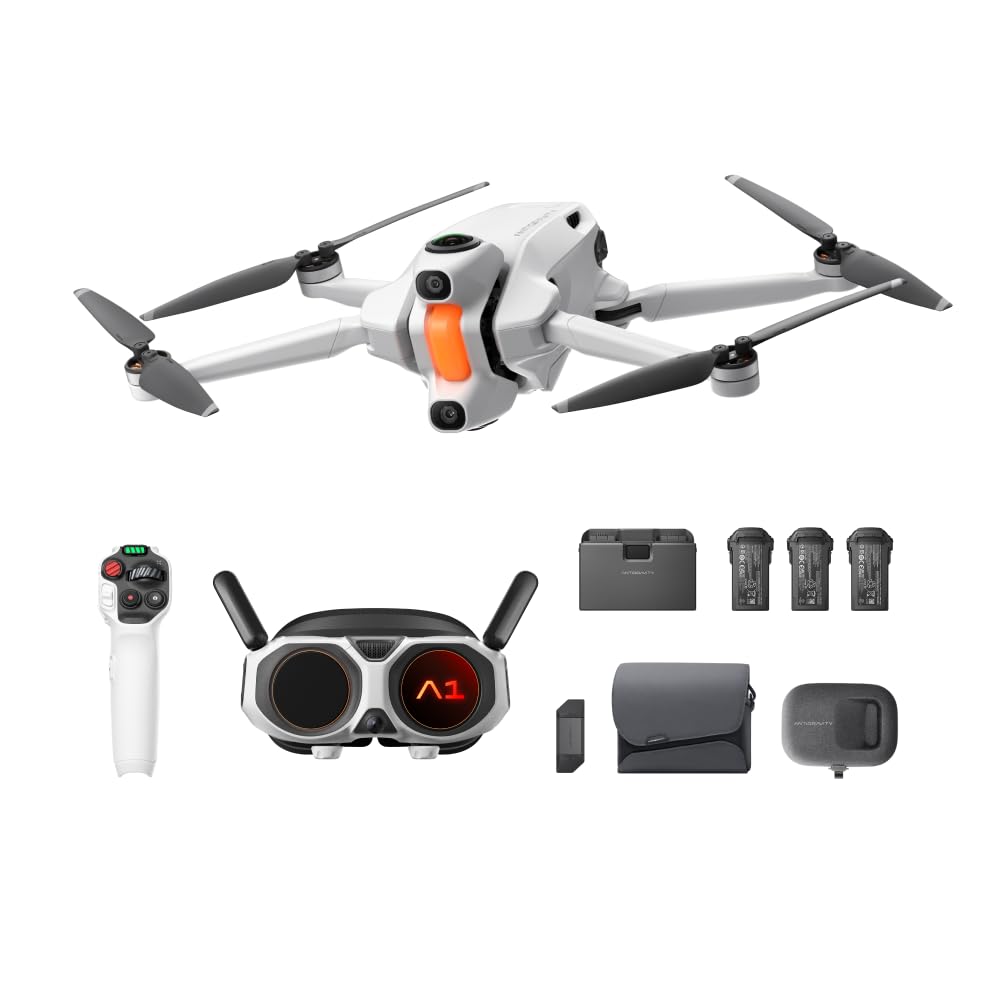
The Antigravity A1 Infinity Bundle takes the same 8K 360° drone platform and triples the flight capacity by including three high‑capacity batteries plus a charging hub, a quick reader for fast media transfer, and a sling bag for carrying everything into the field. With three batteries you get roughly 117 minutes of total air time — enough to cover multiple shooting locations or extended landscape surveys without returning to base to recharge.
The 10‑kilometer transmission range on the OcuSync‑equivalent link keeps the video feed solid even when flying far from the controller, and the omnidirectional obstacle avoidance combined with Smart Return‑to‑Home means the drone can navigate back autonomously if the connection drops. The point‑to‑fly motion control makes the A1 approachable for pilots who have never flown FPV, while the Sky Path feature lets you pre‑program automated flight routes for repeatable cinematic passes over the same location.
The Auto Edit 2.0 pipeline reframes the 8K 360 footage into cinematic 16:9 clips with minimal user input, which is valuable for creators who want aerial content fast without learning professional video editing software. Some early users reported connectivity dropouts and a few reliability concerns, but the Antigravity Care plan and responsive customer support address many of those concerns with replacement units and firmware updates.
Why it’s great
- Three high‑capacity batteries for nearly two hours total flight
- 10km transmission range for long‑range aerial surveys
- Auto Edit 2.0 instantly creates cinematic clips from 360 footage
Good to know
- Some early units reported connectivity and reliability issues
- Goggle FOV may not match dedicated FPV drone immersion
FAQ
Do I need 8K resolution for a 360 camera?
Can I shoot 360 video underwater without a housing?
How does the invisible selfie stick effect work?
Is stitching done in the camera or in software?
Final Thoughts: The Verdict
For most users, the best 360 photography equipment winner is the Insta360 X4 because it balances 8K resolution, 135‑minute battery life, and the most mature editing ecosystem at a price that undercuts the competition. If you want superior low‑light performance and a 1‑inch sensor, grab the DJI Osmo 360 Standard Combo. And for professional still photography and virtual tours, nothing beats the Ricoh Theta Z1.