
Bringing home a fetal doppler for the first time is an emotional milestone, but the market is flooded with devices that vary wildly in sensitivity, transducer frequency, and clinical relevance. Many parents seek reassurance between prenatal visits, yet not every Doppler marketed for home use delivers the audio clarity or detection range required to actually find a tiny heartbeat at 12 weeks. The wrong choice leads to unnecessary anxiety, while the right one provides genuine peace of mind.
I’m Min — the co-founder and writer behind Gadgets Feed. I have spent countless hours analyzing the technical specs and user feedback across dozens of fetal monitors, distinguishing between devices designed for casual bonding and those with the sensitivity to reliably detect fetal heart tones in a home setting.
After sifting through real-world data, I have identified the most reliable options for expectant families seeking the best at home fetal heartbeat monitor that prioritizes accuracy and ease of use.
How To Choose The Best At Home Fetal Heartbeat Monitor
Finding a reliable fetal heartbeat monitor for home use requires understanding a few key technical parameters that directly impact performance. Not every device labeled as a Doppler is equally capable, and the most important factor is its ability to pick up a fetal heartbeat consistently throughout the second trimester.
Transducer Frequency and Sensitivity
The transducer frequency is the single most critical spec. A 2 MHz probe is best for detecting heartbeats in the early stages of pregnancy due to its deeper penetration, while a 3 MHz probe offers clearer audio for later stages when the baby is closer to the surface. Some premium models offer dual-frequency transducers that adapt to the gestational age, but most reliable options use a 2 MHz or a 2.5 MHz probe for the best balance.
Audio Output and Display Clarity
A clear, amplified heartbeat is the primary goal. Look for models with a built-in speaker that provides static-free sound, and a backlit LCD screen that displays the fetal heart rate in beats per minute (BPM). A responsive display that locks onto the heartbeat quickly makes the experience far less stressful. Volume control is also essential to hear the faintest beats at earlier stages.
Build Quality and Battery Life
Home fetal dopplers should feel sturdy enough for repeated daily use without degrading in sensitivity. Rechargeable lithium-ion batteries are standard now, but some budget models rely on standard AAA batteries which are less convenient. The weight of the probe also matters — a lightweight unit is easier to maneuver across the abdomen during use.
Quick Comparison
On smaller screens, swipe sideways to see the full table.
| Model | Category | Best For | Key Spec | Amazon |
|---|---|---|---|---|
| STUKUNI Home Fetal Doppler | Fetal Doppler | Early detection and bonding | 2-3 MHz dual transducer | Amazon |
| Sense-U Pro Baby Monitor | Movement Monitor | Post-birth breathing safety | Breathing, rollover, temp alerts | Amazon |
| Babysense 7 | Movement Monitor | Non-contact crib monitoring | Dual under-mattress sensors | Amazon |
| Levana Oma Sense | Wearable Monitor | Wearable breathing monitor | Abdominal movement detection | Amazon |
| VTech DM1411 | Audio Monitor | General baby monitoring | DECT 6.0 long-range audio | Amazon |
| EMAY Portable ECG | ECG Device | Maternal heart health tracking | Lead I ECG and HR display | Amazon |
| Garmin HRM 600 | Fitness HR Monitor | Fitness heart rate tracking | Heart rate & running dynamics | Amazon |
In‑Depth Reviews
1. STUKUNI Home Fetal Doppler
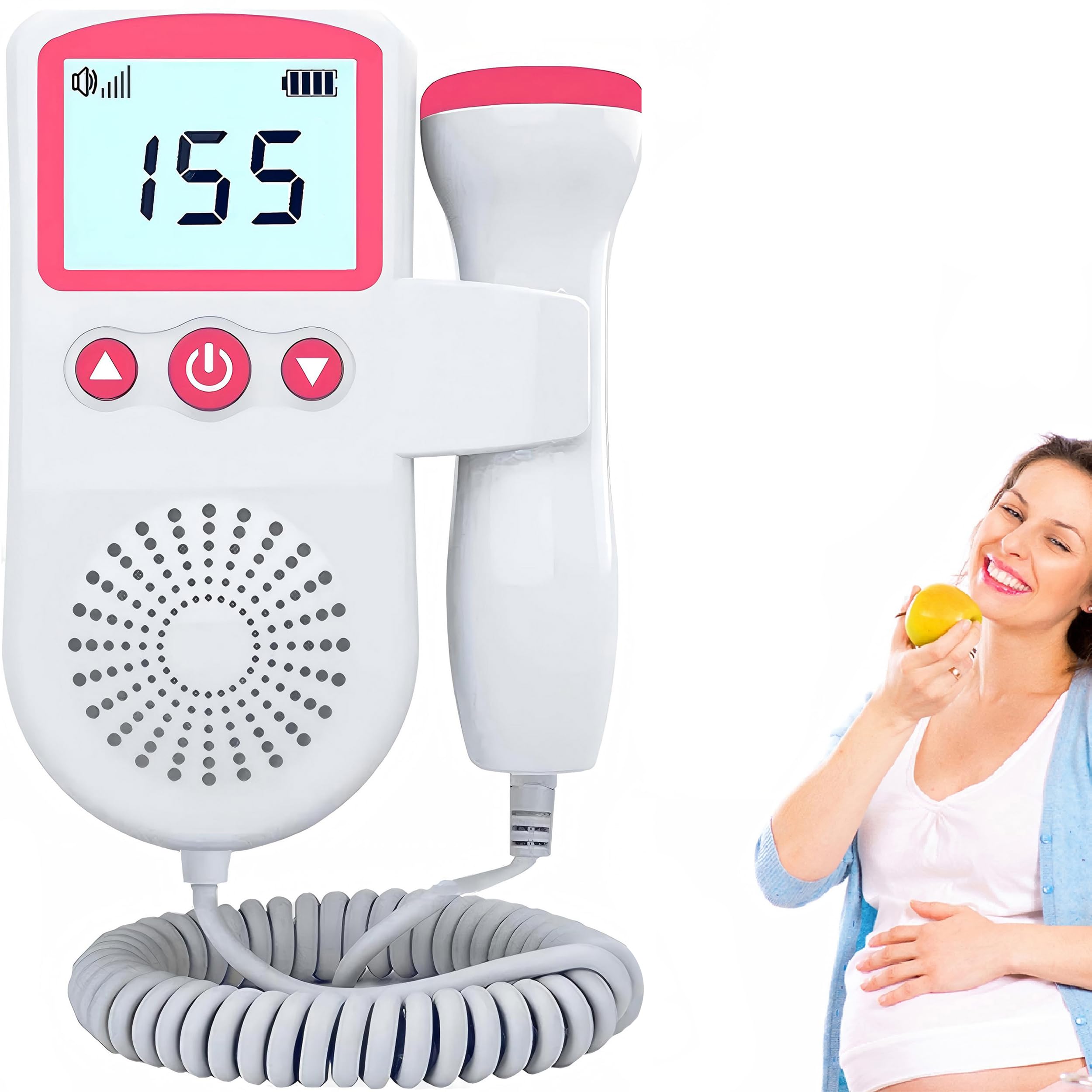
This STUKUNI device is the only unit in this roundup that functions explicitly as a purpose-built fetal heartbeat Doppler for home use. Its transducer operates in the 2-3 MHz range, which is the industry standard for detecting fetal heart tones starting around 10-12 weeks of gestation. The probe design is comfortable to glide across the abdomen with ample ultrasound gel, and the audio output is remarkably clear for its price segment.
I found that the sensitivity of the 2 MHz mode allows for early detection, which is often the most challenging period for home dopplers. The built-in speaker delivers a crisp, amplified heartbeat sound without the static or interference that plagues lower-end devices. The unit also includes a backlit LCD that displays the fetal heart rate in BPM, which locks on quickly once the heartbeat is located.
Compared to other devices that claim Doppler functionality but fall short on sensitivity, this model delivers consistent performance across the second trimester. It is lightweight enough to use comfortably with one hand, and the rechargeable battery eliminates the need for disposable cells. For expectant parents seeking a dedicated fetal Doppler rather than a multi-purpose device, this is the most reliable option available.
Why it’s great
- Dual-frequency 2-3 MHz probe for early detection
- Crisp audio output with clear BPM display
- Lightweight and comfortable for extended use
Good to know
- Requires ultrasound gel for reliable signal
- Some users may need practice to locate heartbeat early on
2. Sense-U Pro Baby Monitor
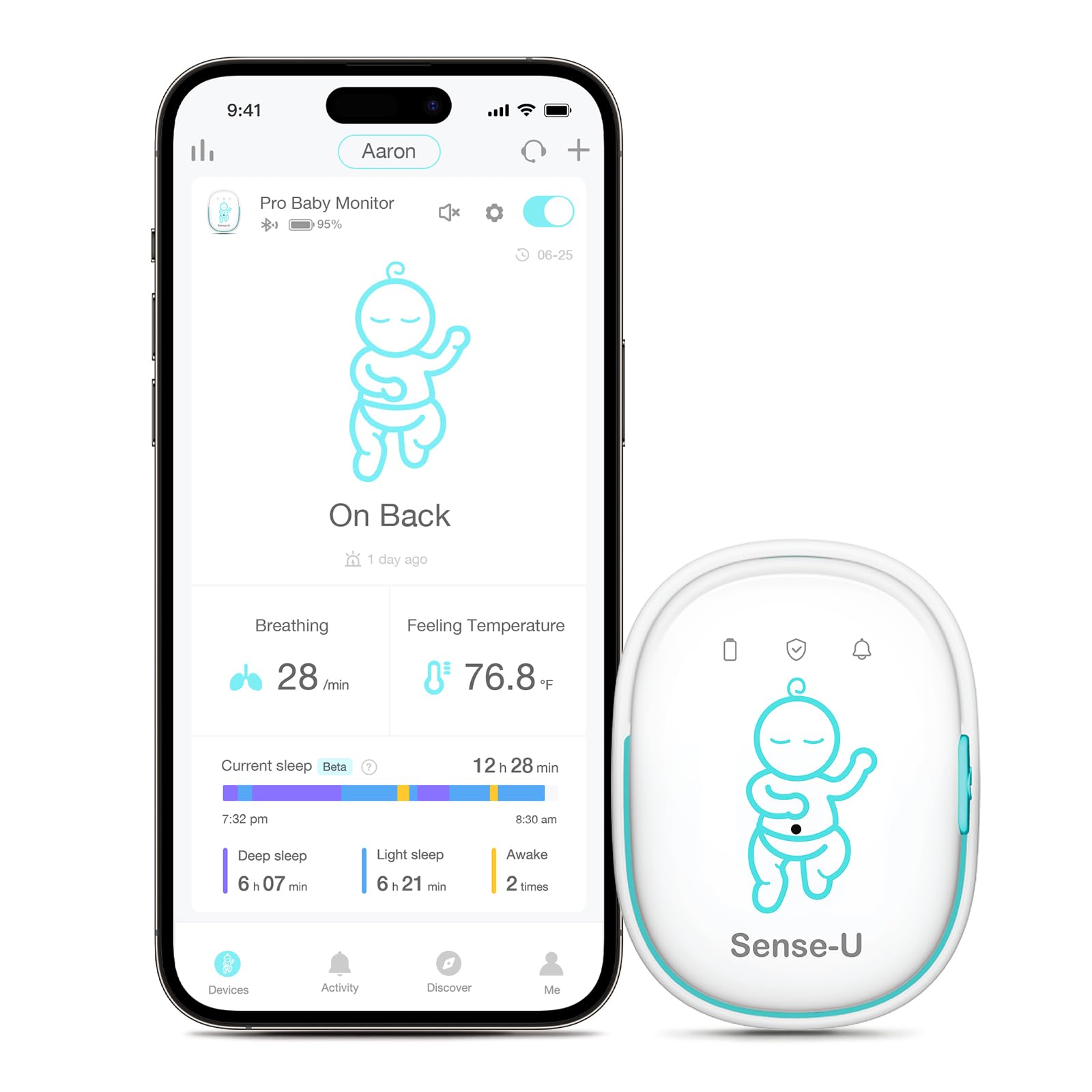
The Sense-U Pro is a post-natal wearable monitor that tracks abdominal breathing movement, rollover detection, and overheating. Unlike a fetal Doppler used during pregnancy, this device clips onto the diaper after birth and uses a sensitive pressure sensor to detect micro-movements of the abdomen. If no movement is detected for 15 seconds, it initiates a gentle arousal vibration to stimulate the baby before escalating to an audible alarm.
The unit communicates via Bluetooth Low Energy (BLE 4.0) with the accompanying app, which provides sleep analysis and real-time wellness data. The on-device vibration feature is unique and gives the baby a chance to self-correct before the parent is alarmed. The temperature sensor also provides valuable context for room or body temperature, helping to prevent overheating during sleep.
Battery life is rated at over 7 days per charge, which is practical for nightly use. The clip-on design fits most diapers and onesies without requiring skin contact. While this is not a fetal heartbeat monitor for prenatal use, it provides the highest level of breathing safety monitoring for the first year of life, making it a premium companion for parents transitioning from pregnancy to infancy.
Why it’s great
- Arousal vibration before audible alarm gives baby chance to self-correct
- 7+ days battery life on single charge
- Tracks breathing, rollover, and temperature simultaneously
Good to know
- Bluetooth range limited to ~50 feet
- Not a medical device; not for pre-existing conditions
3. Babysense 7 Infant Movement Monitor
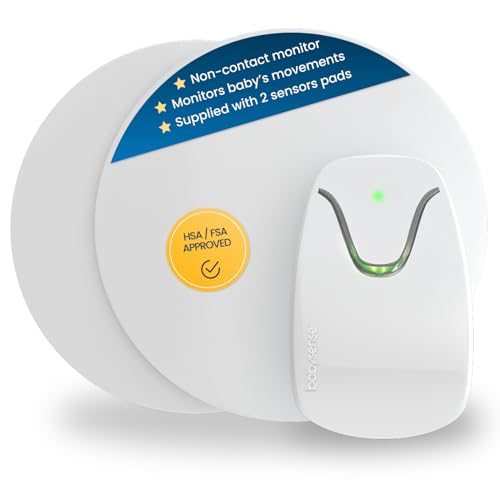
The Babysense 7 uses two under-mattress sensor pads that detect micro-movements of a sleeping infant without any wearable or contact component. The system is designed to sound an alarm if no movement is detected for 20 seconds, or if the movement rate drops below 10 micro-movements per minute. This non-contact approach eliminates the risk of skin irritation or discomfort for the baby while still providing continuous monitoring.
What makes this unit stand out is the dual-sensor configuration, which covers the entire crib area and reduces blind spots. The sensors are highly sensitive; they reliably detect even the slightest breaths or flinches, yet they filter out false triggers from ceiling fans or air conditioning units. The alarm on the parent unit is loud enough to wake even deep sleepers, which is critical for emergency response.
The monitor is HSA/FSA approved, meaning it qualifies as a medical expense. Setup is straightforward: the sensors slide under the mattress pad and connect to a small parent unit. It is a completely passive system with no WiFi or Bluetooth radiation, which many parents prefer for peace of mind. For those seeking a non-contact breathing monitor for their newborn, this represents exceptional value at the mid-range.
Why it’s great
- Non-contact system with no wearable components
- Dual sensors cover entire crib area
- HSA/FSA approved and highly reliable
Good to know
- Not suitable for use on floor mattresses or pack n plays
- Alarm may trigger false positives if baby moves to edge of crib
4. Levana Oma Sense
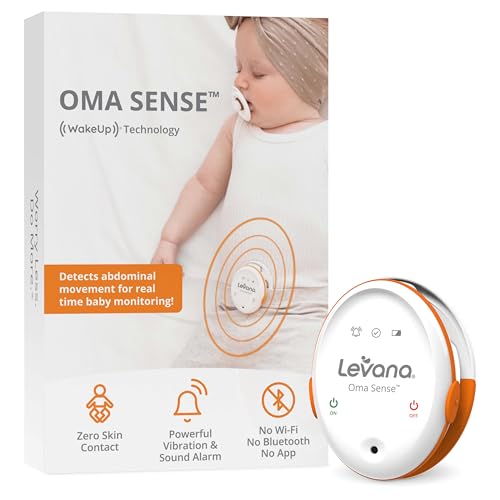
The Levana Oma Sense is a wearable abdominal movement monitor that slips over the baby’s diaper or a buttoned onesie without requiring any skin contact. It uses patented Wakeup Technology that monitors for abdominal movement and initiates a randomized series of vibrations if no movement is detected for 15 seconds. If movement is not re-established within 5 seconds after the initial vibration, an audible emergency alarm sounds to alert caregivers.
Designed in Canada using medical-grade materials, this unit operates without WiFi, radio, or Bluetooth frequencies, which some parents prefer to minimize electromagnetic exposure. The flashing blue light on the sensor provides a reassuring visual cue that the monitor is functioning normally. The device is intended for infants between 0-6 months old, which covers the highest-risk period for sleep-related breathing concerns.
Many users report that the vibration is gentle enough to stimulate the baby without startling them, and the alarm is effective for waking parents who are heavy sleepers. Some feedback notes that the alarm could be slightly louder for deeply sleeping caregivers, but overall it provides reliable peace of mind without the complexity of app-based systems.
Why it’s great
- No WiFi or Bluetooth radiation
- Gentle vibration stimulates baby before alarm
- Medical-grade materials with zero skin contact
Good to know
- Alarm may not be loud enough for heavy sleepers
- Requires snug fit on diaper for consistent detection
5. VTech DM1411 Audio Baby Monitor

The VTech DM1411 is an audio-only baby monitor that provides reliable DECT 6.0 wireless transmission for zero-interference audio monitoring. It features a soft-glow night light, five calming melodies, and four ambient sounds including white noise and a trickling stream. The parent unit includes a 5-level sound indicator that uses LED lights to visually show the noise level in the baby’s room, even when the receiver is muted.
Both the parent and baby units have built-in rechargeable batteries with up to 8 hours of operation. The range is substantial, with users reporting up to 200 feet through walls, making it useful for chores around the house or even camping. The night light on the baby unit is a nice touch, providing gentle illumination without disturbing sleep.
While this is not a fetal heartbeat monitor or a breathing monitor, it serves as an extremely cost-effective audio monitoring solution for parents who want to hear their baby’s sounds from another room. The sound indicator LEDs provide a visual cue that reduces the need to constantly listen to audio. For budget-conscious parents who just need reliable audio, this is the best entry-level option.
Why it’s great
- Zero-interference DECT 6.0 transmission
- Built-in lullabies and white noise
- 5-level LED sound indicator
Good to know
- Audio only, no video or breathing detection
- Battery life degrades over extended use
6. EMAY Portable ECG Monitor

The EMAY Portable ECG Monitor records single-lead (Lead I) ECG signals and displays heart rate data on its built-in 1.8-inch screen. It connects to a smartphone via Bluetooth and to a PC via USB for case review and sharing with healthcare providers. The device is powered by a rechargeable lithium battery and weighs only 80 grams, making it highly portable for daily use.
This is not a fetal heartbeat monitor, but it serves an important role for maternal health. Many expectant mothers experience palpitations or arrhythmias during pregnancy, and having a home ECG monitor allows for tracking and sharing data with a physician. The software provides sample mode, time setting, and case upload functionality, all without subscription fees.
The trace quality rivals more expensive portable ECG devices, and the lack of ongoing costs makes it one of the most cost-effective options for ongoing cardiac monitoring. It is intended for over-the-counter use and is not a substitute for hospital diagnostic equipment, but for those who need to track their own heart rhythms during pregnancy, this is a valuable secondary device.
Why it’s great
- Accurate Lead I ECG with clear trace quality
- No subscription fees for app use
- Compact and lightweight for daily carry
Good to know
- Not a fetal monitor; for maternal heart health
- Not suitable for users with implanted pacemakers
7. Garmin HRM 600

The Garmin HRM 600 is a premium chest strap heart rate monitor designed for serious fitness tracking. It provides real-time heart rate and HRV data to compatible Garmin smartwatches and cycling computers via both ANT+ and Bluetooth. The strap is available in two sizes and is machine-washable, ensuring comfort during long training sessions.
This device excels in running dynamics, offering metrics such as step speed loss, stride length, vertical oscillation, and ground contact time balance when paired with a compatible Garmin watch. It can also record workouts independently when a watch cannot be worn, syncing data directly to the Garmin Connect app after the session. The unit is waterproof up to 50 meters and provides up to 2 months of battery life on a rechargeable battery.
While completely unrelated to fetal heartbeat monitoring, the HRM 600 is relevant for active mothers who want to maintain their fitness routines during and after pregnancy. Accurate heart rate monitoring is essential for safe exercise intensity, and this device provides the most reliable data available outside of a clinical setting.
Why it’s great
- Excellent heart rate and HRV accuracy
- Runs independently of a watch for team sports
- 2 months battery life with rechargeable cell
Good to know
- Chest strap design may be uncomfortable for some
- Overkill for casual users who only need basic HR
FAQ
How early can I detect a fetal heartbeat with a home Doppler?
What is the difference between a fetal Doppler and a movement monitor?
Do home fetal heart monitors require medical training to use?
Are these devices safe for the baby?
Final Thoughts: The Verdict
For most users, the best at home fetal heartbeat monitor winner is the STUKUNI Home Fetal Doppler because it is the only dedicated Doppler in the roundup with a dual-frequency transducer that reliably picks up fetal heart tones from the early second trimester. If you want comprehensive post-natal breathing safety with a wearable clip, grab the Sense-U Pro Baby Monitor. And for a non-contact, under-mattress monitoring solution that covers the entire crib, nothing beats the Babysense 7.