
Parked under direct sun, the interior of a metal box on wheels can hit 130°F within minutes, turning a family camping trip into a dangerous heat trap. A roof-mounted AC unit rated specifically for trailers isn’t a luxury upgrade — it’s the single most critical component for safe and comfortable travel, yet most factory-installed units are underpowered for the brutal thermal load of an unshaded rig.
I’m Min — the co-founder and writer behind Gadgets Feed. I’ve spent hundreds of hours across multiple seasons analyzing BTU capacities, amp draws, noise levels, and real-world DIY installation reports to find the AC units that actually hold up when summer asphalt melts your shoes.
After sorting through a mountain of spec sheets and verified customer accounts of units failing on the second night, I’ve narrowed the field to the eleven models worth your attention. This guide covers exactly which ac units for trailers deliver reliable cooling without draining your generator or your patience.
How To Choose The Best AC Units For Trailers
Choosing an AC for a trailer means balancing cooling power against the electrical constraints of a 30-amp or 50-amp shore power pedestal — or the limited runtime of a portable generator. The wrong pick can trip breakers all night or fail to cool a small space. Focus on four pillars before you buy.
BTU Rating vs. Real Thermal Load
A 13,500 BTU unit is the standard recommendation for a 20-30 foot trailer, but that number assumes moderate insulation and partial shade. If you park in full desert sun or have large windows, bump up to 15,000 BTU or consider an 18,000 BTU variable-speed unit that can modulate its output without constantly cycling on and off.
Amp Draw and Generator Compatibility
Startup surge — locked rotor amps — is the hidden killer of generator performance. A standard 13,500 BTU unit can pull over 2,000 watts momentarily, which exceeds the capacity of a 2,200-watt inverter generator. Units with a built-in soft starter or variable-speed compressors dramatically reduce this spike, allowing you to run the AC on a smaller, quieter, and cheaper generator.
Ducted vs. Non-Ducted Installation
Non-ducted units blow cold air directly from the ceiling assembly into the living space. They are simpler and cheaper to install but can create uneven cooling. Ducted units distribute air through a network of internal channels, providing consistent temperatures across multiple rooms. If you retrofit a non-ducted trailer, you will need to add ductwork or live with a single-point air blast near the kitchen or bedroom.
Noise Floor and Sleep Quality
Many trailers place the AC directly above the bed. A unit running at 58-65 dB (standard level) will disrupt sleep. Premium units now achieve 43-52 dB at low fan speeds, which is comparable to a quiet conversation and allows uninterrupted rest. Weight also matters for roof integrity — heavier units (75-85 lbs) require more roof reinforcement, while lighter EPP-foam designs reduce long-term stress on the structure.
Quick Comparison
On smaller screens, swipe sideways to see the full table.
| Model | Category | Best For | Key Spec | Amazon |
|---|---|---|---|---|
| TOSOT 16,000 BTU | Premium | Quiet operation & heat pump versatility | 43 dB noise floor, 16,000 BTU | Amazon |
| Furrion Chill Cube 18K | Premium | Variable-speed efficiency & low amp draw | 18,000 BTU, variable speed compressor | Amazon |
| RecPro 15K Ducted/Non-Ducted | Premium | Versatile ducted/non-ducted flexibility | 15,000 BTU, heat pump, 55.4 dB | Amazon |
| Coleman-Mach 15 (08-0080) | Premium | Raw cooling output for large rigs | 15,000 BTU, 1/3 HP fan motor | Amazon |
| Coleman-Mach 48204 Signature | Premium | Medium-profile design for limited clearance | 15,000 BTU, medium-profile shroud | Amazon |
| Dometic FreshJet 3 Series | Mid-Range | Ultra-lightweight plug-and-play replacement | 13,500 BTU, 21 SEER, 14% lighter | Amazon |
| TURBRO 15,000 BTU | Mid-Range | Wi-Fi control & integrated heating | 15,000 BTU, 9.6 EER, WiFi enabled | Amazon |
| Airxcel (Coleman) Mach 3 Plus | Mid-Range | Reliable 13.5K BTU with 5,600W heat | 13,500 BTU, 5,600W heat element | Amazon |
| ASA Electronics ACM135 Advent Air | Mid-Range | Budget-friendly Dometic replacement | 13,500 BTU, metal base pan | Amazon |
| ASA Electronics ACM135B | Budget | Lowest entry price for occasional RV cooling | 13,500 BTU, 68.4 lbs | Amazon |
| Dometic Penguin II 13.5K | Premium | Low-profile aerodynamic design | 13,500 BTU, EPP foam housing | Amazon |
In‑Depth Reviews
1. TOSOT 16,000 BTU RV Air Conditioner

The TOSOT 16,000 BTU unit hits the sweet spot for owners of 16-to-24-foot trailers who demand both cooling muscle and whisper-quiet sleep conditions. At only 43 dB on low fan, it is 32% quieter than standard RV ACs — quieter than a normal conversation, which makes a massive difference when the unit sits directly above the bed. The built-in 12,500 BTU heat pump extends the camping season into shoulder months without needing to fire up a propane furnace.
Wi-Fi control through the Gree+ app lets you precool the trailer from the hiking trail, and the non-ducted design fits the standard 14.25 x 14.25-inch rooftop opening without additional ductwork. Multiple owners report it maintains 70°F inside a 23-foot trailer even when outside temperatures hit 105°F with direct sun. The 2-year warranty offers peace of mind, though long-term parts availability remains a concern noted by experienced buyers.
The unit arrives in two separate packages, so ensure both have landed before scheduling installation. It requires 115V AC and has been successfully paired with Honda 3000W generators (with a soft starter recommended). Overall, this is the best balance of noise, power, and smart features for modern trailer owners who camp in varied climates.
Why it’s great
- Remarkably quiet 43 dB operation
- Heat pump adds supplemental warmth
- WiFi enabled for remote temperature control
Good to know
- Shipped in multiple packages that may arrive separately
- Uses R32 refrigerant — check local service availability
2. Furrion Chill Cube 18K BTU

The Furrion Chill Cube uses a variable-speed compressor that fundamentally changes the power equation for trailer AC. Instead of the abrupt starts and stops that spike amp draw on standard units, the Furrion ramps smoothly between 300W and 1,100W. Owners running a 1,000Ah LiFePO4 battery bank report it can run for 10 hours without generator recharging — a game-changer for boondocking.
At 18,000 BTU, the Chill Cube delivers over 1.5 tons of cooling, enough to drop a 31-foot Airstream from 89°F to comfortable in 15 minutes according to verified field reports. The integrated dehumidifier prevents coil freeze-up, a common failure point in humid climates. The bolt-on installation comes with a pre-attached foam seal, and the aerodynamic low-profile shroud reduces wind drag while driving.
The biggest caveat is that this is the AC unit only — the air distribution box (ADB) is sold separately (B0F1464FSX). Several owners also report missing components upon delivery, and Furrion’s customer service has drawn sharp criticism. But for performance per watt, especially off-grid, this unit is unmatched. Just budget for the separate ADB and verify all parts on arrival.
Why it’s great
- Variable-speed compressor cuts startup surge dramatically
- Low amp draw enables extended battery-only operation
- Lightweight at 72.4 lbs makes roof handling easier
Good to know
- Air distribution box (ADB) sold separately
- Some units ship missing internal components
3. RecPro 15K RV Air Conditioner

The RecPro 15K stands out for its rare ability to operate in either ducted or non-ducted mode, making it a one-size-fits-most solution for both retrofits and new builds. The 15,000 BTU output paired with a built-in heat pump offers true four-season comfort. Owners of larger 36-foot coaches report it cools the entire space effectively when set up with ductwork.
Noise levels hover around 55.4 dB — quieter than traditional units but not silent. The remote and LED touch controls eliminate the need for thermostat wiring, simplifying installation. The unit weighs roughly 80 pounds, so a second pair of hands is essential for roof placement. The UV-resistant plastic shroud and aerodynamic shape are designed to minimize drag and road damage over long distances.
Customer service from RecPro receives high marks, with one owner noting a minor issue was resolved instantly via phone. The heat pump mode does cause the fan to run continuously, which slightly increases noise. The included manual is sparse, but installation videos are easy to find. This is the best pick for owners uncertain whether their trailer supports ducting.
Why it’s great
- Flexible ducted or non-ducted installation
- Heat pump provides supplemental electric warmth
- Excellent customer support from RecPro
Good to know
- Fan runs continuously in heat pump mode
- Installation manual is sparse; rely on video guides
4. Coleman-Mach 15 (08-0080)

The Coleman-Mach 15 (08-0080) is the upper unit for the legendary Mach 15 series, delivering 15,000 BTU of raw cooling for owners who need to cool a large or poorly shaded rig. One owner reports this single unit keeps his 33-foot Class A RV “frigid cold” in South Florida summer — a testament to its raw output. The two-piece shroud design simplifies removal compared to the older Mach 3 series.
At roughly 80 pounds, roof installation demands caution. The pre-installed foam seal creates a watertight bond without additional tape or caulk. The wiring is straightforward — hot, neutral, and ground. The scroll compressor runs smoother and quieter than older piston types, though it remains audible during operation. One owner measured a 15-20°F temperature drop compared to the unit it replaced.
The critical catch is that this is the upper unit only — the lower control panel and mounting hardware are sold separately. Several buyers missed this and had to delay installation. The shroud is taller than older models, so measure clearance before committing. For pure brute-force cooling on a 30-amp or 50-amp setup, this remains a top-tier choice.
Why it’s great
- Massive 15,000 BTU output for large rigs
- Two-piece shroud easier to service than older models
- Pre-installed foam seal for leak-free installation
Good to know
- Upper unit only — lower panel and hardware sold separately
- Tall profile may not fit very low-clearance covers
5. Coleman-Mach 48204 Signature Series
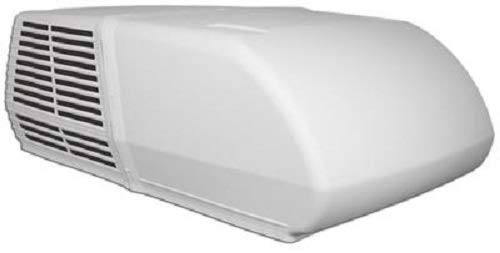
The Coleman-Mach 48204 Signature Series delivers the same 15,000 BTU output as the 08-0080 but in a medium-profile shroud that fits trailers with lower clearance. This is a critical detail for owners of pop-up campers or trailers with limited overhead space above the roof vent. The textured white shroud resists UV fading better than gloss finishes.
Owners consistently say the hardest part is getting the unit onto the roof — three people on separate ladders is the recommended method. Once installed, the instructions are clear and wiring is plug-and-play for standard Mach-compatible control boxes. The 15,000 BTU output handles high-90s weather effectively, though cooking with propane indoors will still raise interior temperatures noticeably.
The main concern reported is quality control. One buyer found two of three compressor mounts unattached due to defective hardware that was irreplaceable — a frustrating experience at this price point. The shroud cover also feels flimsy compared to the base unit. Inspect the unit immediately upon delivery and test the compressor mounts before hoisting it onto the roof.
Why it’s great
- Medium-profile shroud fits lower-clearance trailers
- Proven 15,000 BTU cooling performance
- Easy plug-and-play wiring for Mach-compatible systems
Good to know
- QC issues with compressor mounting bolts reported
- Shroud feels lighter and less durable than expected
6. Dometic FreshJet 3 Series 13.5K

The Dometic FreshJet 3 Series is the ideal upgrade for owners replacing an older Dometic Brisk Air II. It is 14% lighter than the Brisk II, reducing roof stress and making installation safer. The 21 SEER rating is exceptionally high for an RV rooftop unit, translating to lower sustained power draw and quieter operation — 4 dB less noise than competitive units.
Plug-and-play compatibility with existing Dometic air distribution boxes and control systems means no rewiring the ceiling assembly. The unit uses R410A refrigerant, which is still widely available from service techs. Real-world reports show it cools a 19-foot trailer from 80°F to 64°F in 30-45 minutes. Startup draw is about 2,000W, with continuous operation around 1,600-1,700W and fan-only at 450W.
Packaging has been an issue — several units arrive with cracked shroud tabs from shipping. Dometic’s customer service has been mixed, with some buyers receiving quick refunds and others hitting dead ends. If yours arrives damaged, document everything immediately and file a claim. For a pure drop-in replacement that improves cooling and reduces noise without rewiring, this is the prime candidate.
Why it’s great
- Lightweight design reduces roof strain
- High 21 SEER rating saves energy
- Plug-and-play with existing Dometic wiring
Good to know
- Shipping packaging insufficiently protects shroud tabs
- Uses R410A — not as eco-friendly as R32 alternatives
7. TURBRO 15,000 BTU RV Air Conditioner

The TURBRO S15 combines 15,000 BTU cooling with 1,500W electric heating and Wi-Fi app control at a price that undercuts most premium competitors. The 9.6 EER rating is solid for mid-range, and sleep mode drops noise to 52 dB — quieter than many standard units. The atmosphere lamp with blue, yellow, or white light adds a surprising touch of interior ambiance.
Installation requires both 120V AC and a 12V DC cable (not included) for the control system. The unit is universal-fit for standard 14.25 x 14.25-inch rooftop openings and accommodates ceiling thicknesses from 1.02 to 3.93 inches. Owners report it cools a 38-foot camper effectively in Texas heat, even working alongside a second unit. The modular ducting allows flexible installation configurations.
The main trade-offs are the bright LED display with no dimming option and a confusing initial WiFi setup. One owner experienced a heater failure below 40°F, though TURBRO customer support was responsive. The unit is also about 35 pounds heavier than some Dometic equivalents, so roof reinforcement may be needed. Good overall, but not the best for freezing conditions.
Why it’s great
- WiFi and app control for remote automation
- Integrated 1,500W electric heating for cold nights
- Atmosphere lamp adds interior lighting options
Good to know
- Requires both 120V AC and 12V DC wiring
- Heater struggles below freezing temperatures
8. Airxcel (Coleman) Mach 3 Plus 13.5K

The Airxcel Mach 3 Plus offers a robust 13,500 BTU cooling capacity paired with a 5,600-watt electric heat element — the highest heat output in this bracket. This makes it a strong choice for trailers that experience cold overnight temperatures. The 320 CFM airflow rating ensures good circulation, and the 13.1 cooling amps are reasonable for a 30-amp service.
Plug-and-play with existing Coleman-Mach control systems makes it a direct swap for older units. Owners with 2016 Jayco Greyhawks and older Fleetwood Wilderness models report <2-hour DIY installations with the help of YouTube videos. A food truck operator in the South affirmed it keeps the interior significantly cooler than ambient, extending ingredient shelf life.
The main drawback is that the electric heat element is misleadingly advertised — it is not included with the upper unit and requires a separate purchase and installation. The provided manual is notoriously bad (missing pages, wrong staple order). Several units arrived with cosmetic damage to the shroud, and one buyer reported the compressor mount detached, damaging the coils after 20 days.
Why it’s great
- 5,600W electric heating option for cold-weather camping
- Direct plug-and-play with Coleman-Mach systems
- Solid 13.1 amp draw compatible with 30A service
Good to know
- Heating element is purchased separately
- Manual is poorly assembled with missing pages
9. ASA Electronics ACM135 Advent Air

The ASA Electronics Advent Air is a budget-oriented alternative to the Dometic Brisk Air II that kept a trailer cool in 115°F+ Arizona heat when paired with a 3,500W generator. The metal base pan is more rigid than plastic competitors, and the thick watertight gasket with six foam support pads reduces the risk of roof leaks. The washable filter saves money on replacements.
Installation is plug-and-play with existing Dometic control boxes — the 6-pin connector matches perfectly. Owners report it runs smoothly and produces colder air than the original units they replaced. The high-efficiency scroll compressor handles continuous summer operation without failure in the reported cases. Three fan speeds give some airflow customization.
The main warning is that this is the roof unit only — no ceiling assembly, control panel, or wiring diagram is included. Several buyers were caught off guard and had to order additional parts. Some units arrived with cosmetic damage (crushed or bowed shroud) and one buyer received a defective motor. At this price point, inspect thoroughly and test immediately upon arrival.
Why it’s great
- Quieter and colder than many OEM Dometic units
- Metal base pan with robust gasket seal
- Reasonable price for 13,500 BTU output
Good to know
- Top unit only — ceiling assembly and controls sold separately
- Some units arrive with shipping damage
10. ASA Electronics ACM135B

The ASA Electronics ACM135B is the lowest-priced entry point in this guide, making it accessible for owners of small or infrequently used trailers. The 13,500 BTU output is sufficient for a 17-to-20-foot trailer on moderate days. The black finish distinguishes it from the sea of white units and matches darker trim packages.
Installation is straightforward for those with an existing Dometic ducted system — the 6-pin plug matches the factory wiring and the four bolts align with standard roof openings. Several owners report it looks modern and fits well. However, reliability is a significant concern: multiple buyers report the compressor running but failing to produce cold air after just two days of use.
The warranty requires an HVAC technician for any claim, and in one documented case, the out-of-pocket service cost exceeded the original purchase price of the unit. The rotary compressor is also noticeably louder than scroll compressors found in mid-range and premium units. This unit may work for occasional use, but for regular camping, the reliability risk makes it a hard recommendation.
Why it’s great
- Affordable entry into 13,500 BTU cooling
- Black color matches darker trailer exteriors
- Plug-and-play with Dometic ducted systems
Good to know
- High failure rate — some units stop cooling after 2 days
- Warranty claim requires HVAC tech, often costing more than the unit
11. Dometic Penguin II 13.5K

The Dometic Penguin II is the premium low-profile option for owners who want to minimize aerodynamic drag and wind noise while driving. The EPP foam housing reduces overall weight compared to traditional metal shells while actually improving insulation and cooling efficiency. The rib-reinforced base pan ensures the unit can withstand rough road vibrations without cracking.
Compatible with both ducted and non-ducted installations, the Penguin II works with CCC2 or CT thermostats (single or multi-zone) — though controls are not pre-installed, so you will need to purchase the appropriate control kit separately. The R410A refrigerant is less eco-friendly than modern R32 but remains the standard for service compatibility. Owners of 32-foot trailers report it works great alongside a second AC unit in 90°F conditions.
The “cool shot” feature delivers a temporary blast of maximum cold air when you first enter a hot trailer. The main frustrations are the high price for a 13,500 BTU unit and the fact that controls and conversion kits are extra-cost items. Shipping damage is also reported frequently, with one unit arriving completely cracked. If you prioritize low profile and aerodynamics, this is the benchmark, but the value proposition is weaker.
Why it’s great
- Low-profile design reduces wind drag and noise
- EPP foam housing improves efficiency and reduces weight
- Cool shot feature for rapid temperature drop
Good to know
- No pre-installed controls — control kit required
- Premium price for 13,500 BTU output
FAQ
What size AC unit do I need for my trailer?
Can I run a 15,000 BTU trailer AC on a 2,200 watt generator?
What does it mean when an AC unit says upper unit only?
Is non-ducted or ducted installation better for a trailer?
How heavy is a rooftop AC unit and do I need roof reinforcement?
Final Thoughts: The Verdict
For most users, the ac units for trailers winner is the TOSOT 16,000 BTU because it delivers the best balance of whisper-quiet 43 dB operation, built-in heat pump versatility, and smart WiFi control at a mid-premium price point. If you want maximum battery and generator efficiency, grab the Furrion Chill Cube 18K for its variable-speed compressor that slashes power consumption. And for a pure plug-and-play upgrade without rewiring, nothing beats the Dometic FreshJet 3 Series with its lightweight frame and high 21 SEER rating.