
Finding an approach shoe that blends trail-runner agility with climbing-shoe precision is the central challenge of this category. Most hybrids sacrifice grip for comfort, leaving you second-guessing every smear and slab step on the way to the climb.
I’m Min — the co-founder and writer behind Gadgets Feed. I’ve spent countless hours analyzing rubber compounds, last shapes, and midsole stiffness across dozens of models to cut through the marketing and find the shoes that actually perform on technical terrain.
After methodically evaluating traction patterns, fit profiles, and durability testing, this guide delivers a curated selection of the best approach shoes for anyone serious about moving fast and confidently over mixed terrain.
How To Choose The Best Approach Shoes
Approach shoes sit at the intersection of hiking footwear and climbing slippers. The right pair lets you hike miles of trail without fatigue, then transition to technical rock where edging and smearing matter. Every spec—from rubber durometer to midsole flex—directly affects your safety and performance.
Rubber Compound and Tread Pattern
The rubber is everything. Premium models use Vibram Megagrip or Idrogrip, which maintain stickiness on wet and dry rock. Softer compounds (measured by durometer, typically 50–60 Shore A) offer better smear grip but wear faster. Tread lug depth between 3 mm and 6 mm determines how well the shoe sheds mud on dirt sections versus how precisely it sits on small edges.
Fit and Last Shape
Approach shoes require a snug heel pocket to prevent lift during heel-hooks, but enough toe volume for natural splay on multi-hour approaches. Manufacturers like La Sportiva and SCARPA offer specific lasts—some narrow and low-volume for precise climbing (like the Traverse last), others wider for comfort on long hikes. Always check if reviewers recommend sizing up half a size.
Midsole Stiffness and Support
A stiff midsole (measured by flex rating) provides better edging power on small footholds but can cause hot spots on ridgeline traverses. A softer midsole absorbs shock on descents but sacrifices precision for technical climbing moves. Some premium shoes use dual-density EVA or a stabilizing shank to balance both needs without resorting to a heavy hiking boot platform.
Quick Comparison
On smaller screens, swipe sideways to see the full table.
| Model | Category | Best For | Key Spec | Amazon |
|---|---|---|---|---|
| La Sportiva TX4 EVO | Premium | Technical Scrambling & Climbing | Vibram Megagrip Traverse / 13 oz per shoe | Amazon |
| SCARPA Mojito Wrap | Premium | Travel & All-Day Hiking | SuperGum rubber / 11.3 oz per shoe | Amazon |
| ASOLO Space GV | Premium | Waterproof Hiking & Mixed Terrain | Gore-Tex lining / 12.3 oz per shoe | Amazon |
| SCARPA Crux | Premium | Technical Approach & Bouldering | PRESA APR-01 / SuperGum / 11.3 oz per shoe | Amazon |
| New Balance Fresh Foam X Hierro V9 | Mid-Range | Trail Running & Cushioned Hiking | Vibram Megagrip / 6 mm lugs / 2.1 lb pair | Amazon |
| Salewa Mountain Trainer Lite | Mid-Range | Alpine Climbing & Rugged Terrain | Pomoca rubber / 13 oz per shoe | Amazon |
| KEEN Jasper | Mid-Range | Light Hiking & Casual Wear | Non-marking rubber / Cork-infused footbed | Amazon |
| Merrell Speed Strike 2 | Budget | Day Hikes & Light Scrambling | Sticky trail outsole / 1.5 lb per shoe | Amazon |
| adidas Terrex Eastrail 3 | Budget | Easy to Moderate Hiking | Traxion outsole / Lightweight mesh | Amazon |
In‑Depth Reviews
1. La Sportiva TX4 EVO

The La Sportiva TX4 EVO is the gold standard for technical approach shoes. Its full-grain leather upper conforms to the foot over time, while the Vibram Megagrip Traverse outsole with Idrogrip rubber delivers exceptional adhesion on wet slabs and sharp edges. At 13 ounces per shoe, it balances durability with lightweight agility.
The Traverse last provides a snug heel pocket for secure heel-hooks and a precise toe box for edging on small footholds. The resoleable construction extends the shoe’s life significantly, justifying the investment for frequent climbers. Users report a stiff break-in period of roughly 20 miles before the leather softens to a glove-like fit.
Laces are notably short, making double knots difficult, and the break-in can cause blisters on the first few outings. However, once broken in, the TX4 EVO becomes the most capable approach shoe for moving from trail to vertical rock without switching footwear.
Why it’s great
- Best-in-class edging precision from stiff midsole
- Vibram Megagrip with Idrogrip handles wet rock
- Resoleable design extends usable lifespan
Good to know
- Long break-in period with potential blisters
- Laces too short for secure double knot
- Runs small; size up half a size
2. SCARPA Mojito Wrap
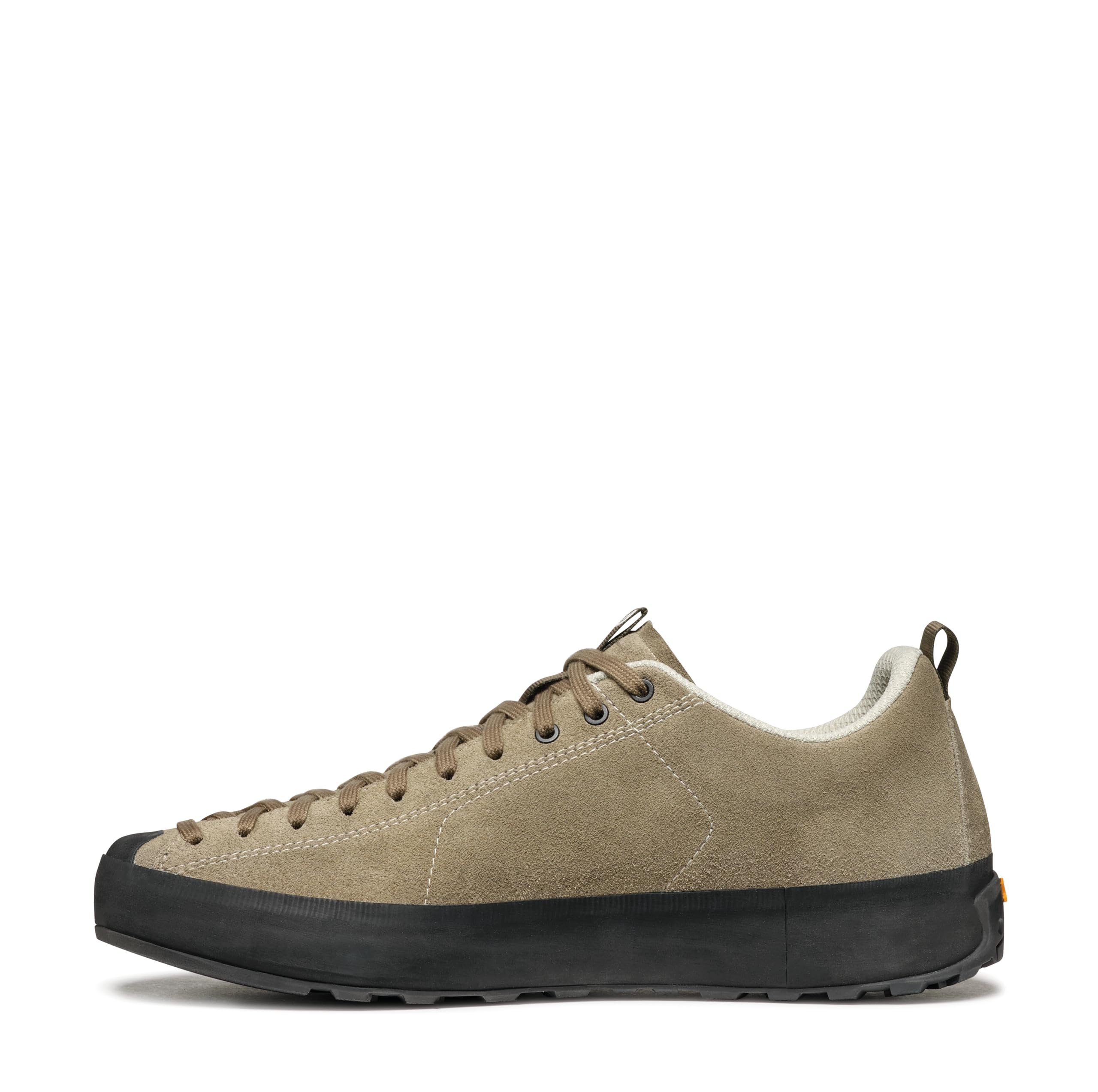
The SCARPA Mojito Wrap blends classic suede styling with genuine approach-shoe performance. The one-piece suede upper requires almost no break-in, and the wide last provides generous toe room for all-day comfort. The SuperGum rubber outsole offers reliable dry-rock grip, though it falters on wet surfaces compared to dedicated Megagrip compounds.
At 11.3 ounces per shoe, the Mojito Wrap is light enough for packing on international trips yet protective enough for moderate trails. The full rubber rand shields the suede from abrasion during scrambles, and the balanced midsole strikes a middle ground between cushion for walking and sensitivity for low-angle climbing.
The wet-grip performance is noticeably weaker than competitors, and the “Dark Rock” color may appear different from product images. For travelers who prioritize comfort and style over technical climbing performance, this is the top pick.
Why it’s great
- Zero break-in with soft suede construction
- Wide, foot-friendly last reduces fatigue
- Versatile enough for urban and trail wear
Good to know
- Subpar wet-rock traction
- Not rigid enough for technical climbing edges
3. ASOLO Space GV
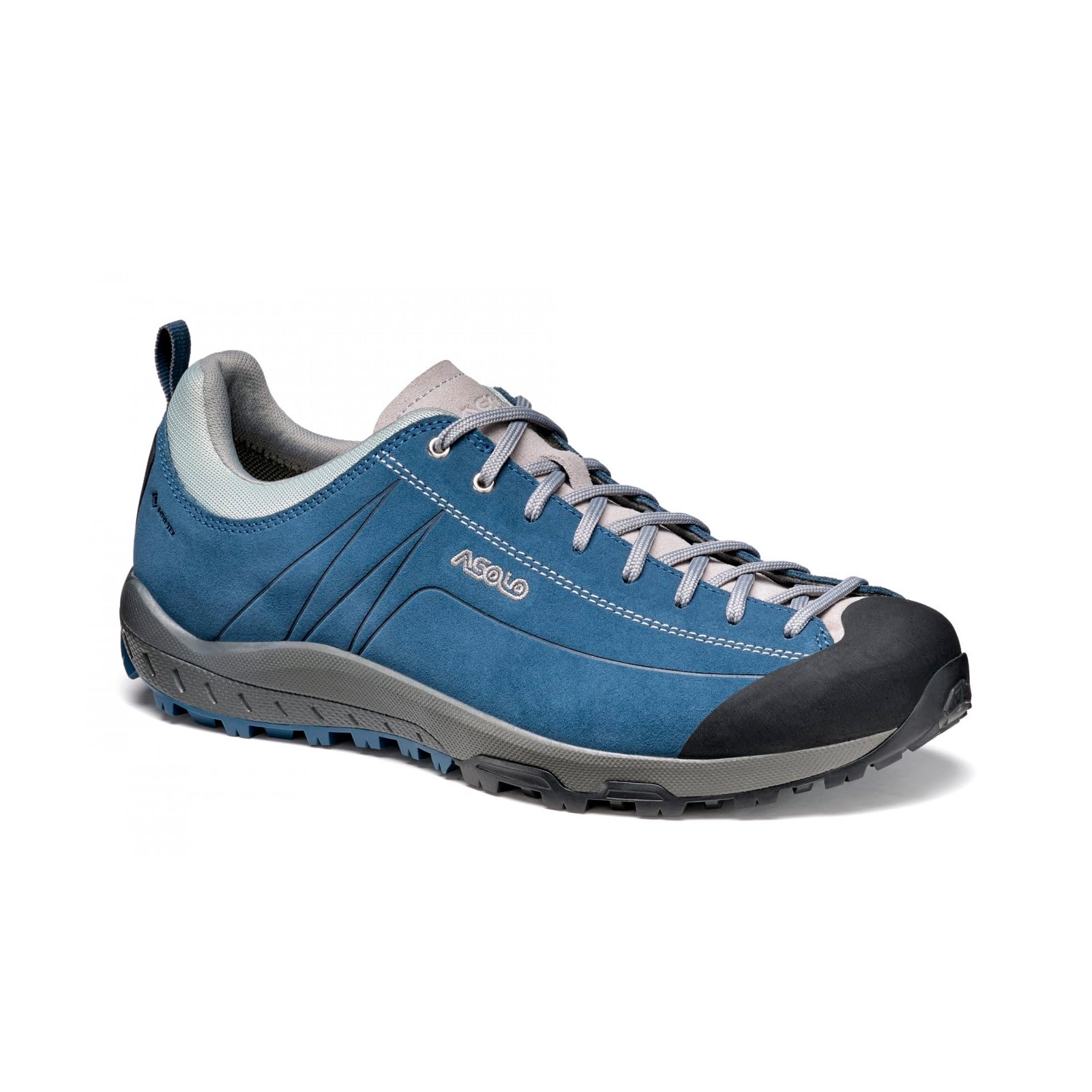
The ASOLO Space GV brings technical hiking boot DNA into a low-profile approach shoe. The suede upper is reinforced with a Gore-Tex lining that keeps feet dry in wet brush and light rain, while the stiff midsole provides exceptional support for carrying loads on uneven terrain. The rubber outsole uses a grippy compound suitable for moderate scrambling.
Runners with narrow feet will appreciate the precise heel fit and the extended lacing system that reaches to the toes, allowing micro-adjustments for heel lock. The stiff platform excels on sharp, rocky trails where underfoot protection matters more than ground feel. Several users report exceeding 500 miles on a single pair.
The Space GV runs narrow and the stock insoles are thin, requiring replacement for full comfort. The stiffness can feel harsh on long paved approaches, and the Gore-Tex lining reduces breathability in hot conditions.
Why it’s great
- Gore-Tex waterproofing handles wet terrain
- Stiff midsole supports heavy packs
- Extended toe lacing for precise fit
Good to know
- Narrow fit limits wide-foot users
- Stock insoles are cheap and need replacement
4. SCARPA Crux
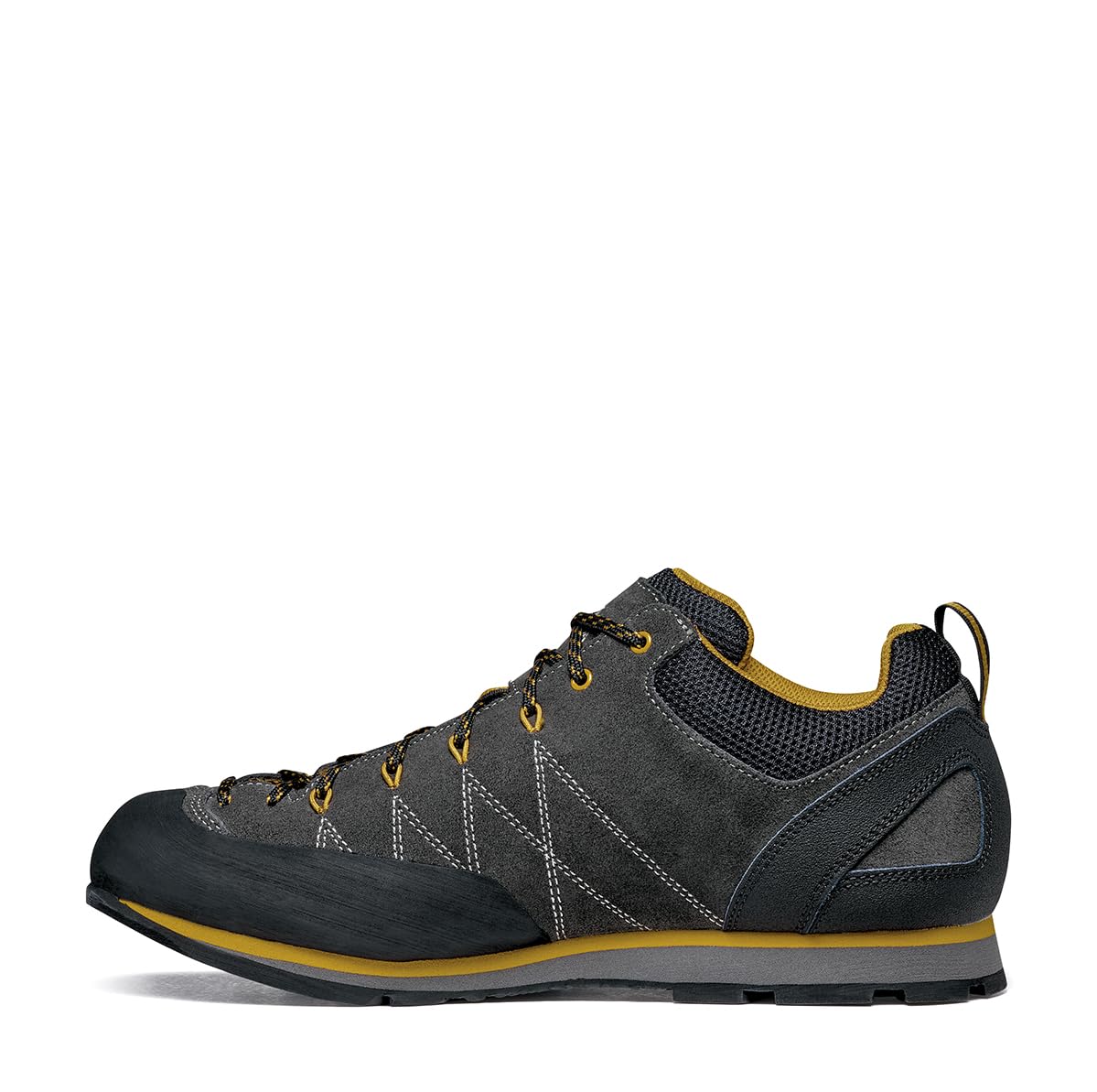
The SCARPA Crux is purpose-built for the approach climber who needs precise edging and smearing on boulders and short technical sections. The PRESA APR-01 outsole uses SuperGum rubber—a soft compound that delivers outstanding friction on dry granite and sandstone. The 2D EVA-CM midsole provides enough stiffness for confident edging without sacrificing sensitivity.
The 1.8 mm suede upper is durable enough for rough talus while remaining light enough for approaches that include running or fast hiking. The heel stabilizer and rubber toe cap add protection for toe-hooks and kick-stepping. Users praise the Crux as the most climbing-like approach shoe available, with many reporting it as their go-to for bouldering circuits.
The soft SuperGum rubber wears faster than harder compounds, and the shoe lacks any waterproofing. Sizing runs true to length but the last is medium-volume; wide-footed users may find the toe box constricting over long distances.
Why it’s great
- SuperGum rubber offers exceptional dry grip
- Climbing-shoe precision for smearing and edging
- Reinforced toe cap for toe-hooks
Good to know
- Soft rubber wears quickly on abrasive rock
- No waterproofing, limited wet performance
5. New Balance Fresh Foam X Hierro V9
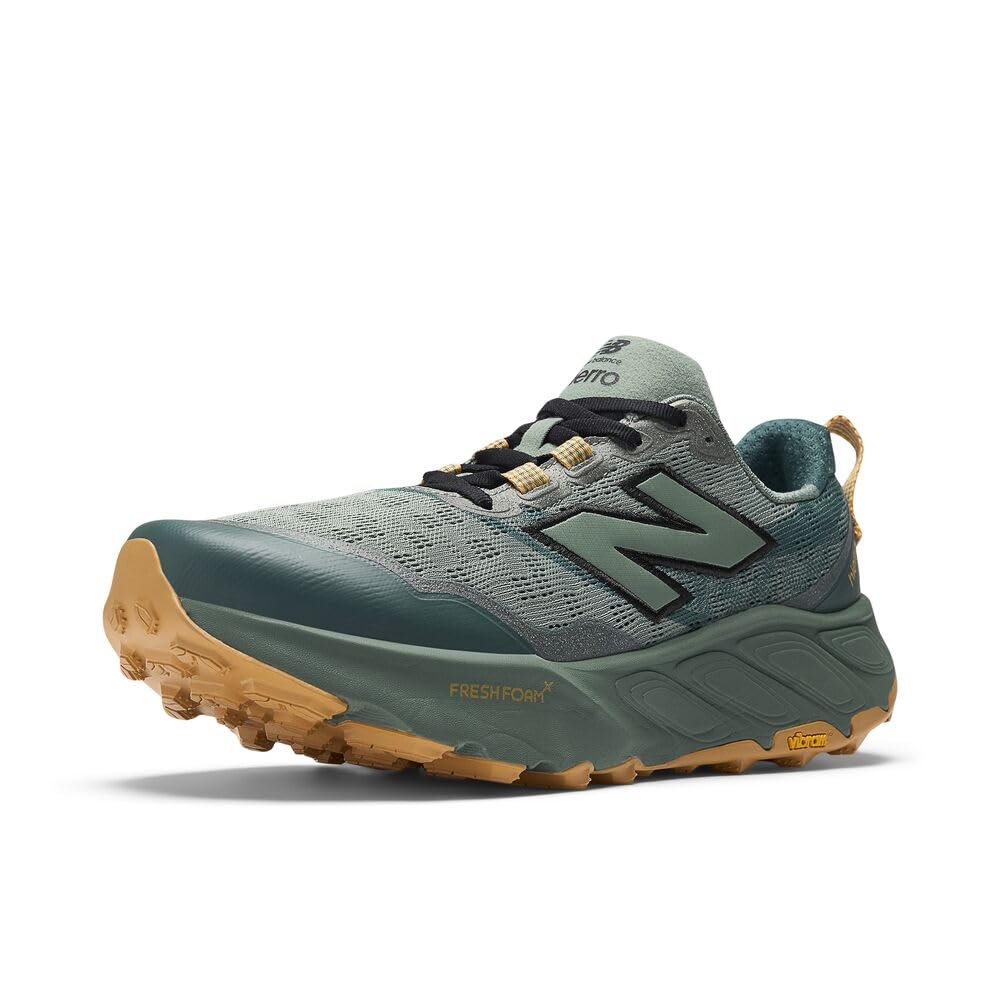
The New Balance Fresh Foam X Hierro V9 leans heavily into cushioning, making it the most comfortable choice for long, pounding approaches where every step matters. The dual-density Fresh Foam X midsole absorbs shock exceptionally well, while the Vibram Megagrip outsole with 6 mm lugs provides reliable traction on loose dirt and wet rock. The Toe Protect technology shields against sharp trail debris.
The breathable knit upper with a gusseted tongue keeps out sand and small pebbles, and the shoe fits like a trail runner with a generous toe box. Reviewers consistently report excellent grip and plush comfort, but note that the shoe runs short—ordering half a size up is necessary. The cushioning, while luxurious for hiking, reduces ground feel for technical climbing moves.
Some users with wide feet find the toe box tight on the sides after long runs. The shoe is also heavy for a trail runner at 2.1 pounds per pair, which discourages fast, light movement on technical ridges.
Why it’s great
- Exceptional shock absorption for long days
- Vibram Megagrip with deep lugs for loose terrain
- Breathable knit upper keeps debris out
Good to know
- Runs short; size up half a size
- Limited ground feel for technical climbing
6. Salewa Mountain Trainer Lite
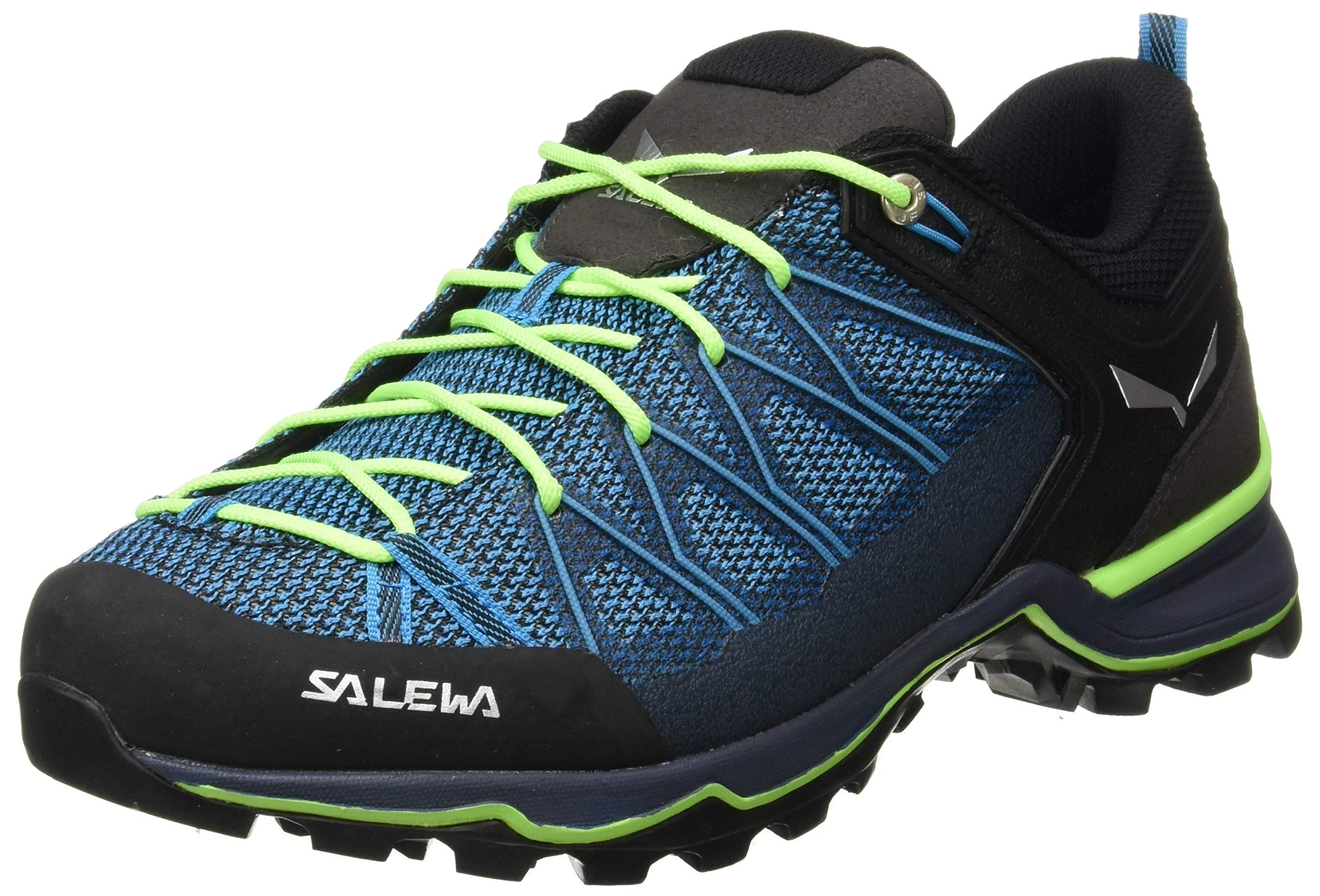
The Salewa Mountain Trainer Lite is engineered for alpine terrain where durability and grip are non-negotiable. The Pomoca rubber outsole features deep, aggressive lugs that handle mud, scree, and wet alpine rock with confidence. The 3F System connects the lacing, sole, and heel for lateral support during uneven traverses, and the climbing lacing extends to the toe for precise fit on technical steps.
The stiff midfoot with a flexible forefoot allows quick movement on rough terrain while providing enough rigidity for edging on small footholds. The textile upper is robust yet breathable, and the rubber toe cap protects against rock strikes. Users report no break-in period and blister-free comfort even on 10-mile days.
The shoe is heavier than dedicated approach models, making it less suitable for fast-and-light missions. The fit is medium-volume; users with wide feet may find the toe box snug, and some dislike the bright orange colorway.
Why it’s great
- Aggressive Pomoca outsole grips alpine terrain
- 3F System provides ankle and heel stability
- No break-in needed; blister-free out of box
Good to know
- Heavy for fast and light missions
- Color may not appeal to all; predominantly bright orange
7. KEEN Jasper
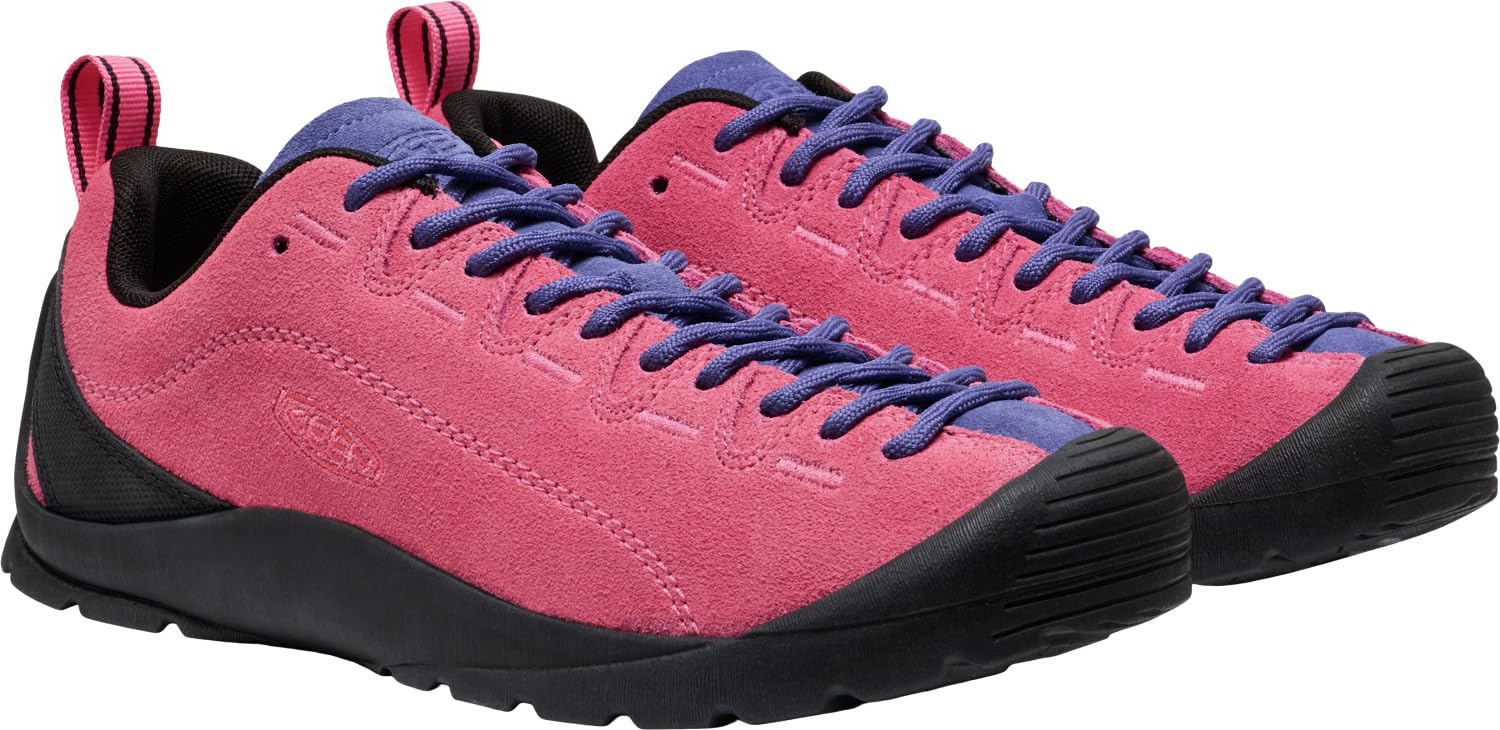
The KEEN Jasper is a lifestyle sneaker with approach-shoe styling, designed for light trails, travel, and everyday wear rather than technical climbing. The cork-infused footbed conforms to the foot over time, providing comfortable arch support for casual walking. The non-marking rubber outsole offers decent traction on pavement and packed dirt but lacks the stickiness needed for scrambling on rock.
The suede upper is durable and stylish, making the Jasper a passable choice for après-hike social settings. The Contoured Fit last provides a more secure heel hold than typical KEEN footwear, though reviewers note the shoe runs large and may require sizing down. The moisture-wicking lining keeps feet dry in mild conditions.
This is not a shoe for technical climbing. The tread is shallow and the rubber compound lacks grip on steep, rocky sections. Users looking for genuine approach-shoe performance should look at models with Vibram Megagrip or similar compounds.
Why it’s great
- Comfortable cork footbed molds to foot
- Stylish suede design transitions from trail to town
- Lightweight and easy to pack
Good to know
- Shallow tread unsuitable for technical terrain
- Runs large; many need to size down
8. Merrell Speed Strike 2

The Merrell Speed Strike 2 bridges the gap between a running shoe and a hiking boot at a budget-friendly price point. The durable outdoor mesh upper is lightweight and breathable, while the sticky trail outsole provides confident traction on dirt, gravel, and moderate rock. At 1.5 pounds per shoe, it is one of the lightest options in the mid-range category.
The fit runs slightly small, but the mesh upper breaks in after 10–15 miles to a comfortable shape. Reviewers praise the shoe for daily walking, van climbing, and light hike scrambling, noting that the grippy sole is effective on metal surfaces and low-angle slabs. The shoe is not waterproof, but the mesh drains quickly when wet.
The major drawback is inconsistent fit for some users: a few report that the left foot feels like it is falling off the sole’s edge, requiring constant repositioning. For pure hiking and light approaches, the Speed Strike 2 delivers excellent value, but technical climbers should look elsewhere.
Why it’s great
- Lightweight and breathable for warm conditions
- Grippy outsole handles low-angle rock well
- Excellent value for daily active use
Good to know
- Inconsistent internal fit for some foot shapes
- Not waterproof and limited on wet rock
9. adidas Terrex Eastrail 3
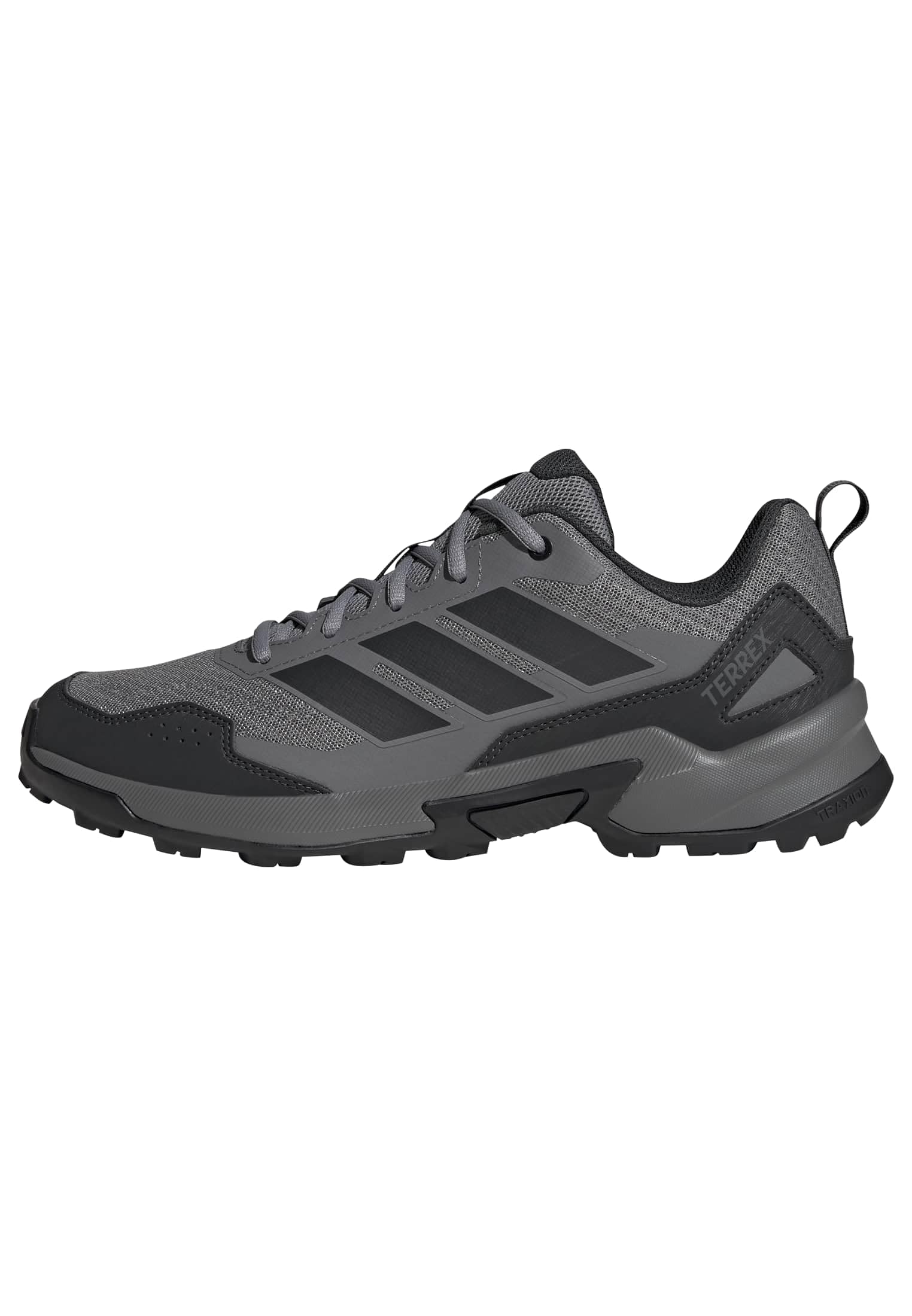
The adidas Terrex Eastrail 3 is a budget-friendly hiking shoe that covers the basics for easy to moderate trails. The lightweight mesh upper is breathable and comfortable, while the Traxion rubber outsole provides adequate traction on packed dirt and gravel. The EVA midsole offers reasonable cushioning for day hikes without breaking the bank.
Users consistently praise the comfort and fit straight out of the box, with many reporting that the shoe requires no break-in period. The water-resistant treatment handles light snow and drizzle, though it is not suitable for stream crossings or sustained rain. The Eastrail 3 is a popular choice for beginners and occasional hikers who want a reliable shoe without a premium price tag.
The outsole lacks the aggressive tread or sticky rubber needed for technical scrambling or wet rock. The shoe also lacks the precision fit and toe protection of dedicated approach shoes. For serious climbers or those tackling rocky terrain, upgrading to a model with Vibram Megagrip is worth the investment.
Why it’s great
- Comfortable right out of the box with no break-in
- Lightweight construction for casual day hikes
- Water-resistant treatment handles light weather
Good to know
- Limited traction on wet rock and technical terrain
- Lacks toe protection and precision fit
FAQ
What is the difference between approach shoes and hiking shoes?
Can I use approach shoes for trail running?
How should approach shoes fit?
Final Thoughts: The Verdict
For most users, the best approach shoes winner is the La Sportiva TX4 EVO because it combines the precise edging and sticky rubber needed for technical climbing with a durable, resoleable construction that multi-pitch climbers demand. If you want a shoe that excels on travel and light hiking with zero break-in, grab the SCARPA Mojito Wrap. And for cushion-heavy approaches where comfort over miles is the priority, nothing beats the New Balance Fresh Foam X Hierro V9.