
The age of frantic note-taking is over. A dedicated AI audio recorder does more than capture sound — it automatically transcribes conversations, identifies speakers, and generates structured summaries with action items. Whether you are buried in back-to-back client calls, sitting through multi-hour lectures, or conducting interviews, the right device handles the recording process so you can stay fully present.
I’m Min — the co-founder and writer behind Gadgets Feed. I’ve spent hundreds of hours analyzing the AI transcription market, comparing real-world accuracy across languages, and testing how each device handles noisy environments and speaker diarization to put together this guide.
After sorting through the latest models, I’ve identified the options that turn raw audio into actionable insights. This is the complete guide to finding the best ai audio recorder for your specific workflow.
How To Choose The Best AI Audio Recorder
Not all AI recorders are created equal. The key differentiators go beyond microphone count — they involve the intelligence layer that processes your audio after you hit stop. Here are the three factors that separate a helpful tool from a frustrating one.
Transcription Engine & Language Support
The core promise of an AI recorder is turning speech into text you can actually use. Look at the supported language count — 112 or 120+ languages indicates a mature model. More importantly, check whether the device handles real-time transcription (useful for live translation) or only post-recording processing. Accuracy claims like “up to 98%” are common, but real-world performance varies with accent and background noise.
Recording Modes: Call vs. In-Person
A dual-mode recording system uses a vibration-conduction sensor for phone calls and a standard microphone array for ambient meetings. Devices that force one mode for everything lose audio fidelity on the other side. Hardware-level switching — sliding a switch or toggling in the app — prevents muffled call audio or missed speaker separation in a conference room.
Privacy and Data Control
If you record confidential client calls, medical consultations, or legal strategy sessions, encryption standards matter. Look for AES-256 encryption, SOC 2 Type I certification, and compliance with CCPA, HIPAA, or EN 18031. Devices that process audio on-device or temporarily in the cloud and then delete it offer the strongest privacy posture. Avoid tools that store raw audio indefinitely on third-party servers.
Quick Comparison
On smaller screens, swipe sideways to see the full table.
| Model | Category | Best For | Key Spec | Amazon |
|---|---|---|---|---|
| Mobvoi TicNote | Premium | Multi-speaker meetings with voiceprint ID | 64 GB / 25h battery | Amazon |
| Plaud Note | Premium | Ultra-thin design for daily carry | 64 GB / 30h battery | Amazon |
| Plaud NotePin S | Premium | Wearable hands-free recording | 64 GB / 20h battery | Amazon |
| RecDot Earbuds | Mid-Range | Discreet earbud form factor with ANC | 48dB ANC / 36h case | Amazon |
| Pocket AI Recorder | Mid-Range | MagSafe attachment & smart Q&A | 64 GB / 4-day battery | Amazon |
| Comulytic Note Pro | Mid-Range | Unlimited free transcription starter plan | 64 GB / 45h battery | Amazon |
| Soundcore Work | Budget | Coin-sized clip-on with MFi certification | 8 GB / 8h battery | Amazon |
In‑Depth Reviews
1. Mobvoi TicNote AI Voice Recorder
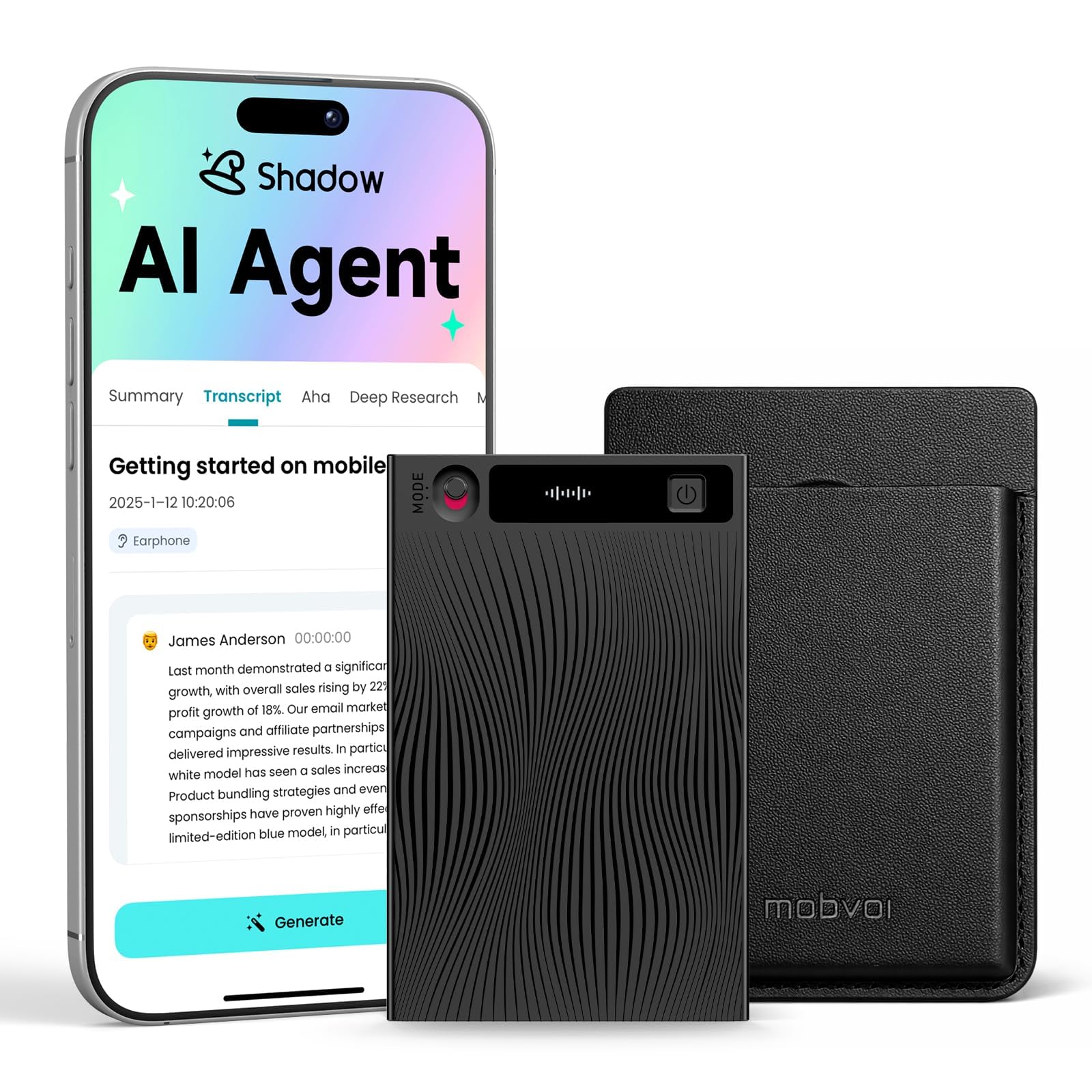
The Mobvoi TicNote earns the top spot because it packs industry-specific AI templates for legal, sales, and medical scenarios into a credit-card-sized body. Its hardware-level dual-mode recording — slide up for calls using a vibration-conduction sensor, slide down for meetings — ensures crisp audio whether you are on a phone con or recording a room. The three-microphone array records at 1536 kbps, capturing voices up to 10 meters away.
The built-in voiceprint identification is a standout feature. After labeling a speaker once, the device retains their voiceprint for future recordings, eliminating the manual sorting that plagues other recorders. This is a massive time-saver for recurring team meetings or multi-interview projects where you need to know who said what without guesswork.
With 25 hours of continuous recording, magnetic Type-C charging that reaches full in 1.5 hours, and 64 GB of local storage, the TicNote is built for all-day professional use. The free Standard Plan delivers 600 minutes per month of full AI processing — summaries, mind maps, and translation — with no subscription string attached. The only catch is the lack of a headphone jack for live monitoring.
Why it’s great
- Voiceprint ID remembers speakers across sessions
- 25-hour battery with 1.5-hour full charge
- Includes 600 free AI minutes per month
Good to know
- No headphone jack for real-time monitoring
- OLED display is small for reading detailed info
2. Plaud Note AI Voice Recorder
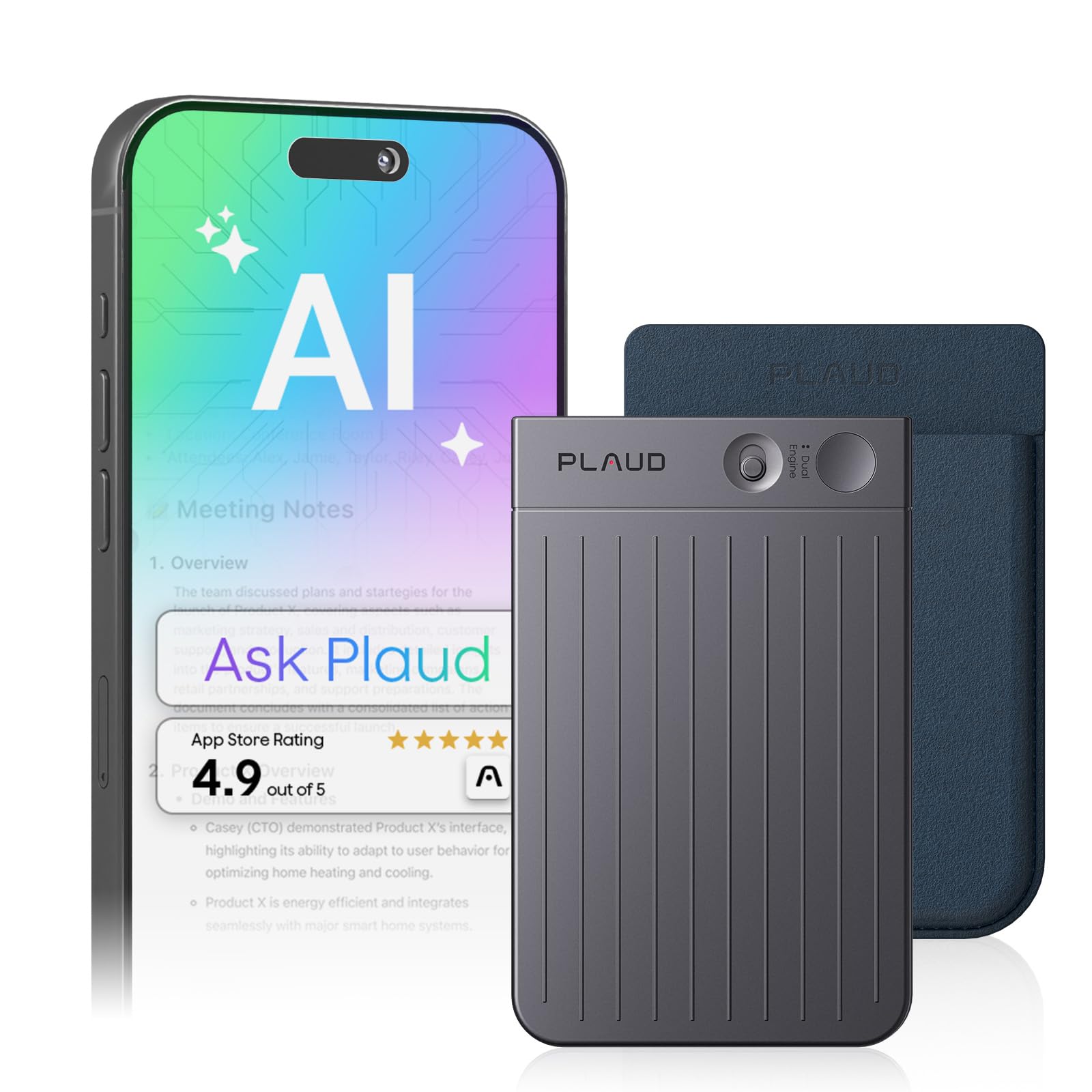
The Plaud Note is the world’s thinnest AI note taker at just 0.12 inches and 1.06 ounces — roughly the size of a credit card. It packs a triple threat of LLMs (GPT-5.5, Claude Sonnet 4.6, Gemini 3.1 Pro) to transform raw audio into structured insights. The device supports 112 languages and offers over 10,000 professional templates for generating mind maps and to-do lists.
Audio capture is handled by a dual-mode system: a standard microphone for ambient meetings and a Vibration Conduction Sensor for phone calls. The 30-hour continuous battery and 60-day standby make it viable for week-long business trips without charging. Local storage is 64 GB, and the magnetic case doubles as a protective shell for pocket carry.
Enterprise-grade privacy compliance — ISO 27001/27701, SOC 2, HIPAA, GDPR — makes this a safe choice for legal and medical professionals. The free Starter Plan gives you 300 transcription minutes per month, which may feel limited for heavy users who will need the Pro or Unlimited plan. Some users report the app occasionally mislabels speakers in rapid back-and-forth conversations.
Why it’s great
- Incredibly thin and light for pocket carry
- Tethered to top-tier LLMs for summaries
- HIPAA and SOC 2 certified for sensitive data
Good to know
- Only 300 free minutes per month
- Speaker diarization can falter in fast group conversations
3. Plaud NotePin S AI Voice Recorder
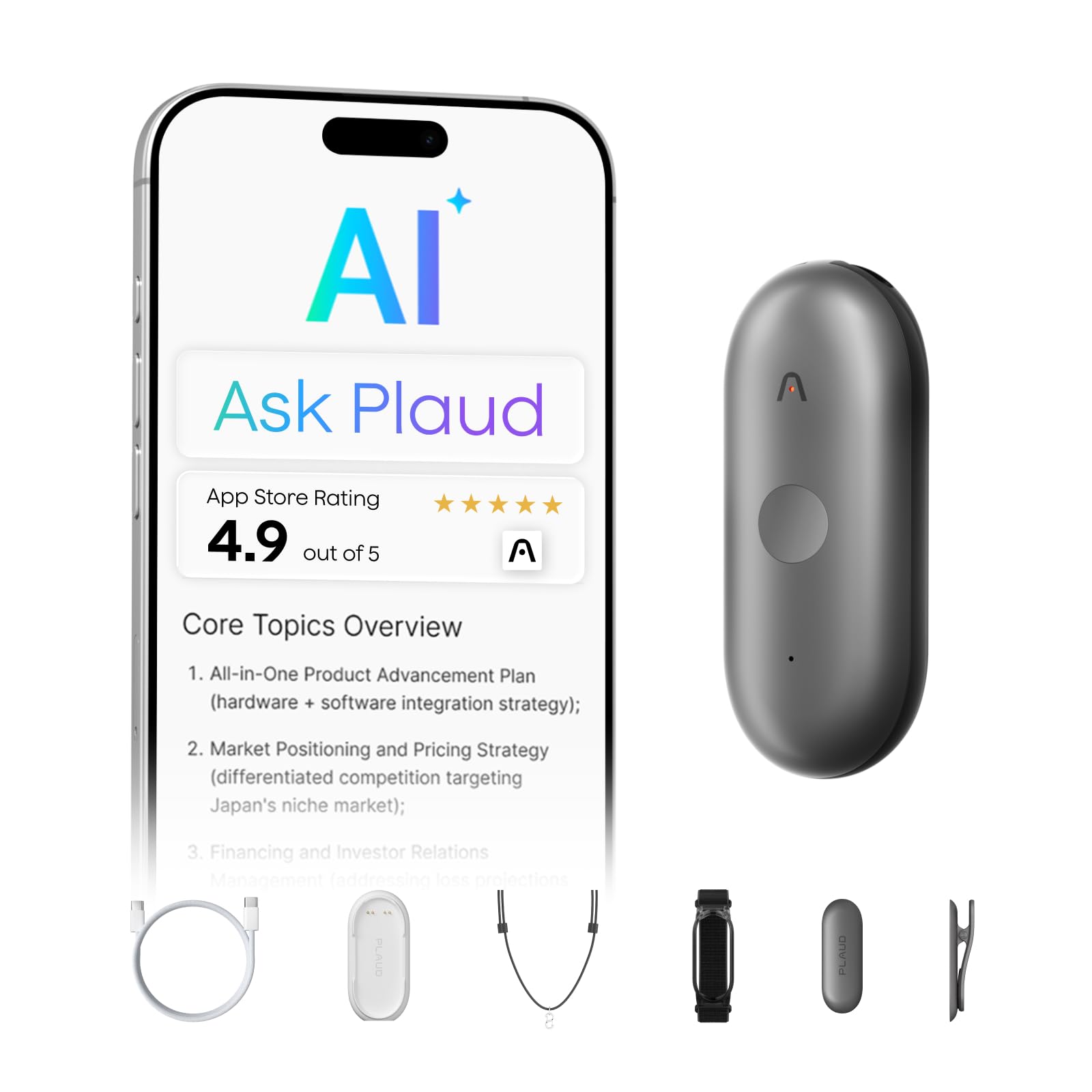
The Plaud NotePin S shifts the form factor from pocket-clip to wearable — you can wear it as a necklace, wristband, clip, or pin. It weighs only 0.61 ounces, making it nearly imperceptible during all-day wear. The dedicated physical record button provides tactile control without looking at a screen.
Like the original Plaud Note, the NotePin S uses the same LLM ecosystem (GPT-5.5, Claude Sonnet 4.6, Gemini 3.1 Pro) and supports 112 languages with multimodal input. You can type notes, add images, or tap to highlight key moments during recording.
The included accessories — magnetic pin, clip, lanyard, wristband, and charging dock — give you flexibility for different scenarios. The free Starter Plan is the same 300 minutes per month as the standard Plaud Note. The 64 GB of local storage is generous, but the subscription ceiling for unlimited transcription (/year) is a consideration for power users recording full workdays.
Why it’s great
- Four wearable configurations for hands-free capture
- Physical record button for discrete operation
- Same powerful AI engine as the Plaud Note
Good to know
- Shortest battery life of the premium picks
- Subscription needed for full feature access
4. RecDot Voice Recorder Earbuds
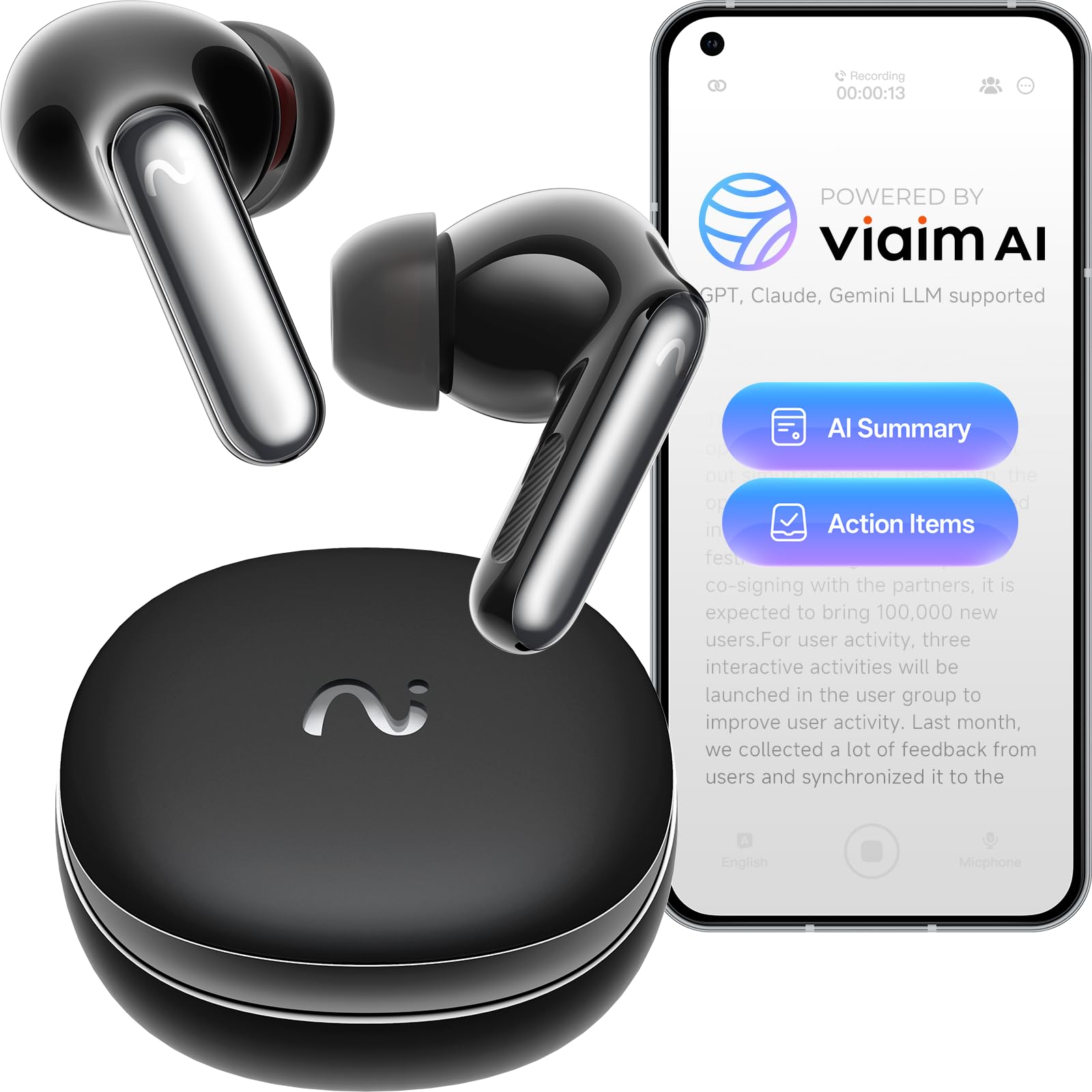
The RecDot Earbuds break the traditional recorder shape by embedding AI note-taking into true wireless earbuds with 48dB hybrid active noise cancellation. They support 78 languages and 145 dialects, with real-time transcription and live translation available through the companion app. The standout feature is FlashRecord — a single tap on the charging case’s red dot starts recording directly to the earbuds without needing a phone or app.
Each earbud stores up to 2 hours of call recordings or 1 hour of ambient recordings, and the case provides 36 hours of total battery life. The earbuds themselves weigh just 0.17 ounces each, making them comfortable for extended wear during multi-hour meetings or lectures. The free tier includes 600 transcription minutes refilled monthly, which is generous compared to the 300-minute Plaud starter plan.
The main trade-off is that transcription quality isn’t as refined as dedicated recorder units — some users report missing speaker separation in mixed-language conversations. The app can feel clunky with stuck uploads, and the FlashRecord feature requires manual syncing to free up space. For someone who wants a single device for music, calls, and note-taking, this is a compelling all-in-one.
Why it’s great
- Two devices in one: ANC earbuds + AI recorder
- FlashRecord captures audio without phone connection
- 600 free minutes refilled monthly
Good to know
- Transcription accuracy lags behind dedicated recorders
- App performance can be sluggish
5. Pocket AI Voice Recorder & Smart Assistant
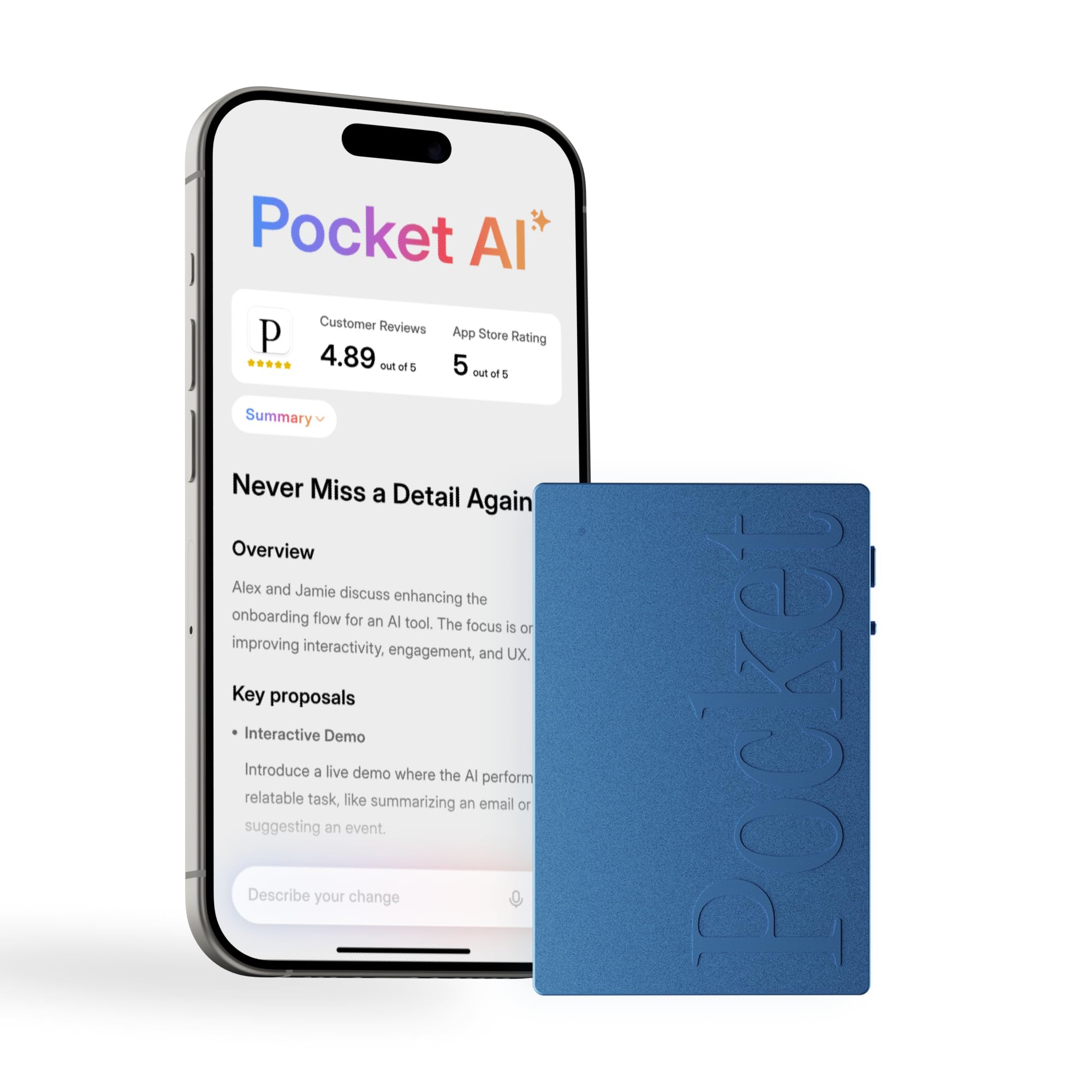
The Pocket AI Recorder differentiates itself with the “Ask Pocket” feature — an interactive Q&A layer that lets you query across your recordings. Instead of just reading a summary, you can ask “What did my wife tell me to grab at the store?” or “What were the key objections in Tuesday’s client call?” and get answers grounded in the actual audio. This turns the device into a searchable memory bank rather than a passive transcription tool.
Physically, the Pocket is MagSafe-compatible, attaching directly to the back of an iPhone or any MagSafe case for hands-free operation. The device measures 1.77 x 3.2 x 7.4 inches and stores 64 GB of audio internally. Battery life is rated at 4 days of mixed use, which is excellent for a device this compact.
The build quality is premium — reviewers compare it favorably to the Plaud Note in terms of feel and design. The included extra magnet ensures a strong hold even through thicker cases. The downside is that the core features are included out of the box, but advanced tools require an optional subscription. Speaker diarization is reliable, though the app can have minor initial connection hiccups.
Why it’s great
- Search-based Q&A extracts specific answers from recordings
- MagSafe attachment for easy phone integration
- Premium build and 4-day battery
Good to know
- Advanced features require subscription
- Limited to 64 GB storage with no expansion
6. Comulytic Note Pro AI Voice Recorder
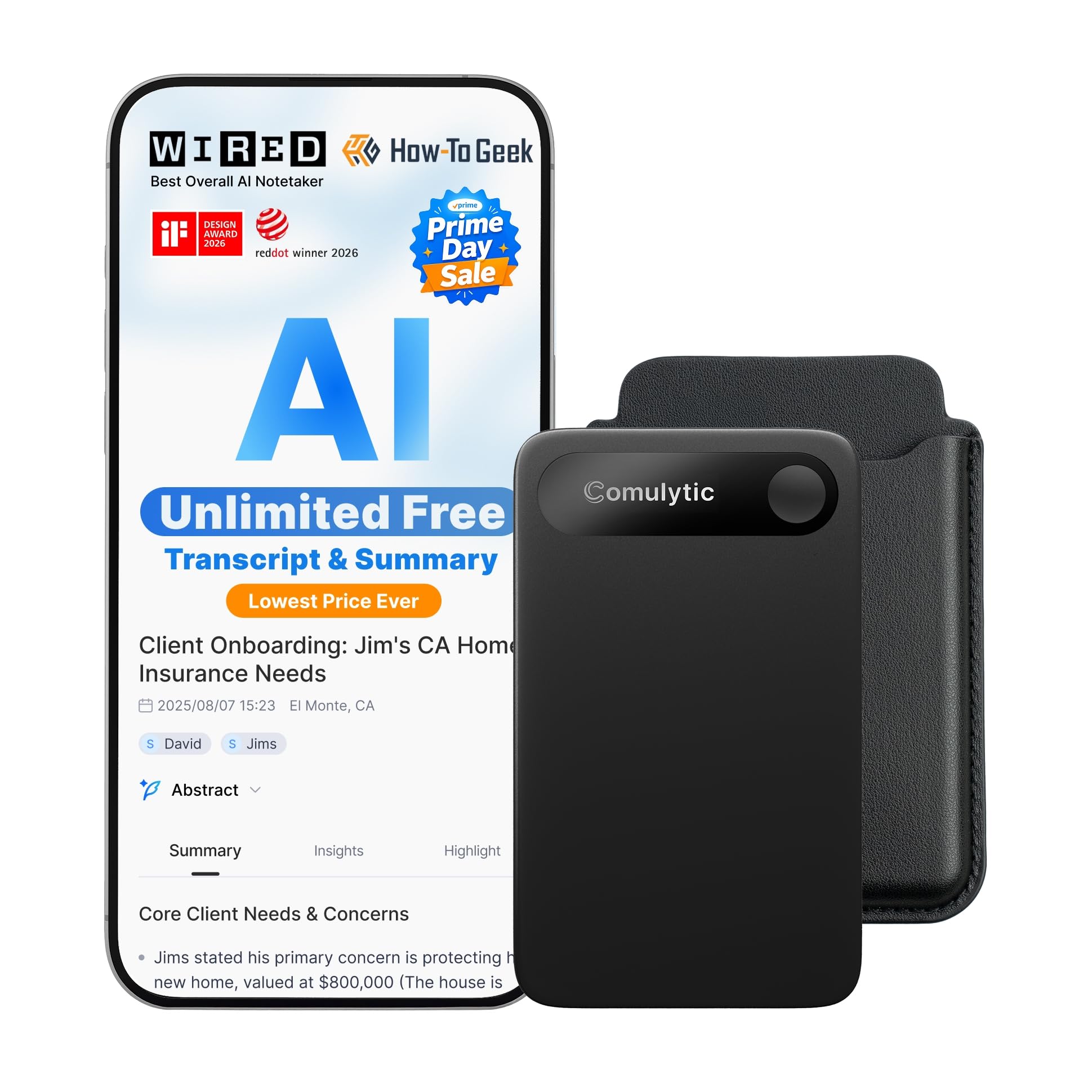
The Comulytic Note Pro is built around a Lifetime Free Starter Plan that includes unlimited transcription and basic summaries at no monthly cost — a rare value proposition in a category where most competitors cap free minutes. It supports 113 languages and claims up to 98% transcription accuracy using a vertical knowledge base tuned for specific industries like insurance sales, real estate, and legal.
The hardware is impressively slim at 3mm thick and weighs just 27.6 grams, making it one of the lightest dedicated recorders available. The 45-hour battery life tops the list, with a 90-minute full charge and 107-day standby. Dual connectivity (Wi-Fi and BLE) enables transfers up to 10x faster than Bluetooth alone, and the 64 GB local storage can hold extensive recordings.
The triple-mic array with AI noise reduction captures clear audio within 5 meters. The Corning Gorilla Glass-protected display shows recording status at a glance. While the unlimited free plan is generous, upgrading to the Premium Plan (/month) unlocks advanced features like Deep Dive Analysis and the Ask Comulytic Assistant. Some users report the summary feature occasionally misses nuance in complex discussions.
Why it’s great
- Unlimited free transcription with no caps
- 45-hour battery — longest in this lineup
- Industry-specific knowledge base for professionals
Good to know
- Advanced AI features locked behind paywall
- No headphone jack for live monitoring
7. Soundcore Work by Anker
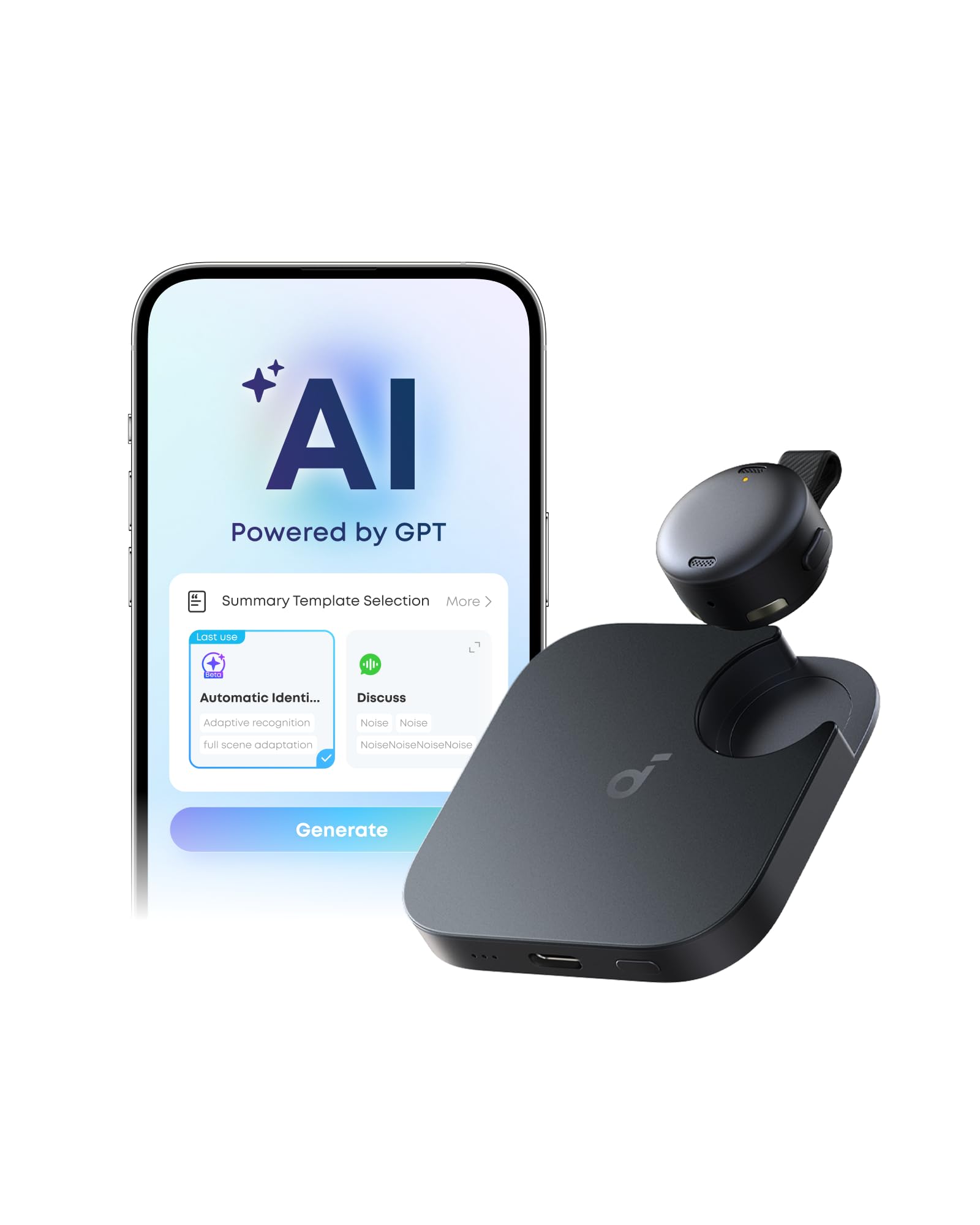
The Soundcore Work is a coin-sized AI voice recorder from Anker that weighs just 0.35 ounces — so small you can clip it to your collar, wear it as a necklace, or attach it to your phone. Despite its tiny form factor, it delivers up to 97% transcription accuracy across 150+ languages, with AI-powered speaker identification that separates who said what in meetings.
The device is MFi-certified for seamless iPhone compatibility, using an Apple-authorized chipset for stable performance. It includes 8 GB of internal storage (enough for roughly 8 hours of recording) and supports cross-meeting summaries that capture key points and action items. The built-in double-tap gesture lets you mark important moments during recording without digging through menus.
Privacy is handled with AES-256 encryption and SOC 2 Type I certification. Audio and transcriptions are stored locally by default, with cloud processing only during transcription requests and permanent deletion afterward. The main limitation is the 8 GB storage — less than one-eighth of the 64 GB competitors offer — and the need for a subscription (/month Pro or /year Unlimited) for more than basic features. Customer reports of Bluetooth connectivity issues on some units are worth noting, though Anker’s support is generally responsive.
Why it’s great
- Extremely portable coin-sized design
- MFi-certified for Apple ecosystem
- Solid 150+ language support
Good to know
- Only 8 GB storage — far less than competitors
- Core features require paid subscription
- Some users report Bluetooth pairing issues
FAQ
Can an AI audio recorder transcribe phone calls automatically?
How many free transcription minutes do I get before paying?
What does speaker diarization mean and why does it matter?
Final Thoughts: The Verdict
For most users, the best ai audio recorder winner is the Mobvoi TicNote because it combines professional-grade voiceprint identification, a 25-hour battery, and 600 free monthly AI minutes in a slim, dual-mode package. If you want the absolute thinnest pocket device, grab the Plaud Note. And for unlimited free transcription without subscription anxiety, nothing beats the Comulytic Note Pro.