
Finding an affordable video drone that delivers stable 4K footage without breaking the bank used to mean settling for shaky, grainy, or frustratingly short flights. The sub- segment has finally matured, with brushless motors, GPS-assisted navigation, and genuine gimbal stabilization filtering down from professional models. Today’s budget-friendly drones eliminate the guesswork, letting you focus on composition instead of fighting the controls.
I’m Min — the co-founder and writer behind Gadgets Feed. I’ve spent hundreds of hours digging through technical data sheets and analyzing customer flight logs to separate genuine value from marketing hype in the compact drone space.
The deciding factor for real-world usability comes down to gimbal type and battery strategy. This guide breaks down the best options to help you pick the perfect affordable video drone for your specific needs.
How To Choose The Best Affordable Video Drone
The gap between a toy drone and a capable aerial camera is defined by three pillars: stabilization hardware, flight intelligence, and battery endurance. Understanding these core categories will save you from a frustrating purchase.
Stabilization: Gimbal vs. EIS vs. Nothing
Toy drones use digital stabilization (EIS) that crops the frame and introduces artifacts during fast motion. The real differentiator is a 3-axis mechanical gimbal — pitch, roll, and yaw motors physically counter wind and vibration. Any drone claiming “smooth footage” without a physical gimbal will produce jello-wobble instantly in a light breeze.
Weight Class and Legal Freedom
The FAA’s 249-gram exemption is a hard line. Models under this threshold require no registration and no Remote ID module. This constraint forces manufacturers into smaller batteries and lighter camera sensors. Some trade battery life for legal simplicity; others pack premium hardware into a sub-250g frame. If you fly recreationally, the “under 249g” models offer significantly less hassle.
Battery Strategy: Capacity and Charging Infrastructure
Three batteries at 20 minutes each (60 minutes total) is more useful than one battery lasting 35 minutes with a six-hour recharge. Look at bundle counts and charging hub wattage. A 60W parallel charger that refuels three packs in 1.3 hours is a game-changer for consecutive shoots.
Quick Comparison
On smaller screens, swipe sideways to see the full table.
| Model | Category | Best For | Key Spec | Amazon |
|---|---|---|---|---|
| Potensic ATOM | Premium | Best Overall Value | 3-axis gimbal + Sony sensor | Amazon |
| DJI Flip | Premium | Pro-Level Beginner | 1/1.3″ CMOS, 4K/60fps HDR | Amazon |
| Ruko F13PRVR8 | Premium | Long flight sessions | 96-min total (3 batteries) | Amazon |
| Bwine F7MINI | Premium | Built-in screen controller | 5.5″ touchscreen remote | Amazon |
| HOVERAir X1 | Premium | Hands-free self flying | 125g, palm launch/track | Amazon |
| DJI Neo | Mid-Range | Ultra-light follow-me | 135g, controller-free | Amazon |
| Gleesfun G11PRO | Mid-Range | 3-axis at mid price | 3-axis brushless gimbal | Amazon |
| Punieayi GPS Drone | Mid-Range | Built-in screen simplicity | 5-inch LCD remote screen | Amazon |
| REDRIE HK33 | Budget | Entry-level value | 2-axis gimbal, 4K camera | Amazon |
In‑Depth Reviews
1. Potensic ATOM 4K GPS Drone

The Potensic ATOM strikes an almost unfair balance for its price tier. It packs a genuine 3-axis brushless gimbal married to a 12MP Sony CMOS sensor, delivering 4K/30fps footage with the kind of horizon-locked stability usually reserved for drones costing twice as much. The sub-249g frame means no FAA registration, and the Fly More Combo includes three 2230mAh batteries for a combined 96-minute ceiling.
PixSync 3.0 transmission stretches to a claimed 6km (20,000ft), though real-world range sits closer to 2.5-3km in suburban environments. The visual tracking and QuickShots modes — Pull-Away, Rocket, Circle, Spiral, and Boomerang — operate reliably and are genuinely usable for solo content creation. The parallel charging hub supports 60W fast charging, refilling all three packs in roughly 1.3 hours.
The primary downside is low-light performance; the sensor struggles past golden hour, and the mechanical gimbal whirs audibly in dead silence. The Fly More package includes a 64GB microSD card and a compact carrying case, making this the most complete kit for someone who wants professional stabilization without the professional price tag.
Why it’s great
- Genuine 3-axis mechanical gimbal for butter-smooth footage
- Three-battery combo with 60W fast charging hub
- Under 249g — no FAA registration needed
- Sony CMOS sensor delivers class-leading daytime detail
Good to know
- Struggles in low light — expect noise after sunset
- Gimbal is audible in quiet environments
- Real-world range is less than the advertised 6km
2. DJI Flip Two Battery Combo
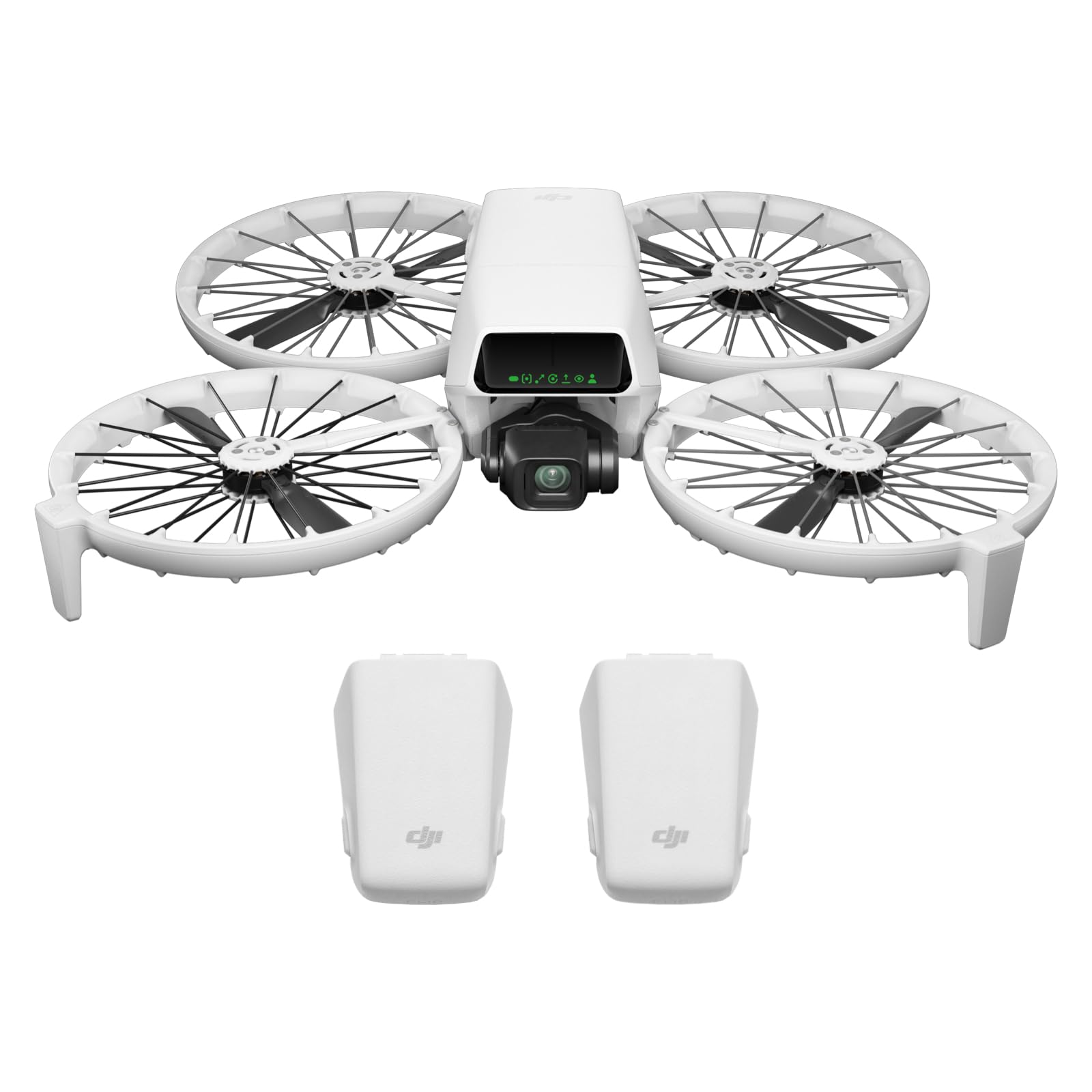
The DJI Flip is DJI’s most accessible video drone to date, and it brings the company’s signature image processing pipeline to a sub-249g package. The 1/1.3-inch CMOS sensor is substantially larger than the typical 1/2.3-inch or 1/3.2-inch sensors found in mid-range competitors, enabling genuine HDR video capture at 4K/60fps. The full-coverage carbon fiber propeller guards are a thoughtful addition for nervous first-time flyers.
The two-battery configuration provides roughly 25 minutes per pack, totaling 50 minutes of flight time. The subject tracking keeps a lock on moving targets with impressive accuracy — it handles an adult on a bicycle without losing the frame. The RC-N3 remote control is included in this configuration, delivering reliable control range in open fields.
The biggest caveat is the price: you’re paying a premium for the DJI brand and its superior sensor. The Flip also requires the DJI Fly app, which was removed from Google Play — you’ll need to sideload it from the official website. The controller-free operation mode is neat for quick selfies, but serious videographers will need the remote for precise framing.
Why it’s great
- Best-in-class 4K/60fps HDR video from a large 1/1.3″ sensor
- Full-coverage carbon fiber propeller guards for safer indoor flights
- Rock-solid subject tracking for active users
- Under 249g with no FAA registration required
Good to know
- Requires app sideloading from DJI’s website
- No remote included in basic bundle — RC-N3 sold separately
- Shorter range than DJI’s Mini series
3. Ruko Drone with 4K UHD Camera

The Ruko F13PRVR8 is designed for endurance over everything else. The three-battery kit pushes total flight time to a generous 96 minutes, and the R2 digital transmission system provides a stable real-time feed up to 20,000ft without relying on Wi-Fi. The 1/2-inch 48MP CMOS sensor captures 8K stills and 4K/30fps video, supported by a 3-axis brushless gimbal and electronic image stabilization.
The AI takeoff and landing system leverages quadruple positioning — GPS, barometric altitude hold, TOF, and optical flow — for safe launches even in semi-obstructed areas. The built-in beeper helps locate the drone if it lands out of sight, a practical feature for beginners still learning precise landing. The carrying case and accessory kit are comprehensive, including three USB cables and a screwdriver.
Ruko’s customer support is a standout — multiple reports of quick replacement for defective batteries and even a full drone replacement after a propeller failure. The joystick sensitivity is high out of the box, so new flyers should stick to the beginner speed setting until they build muscle memory. The Wi-Fi-only connection method means you must stay within direct line of sight for reliable transmission.
Why it’s great
- 96-minute total flight time with three intelligent batteries
- Quadruple positioning for precise landing and takeoff
- Excellent customer service and warranty support
- 8K photo resolution with 3-axis gimbal stabilization
Good to know
- Sensitive joysticks require careful beginner handling
- Wi-Fi transmission limits range compared to digital systems
- Some users report battery failure within first few cycles
4. Bwine F7MINI 4K Video Drone
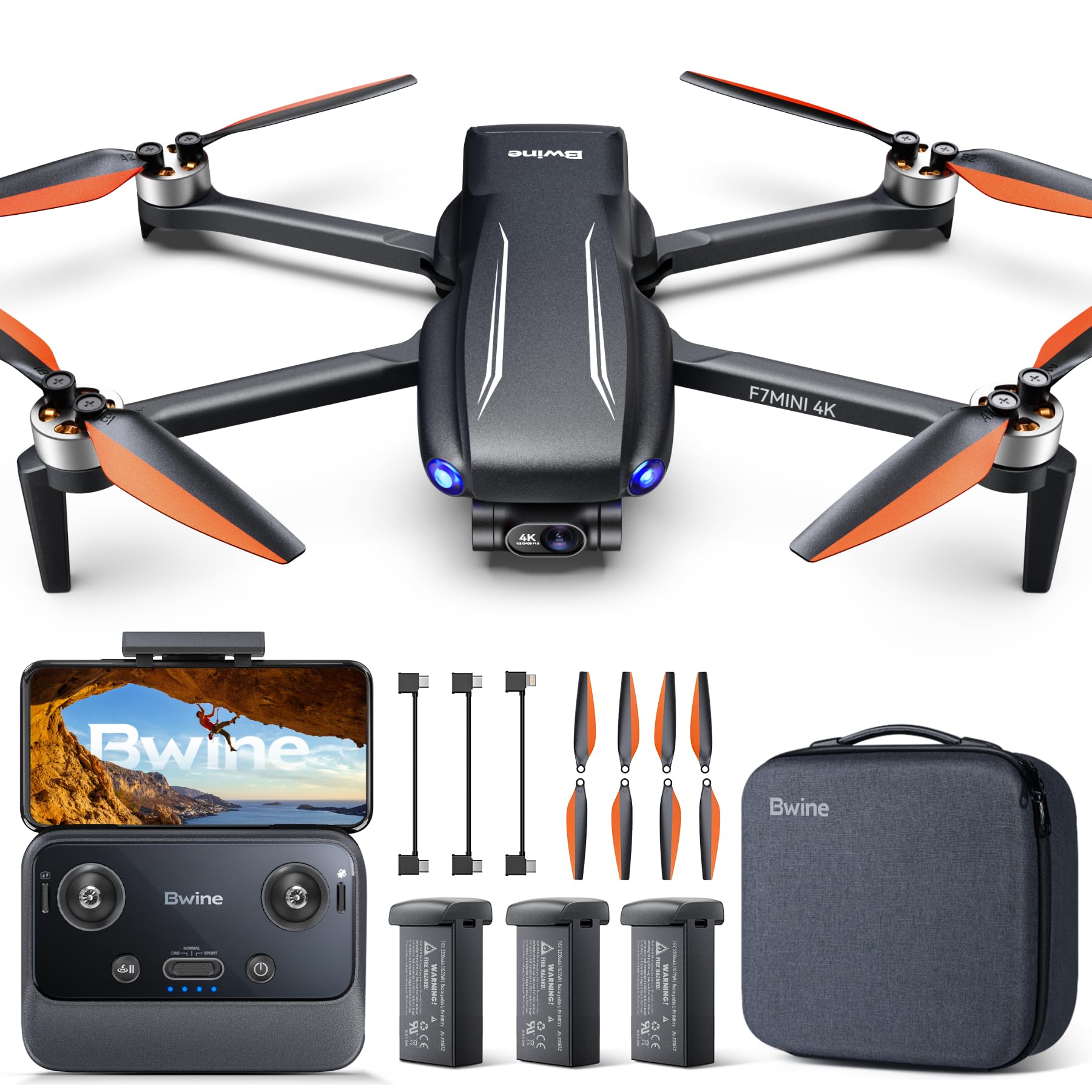
The Bwine F7MINI differentiates itself with a built-in 5.5-inch touchscreen controller, eliminating the need to tether your phone for a live view. The screen is bright enough for outdoor use and eliminates the phone battery drain that plagues app-based setups. The 48MP 1/2-inch CMOS sensor with F1.8 aperture captures detailed 8K photos and 4K/30fps video through a 3-axis stabilized gimbal.
The three-battery system delivers a combined 96 minutes of flight, with PD 3.0 fast charging support. The wired digital transmission system claims 20,000ft (6km) range with zero-latency feedback — in practice, expect about 3,000ft before signal degradation in mixed environments. Optical flow positioning enables stable indoor hovering when GPS is unavailable.
The orange-black propellers look aggressive but the drone remains under 249g, keeping it FAA-exempt. The beginner mode, three speed levels, and one-button takeoff/landing make this genuinely approachable for first-time flyers. The biggest frustration is file transfer speed: downloading footage from the controller to a phone via the app is slow, and the manual recommends using a computer instead.
Why it’s great
- Built-in 5.5″ touchscreen remote — no phone needed
- 48MP F1.8 camera with true 3-axis gimbal stabilization
- Impressive 96-minute total flight time (3 batteries)
- Fast PD 3.0 charging for quick turnaround
Good to know
- Slow app-to-phone file transfer speeds
- Built-in screen can be hard to see in direct sunlight
- Real-world transmission range shorter than claimed 6km
5. HOVERAir X1 Combo Plus

The HOVERAir X1 rethinks the drone form factor entirely. At 125 grams — lighter than most smartphones — it’s designed for palm takeoff, hands-free tracking, and automatic flight paths. There’s no remote control: operation is handled through the Hover X1 App, with pre-programmed modes like Hover, Follow, Zoom Out, Orbit, and Bird’s Eye handling the flying for you. The fully enclosed propeller guards make it safe for close-range shooting around people.
The camera captures 2.7K/30fps and 1080p HDR video with a triple stabilization system that combines EIS and gimbal-like hardware. The 32GB internal storage eliminates SD card hassles, and footage downloads over Wi-Fi to your phone or by USB-C to a computer. Two 1050mAh batteries provide roughly 22 minutes of total flight time per the Combo Plus bundle.
The trade-off for this convenience is significant: the camera quality is noticeably softer than competitors with 3-axis gimbals, and the drone struggles with wind above level 3. It refuses to fly over water reliably, and the follow speed maxes out at 15 mph — actively sprinting will beat it. This is not a cinematic tool; it’s a selfie and vlog companion for casual outdoor activities.
Why it’s great
- Ultra-light 125g design with palm launch — no controller required
- Fully enclosed safety guards for worry-free operation around people
- Intelligent tracking and pre-programmed flight paths for solo creators
- 32GB internal storage — no SD card needed
Good to know
- Video quality is soft compared to gimbal-equipped drones
- Cannot fly over water — will crash on contact
- Limited wind resistance (level 3 max); struggles in breezy conditions
6. DJI Neo Three-Battery Combo

The DJI Neo is the lightest drone in DJI’s lineup at just 135 grams, designed to be flown controller-free using palm gestures, voice commands, or the DJI Fly app. It’s a purpose-built social camera: palm takeoff, hand landing, and subject tracking that locks onto you from the moment you launch. The 4K ultra-stabilized video uses DJI’s RockSteady technology combined with level-4 wind resistance.
The three-battery combo extends total flight time to roughly 54 minutes, with a two-way charging hub that keeps spare packs ready. Full-coverage propeller guards are included and are essential for the close-quarters flying the Neo encourages. The QuickShots modes (Dronie, Circle, Helix, Boomerang, Rocket) are identical to DJI’s larger drones and produce remarkably cinematic clips automatically.
The Neo’s electronic stabilization can’t match a mechanical gimbal — you’ll see subtle cropping and warping during aggressive turns. It’s also quite loud for its size; the small high-pitched motors whine audibly. The app dependency means you must sideload DJI Fly, and the Neo’s camera lacks the detail of the larger Flip. It excels as a pocket-sized, throw-it-in-your-bag adventure camera, not a serious filmmaking tool.
Why it’s great
- 135g — the lightest DJI drone, fits in a jacket pocket
- Palm takeoff and landing with full-coverage propeller guards
- Three-battery combo for extended selfie sessions
- Pro-grade automatic QuickShots modes
Good to know
- Electronic stabilization can’t match a mechanical gimbal
- Loud whine from the small motors in quiet settings
- Requires sideloading DJI Fly app from website
7. Gleesfun G11PRO

The Gleesfun G11PRO brings a 3-axis brushless gimbal and 6K photo / 4K/30fps video capability at a mid-range price point. The GQ2.0 digital transmission system uses a wired connection — Type-C to your phone — for lag-free FPV up to 10,000ft. FAA compliance is confirmed with a QR code containing the Remote ID, a detail many sub- drones skip entirely.
The two 3200mAh batteries deliver a claimed 70 minutes total flight time, with the GL2.0 Smart Battery Management System monitoring charge cycles and adjusting charging speed for longevity. The cruise control mode maintains a steady track for hands-free cinematic recording, and the 40-piece accessory kit includes every cable (Type-C to Micro-USB, Type-C to Type-C, Type-C to Lightning) plus spare propellers and screws.
The G11PRO handles wind better than most in its class — reviewers report stable flight in 20-30 MPH gusts. The follow-me mode works adequately for a budget drone, with occasional lag on direction changes. The carrying case is well-organized with custom cutouts for each component. The biggest complaint is that FAA registration is required (the drone exceeds 250g), which adds a step for casual flyers.
Why it’s great
- True 3-axis brushless gimbal for stable 4K video
- FAA-compliant with confirmed Remote ID compatibility
- Impressively stable in windy conditions (20-30 MPH)
- Comprehensive 40-piece kit with all cables and accessories
Good to know
- Weighs more than 250g, so FAA registration is required
- Follow-me mode can lag on rapid direction changes
- Gimbal audible on quiet recordings
8. Punieayi GPS Drone with 4K Camera
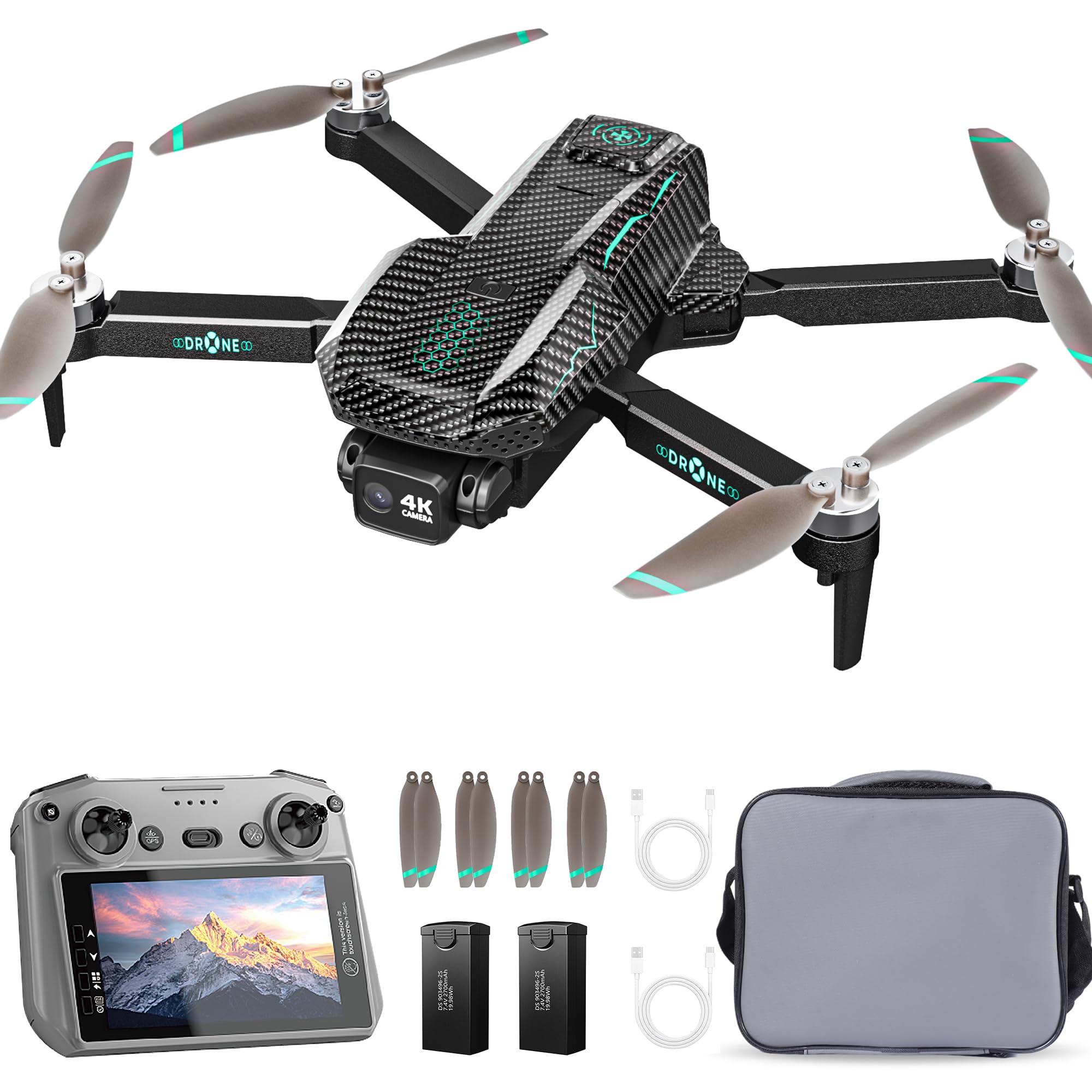
The Punieayi GPS Drone targets absolute beginners with a 5-inch non-touch LCD screen built into the remote controller, eliminating the phone-tethering step that frustrates many first-time pilots. The 90° adjustable 4K camera captures 8MP photos and video, though without any gimbal stabilization — it relies on EIS and the inherent stability of the brushless motor platform. The 238g weight keeps it under the FAA registration threshold.
Two 2700mAh batteries provide a combined 60 minutes of flight time, with the brushless motors maintaining stable operation in level-4 wind conditions. GPS functionality enables precision hovering up to 800ft altitude with automatic Return-to-Home on low battery or signal loss. The Circle Fly and Follow Me modes add basic smart functionality, though the tracking is less precise than more expensive models. An 8GB SD card is included.
The non-touch screen is responsive but not as clear as a smartphone display, and the camera quality is distinctly entry-level — colors appear washed out in overcast conditions. The drone lacks headless mode, meaning orientation awareness is mandatory for new pilots (though the strong GPS hold helps). For the price, it offers an all-in-one solution that avoids the phone-draining app headache, making it ideal for kids or casual outdoor trips.
Why it’s great
- Built-in 5-inch screen — no smartphone or app needed
- Long 60-minute total flight time with two batteries
- Lightweight 238g, no FAA registration required
- Includes 8GB SD card and carrying case
Good to know
- No mechanical gimbal — EIS footage shows wobble in wind
- Non-touch screen is less sharp than a phone display
- No headless mode — orientation skill required
9. REDRIE HK33 4K Drone
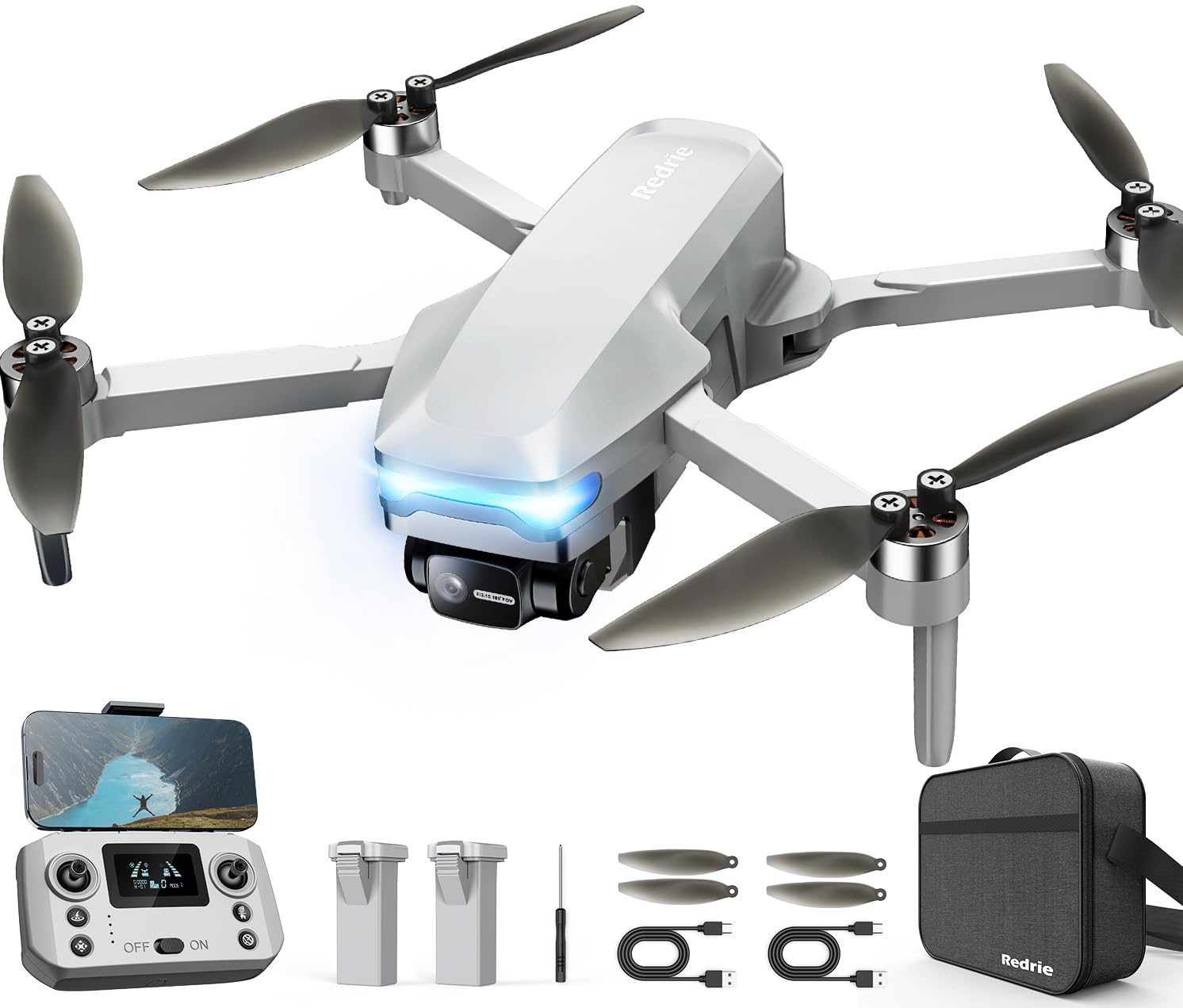
The REDRIE HK33 is the entry point for anyone wanting 4K video on a strict budget. It features a 2-axis gimbal (pitch and roll, no yaw) combined with an F2.15 aperture 110° ultra-wide lens for capturing broader scenes. The camera captures 12MP photos and 2K video (2048x1088P), though the “4K” marketing refers to photo resolution, not video — a distinction shoppers must watch for in this price tier.
The dual 1800mAh batteries provide a combined 40-45 minutes of flight, with the brushless motors delivering stability in level-5 wind conditions. GPS positioning enables auto return-to-home on low battery or signal loss, plus Follow Me and Waypoint modes. The signal repeater extends control range to a rated 500m/1640ft, though real-world performance is closer to 300m in suburban areas. The carrying case and spare propellers are welcome inclusions.
The 2-axis gimbal is a step above pure EIS but cannot fully eliminate yaw-shake during yaw movements — you’ll notice brief micro-jitters in turns. Video resolution is soft at 2K, and the phone holder on the controller is poorly designed for larger smartphones. For the price, it’s a remarkable value that includes smart features usually absent at this tier, but it’s best viewed as a practice platform before upgrading to a 3-axis system.
Why it’s great
- 2-axis gimbal provides real mechanical stabilization at a low cost
- Highly durable — survives multiple crashes without damage
- GPS with Follow Me and Waypoint smart modes
- Includes carrying case, spare props, and tools
Good to know
- Video is 2K, not true 4K — check fine print closely
- Yaw axis shakes visible during turns (no 3-axis coverage)
- Poor phone holder design for larger smartphones
FAQ
Is a 2-axis gimbal good enough for 4K video, or do I need 3-axis?
What does sub-249g mean for flying a drone without FAA registration?
Why do some drones advertise 4K but only shoot 2K video?
How long does it realistically take to charge three drone batteries between flights?
Final Thoughts: The Verdict
For most users, the best affordable video drone winner is the Potensic ATOM because it combines a true 3-axis gimbal, Sony sensor, and three-battery fast-charging system at a price that undercuts similarly equipped competitors by a wide margin. If you want DJI’s superior image processing and 4K/60fps HDR video, grab the DJI Flip. And for maximum flight time across long shoots, nothing beats the Ruko F13PRVR8 with its 96-minute battery kit.