
Utah’s high desert, red rock, sagebrush flats, and mountain fir belts demand camouflage that shifts with elevation. A pattern that disappears against Gambel oak at 6,000 feet will broadcast your silhouette against a salt flat or pinyon-juniper hillside. The wrong camo doesn’t just fail — it turns you into a walking target for the mule deer, elk, and turkey that define Utah’s hunting seasons.
I’m Min — the co-founder and writer behind Gadgets Feed. I’ve spent hundreds of hours combing through terrain-specific reviews, pattern breakdowns, and material science reports to find which camo combinations actually hold up across Utah’s three distinct biomes: the Great Basin, the Colorado Plateau, and the Rocky Mountains.
Whether you are chasing a late-season bull elk in the Uintas or setting up for early archery deer on the Wasatch Front, this guide breaks down the layering systems, quiet fabrics, and concealment patterns that earn a spot in your pack for camo for utah.
How To Choose The Best Camo For Utah
Utah’s hunting pressure and open terrain make concealment a tactical puzzle. You are not just picking a pattern — you are matching fabric weight, weather resistance, and mobility to the specific hunting style and elevation you will be working.
Match the Pattern to the Elevation Band
Below 5,000 feet you are in sagebrush, saltbush, and red dirt. Patterns heavy on tan, khaki, and faded olive work here. From 5,000 to 8,000 feet you hit the transition zone of Gambel oak, mountain mahogany, and juniper — a mix of muted green and gray-brown. Above 8,000 feet you enter spruce-fir forest where dark greens, browns, and black dominate. One suit does not cover all three bands; layering with a mid-layer top that matches your target elevation is the smart approach.
Fabric Noise and Wind Resistance
Utah’s dry air amplifies every rustle. A cotton canvas coat sounds like sandpaper rubbing against itself from 40 yards. Quiet fleece, micro-grid polyester, and brushed tricot fabrics are essential for archery and close-range rifle hunting. Wind resistance also matters: a 15 mph breeze across the West Desert cuts through cheap woven shells instantly, chilling you even if the thermometer reads 45°F.
Layering System vs. Single Suit
A single jacket-and-pants suit works for morning sits but fails on a spot-and-stalk day that swings from 28°F at dawn to 62°F by noon. A three-layer system — moisture-wicking base, insulating mid-layer, and a quiet, water-resistant shell — gives you the flexibility to strip down during the midday hike and button up for the evening glassing session. Every product in this guide fits into one of these layers.
Quick Comparison
On smaller screens, swipe sideways to see the full table.
| Model | Category | Best For | Key Spec | Amazon |
|---|---|---|---|---|
| SITKA Fanatic Hoodie | Premium Mid-Layer | Archery whitetail & elk | 16.6 oz; 93% Polyester Fleece | Amazon |
| TIDEWE Hunting Suit (Next Camo G2) | Premium Outer Layer | Late-season cold & wet | YKK zippers; water-resistant shell | Amazon |
| NEW VIEW Hunting Suit | Mid-Range Set | Tree stand & saddle hunting | Fleece lining; 15 pockets | Amazon |
| KRYDEX G3 Combat Pants | Tactical Pant | Recon & airsoft training | 4-way stretch knee panels | Amazon |
| YEVHEV Hunting Jacket | Entry Shell | Spring/fall mild weather | Water-repellent; lightweight | Amazon |
| Mossy Oak Lightweight Shirt | Base Layer Top | Warm-early season bow hunting | UPF 40+; mesh back panel | Amazon |
| AUSCAMOTEK Ghillie Poncho | Budget Ghillie | Stand hunting & wildlife photography | Breathable mesh lining; desert color | Amazon |
In‑Depth Reviews
1. SITKA Fanatic Hoodie

The SITKA Fanatic Hoodie is the finest mid-layer archery piece available for Utah’s variable temps. At 16.6 ounces in size large, the body-mapped grid fleece and micro-grid fleece work together to dump heat during a stalk and trap warmth when you go still. The half-length offset zipper lets you vent without unzipping fully, and the integrated hand muff and flip-over mitts keep your fingers agile for drawing a bow in 40°F weather.
The hood is streamlined for maximum peripheral vision — critical when you are watching a bull work a ridge at 50 yards. The built-in facemask deploys when the hood is up, cutting wind and scent dispersal thanks to Polygiene control. Users report staying warm in the 50–60°F range with just a t-shirt underneath, and comfortable down to freezing with a proper base and a lightweight shell over top.
One minor caveat: the grey trim around the hood can outline your face against dark cover, so pair it with a face paint or a separate balaclava for early-season hides where contrast kills concealment. The chest pocket is shallow for modern phones, but the thumb loops and integrated mitts more than compensate for this single oversight.
Why it’s great
- Built-in face mask and convertible mittens eliminate extra gear.
- Grid fleece regulates temp across Utah’s 30°F morning-to-noon swings.
- Peripheral-vision hood design is archery-specific and field-proven.
Good to know
- Grey hood trim can create a face silhouette against dark backgrounds.
- Chest pocket is too shallow for larger smartphones.
2. TIDEWE Hunting Clothes (Next Camo G2)
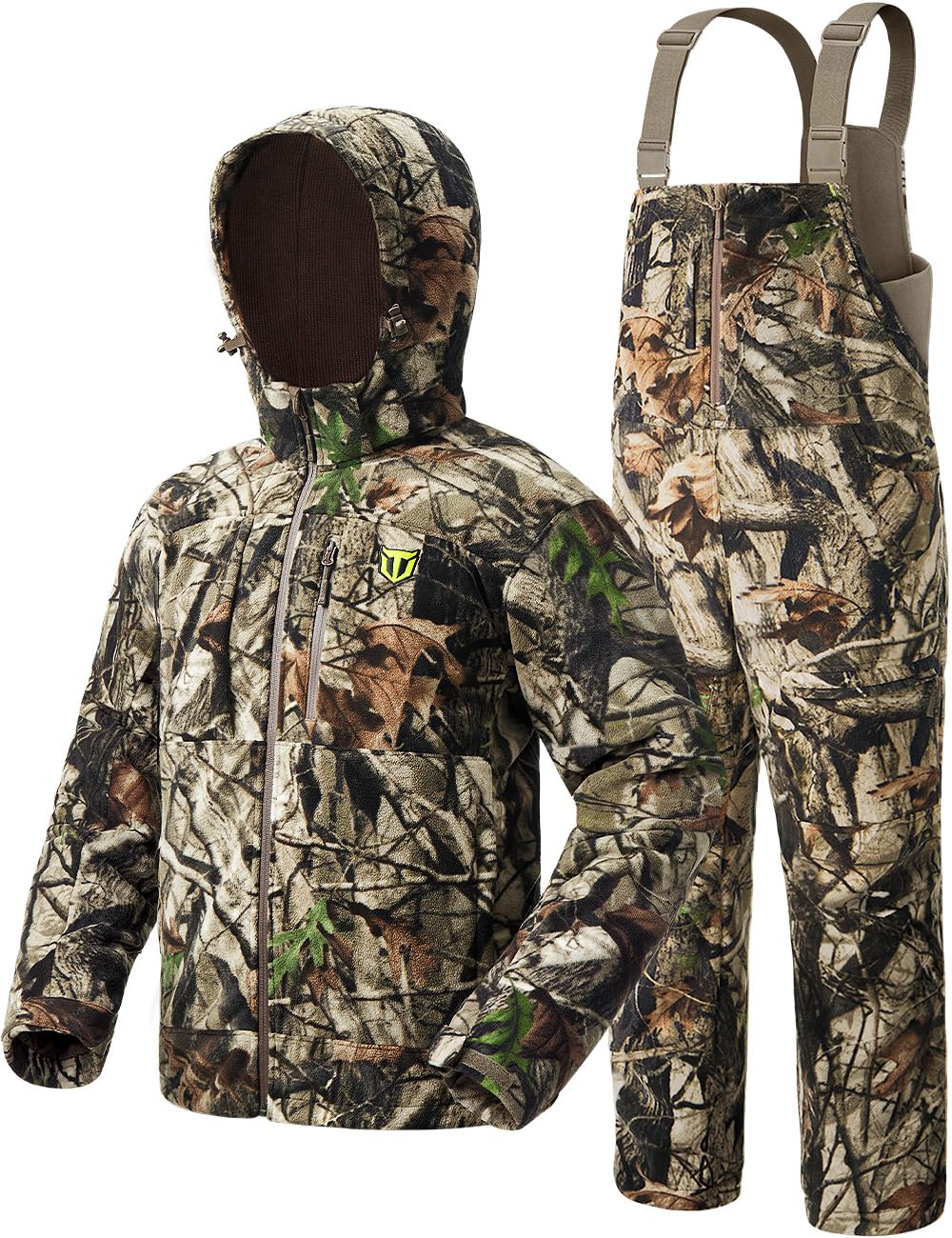
The TIDEWE jacket-and-bibs set in Next Camo G2 is built for the hunter who needs to stay dry and quiet through a week of Utah late-season weather. The shell fabric is water-resistant without the crinkle noise of a typical rain jacket, and the bibs include calf zippers for easy boot access. YKK zippers throughout give you confidence that the closure will not jam when you are pulling up the bibs at 5 AM in a headlamp.
Fit runs slightly generous, which works in your favor for layering a fleece mid-layer underneath. The XL fits a 6’4”, 240-pound frame comfortably with room for a sweater. The Next Camo G2 pattern mixes muted tan and green blocks that handle the pinyon-juniper transition zone well. Multiple pockets across the jacket and bibs — rangefinder hook, hand-warmer slots, and a pass-through pocket — keep your essential gear organized without jingling.
A few users have noted the lack of a fly on the bibs, which is inconvenient during long sits. The camo print edges are slightly soft rather than razor-sharp, giving the suit a slightly older-generation look. That said, for the money, this is the best water-resistant, quiet, warm outer-layer set available for the Wasatch and Uinta late seasons.
Why it’s great
- Water-resistant shell with near-silent fabric — no rain jacket crinkle.
- Bibs with calf zippers and generous cut for heavy layering.
- Next Camo G2 pattern works across pinyon-juniper and high desert.
Good to know
- No fly opening on the bibs — plan for quick bathroom breaks.
- Camo print edges are slightly less sharp than premium brands.
3. NEW VIEW Camo Hunting Clothes (Jacket & Pants)

NEW VIEW’s complete suit delivers a jacket, pants, and face mask in one package at a mid-range price point. The polyester shell with fleece lining traps body heat effectively for tree-stand sits, and the 15-pocket layout on the jacket keeps calls, hand warmers, and a rangefinder organized without bulging. The pants feature boot-friendly cuffs and ankle zippers, making them easy to pull on over insulated boots.
The Quiet fabric material is noticeably softer than standard polyester shells, rustling less when you brush against branches on the walk-in. Ventilated pit zips on the jacket let you cool down during the hike without fully unzipping. The pattern is a traditional reed-and-leaf camo that blends into marshy edges and dry creek bottoms — common waterfowl and early-season deer terrain in central Utah.
The fleece lining is thin enough that below-freezing temps require a thermal base layer and a heavier mid-layer underneath. Some users report the XL jacket fits snug on a 6’2”, 250-pound frame, so consider sizing up if you plan to layer heavily. The included face mask is a thoughtful bonus, though the elastic can wear out after a few washes.
Why it’s great
- Complete set with jacket, pants, and face mask included.
- 15 pockets with dedicated rangefinder hook and hand-warmer slots.
- Quiet fabric and pit zips suit both tree stands and spot-and-stalk.
Good to know
- Thin lining — not warm enough below freezing without layering.
- Jacket fit runs slightly small; consider one size up for layering.
4. KRYDEX Tactical Men’s G3 Combat Pants
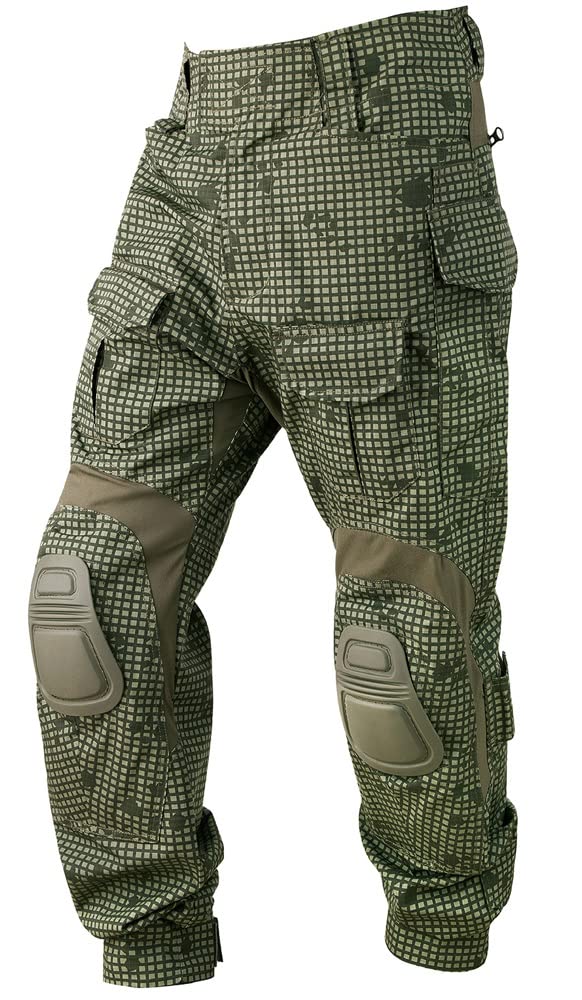
KRYDEX G3 pants bring the ergonomic knee-pad system and 4-way stretch panels found on Crye pants down to a practical price. If you are doing mid-elevation scouting or airsoft training on Utah Bureau of Land Management land, these pants give you the flexibility to kneel, crawl, and glass from a prone position without binding. The adjustable knee pad height via elastic cord and the waist hook-and-loop adjuster let you dial the fit to your exact build.
The fabric is authentic ripstop nylon with a clean Multicam pattern that blends into the Utah transition zone from 5,000 to 7,000 feet. Sizing runs Asian, meaning a 36-inch waist fits more like a 34-inch American cut — check the sizing chart carefully or order one up. The included knee pads are stiff out of the box and the hook-loop attachment discs can peel off in the wash, so hand-stitching them down after the first season is a good insurance move.
These pants are not designed for wet, cold late-season sits. They are a three-season scouting and active-hunt pant where mobility matters more than insulation. The knife pocket fits a standard Benchmade, and the cargo pockets sit low enough to not interfere with a pack waist belt.
Why it’s great
- 4-way stretch knee and crotch panels for full kneeling mobility.
- Adjustable knee pad height and waist for a custom fit.
- Durable ripstop fabric with accurate Multicam pattern.
Good to know
- Sizing runs small — measure carefully or order one size up.
- Knee pad hook-loop discs may detach in the wash; reinforce with stitching.
5. YEVHEV Hunting Jacket
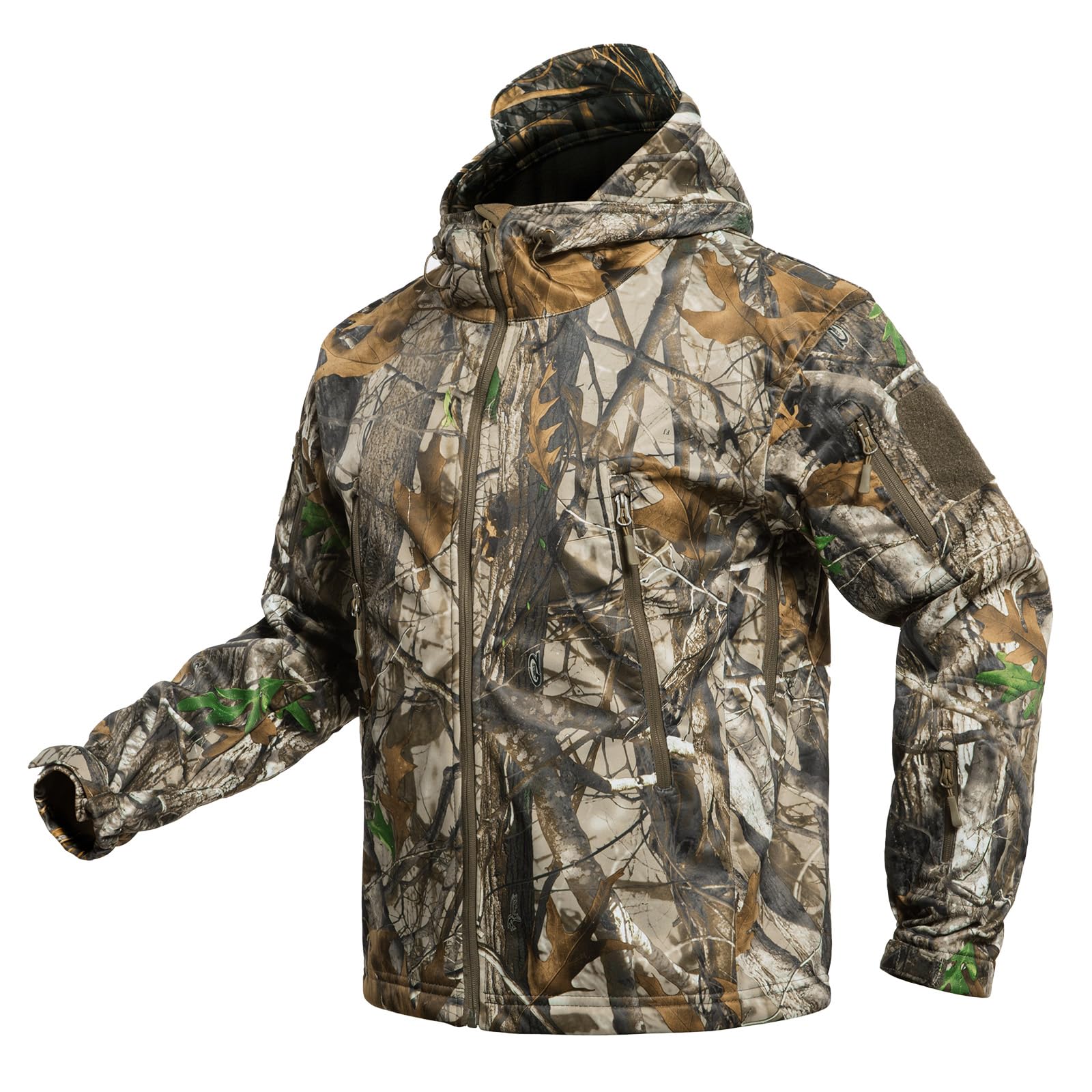
YEVHEV’s jacket is a lightweight water-repellent shell designed for Utah’s transitional seasons — early archery in August, spring turkey in April, and high-elevation scouting in late September. The material is thin enough to pack into a daypack but cuts wind effectively enough to extend a mid-afternoon glassing session when the breeze picks up across the Great Basin. It is not a heavy coat; think of it as a weather-resistant outer shell that goes over a fleece or thermal top.
The fit is generous in the shoulders, which works well for bow hunters who need a full draw without restriction. Multiple reviewers noted the jacket is ideal for moderate California-style weather, which translates to Utah’s 40–70°F days where you want sun protection and a light wind block without overheating. The high-quality inner lining material prevents the clammy feeling common in cheap rain shells.
The body length is slightly short — users who prefer a longer tail to cover the lower back when bending forward may find it rides up. It also lacks insulation, so below 40°F you must layer a heavy fleece underneath. This jacket earns its spot as a budget-friendly shell for the hunter who already owns a good mid-layer and just needs a quiet, weather-resistant outer piece.
Why it’s great
- Light and packable for day hunts with variable weather.
- Water-repellent shell with no crinkle noise.
- Generous shoulder room for unrestricted bow draw.
Good to know
- Body length is short — no extended tail for lower-back coverage.
- No insulation; requires a heavy mid-layer below 40°F.
6. Mossy Oak Men’s Lightweight Camo Shirt
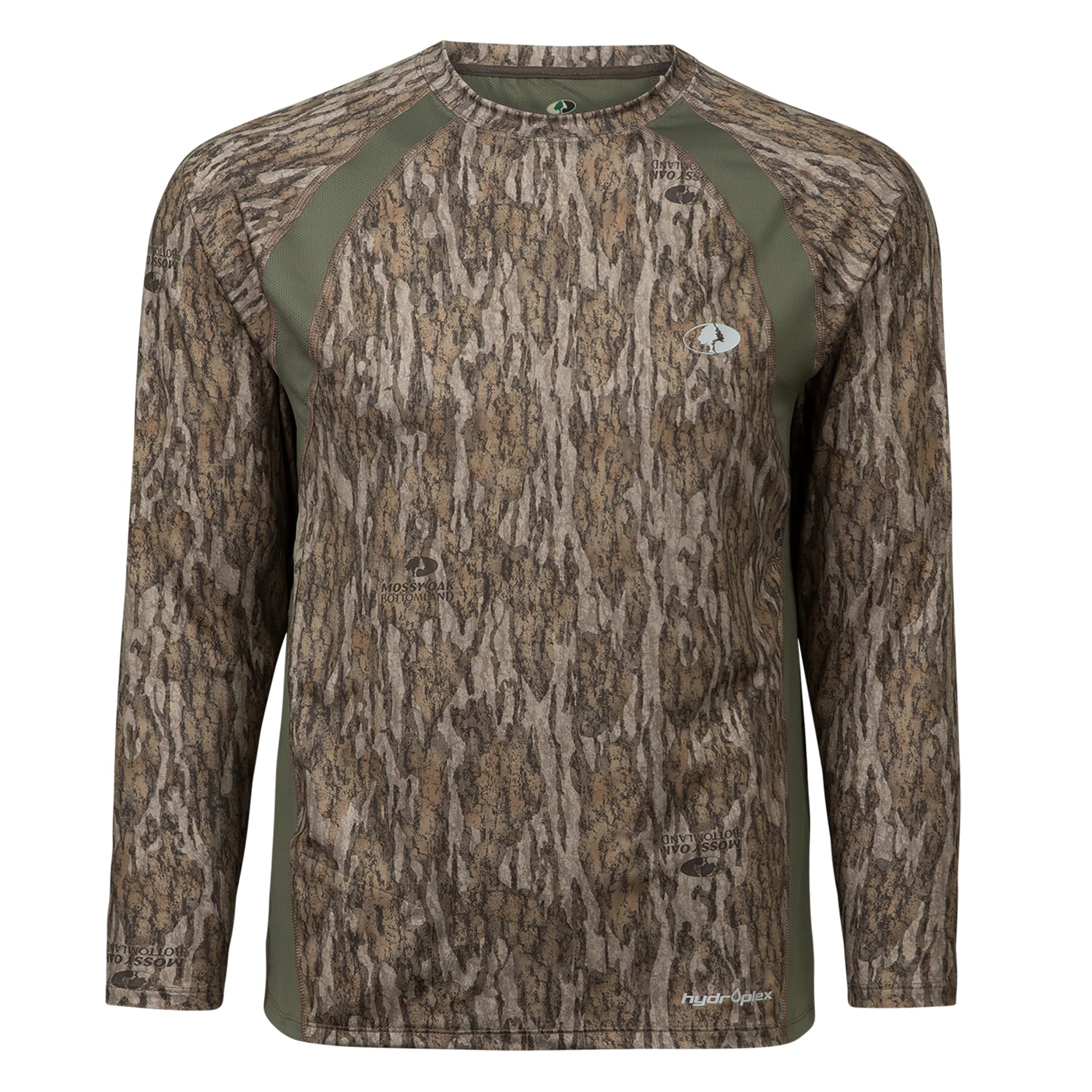
Mossy Oak’s lightweight camo shirt in Bottomland pattern is the no-brainer base layer for Utah’s September archery season. The 88% polyester, 12% elastane fabric with a mesh back panel moves moisture off your skin fast in 90°F desert heat, and the Hydroplex cooling technology chemically reduces surface temperature without washing out. The UPF 40+ rating on the main fabric and UPF 20+ on the mesh panel means you can glass ridgelines in direct sun without burning through your shirt.
The Bottomland pattern — a dense mix of browns, tans, and dark greens — is optimized for the high-desert transition zone where dead grass, sage, and dry oak leaves cover the ground. It is a traditional waterfowl pattern that translates surprisingly well to Utah’s early-season deer and turkey terrain. The shirt has a slight sheen when compared directly to matching Mossy Oak pants, but in field conditions the difference is invisible past 10 yards.
The neck opening on the XXL size is notably large, which some hunters appreciate for ventilation and others find sloppy. The shirt runs true to size and can serve as a standalone warm-weather shirt or a base layer under a jacket as temps drop. For the price, it is the most versatile and proven camo top for the Utah early-season hunter who moves a lot.
Why it’s great
- UPF 40+ sun protection with Hydroplex chemical-free cooling.
- Mesh back panel provides 30% body-temperature reduction in heat.
- Bottomland pattern matches Utah’s dry grass and sage terrain.
Good to know
- Fabric has a slight sheen compared to matching pants.
- Neck opening on larger sizes is roomy — check the fit.
7. AUSCAMOTEK Ghillie Suit Poncho

The AUSCAMOTEK ghillie poncho in desert color is a fast-deploy concealment layer for Utah jump-shooters, archers sitting water holes, and wildlife photographers. The poncho slides over your pack and body in seconds and uses realistic jute and mesh textures that break up your outline effectively at close range — users report deer at 8 yards and turkeys at 5 yards without detection. The breathable mesh lining prevents the sauna effect common in cheap ghillie suits, even during warm September afternoons.
The 4-line reinforcement stitching helps prevent the jute from shedding excessively, though some shedding is inevitable from day one. The poncho is heavyweight and insulating, so it is not a piece for a hot midday stalk — it shines during morning sits when temps are in the 40s and 50s. The generous cut covers a backpack and a chair, making it ideal for waterfowl jump-shooting along the Bear River or setting up a turkey blind on the Manti-La Sal.
The primary complaint is that the initial ghillie thread density is sparse compared to the marketing photos. Several users recommend adding 10 feet of leafy netting and half a pound of additional jute to match the thick coverage shown in the listing. Treat it as a starter platform that you can custom-thicken over time — the base mesh and stitching are durable enough to last several seasons of hard use.
Why it’s great
- Fast put-on/take-off design — covers pack and chair in seconds.
- Breathable mesh lining prevents overheating during warm sits.
- 4-line stitching reduces shedding better than budget alternatives.
Good to know
- Ghillie thread density is sparse; plan to add your own netting and jute.
- Heavy and insulating — not suitable for hot midday stalks.
FAQ
What is the best camo pattern for Utah’s red rock country?
Can I use the same camo for early archery in August and late rifle in November?
How important is quiet fabric for Utah hunting?
Final Thoughts: The Verdict
For most Utah hunters, the camo for utah winner is the SITKA Fanatic Hoodie because it delivers archery-specific mobility, static-temperature regulation across Utah’s 40°F temp swings, and integrated concealment features that eliminate extra gear from your pack. If you want a complete water-resistant outer set for late-season snow and rain, grab the TIDEWE Next Camo G2 suit. And for the budget-conscious early-season hunter covering miles of sage and oak, nothing beats the Mossy Oak Lightweight Shirt as a base layer that keeps you cool and hidden.