
Whether you are carving fire roads on a dual-sport or racking up miles on a fully loaded ADV bike, the jacket on your back is the single most important piece of gear you own. It must block the wind, shed rain, manage airflow on the highway, and carry armor that actually stays in place when you need it most. Stacking a mesh summer jacket under a separate rain shell creates bulk that restricts movement — the whole point of an adventure jacket is doing it all without the layers.
I’m Min — the co-founder and writer behind Gadgets Feed. I spend my days buried in datasheets and buyer sentiment across the entire adventure gear spectrum, cross-referencing CE armor ratings, cordura denier counts, and waterproof membrane claims to separate real-world performance from marketing gloss.
Every jacket reviewed here was selected based on its specific combination of ventilation, impact protection, weather sealing, and storage. After analyzing hundreds of hours of ride experience, here is the definitive guide to the best adventure motorcycle jacket for any rider and any budget.
How To Choose The Best Adventure Motorcycle Jacket
An adventure jacket lives at the intersection of abrasion resistance, weather versatility, and ventilation. The wrong choice leaves you either sweating through traffic or shivering on a mountain pass. These are the critical factors to weigh before clicking purchase.
Armor Certification and Placement
CE Level 1 absorbs a maximum transmitted force of 18 kN; CE Level 2 cuts that to 9 kN. Level 2 armor feels denser but offers significantly higher impact absorption. Check that the armor pockets hold the pads tight — loose armor shifts on impact and leaves you exposed. Most premium jackets come with Level 2 at the shoulders and elbows, while budget models may use Level 1 or include only foam pads.
Shell Fabric and Mesh Balance
A 600D or 1000D polyester shell provides high abrasion resistance, but zero airflow. Mesh panels let air move but offer less slide protection. The best adventure jackets zone 1000D reinforcement at the shoulders, elbows, and forearms (the impact zones) while using high-flow mesh across the chest, back, and underarms. Unlined mesh on the inner sleeve also prevents the jacket from clinging when you start sweating.
Waterproofing Strategy — Liner Versus Membrane
A zip-out waterproof liner is the most common approach. It adds weight but can be removed when the sun comes out. A bonded waterproof/breathable membrane (like Drystar or Gore-Tex) stays in place permanently, which means you do not have to stop and swap layers in the rain — but the jacket may run warmer as a result. Check whether the liner is seam-taped: untaped liners leak through the stitching after ten minutes of steady rain.
Quick Comparison
On smaller screens, swipe sideways to see the full table.
| Model | Category | Best For | Key Spec | Amazon |
|---|---|---|---|---|
| Tourmaster Ridgecrest Mesh | Mesh ADV | Maximum airflow with removable liners | 600D shell + 1000D ripstop zones | Amazon |
| Alpinestars Halo Drystar | Touring ADV | Three-season versatility with removable sleeves | Drystar membrane + removable sleeve shell | Amazon |
| KLIM Carlsbad ADV | Premium ADV | Lightweight waterproof touring | Gore-Tex Pro Shell, 4-season design | Amazon |
| Alpinestars Andes V3 Drystar | Waterproof Touring | Cold-weather and wet-riding protection | Drystar waterproof membrane | Amazon |
| KLIM Dakar Dual-Sport | Dual-Sport | Lightweight outer shell for layering | Removable sleeves, packable design | Amazon |
| MSR Xplorer ADV | Rugged ADV | Durability and D3O armor | D3O CE Level 1 armor all-around | Amazon |
| Alpinestars Zaca Air | Air Mesh | Hot-weather street riding | 3D mesh + 450D polyfabric | Amazon |
| Joe Rocket Atomic 5.0 | Textile Touring | Entry-level three-season performance | CE armor + removable insulated liner | Amazon |
| Milwaukee Leather CE Armored | Budget Mesh | Beginner-friendly or MSF course gear | Removable CE armor, mesh lining | Amazon |
In‑Depth Reviews
1. Tourmaster Ridgecrest Mesh Adventure Jacket

The Tourmaster Ridgecrest Mesh sets the gold standard for mid-range adventure jackets by combining a 600D polyester and high-flow mesh shell with 1000D honeycomb ripstop reinforcements at the shoulders, elbows, and forearms. That reinforcement zoning means abrasion resistance lands exactly where you slide — the core panels remain open for airflow. The included CE Level 2 shoulder and elbow armor represents the highest impact absorption you can get at this price tier, while the removable EVA back pad keeps weight low without sacrificing coverage.
Versatility comes from the dual-liner system: a lightweight Reissa waterproof liner for wet rides and a separate zip-out thermal vest for cold mornings. Riders report excellent airflow at highway speeds — one desert dweller noted it feels like a swamp cooler in motion. The 4-way stretch panels at the shoulders, underarms, and elbows prevent the jacket from binding when you reach for the handlebars, and the microfiber-lined collar eliminates neck chafing on all-day stints. YKK two-way zippers and snap-lock cuffs with mesh gussets add convenience.
Storage is generous with front cargo pockets, zippered hand pockets, a small-item pocket, and a rear oversized pouch. A rear zippered expansion panel lets you dial in airflow or accommodate a hydration pack. The 8-inch jacket-to-pant zipper integrates seamlessly with matching Tourmaster pants. A few buyers noted that the liners take some fiddling to install cleanly, and the snap broke on one unit during liner removal. On balance, the armor rating, shell construction, and airflow put it ahead of any jacket in its tier.
Why it’s great
- CE Level 2 armor at shoulders and elbows is rare at this price point
- Dual-liner system (waterproof + thermal) maximizes seasonal range
- 1000D ripstop zones where abrasion risk is highest
Good to know
- Liners can be fiddly to reinstall after removal
- Snap on liner pull-tab has been reported as fragile
2. Alpinestars Halo Drystar Jacket
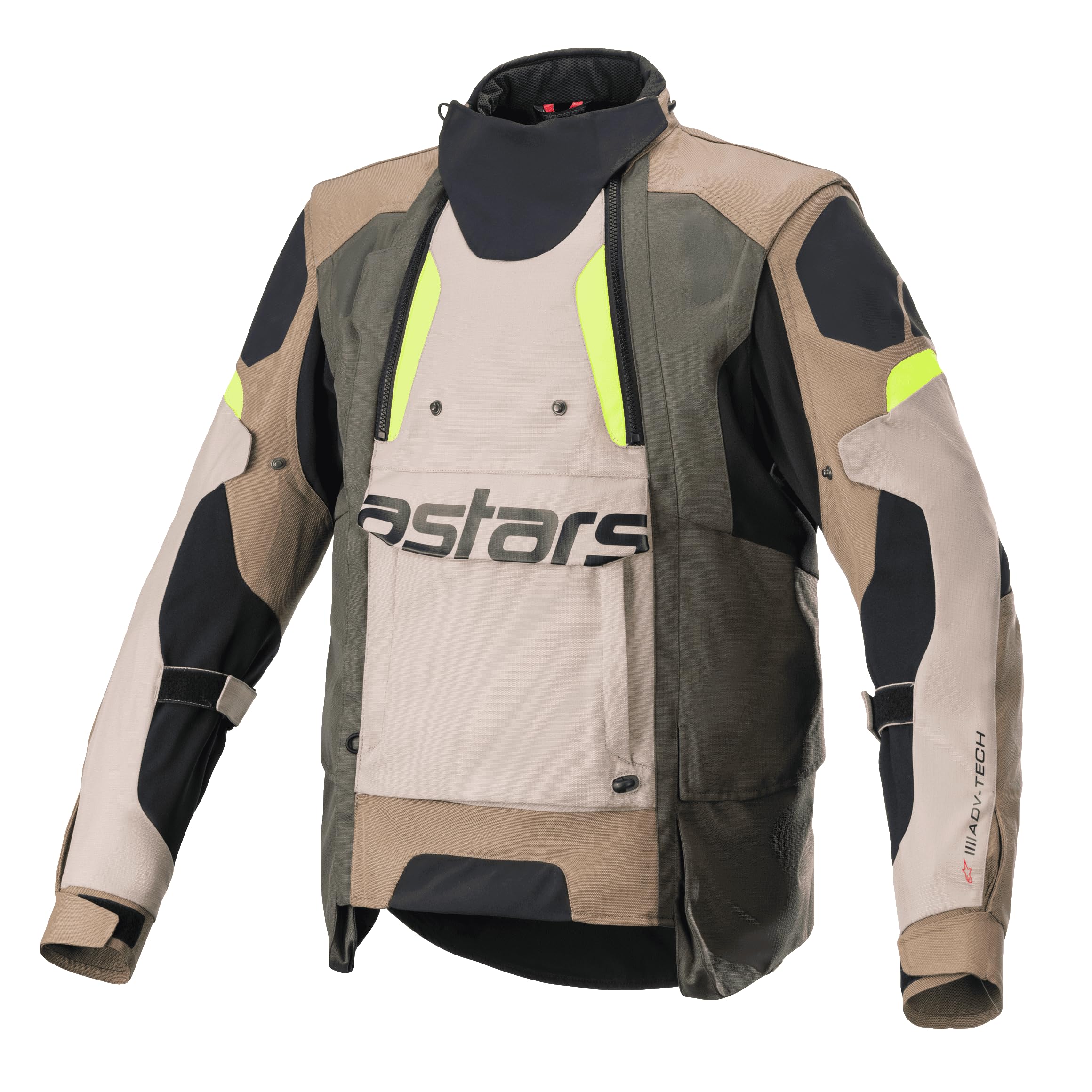
The Alpinestars Halo Drystar is a genuine three-season solution that adapts to weather extremes through an asymmetric front vent panel that spans nearly the full chest width. When fully open, the chest vent pulls massive volumes of air through the jacket interior. The rear vent panel is equally generous, creating a low-pressure zone that draws hot air out without causing the jacket to balloon at speed. The killer feature is the removable outer sleeve shell — peel it off and you are left with full mesh sleeves for summer riding while still retaining the Drystar waterproof membrane in the torso.
This jacket is Tech-Air ready, meaning it can accommodate the Alpinestars Tech-Air 5 airbag system, making it one of the few jackets in this list that scales to active electronic protection. The Drystar membrane is seam-taped and genuinely breathable — owners report wearing it comfortably from 14°F with the rain liner up to 95°F with the vents wide open. The off-center zipper takes a ride or two to get used to, but it enables that full-width chest vent panel in a way a center zipper cannot. Sizing runs small: a rider who wears a Large in most brands needed XL in the Halo.
Criticisms center on the collar height. Multiple owners noted it is too low and would benefit from an extra half-inch of throat coverage, especially when tucking behind a tall windscreen. Build quality is exceptional — the outer shell shows no wear after extended use, and the removable sleeve hardware feels robust. If you ride in climates that swing from freezing mornings to blistering afternoons, the Halo Drystar eliminates the need for a separate summer jacket.
Why it’s great
- Removable sleeve shell transforms it into a true summer jacket
- Tech-Air 5 compatible for airbag integration
- Asymmetric venting delivers exceptional airflow range
Good to know
- Collar sits lower than ideal for cold-weather neck coverage
- Off-center zipper has a learning curve
3. KLIM Carlsbad Adventure Motorcycle Jacket
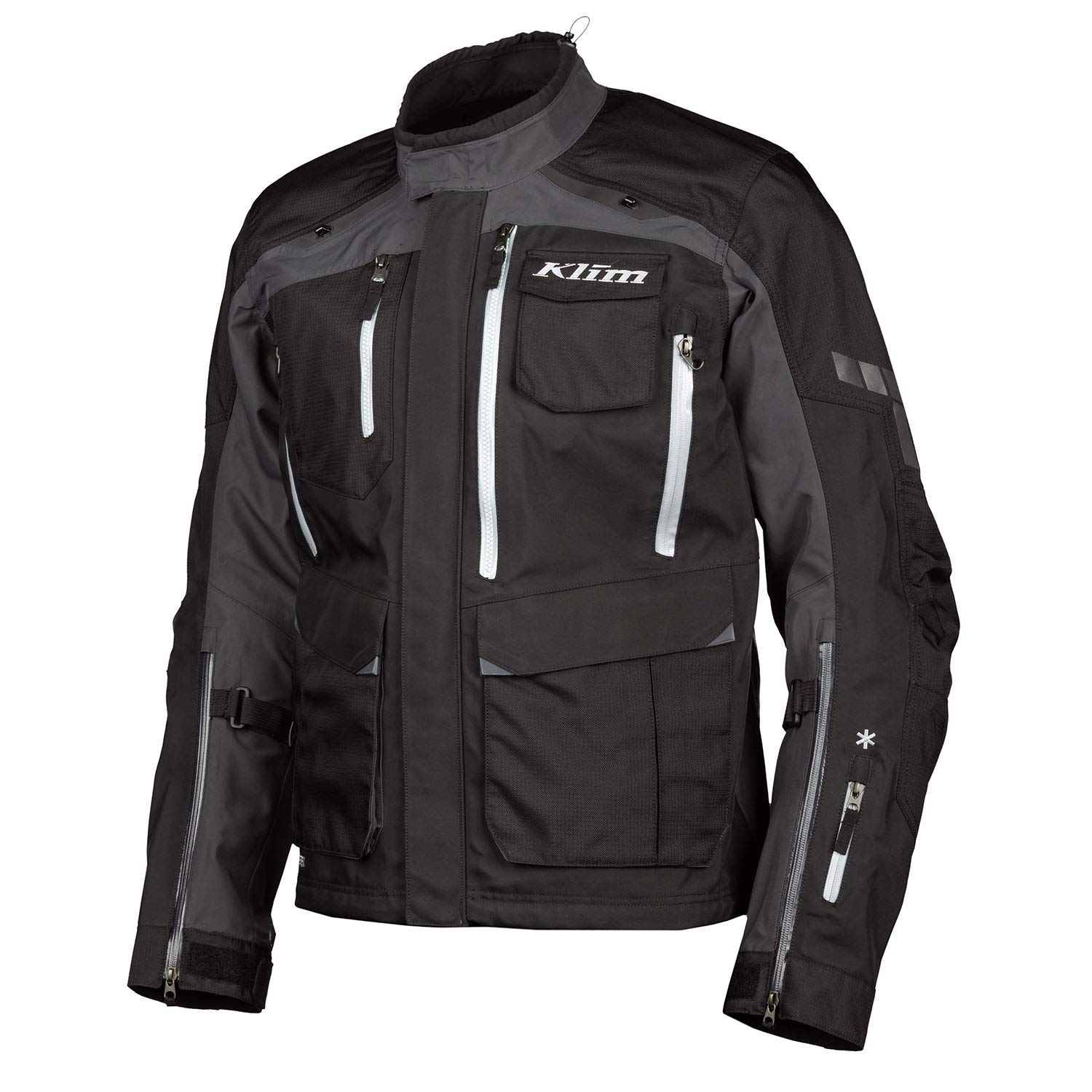
The KLIM Carlsbad is engineered for the hard-charging adventure rider who prioritizes low weight and waterproof reliability over maximum ventilation. The shell uses a Gore-Tex Pro laminate that blocks water completely while allowing vapor to escape — no zip-out liners to lose or reinstall. KLIM dramatically improved the core and arm ventilation over their previous generations, with large chest and sleeve vents that flow meaningful air at highway speeds. Riders report using it comfortably from 40°F up to 90°F with the vents open.
Abrasion resistance is excellent thanks to the 500D Cordura main chassis with 1000D reinforcements in the impact zones. The Carlsbad is notably lighter than the Badlands Pro, making it easier to stuff into a tail bag on multi-day trips. Storage is well-considered: waterproof chest pockets, hand pockets, interior storage, and a rear pocket big enough for a light jacket. The fit runs large by design to accommodate mid-layers, and KLIM recommends sizing down if you plan to wear it over just a base layer.
Some owners experienced pocket seepage and collar leaks during sustained heavy rain, which is a concern given the premium Gore-Tex badge. The collar also has a lower cut that can allow water to trickle down the neck in a driving storm. For dry-weather adventure touring and typical three-season use, the Carlsbad is one of the most comfortable and packable Gore-Tex jackets available. But if you regularly ride through monsoons, you may want to look at a jacket with a more substantial collar and storm flap.
Why it’s great
- Lightweight Gore-Tex Pro shell eliminates liner hassle
- Large chest/sleeve vents flow serious air at speed
- 500D Cordura with 1000D reinforcement zones
Good to know
- Some owners report pocket and collar leaks in prolonged rain
- Runs large — sizing down is recommended
4. Alpinestars Andes V3 Drystar Jacket
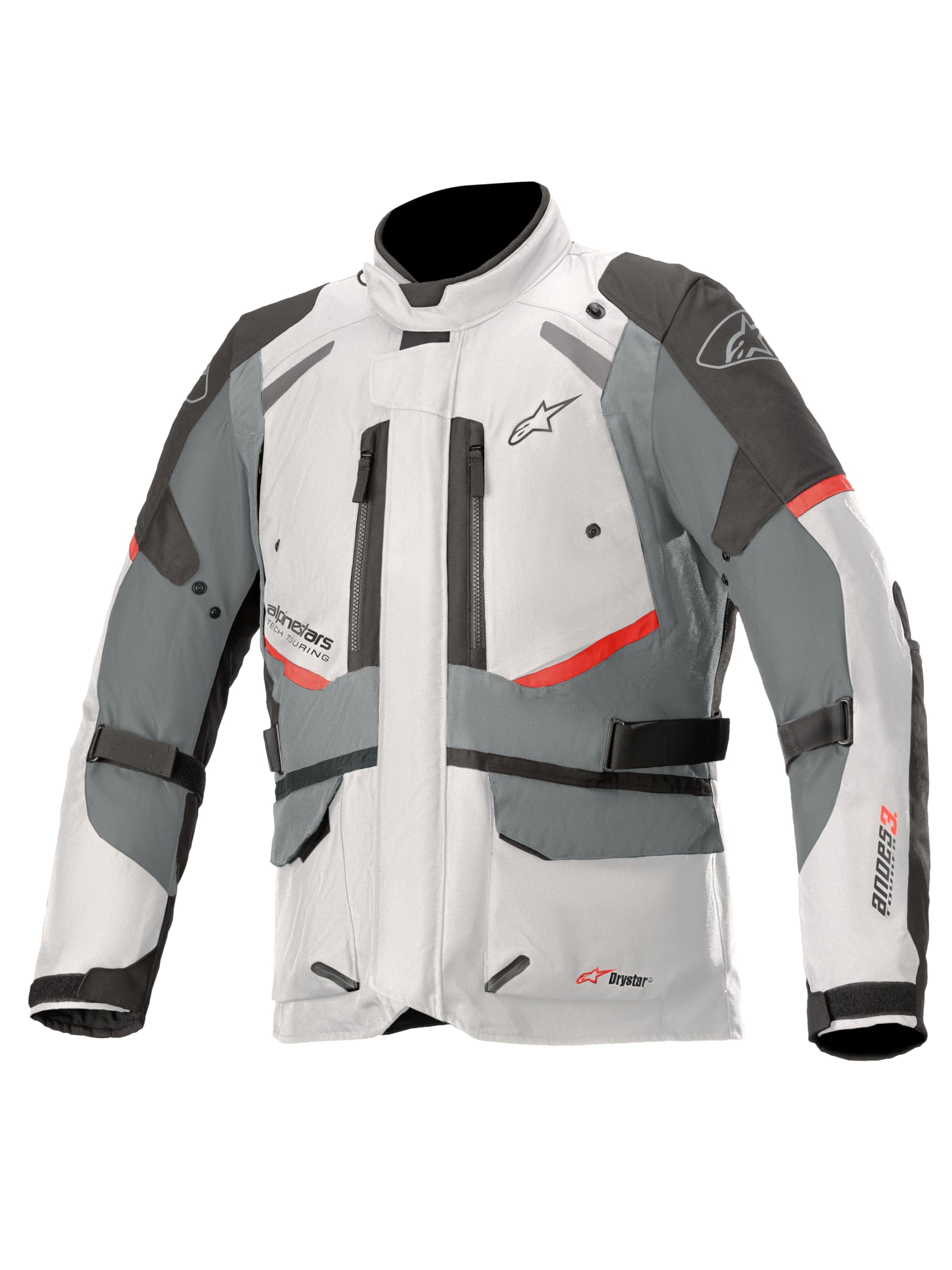
The Alpinestars Andes V3 Drystar is a purpose-built waterproof touring jacket that leans heavily into cold-weather and wet-riding capability rather than high-temperature ventilation. The Drystar membrane is integrated into the shell, not a zip-out liner, so you never have to stop to add rain protection. Owners consistently report staying bone dry in sustained rain and comfortable down to 25°F with the thermal liner installed. Nucleon Flex Plus armor provides Level 1 impact protection at the shoulders and elbows with a flexible feel that does not restrict movement.
The fit runs small — a rider measuring 5’11” and 188 pounds with a 42-inch chest found a Large fits like a tight Medium and needed XL. Multiple reviewers confirm sizing up by one full size is necessary, especially if you plan to layer. The collar is comfortable and the jacket is long enough to prevent the lower back from being exposed when leaned forward. The exterior shell feels substantial, more like a winter snow coat than a typical mesh textile jacket.
The most notable omission is the lack of an included spine protector. The jacket has a Velcro pocket ready to accept one, but you must purchase it separately. The built-in arm and shoulder armor is not upgradable. For wet and cold conditions, the Andes V3 is an excellent choice that outperforms many jackets costing more. For hot summer riding, the lack of large chest vents means you will overheat quickly in traffic. This is a jacket for the rider who values waterproofing above all else.
Why it’s great
- Integrated Drystar membrane is genuinely waterproof and breathable
- Effective down to 25°F with thermal liner installed
- Nucleon Flex armor offers good impact absorption without stiffness
Good to know
- No spine protector included — Velcro pocket ready for add-on
- Runs significantly small; size up one full size
5. KLIM Dakar Dual-Sport Motorcycle Jacket

The KLIM Dakar is not a do-everything adventure jacket — it is a lightweight, packable outer shell designed specifically to layer over armored shirts or mid-layers. The shell features removable sleeves that turn it into a vest, which is a genuine asset for dual-sport riders who transition from highway to singletrack and want to dump heat quickly. At under 2 pounds, it compresses small enough to stuff into a backpack or tail bag without sacrificing abrasion protection.
The 600D shell fabric with 1000D reinforcements offers respectable slide protection for its weight class. Riders consistently praise the range of motion: the articulated sleeves do not bind when standing on the pegs or reaching for a high bar. The vivid color options enhance visibility on the trail. Storage includes large hand pockets, a rear pouch, and internal pockets that secure essentials without bulk.
The major trade-off is airflow. Even with the full-length chest vents open, the Dakar runs warm in 80-degree-plus conditions — the shell fabric simply does not breathe as freely as a dedicated mesh jacket. The armor pockets for the back and chest are present but do not include pads, so factor in the cost of aftermarket armor. For the rider who owns an armored shirt and wants a lightweight, water-resistant shell for cooler days, the Dakar is a brilliant complement. As a standalone jacket for all-day touring in the heat, it falls short.
Why it’s great
- Removable sleeves allow quick transition from jacket to vest
- Ultra-lightweight and highly packable for the ADV toolkit
- Excellent range of motion for standing on the pegs
Good to know
- Airflow is limited; runs warm in high heat
- Armor pads for back and chest not included
6. MSR Xplorer ADV Jacket
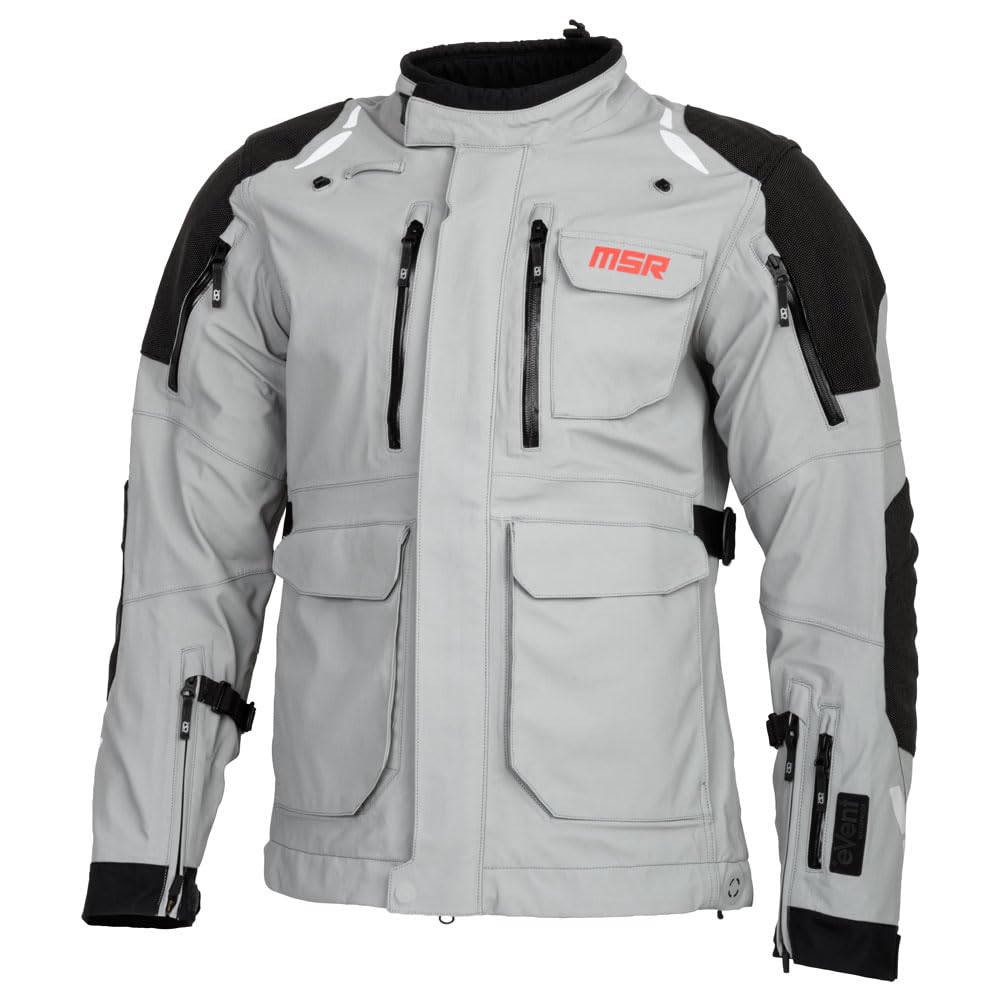
The MSR Xplorer ADV is built for riders who prioritize durability above all else, using D3O CE Level 1 armor at the shoulders, elbows, and back right out of the box. D3O armor is soft and flexible during normal movement but locks rigid on impact, offering excellent energy absorption without compromising comfort. The shell uses Superfabric reinforcement panels — a dense matrix of hard discs bonded to the base fabric — at key slide zones, giving it exceptional abrasion resistance that outlasts standard 1000D nylon.
Ventilation is handled by large chest vents, arm vents, and a rear exhaust system. Owners who rode the jacket through a rainy three-week trip in Scotland reported staying dry and comfortable, with the vents managing temperature well in the 40°F to 80°F range. The jacket includes a large rear cargo pocket, a hydration pocket with hose outlet, two waterproof bellows cargo pockets, and a dedicated zippered pocket for a communication or tracking device. The fit accommodates a broader frame — reviewers with “dad bod” proportions found it fits without the binding that many ADV jackets produce.
The most common complaint is the neck opening. Multiple owners describe it as enormous, with the collar drawstring being ineffective at cinching it down. Riding at highway speeds, the flapping collar allows wind and debris entry, and one reviewer reported a bee sting on the exposed neck. The jacket is also heavy and stiff out of the box, requiring a break-in period. For long-haul touring on rough roads where abrasion resistance matters more than weight savings, the Xplorer is a tank. For around-town use, the collar issue is harder to overlook.
Why it’s great
- D3O CE Level 1 armor included in all key positions
- Superfabric panels provide exceptional abrasion resistance
- Excellent storage with hydration and device pockets
Good to know
- Neck opening is very large and the drawstring is ineffective
- Heavy and stiff when new; requires break-in
7. Alpinestars Zaca Air Jacket

The Alpinestars Zaca Air is a textile jacket engineered with maximum breathability as the primary goal. The entire chest, back, and inner arms use a 3D mesh structure that creates a noticeable airflow channel, preventing the jacket from clinging to your skin even when stopped in summer traffic. The 3D mesh is supported by 450D polyfabric on the outer arms, shoulders, and sides for CE-rated abrasion resistance, while stretch softshell inserts at the pectoral, shoulder blade, and collar areas ensure a precise fit and excellent range of motion.
Protection hardware includes DFS Lite external shoulder sliders — hard plastic cups that reduce friction during a slide — and Nucleon Flex Plus CE Level 1 armor at the shoulders, elbows, and forearms. The jacket is Tech-Air 5 ready, so you can add an airbag system later without replacing the jacket. A detachable 2L waterproof liner handles unexpected rain, and the detachable hood includes an air extraction channel that prevents it from inflating at speed. Riders who have crashed in this jacket report it saved them from road rash with no armor displacement.
The fit runs a half-size small, so ordering up is common. The Level 1 armor feels comfortable and unobtrusive, but some riders prefer Level 2 for higher-end impact absorption. The hood, while useful off the bike, is not everyone’s aesthetic preference. At this price point, the Zaca Air offers industry-leading ventilation in a premium package, making it the best choice for riders in hot climates who still want a jacket that looks sharp and offers meaningful protection.
Why it’s great
- 3D mesh delivers exceptional airflow for hot-weather riding
- DFS Lite shoulder sliders reduce slide friction
- Tech-Air 5 compatible for future airbag upgrade
Good to know
- Runs a half-size small; consider sizing up
- Level 1 armor rather than Level 2 at this premium tier
8. Joe Rocket Atomic 5.0 Textile Jacket

The Joe Rocket Atomic 5.0 is a value-oriented textile touring jacket that delivers CE-approved armor and a removable insulated liner at a price point that appeals to new riders and commuters. The high-impact resistant outer shell is paired with flexible back panels and neoprene cuffs for comfort. The included armor covers shoulders, elbows, and includes a removable spine protector — a feature often missing at this tier. Waterproof ventilation channels and reflective panels add real-world utility for riders who commute in variable conditions.
Owners who survived lowsides at 15 and 35 mph reported only minor scuffing on the buttons, suggesting the 600D shell offers genuine slide protection. The jacket is warm enough with the liner at 30°F with a hoodie underneath, but becomes too hot above 80°F even with the liner removed. The fit is generous: a rider at 6’3″ and 220 pounds found the XL tight and went up to XXL for a comfortable fit over street clothes. The gray color option aids visibility in low light.
The main complaints revolve around durability of small components. The zipper grips on the arm and chest vents have fallen off after moderate use, and the waist adjusters are too short to provide a truly snug fit for all body types. The neoprene cuffs lack adjusters. For the price, the Atomic 5.0 offers a solid foundation of protection and weather versatility. Riders who outgrow it will know exactly what features they want in their next upgrade. For a first adventure jacket or occasional MSF course use, it does the job.
Why it’s great
- CE-approved armor at shoulders, elbows, and spine included
- Removable insulated liner provides three-season range
- Proven slide protection from real-world lowsides
Good to know
- Zipper grips on vents have been known to detach
- No cuff adjusters and waist adjusters are too short
9. Milwaukee Leather CE Armored All-Season Jacket

The Milwaukee Leather CE Armored Jacket is the most affordable entry into CE-rated armor on this list, using removable CE-approved shoulder and elbow pads that meet EN1621-1/EN1621-2 performance levels. The shell uses a textile/mesh chassis with an articulated rider cut that layers easily over base layers without creating bulk. Genuine YKK zippers are a genuine surprise at this price point — they operate smoothly and hold up well to repeated use.
Riders report that the jacket blocks the wind better than expected, with the mesh lining managing airflow well in mild weather. The fit runs small: a rider who normally wears a Large in flannel jackets needed an XL in this model, and multiple reviewers recommend ordering one size larger than usual. The racer cut styling with optional contrast stripes gives it a clean look that works on a naked bike or a sport tourer. Storage includes dual interior utility pockets, a media pocket with wire feed, and external zippered hand pockets.
The sleeve buckle has been reported to break within months of ownership, and the hook-and-loop neck closure is less convenient than a button or snap. There is no back pad included, only a slot to add one. This jacket is best suited as a starter jacket for the MSF basic rider course or for short commutes where the risk of a high-speed slide is minimal. For the rider on a strict budget who needs certified armor, it works. For serious off-road or highway touring, the component durability is a genuine limitation.
Why it’s great
- CE-approved armor at the lowest price point
- Genuine YKK zippers at a budget price
- Blocks wind better than typical mesh jackets
Good to know
- Sleeve buckle and hook-and-loop closure have durability concerns
- Runs small; order one size larger than normal
FAQ
Should I size up for an adventure motorcycle jacket?
What is the difference between a zip-out liner and a bonded membrane for waterproofing?
Can I wear a mesh adventure jacket in cold weather?
Is a back protector necessary in an adventure jacket?
Final Thoughts: The Verdict
For most riders, the best adventure motorcycle jacket is the Tourmaster Ridgecrest Mesh because it delivers CE Level 2 armor, a dual-liner system, and 1000D reinforcement zones at a price that undercuts nearly every competitor. If you ride in extreme heat and want maximum ventilation, grab the Alpinestars Zaca Air. And for serious all-weather touring where the ride starts in freezing rain and ends in blistering sun, nothing beats the versatility of the Alpinestars Halo Drystar with its removable sleeves and Tech-Air readiness.