
Standing on concrete for eight, ten, or twelve hours sends a shockwave through your feet, knees, and lower back with every single step. The unforgiving surface doesn’t give, so your body’s joints and soft tissues absorb the full impact, leading to that deep, bone-tired ache by the end of your shift. A good pair of insoles acts as the missing suspension system, converting a brutal work day into something sustainable.
I’m Min — the co-founder and writer behind Gadgets Feed. I’ve spent countless hours analyzing footbed engineering, material science, and thousands of verified user reviews to separate genuine support from marketing fluff.
After combing through the market, I’ve identified the absolute best options that deliver measurable relief. Here is your definitive guide to the best boot insoles for standing on concrete, built for workers who refuse to let foot fatigue win.
How To Choose The Best Boot Insoles For Standing On Concrete
Not all insoles are built for the punishing density of concrete. A running insole designed for forward motion will collapse under static load, while a rigid orthotic meant for dress shoes will feel like a rock in a work boot. You need to balance three specific traits.
Shock Absorption Material
The top-tier material for concrete is PORON, a high-performance urethane foam that retains 95% of its shock-absorbing capacity even after repeated impacts. Polyurethane foam is a solid mid-range choice, providing excellent durability without being too soft. Avoid basic EVA foam if you are over 200 lbs — it will bottom out within weeks on concrete.
Arch Support Type and Stiffness
A medium-to-high arch support is your ally if you have flat feet or plantar fasciitis, as it prevents the arch from collapsing and pulling on the plantar fascia. For standing still without much walking, a firmer support that locks the foot in place prevents micro-movements that cause fatigue. Look for a deep U-shaped heel cup, which cradles the fat pad and keeps the foot from sliding on impact.
Thickness and Boot Fit
Work boots, especially steel-toe models, have limited vertical space. An insole that is too thick — anything over 5mm in the forefoot — will push your foot against the steel cap, causing toe-banging pain. Trim-to-fit insoles are common, but make sure your boot has a removable factory insole; stacking insoles never works and leads to discomfort.
Quick Comparison
On smaller screens, swipe sideways to see the full table.
| Model | Category | Best For | Key Spec | Amazon |
|---|---|---|---|---|
| Timberland PRO Anti-Fatigue Technology | Premium | All-day dynamic standing & walking | Hexagonal geometric cushioning core | Amazon |
| ARIAT Energy Max Work Insole | Premium | Direct replacement for work boots | Rebound foam with Agion odor defense | Amazon |
| ROCKROOSTER Anti-Fatigue Insole | Premium | Wide feet & heavy-duty use | PU & Memory Foam + COOLMAX top | Amazon |
| Welnove Work Orthotic Insole | Mid-Range | Plantar fasciitis & heel spur relief | 3D dynamic TPU arch + GEL pads | Amazon |
| Professional Heavy Duty Support | Mid-Range | Over 230+ lbs & flat feet | Double PORON cushioning layers | Amazon |
| CRUVHEAL Puncture Resistant Insole | Budget | Hazardous job sites with nails/glass | Built-in steel puncture plate | Amazon |
| Dr. Scholl’s Work Insoles | Budget | Affordable mass-market comfort | Massaging gel technology + Polygiene | Amazon |
In‑Depth Reviews
1. Timberland PRO Men’s Anti-Fatigue Technology Replacement Insole

Timberland PRO engineered these insoles around a distinctive hexagonal geometric core that actively dissipates shock with every step. Unlike flat foam layers that compress to a solid pancake after a few months, this dynamic structure retains its spring-like rebound through continuous 10-hour shifts on concrete. Workers in heavy steel-toe boots report a dramatic reduction in knee and lower back pain, with many users exceeding 200 lbs.
The anti-fatigue technology works on the principle of energy return rather than passive cushioning. Each hexagon compresses under load and then pushes back, effectively recycling the energy your foot would otherwise absorb. Users on warehouse floors and construction sites confirm that the effect is immediate and sustained, with no break-in period required.
Consider that the top fabric material tends to wear through after about six months of intensive daily use, with some users reporting the hex pillars eventually poking through. This is the trade-off for such potent mechanical shock absorption. Trim carefully to fit your boot and remove any factory insole first to avoid excessive bulk.
Why it’s great
- Unique geometric core provides measurable energy return on concrete
- Immediately effective — zero break-in period needed
- Slim profile fits well inside work boots without crowding the toe box
Good to know
- Top fabric layer may delaminate after 6 months of heavy use
- Not designed for high-arched feet or plantar fasciitis support
2. ARIAT Men’s Energy Max Work Insole
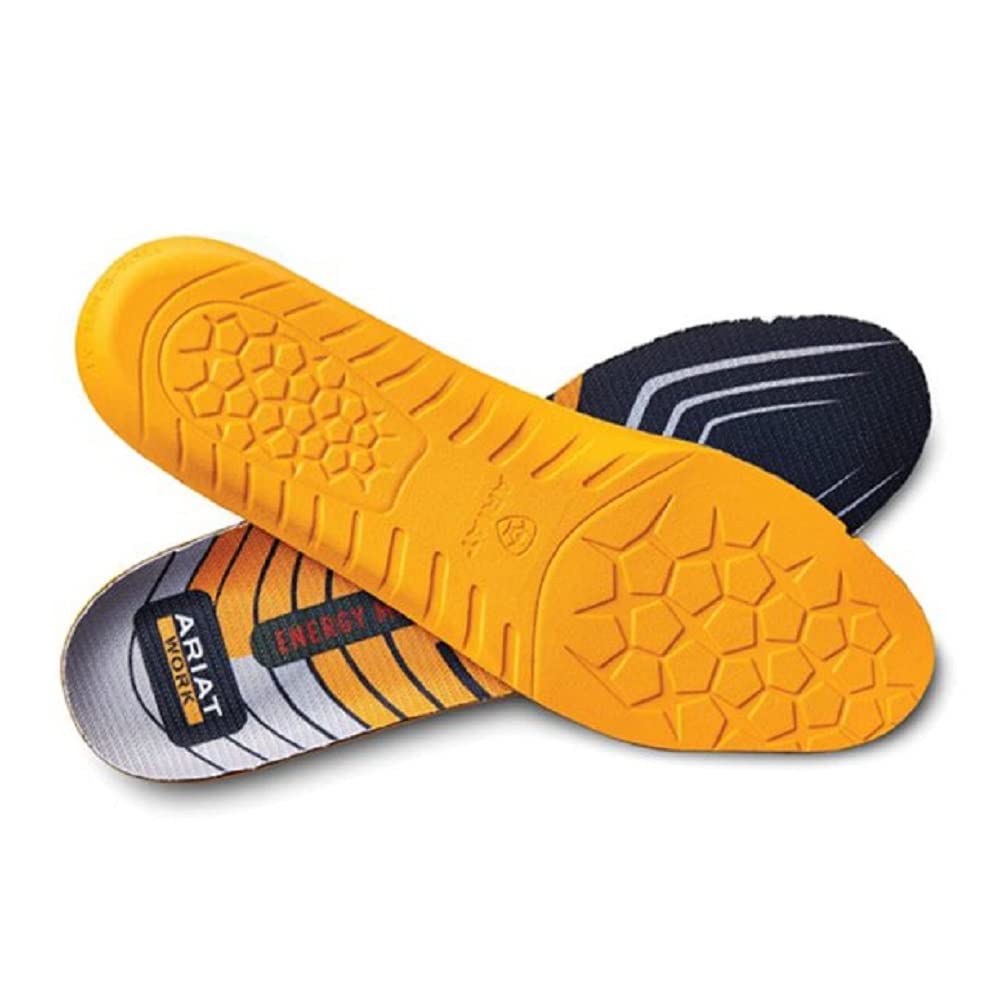
Ariat built these insoles specifically as a direct replacement for the factory inserts found in their premium work boots, but they fit equally well in any brand. The rebound foam layer cradles the entire foot and dissipates pressure across the full surface area, which reduces hot spots on the ball of the foot during long stationary periods on concrete. The open-cell foam actively regulates temperature, preventing that swampy feeling inside insulated boots.
The Agion technology integrated into the moisture-wicking liner provides intense odor defense — a critical feature for anyone working 10-hour days in the same pair of boots. Users consistently report that the sizing is spot-on with no trimming needed, which eliminates the guesswork of cutting your own insoles. Overwhelmingly, users describe the difference as a “game changer” for back and foot pain.
These are best for someone who wants a drop-in solution that doesn’t require any DIY trimming. The foam, while supportive, is not as mechanically aggressive as the Timberland PRO hex core, making it a better match for users who need solid comfort without that ultra-firm orthotic feel.
Why it’s great
- Direct drop-in fit with no trimming required for most sizes
- Agion antimicrobial treatment keeps odor under control during long days
- Open-cell foam regulates temperature for cooler feet on hot concrete
Good to know
- Not ideal for steel-toe boots with very limited vertical clearance
- May not provide enough arch support for severe flat feet
3. ROCKROOSTER Anti-Fatigue Work Boot Insoles
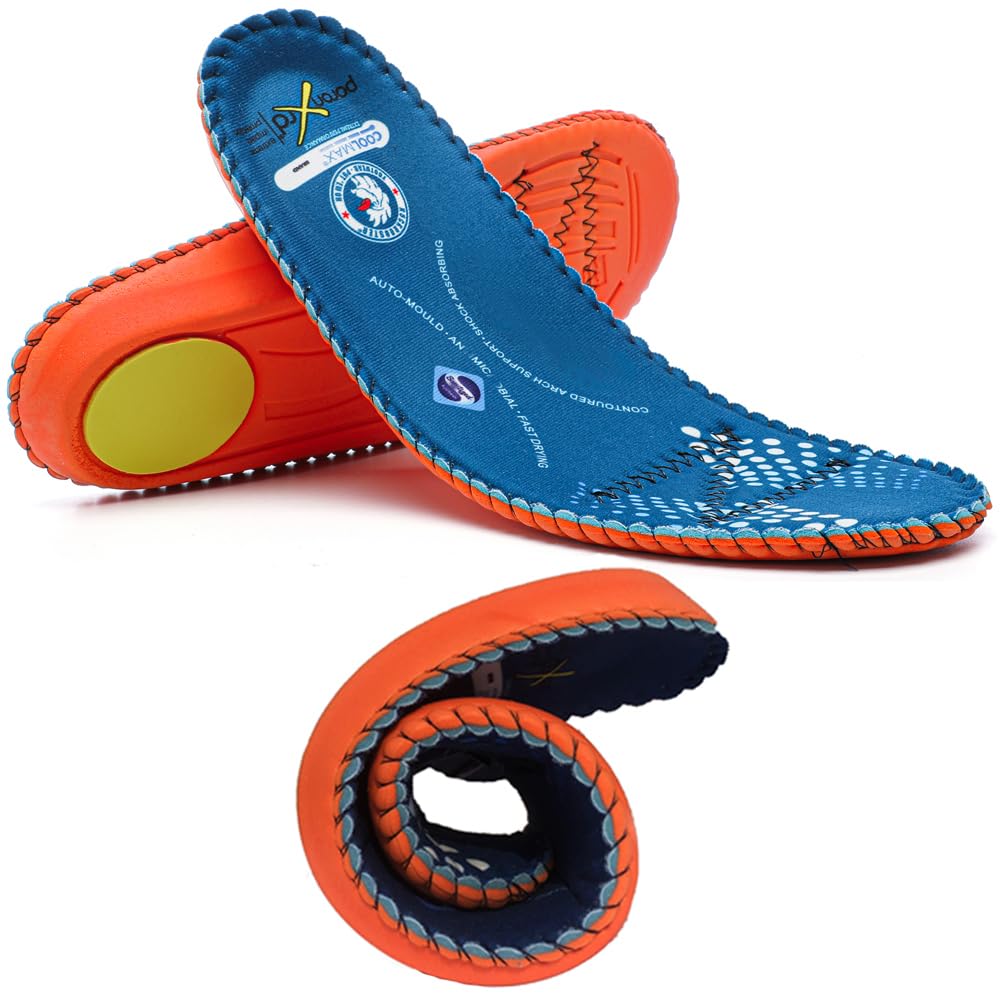
ROCKROOSTER combines a resilient polyurethane base with a plush memory foam top layer, creating a dual-density system that resists bottoming out even under heavy loads. The reinforced heel cushion is specifically designed to minimize impact on joints and arches during shifts spent entirely on concrete. The flexible shape accommodates wide-width boots without pinching, which is a common complaint with narrower insoles.
The COOLMAX top fabric actively wicks away sweat and heat, keeping your feet dry and significantly reducing blister risk during long summer months. Users recovering from plantar fasciitis report that the balance between soft cushioning and supportive structure provides immediate relief without the bone-hard feel of some orthotic inserts. The thick perimeter stitching prevents the edges from fraying or curling after repeated in-and-out removal.
This is a true-to-size insole that requires no trimming, which simplifies replacement. The memory foam will conform to your foot’s shape over the first few days, so the initial feel is slightly softer than it will be after a week of wear. If you need a stiff orthotic-grade support, look elsewhere — this is comfort-first engineering.
Why it’s great
- Wide-friendly shape fits boots without uncomfortable pinching
- COOLMAX fabric actively manages moisture and heat
- Perimeter stitching prevents fraying and curling over long-term use
Good to know
- Memory foam layer may feel too soft for users wanting rigid support
- Thicker construction could compress foot against steel toe in tight boots
4. Welnove Work Orthotic Insoles for Plantar Fasciitis
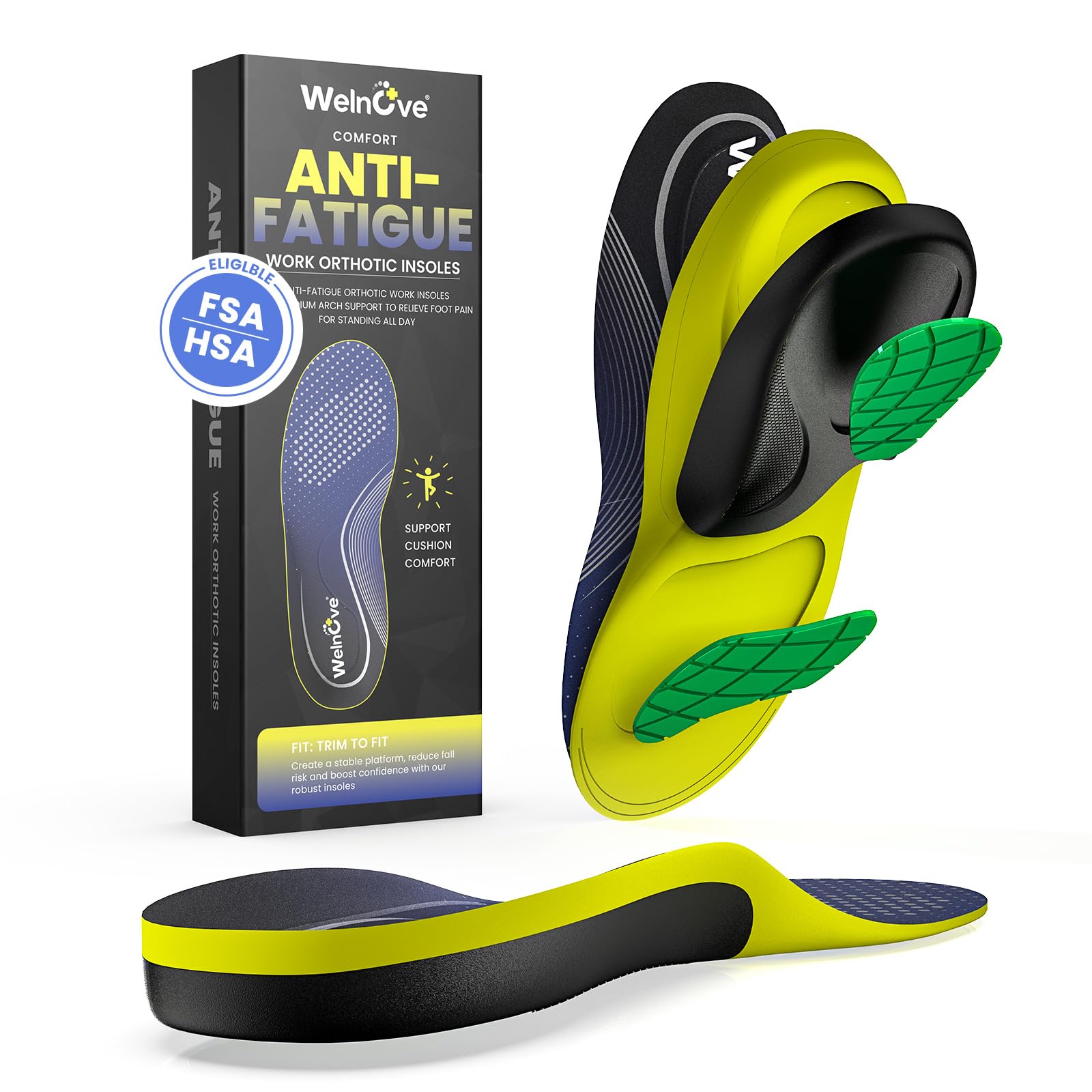
Welnove addresses the specific pain points of plantar fasciitis and heel spurs with a three-component build: a PU foam cushioning layer, a 3D dynamic TPU arch support, and dedicated GEL cushioning pads embedded at both the heel and ball of the foot. This combination actively realigns the foot’s structure, adjusting the plantar force points to reduce stress on the fascia ligament. Users previously limited to 3-4 hours of standing report completing full shifts without foot burning.
The deep U-shaped heel cup locks the calcaneus in place, preventing lateral movement that aggravates existing heel pain. This is a structured insole with noticeable rigidity in the arch, so a gradual break-in period of 3-5 hours per day is recommended to allow your feet to adapt. The sizing runs through S to XL, and the insoles are designed to be trimmed for a custom fit across most shoe types.
A potential concern: these are sold as a single pair, not two pairs, which is easy to misinterpret from the product description. The arch support is substantial, which has caused some users with very low arches to experience increased fatigue after a month. If your feet fall into a neutral-to-low arch range, consider the Timberland PRO or Rockrooster models for a less aggressive orthotic feel.
Why it’s great
- Three-layer design with dedicated GEL pads at heel and forefoot
- Deep U-shaped heel cup locks the foot and prevents heel slippage
- Strong TPU arch support provides measurable relief for plantar fasciitis
Good to know
- Aggressive arch can cause discomfort during the break-in period
- One pair (left + right) — not a two-pack as some listing phrasing implies
5. Professional Heavy Duty Support Pain Relief Orthotics — Over 230+ lbs

This insole is engineered with a double layer of PORON, a high-density urethane foam that maintains 95% of its cushioning properties even under a 230+ lb load. The “Golden Triangle” three-point support system distributes weight across the forefoot, arch, and heel, preventing any single area from taking the full brunt of a concrete slab. Users on 9-10 hour shifts report that heel pain disappears after the first day of use.
The deep U-shaped heel cups provide exceptional stability, preventing side-to-side slippage during movement, which adds a safety benefit for workers on uneven terrain. The full PU layer underneath the foot adds substantial durability, and the skin-friendly sweatproof fabric helps maintain breathability. Multiple user reviews confirm that these insoles show no signs of flattening or compression after three weeks of heavy use.
One note for sizing: these are on the thicker side, so they work best in boots with either a removable factory insole or a naturally spacious toe box. Some users with low-arched feet found the arch support insufficient for their needs, preferring a more aggressive orthotic curve. For the 230+ lb demographic, these provide an excellent balance of impact protection and long-term resilience.
Why it’s great
- Double PORON layers handle heavy loads without flattening out
- Three-point support prevents pressure hot spots on concrete
- Deep heel cups add stability and prevent foot sliding in boots
Good to know
- Thicker construction may require looser laces or more roomy boots
- Arch support is moderate — not ideal for those needing high arch correction
6. CRUVHEAL Puncture Resistant Work Insole — Steel Toe Inserts

CRUVHEAL takes a fundamentally different approach: instead of focusing purely on comfort, it builds in a steel puncture plate that protects against nails, glass, and sharp metal debris on job sites. This is not just a comfort insole — it’s a safety device. Users have tested these with 6-inch nails through the heel and confirmed that the steel plate stops penetration cold. For construction workers, roofers, and anyone on active sites, this is non-negotiable protection.
The insole uses a durable top cloth lined with an odor-control fabric that absorbs moisture, keeping feet fresh even in heavy steel-toe boots. The shock absorption is adequate for concrete but secondary to the puncture resistance. The sizing requires careful attention to the brand’s guide, as the rigid steel construction does not allow for flexible trimming like foam insoles.
Be aware that the steel plate adds significant rigidity and bulk, which can make the boot feel tighter. Some users report that the front of their foot contacts the steel toe cap after installation, leading to discomfort during 12-hour shifts. If your boots are already snug, this may not be the right choice for comfort alone. But if your job involves sharp debris on concrete, the safety trade-off is well worth it.
Why it’s great
- Integrated steel plate stops nails and glass from penetrating the sole
- Durable construction with moisture-wicking odor-control top cloth
- Excellent customer support from the manufacturer
Good to know
- Steel plate adds bulk and can make boots feel tighter
- Not adjustable or trim-friendly — must choose the correct size upfront
7. Dr. Scholl’s Work Insoles (Pack of 2 Pairs)

Dr. Scholl’s brings its clinically proven massaging gel technology to the work boot category, delivering extended cushioning that reduces impact on concrete, asphalt, and wood floors. The gel distributes foot pressure more evenly than standard foam, which helps eliminate the deep muscle soreness that sets in after hour five. The addition of Polygiene StayFresh Technology actively inhibits odor-causing bacteria, keeping the insoles functional and fresh over long rotations.
The adaptive cushioning is designed to respond to movement and return energy with each step, which helps maintain energy levels during physically demanding jobs. Users report that these insoles eliminated tired, achy feet when standing on hard surfaces all day, and they appreciate that the trim-to-fit design makes installation straightforward across a wide range of boot brands.
These are the most value-oriented option on this list, and they reflect that in the firmness of the support. Users with flat feet or a need for aggressive arch correction may find them too flat and unsupportive. The cushioning gel is concentrated in the heel, so users who need full-length impact protection may feel the forefoot area is insufficient. For basic comfort at a low entry cost, this is a solid starting point.
Why it’s great
- Massaging gel technology provides noticeable shock absorption on concrete
- Polygiene treatment keeps insoles fresh and odor-free
- Trim-to-fit design easily adapts to most work boot sizes
Good to know
- Minimal arch support — not suited for plantar fasciitis or flat feet
- Forefoot cushioning is thinner than heel, limiting full-foot protection
FAQ
How do I trim an insole to fit my work boots properly?
Will a thick insole cause my foot to hit the steel toe cap?
How often should I replace insoles used on concrete daily?
Final Thoughts: The Verdict
For most users, the best boot insoles for standing on concrete winner is the Timberland PRO Anti-Fatigue Technology Insole because its unique hexagonal core provides measurable energy return that actively reduces joint strain during full-day shifts. If you need drop-in simplicity with a proven brand track record, grab the ARIAT Energy Max Work Insole. And for superior protection against job site hazards while standing on concrete, nothing beats the CRUVHEAL Puncture Resistant Insole as a safety-first upgrade.