
Our readers keep the lights on and my morning glass full of iced black tea. As an Amazon Associate, I earn from qualifying purchases.
When a cat is diagnosed with liver disease, every meal becomes a measured decision. The wrong ingredient can spike enzyme levels, while the right supplement can restore appetite, reduce jaundice, and normalize bloodwork within weeks. This isn’t about flavor preferences anymore — it’s about targeted nutritional therapy that supports hepatic function, bile flow, and detoxification pathways without overloading an already stressed organ.
I’m Min — the co-founder and writer behind Gadgets Feed. I’ve spent countless hours analyzing veterinary-recommended formulas, deconstructing ingredient labels for their active compounds, and cross-referencing customer bloodwork results to separate real recovery stories from hopeful anecdotes in the review data.
After reviewing the leading options, this guide breaks down the specific mechanisms, dosing protocols, and ingredient synergies that make a genuine difference. Whether you need a powdered topper, a liquid tincture, or a veterinarian-formulated tablet, here is everything you need to find the best cat food for liver disease for your specific situation.
How To Choose The Best Cat Food For Liver Disease
Selecting a therapeutic product for hepatic conditions means looking past generic marketing claims and focusing on bioavailability, ingredient sourcing, and veterinary consensus. Not all milk thistle extracts are equal — the Silybin-phosphatidylcholine complex found in premium formulas offers dramatically better absorption than standard silymarin. Similarly, the form factor matters: liquids absorb fastest but can be rejected by picky cats, while coated tablets protect active compounds from stomach acid but require careful administration.
Active Compounds vs. Whole Herbs
The key distinction in liver supplements is between standardized active compounds (like S-Adenosylmethionine and Silybin A+B) and whole herb extracts. SAMe is the most extensively studied compound for feline hepatic support — it directly boosts glutathione levels, the liver’s primary detoxifying agent. Standardized Silybin, extracted from milk thistle and complexed with phosphatidylcholine, has demonstrated superior bioavailability in cats compared to whole milk thistle extract. Products featuring these specific compounds typically justify a higher investment because their clinical outcomes are more predictable and measurable through bloodwork.
Form Factor and Dosing Precision
The form of the supplement directly impacts compliance. Liquid formulas offer precise milligram-per-pound dosing and faster absorption, making them ideal for acute situations or cats that refuse pills. Capsules and tablets protect sensitive compounds from degradation but require the cat to swallow them whole — crushing can destroy the enteric coating. Powders mix easily into wet food but can alter texture. Consider your cat’s current appetite, whether force-feeding might be necessary, and whether you need to split doses across multiple administrations throughout the day.
Quick Comparison
On smaller screens, swipe sideways to see the full table.
| Model | Category | Best For | Key Spec | Amazon |
|---|---|---|---|---|
| Denamarin | Tablet | Chronic enzyme elevation & rescue cases | 90 mg SAMe + 9 mg Silybin per tablet | Amazon |
| Standard Process Hepatic Support | Tablet | Crushable tablet for picky eaters | 90 tablets, 1.76 oz total | Amazon |
| Fera Pets Liver Supplement | Powder | Multi-ingredient daily food topper | 60 scoops with BioPerine for absorption | Amazon |
| Rx Vitamins Liquid Hepato | Liquid | Fast-absorbing acute liver support | 4 oz, bacon flavor, 1 ml per 10-20 lb | Amazon |
| Pet Wellbeing Milk Thistle | Liquid | Certified organic single-herb support | 2 oz, alcohol-free, bacon flavor | Amazon |
| Rx Vitamins Hepato Capsules | Capsule | Stress-free capsule sprinkling on food | 90 capsules with milk thistle + B2 | Amazon |
| Hill’s r/d Weight Reduction | Dry Food | Weight management + liver-friendly diet | 4 lb bag, therapeutic L-carnitine | Amazon |
In‑Depth Reviews
1. Nutramax Denamarin for Small Dogs and Cats

Denamarin is the most clinically validated supplement in this category because it contains two specific compounds — SAMe and Silybin-phosphatidylcholine complex — rather than relying on whole-herb milk thistle. The SAMe directly replenishes glutathione levels, which is the liver’s primary antioxidant defense. The Silybin complex has demonstrated significantly better absorption in feline patients compared to standardized milk thistle extracts, making this product the gold standard for cases where bloodwork shows consistently elevated ALT and AST enzymes over multiple months.
Customer reports from owners managing chronic hepatic conditions in dogs spanning 11 to 17 years consistently show normalized liver values after 4 months of twice-daily dosing. More surprisingly, several cat owners reported complete resolution of chronic diarrhea within 48 hours — likely due to SAMe’s role in bile acid metabolism and gut barrier repair. The main tradeoff is administration difficulty: pills are large, smell potent, and must be swallowed whole because the enteric coating cannot be crushed without destroying efficacy.
For acute cases like hepatic lipidosis or jaundice where rapid intervention is needed, this supplement’s pharmacokinetic profile gives it an advantage over milk-thistle-only products. The 30-count bottle provides a one-month supply for a single cat at the standard dose. Many owners pair Denamarin with a separate milk thistle supplement for comprehensive coverage, but this should only be done under veterinary guidance due to potential interactions.
Why it’s great
- Clinically superior absorption through Silybin-phosphatidylcholine complex
- Multiple verified reports of normalized bloodwork and resolved jaundice
- #1 veterinarian-recommended liver supplement brand
Good to know
- Pills cannot be crushed — must be swallowed whole
- Strong odor that many cats resist despite liver flavor
- Requires daily dosing; effects reverse quickly if stopped
2. Standard Process Feline Hepatic Support

This is the only product in this comparison that is specifically formulated for feline hepatic function rather than being a dual-species dog-and-cat supplement. Standard Process uses a whole-food-based approach with a proprietary blend designed to support hepatic circulation and bile production. The tablets can be easily split with a pill cutter or crushed into powder, making administration straightforward for cats that refuse whole tablets — a significant advantage over enteric-coated options that require intact swallowing.
Customer reports are particularly compelling for end-stage and palliative cases: one owner whose cat was in liver failure and refused food for days used crushed tablets mixed into food and force-fed the mixture, with the cat eventually eating independently, gaining weight, and no longer showing jaundice after several months. Another case documented reversal of poor liver function bloodwork within two months. The fact that cats consistently eat the crushed tablets without resistance suggests the base ingredients are inherently palatable, unlike the strong-smelling SAMe tablets.
The primary limitation is that this is a whole-food supplement rather than a standardized active-compound product, which means the exact milligram amount of SAMe or Silybin is not quantified on the label. For cats with mildly elevated enzymes or as a maintenance supplement after acute treatment, this is a solid choice. For cats with critically high liver values requiring precise active compound dosing, the Denamarin route may be more appropriate for predictable clinical response.
Why it’s great
- Specifically formulated for feline physiology, not dual-species
- Crushable tablets can be mixed into food without resistance
- Verified liver failure recovery cases in customer reviews
Good to know
- No standardized active compound quantification on label
- Whole-food approach may work slower than SAMe-based products
- 90-tablet bottle at twice-daily dosing lasts 45 days
3. Fera Pets Cat & Dog Liver Supplement Powder

This powder delivers a multi-ingredient liver support blend — including milk thistle, turmeric curcumin C3 complex, choline, zinc, organic burdock root, dandelion root, and artichoke leaf — combined with BioPerine black pepper extract to boost absorption. The chicken bone broth base makes it the most palatable option in this list; most cats will eat it mixed into wet food without hesitation, which eliminates the compliance struggles that plague tablet-based products.
The formula is vet-founded and specifically designed to address root causes rather than symptoms. Choline supports fat metabolism which is critical for cats prone to hepatic lipidosis, while dandelion root and artichoke leaf promote bile flow and natural detoxification pathways. The inclusion of BioPerine is a meaningful differentiator because it increases the bioavailability of all the herbal compounds, potentially allowing lower overall doses to achieve the same therapeutic effect as higher doses of non-enhanced formulas.
A critical caveat emerged from a cat owner’s detailed dosing report: the standard dose (1 scoop under 25 lbs) caused adverse foaming in a 9-pound cat. Reducing to a quarter scoop resolved the issue and still produced improvements in appetite and breath odor. This suggests the formula may be too potent for smaller cats, and owners of cats under 10 pounds should start at a quarter to half scoop and titrate up based on response. The product caused constipation in one dog, which resolved upon discontinuation — likely due to the turmeric content.
Why it’s great
- High-palatability chicken bone broth base accepted by most cats
- Multi-ingredient approach targets multiple hepatic pathways simultaneously
- BioPerine enhanced absorption for better compound utilization
Good to know
- Standard dose may be too strong for cats under 10 pounds
- Turmeric can cause constipation in sensitive cats
- Powder form requires consistent mixing to ensure even dosing
4. Rx Vitamins Liquid Hepato Support for Dogs & Cats
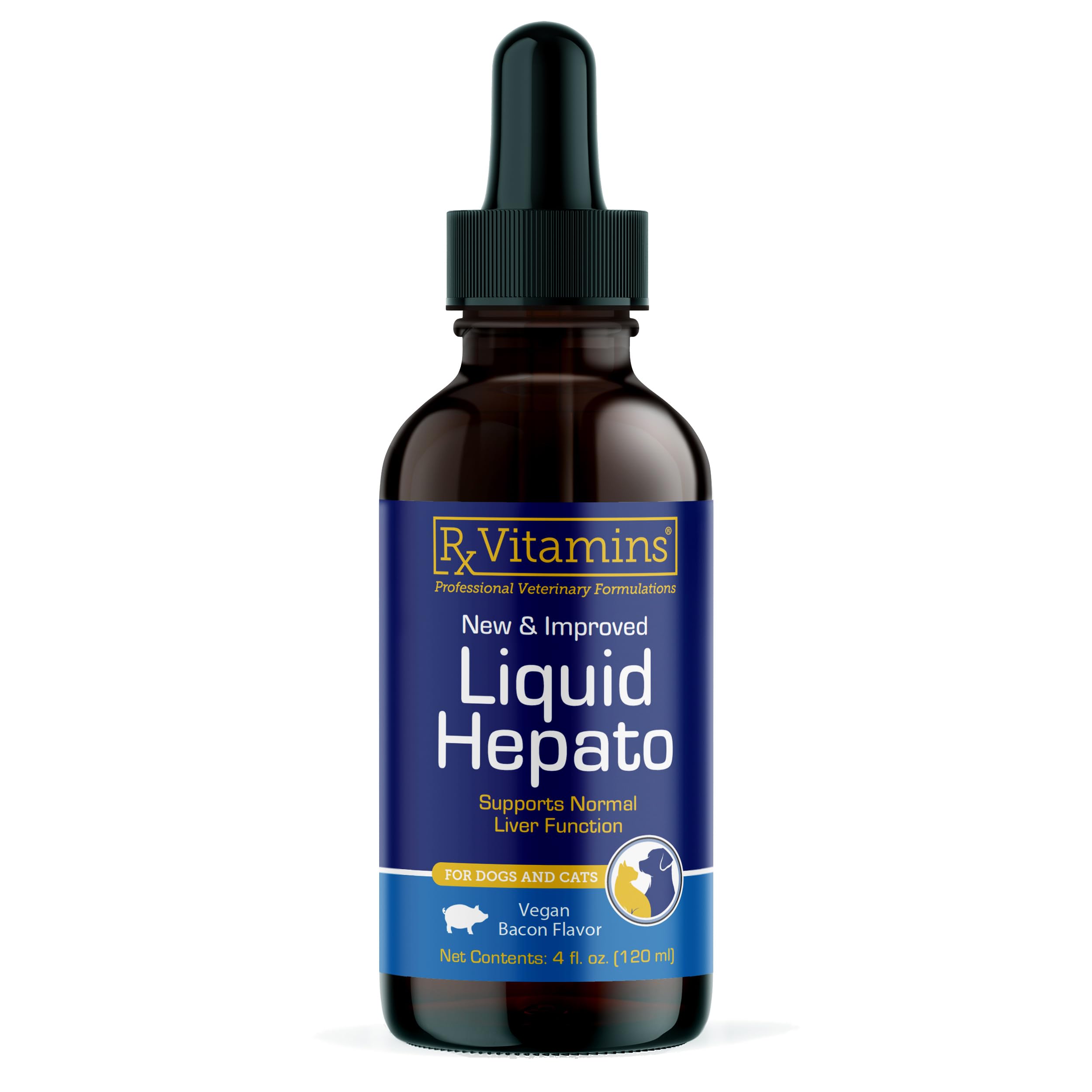
This liquid formulation provides milk thistle (silymarin and silybinin) plus a B vitamin complex (B1, B2, B6) in a bacon-flavored base designed for rapid absorption. The liquid form is particularly useful for senior pets with reduced appetite or difficulty swallowing, and for acute situations where you need the compounds to enter the bloodstream as quickly as possible. The dosing is straightforward: 1 ml per 10-20 pounds of body weight, twice daily.
The most compelling report comes from a 16-year-old Yorkie with concurrent liver disease and pancreatitis whose severe skin issues — red flaky patches, fur loss, constant scratching — completely resolved after switching to Liquid Hepato combined with a raw rabbit diet. Liver and pancreas values normalized, shedding stopped, and energy levels improved. This dual-action effect (liver support plus B vitamin energy metabolism) makes this product particularly suitable for senior cats that present with both hepatic issues and age-related lethargy.
Several practical drawbacks emerged from owner reports: the dropper tends to leak and clog with residue buildup, the liquid settles and requires manual shaking before each dose, and some cats find the bacon scent too strong even when mixed into wet food. One owner needed to combine this with Denamarin (AM dose) to achieve normalized enzyme levels — the Liquid Hepato alone was insufficient for their Chihuahua. This suggests the product works best as part of a comprehensive hepatic protocol rather than a standalone solution for severe cases.
Why it’s great
- Fast liquid absorption ideal for acute or senior cat cases
- B vitamin complex supports energy metabolism alongside liver function
- Precise milligram-per-pound dosing for small cats
Good to know
- Dropper design prone to leaking and clogging
- Strong bacon scent may be rejected by picky cats
- May be insufficient as standalone treatment for severe enzyme elevation
5. Pet Wellbeing Milk Thistle for Cats

This is the only certified organic single-herb milk thistle extract in this comparison, formulated specifically for cats by holistic veterinarians and clinical herbalists. The liquid is alcohol-free and uses a natural vegetarian bacon flavor. It is NASC certified and made in FDA-registered facilities with third-party batch testing for purity — the highest quality assurance standard among all products reviewed here.
The customer recovery reports are among the most dramatic in this entire guide. One cat with concurrent liver and renal failure, given Milk Thistle alongside a kidney support supplement, showed normalized bloodwork and no detectable liver issues within three weeks — the owner had been preparing for end-of-life care. Another case of fatty liver disease with jaundice and complete appetite loss reversed entirely after one month of daily dosing, with the cat returning to normal weight, activity levels, and play behavior. A third owner reported that this product was directly responsible for bringing down their cat’s elevated liver enzymes to the point where the vet said “keep doing what you’re doing.”
The main challenge is palatability despite the bacon flavor. Multiple owners reported that cats refused the liquid even when mixed into wet food, requiring elaborate layering strategies: a small food portion, the dose, a Churu treat on top, then freeze-dried toppers. The glycerite base has a sweetness that some cats find off-putting. This is the most expensive product per dose, but for owners who prioritize organic sourcing and single-herb purity without unnecessary additives, the certified organic status justifies the investment, especially for cats with known sensitivities to synthetic excipients found in tablet binders.
Why it’s great
- Certified organic milk thistle with highest purity standards
- Multiple verified recoveries from fatty liver and jaundice
- Alcohol-free liquid with third-party batch testing
Good to know
- Bacon flavor still rejected by many picky cats
- Higher cost per dose than most alternatives
- Single-herb formula lacks synergistic compounds found in blended products
6. Rx Vitamins Hepato Support Capsules
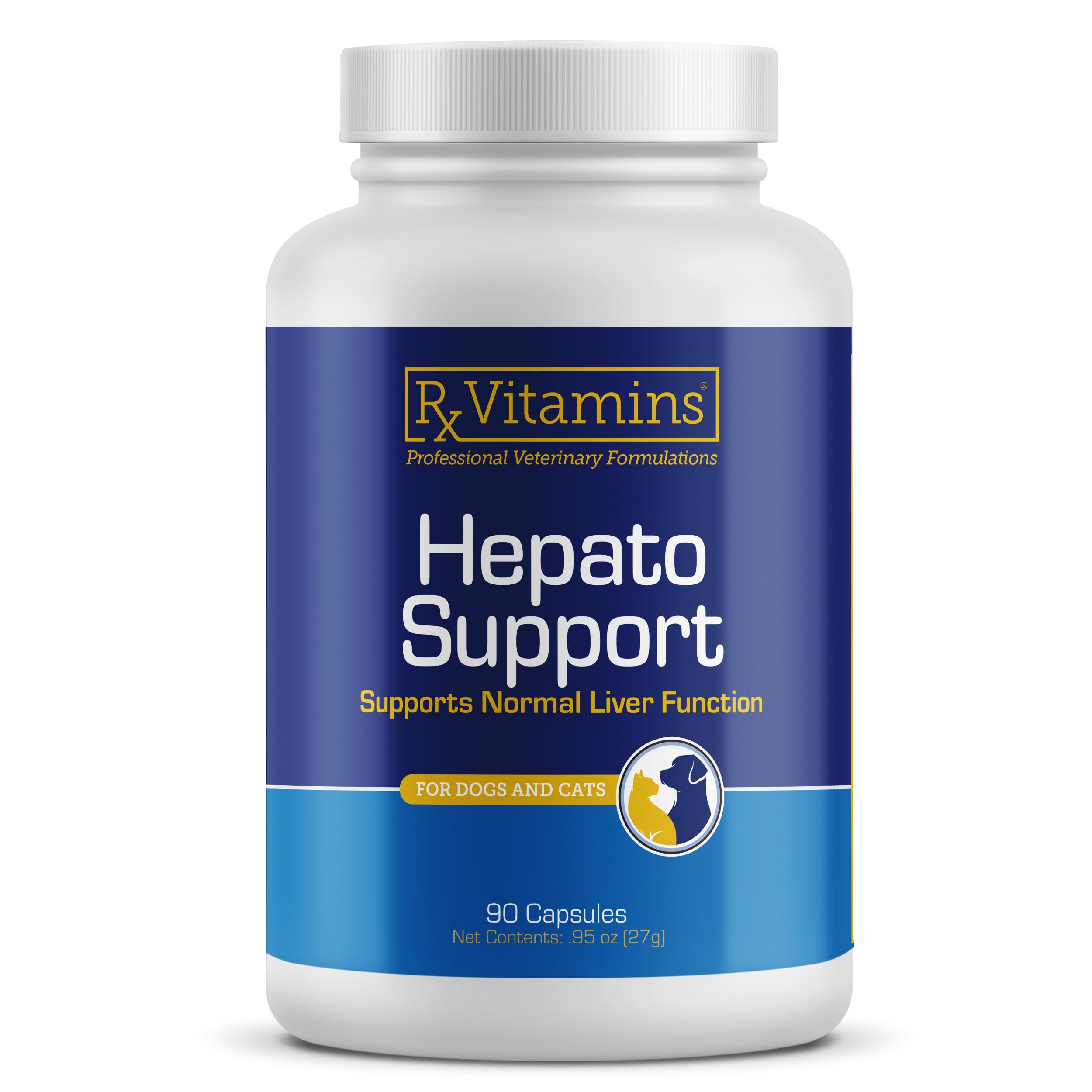
This capsule format from Rx Vitamins offers the same milk thistle and vitamin B2 active ingredients as the liquid version but in a more convenient dry form. The capsules can be opened and the yellow powder inside sprinkled directly onto food, which solves the administration challenges of both whole tablets and liquids. This makes it practical for owners who need to give the supplement while traveling or when the cat is being fed by a pet sitter.
Customer reports align closely with the liquid version’s outcomes: a Westie Mix with low liver readings showed improvement after starting the capsules, with the owner noting their dog “feels better.” One owner’s 11-year-old dog with extremely high liver numbers achieved normalized values after 4 months combining Hepato Support capsules twice daily with Denamarin and a food switch to Acana Singles, and maintained those normal levels for two years. This suggests the capsule format has equivalent efficacy to the liquid when the active compounds reach the digestive system intact.
The main downside is missing the B vitamin complex depth — the capsules only include B2 rather than the full B1, B2, B6 spectrum found in the liquid version. For cats that are also dealing with appetite loss or neurological symptoms secondary to liver disease, the broader B vitamin support in the liquid may be more appropriate. The capsules are unflavored, which is a positive for cats that dislike the artificial bacon scent, but the powder has a bitter taste that some cats may reject if not thoroughly mixed into strongly flavored wet food.
Why it’s great
- Capsules can be opened and sprinkled for stress-free administration
- Equivalent efficacy to liquid version in long-term use
- Unflavored — avoids artificial scent rejection issues
Good to know
- Only contains vitamin B2, not the full B complex
- Powder has bitter taste that may require strong food masking
- Best results require combination with Denamarin for severe cases
7. Hill’s Prescription Diet r/d Weight Reduction Dry Cat Food
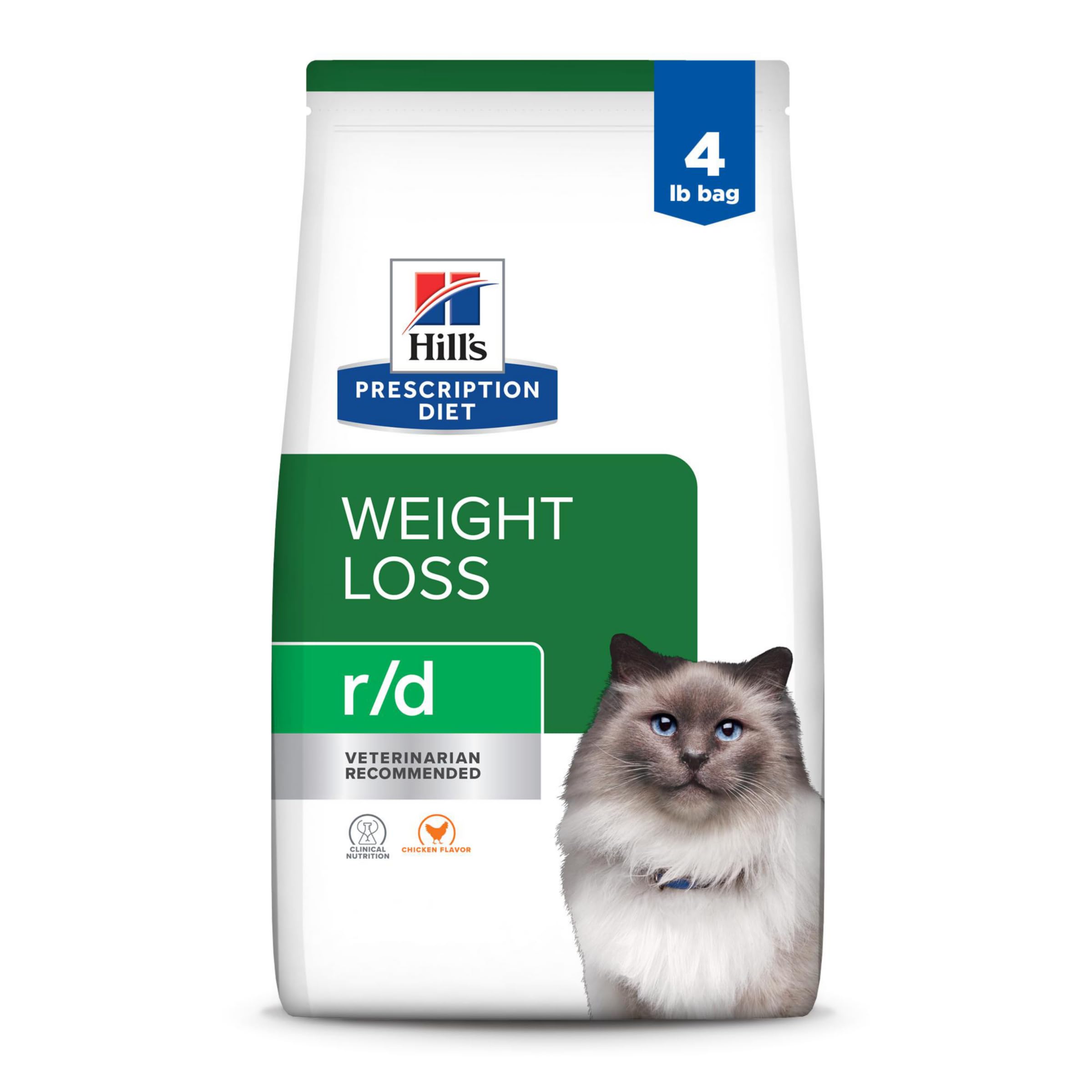
Weight management is directly relevant to hepatic health because obesity and rapid weight loss are the two primary triggers for feline hepatic lipidosis — the most common acquired liver disease in cats. This prescription diet is formulated with therapeutic L-carnitine to metabolize fat and maintain lean muscle during weight reduction, alongside an optimal fiber blend that helps cats feel full. Clinically tested to produce healthy weight loss within 4 weeks.
Customer reports show measurable outcomes: one owner’s spayed cat lost significant weight within weeks after switching to this food, and another documented a reduction from 17 pounds to 12.8 pounds through slow steady weight loss on this diet. The slow reduction rate is actually preferred for liver health because rapid weight loss paradoxically increases hepatic lipidosis risk. The clinically proven antioxidant blend also supports the immune system during the metabolic stress of weight loss.
This is a prescription diet, which means it requires veterinary authorization. It is not a liver support supplement — it does not contain milk thistle, SAMe, or any of the direct hepatic compounds found in the other products. Its role in a liver disease protocol is preventative or supporting, not therapeutic. Cats with existing hepatic lipidosis should not be placed on a weight reduction diet without direct veterinary supervision, as the metabolic demands of weight loss can exacerbate the condition. This product is best suited for overweight cats with normal or mildly elevated liver enzymes as a long-term maintenance food to prevent future hepatic complications.
Why it’s great
- Therapeutic L-carnitine supports fat metabolism and muscle preservation
- Clinically proven 4-week weight loss results
- Reduces hepatic lipidosis risk by promoting slow steady weight reduction
Good to know
- Requires veterinary prescription — not available over the counter
- Not a therapeutic supplement for existing liver disease
- Rapid weight loss can worsen hepatic conditions if not medically supervised
FAQ
Can I use a dog liver supplement for my cat safely?
How long does it take for liver supplements to show results in bloodwork?
Should I combine Denamarin with milk thistle for my cat?
What does “hepatic lipidosis” mean and how does diet help?
Final Thoughts: The Verdict
For most users, the best cat food for liver disease winner is the Nutramax Denamarin because it provides the most clinically validated combination of SAMe and bioavailable Silybin — the two compounds with the strongest evidence base for feline hepatic support. If you need an easy crushable tablet that cats will actually eat, grab the Standard Process Hepatic Support. And for fast-absorbing liquid support that can be precisely dosed for a small cat, nothing beats the Rx Vitamins Liquid Hepato.