
Our readers keep the lights on and my morning glass full of iced black tea. As an Amazon Associate, I earn from qualifying purchases.
Side sleeping on the ground is a battle against pressure points. Your hip and shoulder dig into the hard floor, cutting off circulation and shredding any chance at restful sleep. The wrong pad leaves you tossing all night, waking up sore and exhausted before your next trail mile.
I’m Min — the co-founder and writer behind Gadgets Feed. I’ve spent hundreds of hours analyzing technical specs, reading verified buyer feedback, and comparing baffle construction, R-values, and thickness data to find the pads that genuinely support side sleepers in the backcountry.
After sifting through dozens of models, I’ve zeroed in on the seven that matter most. This guide breaks down the key specs and real-world trade-offs to help you pick the right backpacking sleeping pad for side sleepers.
How To Choose The Best Backpacking Sleeping Pad For Side Sleepers
Side sleepers need a pad that provides enough thickness and targeted support to prevent the hip and shoulder from bottoming out against the ground. Two main factors dictate success: thickness and internal construction. A pad thinner than 3 inches often fails to cushion the bony parts of a side-sleeping body.
Thickness and Baffle Construction
For side sleepers, look for a minimum of 3 inches of loft, with 3.5 to 4 inches being ideal. Baffle design also plays a huge role — vertical baffles or offset I-beam constructions prevent the “hammock effect” where the pad flexes around your hips. Some pads use larger outer chambers to keep you centered and off the cold ground.
Weight vs. Comfort Trade-Off
Ultralight pads under 16 ounces typically sacrifice thickness and width, which hurts side sleepers. If you are carrying the pad on multi-day backpacking trips, you have to decide if the extra ounces for a 3.5-inch thick pad are worth the sleep quality. Car campers and bike packers have more leeway to choose thicker, heavier models with built-in pumps.
Quick Comparison
On smaller screens, swipe sideways to see the full table.
| Model | Category | Best For | Key Spec | Amazon |
|---|---|---|---|---|
| Big Agnes Rapide SL | Inflatable | Three-Season Backpacking | 3.5 in. / 4.25 in. outer chambers / 20 in. wide | Amazon |
| Therm-a-Rest NeoAir Xlite NXT | Inflatable | Ultralight Backpacking | 3 in. thick / 11.5 oz. / R-Value 4.5 | Amazon |
| NEMO Tensor All-Season | Inflatable | Year-Round Ultralight | 3.5 in. thick / 25 in. wide / 590 g | Amazon |
| Hikenture 4″ Self-Inflating | Hybrid | Car Camping / Guest Bed | 4 in. thick / 80 x 28 in. / R-Value 9.5 | Amazon |
| NYECHTO Self-Inflating Pad | Hybrid | Car Camping / Comfort | 3.14 in. thick / 28D foam / Built-in pump | Amazon |
| PineHike Self-Inflating Pad | Hybrid | Car Camping / Easy Setup | 4 in. thick / 2400mAh pump / 9.5 R-Value | Amazon |
| Hikenture Camping Pad | Inflatable | Budget Backpacking | 3.2 in. thick / 1.53 lb. / R-Value 6.2 | Amazon |
In‑Depth Reviews
1. Big Agnes Rapide SL – Insulated Sleeping Pad

The Big Agnes Rapide SL hits the sweet spot for side sleepers who carry their pad on multi-day trips. Its 3.5-inch thickness provides enough loft to keep your hip off the ground, while the offset I-beam construction eliminates the saggy bounce that plagues cheaper air pads. The outer chambers are 4.25 inches tall, creating a slight cradle that keeps you centered and prevents rolling off during the night. At 20 inches wide in the regular size, it is narrow enough to fit inside most backpacking tents but wide enough for comfortable side sleeping without your arms hanging off the edge.
The R-value of 4.8 makes it a true three-season pad, warm enough for early spring and late fall camping. The included Pumphouse inflation sack lets you fill the pad in about four minutes without introducing moisture from your breath into the pad — a detail that improves long-term reliability. The ripstop nylon with aviation-grade TPU lamination is durable enough for rocky tent sites, and the pad packs down to roughly the size of a Nalgene bottle, which is impressive given its thickness.
Side sleepers report the Rapide SL is notably quiet compared to other insulated pads, thanks to its internal film layers being bonded rather than loose. The micro-adjustment valve allows you to fine-tune firmness, which is critical because side sleepers need slightly less pressure to let the pad conform to the hip curve. This is the pad I recommend to anyone who wants premium backcountry comfort without carrying the weight of a foam hybrid.
Why it’s great
- Excellent pressure relief for hip and shoulder
- Very quiet internal construction
- Durable ripstop fabric
Good to know
- 20-inch width may feel snug for broad-shouldered sleepers
- Pump sack requires practice to use efficiently
2. Therm-a-Rest NeoAir Xlite NXT

The NeoAir Xlite NXT is the benchmark that every ultralight pad gets compared to, and for good reason. It weighs just 11.5 ounces in the regular size, yet delivers a 3-inch thick profile with an R-value of 4.5. The Triangular Core Matrix baffling reduces convective heat loss, and the reflective ThermaCapture film traps radiant heat. For side sleepers, the key spec is that 3-inch thickness — enough to keep a 180-pound person from bottoming out on soft ground, though heavier side sleepers might feel the ground on rocky surfaces.
The WingLock valve is the best in the business: one side inflates quickly, the other opens wide for lightning-fast deflation. The pump sack is included, though some users find it fiddly. The pad packs to the size of a 1-liter water bottle, making it ideal for gram-conscious backpackers who still want a warm, comfortable night. The NXT generation is dramatically quieter than the earlier NeoAir models — the crinkle noise is now minimal and tolerable for light sleepers.
Where the Xlite NXT falls short for side sleepers is width. At 20 inches, it is narrow enough that your arm may dangle off the edge if you sleep with your bottom arm forward. The 25-inch wide version solves this but adds about 2 ounces. The 30-denier ripstop nylon is thin, so careful site selection and a ground sheet are recommended. For hikers who count every gram, this pad is the gold standard.
Why it’s great
- Incredible warmth-to-weight ratio
- Fast inflation and deflation valve
- Much quieter than previous generation
Good to know
- Narrow width can be an issue for side sleepers with broad shoulders
- Thin fabric is vulnerable to punctures from sharp rocks
3. NEMO Equipment Tensor All-Season Ultralight Insulated Sleeping Pad
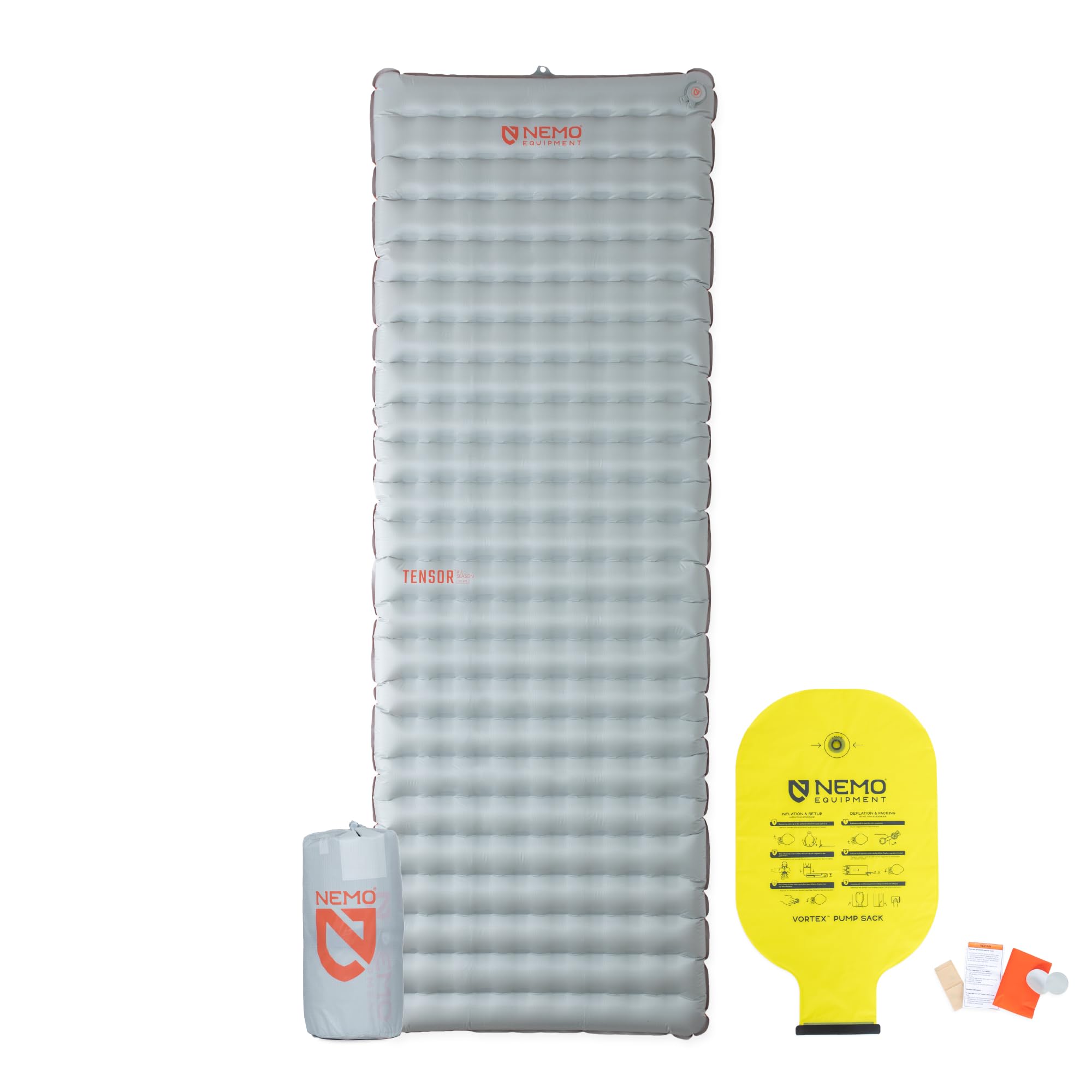
The NEMO Tensor All-Season is a specialist pad designed for the side sleeper who needs width. The regular-wide version is 25 inches across, giving you ample space to position your arm without hanging off the pad. It is 3.5 inches thick, and the Spaceframe baffles — die-cut trusses that eliminate the springy trampoline effect — provide exceptional stability for side sleeping. The two layers of floating Thermal Mirror metallized film deliver insulation without adding significant weight or crinkle noise, making this one of the quietest insulated pads on the market.
At 590 grams (about 20.8 ounces), the Tensor is heavier than the NeoAir Xlite NXT but that weight buys you a much more forgiving sleeping platform. The 20-denier nylon fabric is bluesign approved and feels soft against the skin, though it is not as puncture-resistant as the Big Agnes Rapide. The Vortex pump sack works well, filling the pad in about 2-3 sackfuls. The included stuff sack is spacious, and the pad rolls up to a compact size that fits inside a 40-liter backpack without issue.
Side sleepers who have used the Tensor on rocky ground report that it stays fully inflated for days without leaking, thanks to the high-quality TPU lamination. The pad is warm enough for winter camping when paired with a proper sleeping bag, with an R-value that NEMO rates for all-season use. It is a premium investment, but for the side sleeper who values width and quiet comfort, the Tensor is hard to beat.
Why it’s great
- Wide 25-inch platform for arm and shoulder clearance
- Very quiet insulation
- Stable Spaceframe baffles prevent bounce
Good to know
- Heavier than comparable ultralight options
- Fabric is less durable against rough terrain
4. Hikenture 4 INCH Thick Self Inflating Sleeping Pad
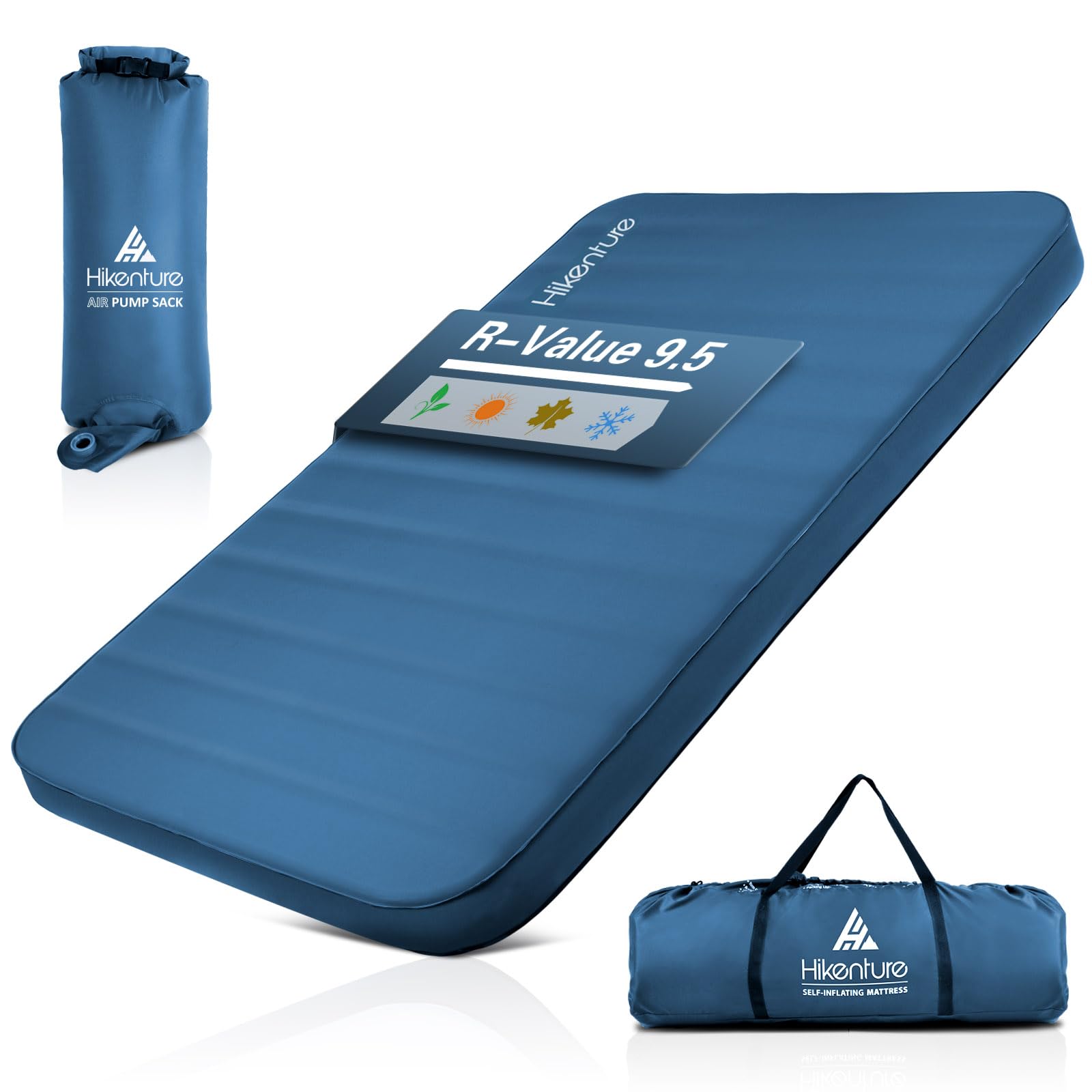
The Hikenture 4 Inch Self Inflating Pad is a luxury sleeping platform for car campers and van dwellers. It uses a hybrid construction of memory foam and air, self-inflating through a two-way valve, then topping off with a few pump sack puffs for custom firmness. At 4 inches thick, it provides unmatched pressure relief for side sleepers — you simply will not feel the ground, whether you are sleeping on your side or your stomach. The R-value of 9.5 makes it suitable for winter camping in sub-freezing temperatures.
The pad measures 80 inches by 28 inches, offering an enormous amount of space. The polyester surface is soft and silent — no crinkle noise at all — and the foam core dampens movement transfer if you are sharing a double-wide version. It weighs 8 pounds, which eliminates it from backpacking consideration but makes it an outstanding choice for car camping trips where comfort trumps weight. The included carry bag is oversized with a wide top opening, making packing easy even with the pad folded imperfectly.
Customer feedback highlights the durability and ease of use. The self-inflating mechanism works reliably, and the one-way valve prevents air from sneaking back in during deflation. Some users noted it is too heavy for backpacking, but for the side sleeper who drives to camp and wants a bed-like experience, this pad delivers. It fits a standard twin fitted sheet, which is a nice bonus for comfort.
Why it’s great
- Luxurious 4-inch thickness eliminates hip pressure
- Large 28-inch width for freedom of movement
- Quiet, soft polyester surface
Good to know
- Too heavy for backpacking (8 lbs)
- Self-inflating takes several minutes
5. NYECHTO Self Inflating Sleeping Pad with Electric Pump

The NYECHTO pad is a mid-range hybrid that combines a 28D high-density memory foam core with a built-in electric pump for effortless setup. The one-touch button inflates the pad in roughly 30 seconds, making it feel like a luxury air mattress from home. At 3.14 inches thick, it offers enough loft for most side sleepers, though heavier individuals (over 200 pounds) may feel some pressure on very uneven ground. The foam layer provides a gel-like feel that distributes weight evenly, and the pump is rechargeable via USB-C with enough capacity for about 7 inflation cycles per charge.
The pad includes a built-in pillow, which is a nice convenience for car camping but not adjustable in height — side sleepers who need a higher pillow may still need to bring their own. The 50D elastic knit fabric cover is quiet and skin-friendly, with no crinkle noise. The R-value is rated at 9.5, making this a four-season pad that will keep you warm in winter. The packed size is relatively compact at 26 by 9 inches, though the weight of 5.95 pounds is too much for backpacking.
Customer reviews consistently praise the comfort and ease of use. One verified user described it as being “like sleeping in my own bed” during winter camping with a 0-degree bag. The main durability concern is the non-removable pump — if the battery dies after a few seasons, the pad becomes a manual-inflate product. The manual two-layer valve at the end of the pad does allow for alternative inflation, which is a smart backup feature.
Why it’s great
- Fast 30-second electric inflation
- Comfortable foam core prevents bottoming out
- High R-value for winter use
Good to know
- Non-removable pump can fail over time
- Heavy at nearly 6 pounds
6. PineHike Camping Sleeping Pad with Built-in Electric Pump

The PineHike pad is purpose-built for car campers who want a mattress experience without manual labor. The built-in 2400mAh rechargeable pump inflates the 4-inch thick pad in about 50 seconds. The hybrid construction uses a 50D sponge core with air, offering a medium firmness that accommodates side sleeping well — the 4-inch thickness provides enough cushion to keep your hip elevated even on hard-packed ground. The R-value of 9.5 matches the best in class, making it suitable for four-season car camping.
The pad is 78.74 inches long and 29.13 inches wide, offering generous space for stretching out. The memory foam layer conforms to body shape better than pure air pads, and the double-sided 50D fabric is quiet and breathable. The pump performs well out of the box, inflating the pad fully with no need for extra puffs. The deflation function helps compress the pad to a much smaller volume for storage, though it still takes up a fair amount of trunk space.
One notable durability concern: a long-term user reported that after 9 months of daily indoor use, the built-in pump failed with a swollen battery. The pump is non-removable, which means the pad becomes unusable for electric inflation. The hybrid valve does allow for manual inflation, but the foam core makes this difficult without an external pump. For occasional seasonal use, this is less of a concern, but frequent campers may want to consider this risk.
Why it’s great
- Fast 50-second electric inflation
- Very thick 4-inch profile for pressure relief
- Large 29-inch width for comfortable side sleeping
Good to know
- Pump reliability concerns over long-term use
- Heavy at 6.6 pounds — not for backpacking
7. Hikenture Camping Sleeping Pad with 6.2 R-Value
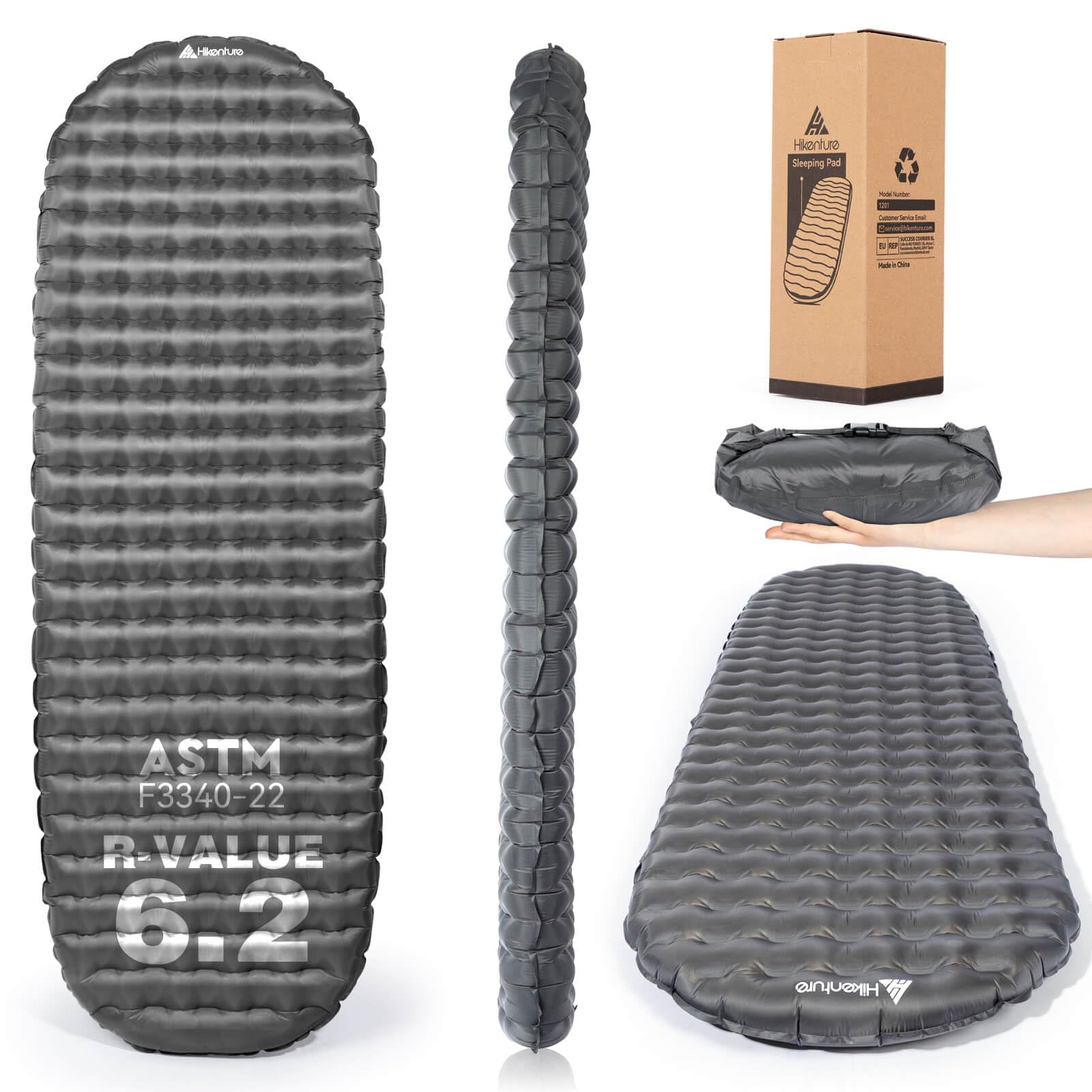
The Hikenture budget pad punches well above its weight class for side sleepers. It offers 3.2 inches of thickness with an airbag structure designed to distribute pressure evenly, preventing the bottoming-out sensation that cheap pads cause. The R-value of 6.2, certified to ASTM F3340-22, is exceptionally high for an entry-level pad — warm enough for winter camping when paired with an appropriate sleeping bag. It weighs just 1.53 pounds and packs down small, making it a viable option for lightweight backpacking.
The pad uses a TPU liner and nylon fabric, which are durable enough to withstand abuse from dogs and rocky sites, according to customer feedback. The included pump sack doubles as a 40L stuff sack and can inflate the pad in about 3 to 5 minutes with a few pumps. The internal reflective aluminum film helps trap body heat, and the pad has been tested to stay warm in sub-freezing conditions. Several side sleepers report that the pad is genuinely comfortable for their sleeping position, especially given the price point.
There are a few trade-offs at this price. The pad produces noticeable crinkle noise when you shift positions, which is common with budget reflective liners. The nozzle at the foot end is difficult to open one-handed, and there is no rapid deflate option — you have to manually squeeze the air out. Some units measure slightly over the advertised weight (closer to 1.7 pounds). However, for the side sleeper on a tight budget who needs a warm, comfortable pad for weekend trips, this is the best value pick.
Why it’s great
- Exceptional R-value for the price
- Lightweight enough for backpacking
- Genuinely comfortable for side sleepers
Good to know
- Crinkly fabric noise when moving
- No rapid deflate valve for quick pack-up
FAQ
What is the minimum thickness for a backpacking pad for side sleepers?
How do I know if a sleeping pad is wide enough for side sleeping?
Can I use an ultralight pad like the Therm-a-Rest NeoAir Xlite NXT as a side sleeper?
Are self-inflating pads better for side sleepers than pure air pads?
What does crinkle noise mean for my sleep quality?
Final Thoughts: The Verdict
For most users, the backpacking sleeping pad for side sleepers winner is the Big Agnes Rapide SL because it balances thickness, weight, and durability better than any other option. If you want to shave ounces for ultralight trips, grab the Therm-a-Rest NeoAir Xlite NXT. And for car camping comfort where weight does not matter, nothing beats the Hikenture 4 Inch Self Inflating Pad.