
Our readers keep the lights on and my morning glass full of iced black tea. As an Amazon Associate, I earn from qualifying purchases.
A boiler that can’t keep up with back-to-back showers or a sudden load of laundry turns a modern home into a source of daily frustration. The market offers everything from compact on-demand units that heat water instantly to high-efficiency condensing systems engineered for whole-house comfort, making the choice between BTUs, flow rates, and venting configurations a critical decision.
I’m Min — the co-founder and writer behind Gadgets Feed. I’ve spent countless hours analyzing technical specifications, customer feedback, and efficiency data to find the gas boilers and tankless water heaters that deliver consistent performance without hidden headaches. This guide focuses on real-world reliability and the specs that actually matter.
Whether you need a space-saving wall furnace for a single room or a high-output condensing boiler for an entire home, this deep dive into the best boilers will help you choose the right one for your specific demands.
How To Choose The Best Boilers
Selecting the right boiler for your home or project involves much more than just picking a brand. You need to evaluate your household’s peak hot water consumption, the climate where you live, the available fuel type, and the physical installation space. A unit sized incorrectly will either waste energy or leave you shivering mid-shower.
Flow Rate (GPM) and BTU Output
The gallon-per-minute (GPM) rating tells you how much hot water the unit can deliver at a specific temperature rise. A 6.5 GPM unit might handle one shower and a kitchen sink, while an 11 GPM unit can supply three showers, a washing machine, and a dishwasher running simultaneously. BTU output determines the heating power behind that flow. Higher BTU ratings allow the unit to heat water faster and maintain temperature during high demand. Always calculate your peak simultaneous water usage before choosing a model.
Condensing vs. Non-Condensing Technology
Non-condensing units are simpler, less expensive, and vent with standard stainless steel pipe, but they waste some heat up the flue. Condensing units capture exhaust heat using a secondary heat exchanger, boosting efficiency (UEF) often above 0.95. This saves money over time, but they produce acidic condensate that must be neutralized and drained, and they require special venting materials like PVC or polypropylene. For colder climates and heavy usage, the extra upfront cost of a condensing unit often pays for itself within a few years.
Fuel Type and Venting Configuration
Natural gas is the most common and economical fuel for whole-house units, while propane is typical for rural areas without gas lines. Indoor units require a direct-vent system that pulls combustion air from outside and exhausts outdoors—this is non-negotiable for safety. Outdoor units simplify installation by eliminating venting entirely, making them ideal for mild climates where freeze protection isn’t a constant concern. Check your local codes, as some regions require Low NOx models for environmental compliance.
Quick Comparison
On smaller screens, swipe sideways to see the full table.
| Model | Category | Best For | Key Spec | Amazon |
|---|---|---|---|---|
| Rinnai RXP199iN | Condensing | Whole-home, large families | 11.1 GPM / 0.98 UEF | $1,861.02Amazon |
| A. O. Smith ATI-310CX3 | Non-Condensing | Low maintenance, scale prevention | 8.0 GPM / X3 Technology | $999.00Amazon |
| Noritz NR66ODNG | Outdoor | No-vent outdoor installation | 6.6 GPM / Outdoor rated | $1,122.96Amazon |
| Rheem RTG-95DVLP-3 | Non-Condensing | High-flow propane indoors | 9.5 GPM / 199,900 BTU | $1,243.00Amazon |
| Westinghouse HW199A0G-LP | Non-Condensing | Large homes, Wi-Fi control | 10.3 GPM / ±1°F accuracy | $1,299.00Amazon |
| Rinnai i150SN | Condensing Boiler | Whole-home hydronic heating | 150K BTU / Multi-zone | $2,775.75Amazon |
| Takagi T-H3S-DV-N | Condensing | Ultra-low NOx emissions | 8.0 GPM / Ultra-Low NOx | $1,286.00$1,410.59Amazon |
| Rheem RTG-70XLP-3 | Non-Condensing | Outdoor propane, 2-3 baths | 7.0 GPM / 160,000 BTU | $804.00Amazon |
| ThermoMate RTC68iN | Condensing | Eco-friendly, high efficiency | 9.38 GPM / 0.91 UEF | $949.99Amazon |
| Goodman GR9T960603BN | Gas Furnace | Forced-air heating upgrade | 60K BTU / 96% AFUE | $1,976.86Amazon |
| Hydronic Radiant Panel | Distribution Panel | Radiant floor system hub | 1 Zone / Pre-Assembled | $2,540.13Amazon |
| Goodman GR9T961004CN | Gas Furnace | Larger home forced-air | 100K BTU / 96% AFUE | $2,442.41Amazon |
| Rinnai EX38DTWP | Direct Vent Heater | Supplemental room heating | 36.5K BTU / Wall mount | $2,769.20Amazon |
In‑Depth Reviews
1. Rinnai RXP199iN Smart Sense Condensing Tankless Water Heater

This flagship condensing unit from Rinnai delivers an outstanding 11.1 GPM and a 0.98 UEF rating, making it one of the most efficient and powerful tankless water heaters available for residential use. The built-in Smart-Circ recirculation pump learns your household’s usage patterns to deliver hot water faster while minimizing wasted water and energy. With 199,000 BTUs on tap, this unit can supply up to seven fixtures simultaneously without a noticeable drop in temperature or pressure.
The RXP199iN is versatile enough for both indoor and outdoor installation, using the optional RX-OVC vent cap for the latter. Its Smart Sense gas control automatically detects whether you are using natural gas or propane, removing the guesswork from fuel conversion. The stainless-steel heat exchanger is built for longevity, and the Quick Flush feature simplifies periodic maintenance, which is a common pain point with condensing units.
Owners consistently praise the quiet operation, noting that the unit is barely audible even when installed near bedrooms. The Rinnai Controlr module (sold separately) adds WiFi monitoring and smart home integration, allowing you to adjust water temperature and track performance from your phone. Professional installation is strongly recommended, but for those with the right setup, this unit delivers unmatched reliability and efficiency.
Why it’s great
- Ultra-high 0.98 UEF efficiency reduces gas bills significantly.
- Built-in recirculation pump with adaptive learning delivers near-instant hot water.
- Smart Sense gas auto-detection simplifies fuel type conversion.
Good to know
- Requires professional installation and a condensate neutralizer kit.
- Rinnai Central app has been reported as inconsistent by some users.
2. Rinnai i150SN Condensing Gas Boiler

This is a dedicated hydronic boiler designed for whole-home heating through radiators, baseboards, or radiant floor systems, not just domestic hot water. The i150SN uses a stainless-steel heat exchanger with a modulating wire mesh burner that precisely adjusts its output to match the heating demand, maintaining energy efficiency across a wide range of conditions. Its multizone control capability lets connect thermostats and pumps directly to the boiler, simplifying zoning without external controllers.
With a maximum output of 150,000 BTUs, this unit can handle most mid-to-large sized homes. The outdoor reset sensor automatically adjusts water temperature based on outside air temperature, maximizing comfort while reducing fuel consumption. The digital display provides real-time temperature and pressure readings, and parameter adjustments are straightforward through the interface. It supports both natural gas and propane, but conversion requires a separate kit.
Users report a dramatic drop in heating bills after switching from older atmospheric boilers, with some estimating a payback period of under three years. The unit is notably quiet and compact, wall-mounted to save floor space. However, professional installation is mandatory, and some users have encountered E-110 error codes related to gas valve issues, though these appear limited to specific production batches. The 12-year heat exchanger warranty provides solid long-term peace of mind.
Why it’s great
- Exceptional efficiency with modulating burner and outdoor reset sensor.
- Multizone control integrated directly, reducing external hardware costs.
- Stainless-steel heat exchanger for durability and corrosion resistance.
Good to know
- Professional installation is absolutely required; not a DIY project.
- Some users reported error codes related to gas solenoids on early units.
3. A. O. Smith ATI-310CX3 ProLine XE
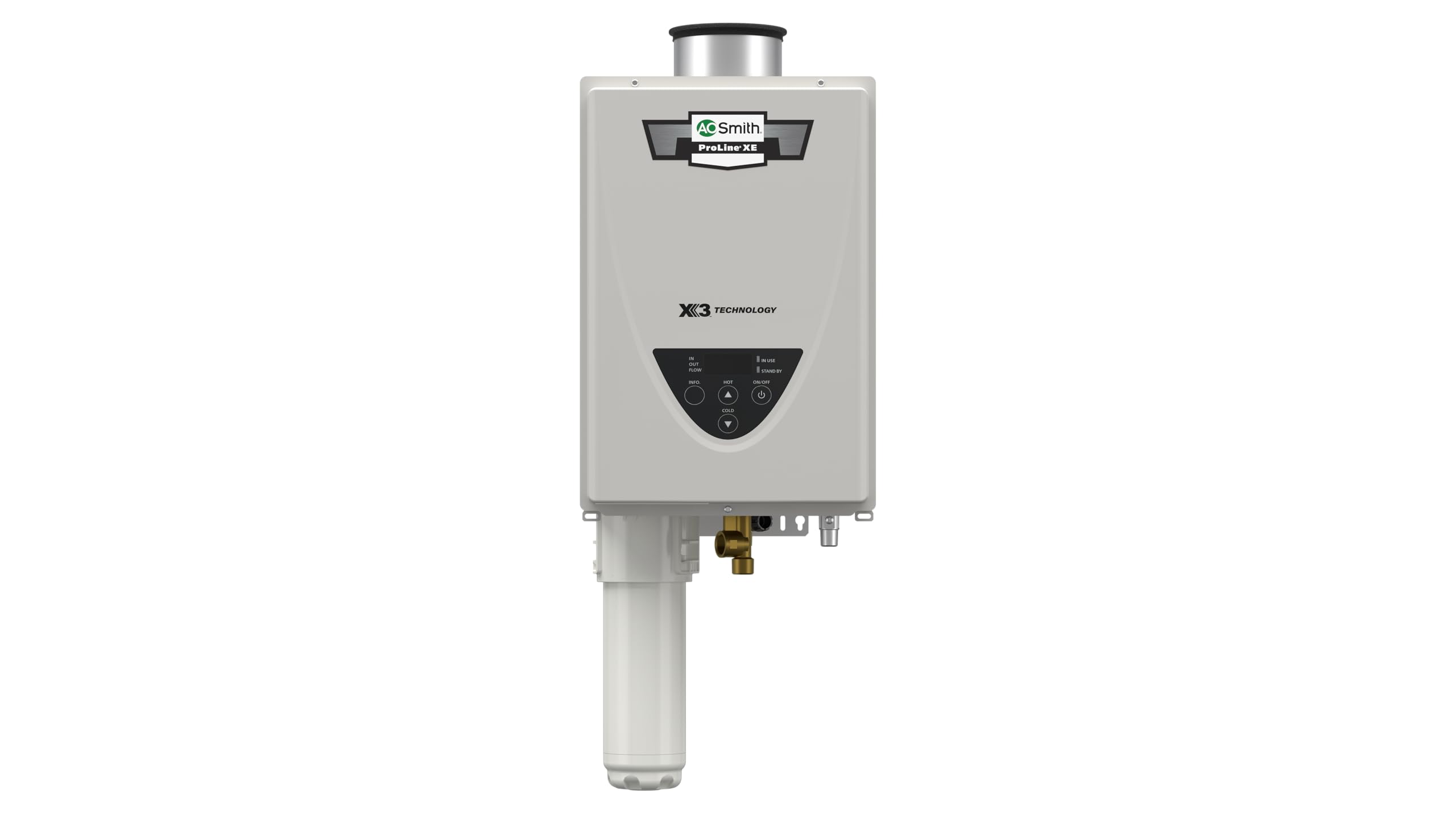
A. O. Smith tackles the most common headache of tankless water heaters—scale buildup—with its proprietary X3 Scale Prevention Technology. This system uses a built-in filter and internal treatment to dramatically reduce mineral deposits, meaning you can skip the annual descaling ritual that other tankless owners dread. The 8.0 GPM flow rate and 190,000 BTU heat output are well-suited for homes with two to three bathrooms.
The unit is a non-condensing natural gas model with a 0.81 UEF, which is respectable but not class-leading. It features a concentric vent system (APNC35) that uses a single wall penetration for both intake and exhaust, simplifying installation. The commercial-grade copper heat exchanger provides 25x better heat transfer compared to steel, according to the manufacturer, contributing to stable output even during heavy demand.
The indoor design is compact at 13.75 inches wide, making it easy to fit into tight utility closets. It converts from natural gas to propane using the included kit, and the propane conversion is straightforward. Professional installation is strongly advised, but handy DIYers have reported successful setups in about 16 hours. The 15-year heat exchanger warranty adds confidence, though some users note the unit is noisier than expected during operation.
Why it’s great
- X3 Scale Prevention eliminates the need for annual descaling.
- Compact footprint and concentric venting simplify installation.
- Commercial-grade copper heat exchanger for fast, efficient heat transfer.
Good to know
- Non-condensing design means lower UEF efficiency (0.81).
- Operating noise is noticeable during high-demand periods.
4. Noritz NR66ODNG Outdoor Tankless Water Heater

For homeowners in warmer climates who want to avoid the complexity and cost of venting, the Noritz NR66ODNG is a straightforward solution. This outdoor-rated unit requires no exhaust flue or intake pipe—just mount it on an exterior wall, connect the gas and water lines, and you are in business. The 6.6 GPM flow rate and 140,000 BTUs are sufficient for a household of up to three people running one shower and a sink simultaneously.
The 0.81 UEF rating is standard for non-condensing units, and the unit is certified Low NOx for areas with strict emissions regulations. Noritz backs this heater with a 12-year warranty on the heat exchanger, 5 years on parts, and 1 year on labor, which is competitive for the category. Weighing only 36 pounds, it is one of the lighter units available, making wall mounting a simpler task.
Users report that installation is significantly easier than indoor models, with no enclosure or venting required. In cold climates, some owners use heat tape and insulation around the water lines to prevent freezing, and with proper planning, the unit has been reported working at temperatures as low as -7°F. A minor complaint is that it takes slightly longer to deliver hot water compared to a preheated tank system, but the endless supply once it arrives is a clear trade-off.
Why it’s great
- No venting required—simplifies installation and reduces cost.
- Lightweight at 36 lbs, easy for mounting.
- Strong warranty coverage for heat exchanger and parts.
Good to know
- Freeze protection requires insulation and heat tape in cold climates.
- 6.6 GPM may be insufficient for large families with high simultaneous demand.
5. Rheem RTG-95DVLP-3 Indoor Tankless Water Heater
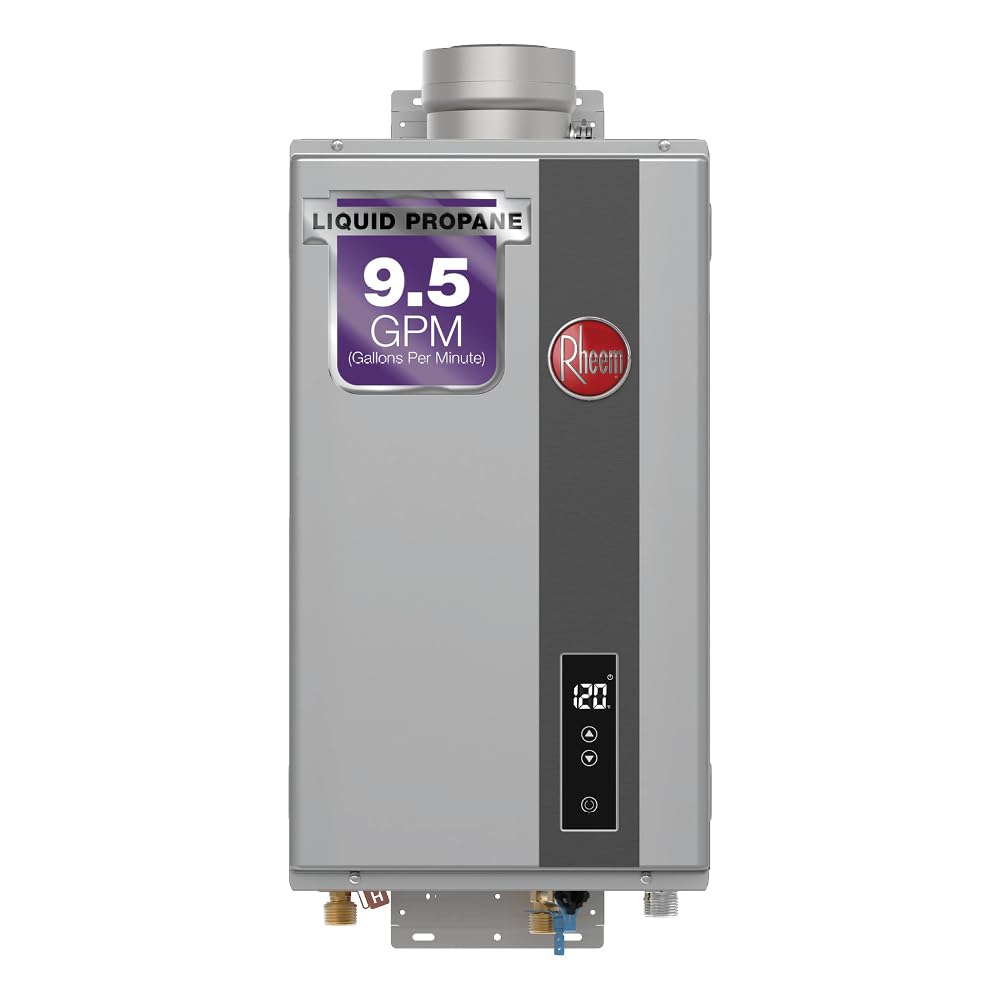
This Rheem model is a powerhouse for homes running on liquid propane, offering a class-leading 9.5 GPM flow rate backed by 199,900 BTUs. That kind of output can easily supply two to three bathrooms plus a dishwasher and washing machine without any perceptible drop in temperature. The Hot-Start programming specifically prevents the cold water sandwich effect between back-to-back showers, a frustration many tankless users encounter.
The indoor design requires a direct vent system, but the compact cabinet (13.5 inches wide, 24.2 inches tall) fits in standard utility spaces with minimal disruption. The unit features a digital display for temperature adjustment and diagnostics, and included components are limited to the heater itself, so you will need to purchase gas, water, and exhaust fittings separately. The 15-year heat exchanger warranty and 5-year parts warranty are strong indicators of Rheem’s confidence in its build quality.
Owners report that installation is straightforward for those with basic gas and plumbing skills, often completed in a few hours with PEX connections. While the unit is generally well-liked for its performance, a recurring observation is that it is noticeably loud during operation, with some comparing the noise to a low-end dishwasher. At higher elevations, such as 8,000 feet, the propane model has been confirmed to work well with proper adjustment.
Why it’s great
- Very high 9.5 GPM flow rate for large households on propane.
- Hot-Start programming eliminates cold water bursts between showers.
- Robust 15-year warranty on the heat exchanger.
Good to know
- Operates loudly compared to many competitors.
- Fittings and venting materials sold separately, adding to total cost.
6. Westinghouse HW199A0G-LP Propane Tankless Water Heater
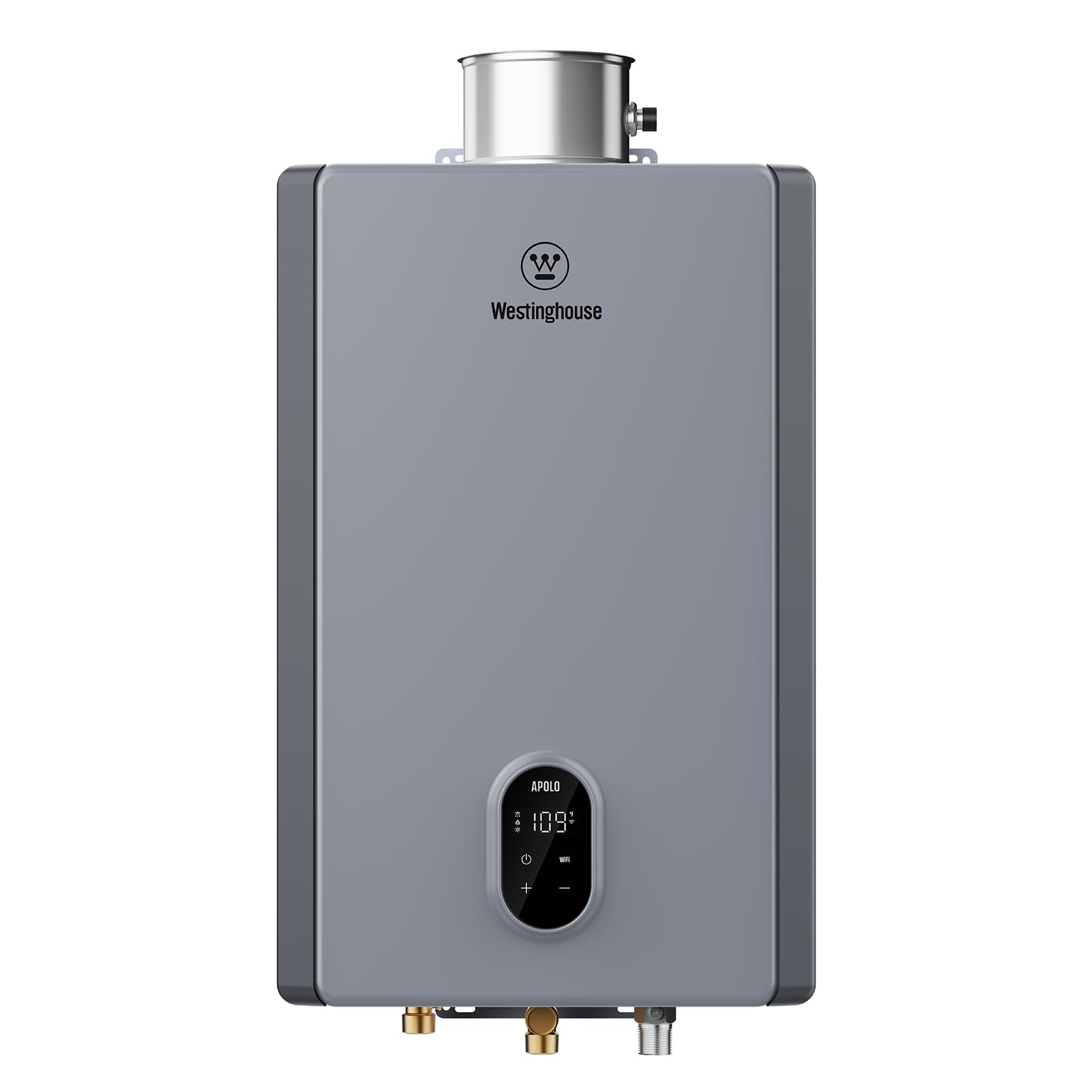
The Westinghouse APOLO Performance series brings together an impressive 10.3 GPM flow rate and 199,000 BTUs with modern smart home connectivity. The built-in Wi-Fi capability allows you to monitor and adjust water temperature from your smartphone, a feature still rare in the tankless water heater category. The advanced self-modulating technology claims to maintain water temperature within ±1°F, which is a significant improvement over units that fluctuate more noticeably during simultaneous use.
This non-condensing unit is designed for indoor installation and features a 1:20 turndown ratio with a 6-stage combustion system. The wide turndown ratio means the unit can throttle down to very low flow rates without cycling on and off, saving gas during light demand. The phosphorus-deoxidized copper heat exchanger is built for fast heating, and the integrated freeze protection works down to -13°F, though the manual advises draining the system below 5°F to prevent damage.
First-time buyers appreciate the clear step-by-step installation guide and the fact that the unit fires up correctly on the first attempt. Owners specifically call out the ability to set a precise temperature like 116°F without needing to mix cold water, eliminating guesswork in the shower. The CSA-certified safety protections cover overheat, freeze, and flame-out conditions. The main drawbacks are the difficulty some users had finding a contractor willing to install customer-purchased equipment and the brief delay in hot water delivery when the unit first activates.
Why it’s great
- Wi-Fi connectivity for remote temperature control and monitoring.
- ±1°F temperature stability eliminates hot/cold swings.
- Wide 1:20 turndown ratio for efficient low-flow operation.
Good to know
- Must be drained in sub-5°F conditions to avoid freeze damage.
- Finding a plumber to install customer-owned units can be challenging.
7. ThermoMate RTC68iN Condensing Water Heater
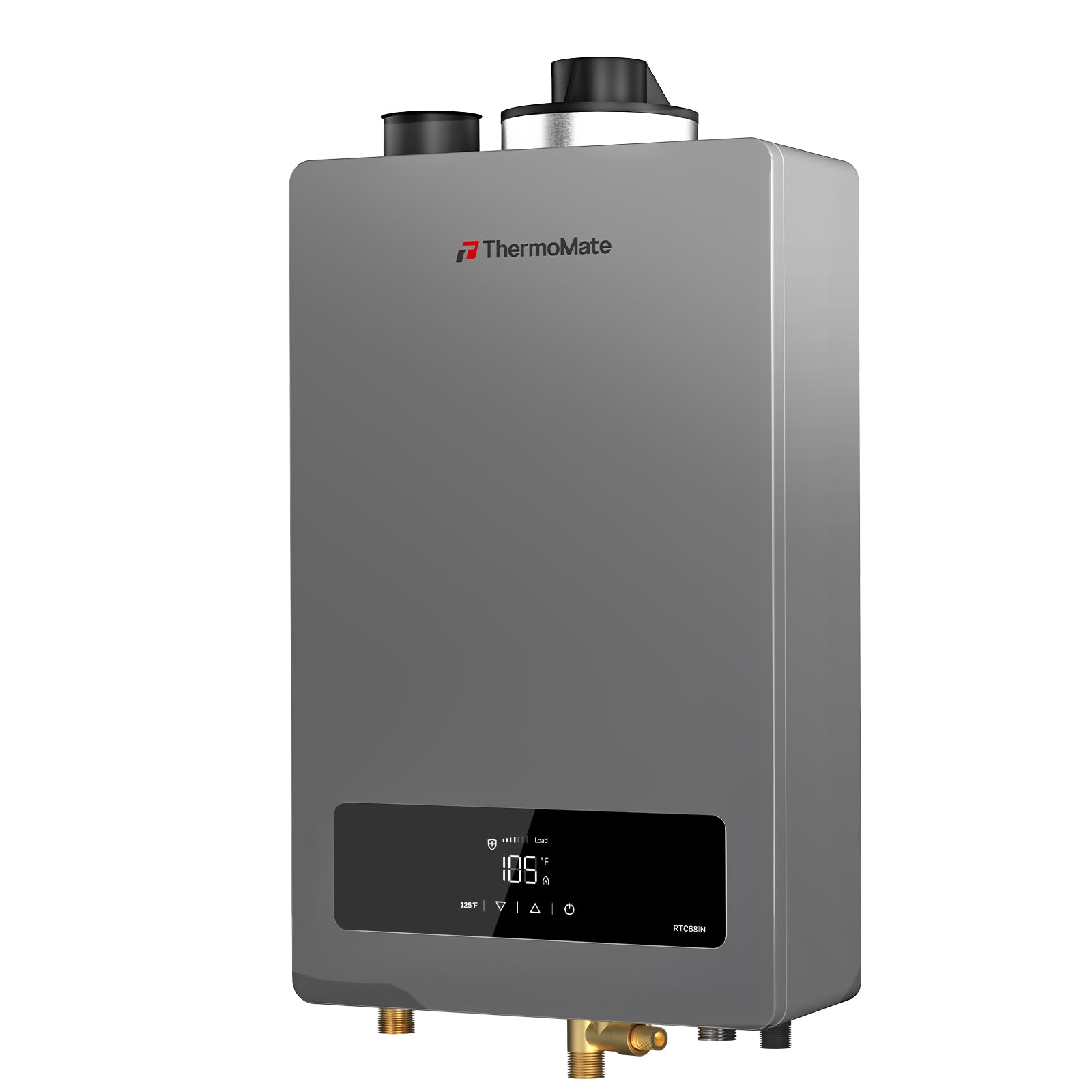
ThermoMate’s RTC68iN is a condensing unit that achieves a 0.91 UEF, putting it well ahead of standard non-condensing models in terms of fuel savings. The dual heat exchange system uses both a stainless steel condensing heat exchanger and an oxygen-free copper heat exchanger to capture and reuse waste heat that traditional units simply exhaust. The manufacturer claims annual water heating cost savings of around 17% compared to typical tankless units.
With 163,000 BTUs and a maximum flow rate of 9.38 GPM (in warmer climates with inlet temperatures above 77°F), this unit can supply three simultaneous showers at 105°F. The intelligent water mixing valve technology is designed to maintain zero temperature fluctuation, even when multiple fixtures are open. The sealed combustion design keeps operational noise low, which is a welcome feature for spaces near living areas or bedrooms.
The CSA certification covers eight built-in protections, including boil-dry, freeze, flame-out, and overheat safeguards. The freeze protection activates automatically at 41°F, using minimal electricity to prevent pipe ice buildup without high energy costs. An important note for installation: as a condensing unit, it produces mildly acidic condensate that must be neutralized with an external kit before draining into household plumbing. Professional installation is recommended, but the included installation kit makes the process manageable for experienced DIYers.
Why it’s great
- High 0.91 UEF efficiency reduces ongoing gas costs.
- Dual heat exchangers maximize heat recovery from exhaust.
- Intelligent water mixing valve eliminates temperature fluctuations.
Good to know
- Requires an external condensate neutralizer kit to protect plumbing.
- Maximum flow rate drops in colder climates due to higher temperature rise.
8. Takagi T-H3S-DV-N Condensing Tankless Water Heater

Takagi has a long-standing reputation in the tankless water heater market, and the T-H3S-DV-N continues that legacy with a condensing design that satisfies the 2012 SCAQMD Rule 1146.2 for Ultra-Low NOx Emissions. This makes it a prime choice for homeowners in California and other areas with strict air quality requirements. The unit delivers 8.0 GPM of continuous hot water, sufficient for a family of four with moderate simultaneous usage.
Key features include computerized safety sensors that eliminate the need for a standing pilot light, contributing to its high-efficiency rating. The compact dimensions (22.5 inches tall, 17.75 inches wide, 10.75 inches deep) allow for flexible wall mounting in tight spaces. The condensing design requires PVC or polypropylene venting, and a condensate neutralizer is necessary to safely handle the acidic wastewater produced during operation.
Long-term users report that these units can last well over a decade with minimal issues, though some have experienced motherboard failures under warranty on older models. The newer T-H3S model seems to have resolved those reliability concerns. Owners note that the unit operates quietly during normal use, with only a noticeable hum during ignition. A few critical voices mention the biannual descaling requirement as a hidden cost, and that existing 1/2-inch gas pipe may need upgrading to 3/4-inch to meet flow demands.
Why it’s great
- Ultra-Low NOx certified for strict emissions regulations.
- Proven long-term reliability with many units lasting over a decade.
- Compact footprint suitable for tight installation spaces.
Good to know
- Gas pipe line may need upgrading to 3/4-inch for full flow capacity.
- Requires biannual descaling and condensate neutralizer setup.
9. Rheem RTG-70XLP-3 Outdoor Tankless Water Heater
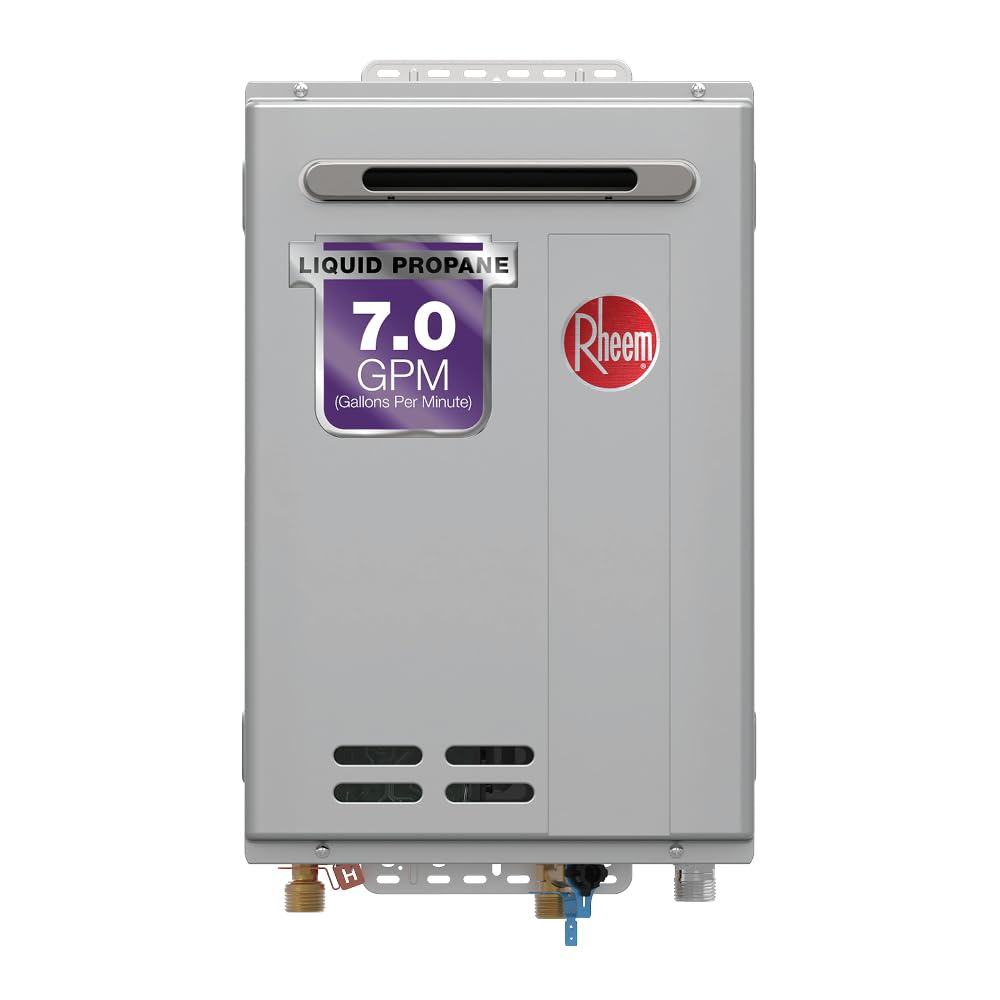
This entry-level Rheem is an outdoor propane unit that delivers 7.0 GPM from 160,000 BTUs, making it a solid choice for small to medium households on propane. The outdoor design eliminates the need for venting, simplifying installation. The Hot-Start programming is included to reduce the cold water sandwich between back-to-back showers, a thoughtful touch for a budget-tier unit. The durable metal cabinet withstands weather exposure well.
However, it is critical to understand the limits of this unit’s freeze protection. Rheem specifies freeze protection only down to 30°F, and multiple users have reported total failure when temperatures dropped into the 20°F range, resulting in internal water damage. For any climate where sustained freezing occurs, additional insulation, heat tape, and a windbreak are mandatory, and even then, some owners recommend skipping this model in favor of a cold-weather-rated alternative.
Positive feedback highlights that the unit provides excellent performance for its price when installed in appropriate climates, with rapid heating for a master bathroom setup. Users running it on a 23-gallon propane tank report satisfactory results at 130°F outlet temperature. A significant concern beyond freeze vulnerability is warranty service: some customers experienced long wait times for support and difficulty ordering simple cosmetic replacement parts, which is frustrating for a major brand.
Why it’s great
- Outdoor installation eliminates venting costs and complexity.
- Hot-Start programming reduces cold water bursts between uses.
- Compact, clean external design for wall mounting.
Good to know
- Freeze protection only rated to 30°F; unit can fail in colder weather.
- Customer service and parts availability receive poor marks.
10. Goodman GR9T960603BN Gas Furnace

The Goodman GR9T is a 96% AFUE gas furnace designed for upflow or horizontal installation, making it a suitable replacement for many older forced-air systems. The 60,000 BTU output is appropriate for small to medium homes, and the two-stage operation means the furnace runs at a lower, more efficient stage most of the time, only kicking into high gear during extreme cold. The multi-speed ECM blower motor enhances efficiency and provides better airflow control for consistent comfort.
This unit requires professional installation, and some HVAC contractors may refuse to install customer-purchased equipment, so check local policies before buying. The 17.5-inch cabinet width fits standard spaces, but the dimensions differ from older Goodman models, so ductwork modifications may be necessary. The unit is Low NOx certified, meeting emissions standards in areas like California.
Users report that this furnace heats quickly and quietly, with many noting a significant improvement over 80% AFUE units from the 1990s. The two-stage valve and auto blower speed work together to provide efficient, whisper-quiet heating. A few minor quality control issues have been noted, such as missing blower motor fasteners and screws inside the cabinet, so a thorough inspection before firing up is advisable. The 10-year parts warranty provides solid protection, but registration is required for full coverage.
Why it’s great
- High 96% AFUE efficiency reduces heating costs.
- Two-stage operation and ECM motor for quiet, efficient heating.
- Low NOx certification for emission-sensitive areas.
Good to know
- Installing contractors may refuse customer-purchased units.
- Inspect carefully for loose debris or missing fasteners before startup.
11. Hydronic Radiant Heat Control Panel (1 Zone)

This pre-assembled hydronic distribution panel is the central hub for an underfloor or space heating system, integrating the circulator pump, mixing valve, and control components into one ready-to-install cabinet. It eliminates the need for custom engineering, saving significant time and labor during installation. The single-zone design is ideal for smaller projects like a single room addition, basement, or workshop where you want radiant heat without a full-house system.
The panel measures 44 x 33.5 x 9.5 inches and weighs 110 pounds, so it is substantial but manageable when mounted on a wall. It supports multiple heat source options, allowing you to connect it to a boiler, heat pump, or solar thermal system. The company behind it, FloorHeat, is known for responsive customer support, including delivery coordination through FedEx with direct phone contact required.
Customers praise the packaging, which includes a wooden pallet and heavy-duty cardboard, ensuring the panel arrives undamaged. The build quality is described as commercial-grade, with components chosen for longevity. The convenience of a fully assembled and tested system is the primary selling point—one user noted it is “a bit pricey but cannot beat the convenience.” For DIYers building a radiant system, this panel turns a complex wiring and plumbing puzzle into a straightforward connection project.
Why it’s great
- Pre-assembled and tested, dramatically reducing installation complexity.
- High-quality components and robust packaging ensure a perfect arrival.
- Versatile multi-heat source compatibility for different system types.
Good to know
- Single-zone only; additional panels needed for multiple zones.
- Considerable weight (110 lbs) requires a sturdy mounting wall.
12. Goodman GR9T961004CN Gas Furnace

For larger homes requiring more heating power, the Goodman GR9T961004CN offers 100,000 BTUs of heating output while maintaining the same 96% AFUE rating as its smaller sibling. The two-stage operation and multi-speed ECM motor work together to deliver only the heat needed at any given moment, reducing temperature swings and improving overall comfort. The 21-inch cabinet width accommodates the larger blower required for the higher CFM output of 1600 cubic feet per minute.
This model replaces several discontinued Goodman furnace part numbers, including the GMEC961004CN. It is designed for upflow or horizontal installation and cannot be configured as a downflow unit—if you need that orientation, look for the GD9 series instead. The aluminized steel primary heat exchanger offers good durability, and the Energy Star certification confirms its efficiency credentials. Accessories such as LP conversion kits and venting components are sold separately.
Buyers report that the furnace runs significantly less than their old units while keeping the house consistently warm, a direct result of the two-stage valve working efficiently. Self-installers appreciate that the unit arrives dialed in from the factory, with one user reporting a perfectly clean startup checkout. Some minor annoyances include the sight glasses for error codes being difficult to read with the cover on and occasional loose screws inside the cabinet. Overall, it is a straightforward, high-efficiency workhorse for forced-air heating.
Why it’s great
- High 100K BTU output suitable for larger homes.
- 96% AFUE and Energy Star certified for maximum efficiency.
- Two-stage operation provides even, quiet heating.
Good to know
- Not usable in downflow configuration; check orientation.
- Error code sight glasses are hard to read with cabinet cover installed.
13. Rinnai EX38DTWP Direct Vent Wall Furnace
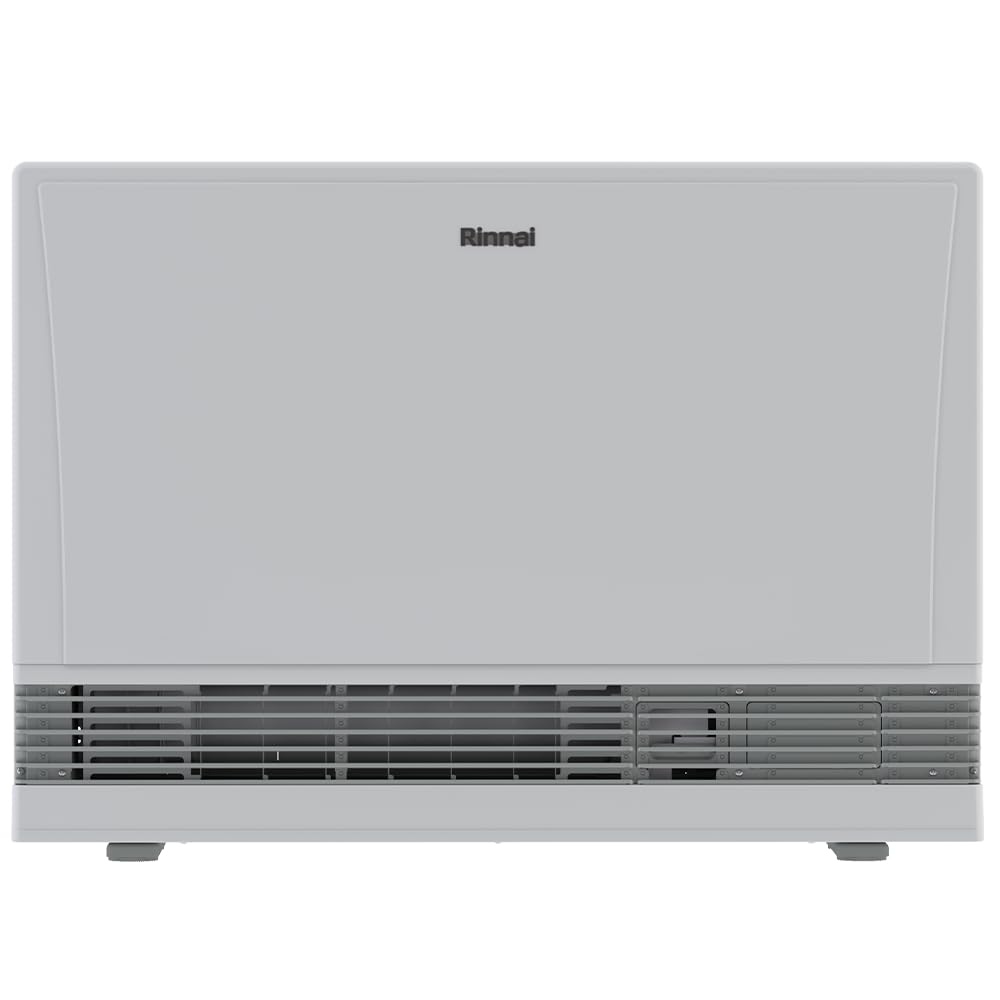
The Rinnai EX38DTWP is a dedicated direct vent wall furnace designed for supplemental or zone heating, rather than whole-home water heating. With 36,500 BTUs of output, it can heat up to 1,600 square feet, making it perfect for a large great room, finished basement, or apartment. The direct vent system uses outside air for combustion and exhausts outdoors, maintaining indoor air quality without needing a chimney or flue.
Advanced modulating technology automatically adjusts the heat output based on the room’s temperature, preventing the overheating that simple on/off heaters produce. The programmable thermostat allows scheduling for different times of the day, and the unit is compatible with NEST thermostats for smart remote control. The cool-to-the-touch cabinet and self-diagnostic electronics make it a safe choice for homes with children, as the exterior stays safe even during extended operation.
Users who upgraded from older Japanese wall furnaces like the Monitor GF500 report that the Rinnai is significantly quieter and distributes heat more evenly without hot spots. The easy-to-program two time/temperature schedules and minimum room temperature setting allow precise control. A recall on a specific part affected some units, and while Rinnai sent replacement parts, the installation was complicated for end users. Overall, this is a premium solution for targeted, efficient gas heating without running ductwork.
Why it’s great
- Direct vent design preserves indoor air quality without a chimney.
- Modulating heat output provides even, quiet operation.
- Compatible with smart thermostats like NEST for remote scheduling.
Good to know
- Some units affected by a component recall; replacement part installation is complex.
- Heavier than expected at 108 pounds; requires sturdy wall mounting.
FAQ
Do I need a condensing or non-condensing tankless water heater?
Why does my tankless water heater take so long to deliver hot water?
Can I install a tankless water heater myself?
What size tankless water heater do I need for a family of four?
Are outdoor tankless water heaters safe in freezing temperatures?
Final Thoughts: The Verdict
For most users, the best boilers winner is the Rinnai RXP199iN because it combines the highest condensing efficiency (0.98 UEF), the best flow rate (11.1 GPM), and a built-in recirculation pump that solves the slow-hot-water problem. If you prioritize low maintenance without annual descaling, grab the A. O. Smith ATI-310CX3. And for a dedicated hydronic whole-home heating system, nothing beats the Rinnai i150SN for its modulating efficiency and multizone control.
Product prices and availability are accurate as of the date/time indicated and are subject to change. Any price and availability information displayed on Amazon at the time of purchase will apply to the purchase of this product. As an Amazon Associate I earn from qualifying purchases.
CERTAIN CONTENT THAT APPEARS ON THIS SITE COMES FROM AMAZON. THIS CONTENT IS PROVIDED "AS IS" AND IS SUBJECT TO CHANGE OR REMOVAL AT ANY TIME.
Amazon and the Amazon logo are trademarks of Amazon.com, Inc. or its affiliates.